
Last updated November 18, 2026
 Wrought iron
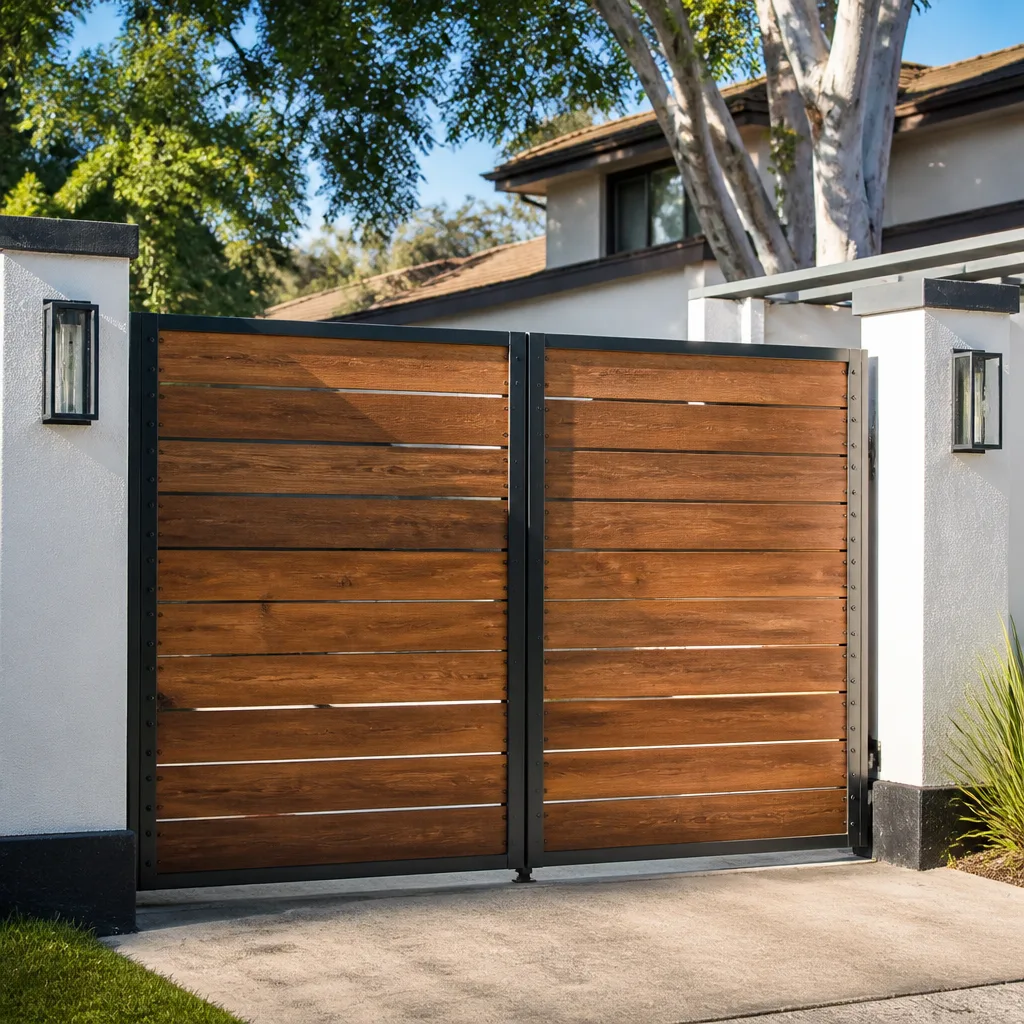 Wood & steel frame
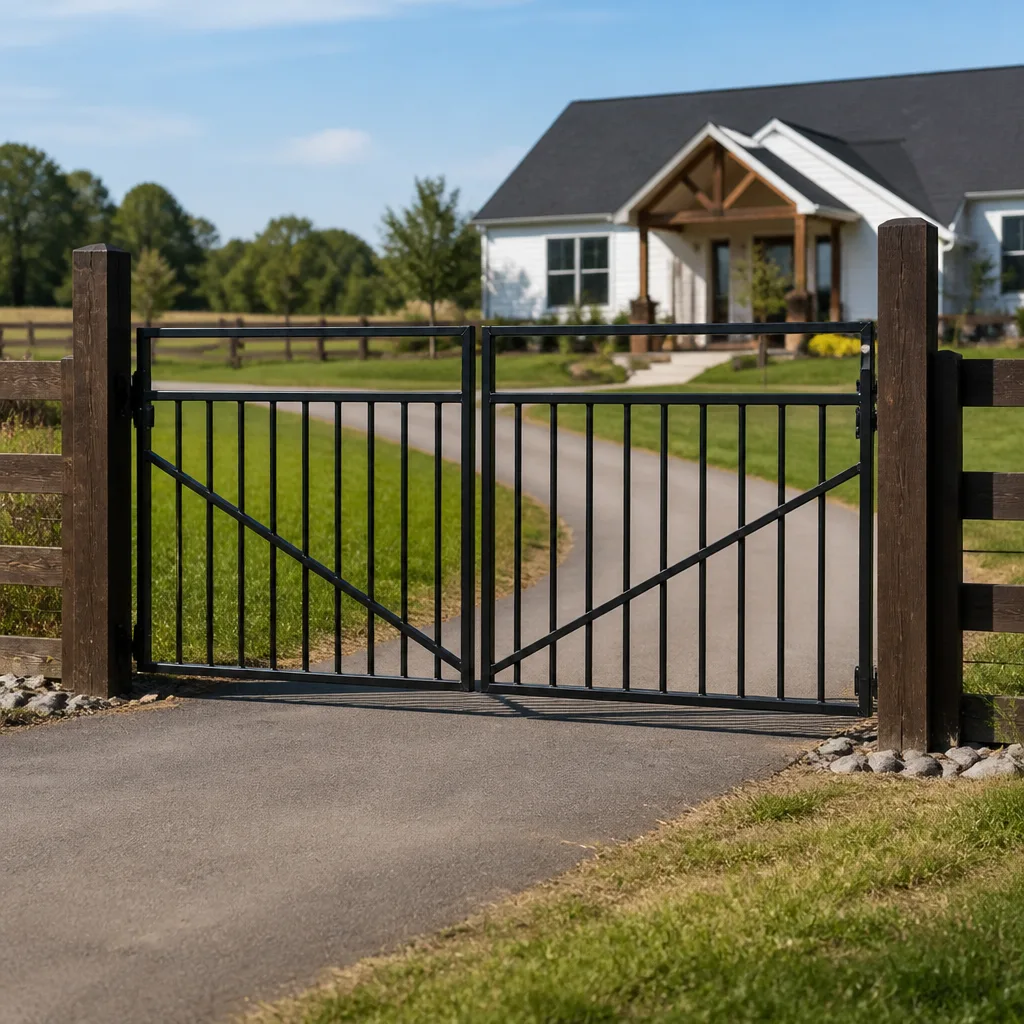 Farm & ranch
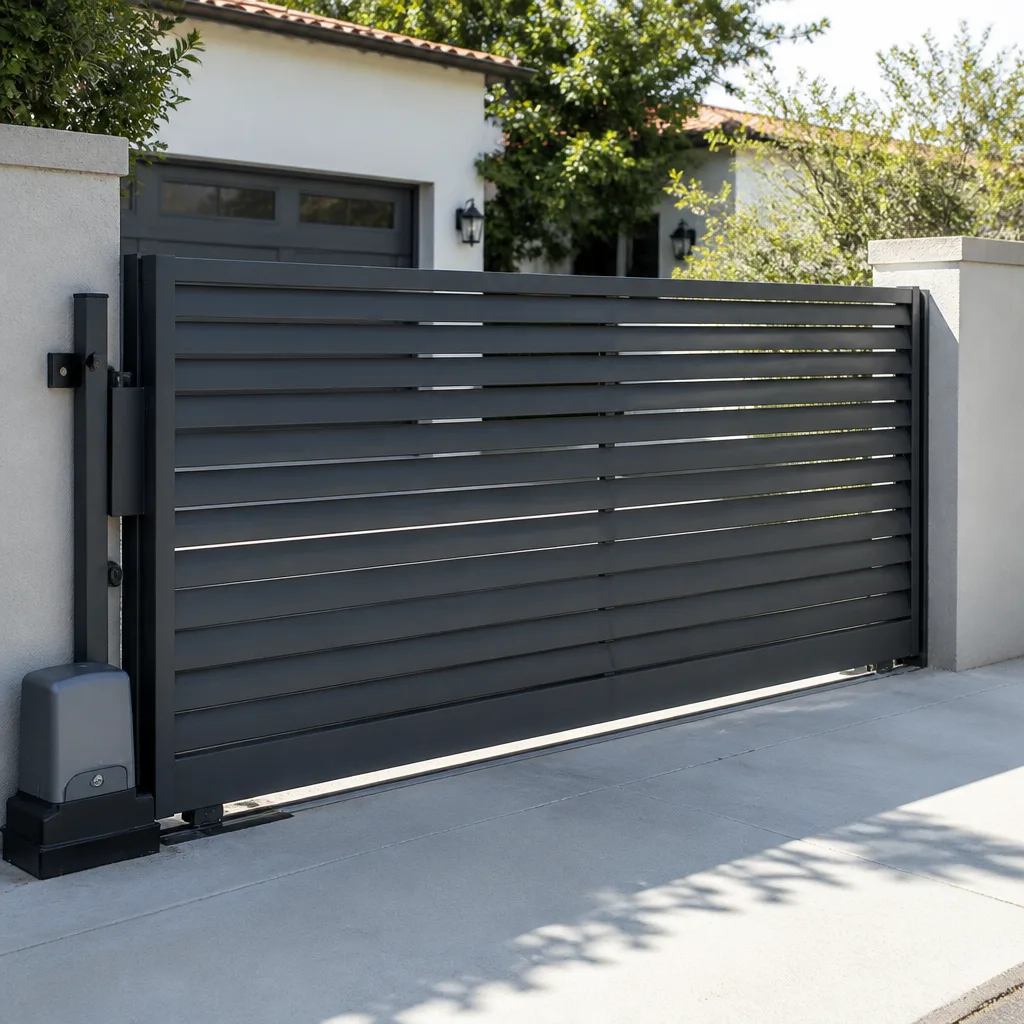 Sliding driveway gates
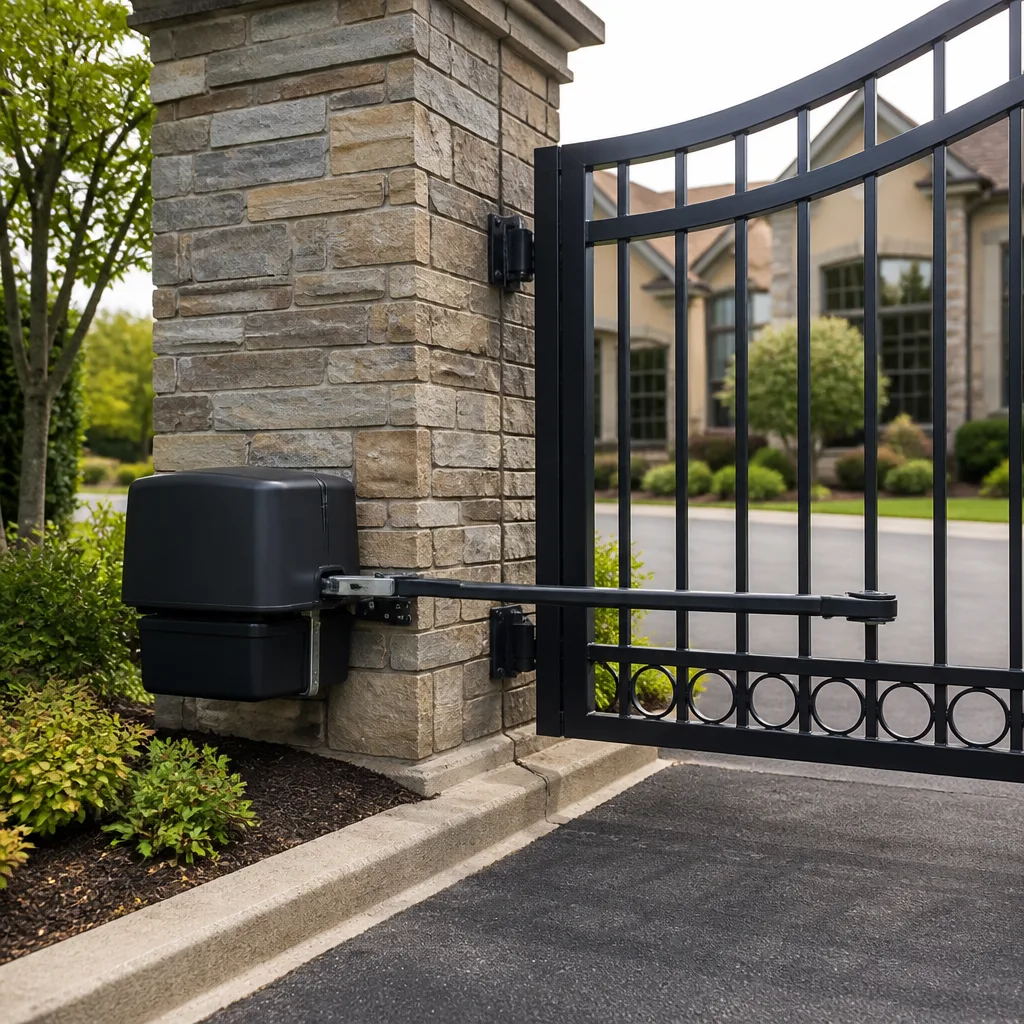 LiftMaster operators
Free on-site gate assessment - hinges, posts, and your LiftMaster or Nice gate operator checked before anything is quoted
The assessment is free and the quote is the invoice.
Get your free estimateDIY vs Professional Gate Parts & Welding: What’s Safe to Do Yourself
You can replace a latch pin on a garden gate with a hardware store bolt and be fine. Put that same approach on a 400-pound driveway gate and you’ve created a falling-object hazard that your homeowner’s insurance may not cover. That’s the line most DIY guides miss. The question isn’t whether you’re “handy enough” to weld or wrench on a gate. It’s what load class that gate carries and whether a failure drops a piece of steel onto a person, a car, or a child. We’ve inspected enough gates across Winchester to know that the same loose hinge means two completely different things depending on which side of the driveway it’s bolted to. Here’s how to tell the difference before you pick up a tool.
Quick Answer
Low-load decorative hardware on pedestrian gates (latches, handles, hinges you can lift with one hand, surface rust on non-structural metal) is safe for most homeowners to handle. Anything on a vehicle-rated gate is professional territory: welding, hinge replacement, post anchors, and any repair on a gate over 150 pounds. If a weld on a driveway gate fails, the result is a falling-object injury risk and a liability problem your insurance may not cover.
Styles & brands we work with
- Wrought iron
- Wood & steel frame
- Farm & ranch
- Sliding driveway gates
- LiftMaster operators
Table of Contents
- What “Load Classification” Means for Your Gate
- Safe DIY Work: Low-Load Decorative Hardware
- Professional-Only Territory: Where DIY Crosses the Line
- How to Assess Your Gate’s Load Class Without Documentation
- The Liability Gap: Vehicle Gates vs. Pedestrian Gates
- What to Document Before Any DIY Work
- Why Winchester Gates Fail Differently
- Common Mistakes to Avoid
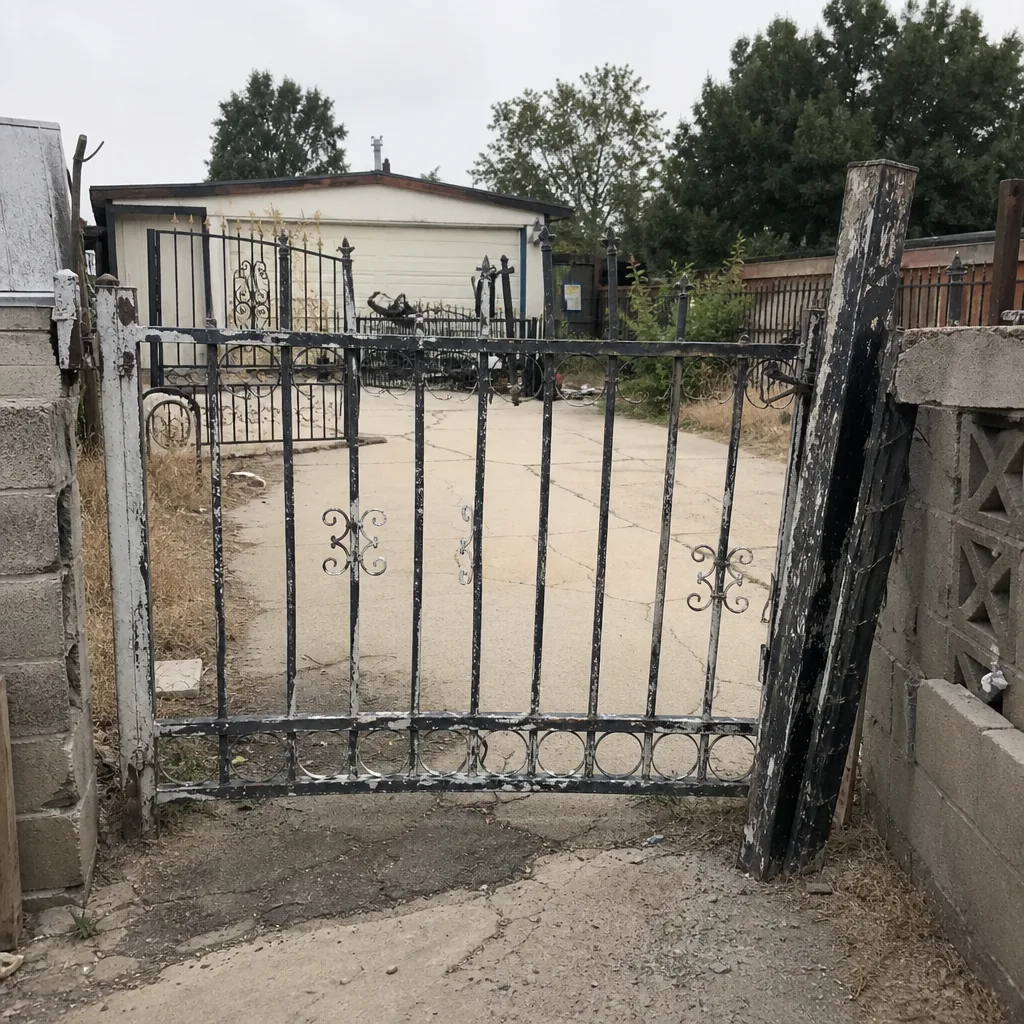 Before
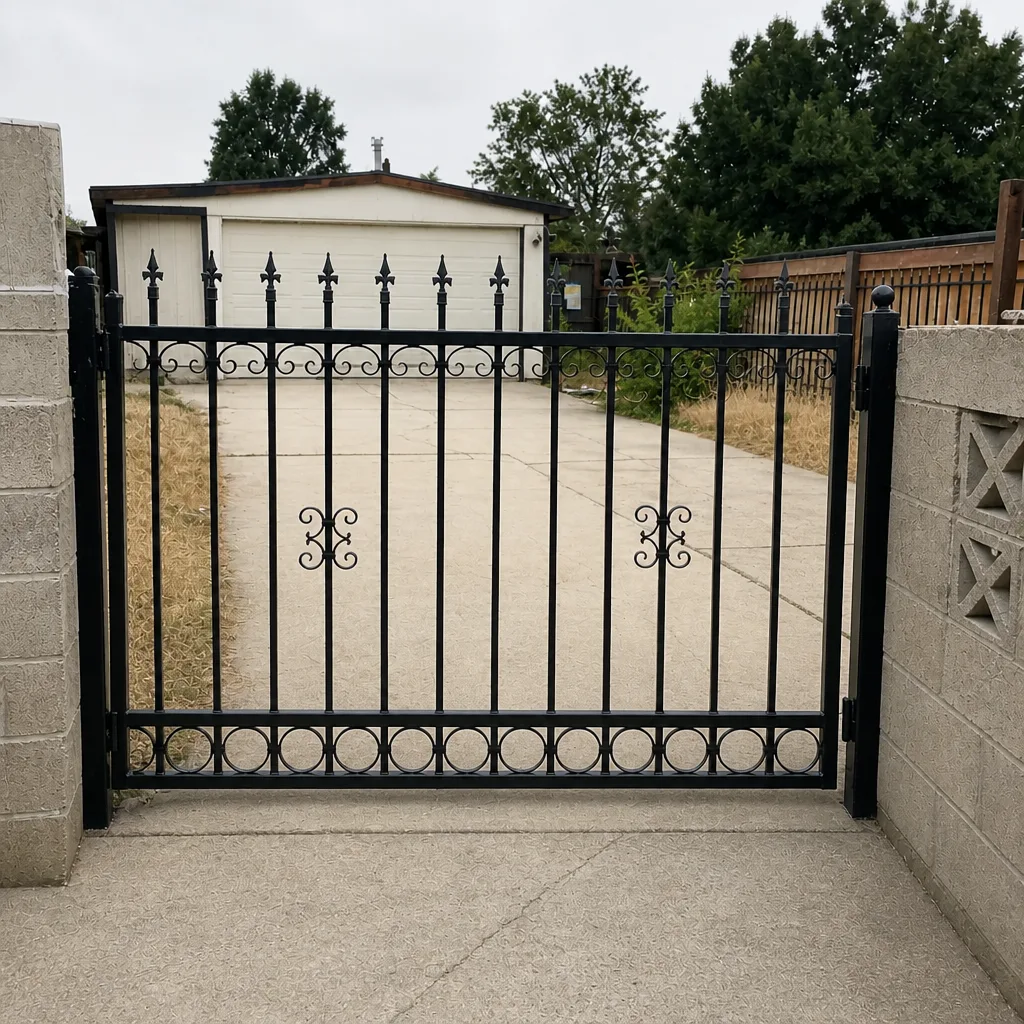 After
What “Load Classification” Means for Your Gate
Every gate carries a load class, whether or not anyone wrote it down. Load class is the combination of the gate leaf’s weight, its span, the forces the hinges and posts absorb every time it opens, and what’s on the other side if it fails. A 60-pound garden gate swinging on two strap hinges has a low load class. A 16-foot double driveway gate with an automatic opener carries a very different set of forces, and a failed weld there doesn’t just look bad.
We sort gates into three rough tiers when we assess them:
- Low load: pedestrian gates under about 80 pounds, decorative metal, wood garden gates, pool enclosure gates. Hardware fails gradually and the consequence is usually a sagging gate, not an injury.
- Medium load: pedestrian and entry gates between 80 and 150 pounds, tall ornamental gates, gates with glass or solid infill panels. Hinge wear matters here, and a hinge pulling free can drop the gate.
- High load: anything vehicle-rated. Driveway gates, security gates, commercial-light entry gates, any gate over 150 pounds, and any gate attached to an automatic opener. Structural failure means a heavy object in motion.
The line between “you can fix this” and “call someone” falls precisely at that third tier. When we handle gate repair in Winchester, the first thing we do is confirm the load class, because it changes what’s an acceptable repair and what isn’t. A cable-tied latch on a garden gate is a minor note. A cable-tied latch on a driveway gate is a red flag on the documentation.
Safe DIY Work: Low-Load Decorative Hardware
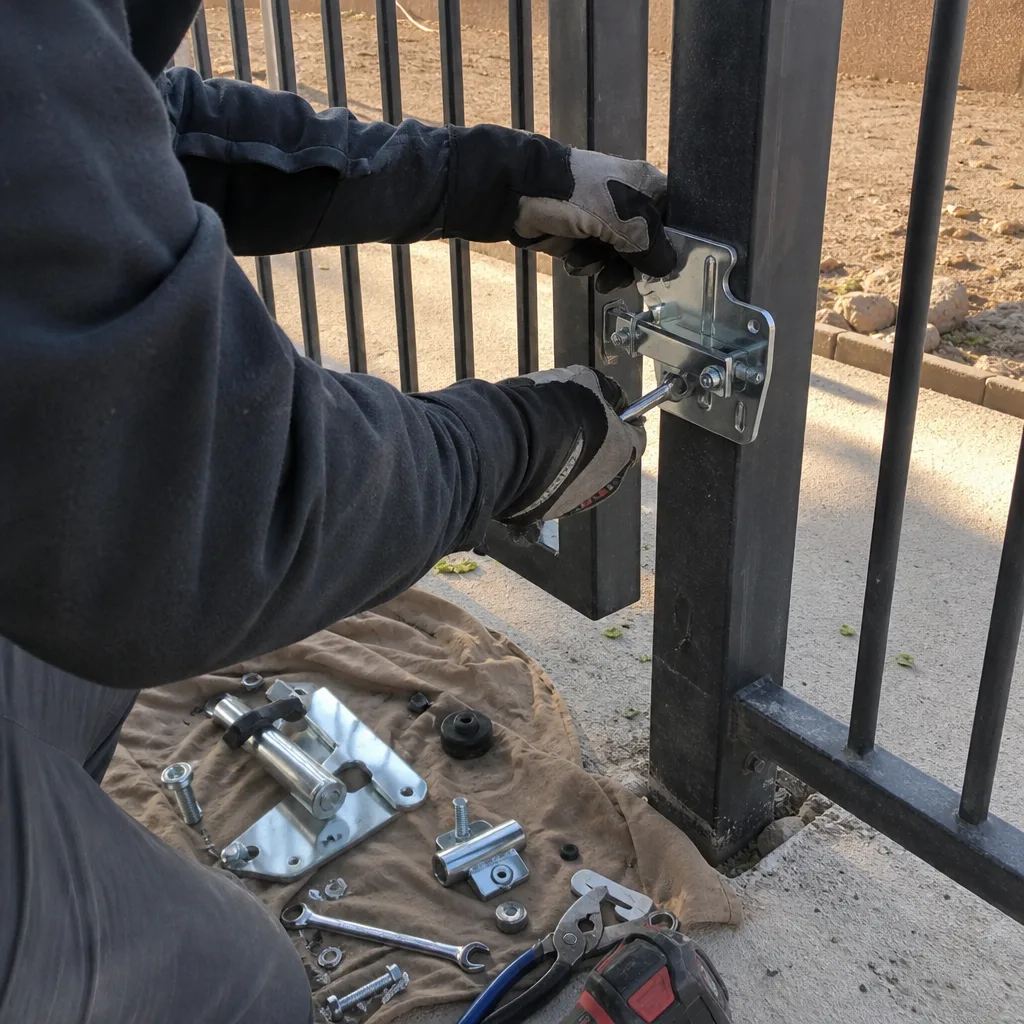
The DIY-appropriate list is real, and it’s longer than most people expect. On a pedestrian gate, you can absolutely handle your own hardware swaps without a professional. Here’s what falls in that category:
- Latch and handle replacement on pedestrian gates. Match the mounting hole spacing, use through-bolts rather than wood screws where the gate allows, and check alignment with the strike plate.
- Hinge lubrication. White lithium grease or a silicone spray on the pin, twice a year. This is the single most underrated maintenance task on any gate.
- Surface rust treatment on non-structural metal. Wire brush, rust converter, touch-up paint. If rust is bubbling from the inside of a weld, stop and get it looked at.
- Latch adjustments where the gate has sagged slightly and the tongue no longer seats. Shim the hinge or adjust the strike, not the latch itself.
- Cosmetic panel work on ornamental gates. Replacing a bent picket or a decorative scroll that doesn’t carry structural load.
These are the tasks where a careful homeowner with basic tools produces the same outcome as a technician. When we’re called out to a Winchester home for a latch issue that turns out to be a hinge sag, the fix is often fifteen minutes of shimming. That’s the kind of thing you can do yourself if you can identify it.
Professional-Only Territory: Where DIY Crosses the Line
Some gate work isn’t a skill question. It’s a physics question. High-tension and heavy-load components behave non-intuitively, and a weld that “looks fine” can carry a fraction of what the original did. Here’s where we draw the hard line:
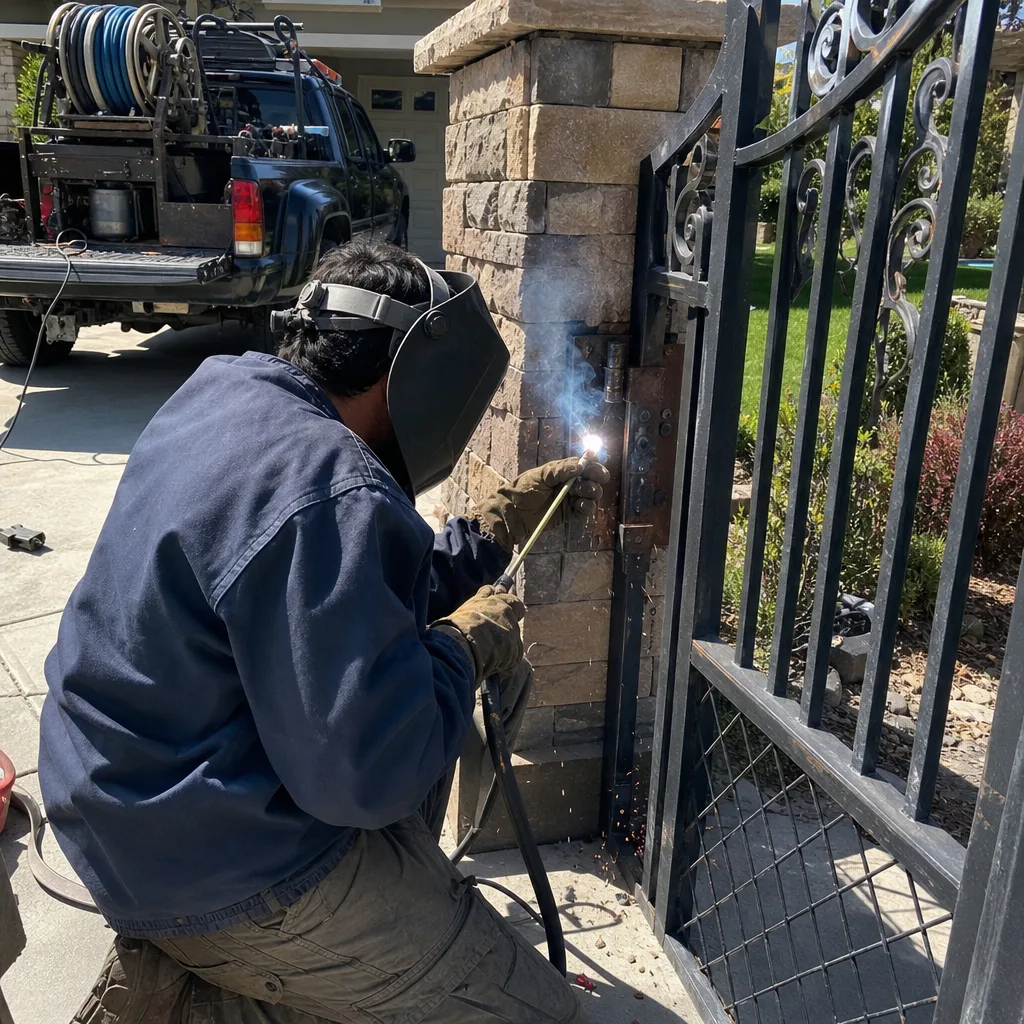
- Any weld repair on a vehicle-rated gate. Structural welds carry the gate’s weight and the shock load from every open and close cycle. A homeowner MIG weld on a hinge plate carrying 200 pounds looks solid right up until it doesn’t.
- Post anchor work. The post is what the whole gate hangs from. Anchor bolts, concrete footings, and post-to-mounting-plate welds are all professional work.
- Hinge replacement on any gate over 150 pounds. This is a two-person job with lift equipment, and the hinge grade has to match the load. Getting a lighter hinge on a heavier gate is a waiting failure.
- Any welding near an automatic opener or its wiring. Heat, sparks, and a motor controller in the same work area is a bad combination. Disconnect and lockout before anyone strikes an arc.
- Structural straightening of a bent gate leaf. You can bend a gate back. Whether the weld that bends with it still holds is a professional call.
We want to be direct about one more thing: an automatic gate operator stores energy, and that stored energy is dangerous. If your gate runs on a gate motor and opener in Winchester and you’re considering a repair, the equipment should be de-energized and mechanically locked out before any work begins. We don’t recommend homeowners handle that themselves.
How to Assess Your Gate’s Load Class Without Documentation
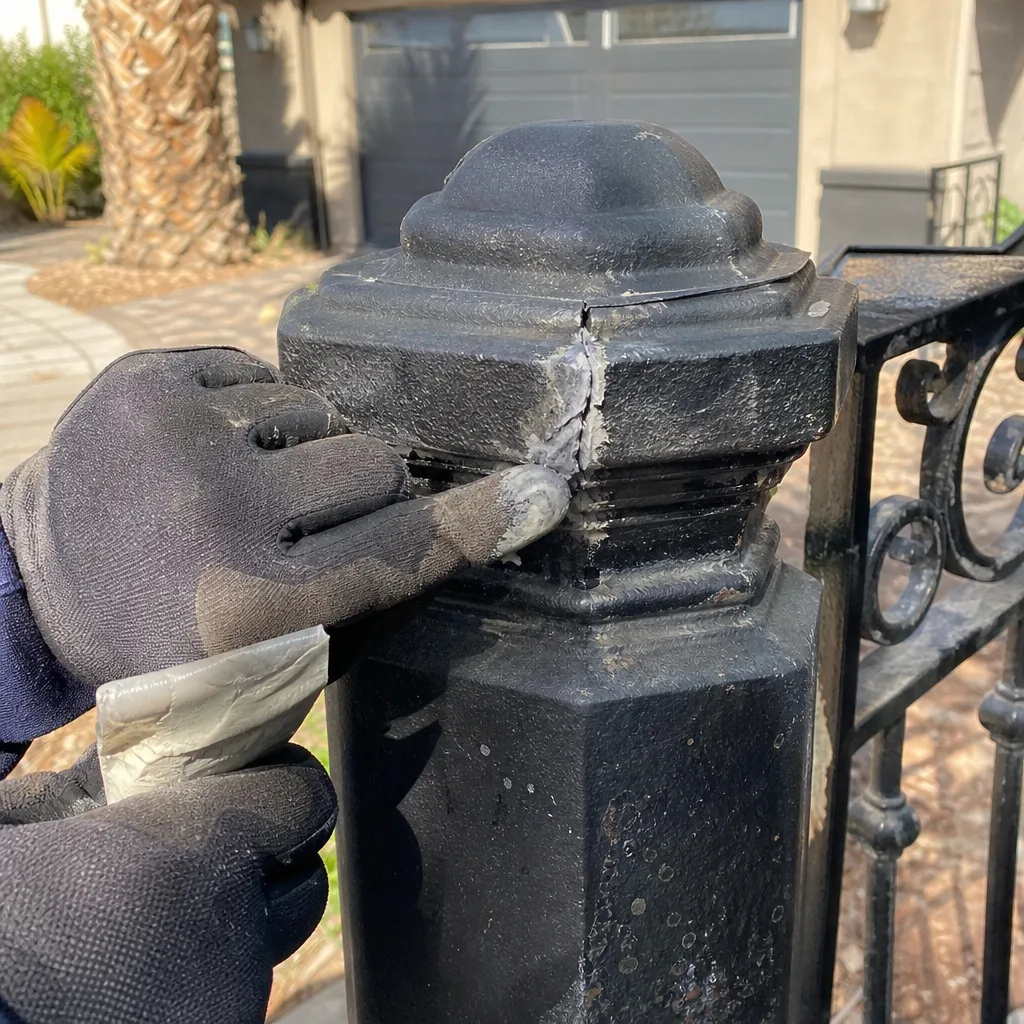
Most homeowners don’t have the original spec sheet for their gate. That’s fine. You can gauge load class with three observations, and if the numbers aren’t obvious, treat the gate as the heavier class until someone qualified proves otherwise.
- Estimate the weight. A rough rule of thumb for ornamental steel: a 4-foot-tall gate with solid steel pickets weighs roughly 12 to 18 pounds per foot. Tubular aluminum runs lighter, often 6 to 10 pounds per foot. A 4×6 gate with steel pickets is likely 100 to 150 pounds before you add anything. Measure the leaf, not the opening.
- Read the hinge grade. Many stamped hinges on residential gates have a load rating stamped or cast into the leaf. Common grades run from light-duty (often rated around 50 pounds per hinge) to heavy-duty (rated above 200 pounds per hinge). If you can’t find a stamp, assume light-duty.
- Check what it takes to lift one end. With a second person and the gate fully open, lift the free end a couple inches. If you can do it with two fingers, it’s light. If you’re grunting, it’s not. Get someone to hold it and inspect the bottom hinge for movement.
If you’re unsure, err toward the heavier class. When we estimate a gate for repair in Winchester, we sometimes find replacements on gates that were never rated for the weight, which means the whole hinge schedule needs to be re-examined, not just the failed part. That’s a bigger conversation than a hardware swap.
The Liability Gap: Vehicle Gates vs. Pedestrian Gates
Here’s where insurance math gets uncomfortable. A failed latch on a garden gate is a service call. A failed weld on a driveway gate is a potential injury claim, and homeowner’s insurance policies are increasingly strict about whether damage from a self-repaired structural component is covered. We’ve been on walk-throughs in Winchester where the insurer wanted documentation of who did what work and when. Without a paper trail, the conversation gets expensive fast.
The practical difference comes down to hazard class. Both failures are failures, but the pedestrian gate fails “down and in” (the gate sags into its own frame). A vehicle gate failing at a hinge or post can put several hundred pounds of steel down onto a car, a person, or a walkway. That’s the difference between a repair and a hazard.
This is why our Vance Gate Repair Winchester home service treats the photo record as part of the repair, not a bonus. Under the Haven Standard, every job carries a documented photo record of what was found, what was adjusted, and what was installed. That record protects the homeowner if a failure ever lands on an insurance desk years later. It’s the reason we photograph hinge grades, weld locations, and post anchor torque readings on vehicle-gate work.
What to Document Before Any DIY Work
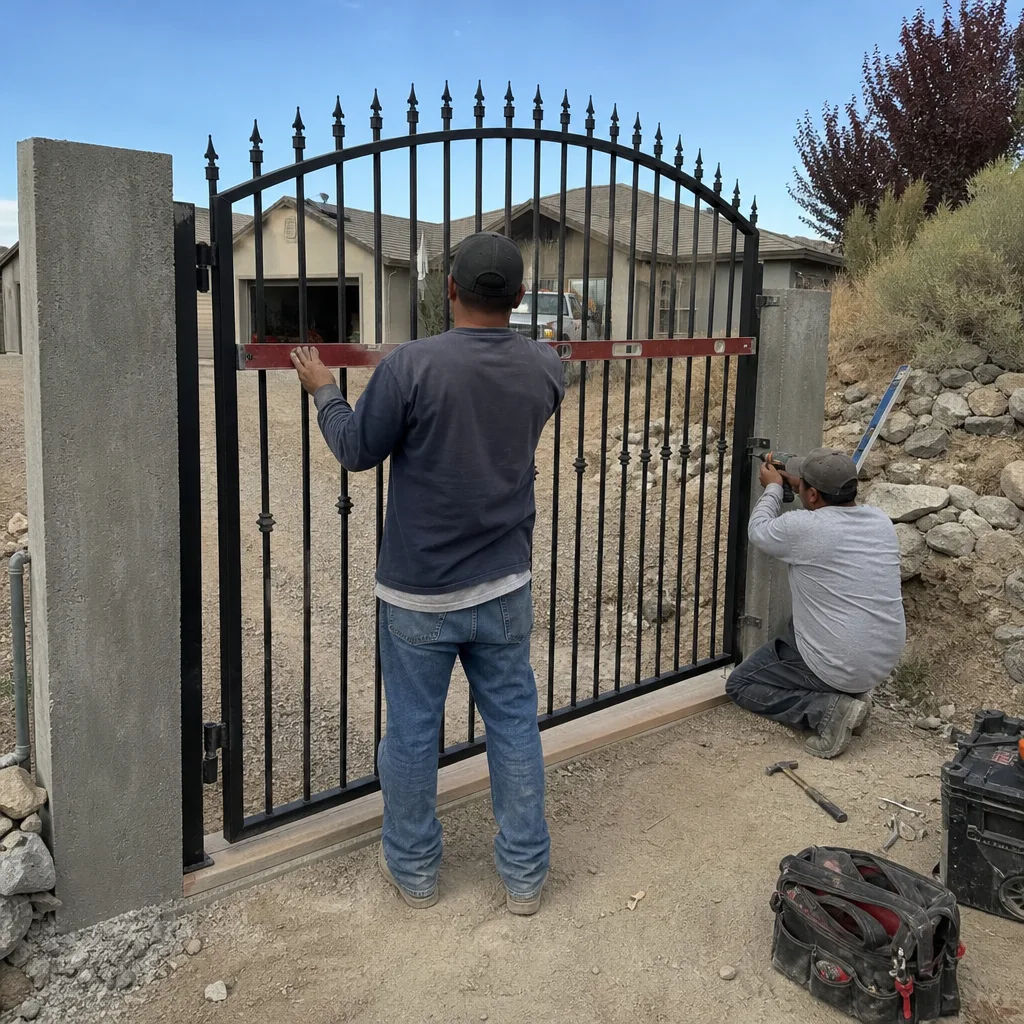
If you’re going to do the DIY-appropriate work yourself, leave a record. A future technician (or a future insurance adjuster, or the buyer when you sell) should be able to see what you changed and with what. Here’s the checklist we recommend, and it’s the same habit our technicians follow:
- Photograph before and after. Wide shot of the whole gate, close-up of the part you’re touching, and the mounting hardware underneath.
- Write down the part number and material of anything you replace, and the brand if it’s stamped. Note whether the replacement is the same grade as the original.
- Record the date and the reason. “Sagging latch on east pedestrian gate, replaced with a through-bolt strike matching the existing hole spacing” is the kind of line that helps.
- Keep the packaging and the original part in a labeled bag in the garage for 30 days. If the replacement doesn’t fit right, you’ll want the reference.
- Note any tool or method if you used a bolt that isn’t the original type. If you tapped a new hole, mark its position and diameter.
When we do the work, you get that record as a written document and a photo set left with you. That’s Haven Standard Clause 4 (Evidence on every job). We’d rather you do the same thing on your own repairs than have a great DIY fix that nobody can verify later.
Why Winchester Gates Fail Differently
Gate failures are local. Winchester sits in a desert climate with wide temperature swings between summer afternoons and winter nights, and that cycle drives heat expansion across steel welds and gate leaves. The specific pattern we see on Winchester gates isn’t rust-through like you’d get in humid climates. It’s weld fatigue at the mounting points and hinge-post stress from the expansion cycle. Check your hinge plates in late spring and early fall, because that’s when we get calls about loose hinges on gates that passed inspection the previous season.
Wind is the other factor. Winchester’s spring gusts put lateral load on every gate mounted on a post that’s anchored in the local caliche-heavy soil. A gate that’s “fine” in March can start showing hinge loosening by June if the anchors weren’t set correctly. If you’re considering a gate installation, that’s the argument for professional anchor work: gate installation in Winchester done right includes the anchor schedule, and that schedule is what carries the gate through a decade of wind. We’ve documented anchor failures on Winchester gates installed by contractors who used the wrong anchor type for the soil, and those are always a bigger repair than they should have been.
Common Mistakes to Avoid
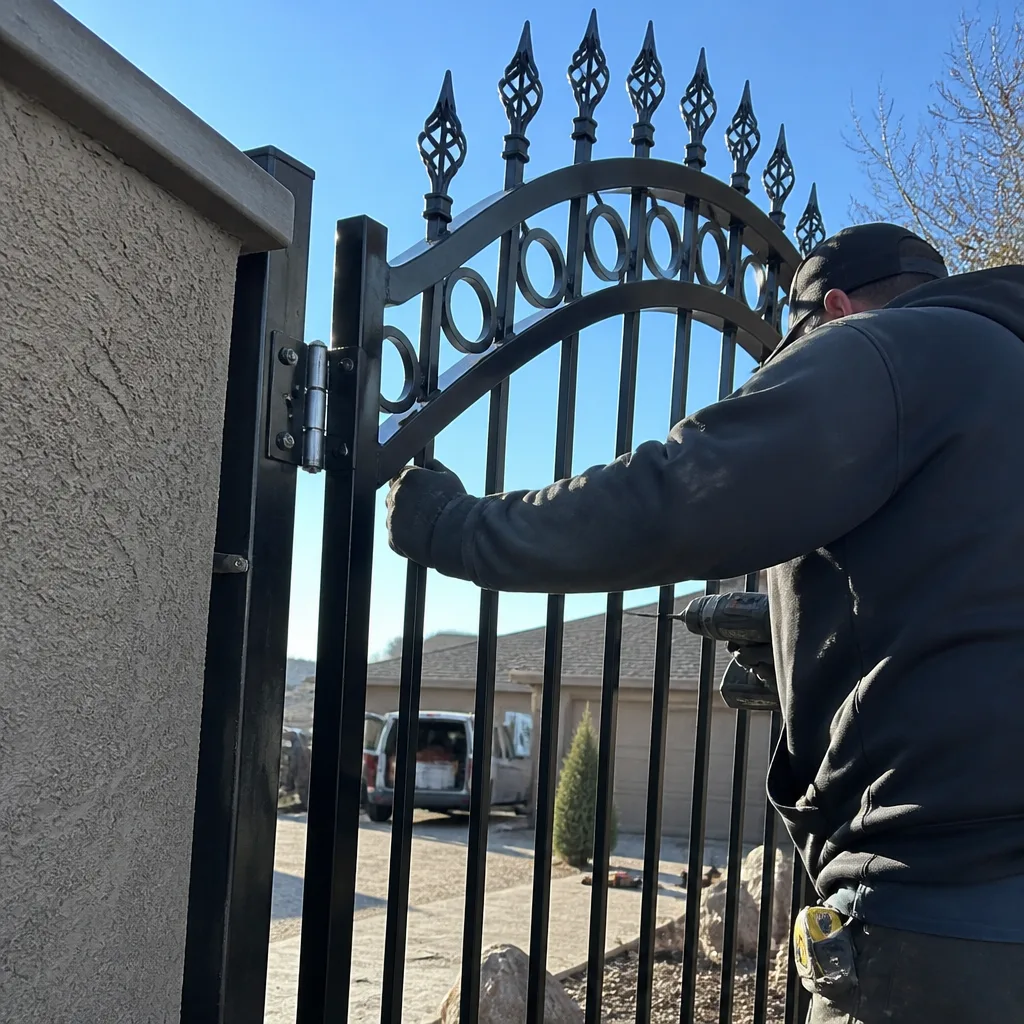
- Welding on a vehicle gate because “it’s just a small crack.” Small cracks are where structural welds start. Unlike a decorative picket, a hinge weld that carries load needs to be re-welded to original spec, not just bridged. We’ve seen a repaired crack let go on a Winchester driveway gate within a single season.
- Replacing a hinge with a lighter grade. Homeowners often match by hole spacing and not by load rating. A light-duty hinge on a 200-pound gate is a scheduled failure, and the damage when it goes is often worse than the original problem.
- Using a wood screw through a steel gate post. It “works” until it doesn’t. Through-bolts or machine screws sized to the mount are the only fix that holds on metal gate posts.
- Adjusting a limit switch on an automatic gate without meters. A limit switch set even 5 degrees past travel puts stress on every cycle. If you don’t have a multimeter and know how to read travel, leave it to a technician.
- Skipping the lockout before working near an operator. Automatic operators store energy in the arm, the controller, and often a battery backup. Disconnect power and mechanically secure the gate leaf before touching anything.
- Ignoring the post because the gate looks fine. On Winchester gates, a wobbling post is often the first sign that the anchor is failing. If the post moves when you push the gate, stop and call.
- Not photographing what you changed. The biggest cost of a DIY repair gone wrong is a professional showing up with no idea what was modified. Document everything you touch, even if it’s a single screw.
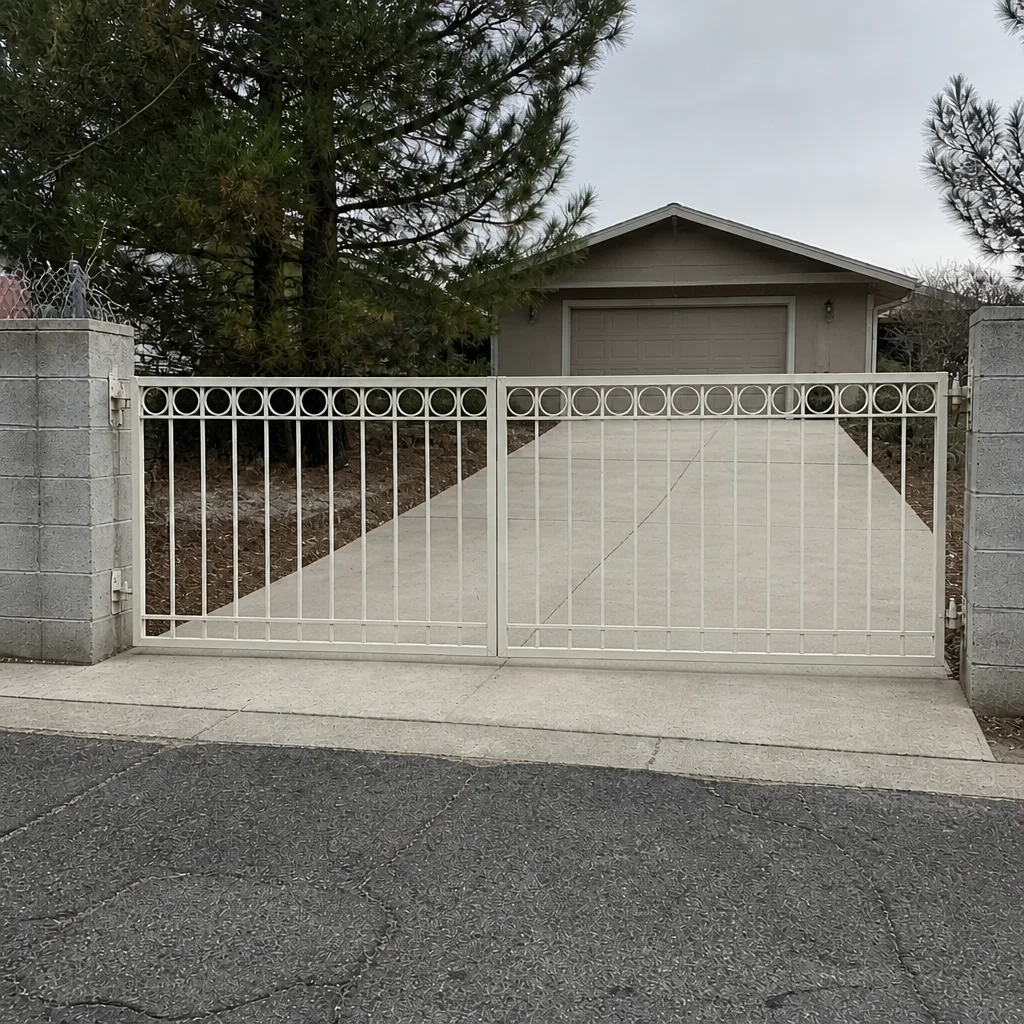
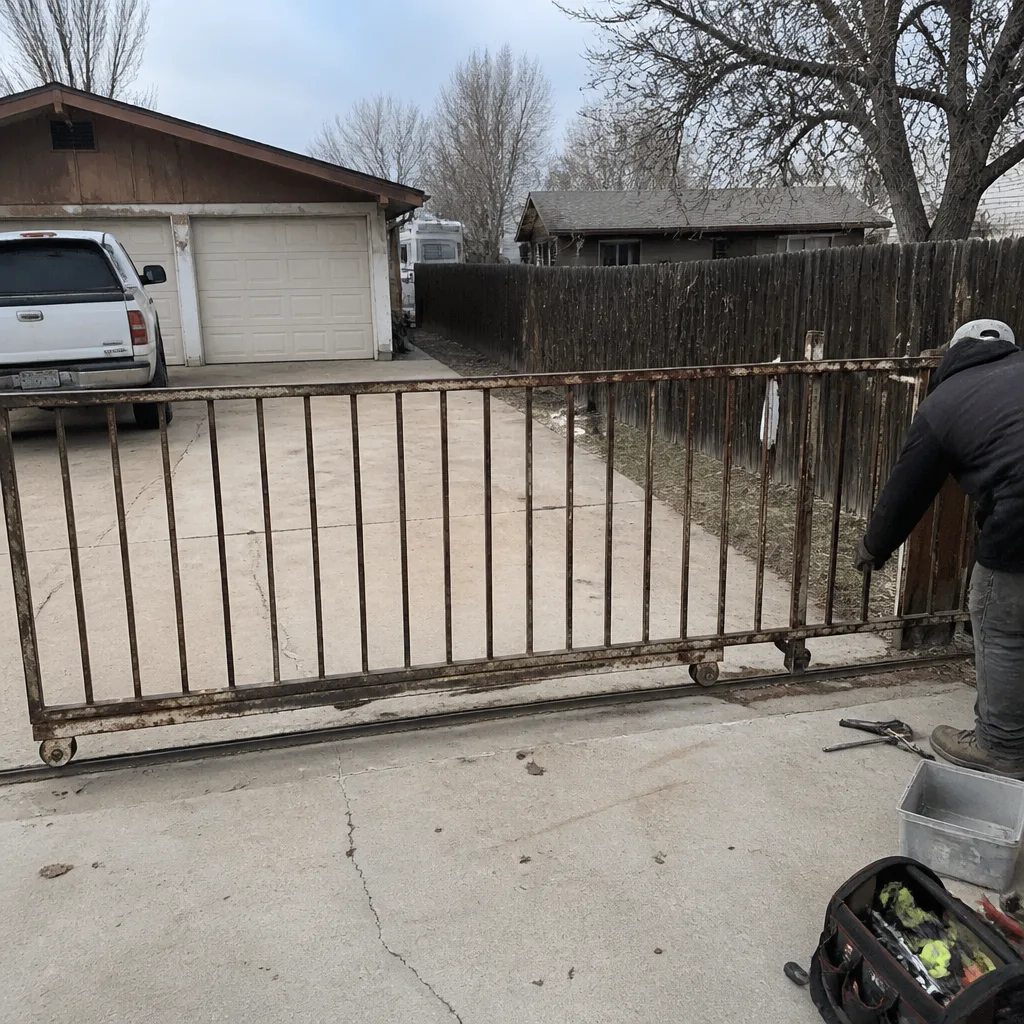
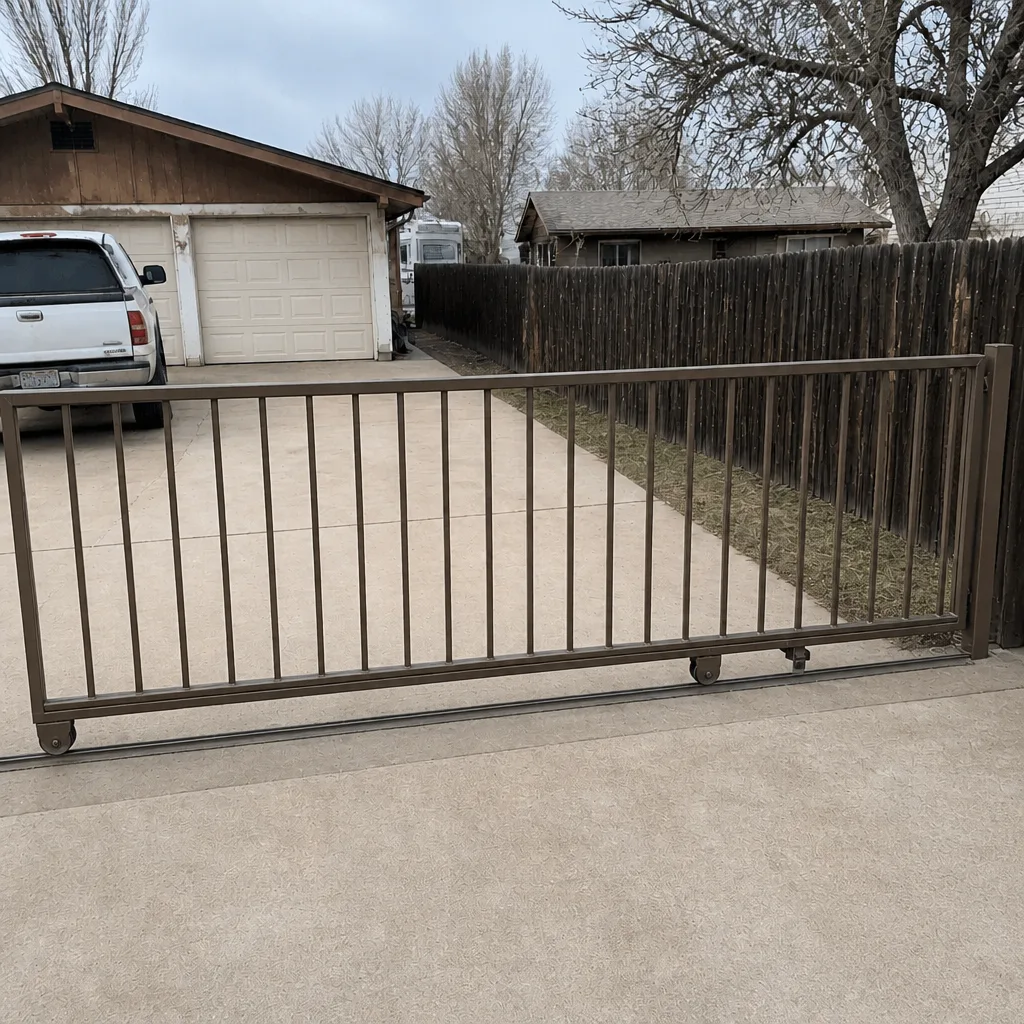
See the difference
BeforeAfter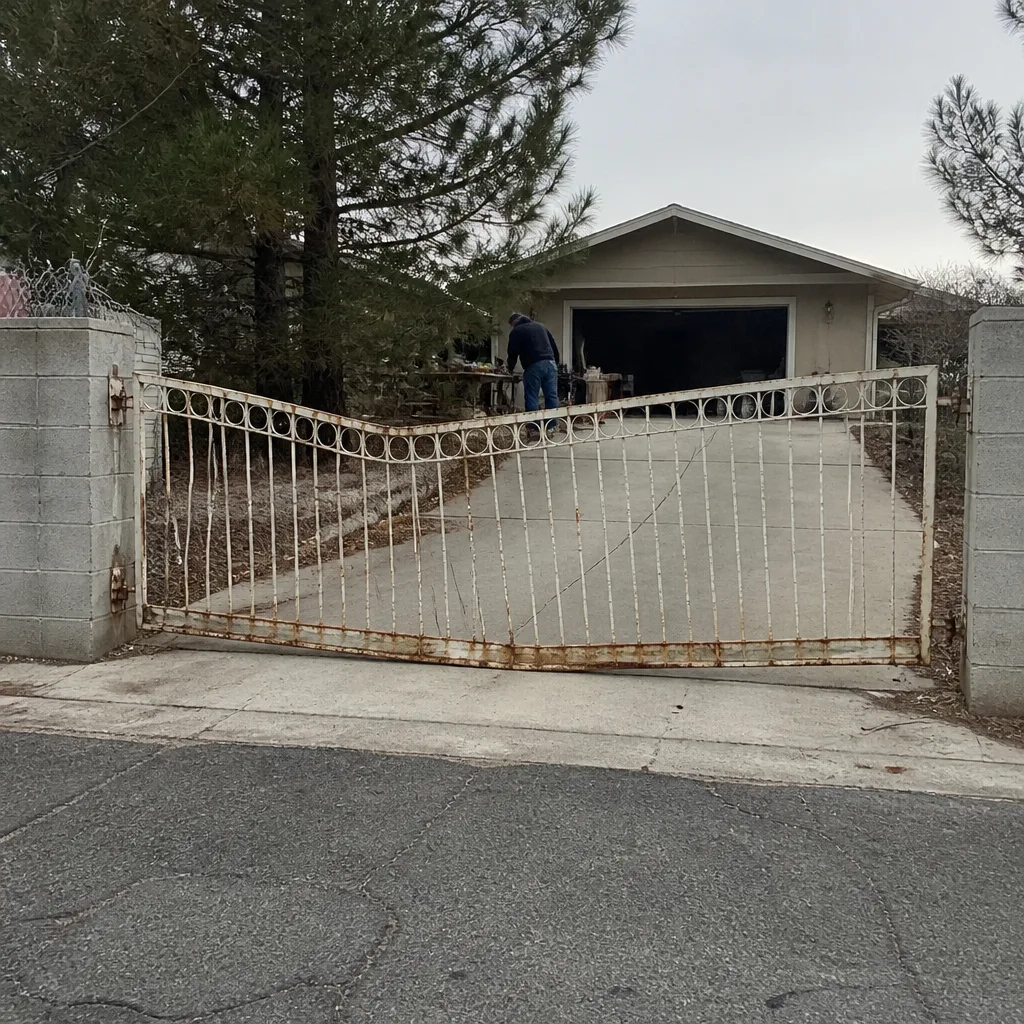 Before
 After
 Before
 After
When to Call a Professional
Call a professional if your gate is vehicle-rated and anything structural is failing. That means a bent or broken hinge on a gate over 150 pounds, any weld crack at a structural joint, a post that moves when you push the gate, or any issue with the opener’s travel or limit switches. We also want to hear from you if a pedestrian gate has dropped more than half an inch at the free end, since that’s usually a hinge or post problem rather than a latch problem. Vance Gate Repair Winchester offers free estimates in Winchester to walk the gate and confirm load class before anyone commits to a repair path. Call (866) 983-9213 and we’ll get a technician out to document what’s actually happening.
Frequently Asked Questions
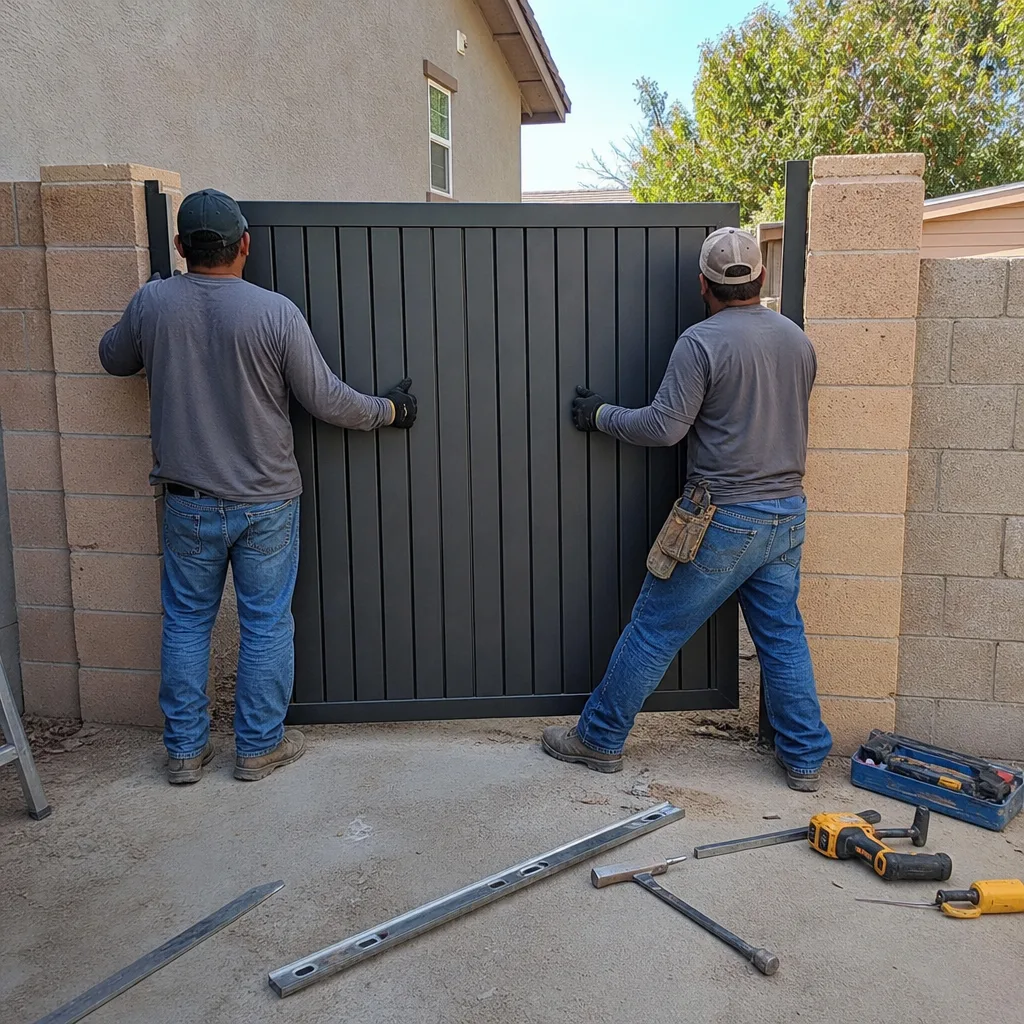
No. Any weld repair on a vehicle-rated gate is professional work. The weld carries the gate’s weight plus the shock load from every open and close cycle, and a homeowner repair that “looks solid” is very often a fraction of the original strength. Call a professional at (866) 983-9213 for a written estimate before you touch the joint.
If the gate is vehicle-rated, weighs over 150 pounds, or has an automatic opener attached, treat it as high-load. When in doubt, measure the leaf and estimate weight by material (roughly 12 to 18 pounds per foot for steel picket gates, 6 to 10 for tubular aluminum). If the hinges don’t have a visible grade stamp, assume light-duty and get it looked at.
Lubricating hinges is the safest and highest-value DIY task you can do. White lithium grease or silicone spray on the hinge pins twice a year extends the life of the hardware and prevents most of the sag we see on Winchester pedestrian gates. Surface rust treatment on non-structural metal is also safe for most homeowners.
Often not, especially on vehicle gates where the failure involves a structural weld or hinge. Most policies exclude damage from negligent or unpermitted structural repairs, and adjusters increasingly ask for documentation of who did what work. A written record and photo documentation, which is what our technicians leave on every visit, is what makes an insurance conversation possible.
Structural weld repairs on Winchester gates typically run in the range of a few hundred dollars depending on the joint and whether the gate has to be removed to weld it properly. You’ll get a written flat price before any work starts, so you’re not guessing at the number after the technician has already been on site.
Yes, and it takes about five minutes. Photograph the before and after, write down the part number and material, keep the original part in a labeled bag, and note the date and reason for the repair. A future technician (or a buyer’s inspector) can verify what was done without having to guess, and a documented repair almost always looks better than an undocumented one.
The Bottom Line
The DIY line on gate work follows load class, not skill level. Low-load decorative hardware on pedestrian gates, hinge lubrication, surface rust treatment, and latch adjustments are yours to handle. Vehicle-rated gates over 150 pounds, structural welding, post anchors, and anything near an automatic opener are professional work, and the liability gap between the two is much larger than most homeowners assume. Document everything you touch, photograph it, and keep the original parts. If you’re not sure what class your gate falls into, get a second opinion before you pick up a tool. Call (866) 983-9213 for a free estimate in Winchester, and we’ll confirm the load class in writing before any work starts.
Written by the team at Vance Gate Repair Winchester.