
Last updated November 18, 2026
 Wrought iron
 Wood & steel frame
 Farm & ranch
 Sliding driveway gates
 LiftMaster operators
Free on-site gate assessment - hinges, posts, and your LiftMaster or Nice gate operator checked before anything is quoted
The assessment is free and the quote is the invoice.
Get your free estimateGate Access Control Maintenance Schedule: What to Do and When
Most access control failures in Winchester aren’t sudden. A technician who pulled the last service record would have seen the fault developing across two or three visits. The problem is there was no last service record. Somebody checked “OK” on a clipboard, the battery read a little low in November but nobody wrote the number down, and by the following summer the gate would not open on the driveway sensor at all. This guide fixes that. It gives you a real maintenance schedule by component, tells you what to record at each checkpoint so drift becomes visible, and explains how Winchester’s high-desert swings change what you’ll actually see on a meter.
Quick Answer
Battery backup should be tested every six months with voltage recorded, loop detectors checked annually for sensitivity, limit switches calibrated every 12 to 18 months, and wiring terminal torque checked annually. Record the actual readings each time, not a checkbox. A schedule that produces a written history catches failing components before they strand you at the driveway.
Styles & brands we work with
- Wrought iron
- Wood & steel frame
- Farm & ranch
- Sliding driveway gates
- LiftMaster operators
Table of Contents
- The full component-by-component schedule
- What to record at every visit
- How Winchester’s desert swings affect your board and battery
- Maintenance visit vs. diagnostic visit
- A simple homeowner log you can keep yourself
- Brand differences worth knowing
- Common mistakes to avoid
- When to call a professional
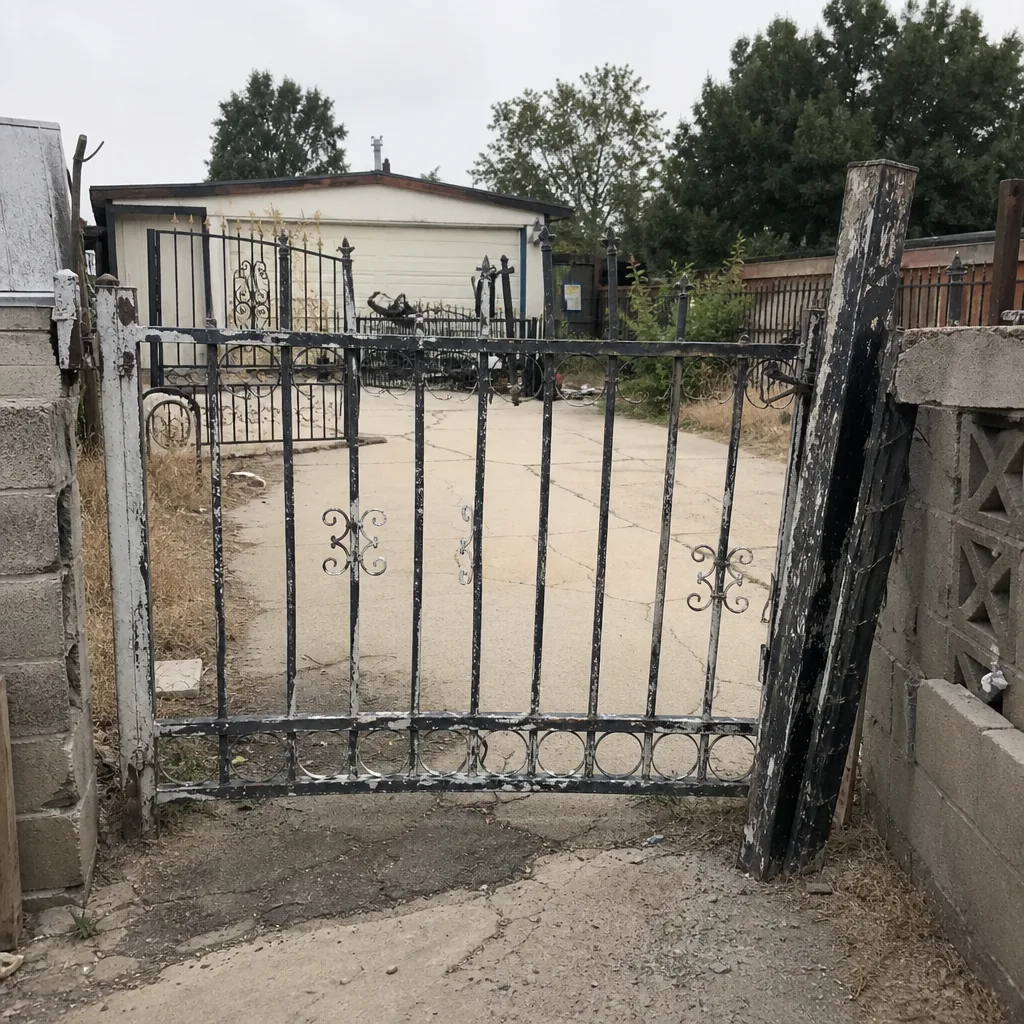 Before
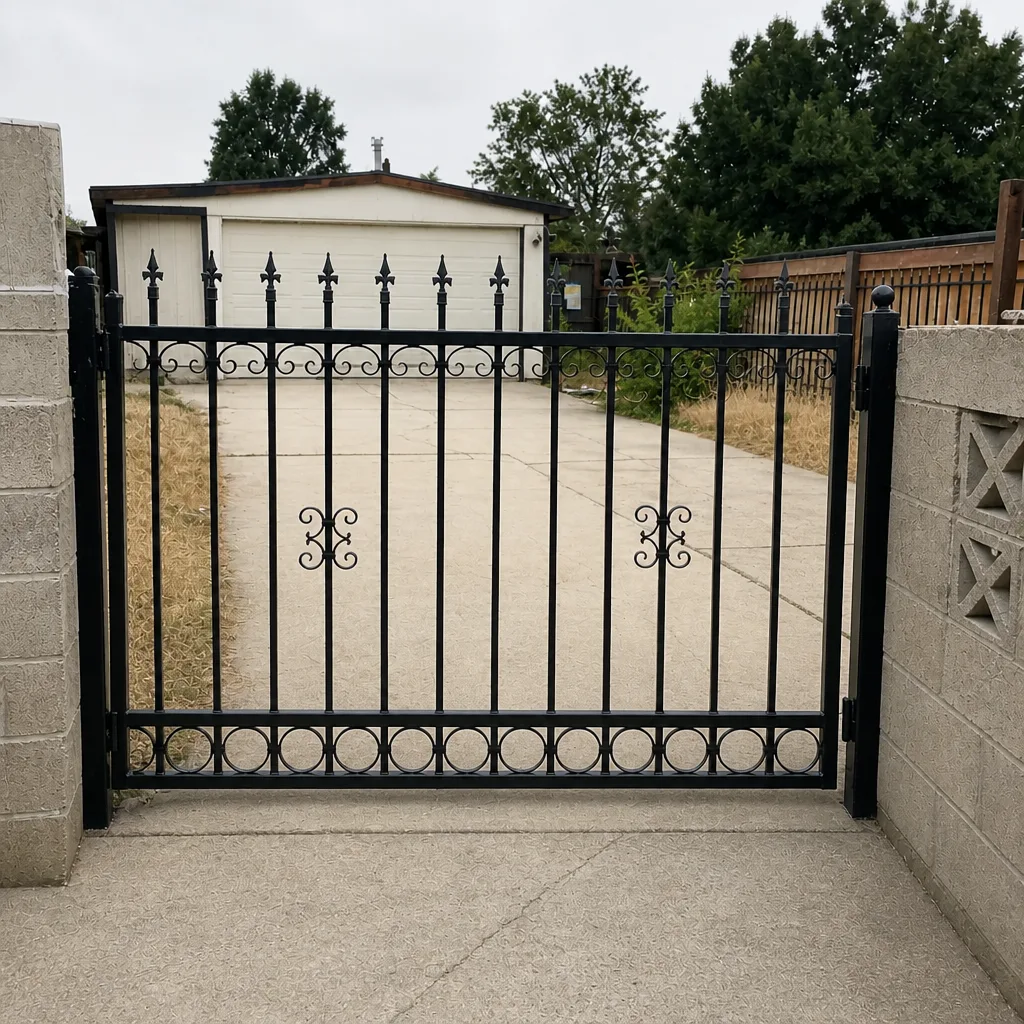 After
The full component-by-component schedule
Not every part of an access control system wears at the same rate, so a single annual “tune-up” is the wrong structure. Here is the interval we use on residential and light commercial gates in Winchester, broken down by component. If you own a swing gate on a gate motor and opener system, this is the schedule your technician should be running against.
Battery backup: every six months. Backup batteries fail slowly and then all at once. Test under load and write down the voltage, not just whether the gate opened. A 12V battery sitting at 12.6V is healthy; one at 11.8V under load is on its way out.
Loop detector sensitivity: annually. Loop detectors trigger the gate when a vehicle crosses the embedded wire. Sensitivity drifts with ground movement and seasonal moisture. Test with an actual car, not a hand wave.
Limit switch calibration: every 12 to 18 months. Limit switches tell the operator where the gate has reached full open and full closed. When they drift, the gate over-travels, slams, or reverses at the wrong point. Verify the degree reading and record it.
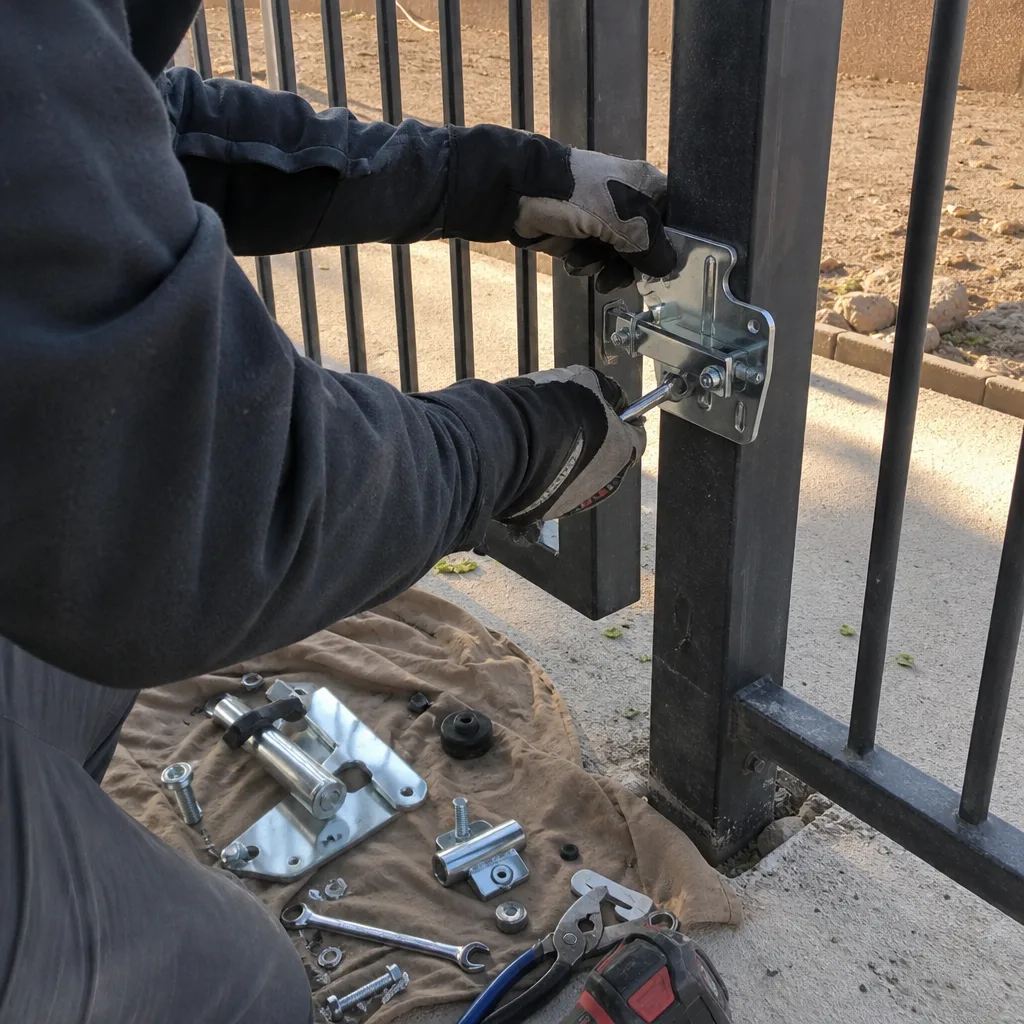
Wiring terminal torque check: annually. Loose terminals on the control board cause intermittent faults that are miserable to diagnose later. Check torque at the board and at the operator.
Safety device test: monthly. The photo-eye (the infrared beam that stops the gate if something crosses the path) should be tested monthly by the homeowner. Break the beam by hand and confirm the gate reverses or stops.
Hinge and track lubrication: every six months. Not electrical, but a binding hinge puts load on the motor and shortens operator life.
What to record at every visit
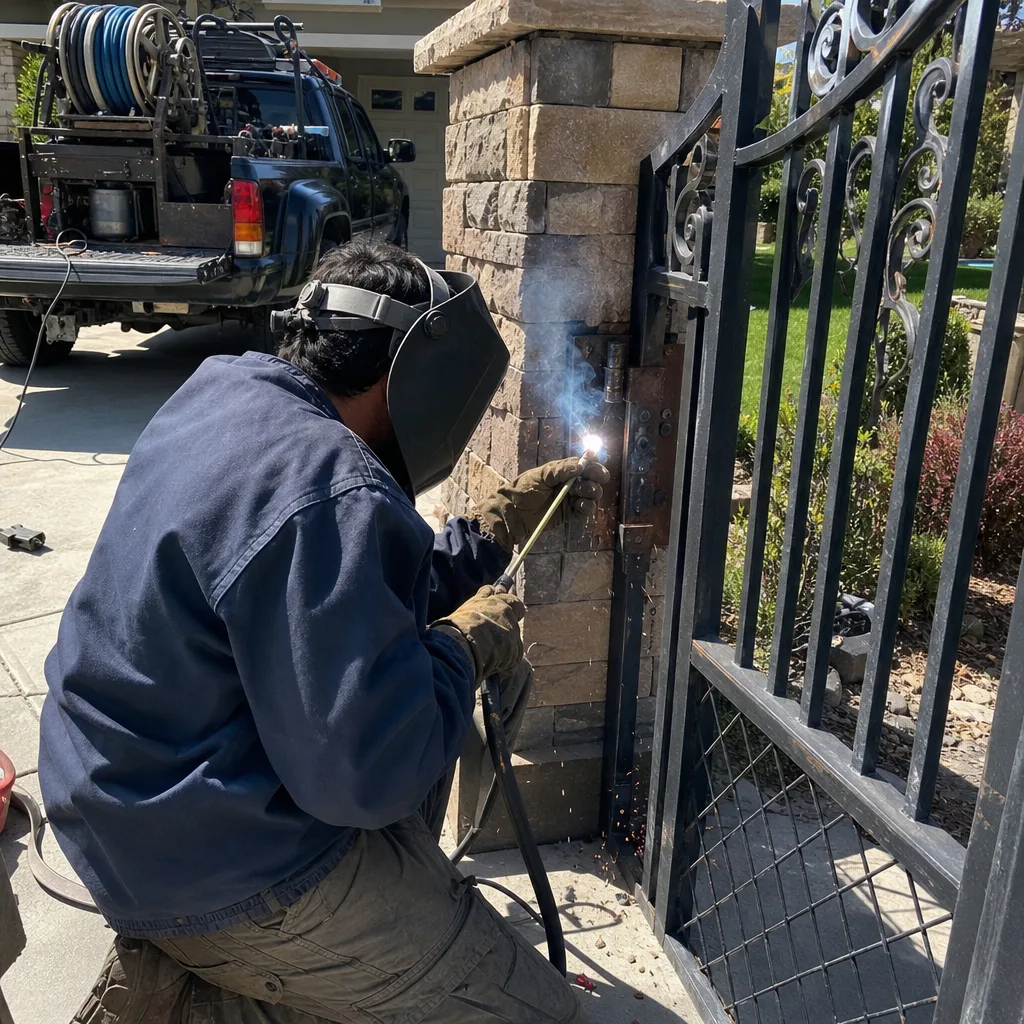
A maintenance schedule without readings is just a clock being reset. The value of the schedule comes from the numbers you write down, because a technician comparing two visits can see a downward trend before it becomes a breakdown. Here is what should appear on every written record from a good maintenance visit.
- Battery voltage under load – the actual number, to one decimal place, not “good.”
- Cycle count if the operator reports it. Most modern operators track open/close cycles; recording it lets you project when the operator reaches its rated life.
- Limit switch position in degrees, so a 12-degree drift is visible across two records.
- Safety device response time – how quickly the gate reverses after the beam breaks. A slow response is a warning.
- Terminal torque readings at the board, recorded in inch-pounds if the tech carries a torque driver.
- Photographs of the control board, the limit switch position, the safety devices, and anything adjusted or replaced.
- Part numbers of anything installed, so a future visit doesn’t reorder the wrong part.
Under the Haven Standard, every Vance visit leaves a documented photo record of what was found, what was set, and what was installed. That record is what turns a maintenance schedule from a recurring bill into a real history of the gate.
How Winchester’s desert swings affect your board and battery
Our climate does things to gate electronics that coastal guides don’t mention. Winchester runs hot in summer and cold in winter, and the day-to-night swing in spring and fall can exceed 30 degrees. That matters for two components in particular.
Batteries. A sealed lead-acid battery loses capacity in heat – a battery rated for four years at 77 degrees may last less than two years at sustained 95-degree temperatures. Winchester’s summers push battery compartments toward that range. Meanwhile cold snaps drop voltage further; a battery that reads 12.4V in July may read 11.6V under load on a January morning and fail to open the gate. This is why we test and record voltage in both seasons, not just once a year.
Control boards. Temperature cycling causes solder joints and terminals to expand and contract, which is exactly how intermittent faults begin. That terminal torque check is more important in Winchester than in a mild climate. Similarly, plastic housings and photo-eye brackets crack faster here.
When we service a Linear or Viking operator in Winchester, we pull the last log first. If the previous readings show a voltage drop from 12.6 to 12.1 across two visits six months apart, we know the battery is being cooked by the heat and failing early, and the next one is due in about a year – not four.
Maintenance visit vs. diagnostic visit
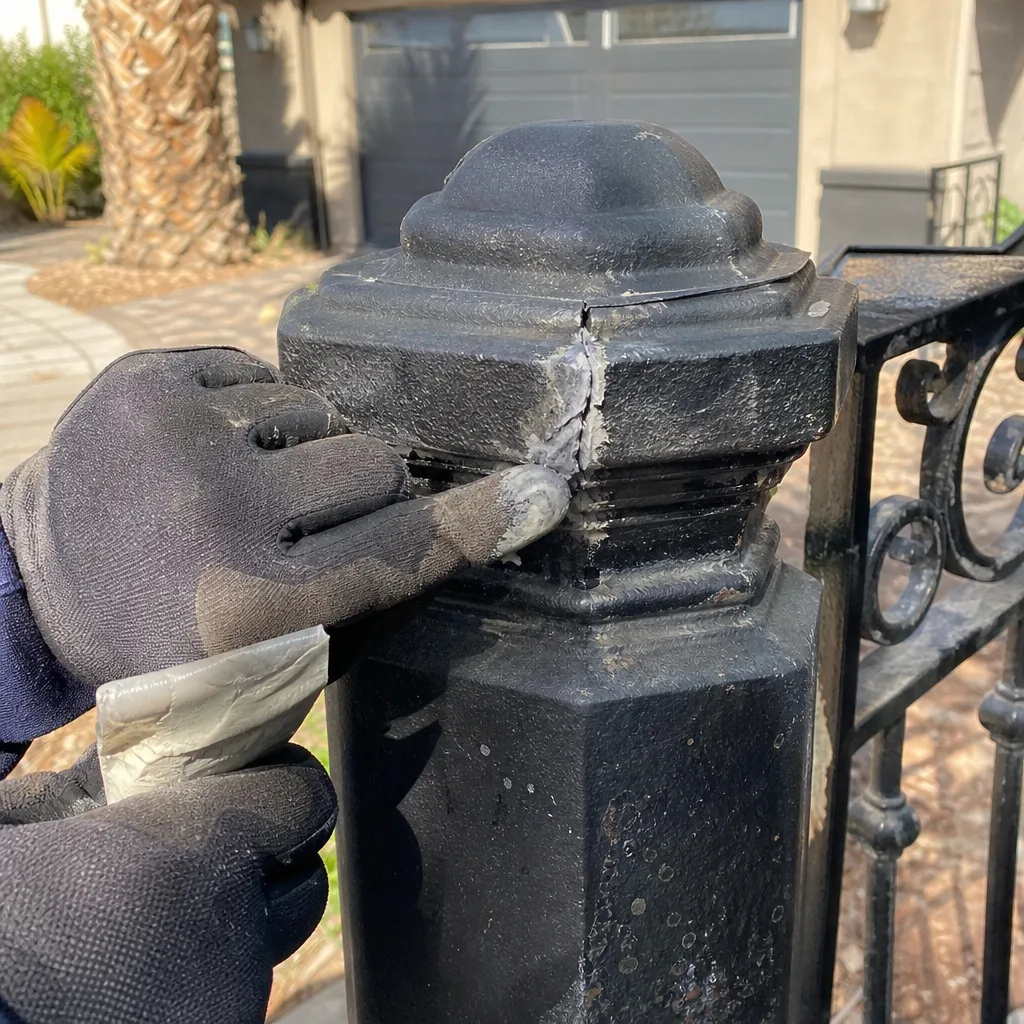
Homeowners lose real money by treating these as the same appointment, and here’s why. A maintenance visit is scheduled, follows a fixed checklist by interval, is priced as an inspection and adjustment, and produces a record. A diagnostic visit is reactive: something has already gone wrong, the technician is on the clock to isolate the failure, and pricing is discovery work.
If you call in a maintenance visit but describe a symptom (“it beeps sometimes”), a careful technician will convert it to a diagnostic visit up front. That’s not upselling – it’s scope. Diagnostics take longer because the technician is hunting for the root cause. A maintenance visit assumes the system is working and checks what usually drifts.
Folding the diagnostic work into maintenance hours is how technicians end up doing rushed troubleshooting on the clock and either missing the root cause or overextending the visit to cover the gap. Vance prices these distinctly, in writing, before any work starts. Under the flat-price structure, the maintenance visit and the diagnostic visit each carry their own written scope; you see both before you agree to either. If a maintenance visit uncovers a fault, the technician documents it, photographs it, and quotes a diagnostic separately.
One more distinction worth naming: emergency call-outs are neither. An emergency visit is a safety or security event; our team answers the phone 24 hours a day, and the emergency scope gets its own written price.
A simple homeowner log you can keep yourself
Between professional visits, you can build a log that makes the next visit far more useful. This is not a substitute for a trained inspection – it’s a record of what the gate is doing day to day. Keep a single sheet of paper taped inside the cabinet door or a note on your phone.
- Write the date and month any time the gate fails to open, stops mid-travel, or reverses unexpectedly.
- Note the weather and time of day – many faults are temperature-sensitive.
- Test the photo-eye monthly. Break the beam with your hand and confirm the gate reverses. Write “PASS” or the date of failure.
- Note any change in sound or speed. A groan on the return swing, a slower first foot of travel, a clunk near the closed limit.
- Note any change on the keypad or entry system behavior – codes taking a second attempt, delays between keypress and gate movement.
- Note anything adjusted or reset – including a power cycle or a manual release you used.
When a technician opens the cabinet and sees your log reading “gate reversed twice in August, once at 6am, once at 4pm in 100-degree heat,” they can check board temperature and battery load in a targeted way. Without that, they’re guessing.
Brand differences worth knowing
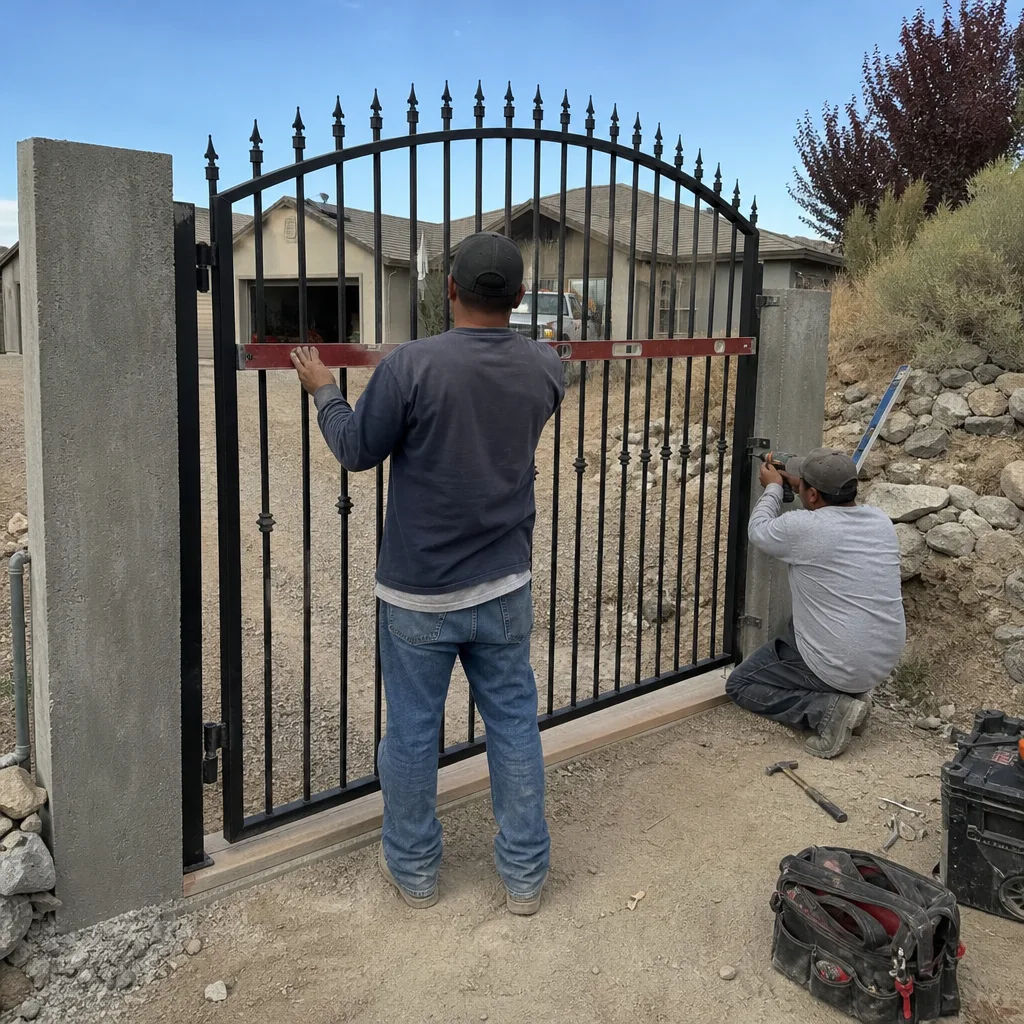
Different automation brands report different things, and knowing the difference tells you what to ask for at each visit. A BFT operator, for instance, is usually well-documented on cycle counts and offers a diagnostic display through its onboard controller – so ask the technician for the cycle count on the record. A Linear swing or slide operator often reports the limit position clearly on its control board, so a degrees entry is straightforward. Viking operators similarly benefit from recording both the limit position and the safety reversal time, which some boards display and others require you to time manually.
Ghost Controls gate operators used on many rural and acreage properties in Winchester don’t always expose detailed diagnostics through the control panel – on these, the record relies more heavily on the technician’s photographs and manual voltage readings. That’s the point: the log structure has to match the brand, not the other way round. A technician who knows all nine major brands can pick the right diagnostic approach without forcing your operator into the wrong bracket.
If you’re buying or installing new and want this maintenance track built in from day one, that conversation starts at gate installation in Winchester.
Common Mistakes to Avoid
- Skipping the written record. Two visits with no numbers between them are two visits, not a maintenance schedule. You’ve paid twice and learned nothing.
- Testing the battery with a no-load meter. A battery can read 12.6V no-load and sag to 10.8V under the operator’s draw. Always measure under load.
- Trusting a hand-wave on the photo-eye. A hand across the beam is fine for a quick monthly check, but a professional test should confirm the actual reversal response time. In Winchester heat, we’ve seen photo-eye brackets crack and drift the beam 2 inches without a single visible symptom.
- Calling a diagnostic a maintenance visit. If the gate is already failing, say so when you call. Otherwise the technician arrives expecting a check and has to convert mid-visit, which costs you more.
- Adjusting the limit switch under pressure. Limit switches are set for a reason. A homeowner who “fixes” a slam by moving the limit can move it past the mechanical stop and cause damage on the next cycle. If the gate is slamming, stop using it and call.
- Ignoring a slow reversal. A safety device that reverses slowly is still weak. That’s a failure waiting to happen.
- Using a different technician for every visit. Without a shared record, each new technician starts from zero. That’s exactly why a written history matters more than any single technician’s memory.
When to Call a Professional
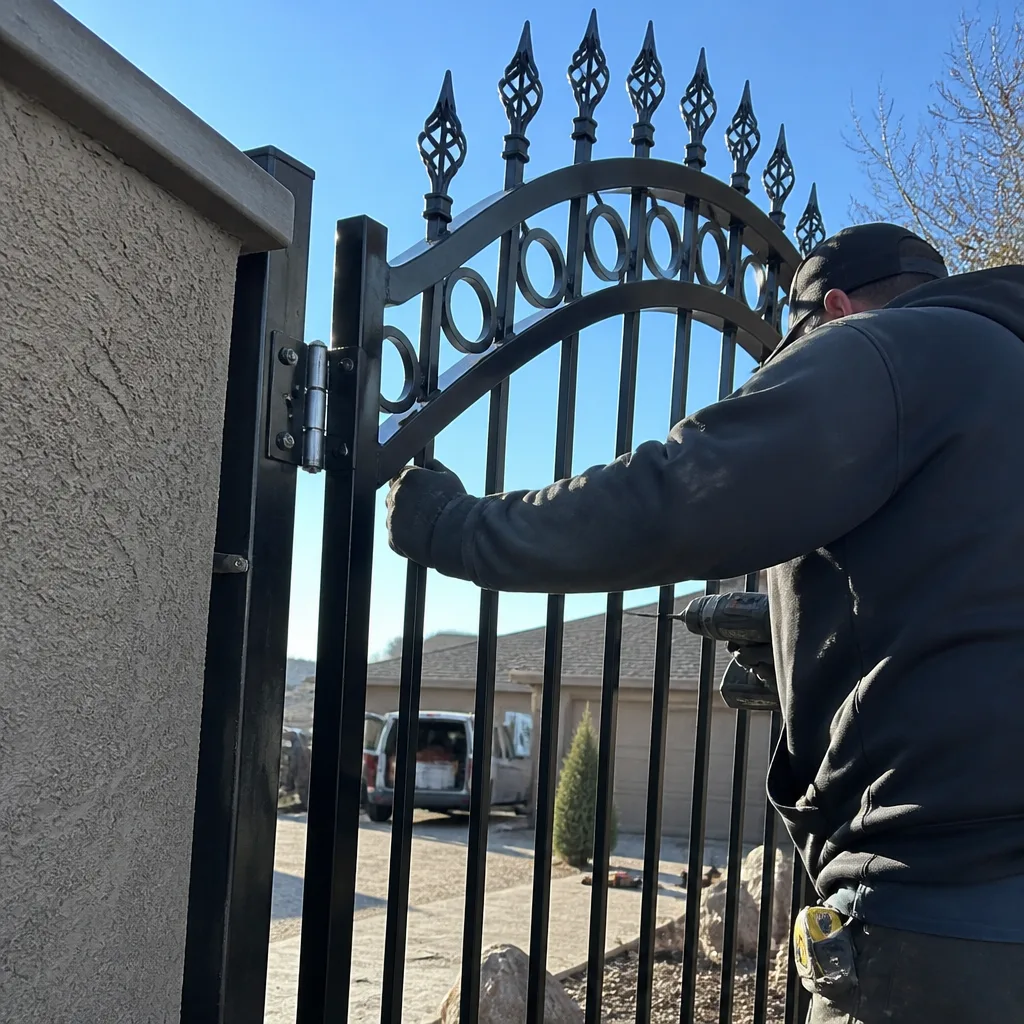
Some tasks belong on your todo list. Others belong on a service call. Call a professional when: the gate stops mid-travel or reverses unpredictably (safety device or limit fault), the operator emits an unfamiliar sound or smell, the battery reads below 12.4V under load, a photo-eye or safety edge fails its monthly reversal test, a wiring terminal feels loose or shows discoloration, or the gate holds weight and stops partway. For a gate with a serious weight or spring load, don’t attempt adjustment yourself. The gate is a machine holding real mechanical force, and a trained technician should be the one to put hands on it.
When a repair is needed, Vance Gate Repair Winchester services the nine major operator brands – so we work on whatever motor is already on your property rather than steering you toward a replacement you don’t need. Repairs are covered by the 365-Day Done Right Promise, and every job leaves a written price before work starts and a photo record when the technician leaves. Call (866) 983-9213 for a free estimate.
See the difference
BeforeAfter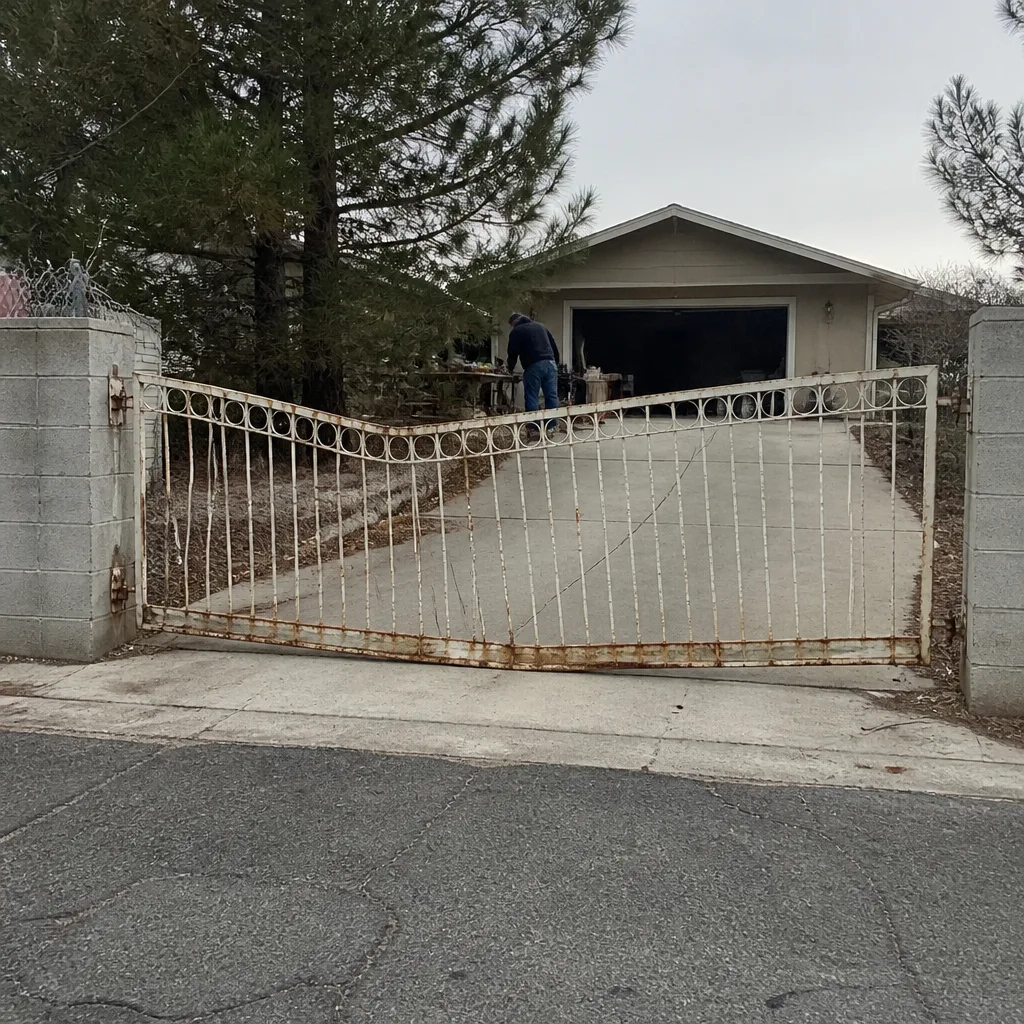 Before
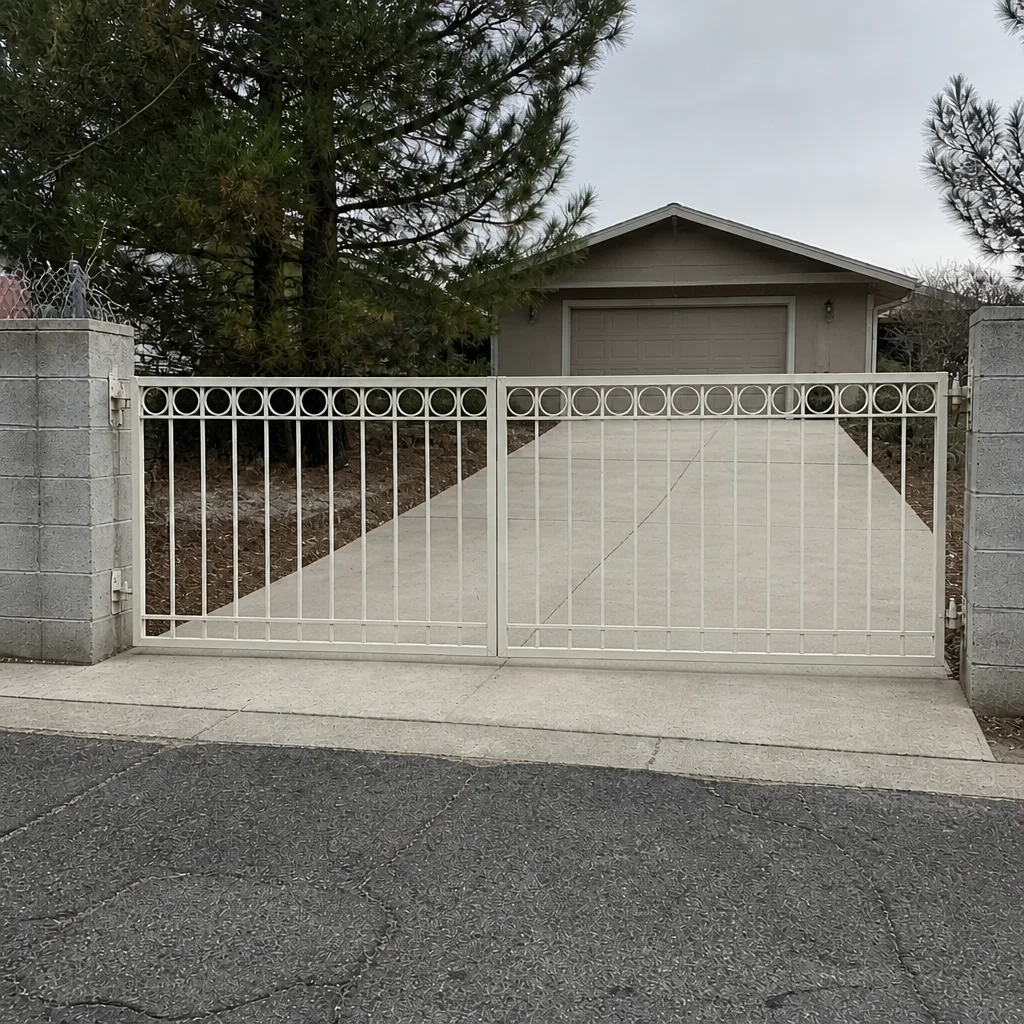 After
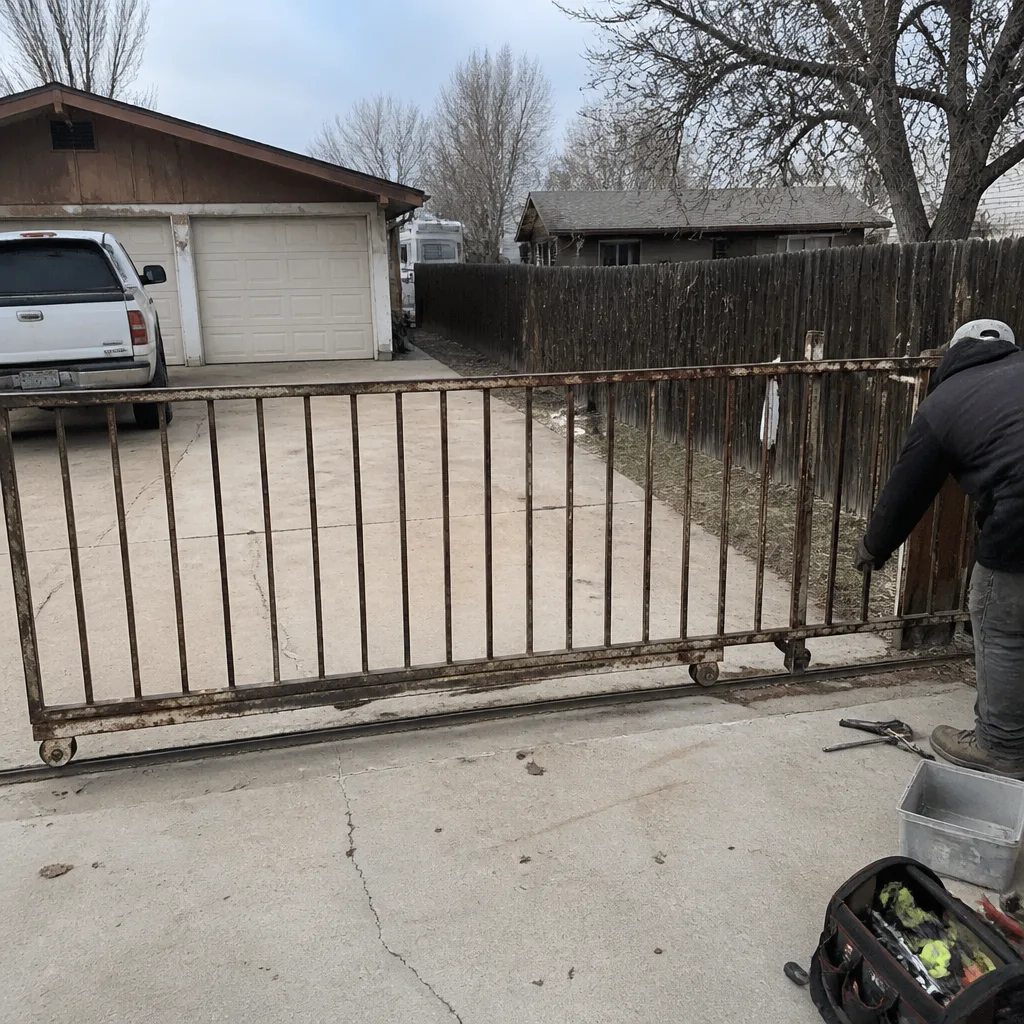 Before
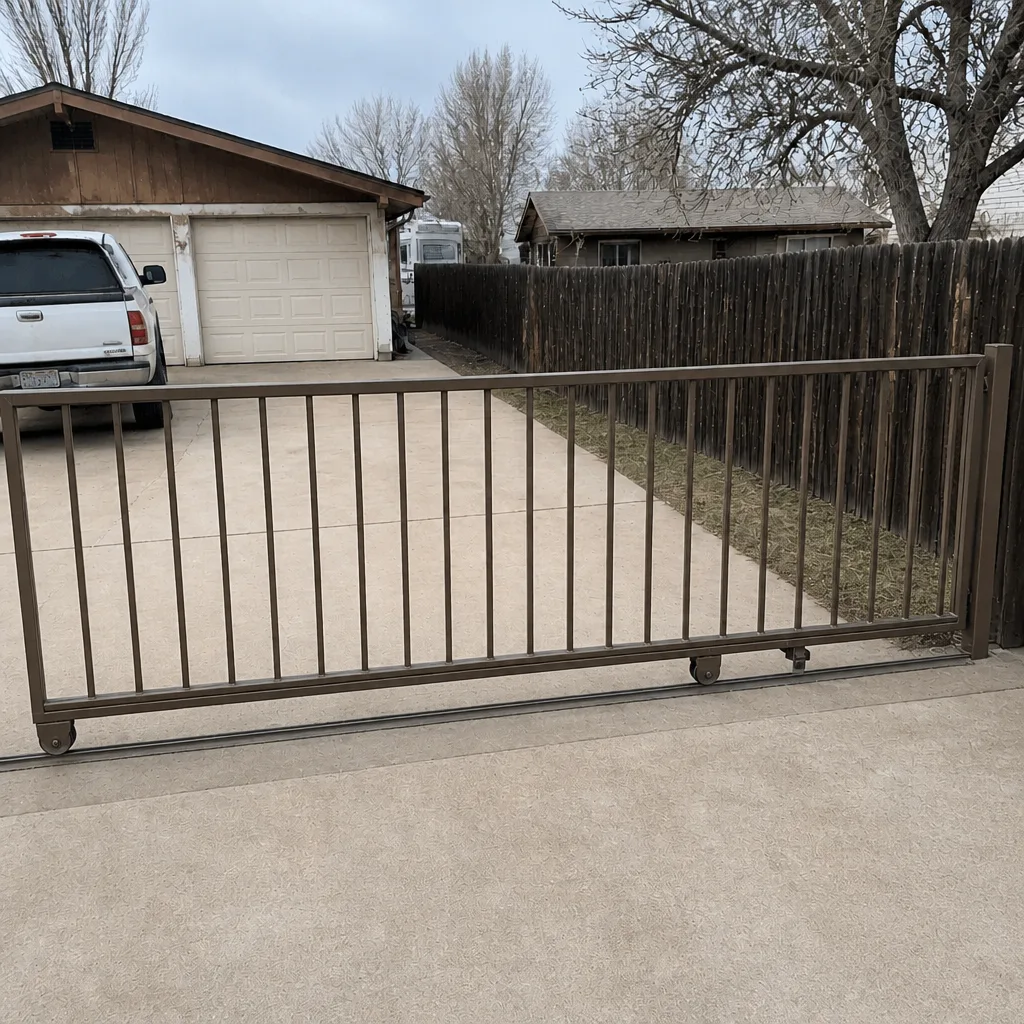 After
Frequently Asked Questions
Test the battery backup every six months, check loop detector sensitivity annually, calibrate limit switches every 12 to 18 months, and verify wiring terminal torque once a year. Test safety devices monthly yourself. Winchester’s temperature swings make the twice-a-year battery test especially important.
Heat. A sealed lead-acid battery loses capacity faster when its compartment runs above 85 degrees, and Winchester summers get there. That accelerates aging, and winter cold snaps then drop voltage further on the same weakened battery. Recording voltage in both summer and winter catches the decline early.
Maintenance pricing depends on gate type and what gets adjusted, so a written price is quoted before work starts. The visit covers load-tested battery voltage, safety device response timing, limit switch calibration, terminal torque checks, and a written photo record of every adjustment. Call Vance Gate Repair Winchester at (866) 983-9213 for an exact quote – estimates are free.
No. If the gate is already failing, the right appointment is a diagnostic visit – the technician is isolating a fault, not checking a healthy system. Ask for a diagnostic when you call. A maintenance visit that uncovers a fault gets documented and quoted separately.
Actual readings, not “OK.” Battery voltage under load, limit switch position in degrees, safety device response time, terminal torque readings, photographs of what was found and adjusted, and part numbers for anything installed. That record is what makes the next visit smarter.
Yes, safely – test the photo-eye monthly, log any change in sound or speed, note temperature and time of any failure. Skip anything that requires opening the cabinet or adjusting a limit or a spring. The gate holds real mechanical force, and that work belongs to a trained technician.
The Bottom Line
A maintenance schedule only earns its name if it produces a history. Every interval is a documentation checkpoint – voltage, cycle count, limit position, reversal time, photographs – not a checkbox. In Winchester, the heat swings make twice-a-year battery readings and annual torque checks more important than the generic guides admit. Treat maintenance and diagnostics as separate appointments, keep a simple log between visits, and insist on written records each time. Do that, and the next technician opens the cabinet with five years of evidence instead of a blank slate.
Vance Gate Repair Winchester repairs, installs, services motors, and handles gate repair in Winchester across all nine major automation brands. Call (866) 983-9213 for a free estimate, and see our Vance Gate Repair Winchester home page for the full service list.
Written by the team at Vance Gate Repair Winchester.