
Last updated November 18, 2026
 Wrought iron
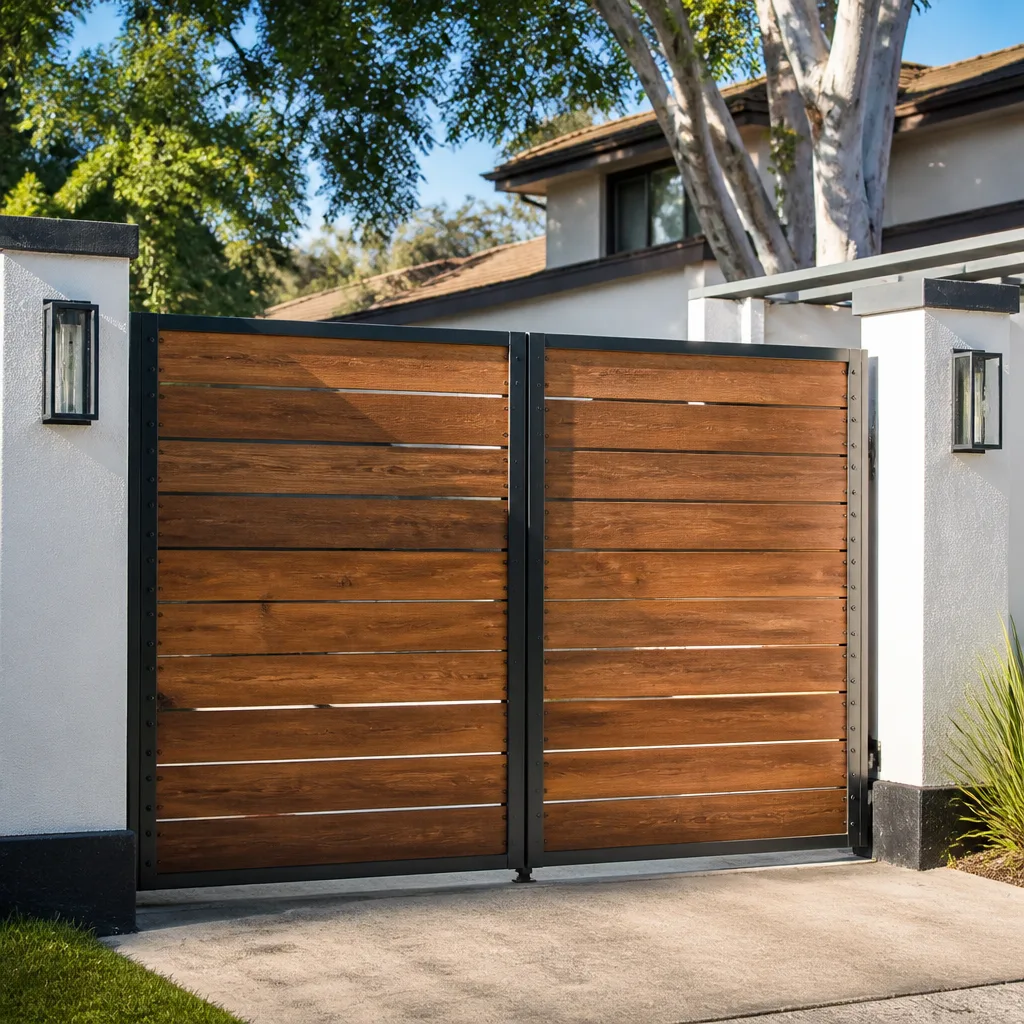 Wood & steel frame
 Farm & ranch
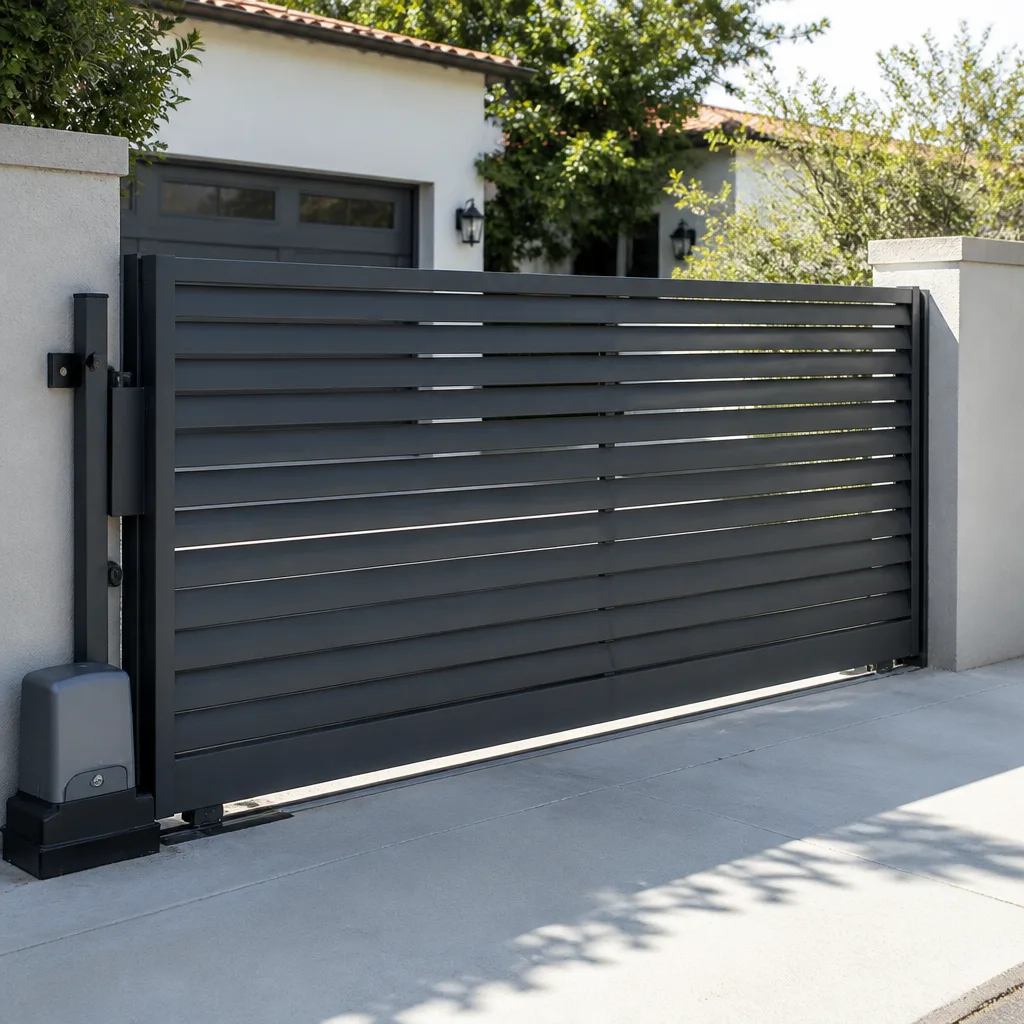 Sliding driveway gates
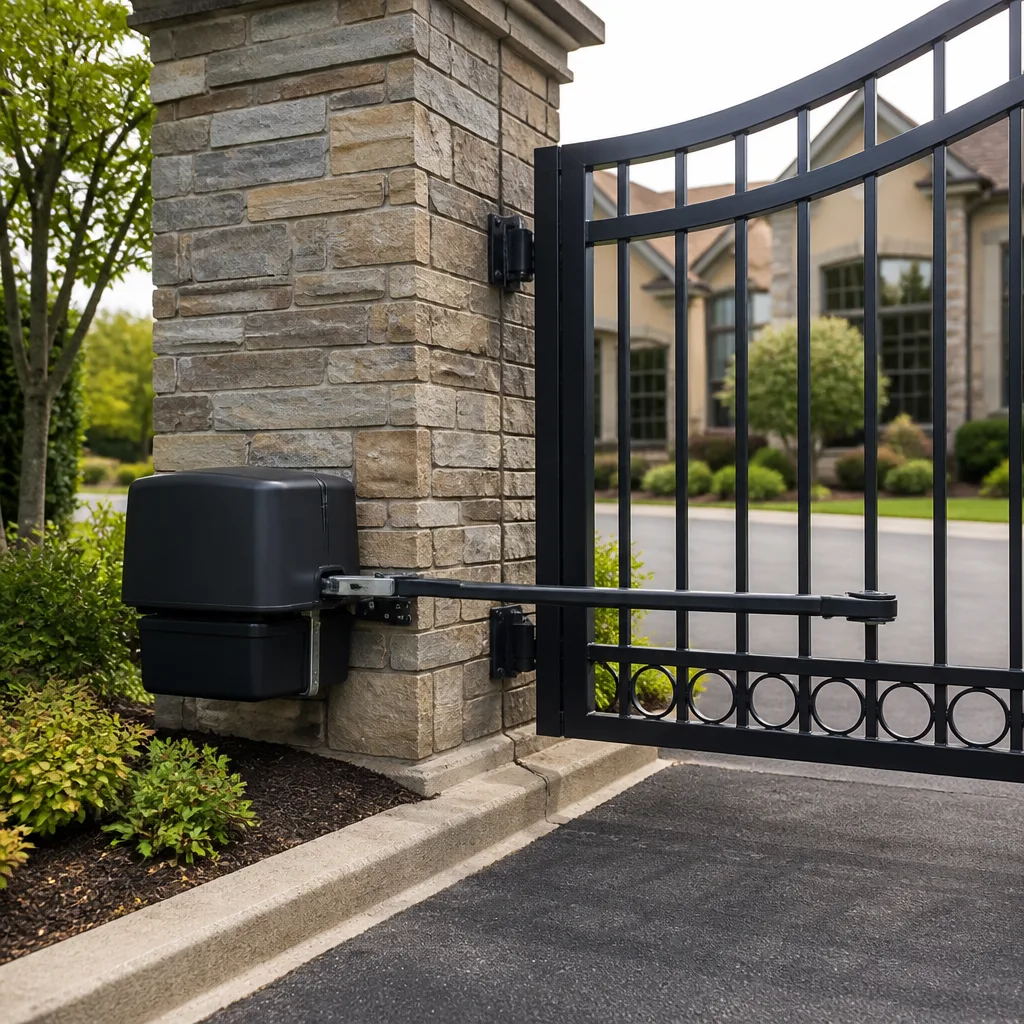 LiftMaster operators
Free on-site gate assessment - hinges, posts, and your LiftMaster or Nice gate operator checked before anything is quoted
The assessment is free and the quote is the invoice.
Get your free estimateGate Installation Maintenance Schedule: What to Do and When
New gate installations need a 90-day check that most installers never mention. Not because something went wrong, but because every gate shifts as posts cure and soil compacts, and the factory settings on the motor were never calibrated for your specific driveway. The first year of a gate’s life is fundamentally different from every year that follows: components are settling, settings are drifting away from their installed baseline, and the schedule should reflect that. This guide lays out a year-one maintenance structure for Winchester homeowners, with 30-day, 90-day and 12-month milestones, plus the annual rhythm that takes over afterward.
Quick Answer
A newly installed driveway gate should be inspected at 30 days (fastener torque and post movement), again at 90 days (limit-switch position, post plumb, chain or rack wear, obstruction-force reading), and at 12 months (full annual service, including buried hardware inspection after the first monsoon and freeze cycle). After year one, the gate moves to an annual maintenance schedule. The 90-day check is the one that matters most and the one most installers skip.
Styles & brands we work with
- Wrought iron
- Wood & steel frame
- Farm & ranch
- Sliding driveway gates
- LiftMaster operators
Table of Contents
- Why the First Year Is Different From Every Year After
- The 30-Day Check: What Settling Looks Like
- The 90-Day Check: The Measurements That Matter
- The 12-Month Milestone: The Full First Annual Service
- The Winchester Post-Winter Inspection: Frost Heave and Alkaline Soil
- Maintaining the Installation Documentation Package
- Who’s Responsible During the Warranty Period
- The Ongoing Annual Schedule After Year One
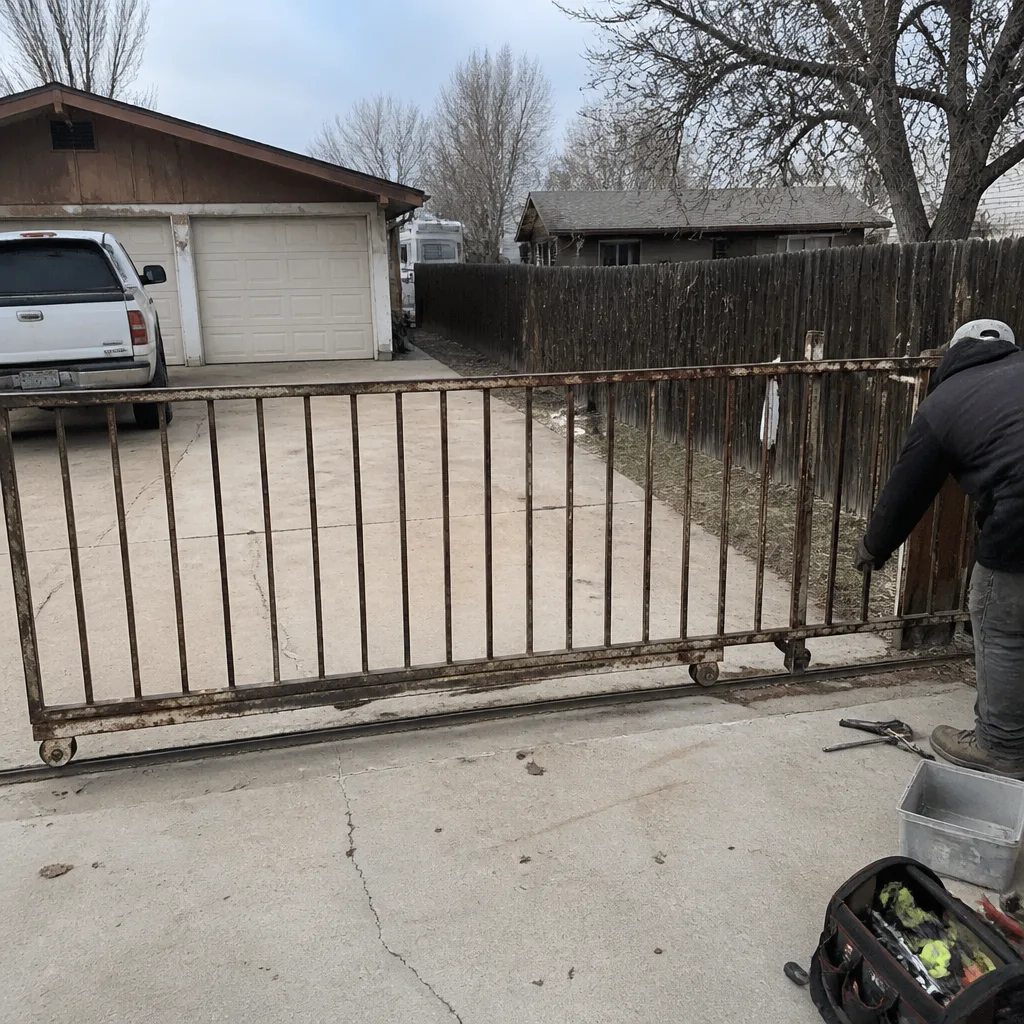
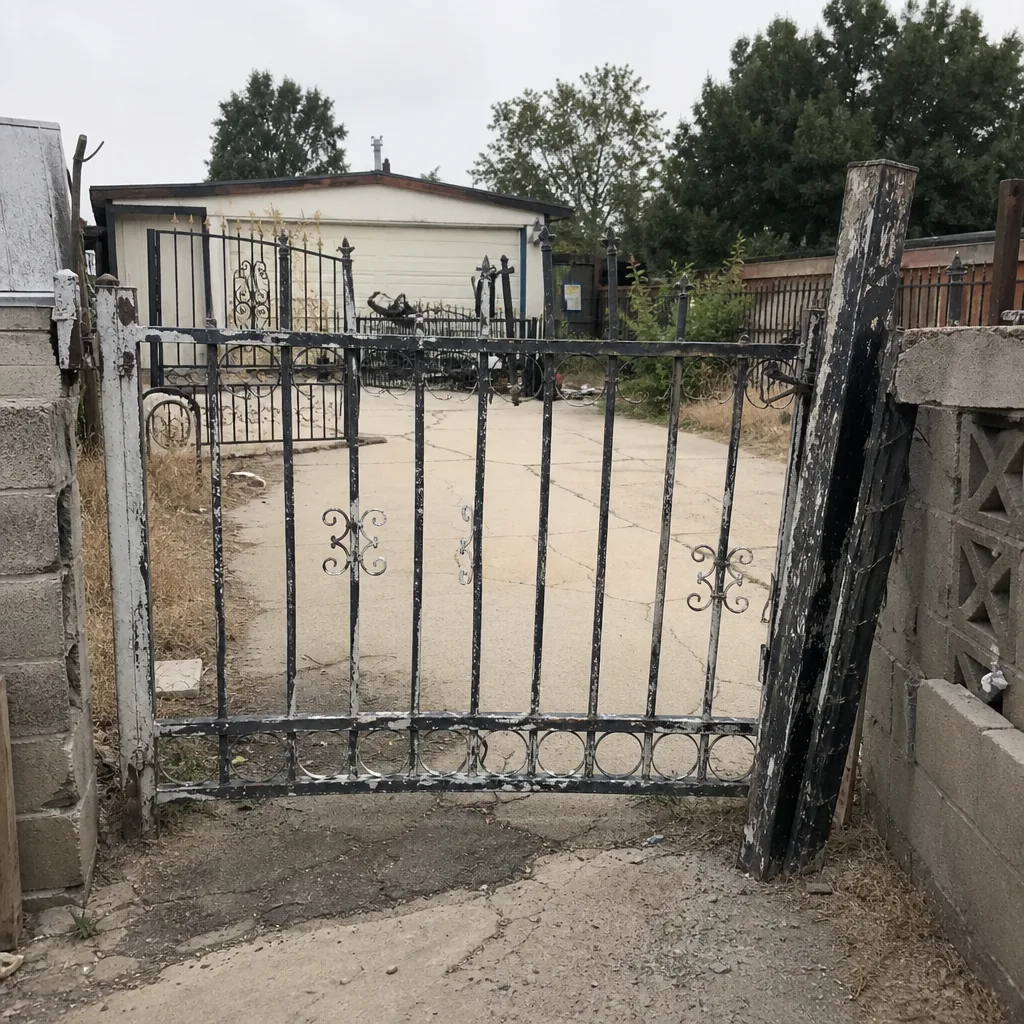 Before
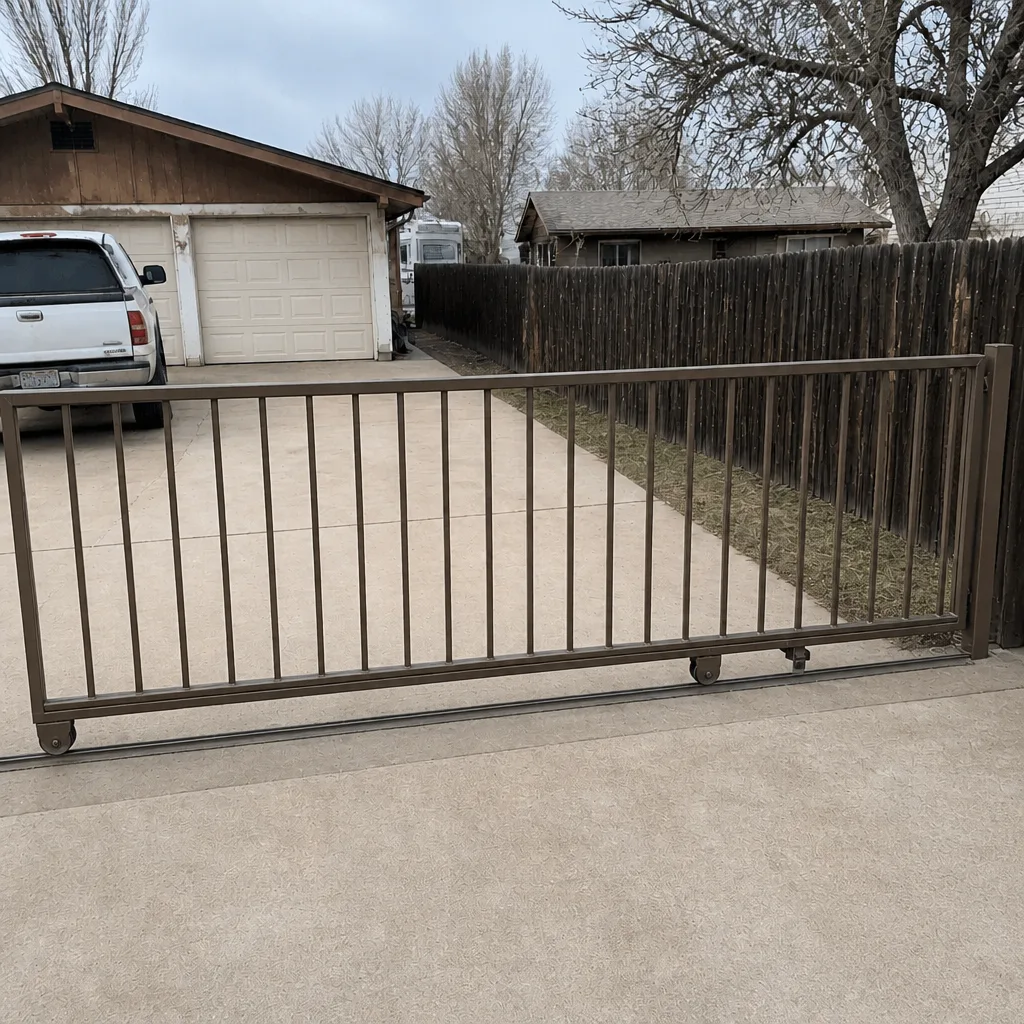
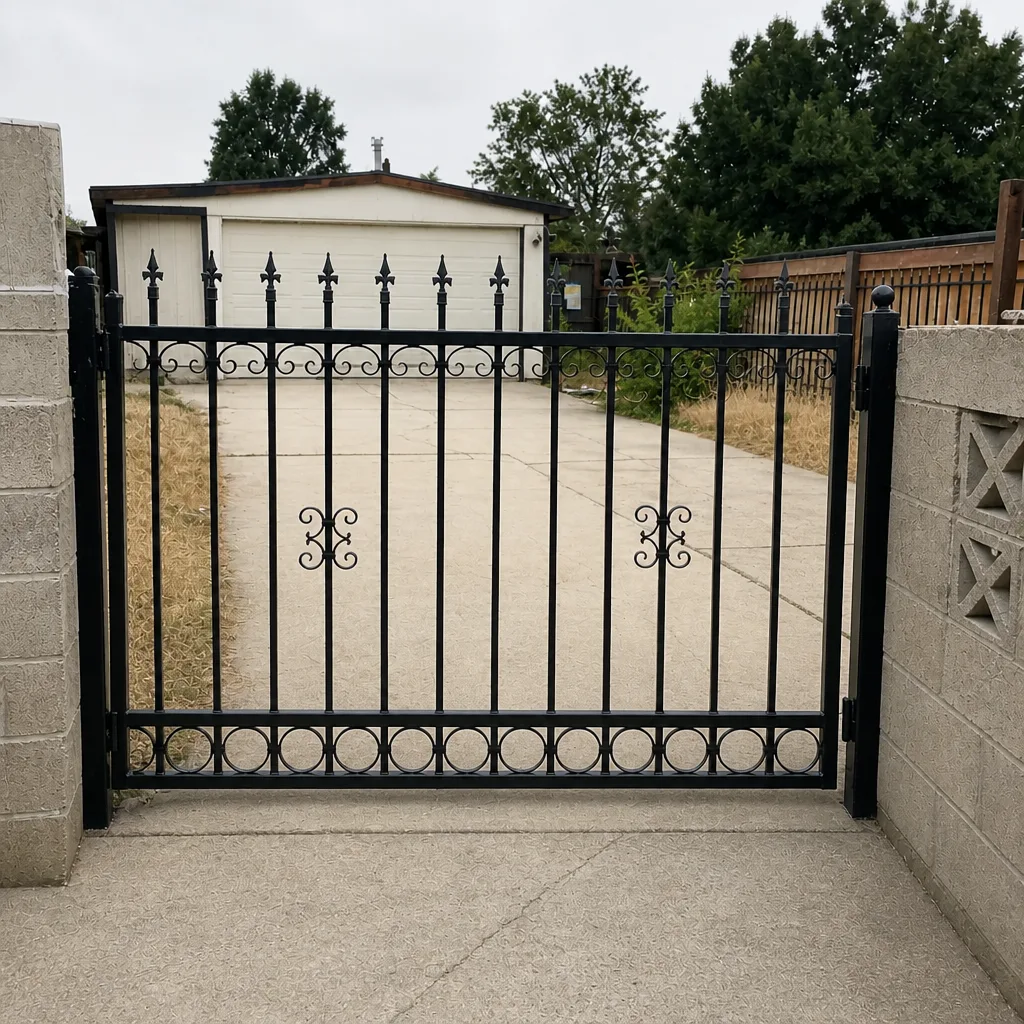 After
Why the First Year Is Different From Every Year After
A gate that’s been standing for five years is, mechanically speaking, a stable object. A gate installed three months ago is not. The concrete footings under the posts are still curing (full cure takes roughly 28 days and final dimension stability longer), the soil around them is still compacting under the gate’s weight and the swing or slide cycle, and every factory setting on the operator was dialed in on a bench or in a shop, not on your driveway.
What this means in practice is that problems in year one rarely come from wear. They come from drift. The limit switch (the sensor that tells the operator the gate has reached fully open or fully closed) was set on installation day against a post that sat one way. By day 90, that post may have tilted a fraction of a degree, the gate leaf may be hanging slightly differently, and the operator is now stalling into the end of travel or reversing too early. None of that is a failed part. It’s a calibrated baseline that has moved.
Writers of standard maintenance advice treat month one the same as month fourteen. They shouldn’t. The year-one schedule exists to catch drift while it’s still cheap to correct, and it’s the difference between a gate that runs smoothly for a decade and one that needs a repair call in its second year. The same logic applies to the broader gate installation in Winchester process: the install isn’t finished when the technician drives away. It’s finished when the gate has proven it holds its calibration through a full seasonal cycle.
The 30-Day Check: What Settling Looks Like
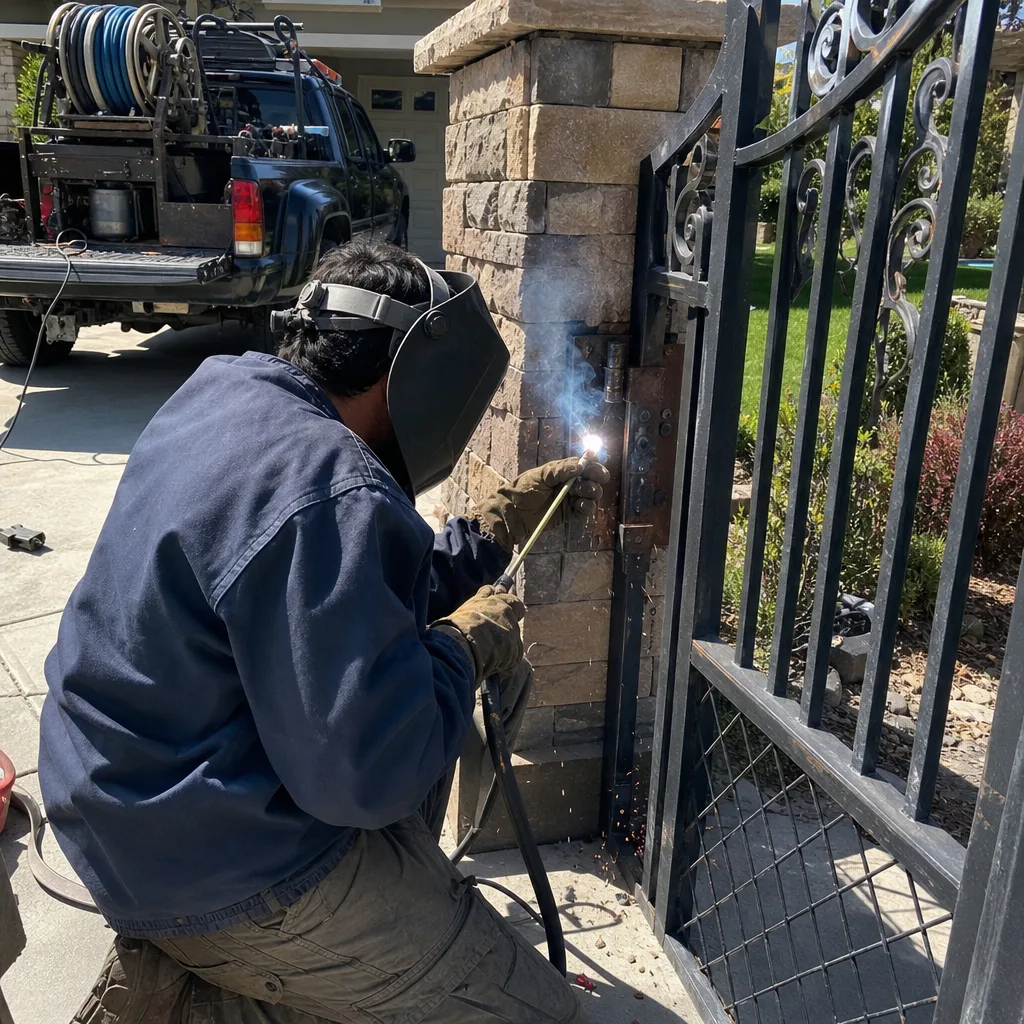
At 30 days, the concrete has reached structural cure and the soil has begun to compact under load. This is a settled-inspection, not a repair visit. Here’s what gets measured:
- Post plumb against the as-installed baseline. The installer should have recorded the plumb reading on the day the posts went in. At 30 days we compare. A post that has moved more than a small fraction off its as-installed plumb is worth watching.
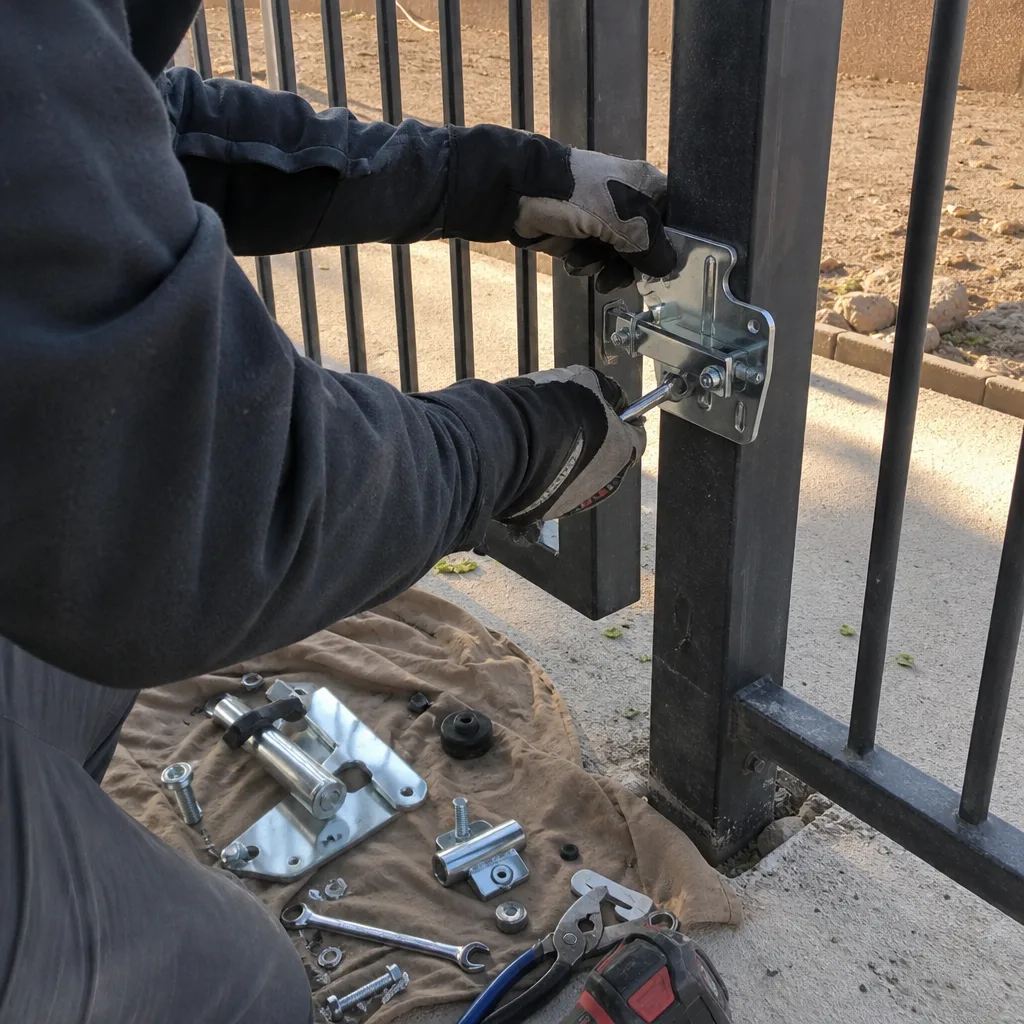
- Fastener torque on every hinge, bracket and arm mount. Bolts that were torqued to spec on installation day can lose tension as the wood or metal they bite into relaxes. We check and re-torque, and photograph the readings.
- Gate leaf swing or slide resistance by hand. With the operator disengaged, the gate should move through its full travel with the same effort as on install day. A leaf that’s suddenly stiff suggests a hinge issue or a post that’s moved.
- Operator arm or rail alignment. The arm geometry on a swing operator or the rail tracking on a slide operator should still line up with the marks made on installation day.
- Photo-eye (the infrared beam that stops the gate if something crosses the path) alignment. These are easily knocked out of alignment by wind or by someone brushing past the bracket.
In our experience, roughly half of 30-day checks turn up at least one fastener that needs re-torquing and a photo-eye that has drifted a half-inch. Neither is a warranty issue. Both are the reason the check exists. If you have not been offered a 30-day inspection on your installation, request one.
The 90-Day Check: The Measurements That Matter
This is the most important inspection in the entire year-one schedule, and it’s the one most installers don’t mention. By 90 days, the gate has been through a full season of use and its components have moved from their installed baselines. The questions we ask at 90 days are specific and measurable:
- Limit-switch position versus as-installed baseline. Recorded in degrees of travel. If the as-installed close limit was set at 0 degrees past full-seat, and the gate is now hitting the physical stop before the switch trips, you have a drift of a few degrees that needs resetting.
- Post plumb deviation. Compared to the 30-day reading. A post that moved between install and 30 days and has stayed put since is settling. A post that is still moving at 90 days is a footing problem.
- Chain or rack wear pattern. On a slide gate, the chain or rack will show a wear signature if the gate is not tracking true. Even wear across the full length is normal. Wear concentrated near one end or on one side of the rack teeth indicates an alignment issue that needs correcting before it becomes a replacement.
- Obstruction-force reading versus the initial setting. Every modern operator (whether it’s a Ghost Controls unit on a residential slide gate or a DoorKing on a heavier access-controlled entry) has an obstruction-force setting that determines how hard the gate pushes before it reverses. Factory settings don’t account for your driveway’s slope, gate weight, or the specific model of operator. At 90 days we re-read the force sensor against the as-installed figure and reset if needed. This is a safety measurement, not a performance one.
What happens after the 90-day check is straightforward: the settings that were calibrated on install day are either confirmed to still be correct, or they’re reset to the correct values and the new values are recorded. Either way, the homeowner walks away with a photo log of the measurements and the written record of what was adjusted. That’s the visit that turns the installation from an event into a documented baseline.
The 12-Month Milestone: The Full First Annual Service
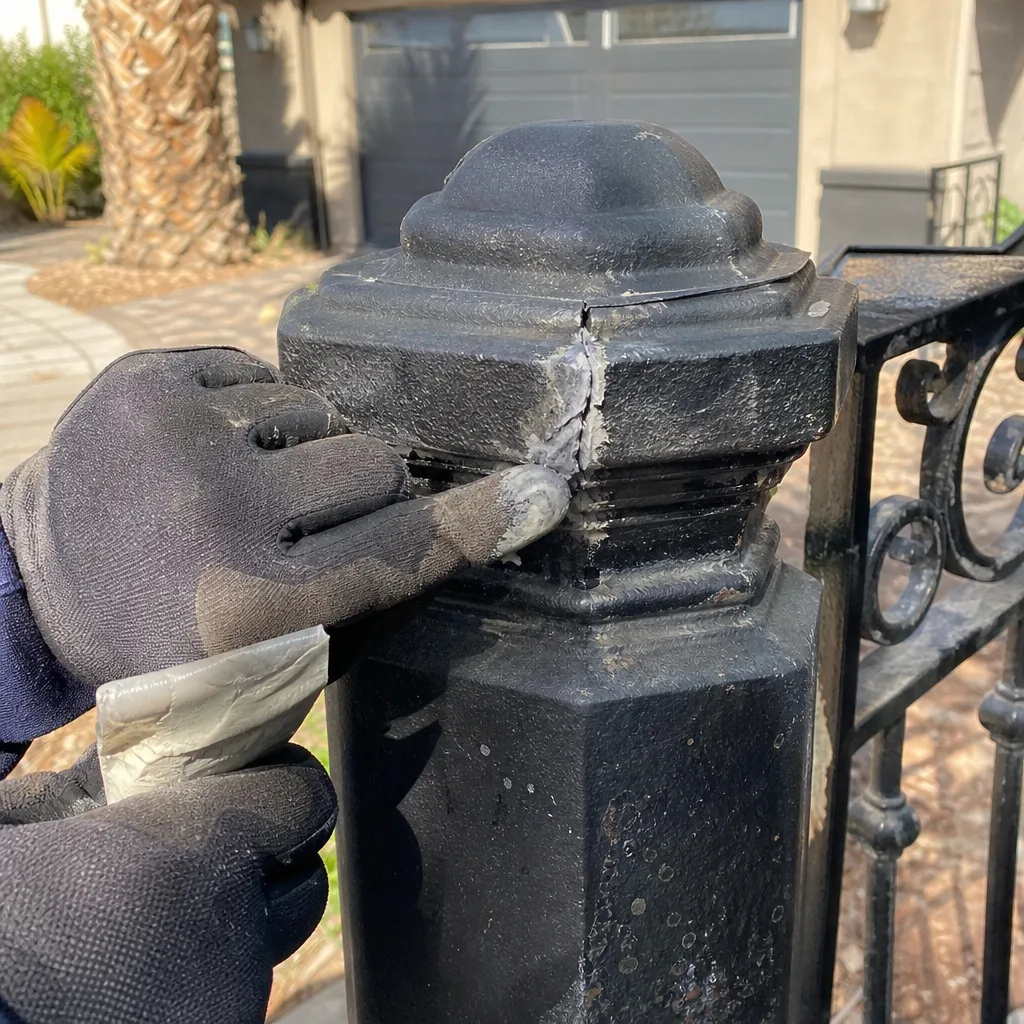
At 12 months, the gate has been through a full seasonal cycle in Winchester: the summer heat (which on metal gates expands and contracts the leaf), the first monsoon, the first freeze-thaw cycle after the ground has saturated, and back into spring. This is the visit where the year-one schedule hands over to the ongoing annual schedule, and it’s the most thorough of the three.
The 12-month service includes everything from the 90-day check, plus:
- Battery and backup-power testing on the operator and any access-control keypad or intercom. Backup batteries have a typical service life of 3-5 years; the 12-month test establishes the starting point.
- Full lubrication of hinges, rollers, chain and pivot points with the lubricant the operator manufacturer recommends. The wrong lubricant on a chain attracts grit and accelerates wear.
- Inspection of buried hardware, including the base of each footing and any conduit or wiring run to the operator. More on this in the Winchester section below.
- Full obstruction-force and photo-eye test across the entire travel, not just at the terminals.
- A written condition report, with photos, that becomes part of the documentation package.
This is also the visit where the homeowner learns what the gate’s ongoing annual schedule will look like. A light residential swing gate driven by a Mighty Mule operator may need one service a year. A heavier slide gate on a commercial-light cycle may need two. The 12-month report should tell you which category your gate falls into.
The Winchester Post-Winter Inspection: Frost Heave and Alkaline Soil
Winchester’s soil and climate add two specific failure modes to the year-one schedule that homeowners in milder or wetter regions don’t have to think about.
Frost heave displacement. Where the ground freezes and thaws, water trapped around a concrete footing expands when it freezes and lifts the footing a fraction of an inch. Over a single winter that can be negligible. Over a single winter near the foot of a slope, or where drainage runs toward the gate, it can push a post out of plumb enough to throw off the operator’s limit settings. The post-winter inspection checks footing level against the as-installed figure. A footing that has heaved more than the tolerance needs to be addressed before the gate’s tracking is affected.
Alkaline soil and buried hardware. Winchester’s soil profile runs alkaline in many areas, and alkaline soils are more aggressive to buried steel, zinc-plated fittings and unprotected conduit boxes than neutral soils are. After the first monsoon season (when the soil is saturated and the electrochemical reaction accelerates), the post-winter inspection should include a look at any buried anchors, the base of the operator pedestal, and the entry point of any low-voltage wire to the operator housing. Corrosion at the wire entry is one of the more common failure modes we see on gates installed in Winchester.
The good news: both are cheap to inspect and expensive to ignore. A gate that passes its first post-winter inspection cleanly has established that its footings and buried hardware are adequate for Winchester’s soil. That’s information worth having in writing.
Maintaining the Installation Documentation Package
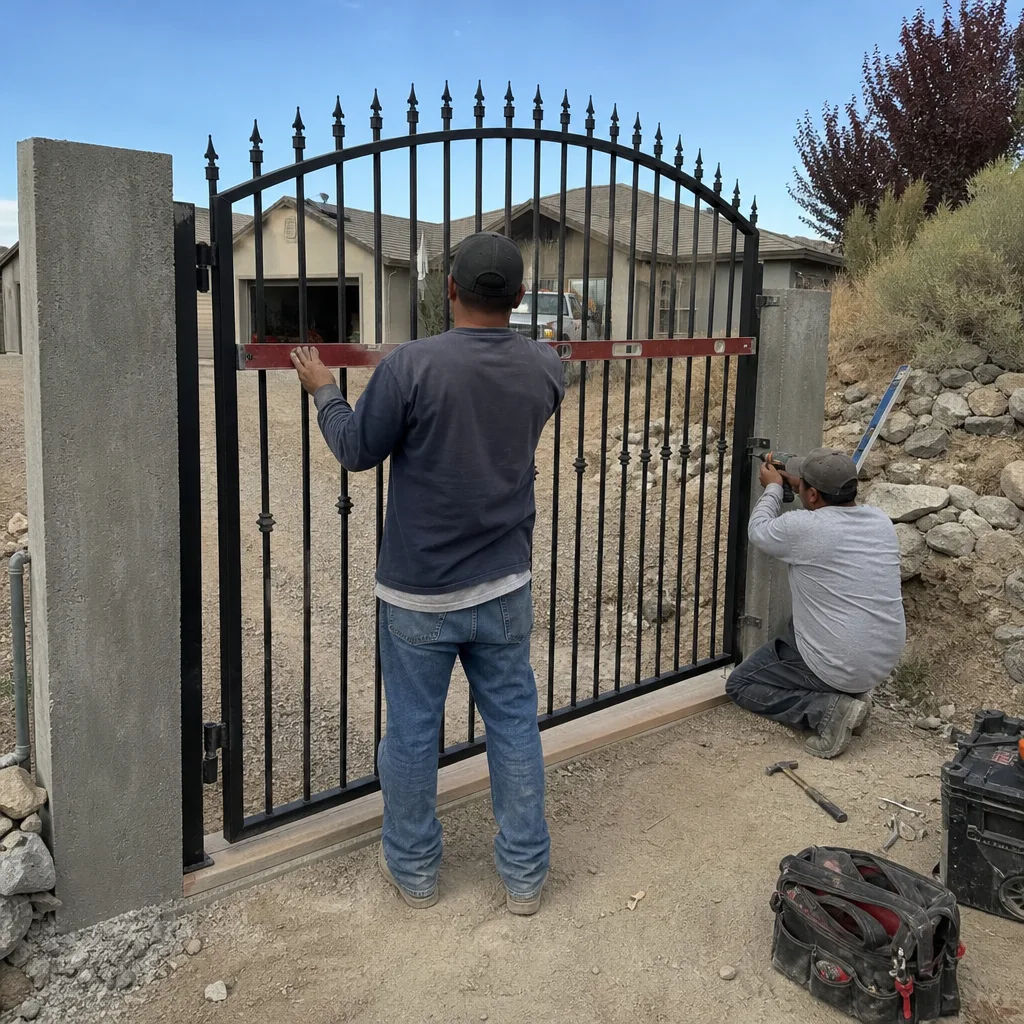
The installation documentation package is what a future technician (or a future you) uses to know what the gate looked like on the day it was correct. It’s the single most valuable thing to maintain through year one and beyond. Here’s the minimum contents:
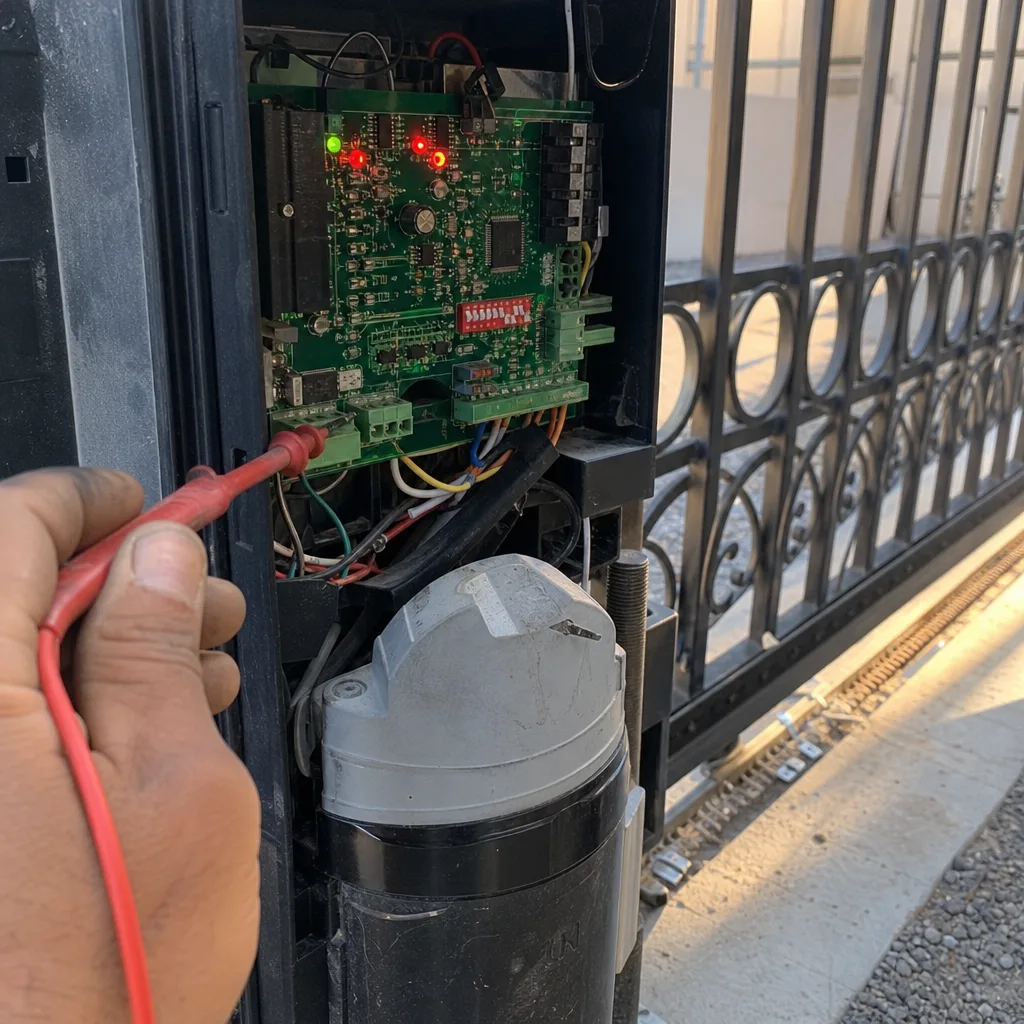
- Installation photos of the control board wiring before the cover went on. A photograph of the control board and terminal block, taken on install day, is worth more than any written description. It shows exactly which wire landed on which terminal, which accessory was added, and what the factory jumpers looked like. Written descriptions of wiring get misremembered and mis-transcribed.
- Wiring diagrams for the operator and any accessory. Stored as a PDF alongside the photographed board, with the manufacturer and model number written on them.
- The as-installed measurements. Limit-switch positions, obstruction-force readings, post plumb readings, and the date each was taken.
- The photo record of every subsequent visit. Every adjustment, every part replacement, every reset, with the date and the part number.
Where to store it: a physical folder in the house and a digital copy in cloud storage. When you add an accessory (a keypad, an intercom, a second photo-eye, a vehicle-loop detector), the new accessory gets added to the diagram and a new photo of the board gets taken. The old photo stays in the folder. What you’re building is a timeline, not a snapshot. When a technician arrives for a future service call, that timeline tells them what’s been tried and what’s been changed. It’s how a gate gets serviced accurately instead of from scratch every time. The same habit is built into our gate motor and opener service in Winchester and the way Vance Gate Repair Winchester documents every visit under The Haven Standard.
Who’s Responsible During the Warranty Period
One of the more common points of confusion in year one is who covers a given problem. The rule of thumb is that the installer is responsible for the correctness of what was installed and calibrated, and the homeowner is responsible for ongoing wear items and for conditions that were outside the installer’s control.
Typically the installer’s responsibility during the warranty period:
- Calibration of the operator (limit switches, obstruction force, photo-eye alignment) against the as-installed baseline.
- Any part failure on a component the installer supplied, within its warranty.
- Post plumb or footing movement, where the footing was poured by the installer and movement exceeds tolerance in the first year.
- Wiring faults on the low-voltage run the installer installed.
Typically the homeowner’s responsibility:
- Keeping the gate’s travel path clear of debris, snow, or obstructions.
- Reporting drift early (a slow reversal or a stall is much cheaper to correct at 90 days than at 18 months).
- Damage from a vehicle strike, storm debris, or unauthorized adjustment by someone else.
- Accessory additions or modifications outside the original scope.
If you’re not sure which category a problem falls into, ask for it in writing. A written record of the visit is what makes the boundary clear.
The Ongoing Annual Schedule After Year One
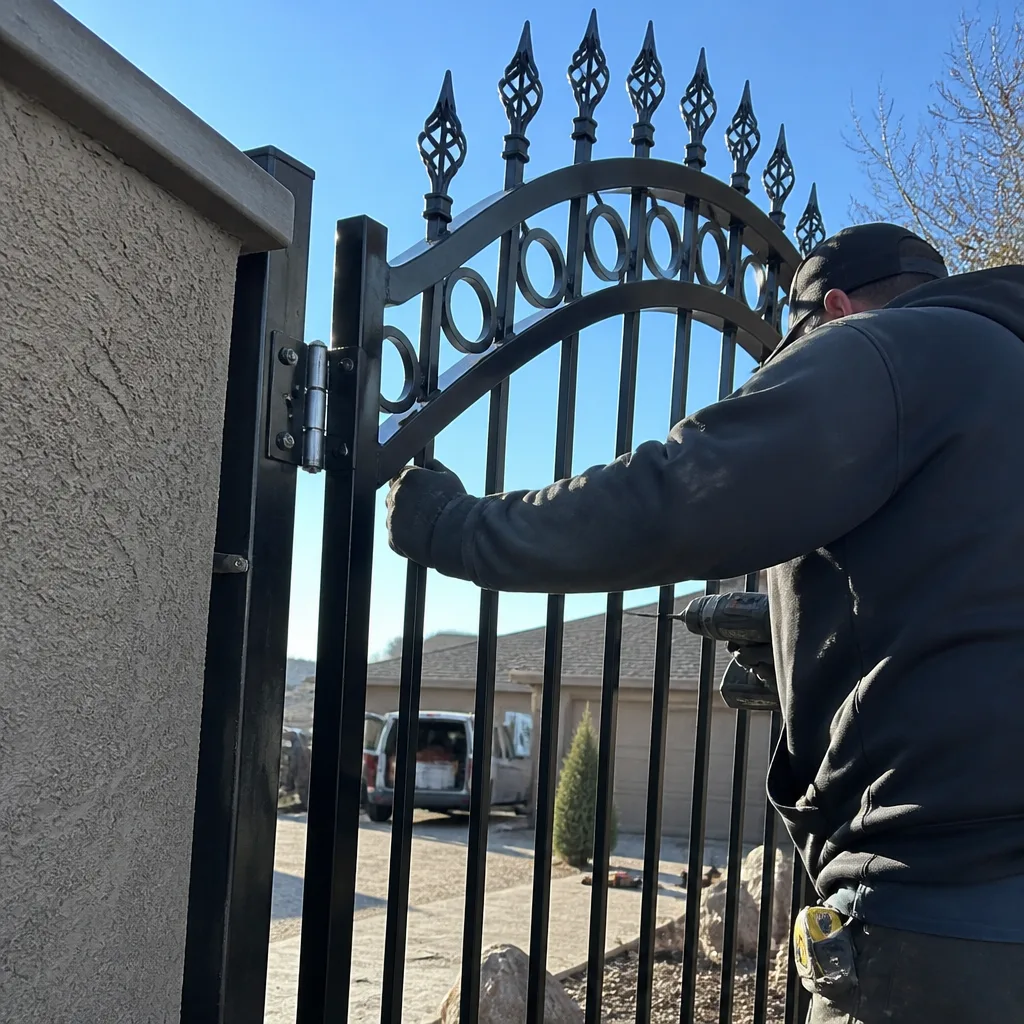
Once the gate has passed its 12-month milestone, it moves into the annual rhythm. The scope is a distilled version of the 12-month service:
- Full obstruction-force and photo-eye test across the travel.
- Hinge, roller and chain lubrication.
- Fastener torque and post plumb check.
- Battery and backup-power test.
- Buried hardware and footing inspection (especially post-winter).
- Photographic record and written condition report.
Two visits a year is right if the gate sees heavy daily use or drives a slide that covers a long span. One visit is usually enough for a standard swing gate on a residential driveway. The signal to move to twice-yearly is not the gate’s age but its duty cycle and the length of travel. A gate that opens forty times a day wears on a different curve than one that opens four.
Following this schedule is also the cheapest form of protection against the more expensive repairs. A gate that’s had its limits checked annually doesn’t usually arrive at the gate repair phase in Winchester for a stalled operator or a snapped hinge. It arrives for a lubrication visit and goes back out the same day.
Common Mistakes to Avoid
- Skipping the 90-day check because nothing is broken. The purpose is to catch drift before it becomes damage. A gate that is still opening is not the same as a gate that is still correct.
- Treating year one the same as year five. The schedule should tighten through year one, not stay fixed. Month one and month fourteen do not need the same inspection.
- Adjusting the limit switch by feel instead of against the recorded baseline. Without the as-installed number to compare against, an adjustment is a guess.
- Losing the installation documentation package. A photo of the control board taken on install day will save a future technician more time than any written note. Store it, and update it when an accessory is added.
- Ignoring the first post-winter inspection near a footing on a slope. Frost heave displacement is a Winchester-specific risk, and it’s cheapest to correct in the first spring after installation.
- Assuming the factory obstruction-force setting is correct for your gate. Every operator ships with a default; the default does not account for your driveway’s slope, gate weight or hardware. Have it set and recorded.
- Not asking who covers a given problem within the warranty. Get the boundary in writing at the start, so a later service call is a repair visit and not a negotiation.
See the difference
BeforeAfter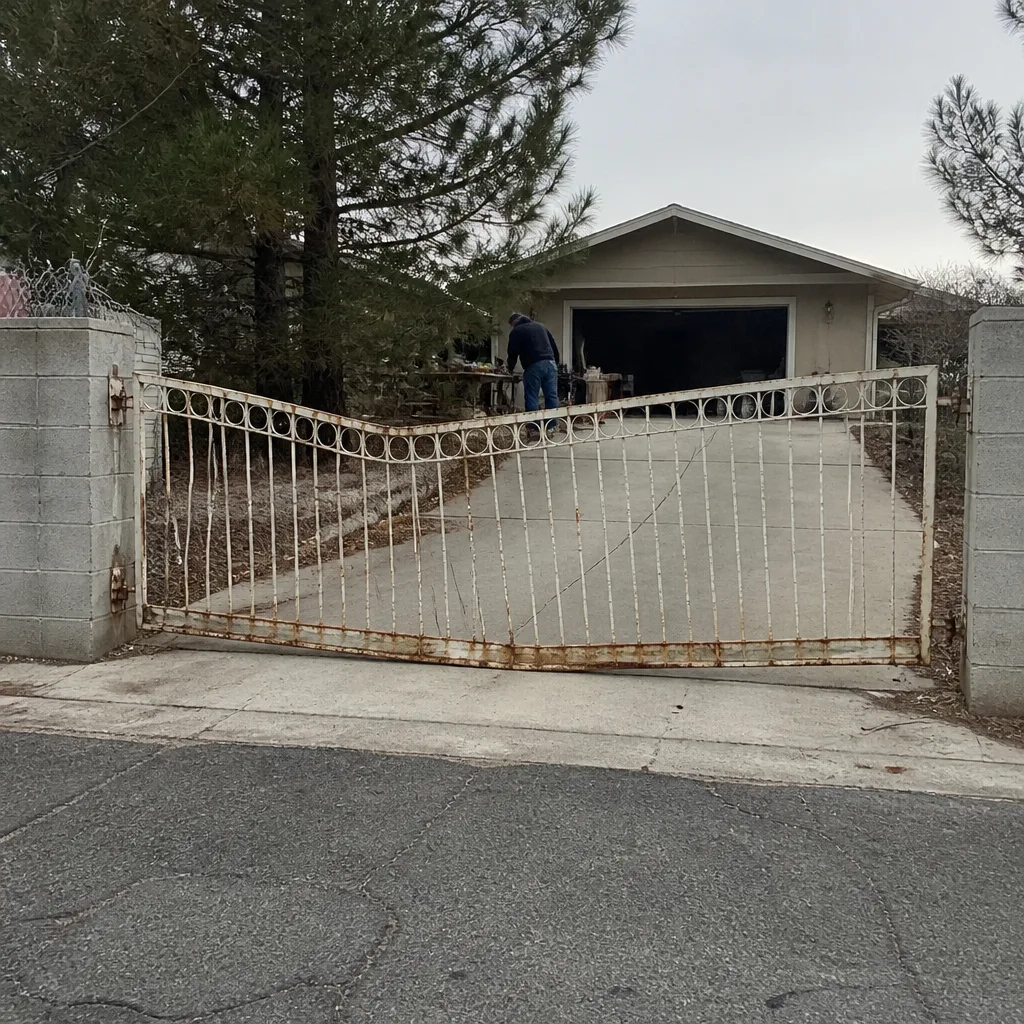 Before
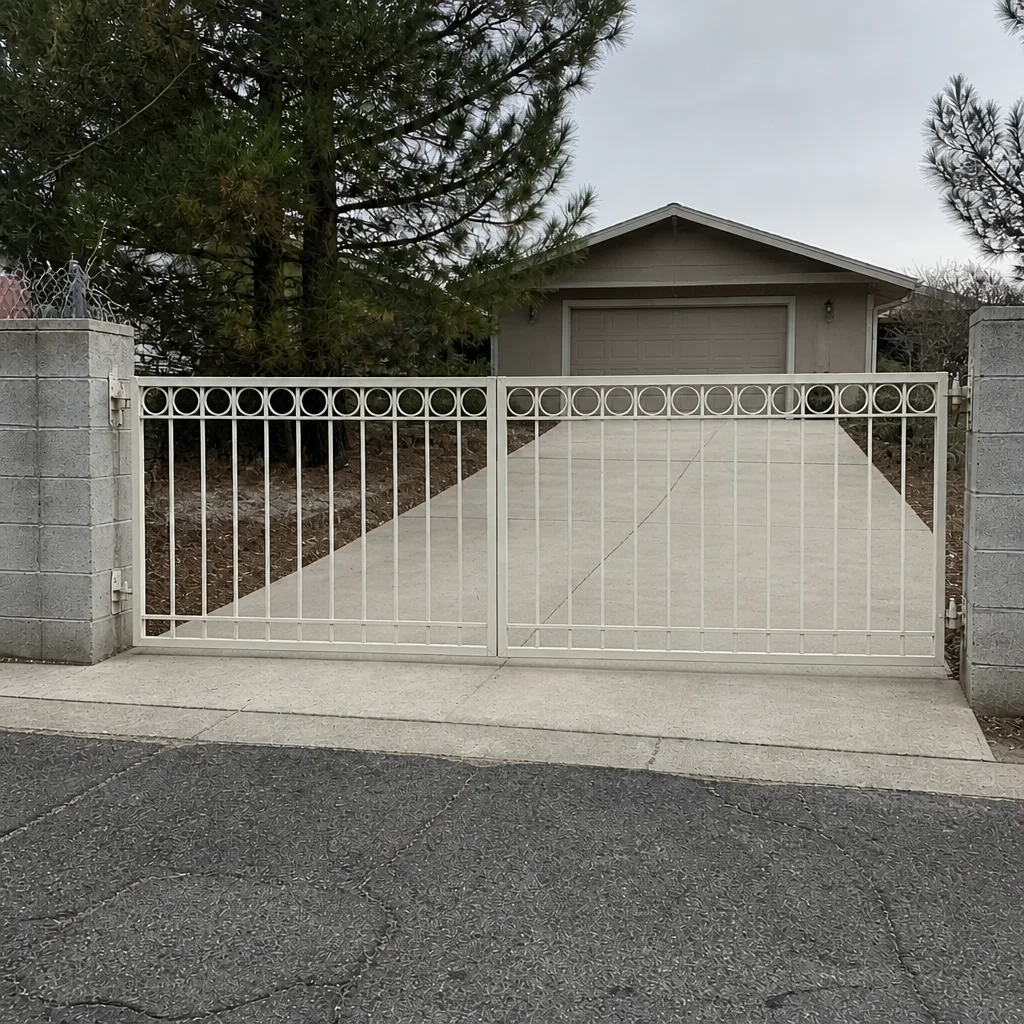 After
 Before
 After
When to Call a Professional
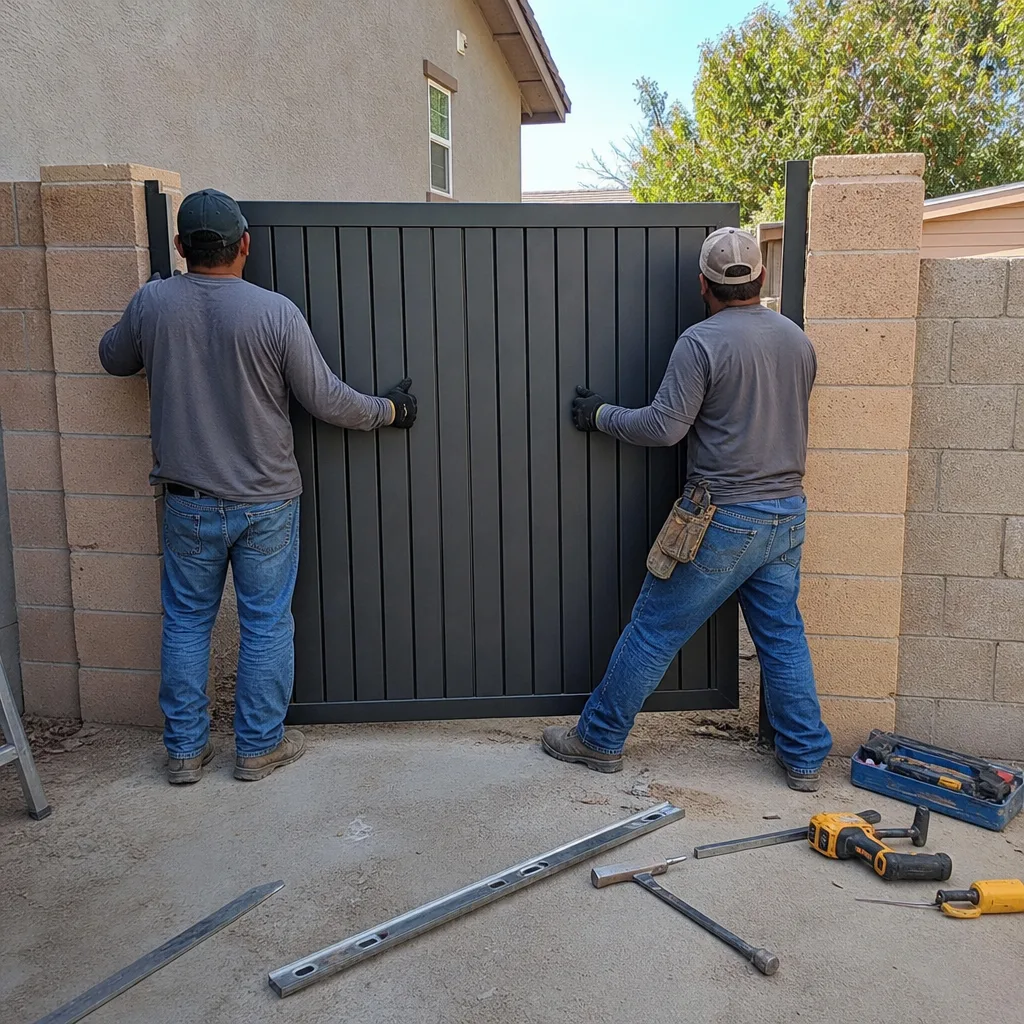
Some of what’s in this schedule is a homeowner call, and some of it isn’t. When to call us: the gate reverses on its own mid-travel, the operator stalls or runs past its limit, a post has visibly moved, a photo-eye is misaligned and won’t stay aligned, or anything involving the high-voltage line to the operator. Every year-one problem on this list gets diagnosed and, if the repair is on us under the 365-Day Done Right Promise, corrected at no additional charge. The work that is safe to do yourself is the work of the annual check (clearing the travel path, reporting drift early, keeping the documentation folder). The work that isn’t is the work of measurement and adjustment, because a mis-set obstruction-force reading or an over-adjusted limit switch can damage the operator or create a safety hazard. Vance Gate Repair Winchester offers free estimates in Winchester for any year-one problem: call (866) 983-9213 and a live person answers. Every visit includes a written price before any work starts and a photo record of what we found, adjusted and installed when we leave.
Frequently Asked Questions
A new gate should be inspected at 30 days (fastener torque, post plumb, photo-eye alignment), at 90 days (limit-switch position, post plumb deviation, chain or rack wear, obstruction-force reading), and at 12 months (full annual service plus buried hardware inspection). After year one, the gate moves to an annual or twice-yearly schedule based on duty cycle. Call (866) 983-9213 for a written schedule tailored to your gate.
Because 90 days is when the gate has been through its first full season of use and its settings have drifted from the as-installed baselines. The check measures limit-switch position against the original setting, post plumb against the 30-day reading, chain or rack wear pattern, and obstruction-force reading against the initial setting. It’s a calibration visit, not a repair visit, and it’s the one most installers skip. Call (866) 983-9213 to schedule one in Winchester.
The warranty covers parts and installation defects; the maintenance schedule covers the calibration and inspection visits that keep the gate running correctly. The installer is responsible for calibration of the operator and for footing or plumb movement beyond tolerance in the first year. The homeowner is responsible for keeping the travel path clear, reporting drift early, and any damage from outside causes. Call (866) 983-9213 if you’re not sure which category a problem falls into.
Yes. Winchester’s alkaline soil is more aggressive to buried steel and zinc-plated hardware than neutral soils, and the freeze-thaw cycle can cause frost heave displacement of the footings near slopes or areas with drainage issues. The post-winter inspection after the first monsoon and freeze cycle is a Winchester-specific addition to the year-one schedule. Call (866) 983-9213 to book one.
The minimum is a photograph of the control board wiring taken with the cover off, the wiring diagrams for the operator and any accessory, the as-installed measurements (limits, obstruction force, post plumb) with dates, and the photo record of every subsequent visit. When an accessory is added, add it to the diagram and take a new board photo. Call (866) 983-9213 and we’ll review the package with you on any service visit.
At the 12-month milestone, after the gate has been through a full seasonal cycle. The annual schedule after that is a distilled version of the 12-month service: obstruction-force and photo-eye test, lubrication, fastener torque and plumb check, battery test, buried hardware inspection, and a written condition report. Two visits a year is right for heavy daily use or a long-travel slide gate. Call (866) 983-9213 for a written schedule.
The Bottom Line
The first year of a new gate installation is not the same as every year after, and the schedule should reflect that. The 30-day check catches settling. The 90-day check catches drift in limits, plumb, chain wear and obstruction force while it’s still cheap to correct. The 12-month milestone closes the year-one cycle and hands the gate over to the ongoing annual schedule. If you maintain the documentation package through that year, the gate’s correct settings are recorded and any future technician works from a baseline rather than from scratch. If you’d like the schedule applied to your gate in Winchester, that’s what we do. Call (866) 983-9213 for a free estimate, a written scope, and a documented photo record on every visit.
Written by the team at Vance Gate Repair Winchester.