
Last updated November 18, 2026
 Wrought iron
 Wood & steel frame
 Farm & ranch
 Sliding driveway gates
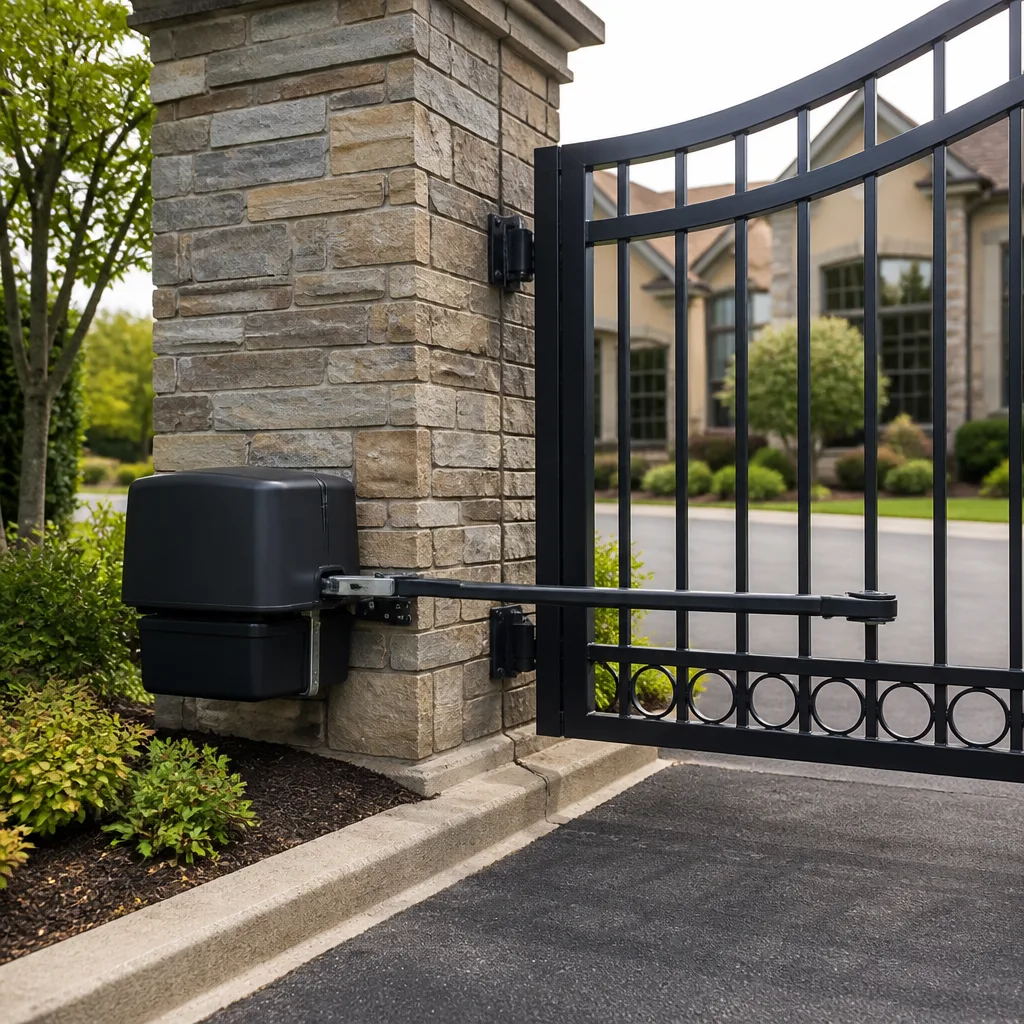 LiftMaster operators
Free on-site gate assessment - hinges, posts, and your LiftMaster or Nice gate operator checked before anything is quoted
The assessment is free and the quote is the invoice.
Get your free estimateGate Motor & Opener Maintenance Schedule: What to Do and When
The most common answer to “when did you last service the gate motor?” is “we haven’t had any problems.” That’s not a maintenance schedule. It’s a waiting strategy. In Winchester, we’ve pulled apart slide-gate operators running on borrowed time because the homeowner was waiting for a symptom – and by then the limit switch had drifted far enough to throw motor overload faults the whole summer. What follows is a schedule built around measurable thresholds, not seasons: cycle counts, lubrication condition, limit-switch drift. You’ll learn what to check quarterly, when to grease and when not to, and what a real professional visit should hand you in writing before the technician drives off.
Quick Answer
A gate motor should be inspected professionally once a year, lubricated every 6 to 12 months depending on cycle count and dust exposure, and functionally tested by the homeowner every 3 months using the obstruction-reversal test and a remote-range check. Replace the battery in any backup system every 2 to 3 years, and correct limit-switch drift as soon as it exceeds roughly two degrees of deviation from the original set point.
Styles & brands we work with
- Wrought iron
- Wood & steel frame
- Farm & ranch
- Sliding driveway gates
- LiftMaster operators
Table of Contents
- The Four Maintenance Categories (and Why They Run on Different Clocks)
- Lubrication: What Goes Where, and What to Keep Off
- Limit-Switch Drift: Measuring It Before It Costs You a Motor
- The Quarterly Tests You Can Do Without Tools
- Electrical and Enclosure Inspection: The Underrated Half of the Job
- Software, Firmware, and Remote Diagnostics
- What a Professional Maintenance Visit Should Produce in Writing
- Common Mistakes to Avoid
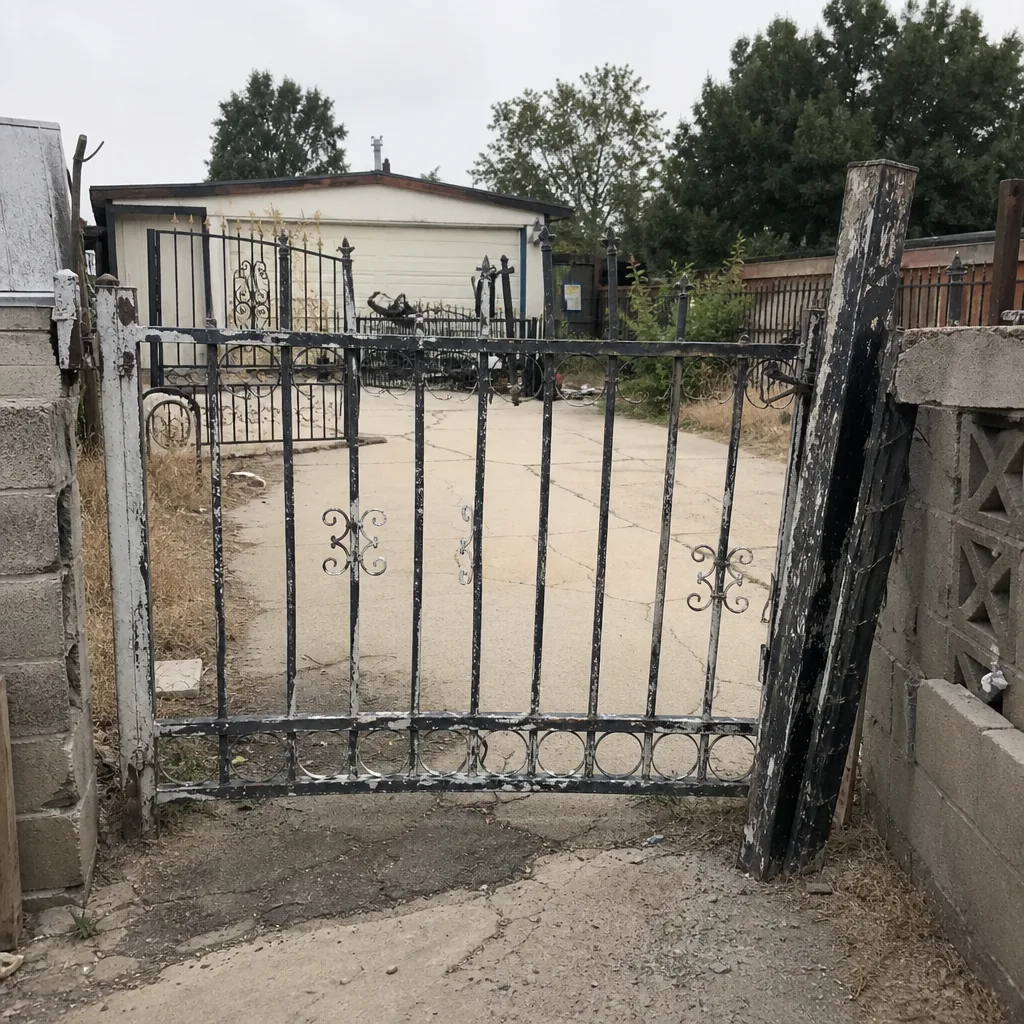 Before
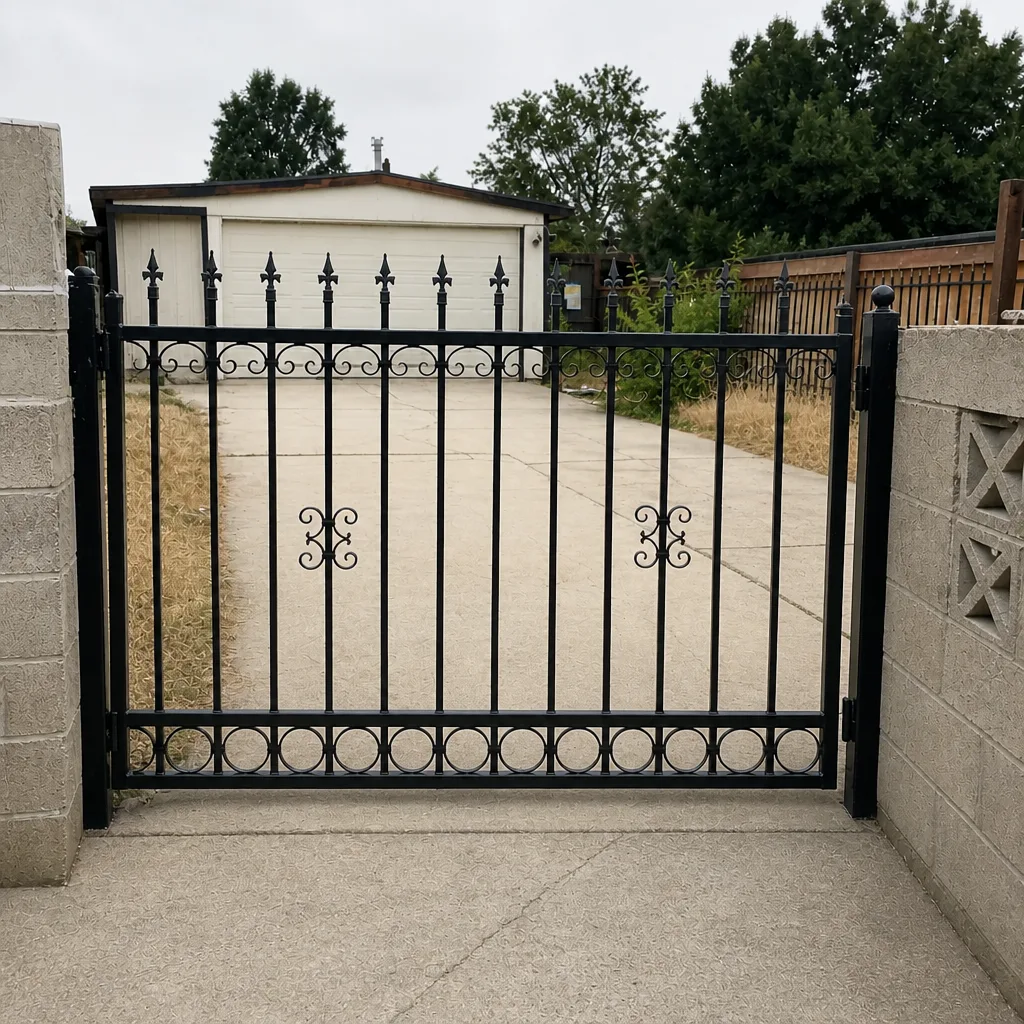 After
The Four Maintenance Categories (and Why They Run on Different Clocks)
A gate motor doesn’t have one maintenance interval. It has four, and each degrades on its own timeline. Treating them as a single “annual service” is how components fail between visits.
The four categories are:
- Lubrication. Runs on a cycle-count clock. A daily-driver driveway gate with 20 cycles a day hits lubrication thresholds about 4 times faster than a weekend property.
- Electrical inspection. Runs on an environmental clock. Winchester’s summer heat load (regular 110°F stretches) and winter temperature swings stress wire insulation, terminal connections, and voltage regulators on a schedule that has nothing to do with how often the gate opens.
- Mechanical adjustment. Runs on a wear clock. Limit switches drift, chains stretch, hinge pins wallow, and the swing arm bracket creeps out of alignment over hundreds of cycles.
- Software and firmware check. Runs on a release clock. FAAC, BFT, Linear, and Viking have all pushed operator firmware updates in the last decade that touch obstruction sensitivity, soft-start ramps, and error logging. A gate still running original firmware may be logging faults nobody has read.
In our experience across Winchester, the lubrication clock is the one homeowners get wrong most often – usually by greasing something that was never supposed to be greased. The electrical clock is the one they ignore entirely until something smokes. We wrote the next four sections around each clock separately so you can track them independently.
Lubrication: What Goes Where, and What to Keep Off
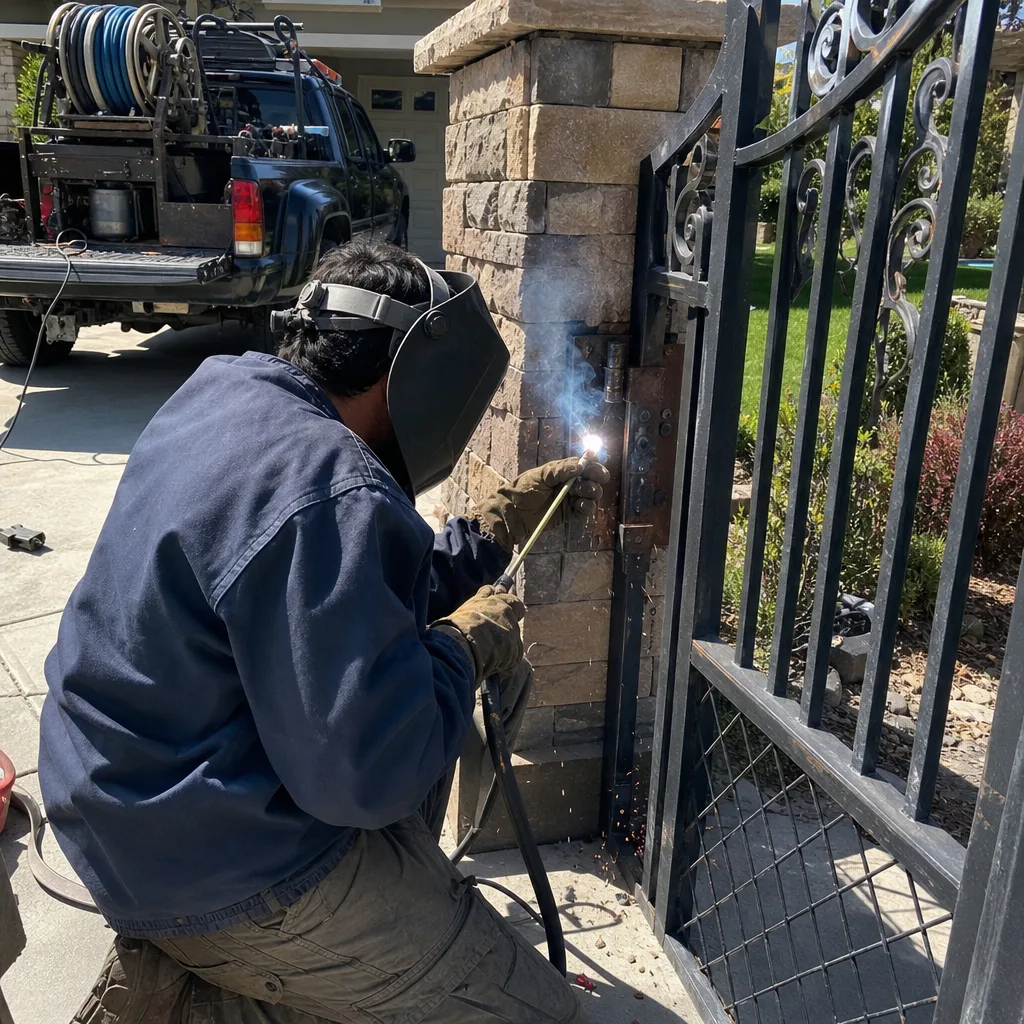
Not all gate hardware wants the same product, and applying the wrong one is often worse than leaving a component dry. If you take one thing from this guide, make it this table:
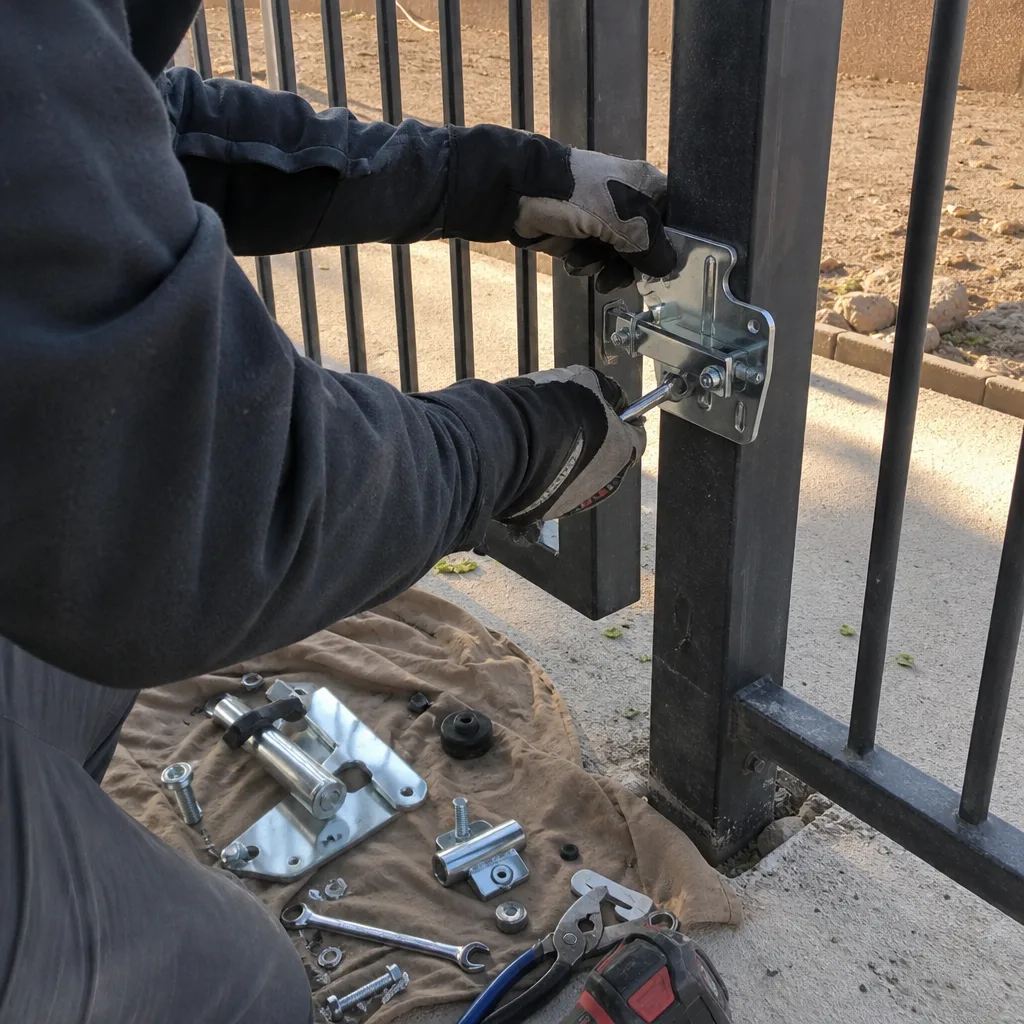
- Roller chain (slide gates): chain-specific lithium grease or a dry-film PTFE spray. Apply a thin coat, cycle the gate 3 to 4 times, then wipe the excess. Chain lube attracts less dust than oil.
- Rack and pinion (rack-driven slide gates): a heavy gear grease applied to the pinion teeth, not the rack itself. Excess on the rack becomes a dust magnet.
- Pivot points, hinges, and swing-arm bushings: light machine oil or a silicone lubricant. One or two drops per point. More is not better.
- Operator gear housing: nothing. The manufacturer filled it at the factory. Opening it invites contamination.
- Star wheels, latches, and lock mechanisms: dry graphite or PTFE. Wet lubricants here collect grit and jam over months.
What to avoid: WD-40 on plastic gears. WD-40 is a solvent-thinned light oil – great for freeing rusted hardware, wrong for anything with a nylon or acetal gear inside. It strips the factory lubricant and, in Winchester dust, the plastic surface wears faster than it would have untouched. Avoid using automotive bearing grease on chain; it’s too heavy and it turns into a paste that grinds.
Over-lubrication is a real failure mode. Signs you’ve gone too far:
- A visible film of liquid oil on the chain or rack after cycling the gate a few times
- Grease caked with grit at the pinion or chain return
- Drips on the concrete or gravel under the operator
- Uneven motion – the gate slows then speeds up as it travels
In Winchester, we see over-lubed rack gates weekly. The homeowner greased monthly thinking more frequent is safer. It isn’t. Twice a year is enough for a typical driveway gate in our dust. If the gate is on a paved street away from construction traffic, once a year is fine.
Limit-Switch Drift: Measuring It Before It Costs You a Motor
Limit switches tell the operator where “fully open” and “fully closed” are. They are physical switches sitting in a housing that vibrates, heats, and cools every single day. They drift. The drift is usually small at first – a degree or two of gate travel – and then it accelerates as worn mechanical components compound the error.
The symptoms of limit-switch drift, in rough order of severity:
- Gate stops an inch or two short of fully closed, or over-travels and bumps the post
- Motor runs slightly longer than it should before the reversing contact snaps
- Occasional “reversal” error codes logged on the operator display
- Motor overload faults in hot weather (the operator thinks it’s hitting an obstruction)
- Intermittent “gate open” fault on the panel – the safety edge trips on nonexistent obstruction
How to measure drift: this is a professional task on the higher-voltage operators, and we don’t recommend opening the limit-switch housing yourself on a live system. But there’s a homeowner-visible proxy: measure the gate’s fully closed and fully open positions against a fixed mark. Place a piece of tape on the concrete where the gate leaf edge sits when fully closed. Check it once a quarter. If it has moved more than about an inch of leaf travel, that’s the equivalent of roughly two degrees at the arm – the point we’d correct.
On FAAC and Viking operators in Winchester, we’ve seen limit drift accelerate noticeably in August and September because the daily thermal expansion has worked the set screw loose over the summer. If your gate has drifted, it will not fix itself. The motor pays for it via heat.
The Quarterly Tests You Can Do Without Tools
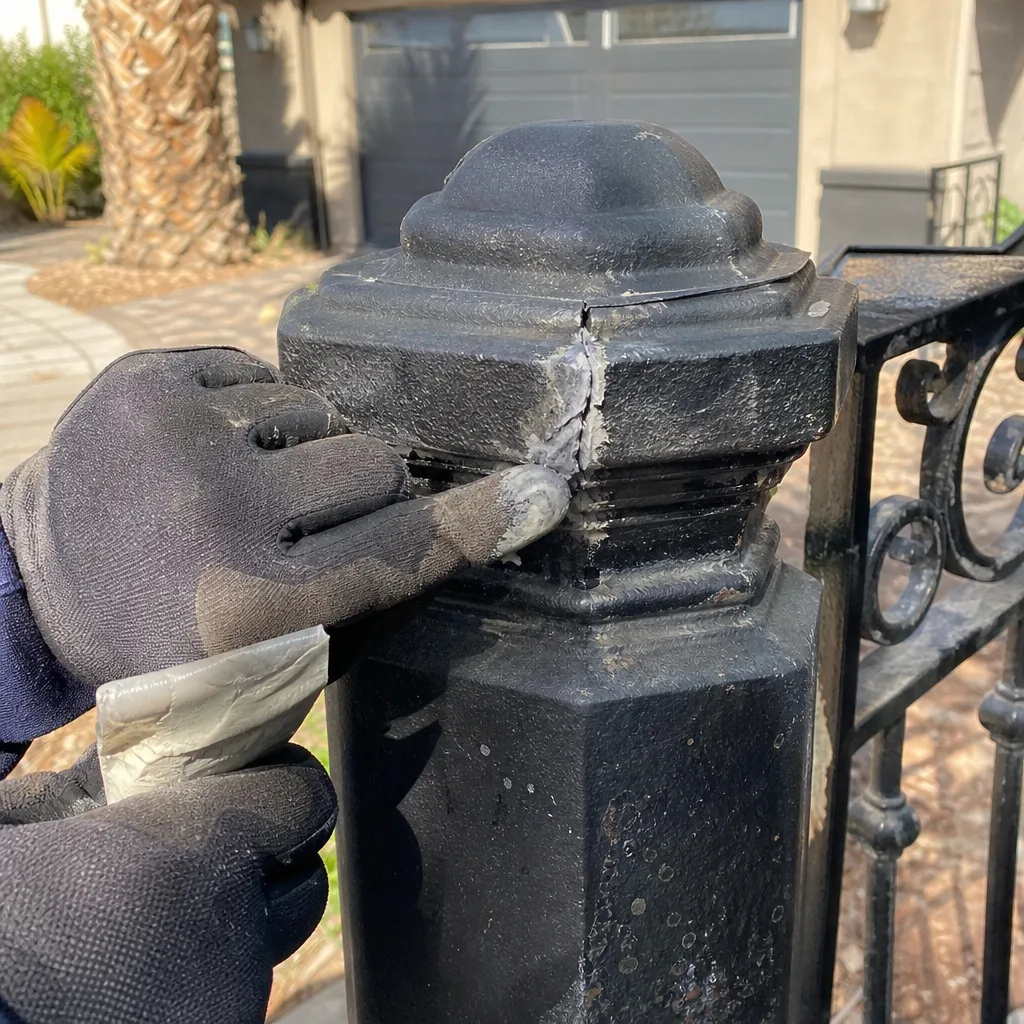
You don’t need a multimeter to catch most problems. Every three months, run these tests in this order:
- Obstruction-reversal test. With the gate moving toward the closed position, place a 2×4 (or your foot – but only on gates rated for it, and never on a gate with no safety edge) in the path. The gate must reverse within a few inches of contact. If it doesn’t reverse, or reverses slowly, the safety edge sensor or the photo-eye is compromised. Stop using the gate until it’s fixed.
- Photo-eye alignment check. The photo-eye is the infrared beam running across the driveway that stops the gate if something crosses. Look at the LED on the receiving unit. Steady light means aligned. Flickering or dark means the beam isn’t reaching – dust, cobwebs, or an insect nest at the lens will cause this in Winchester within a week of a windstorm.
- Remote range check. Walk to the spot where you normally trigger the gate from inside the car. If you have to be closer than you used to, the receiver is losing sensitivity – usually an antenna grounding issue, a tired battery in the remote, or vegetation blocking the signal.
- Visual inspection of conduit and housing seals. Look at every greenfield or grey conduit and every housing gasket. Cracks in the conduit, sag on the run, or a gasket pulled loose from sun bake are the leading causes of moisture intrusion into the operator box on a Winchester summer. Twenty seconds now saves a board replacement later.
- Full cycle listen. Stand near the operator and listen. A healthy gate motor makes a steady, even hum. Grinding, whining, clicking, or an audible “clunk” at the start or end of travel are three different problems the ear catches before the multimeter does.
Write the results on a sheet and date it. That piece of paper is the difference between a maintenance record and a vague memory. It’s also the first thing a technician should ask to see when they arrive.
Electrical and Enclosure Inspection: The Underrated Half of the Job
Winchester’s climate is hard on electrical enclosures. The combination of dry dust in spring, 110°F summer days, and winter cold snaps that can crack aged gasket material means the operator enclosure is doing more work than the homeowner realizes. Once a year, an inspection should cover:
- Voltage under load. Measure at the operator terminals while the gate is cycling. A low-voltage reading under load means the wire run or transformer is undersized; the motor will run hot and eventually fail.
- Terminal torque. Every screw terminal checked to spec. Loose terminals caused by thermal cycling are the single most common intermittent-fault cause we find on Winchester gates older than six years.
- Ground connection. Confirmed at both the operator and the service panel.
- Standby battery health. If the operator has a backup battery, its capacity at 2 to 3 years is typically at half of original. Test it rather than trusting the “battery OK” light.
- Safety-edge continuity. The rubber safety edge on the gate itself is a wire run inside a rubber profile. It cracks at the ends with age. Continuity test confirms it will actually reverse the gate when struck.
- Conduit and gland condition. Confirmed sealed. This is where Winchester dust and moisture meet, and it’s where we find most water damage.
If your gate runs a Linear or BFT operator with a solar or backup-battery setup, the battery is doing more work in Winchester than most owners realize. The summer AC-compressor load on the local grid means brownouts are more common than average, and each one cycles the battery. Inspect it annually, not every five years.
Software, Firmware, and Remote Diagnostics
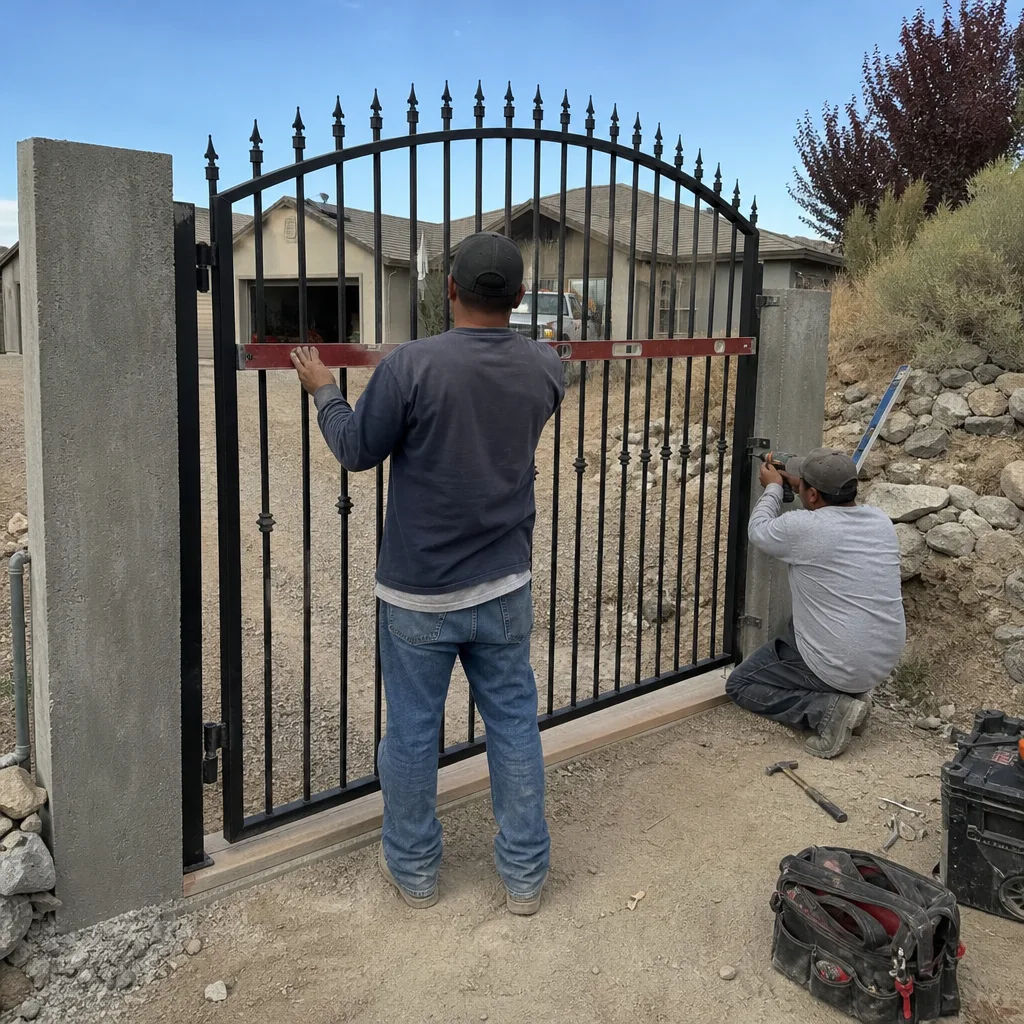
The software category is the newest and most overlooked. Modern operators from FAAC, BFT, Viking, and Linear log fault codes, run soft-start algorithms, and in some cases accept firmware updates that touch obstruction sensitivity thresholds or Wi-Fi module behavior. What should be checked:
- Fault code review. The operator has a log. It should be read, not cleared. Repeated faults – even ones that don’t seem to cause a problem – are the early warning about limit drift, encoder wear, or safety-edge triggering.
- Firmware version check. Cross-referenced against the manufacturer’s current release.
- App pairing and access credentials. If the gate is controlled by a smartphone app, confirm the account credentials are current and any temporary guest codes are cleared.
- Access control logging. For gates with a keypad or card reader, check the access log – an old code in use or a keypad failure will show up there before the homeowner notices.
For a fuller picture of what this side of the system includes, see our page on gate motor and opener service in Winchester. The short version: firmware and logs are cheap to check and expensive to ignore.
What a Professional Maintenance Visit Should Produce in Writing
Any maintenance visit should leave you with documentation, not just a spoken “everything’s fine.” If a technician can’t hand you paper at the end, you didn’t get a maintenance visit – you got a conversation.
Here’s what a real one should include:
- A written scope and price before work starts. Not “call for a quote.” Not a verbal estimate. The flat price in writing, handed over before anyone opens the operator housing.
- Pre-service readings. Voltage under load, limit-switch positions (in inches of travel or degrees, whichever the operator uses), cycle counter at time of service, fault log.
- Post-service readings on the same items. Direct comparison.
- Photographs. Wiring as found, wiring as left, every adjustment made to a limit switch or potentiometer, the housing internals, any parts replaced.
- Part numbers for anything replaced. So the next technician knows exactly what’s in the gate.
- A “watch” list. Components approaching end of service life – the battery at 60% capacity, the safety edge showing its first hairline cracks, the pinion gear at 70% of its tooth wear. Named, dated, so you know what to budget for next year.
This is the documentation standard we operate under, and it’s the reason we photograph every adjustment on every visit – not just on installs. For homeowners in Winchester who’ve had another company quote a motor replacement, we’ll review their written estimate at no charge and tell you honestly whether maintenance would keep the current motor going another two or three years. That second-opinion review is a standard part of how we work, not a special.
Common Mistakes to Avoid
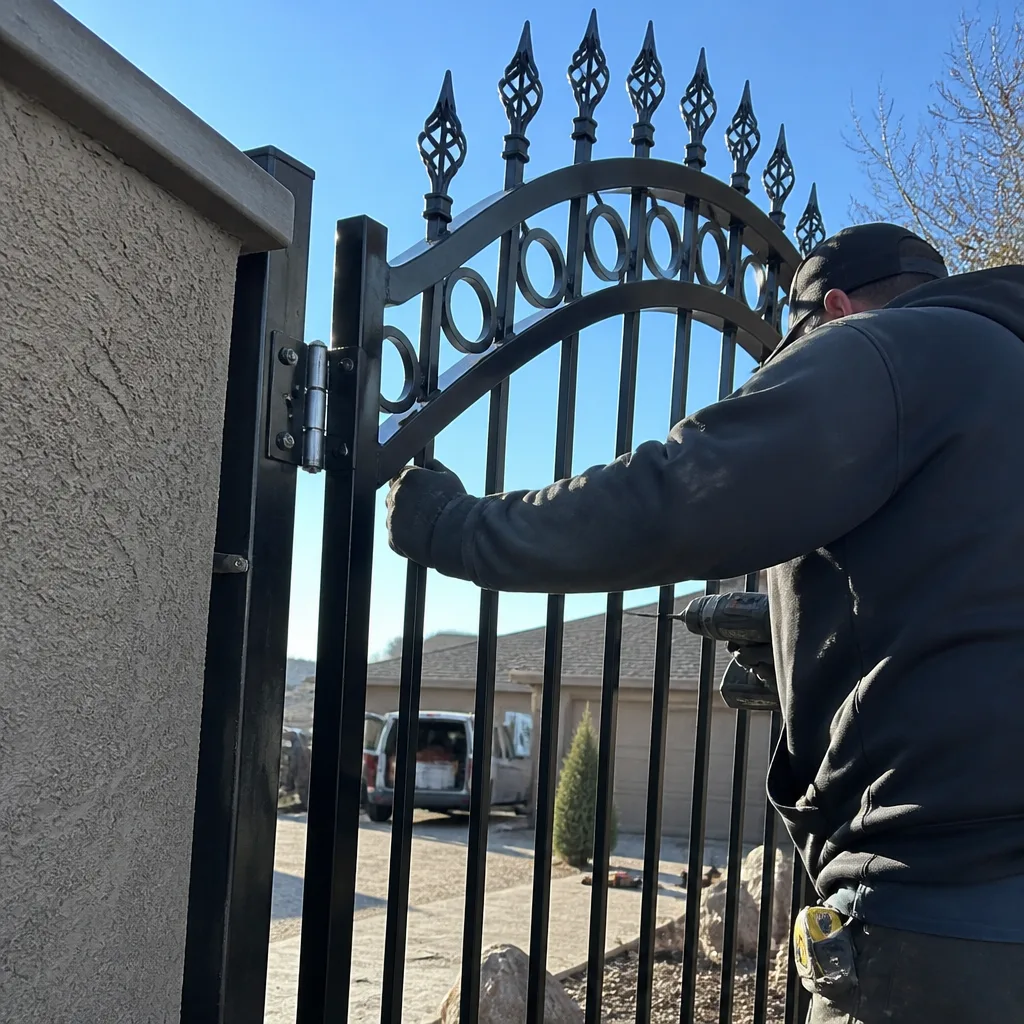
- Greasing chain monthly instead of inspecting it. More grease in Winchester dust means more grit trapped between the rollers. The chain wears faster with too much lube than with none.
- Using WD-40 on anything with a plastic gear. It’s the wrong product for the application and it strips the factory lubricant. This is the single most common self-inflicted gate-motor problem we see.
- Clearing fault codes without reading them. The operator logged the fault for a reason. Read first, clear second.
- Ignoring a slow obstruction-reversal for “a few more weeks.” A safety edge that reverses slowly may not reverse at all under real load. This one has actual injury potential, especially with kids and pets in the driveway.
- Trusting a “battery OK” light. Test capacity. The status light on a 3-year-old battery is unreliable.
- Skipping the annual inspection because “we haven’t had any problems.” That phrase is not a maintenance record. It’s a starter pistol for the failure you didn’t see.
- Letting a verbal estimate stand without a written scope. If your gate company quoted from memory, ask them to put it on paper. Under our first Haven Standard clause we do this on every job; it’s a reasonable ask of any local company.
See the difference
BeforeAfter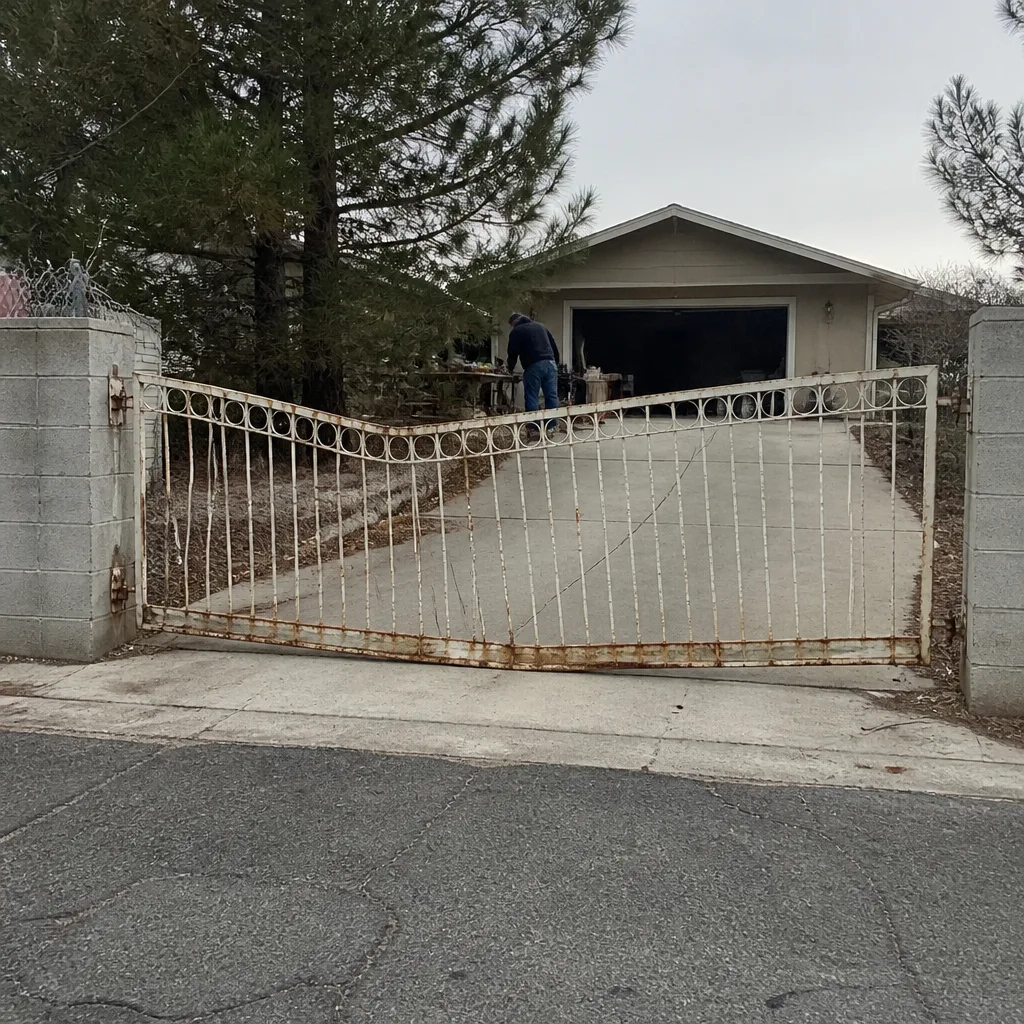 Before
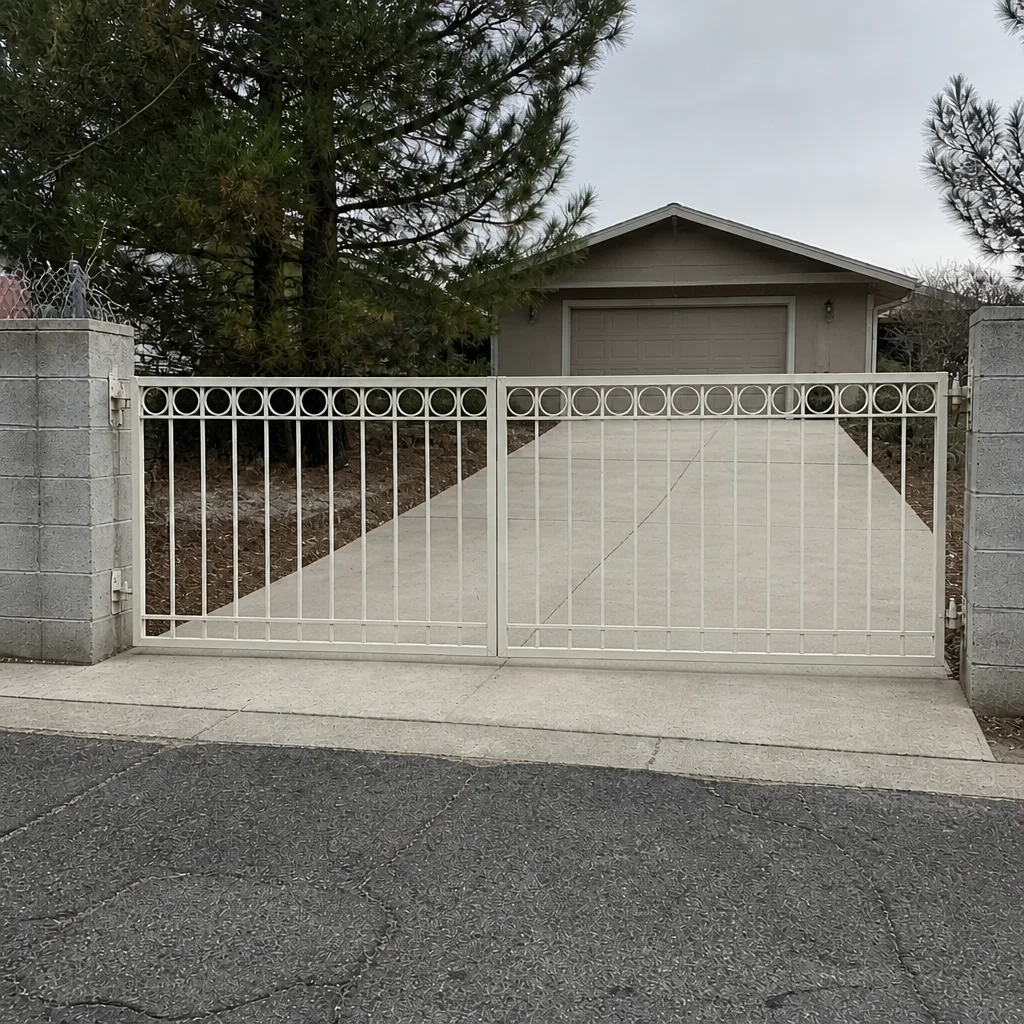 After
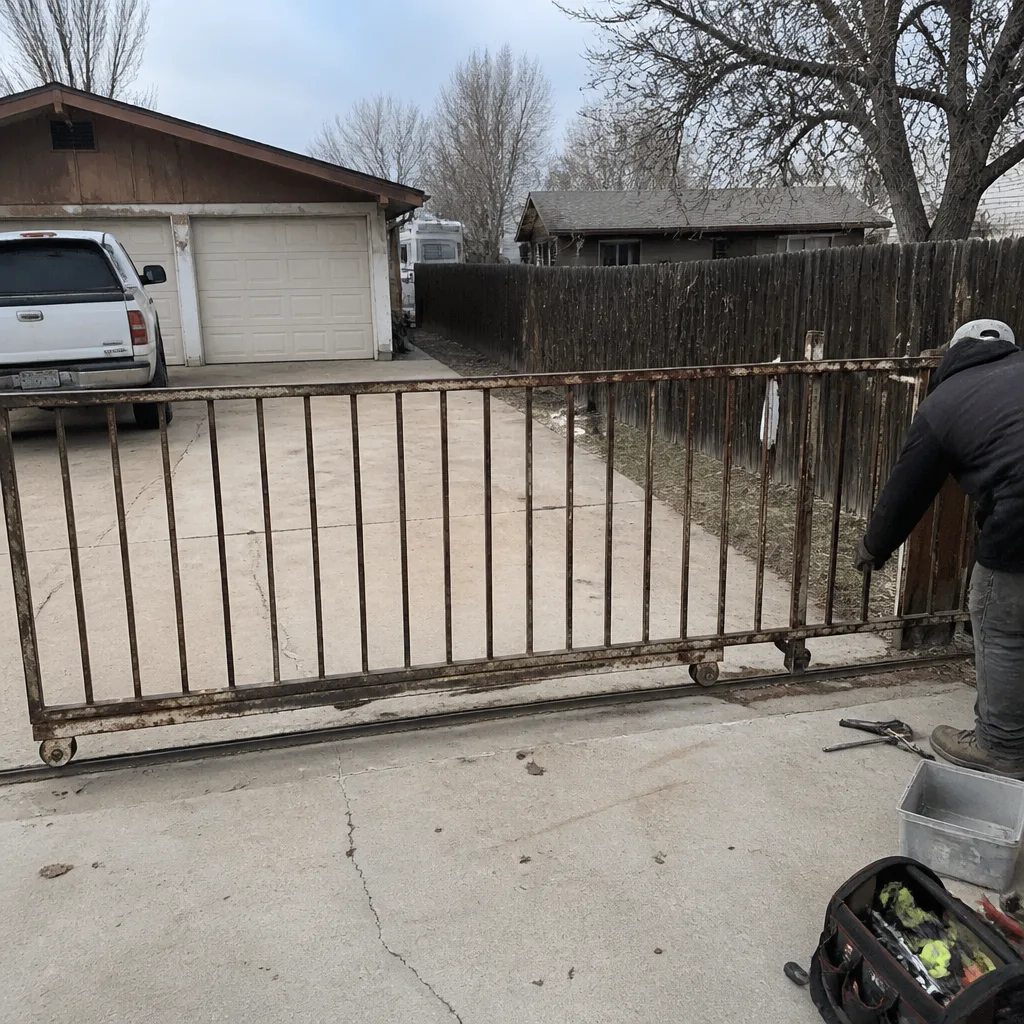 Before
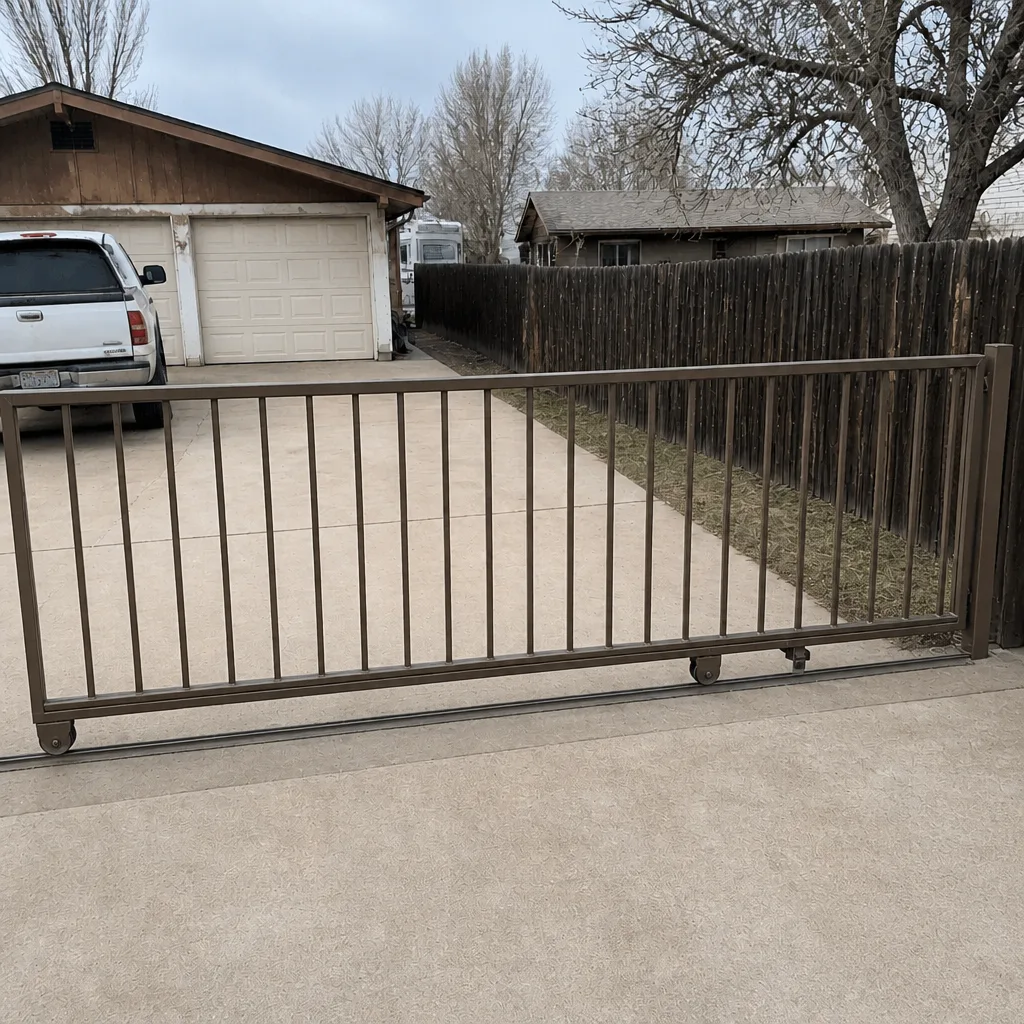 After
When to Call a Professional
Call a professional before you touch the gate in these situations: the gate reverses slowly or doesn’t reverse at all (safety stop); the device hums or clicks but the gate doesn’t move; the operator trips a breaker; you see a visible arc or burn mark on any terminal; the gate opened or closed on its own; or the gate is out of travel and you can hear the motor straining. Beyond safety, call if the gate has drifted more than an inch from its set position, if the chain or rack is visibly worn at the pinion, or if you’ve never had a documented maintenance visit. Vance Gate Repair Winchester offers free estimates in Winchester – call (866) 983-9213 and a live person answers, day or night. If you want a baseline on the rest of the system, start with gate repair in Winchester.
Frequently Asked Questions
Once a year, professionally, regardless of cycle count. Add a homeowner-run quarterly check of the obstruction-reversal, photo-eye alignment, and remote range. An annual professional visit reads the fault log, inspects the electrical enclosure, measures limit-switch positions, and tests the safety edge continuity – all things most homeowners can’t test safely.
Yes on the visible moving parts: chain, rack pinion, pivot points, hinges. Use a chain-specific lithium grease, PTFE dry spray, or light machine oil as appropriate to each component, and wipe any excess. Do not open the operator housing – the gear case is factory-sealed. If your operator housing has loosened, call (866) 983-9213 before the dust gets in.
Put a piece of tape where the gate leaf edge sits when the gate is fully closed. Check the tape position once a month. If the gate has stopped more than about an inch short of the tape, or over-traveled past it, the limit switches have drifted and need resetting. Don’t open the housing yourself on a live system – have a technician measure and reset.
In Winchester, an annual maintenance visit on a residential operator typically runs $180 to $320, depending on the brand and whether the operator is on a solar or backup-battery system. Any part or repair work beyond that comes with its own written price before it starts. Request the price in writing before work begins. Call (866) 983-9213 for an exact number – estimates are free.
Every 2 to 3 years on a typical Winchester residential gate. Ask for a capacity test at each annual visit. Don’t trust the “battery OK” indicator light – it goes off when the battery is already too weak to hold up under a real outage.
If the motor is under 8 years old and the reported fault is a limit switch, encoder, or safety edge, repair is virtually always cheaper than replacement. If the housing has rusted through, the winding is failing, or the brand parts are discontinued, replacement becomes worth pricing. Our team services nine major automation brands, so we’re not going to steer you toward a replacement you don’t need. Call (866) 983-9213 with the brand and model and we’ll tell you the parts picture before you decide. You can also see gate installation in Winchester if a replacement is genuinely the answer.
The Bottom Line
A calendar isn’t a maintenance schedule. A cycle counter, a lubricant-condition check, and a limit-switch tape mark are. Run the quarterly tests without tools: reversal, photo-eye, remote range, and a listen to the motor. Keep the annual professional visit so the electrical enclosure, firmware, and fault log get a real inspection, not a glance. Ask for the written scope and price before work starts, and expect pre- and post-service readings, photographs, and a named watch list when the job is done. If your gate in Winchester hasn’t had a documented service in over a year, that’s your signal. Call (866) 983-9213 for a free estimate. For everything else we handle on the driveway, start at Vance Gate Repair Winchester home.
Written by the team at Vance Gate Repair Winchester.