
Last updated November 18, 2026
 Wrought iron
 Wood & steel frame
 Farm & ranch
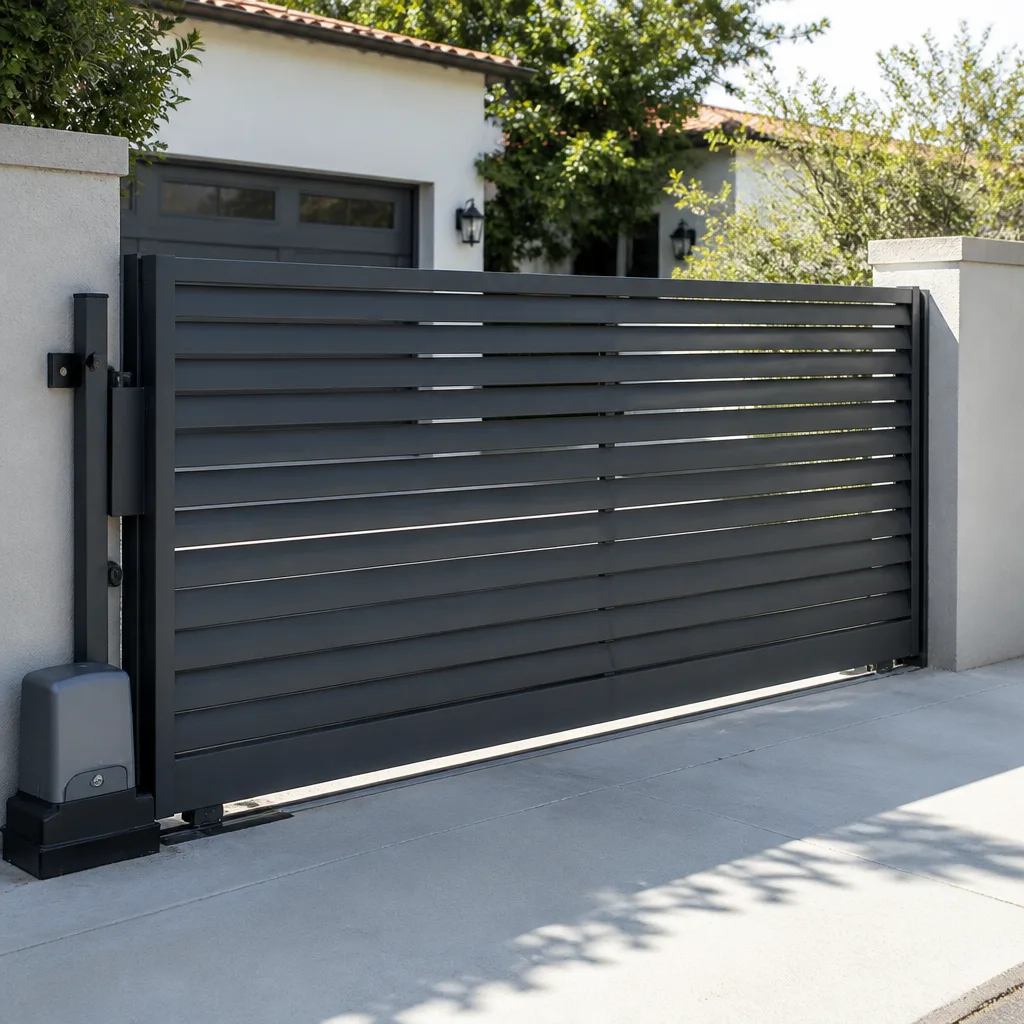 Sliding driveway gates
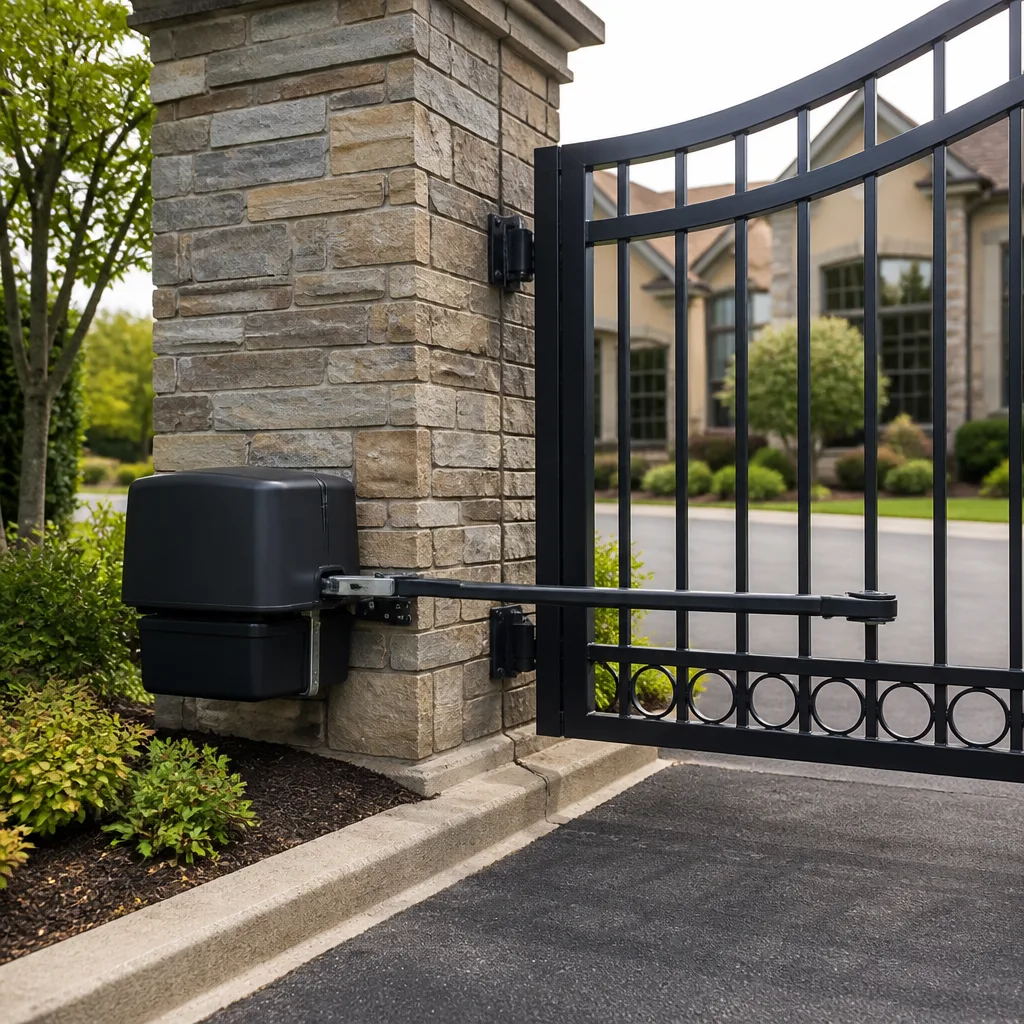 LiftMaster operators
Free on-site gate assessment - hinges, posts, and your LiftMaster or Nice gate operator checked before anything is quoted
The assessment is free and the quote is the invoice.
Get your free estimateDIY vs Professional Gate Repair: What’s Safe to Do Yourself
Replacing the battery in a gate remote is fine to do yourself. Adjusting a swing gate’s close-force setting is the task that ends with a dented car or a broken wrist if the number lands two clicks too high. That gap is where most DIY vs professional gate repair decisions actually get made, and it has nothing to do with how handy you are. Some gate failures give you a second chance. A few don’t. What follows is a task-by-task breakdown of which repairs belong in your hands, which belong in a technician’s, and how to leave a documented trail either way, written from the repair experience we’ve built across Winchester and the neighborhoods around it.
Quick Answer
Safe DIY gate repair covers the low-voltage, low-force end of the work: remote batteries, photo-eye cleaning, track clearing, hinge lubrication, and visual inspections. Repairs that involve springs, close-force or obstruction-sensitivity settings, high-voltage wiring, or a gate heavy enough to crush a vehicle should go to a trained technician with a force meter and a documented procedure. The dividing line isn’t difficulty; it’s what happens when the adjustment is wrong and nobody checks it.
Styles & brands we work with
- Wrought iron
- Wood & steel frame
- Farm & ranch
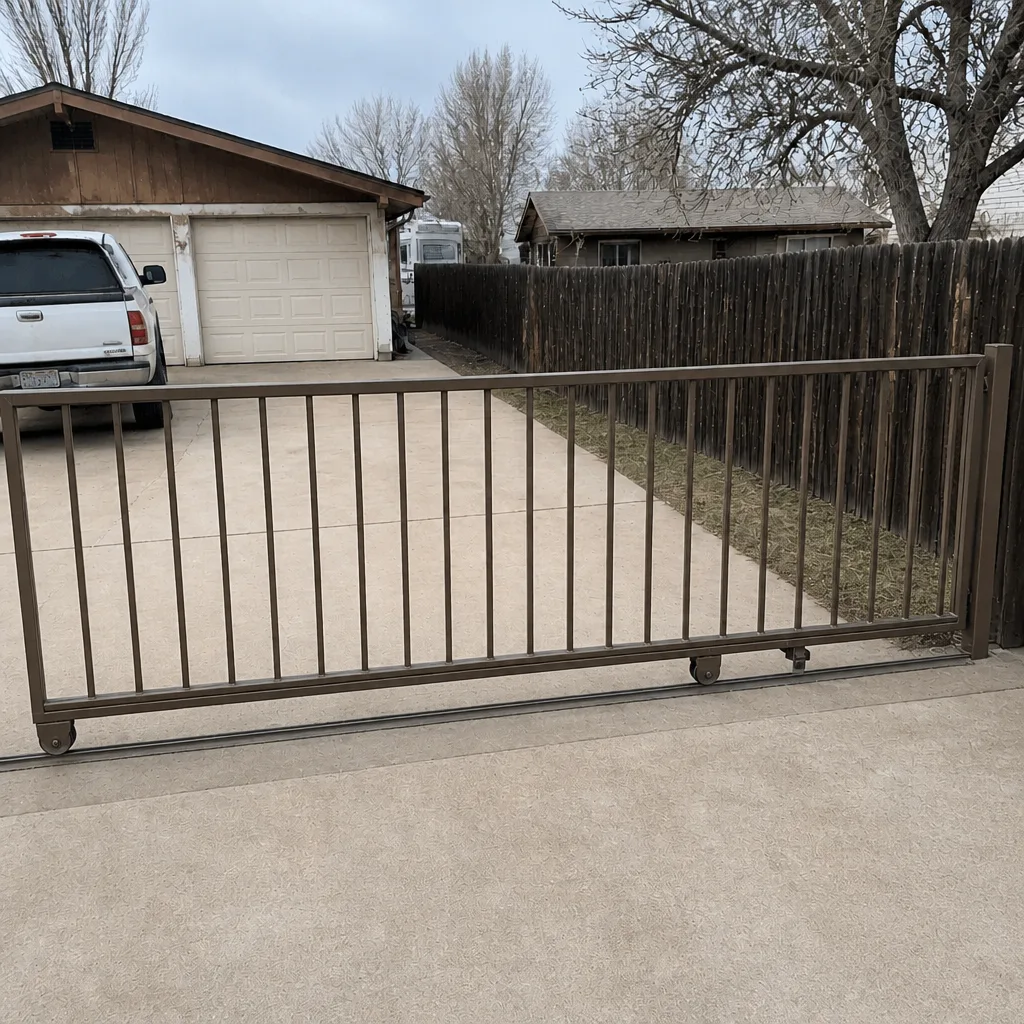
- Sliding driveway gates
- LiftMaster operators
Table of Contents
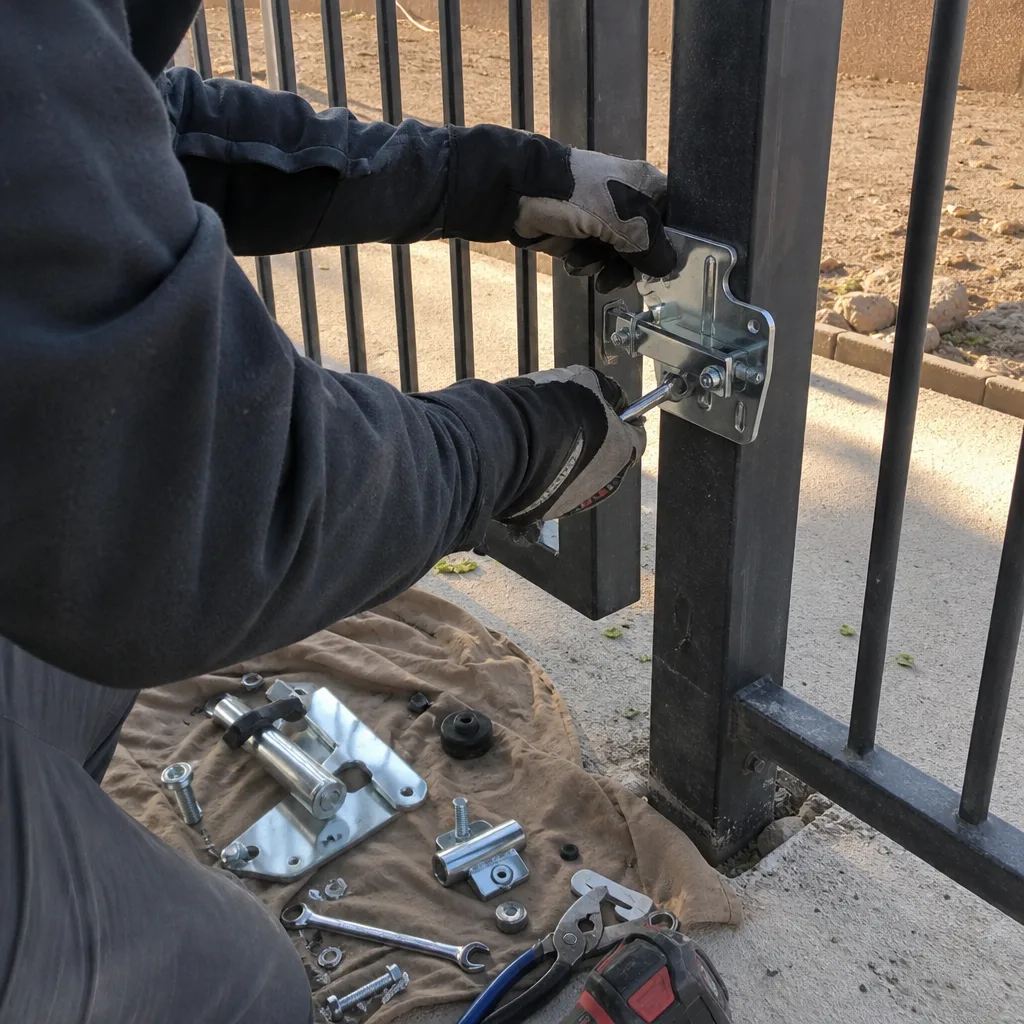
- The Three Tiers of Gate Repair: A Task List
- Tier 1: Safe DIY Repairs You Can Handle Today
- Tier 2: DIY With Documentation, So Nobody Starts From Zero
- Tier 3: Do Not Touch, and the Specific Reason Each Task Is Dangerous
- Why Limit Switches and Obstruction Sensitivity Look Easy and Aren’t
- What Documentation to Produce Before Any DIY Repair
- The Insurance and Legal Exposure of a Self-Adjusted Gate
- How to Describe DIY Work You’ve Already Done to a Technician
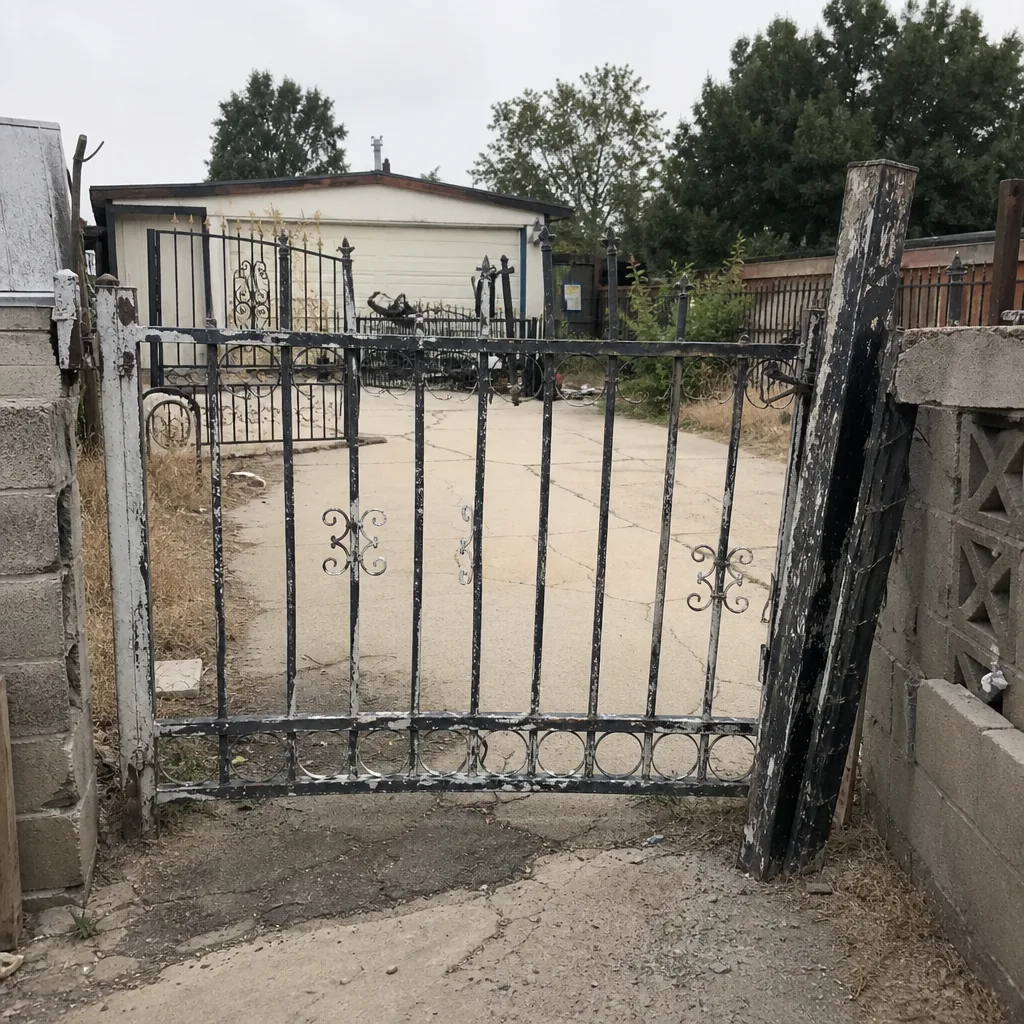 Before
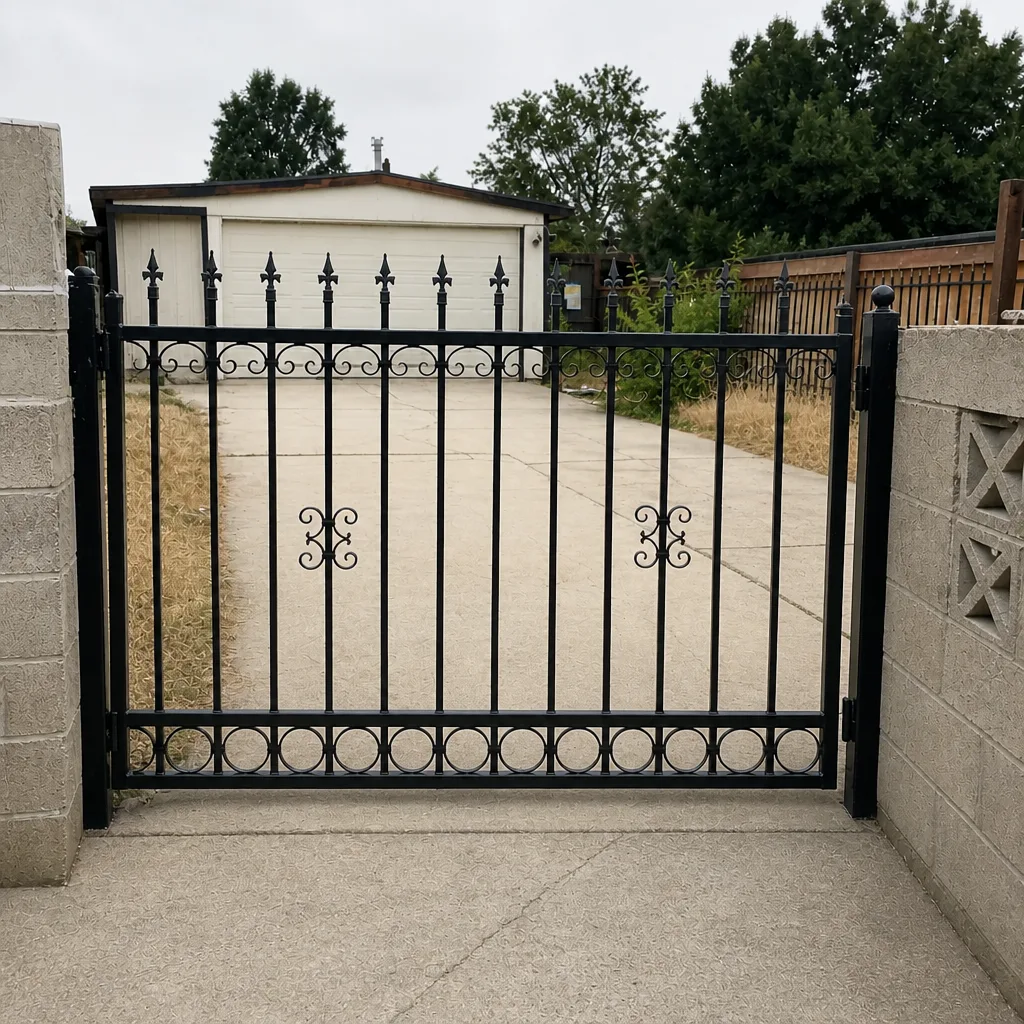 After
The Three Tiers of Gate Repair: A Task List
Every gate repair falls into one of three buckets, and the bucket is set by consequence rather than skill. Tier 1 is safe to do any afternoon with a screwdriver. Tier 2 is doable but requires you to write down and photograph exactly what you did, because the next person to touch that gate is often a technician who needs to know what changed. Tier 3 is work where a single wrong adjustment can trap a vehicle, damage the operator, or hurt someone standing in the path.
We sort repairs this way because we’ve pulled up to too many Winchester driveways where the original problem was buried under three rounds of well-intentioned fixes. A homeowner resets an obstruction sensitivity to stop a false trip, the gate stops reversing when it should, and by the time we’re called the actual fault (a misaligned photo-eye, most often) is two layers down. The tiers exist so that doesn’t happen.
The quick sort
- Tier 1 (safe): remote batteries, remote pairing, photo-eye lens cleaning, track and roller debris clearing, hinge and pivot lubrication, visual inspection of chains and belts.
- Tier 2 (DIY with documentation): replacing a photo-eye pair with a like-for-like unit, swapping a battery backup, reconnecting a known wire to a known terminal, resetting an operator after a power outage.
- Tier 3 (do not touch): counterbalance springs, close-force and obstruction-sensitivity calibration, high-voltage supply wiring, limit-switch setting without a meter, any welding or structural gate frame repair.
Where the tiers get fuzzy is the middle one, and that’s where the documentation habit earns its keep. If you’ve done a Tier 2 repair and left a photo of the before-and-after wire positions, the technician who follows you is diagnosing one problem. Without that record, they’re rebuilding the whole picture from scratch, and that time shows up on your invoice. This is the same reasoning behind the photographed record we leave on every visit, and the thinking behind our gate repair service in Winchester.
Tier 1: Safe DIY Repairs You Can Handle Today
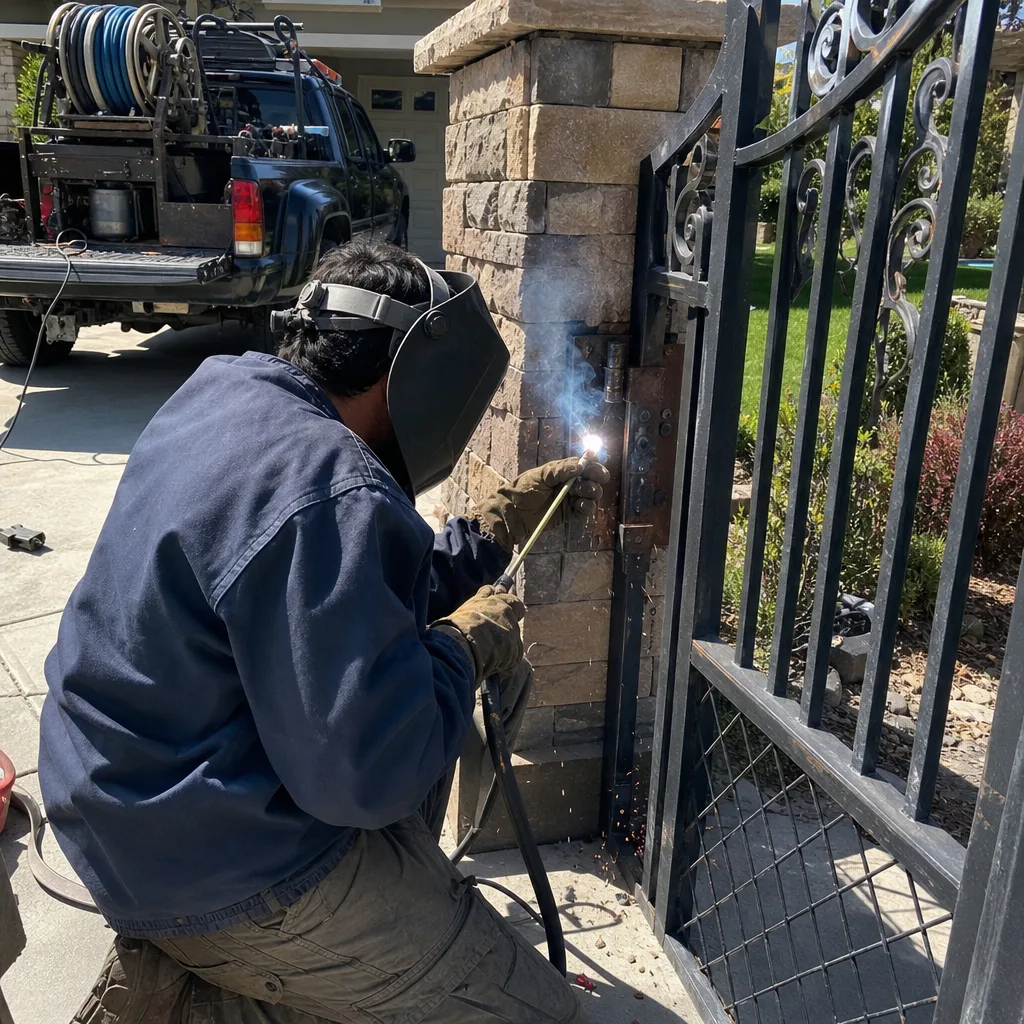
These are the repairs where a mistake means the gate still doesn’t work and you try again. Nothing to crush, nothing to electrocute, nothing to spring back at you. Keep a Phillips and a flathead screwdriver on hand and most of this list is a half-hour job.
- Remote battery replacement. Pop the back, match the coin cell (CR2032 is common), replace, then re-pair only if the remote drops off. Ten minutes, no gate contact.
- Remote re-pairing. Follow the operator manual’s pairing sequence. If you don’t have the manual, the brand name on the housing usually gets you to it. BFT and Linear both publish pairing steps by model.
- Photo-eye lens cleaning. A dusty or spider-webbed lens causes the gate to stall or reverse for no reason. A dry microfiber cloth across both eyes solves more “phantom” faults than anything else on this list.
- Track and roller clearing. Driveway grit, leaves, and in Winchester, windblown desert dust collect in the track and make a sliding gate drag. Clear it before it packs.
- Hinge and pivot lubrication. A light spray on the hinge points quiets a squealing swing gate and slows wear.
- Visual inspection. Walk the gate line once a month. Look for sagging, cracked welds, frayed chain, or a photo-eye knocked out of alignment by a lawnmower.
None of these require you to change a setting the manufacturer established. That distinction matters more than the apparent difficulty of the task, and it’s the reason this list stays short.
Tier 2: DIY With Documentation, So Nobody Starts From Zero
Tier 2 work is where a careful homeowner can save money and still protect the next technician’s ability to diagnose fast. The rule is simple: if you touch a wire, a battery, or a setting, you photograph it and write it down. Before and after, every time.
Replacing a failed photo-eye pair with the same model is a reasonable Tier 2 job. So is swapping an operator’s backup battery, and reconnecting a wire you can clearly trace to its terminal. Resetting an operator after a power outage falls here too, because you’re clearing a state, not changing a force curve. In each case, the work is reversible and the risk sits in what you fail to record.
What to capture before you start
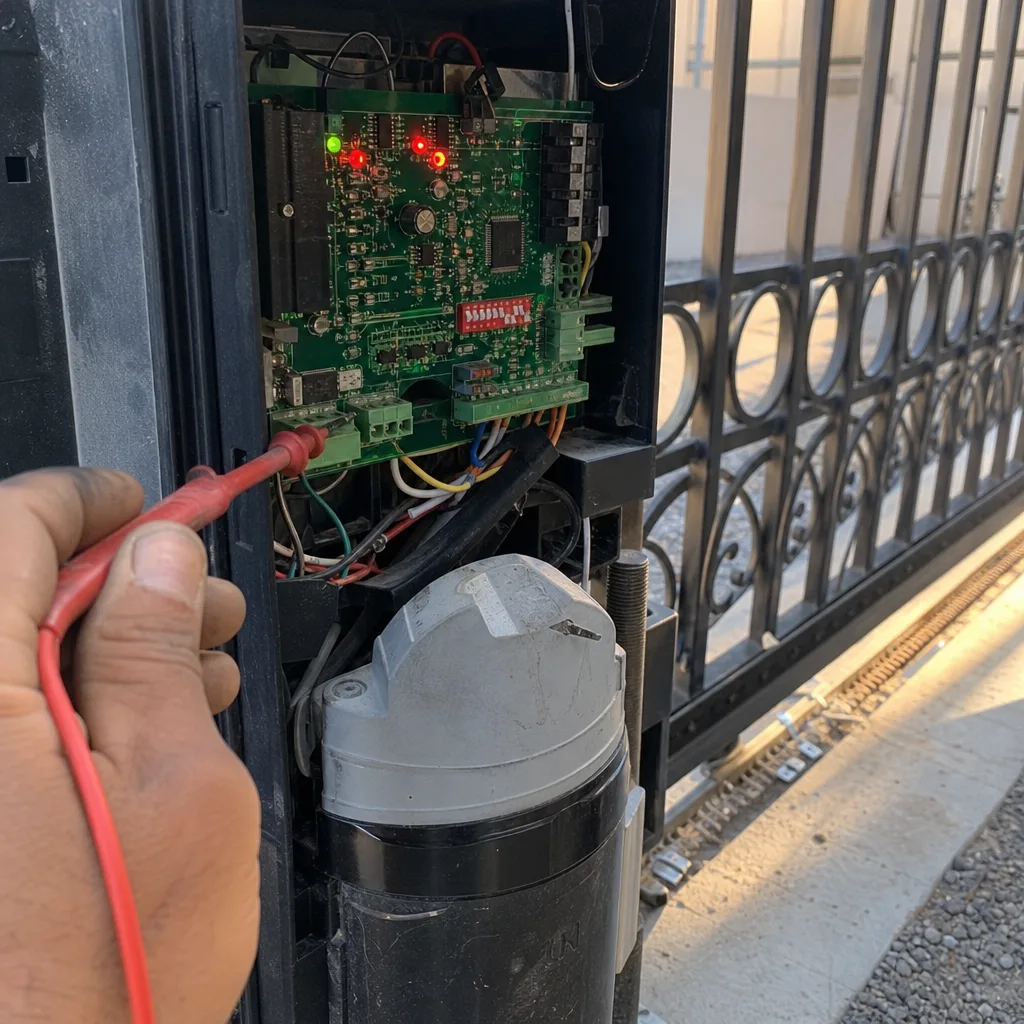
- A wide photo of the open operator housing showing every wire in place.
- Close photos of each terminal block, so wire colors and positions are readable.
- A photo of the model and serial label on the operator housing.
- If you’re in settings, a screenshot or photo of the current values before you change anything.
- A one-line note: what was wrong, what you did, the date. Tape it inside the housing.
This is a version of what our technicians do under Clause 4 of the Haven Standard, which requires a documented photo record on every job. A homeowner doing Tier 2 work can borrow the same habit, and it pays off the next time anyone opens that housing, whether that’s you in six months or a technician you call in Winchester. If the operator itself is failing, our gate motor and opener service in Winchester covers the repair side across most major brands rather than pushing toward replacement.
Tier 3: Do Not Touch, and the Specific Reason Each Task Is Dangerous
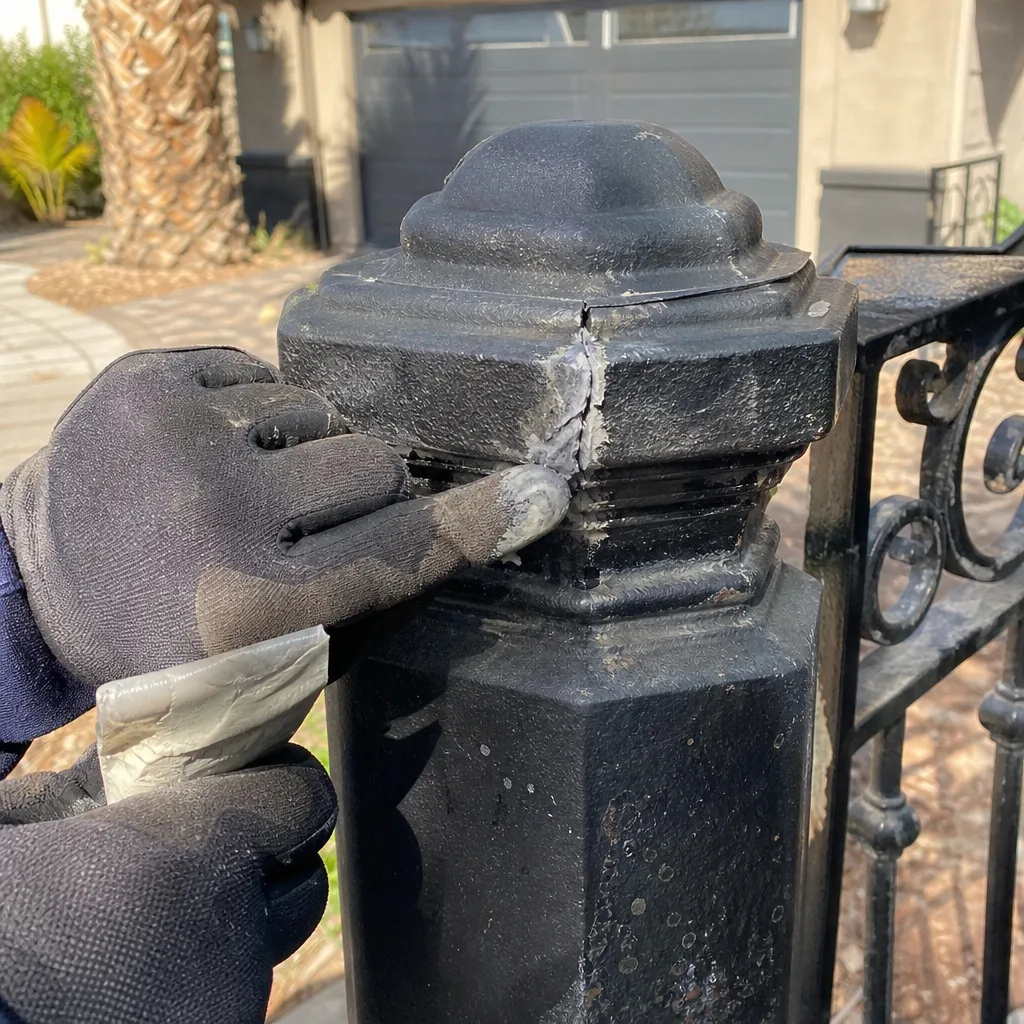
The dangerous tasks share a trait: they store energy or control force. Get one wrong and the gate doesn’t politely stop working. It keeps operating with the wrong parameters, or it lets go of energy all at once. Here’s why each belongs to a trained technician.
Counterbalance springs. A swing or slide gate’s spring holds the gate’s weight so the operator arm doesn’t have to. That spring is under heavy tension. A spring that releases while a hand or face is near the mechanism causes serious injury, which is why the trade treats spring work as its own danger category. Do not attempt it. This is the one repair on the list where we’d say it plainly: leave it to someone trained to release the tension safely.
High-voltage supply wiring. The line feeding an operator from the house or a junction box carries mains voltage. Wiring errors here are a shock and fire hazard, and they often sit behind a panel you shouldn’t be opening.
Close-force and obstruction-sensitivity calibration. Covered in the next section, because it’s the task that looks the easiest and does the most damage.
Limit-switch setting without a force meter. A limit switch tells the operator when the gate has reached its full open or closed position. Set it by ear and the gate can over-travel into a stop, strain the operator, or fail to seat, and you won’t know which until something breaks.
Welding and structural frame repair. A cracked hinge post or a bent gate frame is a load-bearing problem. A weld that looks solid but isn’t turns a gate into a falling object.
Why Limit Switches and Obstruction Sensitivity Look Easy and Aren’t
This is the category where we see the most damage and the least caution. Limit-switch and obstruction-sensitivity adjustments look trivial on video. Turn a screw, watch the gate, done. What the video leaves out is the meter and the reference numbers, and without those you’re setting a safety threshold by guesswork.
Obstruction sensitivity is the setting that tells the operator how much resistance to allow before it reverses. Set it too high and the gate stops reversing when it should, so a child or a pet in the path doesn’t stop it. Set it too low and the gate reverses on a stray leaf, which is why so many homeowners raise it. A technician calibrates that setting against a force meter so the reverse threshold lands where the manufacturer specifies. You cannot see that number by watching the gate move. You can only measure it.
We’ve seen the same pattern in Winchester: a homeowner raises sensitivity to stop a false trip, the false trip was actually a misaligned photo-eye or a dragging track, and the real safety margin gets traded away to cover a different fault. A technician with a meter fixes the actual cause and restores the threshold in one visit.
What Documentation to Produce Before Any DIY Repair
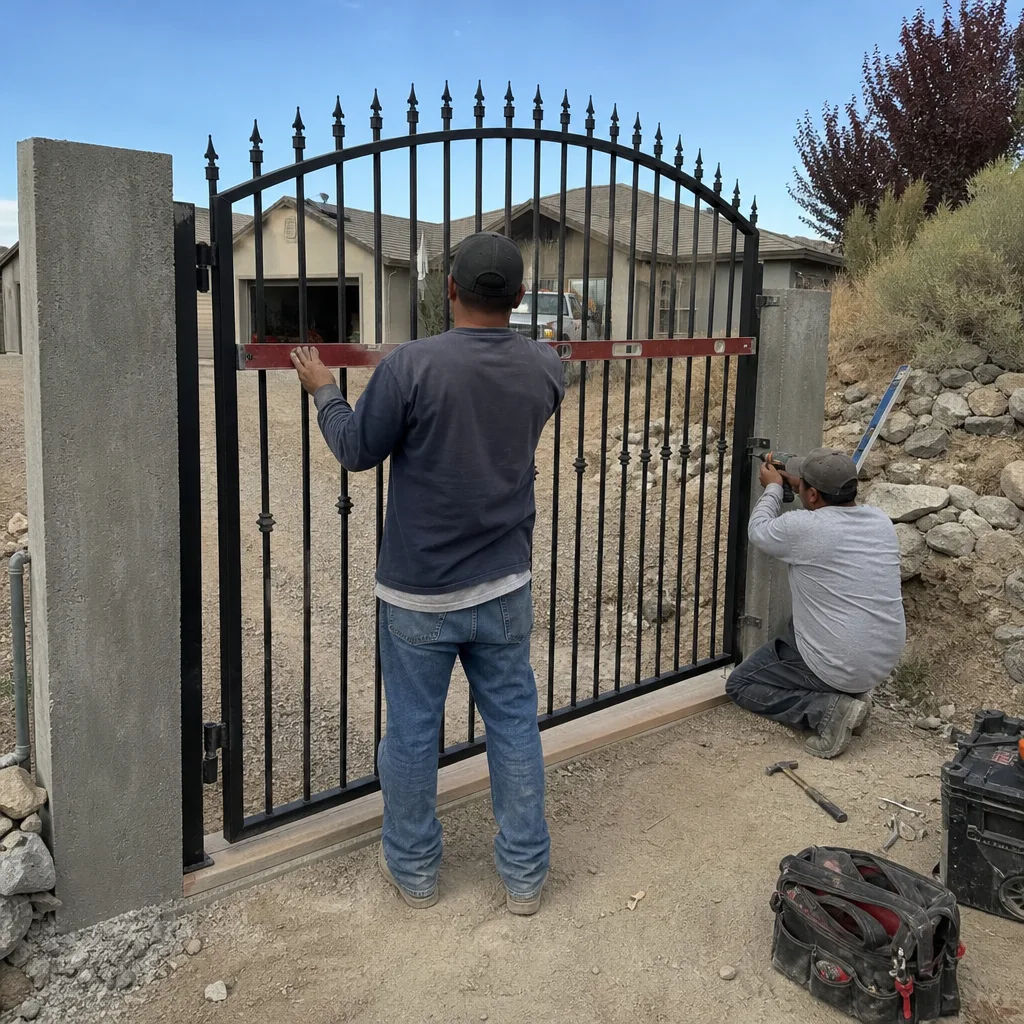
Whether you do the work or hand it off, the record is what keeps the next repair from starting at zero. A future technician diagnosing on top of your undocumented fix is the most expensive version of this problem. Before you touch anything on a gate, produce these:
- Photos of the whole assembly. One wide shot of the gate, one of the operator, one of the hinges or track. Cell phone photos are fine.
- Model and serial numbers. Photograph the label on the operator housing. This tells a technician which of nine common brands they’re working with and which manual applies.
- Wire labeling. If you disconnect anything, label both ends (masking tape and a pen work). Photo the terminal block before and after.
- Settings screenshots. If your operator has a display, photo the settings menu before you change a value.
- A written log. One line per action, dated: what was wrong, what you did, the result. Keep it near the operator.
This is exactly the kind of record our technicians leave behind on every job, and it’s why we can hand you a photo log of what was found and adjusted before we drive off. A homeowner who produces even a partial version of this saves the technician diagnostic time, and that shows up directly in the estimate. It’s also the first thing our gate installation service in Winchester reviews when a new operator goes in on a property with prior work.
The Insurance and Legal Exposure of a Self-Adjusted Gate
A gate that injures someone or damages a vehicle is a liability event, and a self-installed or self-adjusted gate changes how that event gets handled. Standard homeowners’ policies typically exclude damage that results from faulty workmanship performed by the insured. That means a gate you adjusted, that then fails to reverse and dents a neighbor’s car or injures a delivery driver, may fall outside your coverage in a way a professionally serviced gate would not.
The liability picture has two pieces. The first is coverage: if the harm traces to your own faulty adjustment, the insurer may deny the claim and you may be personally responsible for the damage. The second is the record: a documented professional service history is evidence that the gate was maintained to the manufacturer’s specification. A gate with no record, adjusted by hand, is harder to defend. This is where the written record we leave on every job earns its keep beyond convenience, and it’s why we recommend a professional calibration any time a force setting is touched, even if you handle everything else yourself.
How to Describe DIY Work You’ve Already Done to a Technician
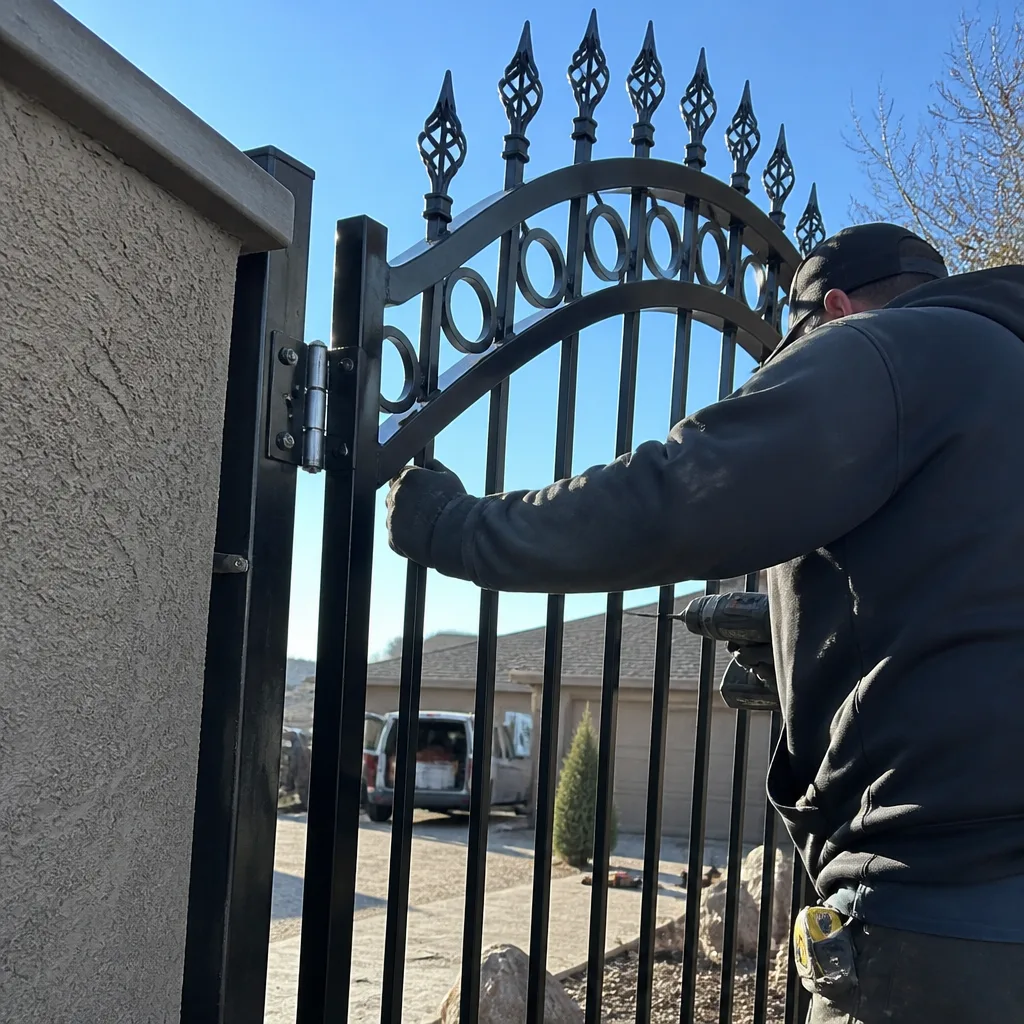
If you’ve already made a fix, describe it in a way that lets the technician diagnose the current problem without re-solving the old one. The wrong way is to describe the symptom and leave out the repair. The right way is to give the technician the sequence, in order, with dates.
- Say what you changed and when. “I replaced the photo-eye pair three weeks ago with a like-for-like model” tells us more than “the gate’s been acting up.”
- Say what setting you touched, even if you put it back. “I raised the reverse sensitivity two clicks to stop a false trip” is critical, because it changes what we calibrate.
- Hand over your photos and notes. If you kept a log, show it. If you didn’t, say so, and we’ll re-document everything.
- Name the symptom timeline. When did the original problem start, when did you first attempt a fix, has it changed since.
In our experience, the clearest handoffs come from homeowners who treated their own repair like a technician would: a photo, a note, a date. If you’re not sure what you’re looking at, our team can start from the photos you have. You can reach us through the Vance Gate Repair Winchester home page or a call, and we’ll tell you straight whether it’s a DIY job or a technician job.
Common Mistakes to Avoid
- Raising obstruction sensitivity to stop a false trip. The false trip is almost always a misaligned photo-eye or debris in the track. Fixing the symptom by widening the force threshold removes the safety margin and hides the real fault.
- Setting a limit switch by ear instead of with a meter. A gate that “sounds right” can still be over-traveling into the stop, which strains the operator and shortens its life. Measure, don’t listen.
- Attempting spring work without training. This is the most dangerous item on the list. A spring under tension releases with enough force to break bones. If you find yourself near one with a wrench in hand, step back and call.
- Doing a Tier 2 repair with no record. The wire you reconnect without a photo is the wire the next technician has to trace by hand, and that’s billed time. In Winchester, where windblown dust already wears down components, a missing record makes every repair slower.
- Mixing brands on a single operator. A replacement photo-eye or remote from a different brand than the operator can introduce faults that look like a failing motor. Match the brand, or have a technician confirm compatibility first.
- Assuming a silent gate is a dead gate. A gate that won’t move is often a tripped photo-eye, not a failed motor. Check the lens before you assume the worst and price a replacement.
- Touching high-voltage wiring without a qualified electrician. The supply line carries mains voltage. Anything past the low-voltage control side belongs to someone licensed for it, full stop.
See the difference
BeforeAfter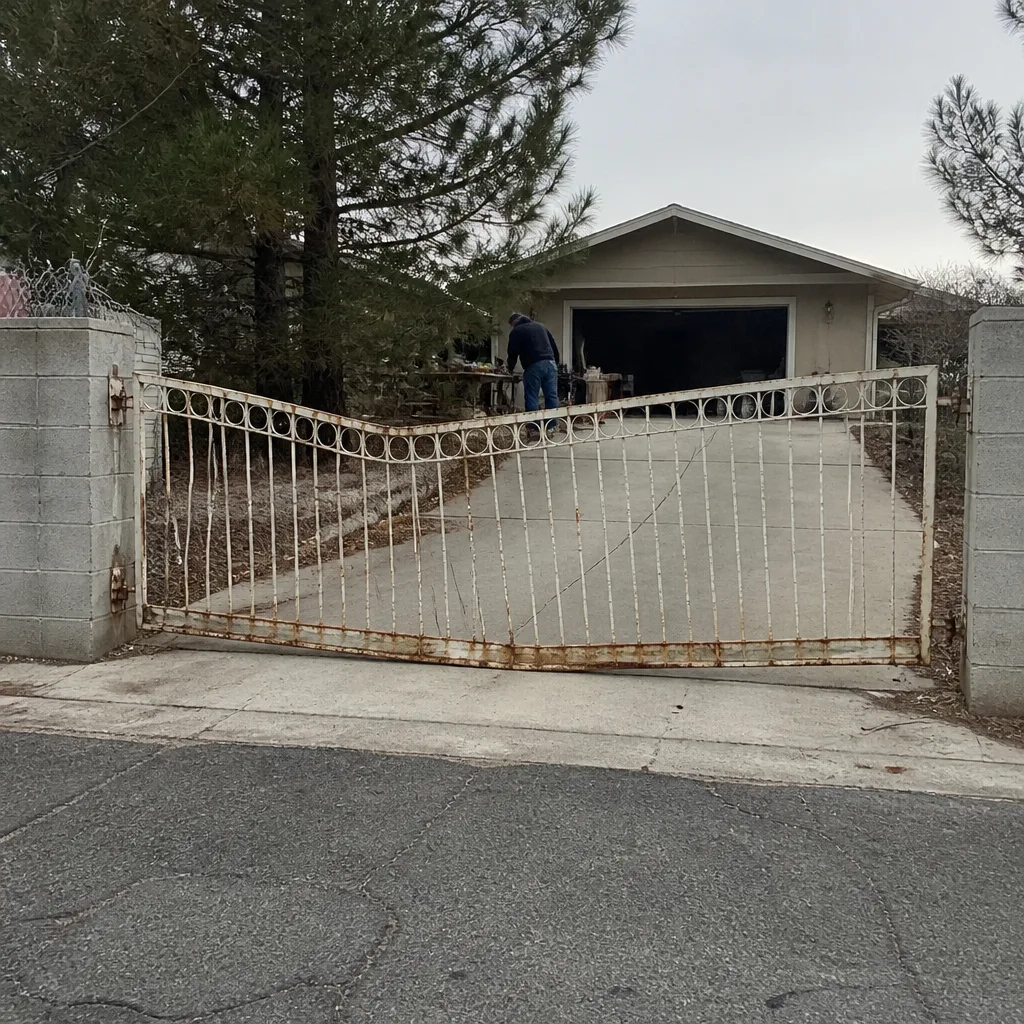 Before
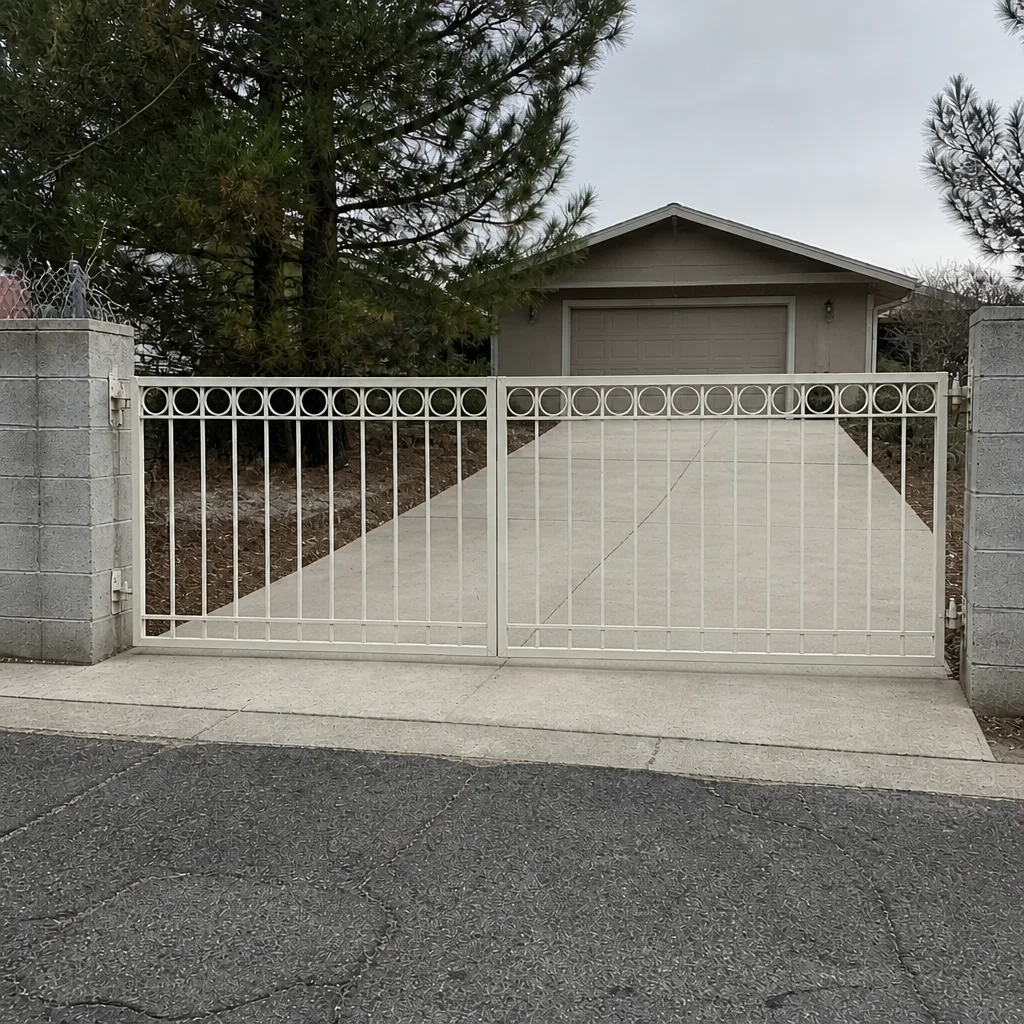 After
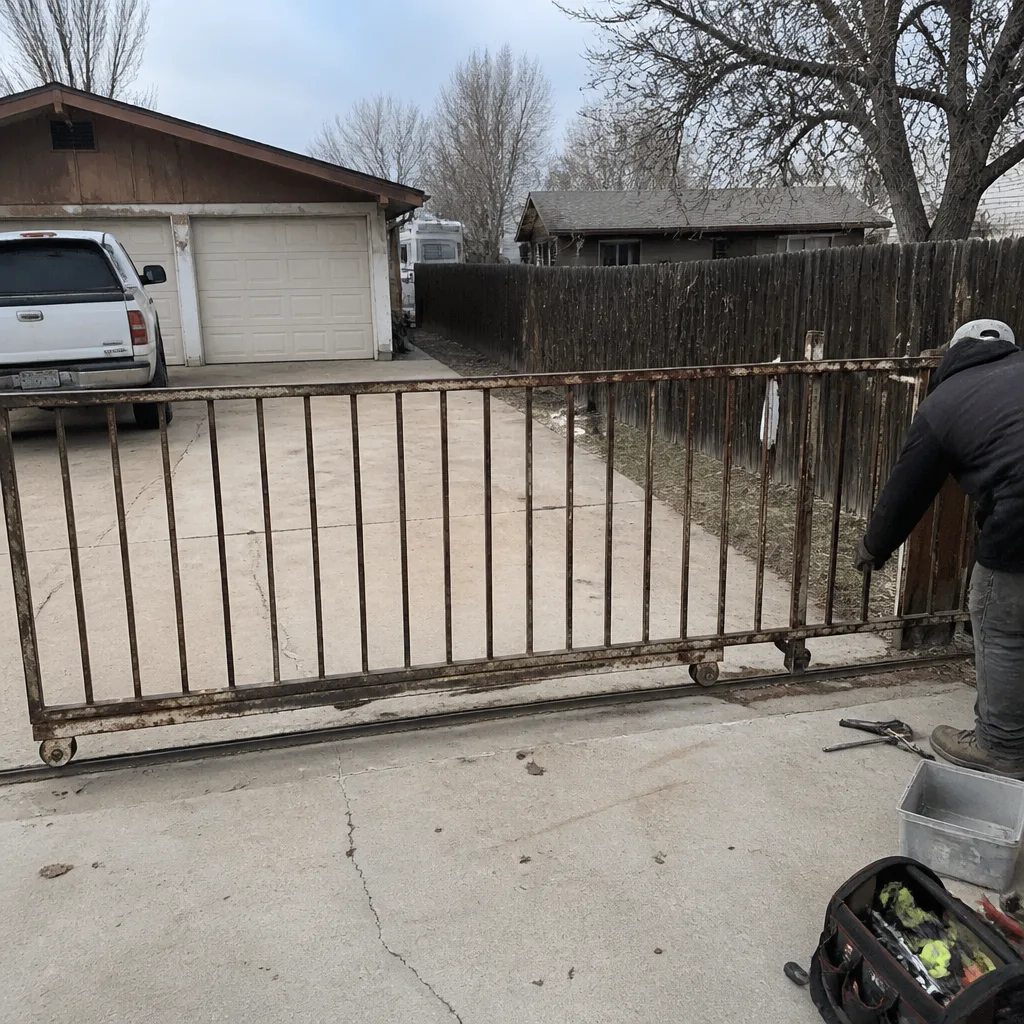 Before
 After
When to Call a Professional
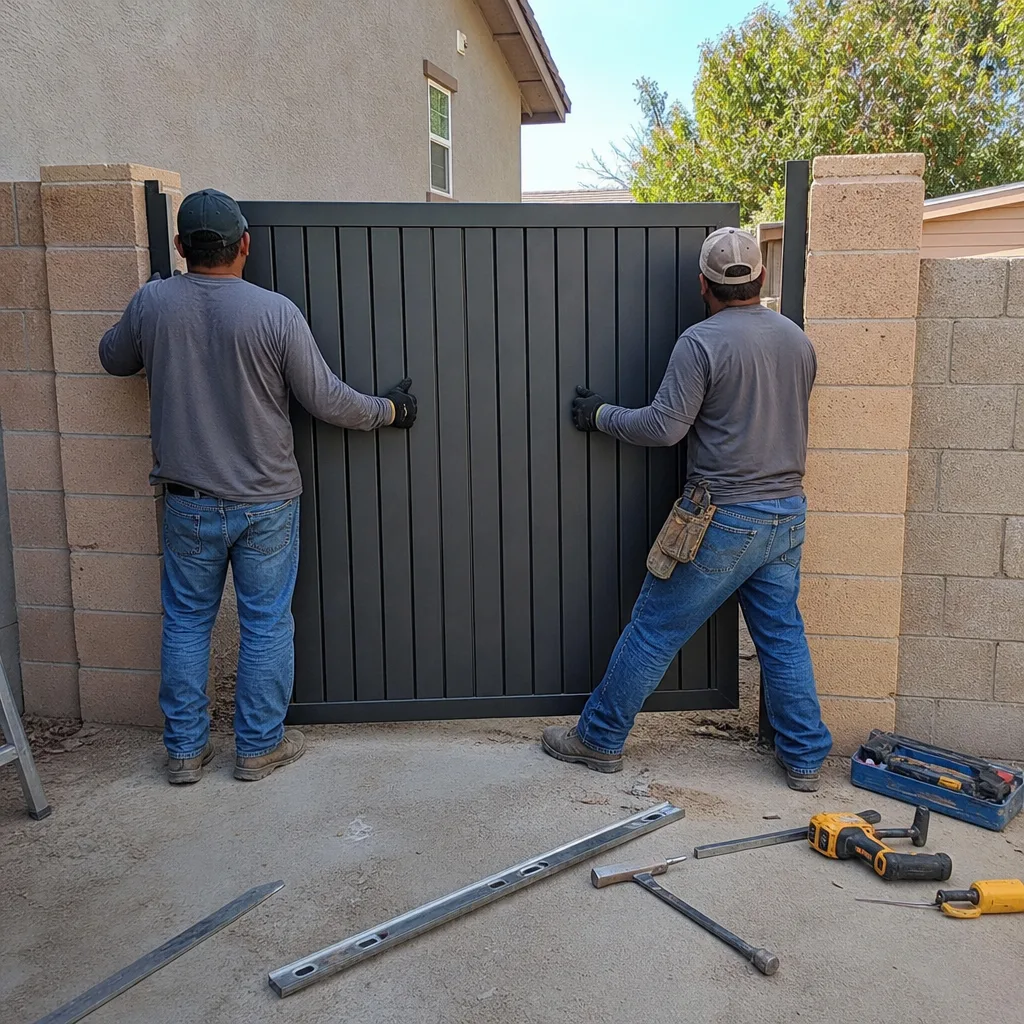
Call when the repair touches a spring, the supply wiring, a force or limit setting, or a structural weld. Call when a gate reverses unpredictably, travels past its stop, or fails to reverse when something blocks it, because those are safety failures and they don’t fix themselves. Call when you’ve done a Tier 2 repair and the problem came back, because a second attempt on top of the first usually muddies the diagnosis. And call when a gate is heavy enough that a failed operator could let it fall, which is most slide gates and many swing gates.
Vance Gate Repair Winchester offers free estimates in Winchester. A live person answers the phone at any hour, and we’ll tell you plainly whether your repair is a DIY job or one that belongs with a technician. Call (866) 983-9213 to talk it through.
Frequently Asked Questions
Yes. Remote battery replacement is a safe DIY repair. Pop the back open, match the coin cell (CR2032 is common), swap it, and re-pair only if the remote drops off. No gate contact and no risk.
A gate that reverses for no apparent reason is usually reacting to a misaligned photo-eye or debris in the track, not a failing motor. In Winchester, windblown dust and grit pack into tracks and photo-eye housings faster than in greener climates, so start there. Clean the lenses and clear the track before assuming the operator is failing, and call if the false trips continue.
No. Close-force and obstruction-sensitivity settings are calibrated against a force meter, and setting them by ear or by feel removes the safety margin that stops the gate when something blocks it. This is a technician job. Call (866) 983-9213 for a free estimate on calibration.
No. Counterbalance springs are under heavy tension and a released spring causes serious injury. Care doesn’t change the stored energy. This is the single most dangerous gate repair on the list, and it belongs to a trained technician without exception.
It can. Standard homeowners’ policies typically exclude damage that results from faulty workmanship by the insured, so a gate you adjusted that fails and causes damage may be denied coverage. A documented professional service history is stronger evidence that the gate was maintained to specification.
Yes. We service nine major gate-automation brands, including BFT, Linear, Viking, and Ghost Controls. That means we work on whatever operator is already on your property rather than steering you toward a replacement. If you’ve done a DIY repair and want a second opinion, call (866) 983-9213 and we’ll review it at no charge.
The Bottom Line
DIY vs professional gate repair isn’t a question of confidence or skill. It’s a question of what happens if the fix is wrong. Remote batteries, photo-eye cleaning, track clearing, and lubrication are yours to handle, and doing them keeps a gate running well between service calls. Force settings, limit switches, springs, high-voltage wiring, and structural welding are not, no matter how simple they look on video, because a wrong adjustment there doesn’t just break the gate; it removes a safety margin. Produce a record for any repair you do, and hand that record to a technician if you call one. In Winchester, that habit is the difference between a fast diagnosis and a costly rediscovery.
When a repair lands in the do-not-touch tier, call Vance Gate Repair Winchester at (866) 983-9213 for a free estimate. Every job comes with a written price before work starts and a documented photo record when it’s done, and every repair is covered by the 365-Day Done Right Promise.
Written by the team at Vance Gate Repair Winchester.