
Last updated November 18, 2026
 Wrought iron
 Wood & steel frame
 Farm & ranch
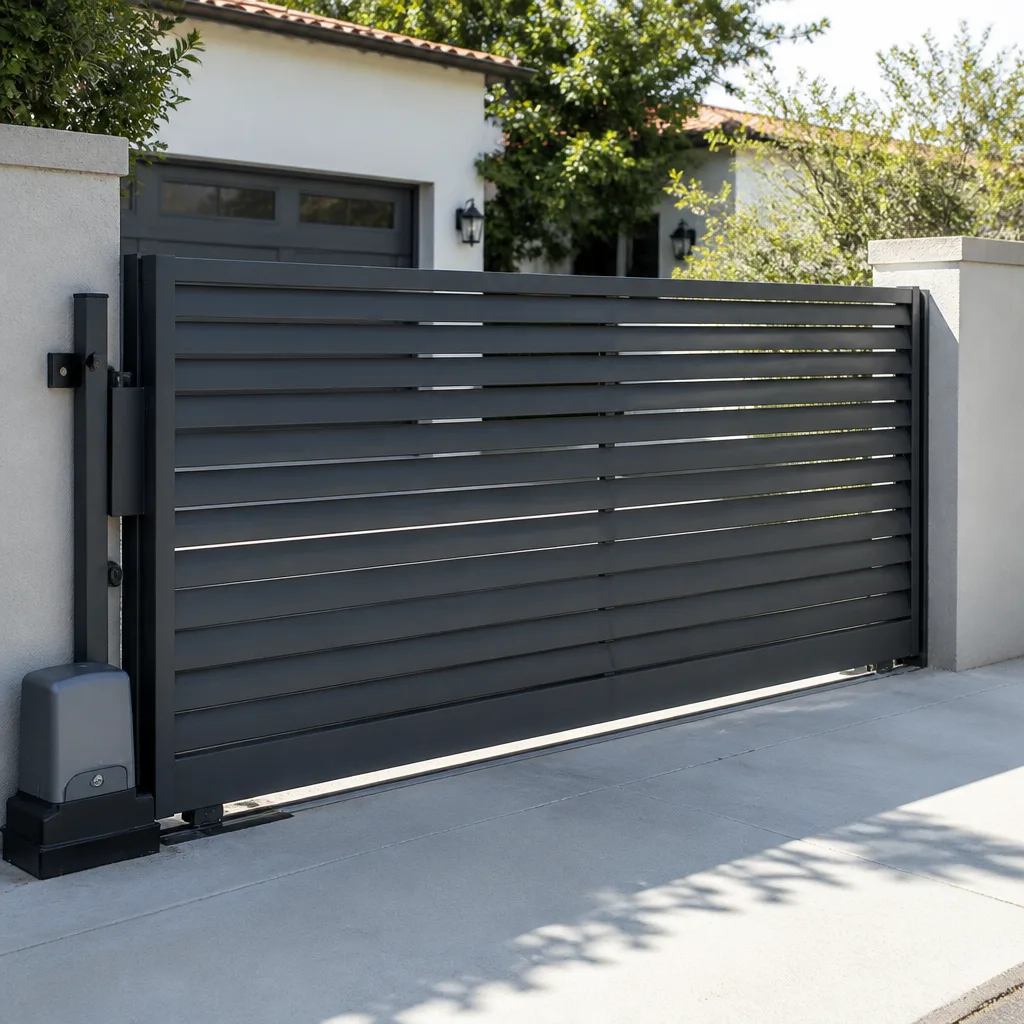 Sliding driveway gates
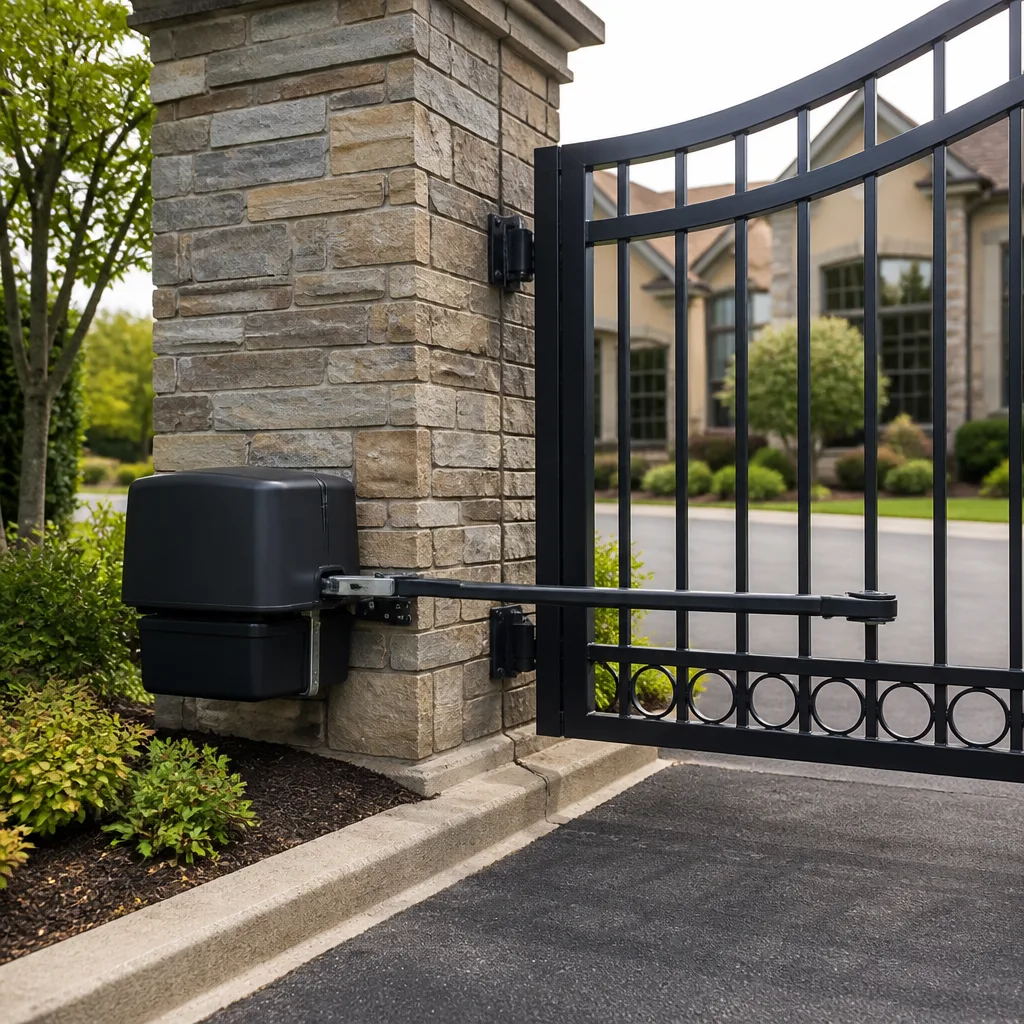 LiftMaster operators
Free on-site gate assessment - hinges, posts, and your LiftMaster or Nice gate operator checked before anything is quoted
The assessment is free and the quote is the invoice.
Get your free estimateDIY vs Professional Gate Motor & Opener: What’s Safe to Do Yourself
A homeowner who programs their own remote saves $0 and risks nothing. A homeowner who self-installs the transformer connection saves $150 and may void the motor warranty, fail a future home inspection, and create a shock hazard. The line between those two tasks is exact, and most gate advice online blurs it. We’ve opened control boxes across Winchester where a homeowner’s “quick fix” cost $800 to undo. This guide draws that line task by task: what you can safely handle, what voids your warranty, what Nevada wiring rules catch at resale, and what a documented professional record is actually worth on your next service call.
Quick Answer
Remote programming, obstruction-force testing, and lubrication are genuinely safe to do yourself. Low-voltage wiring connections, transformer installation, and control-board replacement are not – they can void manufacturer warranties, create shock hazards, and raise code violations that surface during a home sale. Everything in between depends on the documentation the work leaves behind.
Styles & brands we work with
- Wrought iron
- Wood & steel frame
- Farm & ranch
- Sliding driveway gates
- LiftMaster operators
Table of Contents
- Where the DIY Line Actually Falls
- Tasks That Are Safe to Self-Serve
- Tasks That Require a Licensed Professional
- Which Warranties Self-Installation Voids
- Nevada Code and Low-Voltage Gate Wiring
- What a Professional Installation Documents
- The DIY Risk Unique to Gate Motors
- Common Mistakes to Avoid
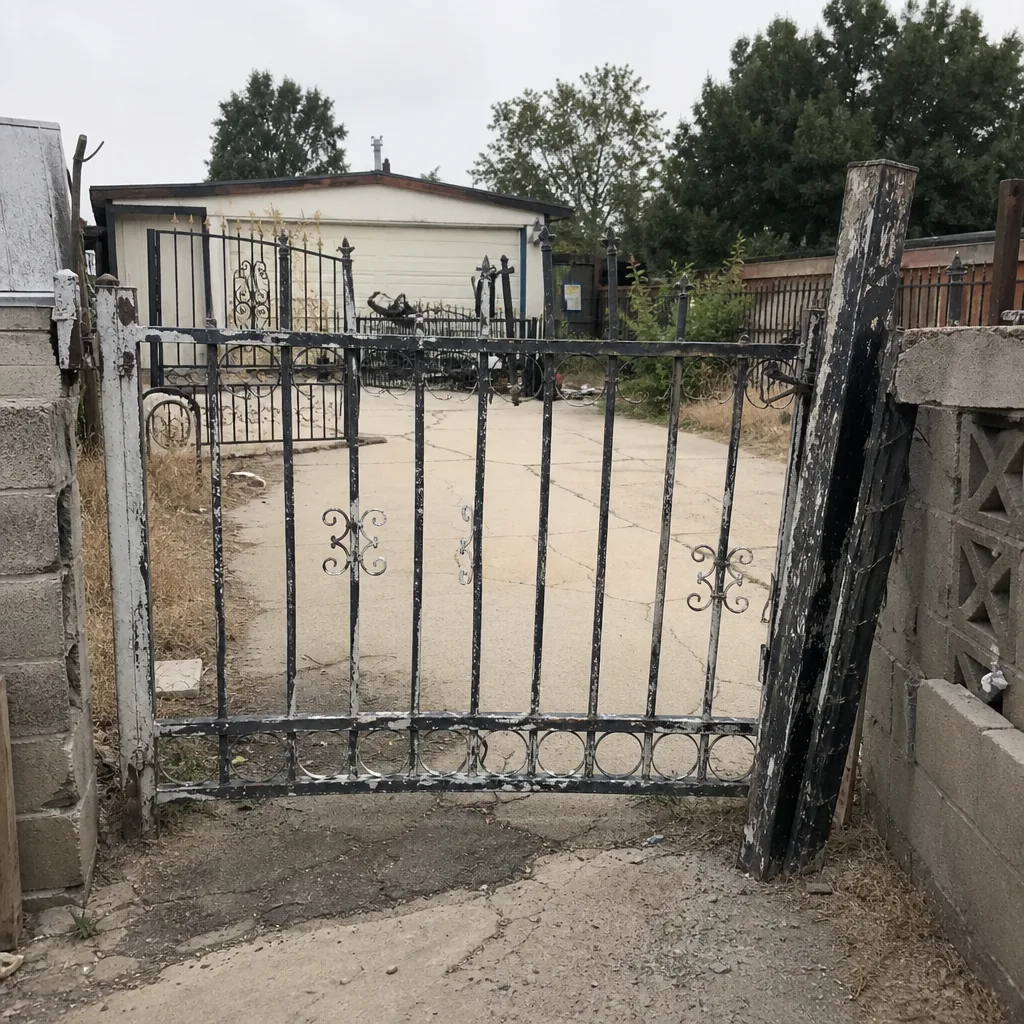 Before
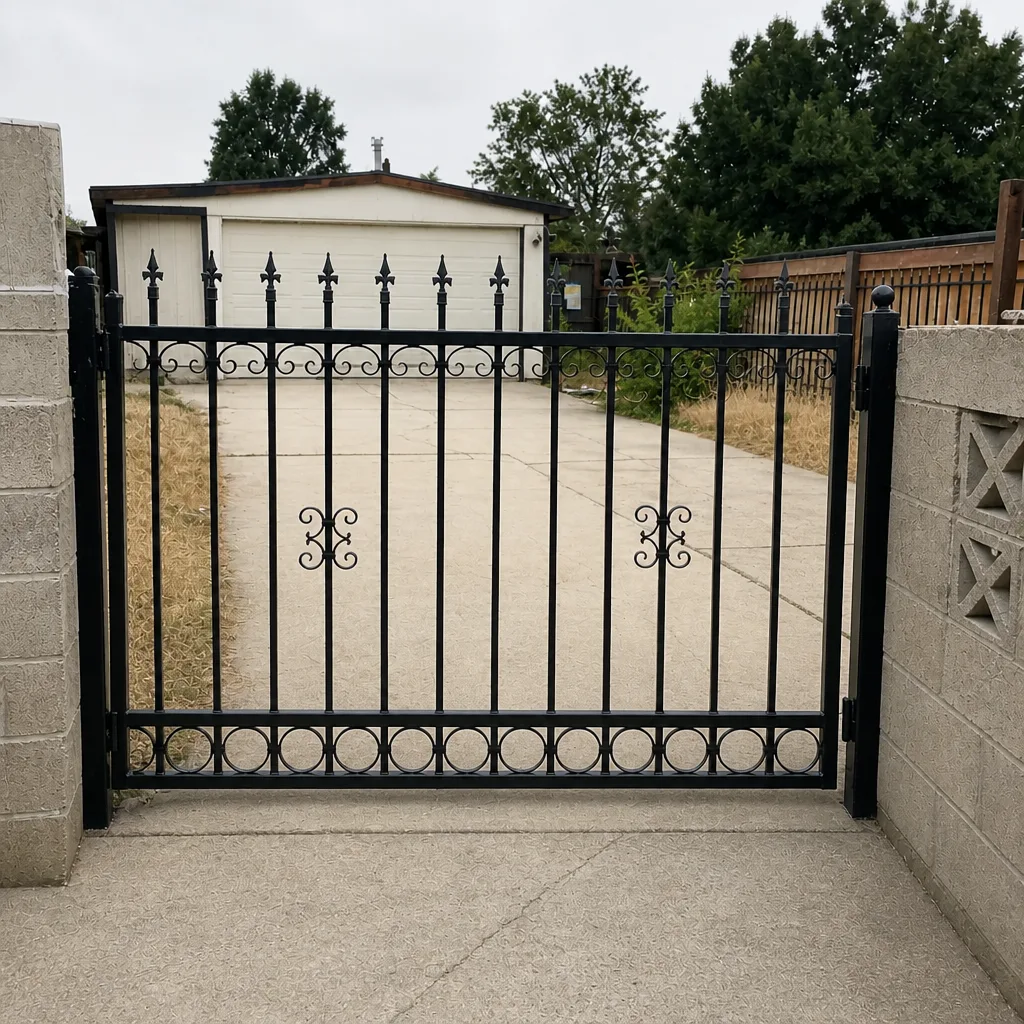 After
Where the DIY Line Actually Falls
The DIY question for gate motors isn’t about whether you’re handy. It’s about three things that have nothing to do with skill: liability, warranty language, and the written record. A remote programmed wrong just doesn’t work. A transformer connected wrong can shock the next person to touch the housing, and it can leave a wiring condition that an inspector flags years later when you’re selling the house.
We service nine major automation brands, including LiftMaster, FAAC, Elite, and Mighty Mule, and the warranty terms differ sharply between them. Some manufacturers explicitly allow homeowner commissioning – the initial setup and force adjustment after a motor is mounted. Others void coverage the moment anyone but a licensed installer opens the control enclosure. That difference matters more than most homeowners realize, because it decides who pays when a control board fails 18 months in.
In Winchester, we see a specific pattern in spring: homeowners fire up dormant gates after winter, hit a fault, and start troubleshooting from a support forum. About half the resulting service calls trace back to a setting someone changed that we then have to undo before we can even diagnose the original problem. The line below is what we’d hand a neighbor who asked before touching anything.
Tasks That Are Safe to Self-Serve
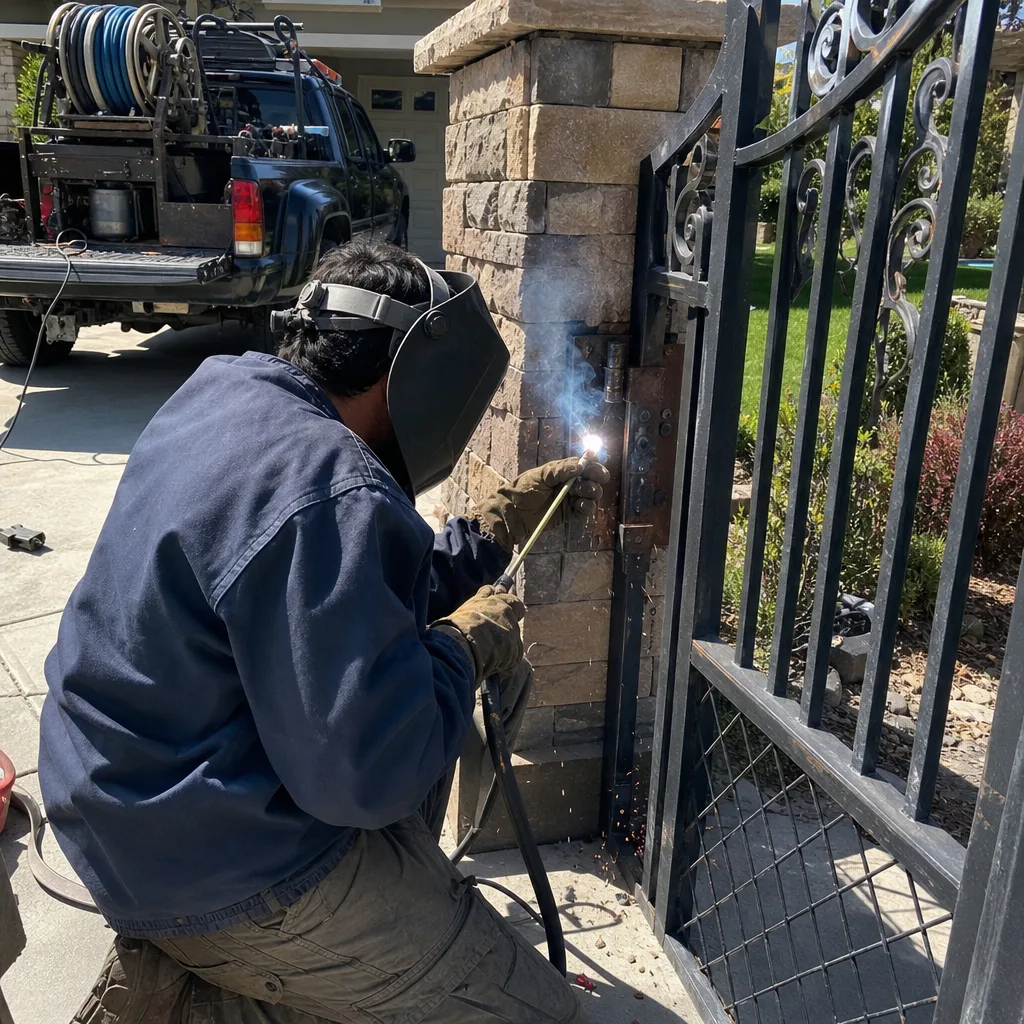
These three tasks cost you nothing in warranty, carry no meaningful liability, and are worth doing before you call anyone. If your gate is misbehaving, start here – you may solve it in ten minutes.
1. Programming and changing remotes. Adding a handheld remote or keypad code is a menu operation on most newer control boards. It doesn’t touch the power side, doesn’t require opening the wiring compartment, and leaves the warranty intact. If the remote dies, replacing the battery is the same category. On LiftMaster and Elite units this is usually a button-press sequence detailed on the inside of the control-box cover.
2. Obstruction-force testing. This is the one safety test every homeowner should know. With the gate moving, block the path with a firm object at mid-travel and confirm the gate reverses or stops. Do it monthly. If it grinds against the obstruction instead of backing off, the force setting is too high and needs a professional adjustment – a gate that doesn’t reverse is the single most common cause of gate injuries.
3. Lubrication and visual inspection. Grease the hinge points, the operator arm pivots on a swing gate, or the track and rollers on a slide gate. Clear debris from the photo-eye lenses. Check that the photo-eye (the infrared beam that stops the gate if something crosses the path) is aligned – if the beam is interrupted, the gate simply won’t close.
- Test the obstruction reversal at the start of every month.
- Lubricate hinge and pivot points quarterly with a lithium or white grease.
- Wipe the photo-eye lenses and confirm alignment every season.
- Watch and listen for grinding, hesitation, or speed changes; note the date it starts.
That fourth item – noting the date and symptom – is what makes the eventual professional call faster and cheaper, and it’s the kind of documentation habit we build into every job at Vance Gate Repair Winchester home.
Tasks That Require a Licensed Professional
These tasks fall into two buckets: they touch line voltage or a transformer, or they require diagnosing a live control board. Neither is a place for a homeowner, and that’s a liability and warranty judgment, not a knock on your ability.
Low-voltage wiring connections. Even the low-voltage side – control wires, safety-edge wiring, photo-eye runs – requires understanding the specific terminal map for your board. Cross a wire and you can fry a control board that costs $200-$400 to replace. More importantly, the connection must be documented so the next person knows what feeds what. A tangle of unlabeled wires is what turns an $80 diagnostic into a $400 hunt.
Transformer installation and connection. A gate motor transformer steps line power down to the operator, and getting the input/output taps wrong creates a genuine shock and fire hazard. This is the task where the DIY savings ($150-$350 on a typical install) are most obviously not worth the exposure.
Control board replacement. Swapping the board is straightforward mechanically, but every setting – limits, force, delay, timer – has to be re-entered, and getting one wrong creates a safety fault. On DoorKing and FAAC commercial-grade boards, a mis-set limit is a gate that slams or reverses erratically.
Spring and tension work on a swing operator. Some swing-gate geometries store spring energy in the arm mechanism. If you’re not sure whether yours does, treat it as a professional task. There’s more on this below under stored energy.
Which Warranties Self-Installation Voids
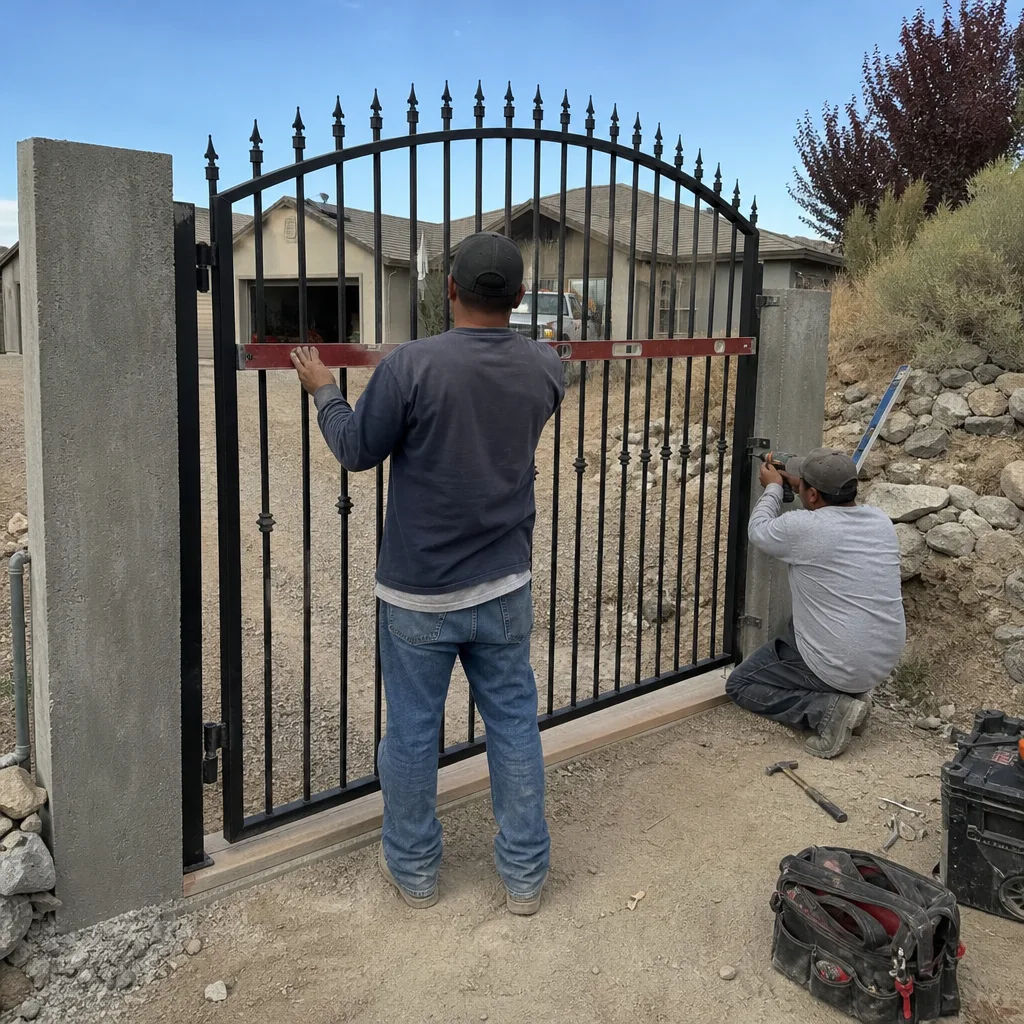
Here’s what actually decides who pays for a failed board at year two: the warranty language, and whether you can produce the documentation it requires. Manufacturers fall into two rough camps.
- Homeowner-commissioning-allowed brands: A number of consumer-grade operators – Mighty Mule is the clearest example – are sold specifically for homeowner installation and permit the homeowner to do the initial mounting, wiring, and commissioning. The catch is a documentation requirement: keep the receipt, follow the manual’s mounting and wire-gauge specs exactly, and photograph the finished install. A warranty claim without that proof gets denied on the grounds that the install was “not per spec.”
- Professional-install-required brands: Most commercial and pro-grade lines – FAAC, LiftMaster’s heavy-duty models, Elite, DoorKing – void coverage if the wiring or commissioning is done by an unlicensed party. The manufacturer’s position is that external line-voltage work must be done by someone licensed to do it, and a homeowner isn’t.
Before you mount anything, read the warranty page for your exact model and find the phrase “installation by a licensed professional.” If it’s there, a homeowner install voids the coverage on the parts that matter most – the control board and the motor itself, the two most expensive components.
Nevada Code and Low-Voltage Gate Wiring
Most Winchester homeowners don’t learn about gate wiring code until a house sale surfaces it. The rule that catches people: line-voltage work on your property generally needs a permit and a licensed electrician, and a gate motor install that taps into household power is line-voltage work even when the operator runs on low voltage downstream. The low-voltage side is more forgiving than the high-voltage side, but “exempt” is narrower than “low voltage.”
What this means practically:
- If your gate operator gets its power from a dedicated circuit, that circuit and the transformer feeding it are the parts that draw permits and licenses.
- An unpermitted electrical modification can show up in a pre-sale inspection. If it’s flagged, you may be asked to correct it before closing – at your cost, on someone else’s timeline.
- Buried cable to a detached gate needs to be at the right depth in the right conduit. A homeowner-run line laid shallow in Winchester soil – which shifts with our clay content and heat cycling – is a common inspection finding.
- Safety reverse and photo-eye functions are tied to that wiring. A code-compliant gate must reverse on obstruction, and a wiring shortcut can defeat that.
We’re not electricians and we don’t pull electrical permits. But every gate motor and opener job we take on through Gate Motor & Opener in Winchester is documented precisely so that if the electrical side needs a licensed electrician, you have the wiring diagram and photos to hand them – no guesswork, no re-tracing.
What a Professional Installation Documents
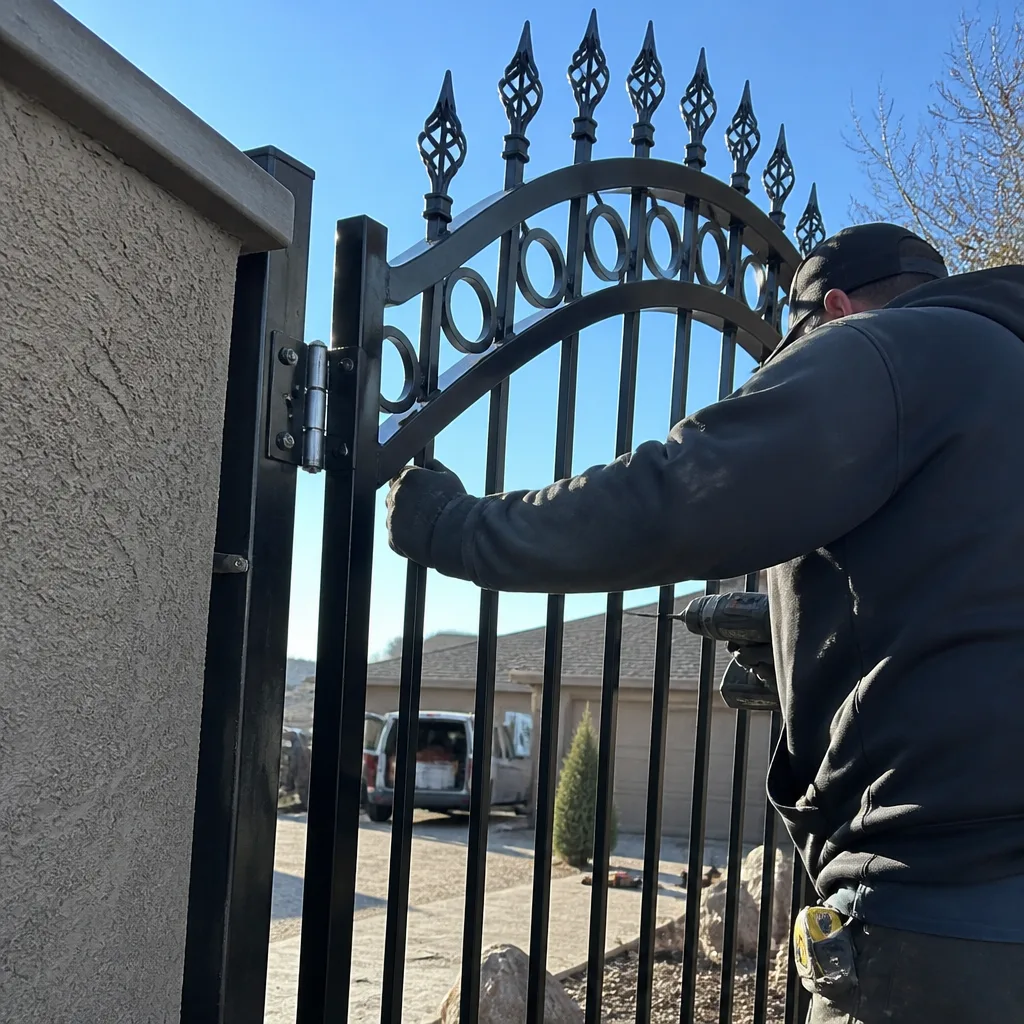
This is the section most DIY articles skip, and it’s the one that changes the economics of every future call. A professional install produces a record: a written scope before work starts, a wiring diagram, photos of what was found and what was set, and the limit-switch readings. That record travels with the gate.
Why it matters down the line:
- Faster diagnosis. A technician who opens the box and finds a diagram and photo log skips the 45-minute trace. That’s the difference between an $80 diagnostic and a $200 one.
- Warranty claims that hold. When the board fails at 18 months, a written install record is what proves the install met spec. Without it, the claim is a conversation; with it, it’s a formality.
- Resale value. A documented, permitted, warranty-covered install is a document you can hand a buyer’s inspector. It removes a common point of friction at sale.
At Gate Repair in Winchester, every visit leaves a photo record of what was found, what was adjusted, and what was replaced – the same wiring-diagram habit carried over from commercial access-control work into every residential driveway gate. Under the Haven Standard’s evidence clause, that documented record comes with the job at no extra charge. It’s the thing that makes the second technician’s visit cheaper than it would otherwise be.
The DIY Risk Unique to Gate Motors
Two mechanics make certain gate-motor tasks dangerous in a way an electrical shock warning doesn’t capture. Understand both before you decide a repair is a “watch a video” job.
Stored spring energy in swing operators. Many swing-gate systems use a counterbalance spring or a spring-loaded arm to hold the gate and assist the operator. That spring stores force even when the power is off. Releasing a tensioned spring without the right tool – a proper winding bar, the correct procedure – can throw hardware at body speed. This is the same class of risk as a garage-door torsion spring, and the same rule applies: if the task involves releasing stored spring tension, it belongs to a trained professional with the right equipment. There is no safe DIY version of that step.
Pinch-point geometry in slide operators. A sliding gate rides on a track and is driven by a rack-and-pinion or chain. The danger is the pinch points: the gap between the gate and the post at full travel, the chain and sprocket, the track and the roller. When the gate is moving under power and you’re adjusting a limit switch or clearing an obstruction, your hand is in a crush zone. The operator doesn’t sense a hand the way it senses an obstruction in the path – the force setting that lets it push through wind can push through a hand.
We’ve attended Winchester calls where a homeowner reached into a moving slide gate to clear a twig. The fix took seconds; the hand took weeks. Cut the power at the breaker before you go near a moving gate, and if the task is springs or tension, stop and call – this is the category where a professional is the only safe answer. New gate installs themselves are measured, ordered, and scheduled work, not same-day fixes, and that’s spelled out on the Gate Installation in Winchester page.
Common Mistakes to Avoid
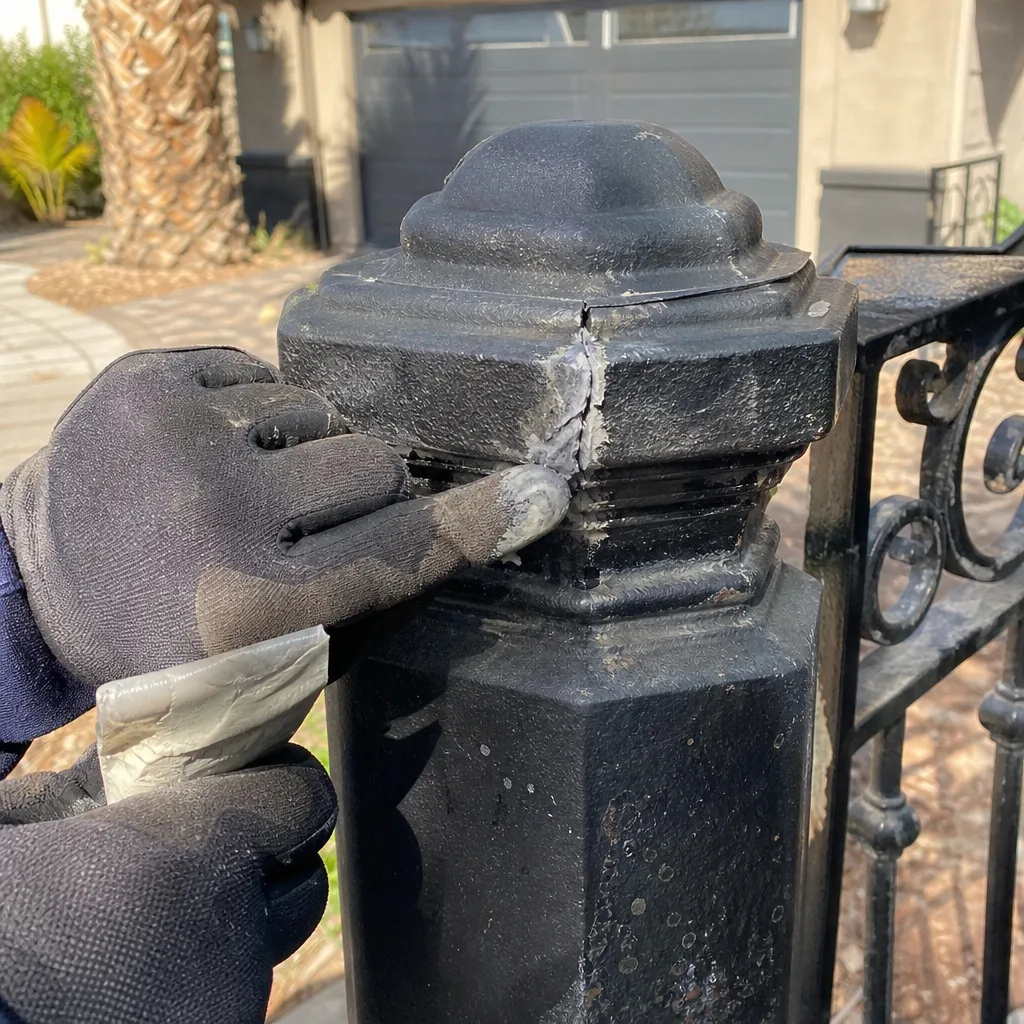
- Firing up a dormant gate in spring without a reversal test. Winchester gates sit through winter, then get pressed into service with the force setting never re-checked. If it doesn’t reverse on obstruction, fix the setting before you use it.
- Connecting the transformer without a diagram. The most expensive DIY mistake we see. Wrong input/output taps create a shock hazard and can void the warranty in one motion. This is the task to hand off.
- Crossing low-voltage wires and guessing. A mis-wired control run can take out a $200-$400 control board. Label every wire you touch, photograph it before you move it.
- Assuming “low voltage” means “no permit.” In Nevada the line-voltage feed and the transformer still draw permits and a licensed electrician, even when the operator runs low voltage. A sale inspection is where that surfaces.
- Self-installing on a brand that requires a licensed installer. Read the warranty page first. A homeowner install on a FAAC or heavy-duty LiftMaster voids the board and motor coverage entirely.
- Reaching into a moving slide gate. The operator’s force setting can push through a hand. Cut power at the breaker first, every time.
- Throwing away the install manual and photos. On homeowner-commissioning brands like Mighty Mule, the documentation is the warranty. Lose it and a valid claim gets denied.
See the difference
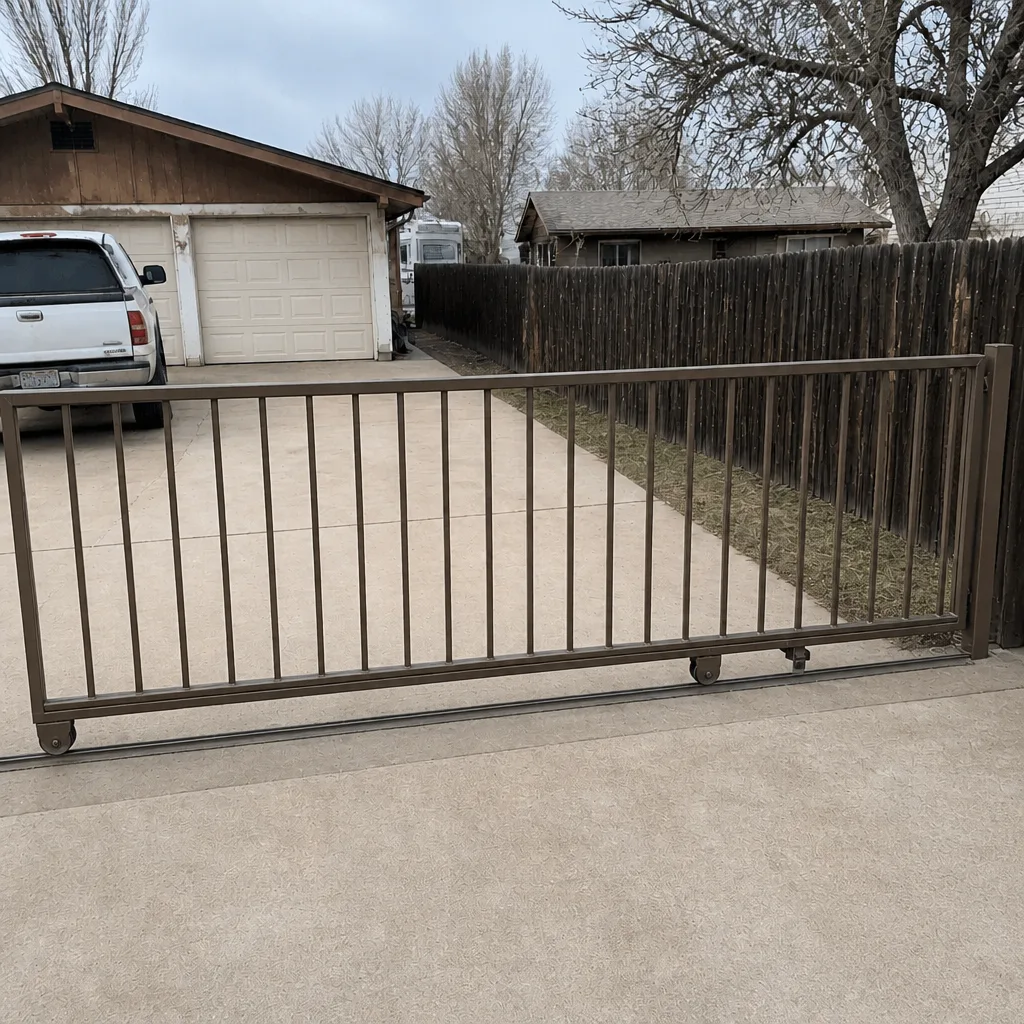
BeforeAfter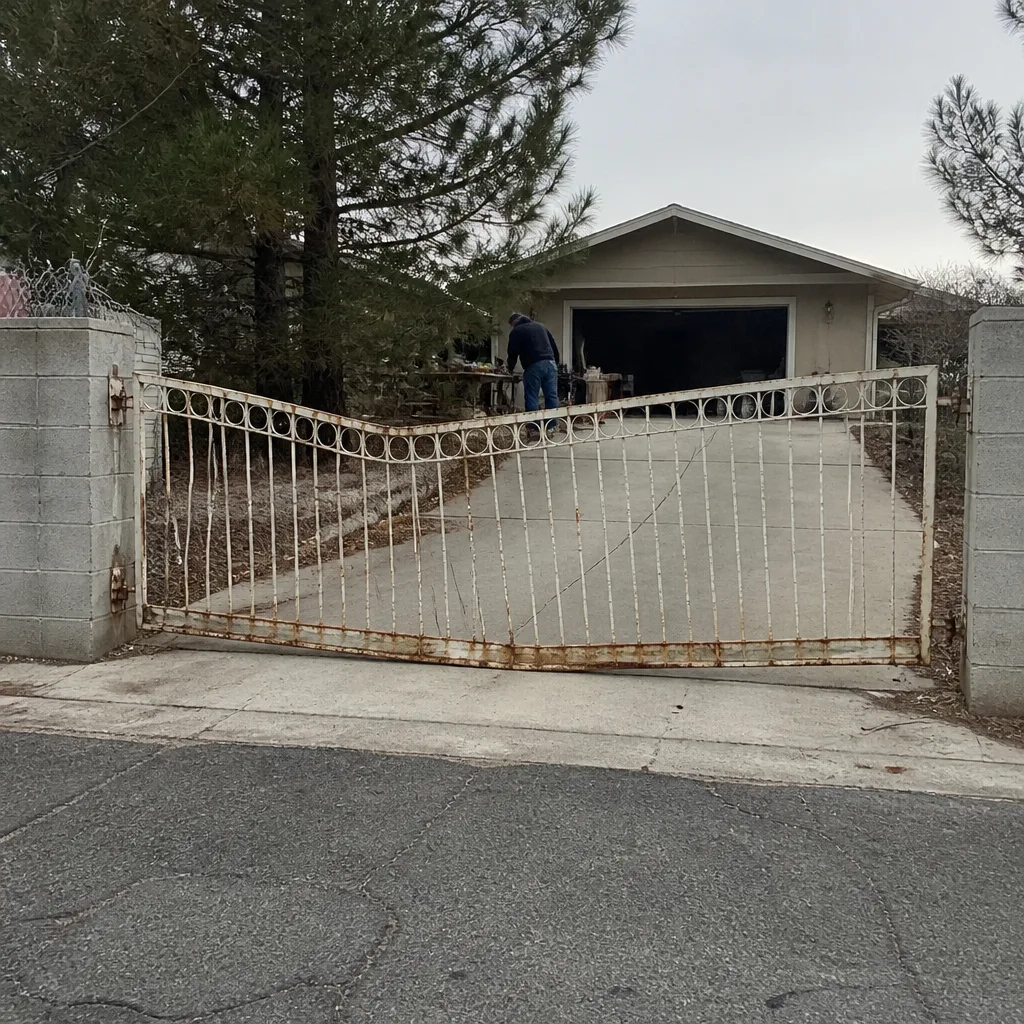 Before
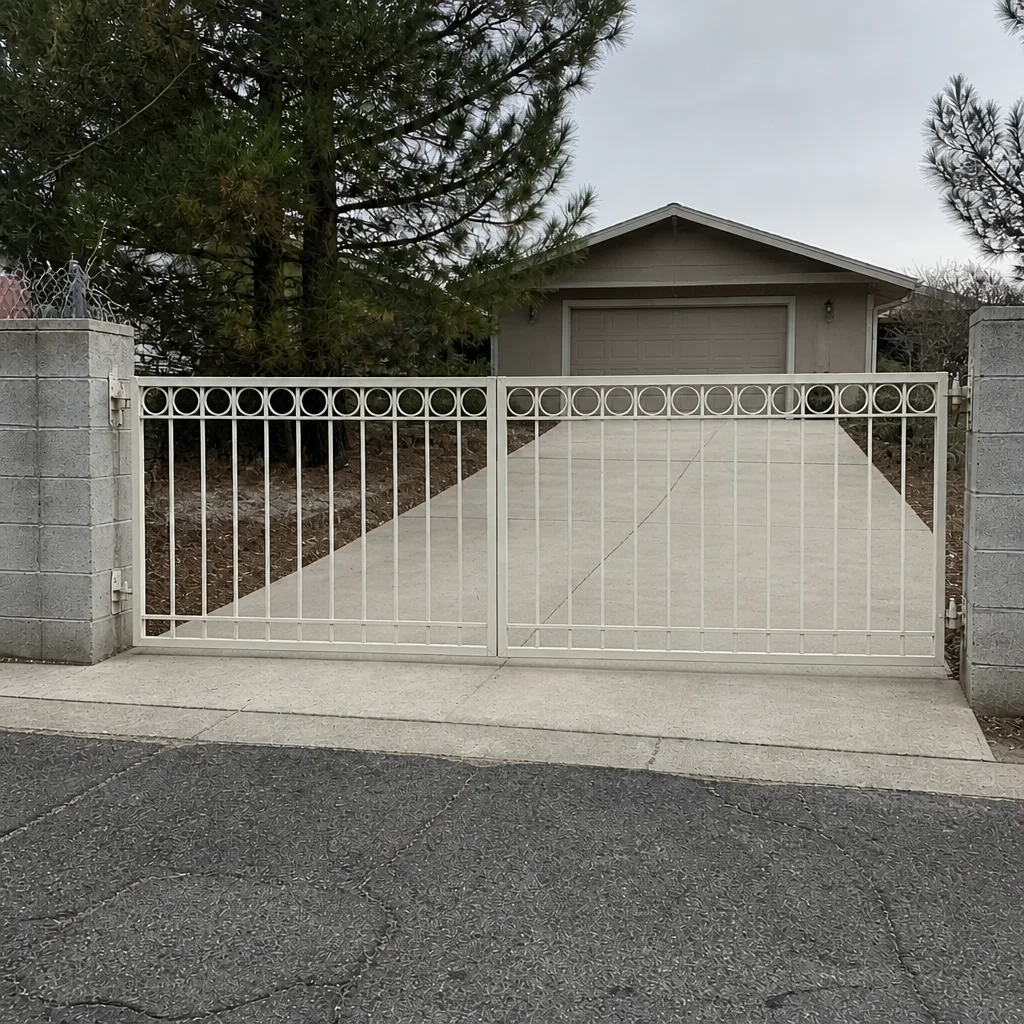 After
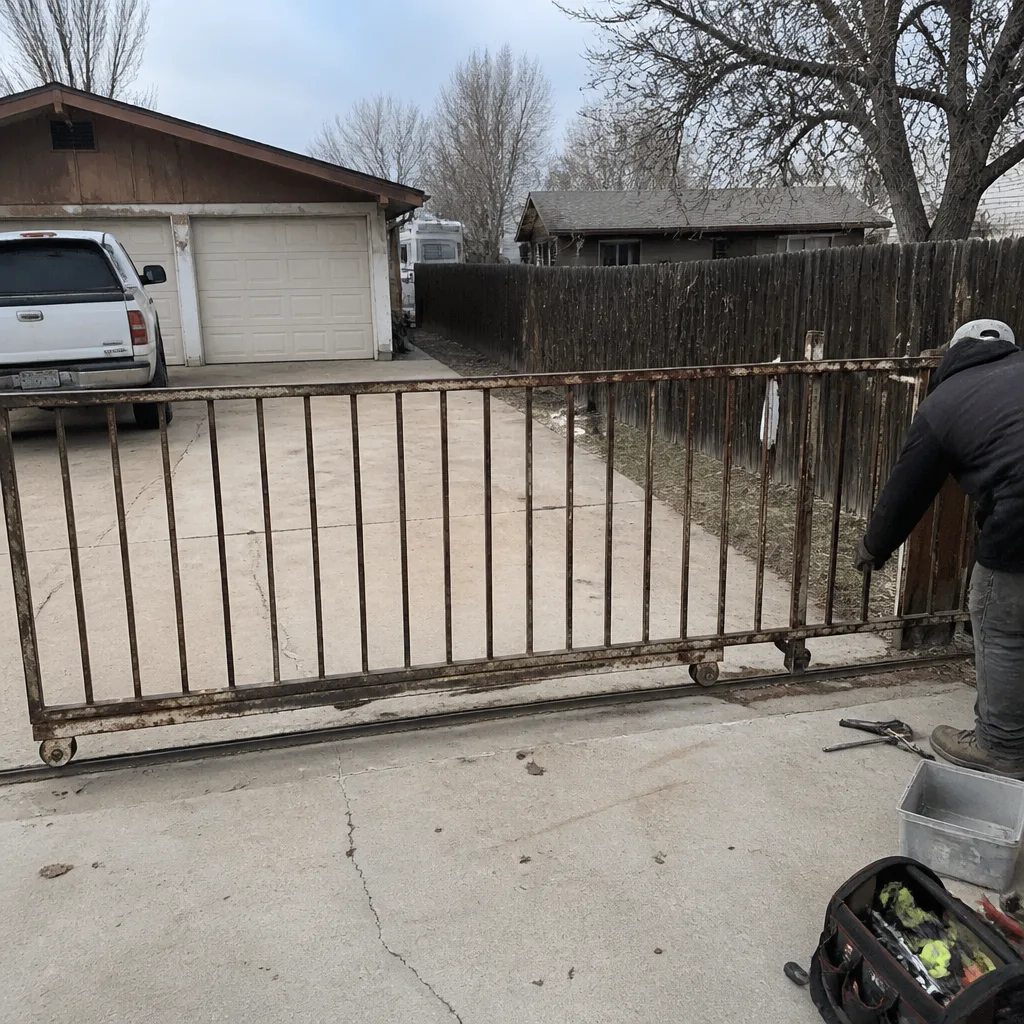 Before
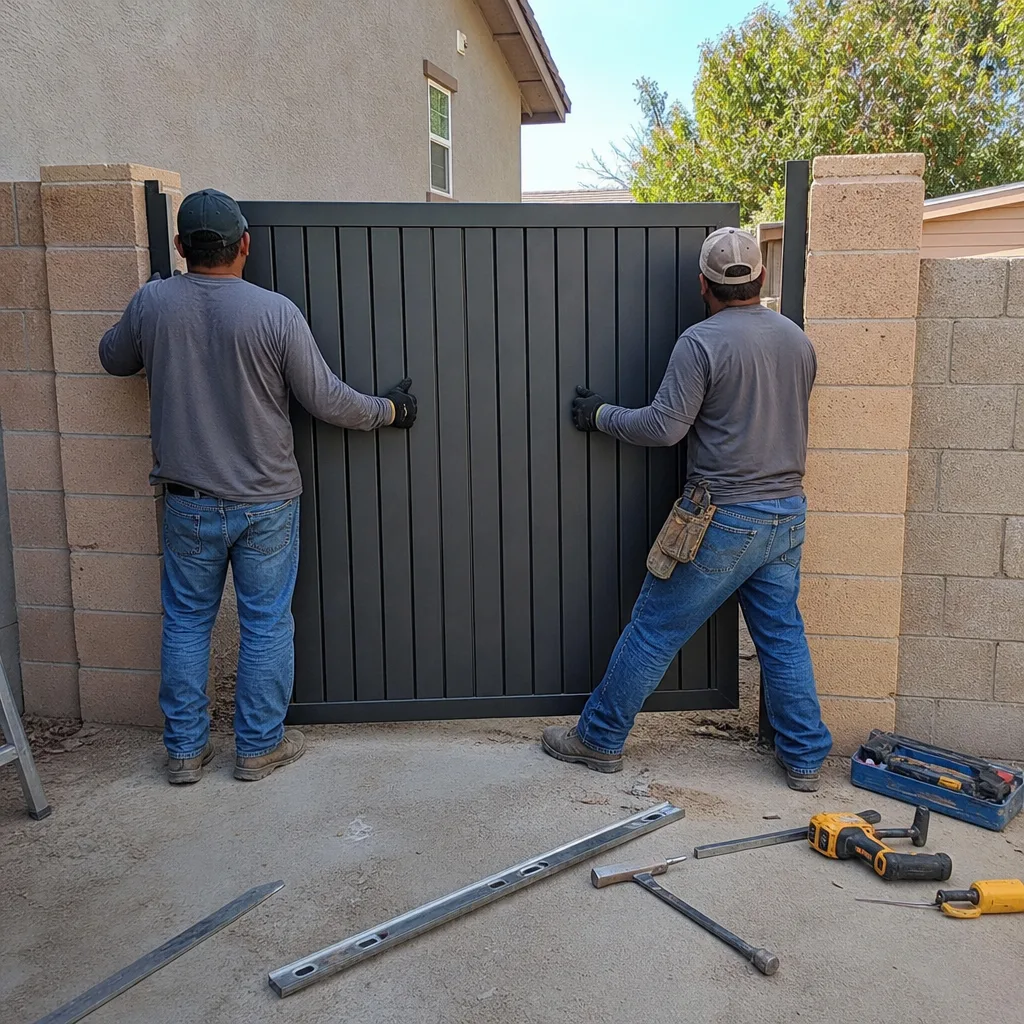
 After
When to Call a Professional
Call a professional when the task involves releasing stored spring energy, making a line-voltage or transformer connection, replacing a control board, or reaching into any part of a gate that moves under power. Call when the gate doesn’t reverse on obstruction and you can’t find the force setting in the manual. Call when a manufacturer warranty requires a licensed installer, and you want that coverage to hold if the board fails. And call when you’ve already started and the tangle is a step past where you’re comfortable – every hour on an open control box raises the chance a board goes with it. Vance Gate Repair Winchester gives free estimates in Winchester, with the flat price written and handed over before any work starts; call (866) 983-9213 and a live person answers, any hour.
Frequently Asked Questions
Sometimes, and the deciding factor is the brand. Consumer-grade operators such as Mighty Mule are sold for homeowner installation and permit it, provided you follow the mounting and wire-gauge specs exactly and keep your documentation for warranty claims. Pro-grade brands like FAAC, Elite, and heavy-duty LiftMaster generally require a licensed installer for the wiring and commissioning, and self-installing voids coverage on the control board and motor. Read your model’s warranty page before you mount anything – the phrase “licensed professional” tells you which camp you’re in.
It does on most professional-grade brands and doesn’t on homeowner-commissioning brands, provided you keep the documentation. The manufacturer’s position on pro-grade lines is that line-voltage wiring must be done by someone licensed to do it, and a homeowner isn’t; a claim filed after a homeowner install gets denied. On brands that allow homeowner commissioning, the warranty holds only if you can prove the install met spec – receipt, manual-compliant mounting, and photos. Keep all of it. Call (866) 983-9213 for a free second opinion on any warranty question.
Remote programming, obstruction-force testing, lubrication, and photo-eye cleaning are all safe and appropriate for a homeowner. None of them touches the wiring compartment or releases stored energy, and none affects warranty coverage. Start there whenever your gate misbehaves – a meaningful share of service calls are solved by a battery change, a re-aligned photo-eye, or a force setting re-check. If the problem survives those three, it’s usually a wiring or board issue and worth a professional look.
The pinch-point geometry is the reason. A sliding gate is driven by a rack and pinion or chain, and the crush zones – between gate and post, chain and sprocket, track and roller – are exactly where your hand goes when you adjust a limit switch. The operator’s force setting, tuned to push the gate through wind resistance, doesn’t distinguish a hand from an obstruction at close range. Cut power at the breaker before any adjustment, and never reach into a gate that’s moving under power.
For the line-voltage feed and the transformer, yes – that work generally needs a permit and a licensed electrician, even though the operator runs on low voltage downstream. The low-voltage control wiring itself is often handled by a gate technician, but the electrical supply side is electrician work. In Winchester, the practical cost of skipping that step shows up at a pre-sale inspection, at your expense and on someone else’s timeline. Call (866) 983-9213 if you need the wiring documented for an electrician.
You should get a written scope and price before work starts, a wiring diagram, photos of what was found and what was set, the limit-switch readings, and the part numbers installed. That record is what makes a future diagnostic faster and a future warranty claim clean – a technician who opens the box and finds a diagram skips the trace entirely. It’s also what a buyer’s inspector can review at resale. We leave that record on every visit; ask any company to show theirs before they start.
The Bottom Line
The DIY line on a gate motor isn’t about skill – it’s about liability, warranty language, and the record the work leaves behind. Remote programming and force testing are yours to handle and should be part of your routine. Transformer connections, low-voltage wiring, and control-board swaps belong to a professional, because they can void a warranty, create a shock hazard, and raise a code issue that only surfaces at sale. Spring energy and slide-gate pinch points make the danger physical, not just financial. When a task crosses that line, the documented record a professional produces is worth more than the money you’d save doing it yourself.
If your gate needs work, Vance Gate Repair Winchester gives free estimates in Winchester with the price in writing before any tool comes out. Call (866) 983-9213 – a live person answers any hour, and our technicians carry up to 12 years of experience on nine major automation brands. Bring us any written estimate from another company and we’ll review it at no cost.
Written by the team at Vance Gate Repair Winchester.