
Last updated November 18, 2026
 Wrought iron
 Wood & steel frame
 Farm & ranch
 Sliding driveway gates
 LiftMaster operators
Free on-site gate assessment - hinges, posts, and your LiftMaster or Nice gate operator checked before anything is quoted
The assessment is free and the quote is the invoice.
Get your free estimateGate Installation Warning Signs Every Homeowner Should Know
A gate that opens and closes on day one is not proof the installation was done correctly. It’s the minimum bar. Here’s what to check while the installer is still in the driveway.
We’ve photographed enough failed installations around Winchester to know the pattern: the gate works fine for a season, then the motor starts straining, the gate drifts past its stop point, or the whole post shifts a quarter inch after the first hard freeze. By then the installer is long gone and the homeowner is paying twice for the same job. The evidence was there at handoff – most people just didn’t know what to look for. This guide gives you the specific things to inspect, the questions to ask before work begins, and the documentation you should walk away with. Whether you’re in Summerlin, Green Valley, or anywhere else in the Las Vegas Valley, these checks apply.
Quick Answer
The clearest warning signs of a bad gate installation are: a post that moves when you push on it, no written scope or documented wiring diagram at handoff, exposed electrical splices at the controller, and a gate that fails the obstruction-reversal test. If any of those are present, the installation needs correction before the problems compound – typically within the first six months, when motor strain and alignment drift become obvious.
Styles & brands we work with
- Wrought iron
- Wood & steel frame
- Farm & ranch
- Sliding driveway gates
- LiftMaster operators
Table of Contents
- Post and Concrete Red Flags
- What a Proper Handoff Should Include
- Electrical Warning Signs Visible at Handoff
- The Motion Test to Run on Day One
- Contractual Warning Signs Before Work Begins
- Why Problems Surface Six Months Later
- Common Mistakes to Avoid
- Frequently Asked Questions
 Before
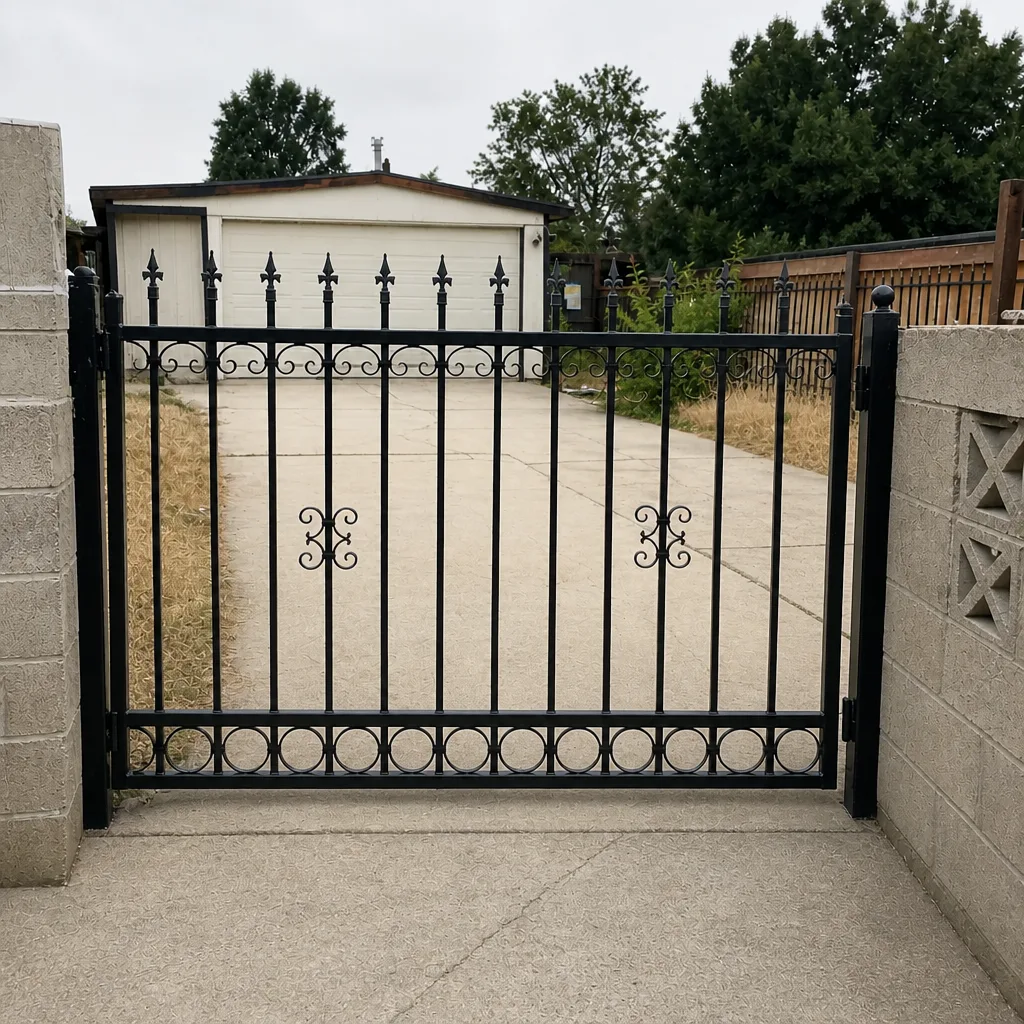 After
Post and Concrete Red Flags
The post is the foundation of everything that follows. If it’s wrong, no amount of motor tuning fixes it. Here’s what to check, ideally within the first week while the concrete is still curing and the installer is still accountable.
Push test. With the gate in the open position, lean your body weight against the post at the hinge side. A properly set post shouldn’t move perceptibly. If you feel a wobble or see gravel shifting at the base, the post wasn’t set deep enough or the concrete wasn’t mixed to spec.
Gravel fill instead of concrete. Dig down two or three inches at the base of the post with a trowel or screwdriver. If you hit loose gravel or dirt rather than a solid concrete collar, that’s a shortcut. Gravel backfill passes inspection on a calm day but fails the moment the gate takes wind load or a swing-motor’s torque.
Insufficient depth for gate weight. A sliding gate weighing 400 pounds needs roughly a third of its post height buried in concrete – typically 30 to 36 inches for a standard residential installation. A swing gate with a heavy steel frame needs the hinge post set deep enough that the concrete mass exceeds the gate’s weight by a comfortable margin. Ask the installer directly how deep the post was set. A vague answer is a warning sign.
Winchester’s soil is caliche-heavy in many neighborhoods – that hard, cement-like layer that resists digging. We’ve seen installers stop at the caliche and call it good, when the post needed another foot of depth. In older Winchester neighborhoods where the ground has been disturbed by utility work, settling is more common, and a post that looked solid at installation can shift within a year. If your installer didn’t mention the soil conditions, ask.
What a Proper Handoff Should Include
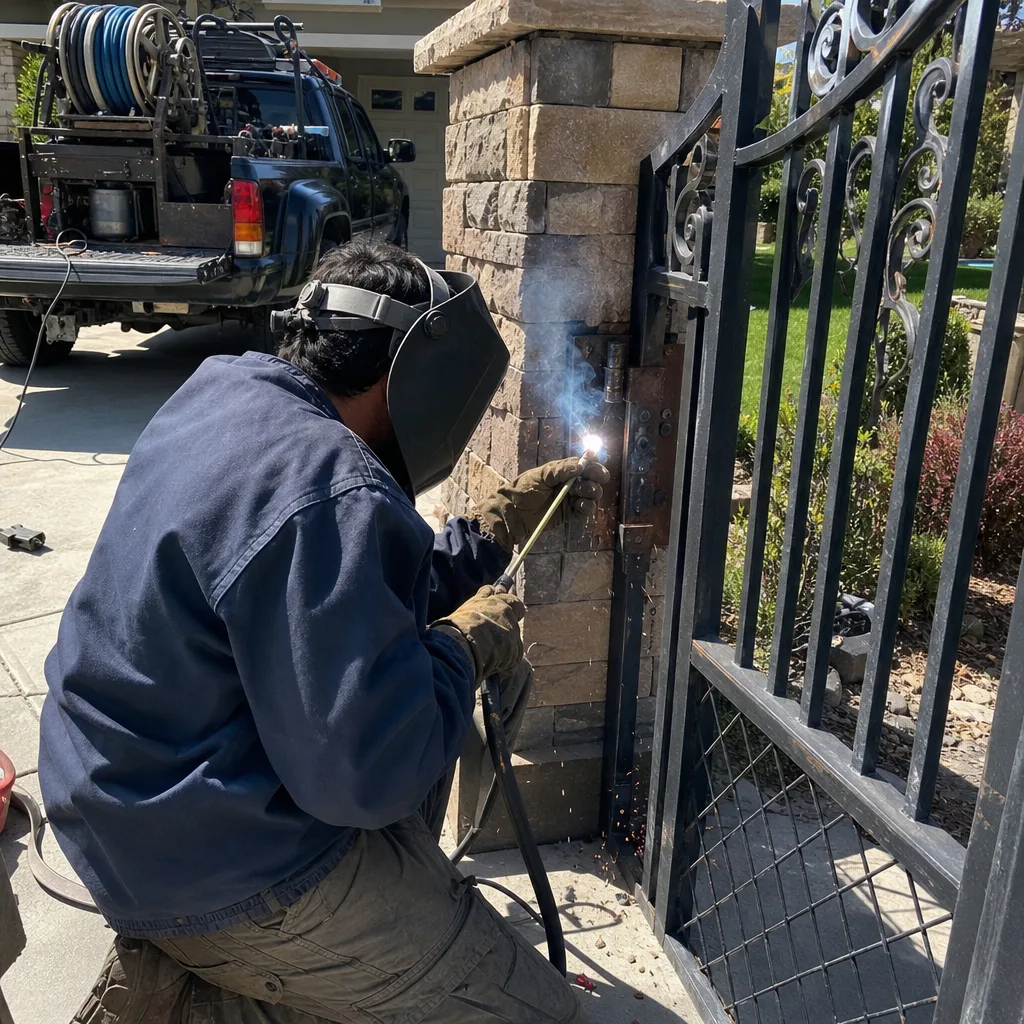
A documented handoff is the single best predictor of whether a gate installation will hold up. Documentation means the installer leaves behind a record that any future technician – including us – can read. Without it, every service call starts from scratch, and you pay for the rediscovery.
Here’s what a complete installation handoff should contain:
- A wiring diagram showing how the controller connects to the motor, the safety edges, the photo-eyes, and the keypad or access-control device. Hand-drawn is fine if it’s legible and accurate.
- Limit-switch readings – the exact positions where the open and close travel stops were set, noted numerically or with a photo of the switch position. This matters because when a gate drifts, the next technician can compare against the original setting instead of guessing.
- Photos of the conduit runs before backfill, showing depth, routing, and where the line enters the controller enclosure.
- The motor’s brand, model, and serial number written down.
- Any permit paperwork and the inspector’s sign-off, if a permit was required.
- The written scope and price from before work started, so you have a record of what was promised.
If none of that was provided, it doesn’t automatically mean the work is bad – but it means you have no way to verify it, and the next person who touches the gate will spend billable hours reconstructing what should have been documented on day one. Under our gate motor and opener service, every visit includes a photo record of what was found, what was set, and what was installed. That’s not a luxury; it’s the baseline.
Electrical Warning Signs Visible at Handoff
Gate operators run on line voltage or low-voltage DC, and most residential installs include a transformer, a controller board, and safety devices. You don’t need to open anything up to spot the four most common electrical shortcuts. Walk the property with the installer and look for these:
- Exposed wire splices. Any splice should be inside a weatherproof junction box, not taped and left hanging. If you see electrical tape wrapped around a wire near the controller or along the fence line, that’s a fail.
- Undersized conduit. The conduit protecting the power or low-voltage run should be large enough that the wire slides freely. If the wire was forced through a conduit that’s too small, the insulation can chafe against the edge over time.
- No weatherproof junction box. Winchester summers push 110°F and monsoon season brings sudden downpours. An unprotected connection corrodes fast. The box should be rated for outdoor use, with a gasket and a secured cover.
- Controller mounted without strain relief. The cable entering the controller enclosure should be clamped so the weight of the wire doesn’t pull on the terminal block. If the wire is tugging directly on the terminals, vibration from the motor will eventually loosen the connection.
We’ve seen installations in Winchester where a Linear or Viking operator was wired correctly but the safety photo-eyes were never connected – the installer capped the leads and left them inside the housing. That’s a genuine safety failure, not just a documentation gap. The gate will run, but it won’t stop for a child or a dog in the path.
The Motion Test to Run on Day One
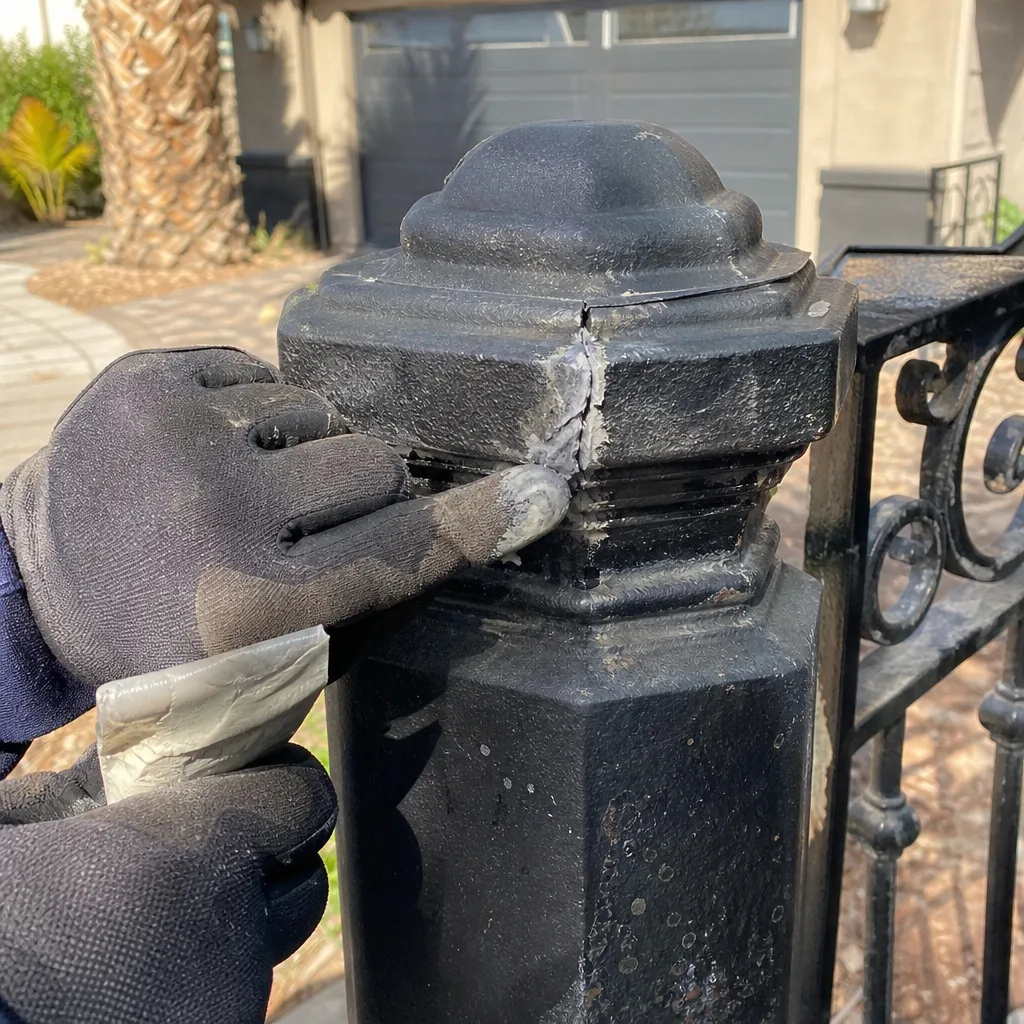
This is the test most homeowners skip, and it’s the one that reveals whether the installation was tuned or just made to work. Run it on the day of handoff, with the installer present, and watch what happens.
- Obstruction reversal. With the gate closing, place a firm object – a piece of 2×4 lumber works – in its path. The gate should reverse within about two inches of contact, or stop entirely if it’s a sliding gate with a reversing edge. If it keeps pushing, the force limit is set too high, or the safety edge isn’t connected.
- Travel smoothness at both ends. Open the gate fully and watch the last six inches. Then close it and watch the last six inches. A properly set limit switch produces a firm, quiet stop. A gate that slams, bounces, or hesitates at either end has its limits set wrong or its motor running against a mechanical stop.
- Remote range at the property boundary. Walk to the far edge of your driveway, or to the street, and press the remote. It should work reliably from there. If the range is short, the antenna may be coiled inside the housing or the receiver may be mounted behind metal – both easy fixes, but only if you catch them now.
- Manual release. Test the emergency release per the operator’s manual – usually a key or lever on the motor housing. The gate should move freely by hand when disengaged. If it’s stiff or jammed, the track or hinge geometry is off.
- Cycle test. Open and close the gate five times in a row. Listen for changes in motor pitch. A motor that gets louder or slower with each cycle is straining against something – a misaligned post, a binding roller, or an undersized operator for the gate’s weight.
If any of those five checks fails, you have grounds to ask for correction before the installer leaves. If the installer can’t or won’t run the full test with you present, that’s your answer about the quality of the work. Our gate installation in Winchester process includes a documented motion test on every job, with the readings and photos left with the homeowner.
Contractual Warning Signs Before Work Begins
The most expensive installation problems are the ones you can spot before anyone lifts a tool. These are the contractual red flags, and they’re remarkably consistent across the industry.
- Verbal-only estimate. If you never receive a written scope and price, you have no baseline for what was promised. A verbal number is not a contract, and it leaves you exposed when the final invoice arrives. The written price should be delivered before work starts, not after.
- No written scope. The scope should name the gate type, the operator brand and model, the post depth, the electrical work included, and what’s excluded. Anything vague is a place where the installer can under-deliver.
- No permit discussion. Many Winchester jurisdictions require a permit for a new gate with an automatic operator, particularly when line voltage is involved. If the installer waves off the question, ask why. An unpermitted installation can complicate a future sale and may void the operator’s warranty.
- Same-day start pressure. A gate installation is measured, ordered, and scheduled – it isn’t a same-day emergency service. If a company is pushing you to start immediately, either they’re working from stock that may not fit your gate, or they’re trying to prevent you from getting a second bid.
- No named technician or arrival window. You should know who’s coming and when. A company that can’t tell you either is a company that’s dispatching from a call list.
- A refusal to put the 365-Day warranty in writing. If a company won’t commit to standing behind its work for a full year, believe them the first time.
In our experience, homes in the older parts of Winchester – where the lots are wider and the gates are heavier – are the most common sites for post-depth shortcuts, because the installation takes an extra hour of digging. That’s exactly the hour that should never be skipped. You can see our gate repair in Winchester work for the kinds of problems that surface when it is.
Why Problems Surface Six Months Later
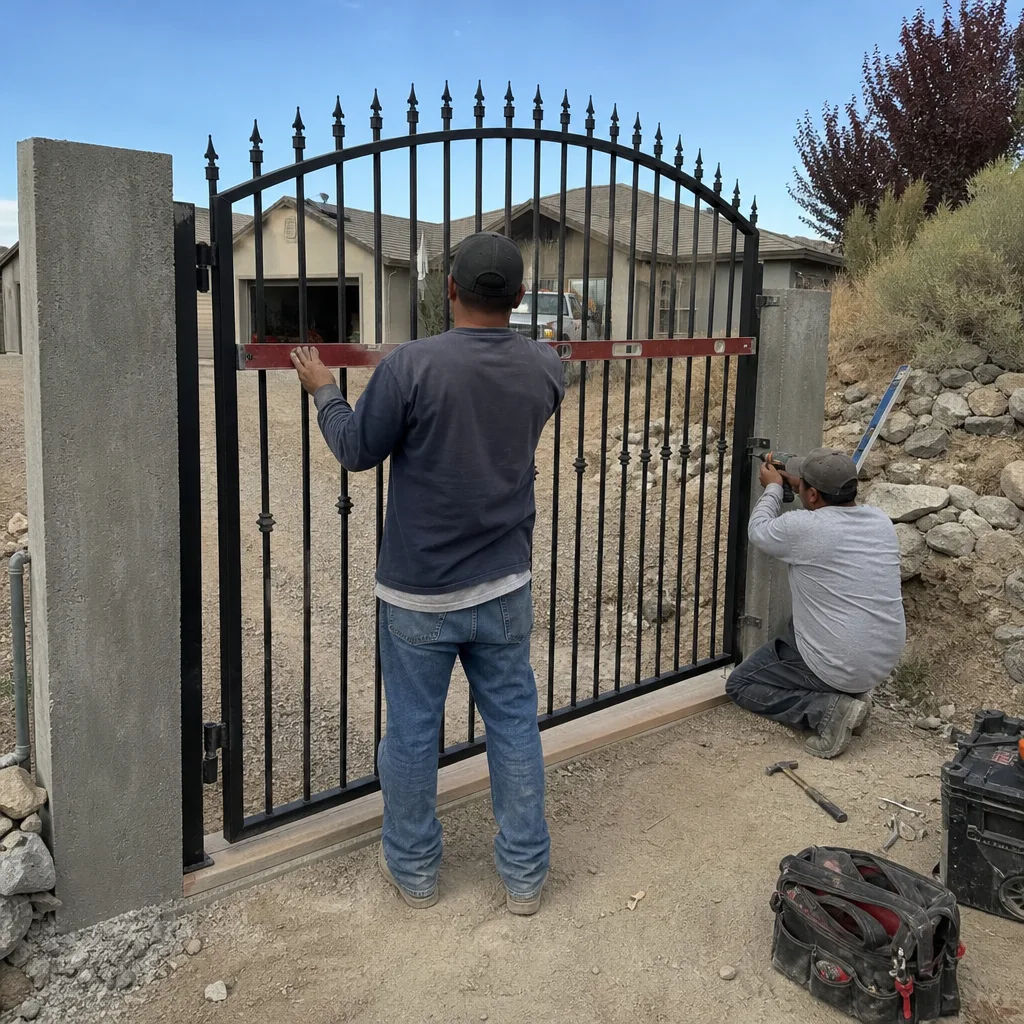
The reason installation failures don’t show up on day one is physics. A gate and its operator have a lot of tolerance built in when everything is new – the concrete is still curing, the parts are still tight, and the motor hasn’t had to work against friction yet. Over the first six months, three things change.
Concrete cures and settles. A post set in wet-mixed concrete actually shrinks slightly as it cures, and if the post wasn’t set deep enough or wasn’t braced, that shrinkage lets the post drift. A quarter-inch of drift at the base becomes an inch at the top of a six-foot post.
The motor beds in. Gearboxes have a break-in period, and a motor that was tuned to a perfectly aligned gate can start to strain when the gate’s alignment shifts. That’s when the limit switches stop reading correctly and the gate reverses before it’s fully closed.
Weather does its work. Winchester’s temperature swings – 110°F summer highs and winter nights that dip near freezing – expand and contract metal gates and their posts. An installation that wasn’t set for that expansion develops binding points at the hinges and rollers. Monsoon dust and windblown grit also work into exposed tracks and rollers within a season.
This is why documentation matters so much. When a gate reverses unexpectedly six months in, the technician who has the original limit-switch readings can reset the gate in minutes. Without them, the same job takes an hour of diagnosis – and you pay for that hour. Our Vance Gate Repair Winchester home page explains how every visit leaves a record so this never happens on our jobs.
Common Mistakes to Avoid
- Not running the motion test on day one. The single biggest mistake is trusting the installer’s “looks good” and skipping the five-minute reversal and cycle test. Run it with them present.
- Accepting a verbal scope and price. Without a written document, you have no baseline for what was promised and no leverage when something is missing. Demand the written price before work starts.
- Letting the installer skip the permit. Winchester permits exist for a reason, and an unpermitted automatic gate can cause problems at resale. Ask to see the permit number.
- Overlooking the photo-eye connection. Homeowners in Winchester sometimes accept a gate without connected safety sensors because the installer says “the gate works fine without them.” A gate that doesn’t reverse is a genuine danger.
- Choosing the cheapest bid without comparing scope. Two quotes that look the same on the number can differ wildly on post depth, conduit, and documentation. Compare line by line.
- Paying in full before the handoff. Hold final payment until you have the documentation and the motion test is complete. That’s your leverage.
- Ignoring early motor strain. If the gate gets louder within the first three months, have it checked immediately. A bearing change or limit reset now costs far less than a motor replacement later.
See the difference
BeforeAfter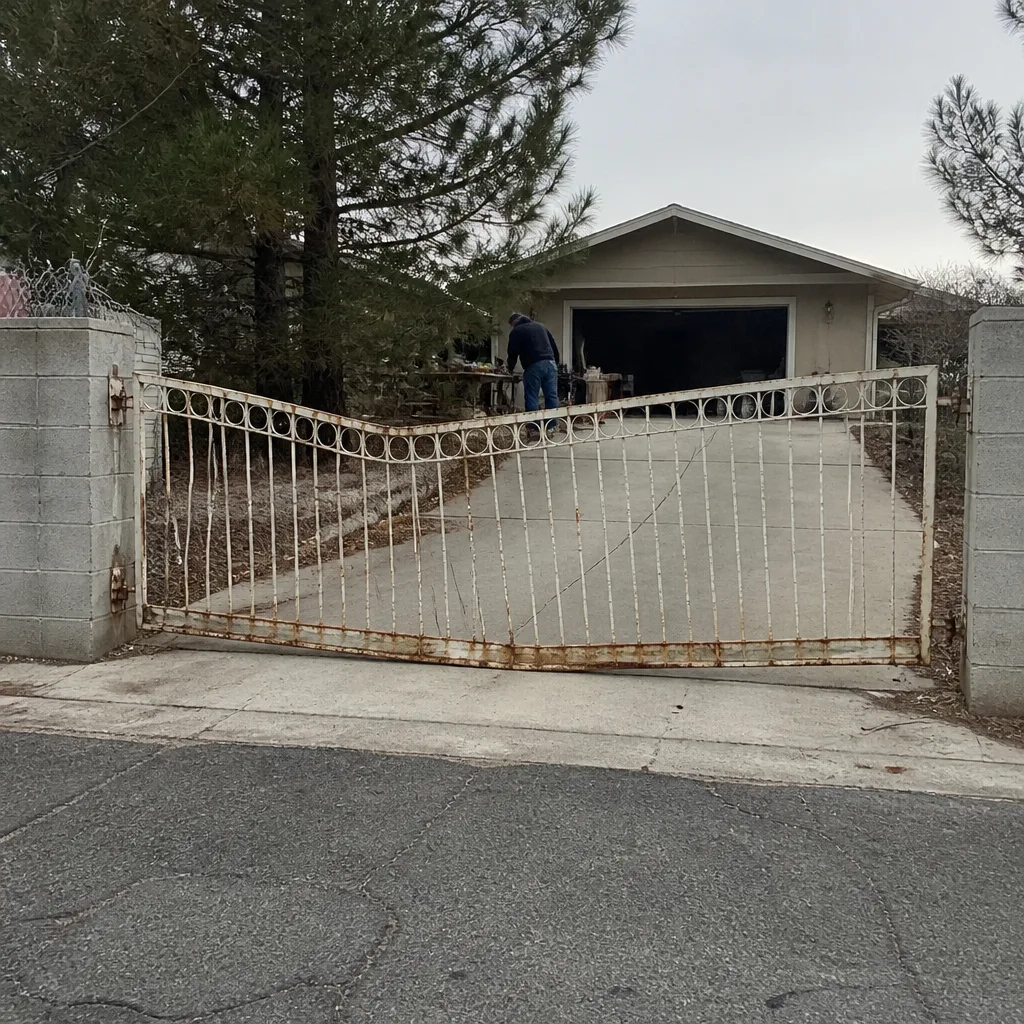 Before
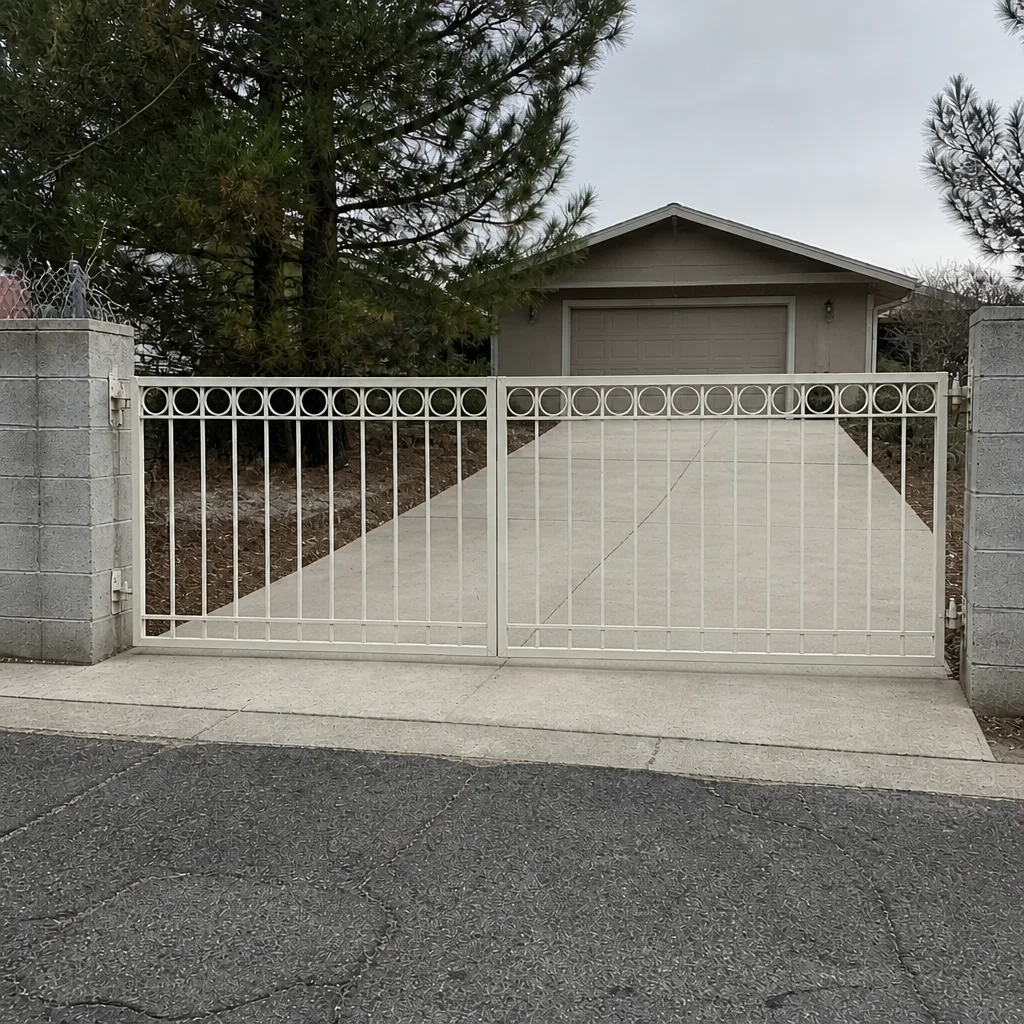 After
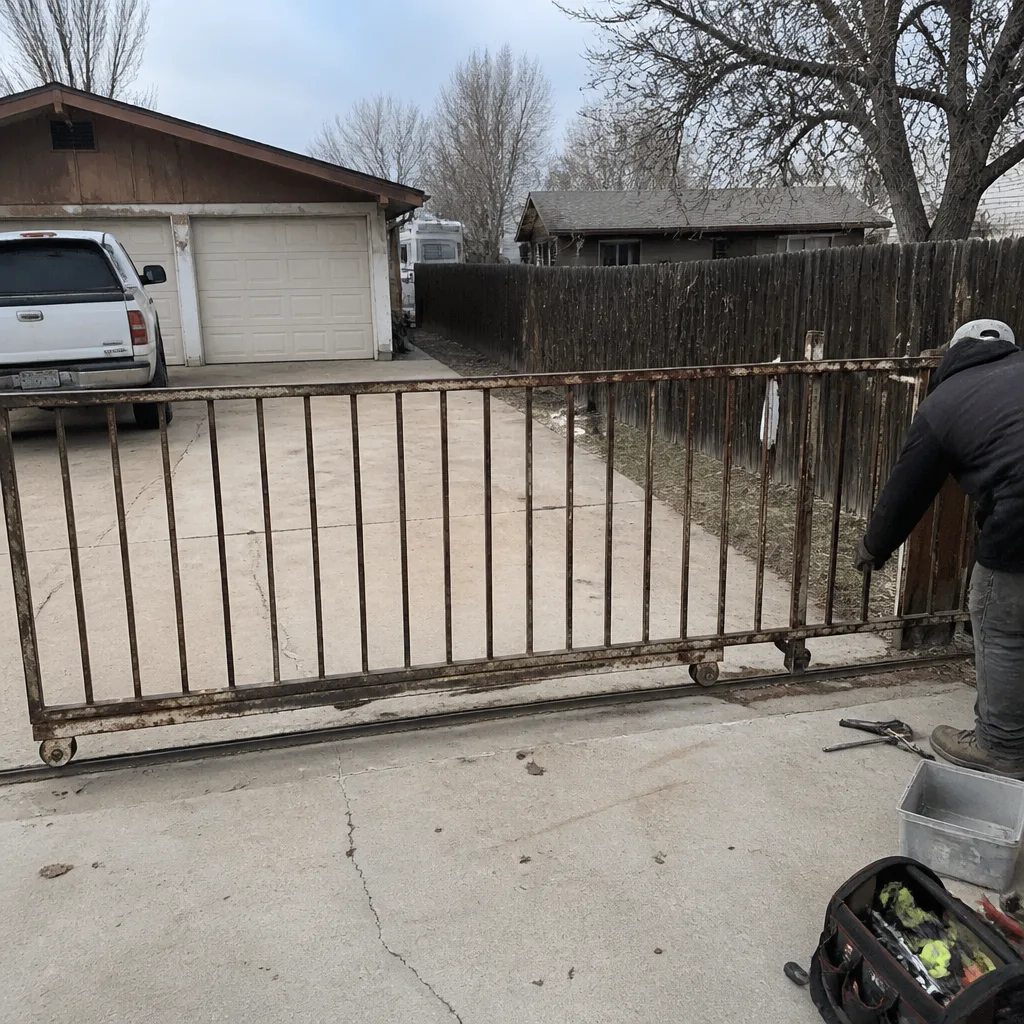 Before
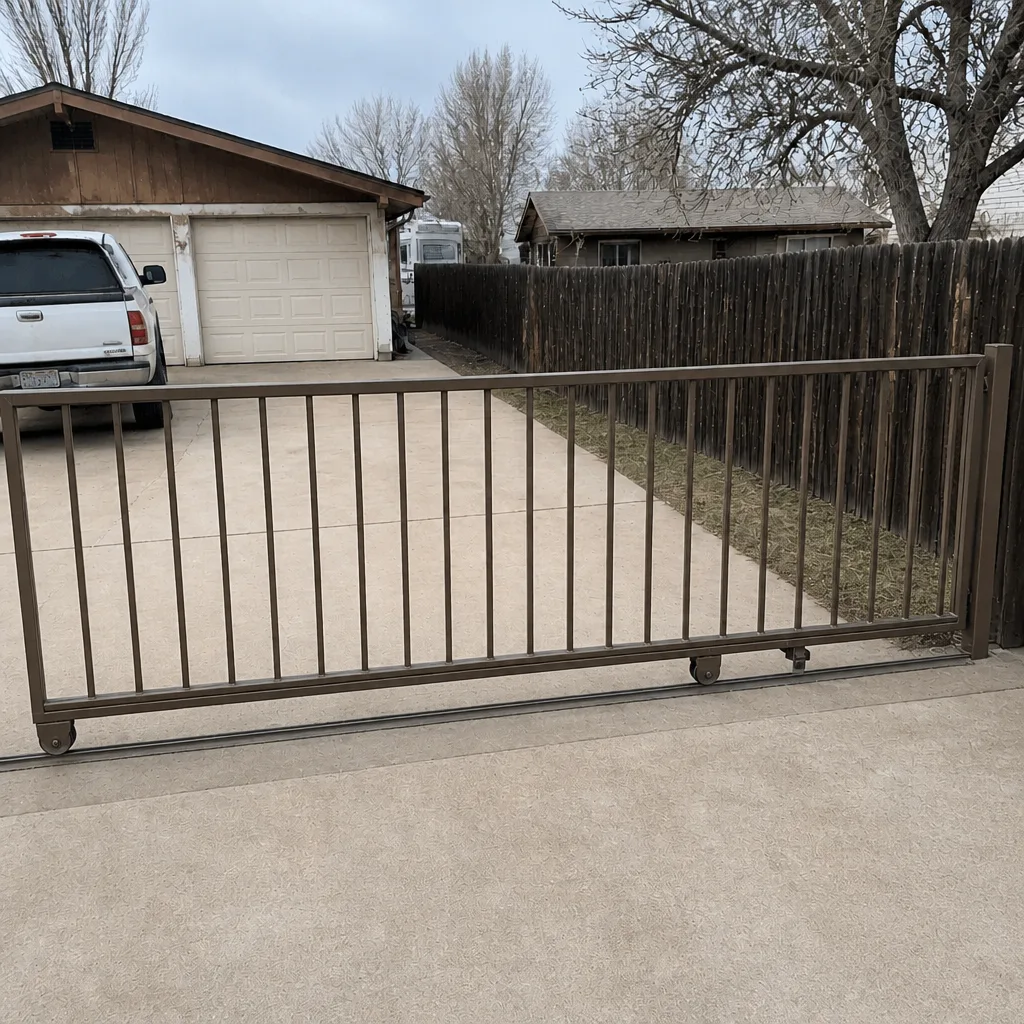 After
When to Call a Professional
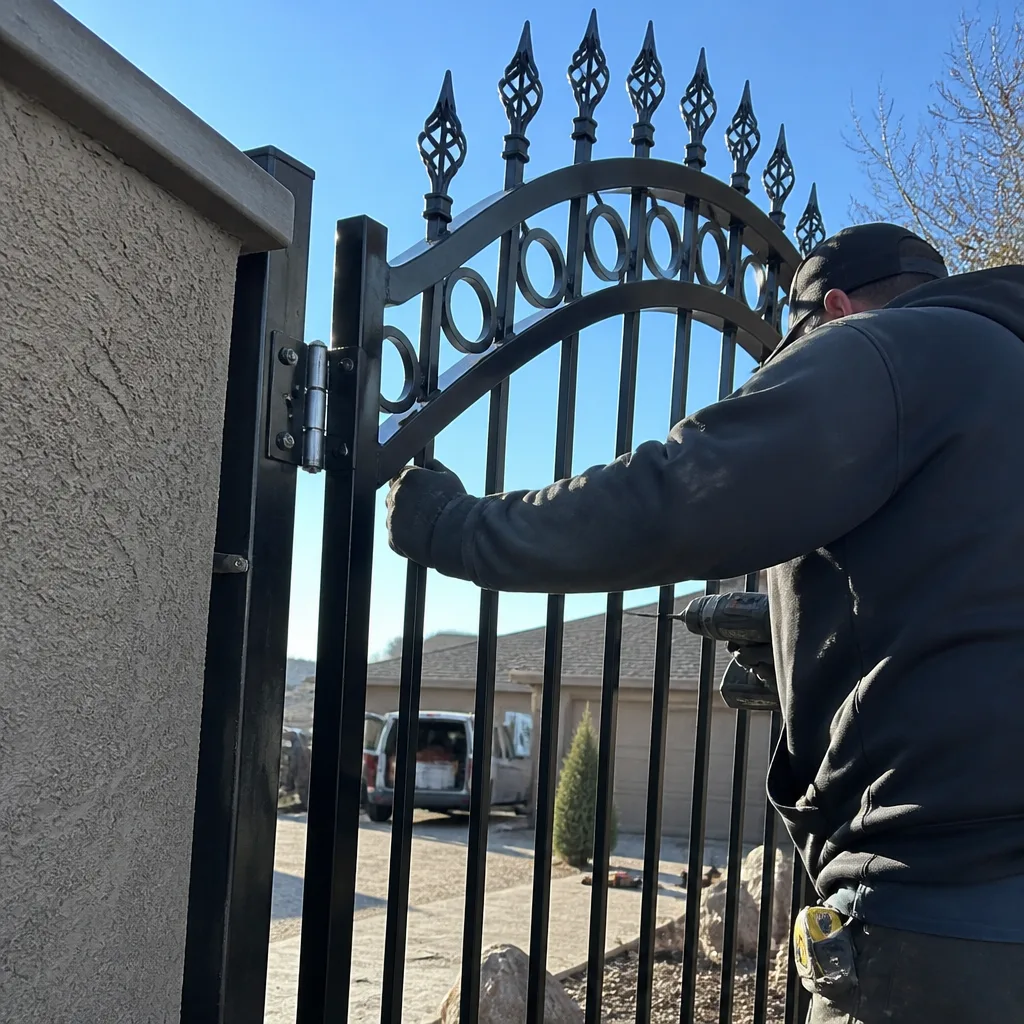
If your gate was installed in Winchester and you’re noticing any of the signs in this guide – post wobble, a motor that strains, a gate that reverses unpredictably, or missing documentation – call a professional rather than adjusting it yourself. Gate operators involve high-tension springs and line or low-voltage wiring, and both can cause serious injury when handled by someone without the right tools and training. A trained technician can verify the post set, the wiring, the photo-eye alignment, and the limit-switch positions in a single visit, and leave you with a documented record of what was corrected. We offer free estimates in Winchester on installations, corrections, and repairs – call (866) 983-9213 and a live person will answer, day or night. We work on all nine major automation brands, including BFT, Linear, Viking, and Ghost Controls, so whatever is on your property, we can diagnose it without steering you toward a replacement you don’t need.
Frequently Asked Questions
A residential gate installation in Winchester typically takes one to three days, depending on whether the job is a swing or slide gate, whether the electrical run is new, and whether a permit inspection is required. The written scope should give you a specific timeline before work begins – if it doesn’t, ask for one.
Yes, a written wiring diagram should be part of every handoff, and its absence is a warning sign of an incomplete installation. The diagram lets any future technician – including a repair company years from now – understand how the operator, safety edges, and access control are connected without reverse-engineering the system. If you didn’t receive one, ask the installer for it in writing.
A gate that reverses before it closes usually has a misaligned limit switch, a misadjusted force limit, or a photo-eye obstruction – and all three are correctable in a single service visit. Don’t try to adjust the limit switches yourself; the operator holds mechanical energy that can cause serious injury. Call us at (866) 983-9213 and a live person will take the details.
In many Winchester cases, yes – particularly when the installation includes line-voltage wiring or an automatic operator. Permit requirements vary by jurisdiction, so ask the installer directly and get the answer in writing. An unpermitted install can complicate a home sale, and it may void the manufacturer’s warranty on the operator.
Push on the post at the hinge side with your body weight; a properly set post shouldn’t move perceptibly. Dig down two or three inches to confirm you hit concrete, not gravel. If either test fails, or if the installer can’t tell you the depth in inches, the post should be inspected by a professional before the gate is used regularly.
Yes. A documented installation gives the next technician the original limit-switch readings and wiring layout, which means adjustments are made against a known baseline instead of trial and error. In our experience, documented installations see fewer improper force-limit settings, and the motor runs within its designed range rather than straining against a misalignment.
Yes, and we do it often. We service all nine major automation brands, so whatever motor is already on your property – BFT, Linear, Viking, Ghost Controls, or any of the other five – we can diagnose and correct it. Bring any paperwork you have, and we’ll review it as part of the free estimate.
The Bottom Line
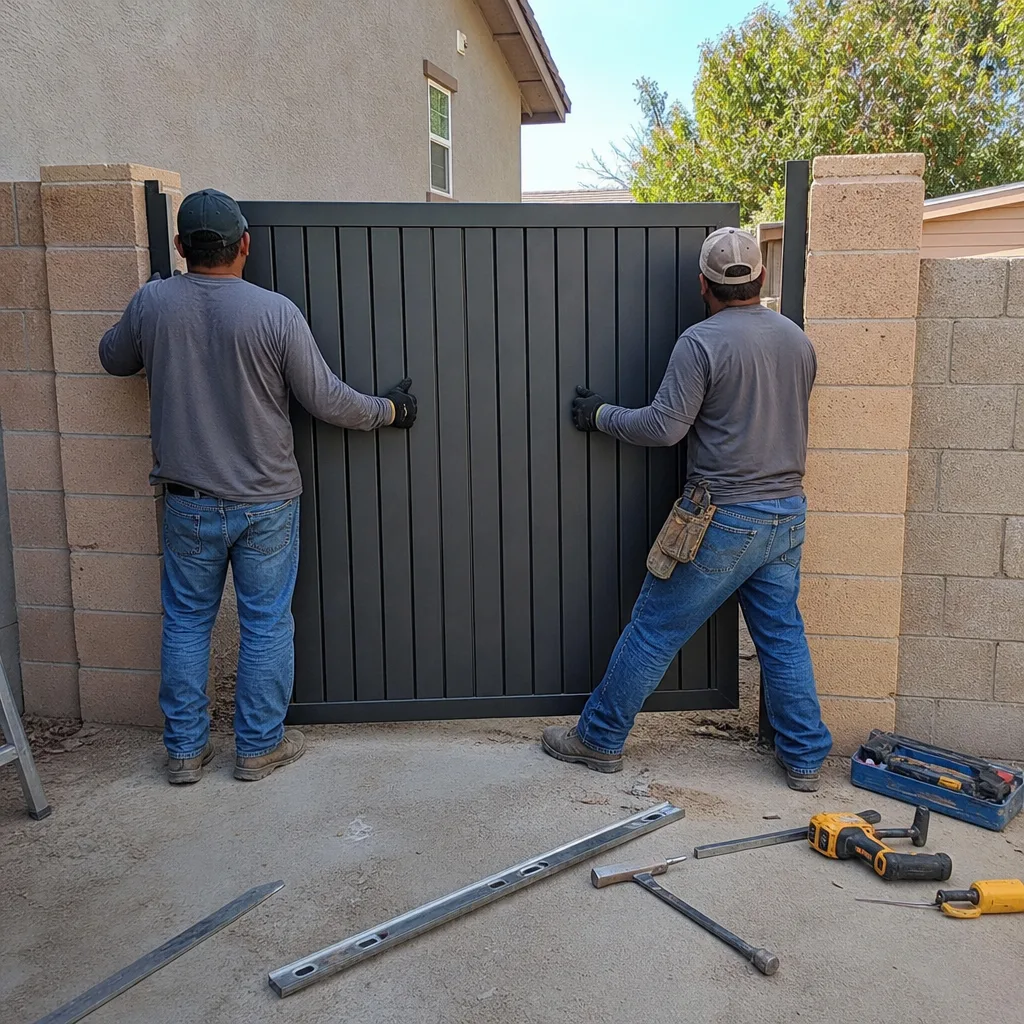
The evidence that a gate installation was rushed or incomplete is nearly always visible at handoff – you just have to know where to look. Push on the post, dig for concrete, walk the electrical run, and run the five-minute motion test with the installer present. Ask for the wiring diagram, the limit-switch readings, and photos of the conduit. Demand a written scope and price before work begins, and hold final payment until the documentation is in your hands. If anything is missing, get it corrected before the first six months pass, because that’s when the problems compound. If you’re not sure whether your installation holds up, we’re happy to take a look.
Call Vance Gate Repair Winchester at (866) 983-9213 for a free estimate on an installation, a correction, or a second opinion on a written quote from another company. We answer the phone with a live person 24/7, and every visit includes a documented photo record under the Haven Standard.
Written by the team at Vance Gate Repair Winchester.