
Last updated November 18, 2026
 Wrought iron
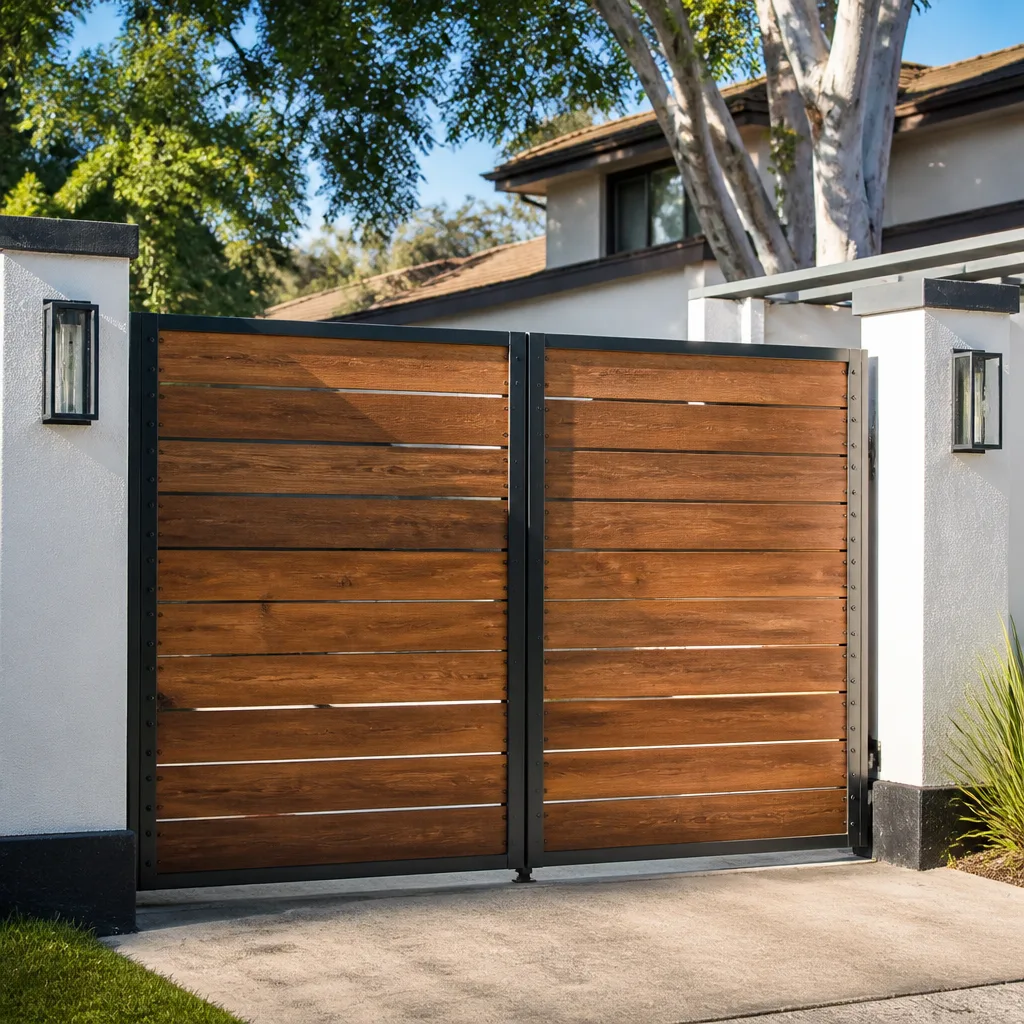 Wood & steel frame
 Farm & ranch
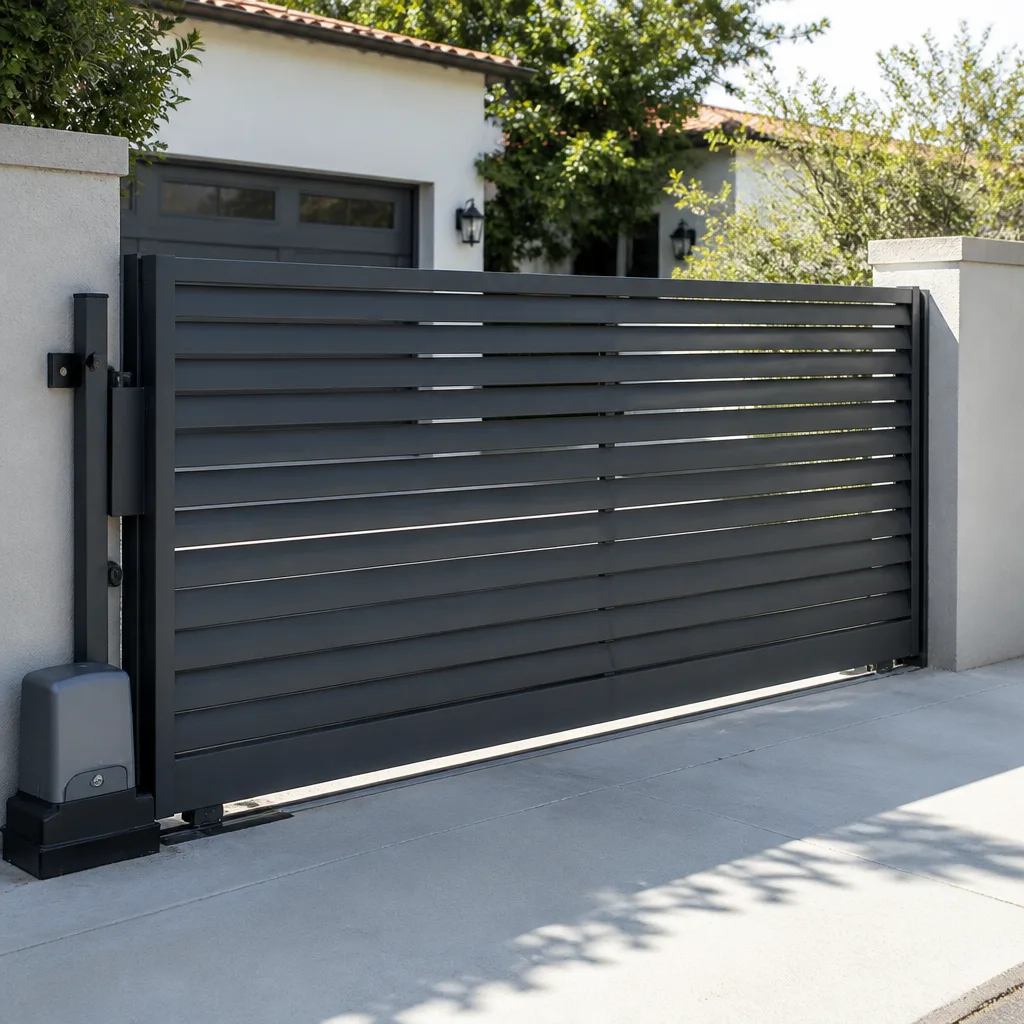 Sliding driveway gates
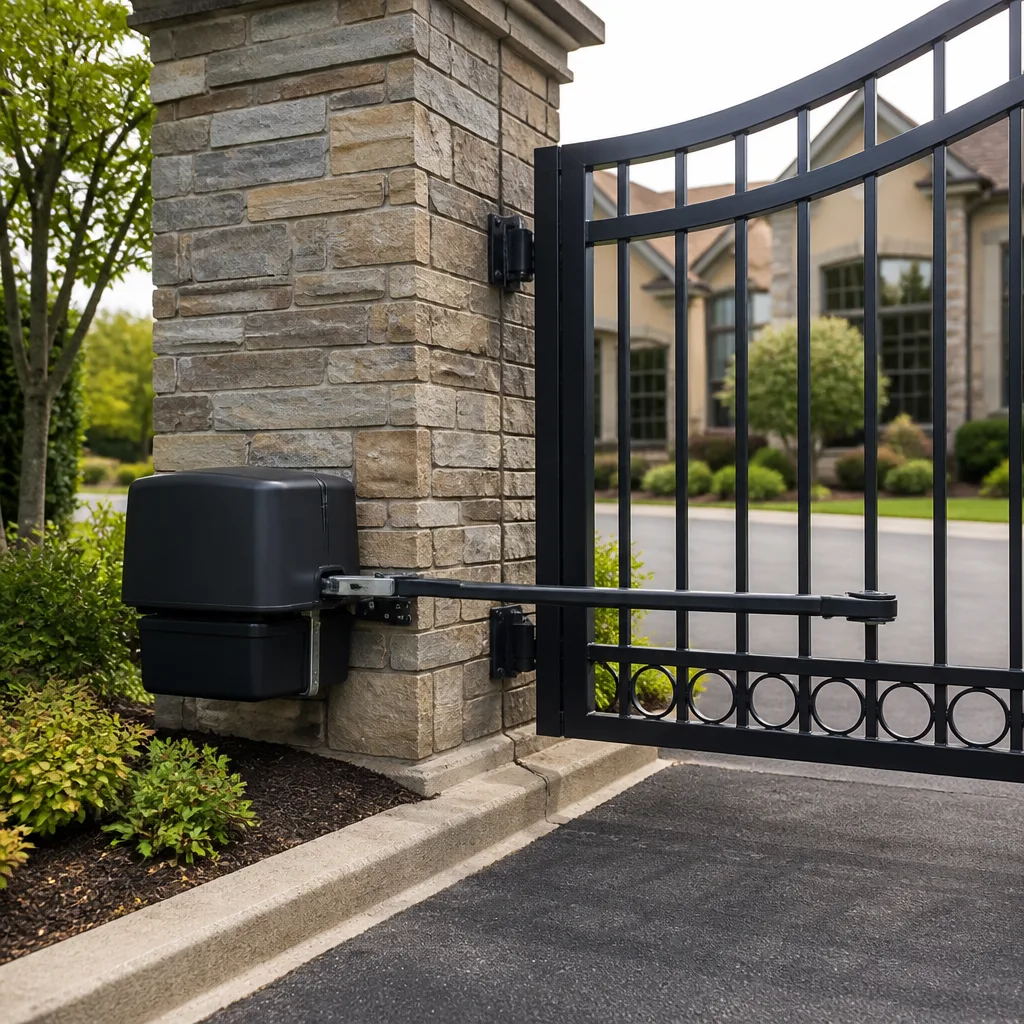 LiftMaster operators
Free on-site gate assessment - hinges, posts, and your LiftMaster or Nice gate operator checked before anything is quoted
The assessment is free and the quote is the invoice.
Get your free estimateSeasonal Gate Repair Care for Winchester: Year-Round Homeowner’s Guide
Here’s a puzzle we’ve run into more than once in Winchester. A gate works flawlessly in April. By the second week of July the operator stops mid-travel and won’t re-close. Nothing physically “broke” in that stretch of time. Under the housing, tiny phenolic components on the control board have expanded at a slightly different rate than the aluminum box around them. That gap that sat comfortably at 75°F can close enough in serious heat to stress or crack a conductive trace. Winchester doesn’t really have the four tidy seasons most maintenance schedules assume. It has a long UV-and-heat grind from May through September and a short, sharp contraction cycle from November through February. This guide covers both, plus the irrigation overlap that quietly eats post footings in the older neighborhoods.
Quick Answer
A gate in Winchester needs two focused inspections a year, not four: one in late spring before the May – September heat peak, and one in late fall before the November – February freeze cycle. Both matter more than a general “tune-up.” The spring check is mostly about UV damage to photoeyes and rubber seals plus getting chain or spring tension right, and the fall check is mostly about thermal contraction at track joints and how freely your rollers turn. Log actual readings at each visit and you’ll catch most failures before they strand you.
Styles & brands we work with
- Wrought iron
- Wood & steel frame
- Farm & ranch
- Sliding driveway gates
- LiftMaster operators
Table of Contents
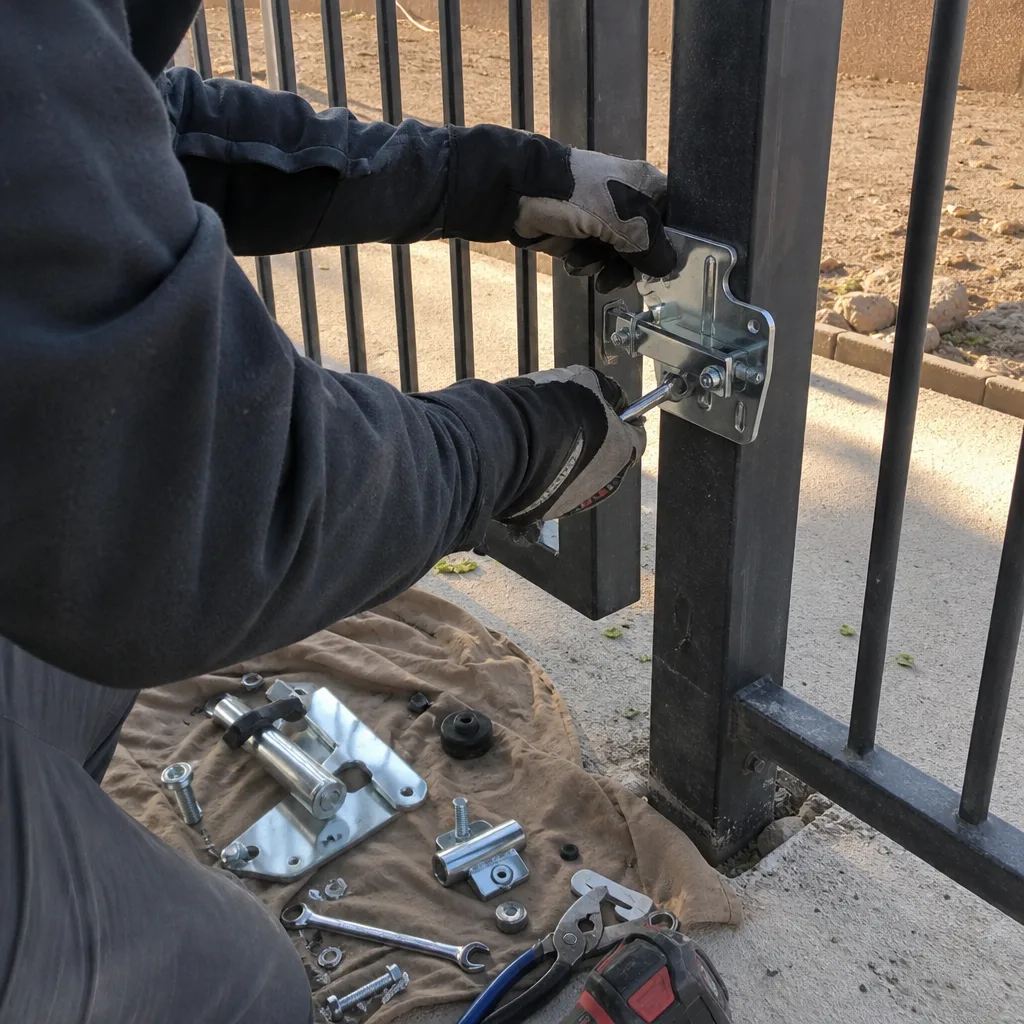
- The May – September Heat Protocol: What UV Does to Your Gate
- The November – February Contraction Protocol
- Irrigation Season Overlap: When Runoff Reaches the Footings
- The One Pre-Summer Adjustment That Prevents Most Service Calls
- Building a Two-Page Seasonal Log That Records Readings
- Matching Care to Your Operator: Brand Differences in Winchester
- Common Mistakes to Avoid
- When to Call a Professional
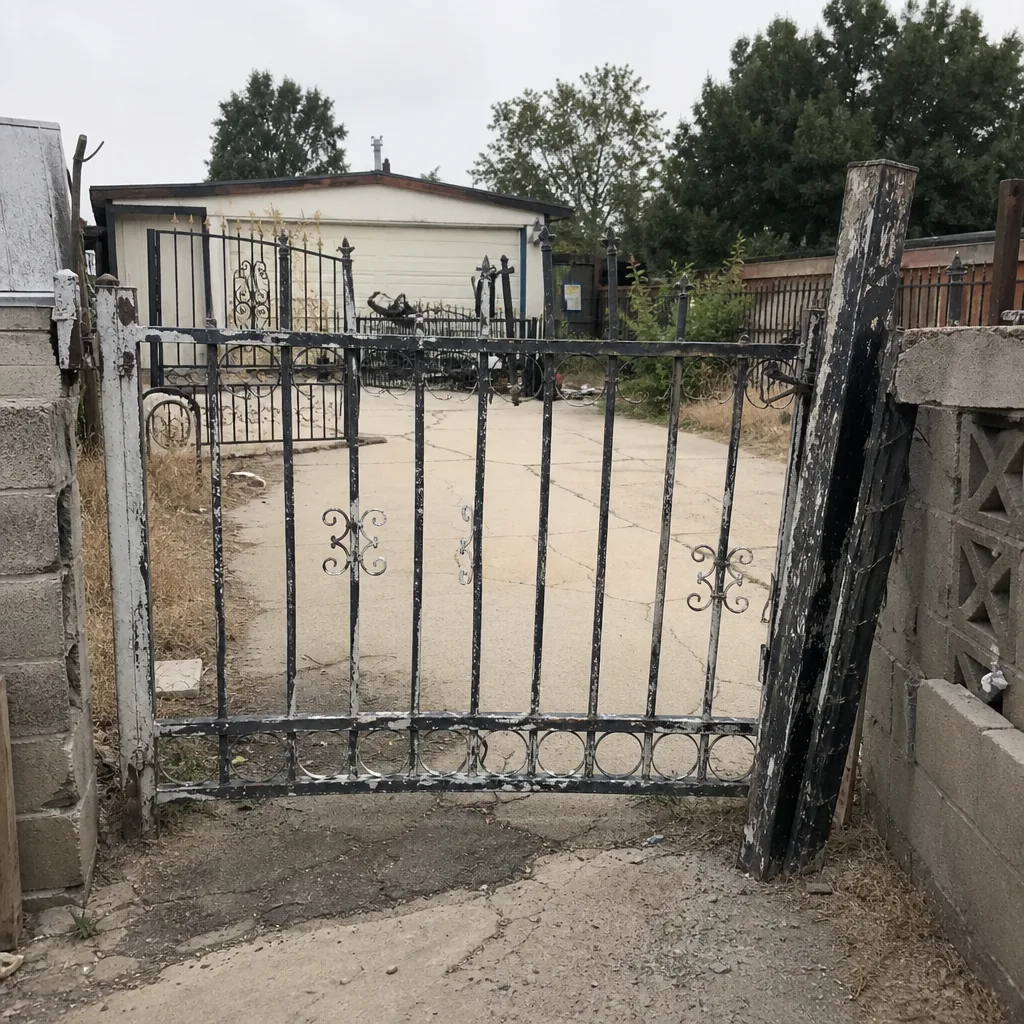 Before
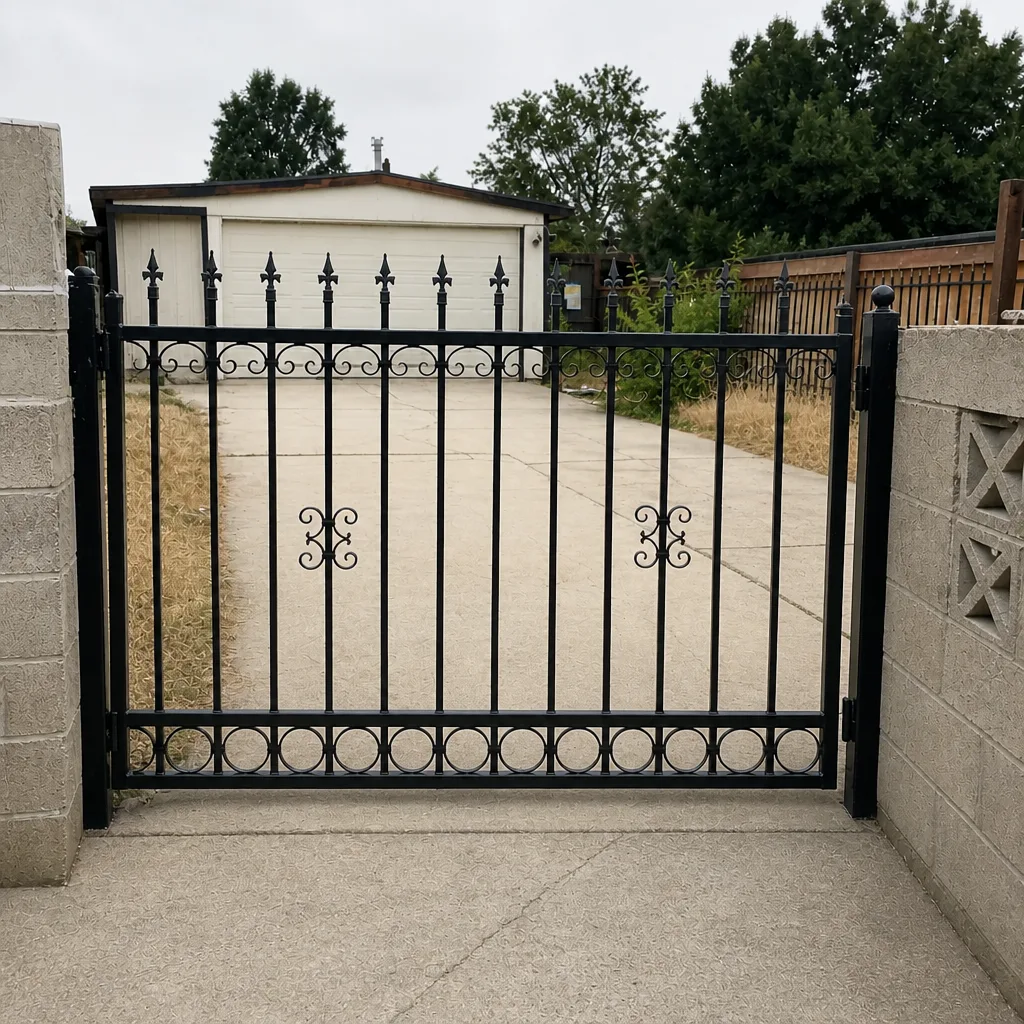 After
The May – September Heat Protocol: What UV Does to Your Gate
Winchester’s summer does two things to a gate at once. It bakes the exposed surfaces with UV, and it pushes the operator’s electronics into a temperature range where small clearances tighten. Both are slow and both are predictable, which is good news. You just have to look in the right places on the right schedule.
The first thing to check coming out of spring is the photoeye lens. That’s the small infrared sensor pair – one on each side of the opening – that stops or reverses the gate if something crosses the beam. UV exposure here in the valley clouds the plastic lens over time, and a slightly cloudy lens can lose range or throw false signals. In our experience the lenses want cleaning twice in the summer and replacing somewhere in the three-to-four year range depending on how much direct afternoon sun they take. A gate that’s on the west side of the property cooks faster than one in shade.
Rubber weather-seal strips and any elastomer gaskets on the operator housing are the other soft target. Sun and dry air make them crack and shrink. When a seal on a LiftMaster or FAAC housing dries out, windblown dust finds its way inside and starts working on the board. We usually see seal strips wanting attention every two to three years, sooner on unlacquered aluminum frames.
- May check: clean both photoeye lenses, confirm the beam aligns, look for lens clouding.
- June check: inspect seal strips and gaskets, look for cracking or gaps at the housing.
- July – August: listen to the operator. New rattles or a motor that seems slow to start on the hottest afternoons are worth a look.
- September: check that limit switches still stop travel where they should. Heat can shift the reading.
That last point is the one that catches people. We regularly reset limit switches in September that were fine in May, simply because the arm and the housing have both grown through the summer at slightly different rates.
The November – February Contraction Protocol
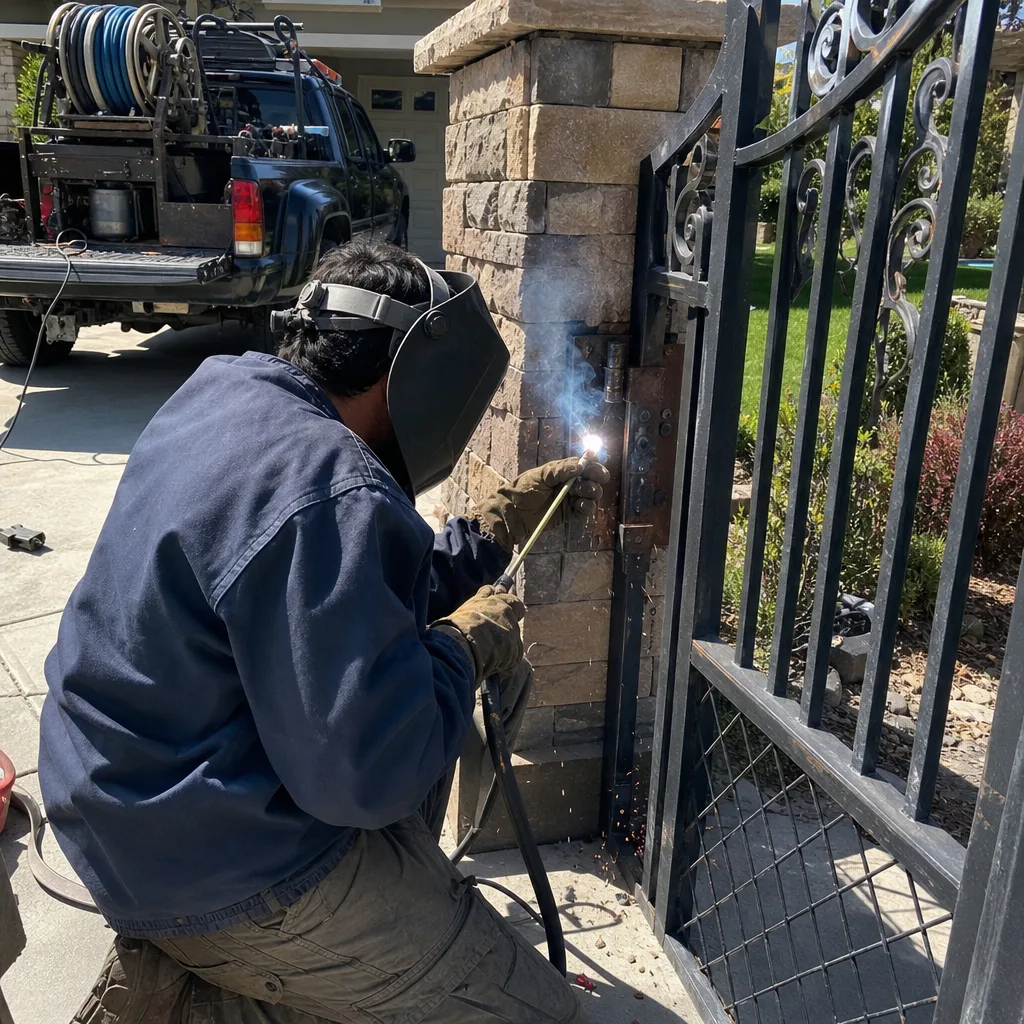
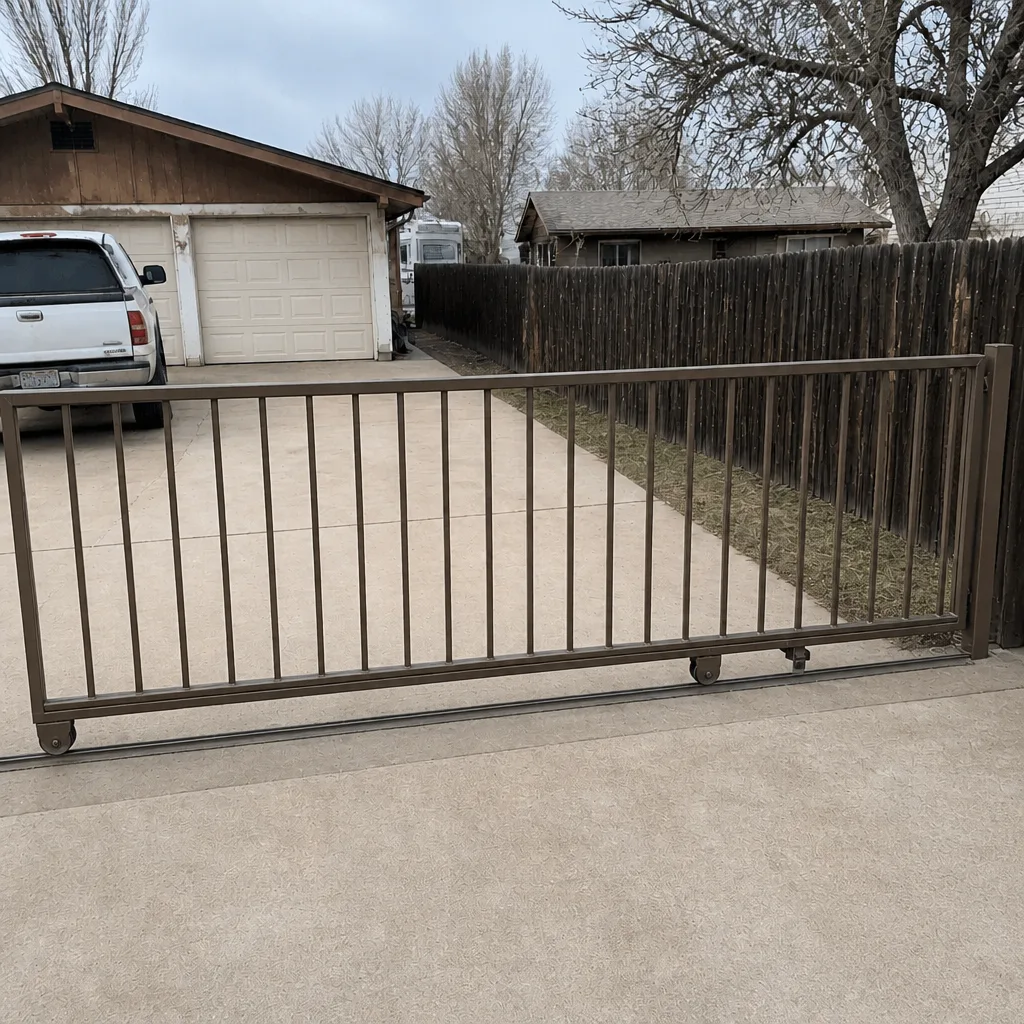
Winchester winters are short but they get cold enough that metal moves. When the temperature drops below about 28°F, aluminum slide-gate tracks contract. Those tracks are built in sections, and each joint can open up by a fraction. Over a season that gap shows up as a small lip the rollers have to climb, and a roller that’s already tight or dry will start dragging at exactly the joint where the gate used to glide.
The rollers and their bearings are the other half of the story. A bearing packed with the right grease handles contraction fine. A bearing that’s been sitting dry since summer will stiffen as the grease turns viscous in the cold, and the motor works harder to push the gate through. The fix is simple: before the first hard cold snap, check that every roller turns freely by hand and re-grease or replace any that drag. This is the single most common call we get in December and January in Winchester – a slide gate that ran fine all summer suddenly stalling a few feet in.
- Walk the track length and feel each joint for a lip or gap opening up. Photograph anything that looks wider than a hairline.
- Spin every roller by hand and note whether it turns smoothly. A roller that grinds or sticks gets re-greased or replaced.
- Check the operator housing for moisture entry and the control board for any condensation damage.
- Confirm the safety edges reverse the gate properly. Cold can stiffen the rubber contact strips and change how they respond.
- Record the ambient temperature and the gate travel time. Travel time creeping up over a cold winter is an early sign of dragging.
We see contraction problems most in the older Winchester neighborhoods where gates were installed against aluminum track sections that were spaced without much allowance for expansion. If that describes your setup, the late-fall walk is the most valuable hour you’ll spend on the gate all year.
Irrigation Season Overlap: When Runoff Reaches the Footings
Here’s a Winchester-specific issue that gate owners outside an irrigation climate rarely think about. Your drip system runs through the peak of summer and often straight through to the fall, and if any of the water reaches the ground around a gate post, it’s reaching the footing of a heavy piece of metal. That’s where corrosion starts, and it starts below eye level long before the gate shows any symptom.
What early corrosion looks like is worth naming, because it doesn’t look like rust yet. You see flaking paint at the base of the post, or a ring of darker, softer soil where the ground stays damp longer than the rest of the yard. That’s the point to act. Once water is reaching the post continuously, the steel in the footing begins to corrode and eventually weakens the anchor. We’ve seen enough of these in Winchester to say that the visual warning is usually there months before the post gets loose.
- Trace your drip lines and note whether any emitter is pointed within a few feet of a gate post.
- Look for soggy ground, flaking paint, or a ring of discoloration at the post base.
- Check whether the concrete footing is exposed or has a gap where water can reach it.
- Move or cap any emitter that saturates the post zone, and give the post a dry season to be checked.
This is one of the reasons a fall inspection matters in Winchester. You want to look at the post bases at the end of the irrigation season, not in spring when everything is still damp. If you want the repair side of this handled properly, our gate repair in Winchester page covers what we do with post and footing issues.
The One Pre-Summer Adjustment That Prevents Most Service Calls
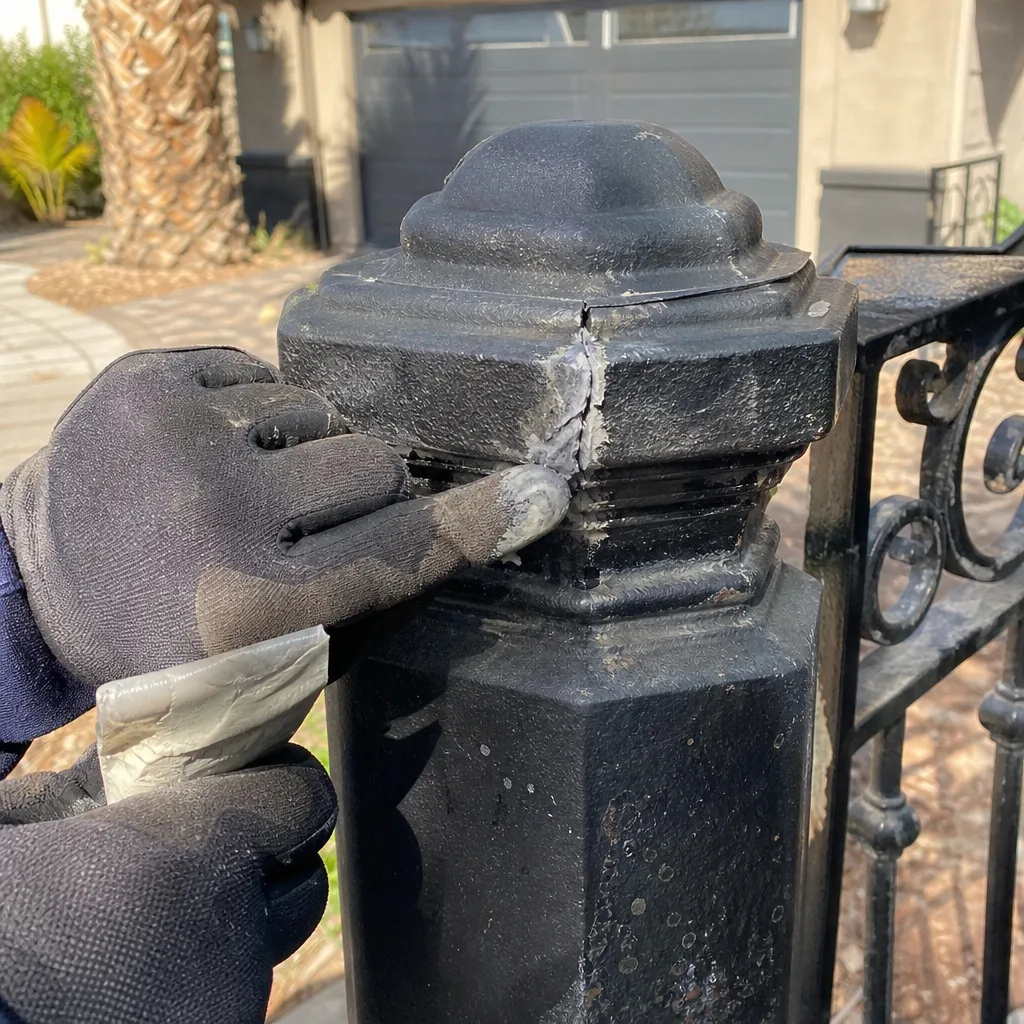
If you do one thing before summer, do this: set your chain tension or your spring tension correctly, depending on what drives the gate. In our experience this single adjustment eliminates the majority of summer service calls, because a gate running on the wrong tension overheats the motor, stresses the board, and wears the rollers faster than anything UV can do.
The two operator types are different jobs. On a chain-drive operator, the chain should have a small, even amount of slack – it should lift maybe half an inch in the middle of its run, no more. Too tight and the summer heat contraction of the chain against an expanding frame snaps it or wears the sprocket. Too loose and it slaps, skips, and loads the motor unevenly. On a screw-drive or arm operator, the pre-summer attention goes to the mechanical arm and any spring tension, plus the limit-switch travel. A limit switch set a few degrees past the gate’s actual stop forces the motor to stall briefly every cycle – and in July, a motor that stalls against its stop every time is a motor running hot.
- Identify the operator type first (chain, screw, or arm-driven). The adjustment is different for each.
- Check chain slack with the gate at mid-travel and the power off.
- Respect spring tension. High-tension springs and cables on a swing gate store real energy and can cause serious injury if released. That’s not a homeowner adjustment; have a trained professional set it.
- Confirm limit switches stop the gate at the correct travel point, not past it.
- Record what you set, and the reading – not just “looks fine.”
If you’re not sure what operator is on the gate, that’s fine to leave alone and have checked. We work with all the major brands, so whatever motor is already on your property, we can service it. If it’s a chain-drive setup like many Mighty Mule and LiftMaster installs in Winchester, the chain-slack check alone is often the whole story.
Building a Two-Page Seasonal Log That Records Readings
Most seasonal logs fail because they record observations, not readings. “Gate looks good” tells you nothing next year. A number tells you everything, because you can see a trend. Two pages is plenty – one page per inspection season. Here’s how we’d lay it out.
Page one: late spring (before the heat peak). Columns for date, ambient temperature at inspection, photoeye lens condition (clean/cloudy/replaced), photoeye alignment check (pass/fail), seal-strip condition, chain slack measurement, limit-switch travel reading, and operator travel time in seconds. That last one is the value that pays off over years – a travel time creeping from twelve seconds to fourteen over a single summer tells you the gate is dragging before it fails.
Page two: late fall (before the freeze). Date, ambient temperature, any track joint gap that looks wider than a hairline, roller condition per roller (free/dragging/replaced), safety-edge reversal test (pass/fail), footing and post-base condition, and travel time again. Side by side with the spring page, you get a before-and-after for the year.
- Always write the ambient temperature. A reading means nothing without it.
- Record travel time in seconds, not impressions.
- Note the part number of anything installed, so the next inspection knows what’s there.
- Photograph the limit-switch position and any joint you adjusted, with the date in a corner.
- Keep both pages on a clipboard near the gate or in a folder – it’s for you, not for a filing cabinet.
This is exactly the habit we bring to every job. Every visit leaves a photographed record of what we found, what we set, and what we installed – the same wiring-diagram documentation habit that started in commercial access-control work and carried over to residential gates. You can read more about how we handle the repair side on our gate motor and opener service page. And if you want the whole record start to finish, our Vance Gate Repair Winchester home page lays out the standard we work to: a written price before any tool is picked up, a photo record when we leave, and a 365-Day Done Right Promise behind every repair.
Matching Care to Your Operator: Brand Differences in Winchester
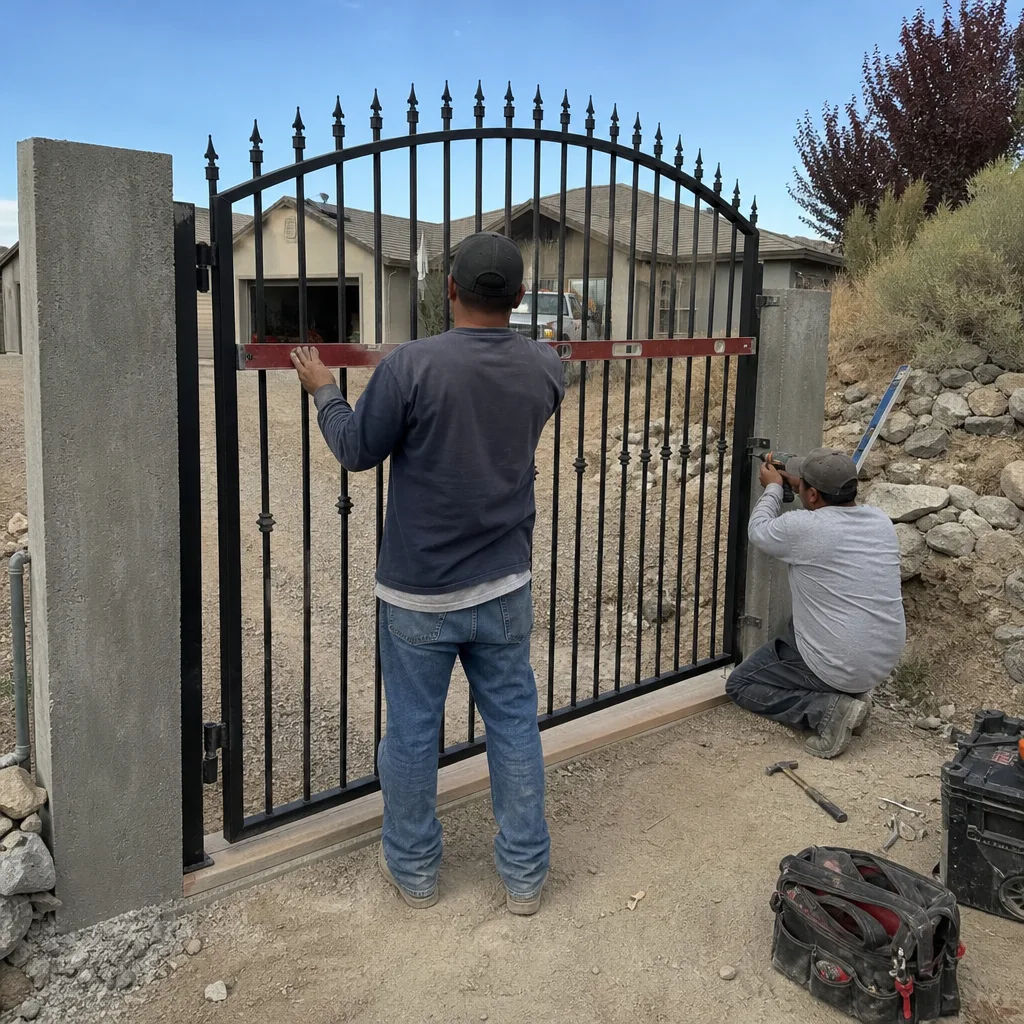
The seasonal care is broadly the same across operators, but the adjust points differ by brand, and knowing which one you have saves a lot of guessing. We service nine major brands, so we’re not going to steer you toward a replacement when a repair is what the gate needs.
On a LiftMaster chain or screw operator, the chain-tension check and the limit-switch travel adjustment are the two you’ll touch most. On a FAAC arm operator, the pre-summer attention goes to the arm geometry and the motor’s end-travel settings rather than a chain. A BFT slide operator has its own limit-switch routine that should be re-checked after the heat peak and again before the freeze, because the same travel setting that runs clean at 95°F can bind at 28°F. And a Mighty Mule chain-drive gate benefits from the same chain-slack check plus a look at the control board housing seal, since those units are often mounted low where dust and heat both reach them.
If you’re not sure which brand or model is on the gate, look for the plate on the operator housing – it’s usually on the side or underside. Failing that, call us and describe the arm. Either way, the seasonal log should record the brand and model so future inspections start from a known point. That’s how you avoid paying twice to rediscover the same problem.
Common Mistakes to Avoid
- Following a four-season calendar in Winchester. The heavy lifting here is two inspections, not four. Spreading attention evenly means you miss the May heat peak and the November cold snap, which are the two that actually break gates.
- Recording “looks fine” instead of numbers. Without an ambient temperature and a travel-time reading, next year’s inspection can’t tell a trend from a first-time issue.
- Over-tightening the chain in summer. A chain pulled tight against an expanding frame snaps or wears the sprocket. Leave a little slack and check it again in the fall.
- Ignoring the drip emitters near the post. Runoff that reaches the footing starts corrosion below eye level long before the gate shows a symptom. Look for flaking paint and damp, darker soil at the base.
- Replacing a cloudy photoeye lens with a same-spec part and no alignment check. The new lens still needs to point correctly at its partner, or the gate will throw false reversals in the afternoon sun.
- Assuming a warm-weather stall means a dead control board. In our experience more summer stalls trace to tension and limit-switch settings than to failed electronics. Have the settings checked before the board is condemned.
- Touching the counterbalance spring. High-tension springs and cables on a swing gate store enough energy to injure you seriously. That’s a job for a trained professional, every time.
See the difference
BeforeAfter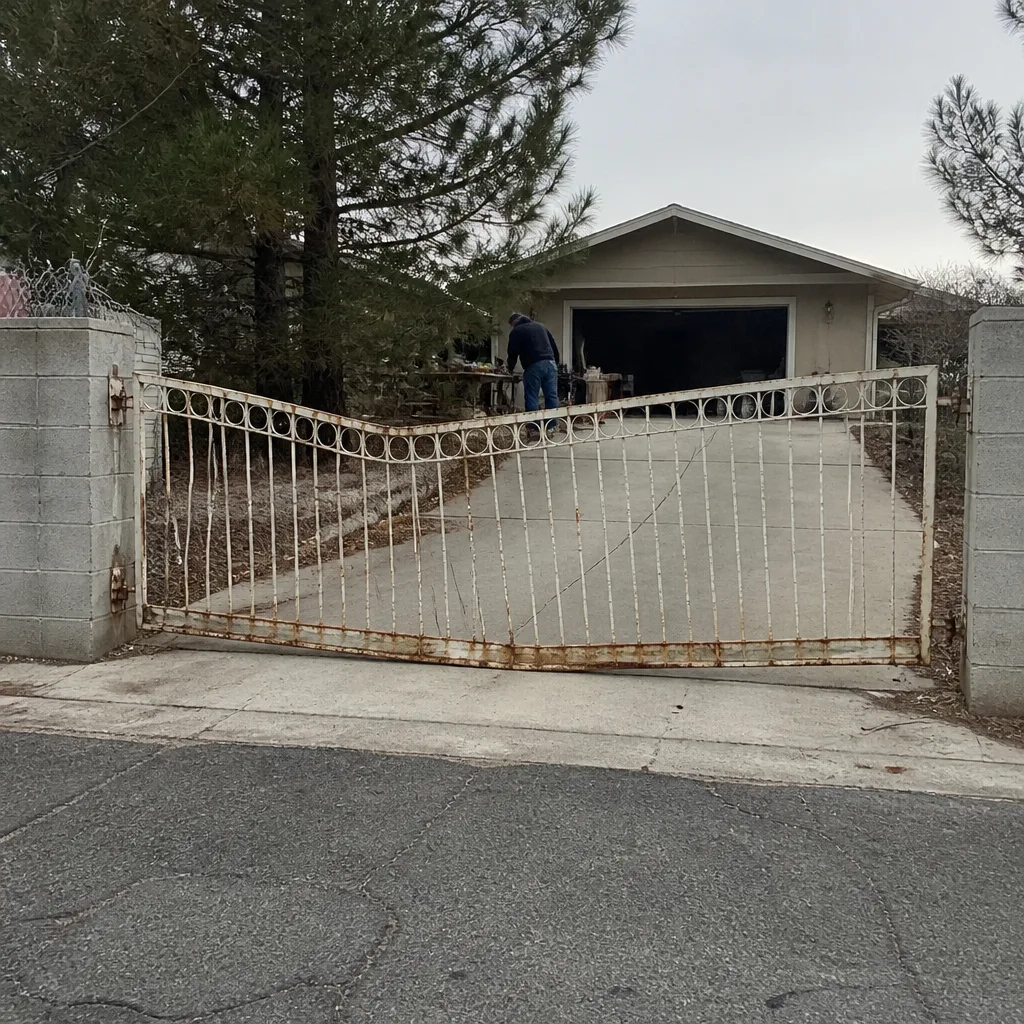 Before
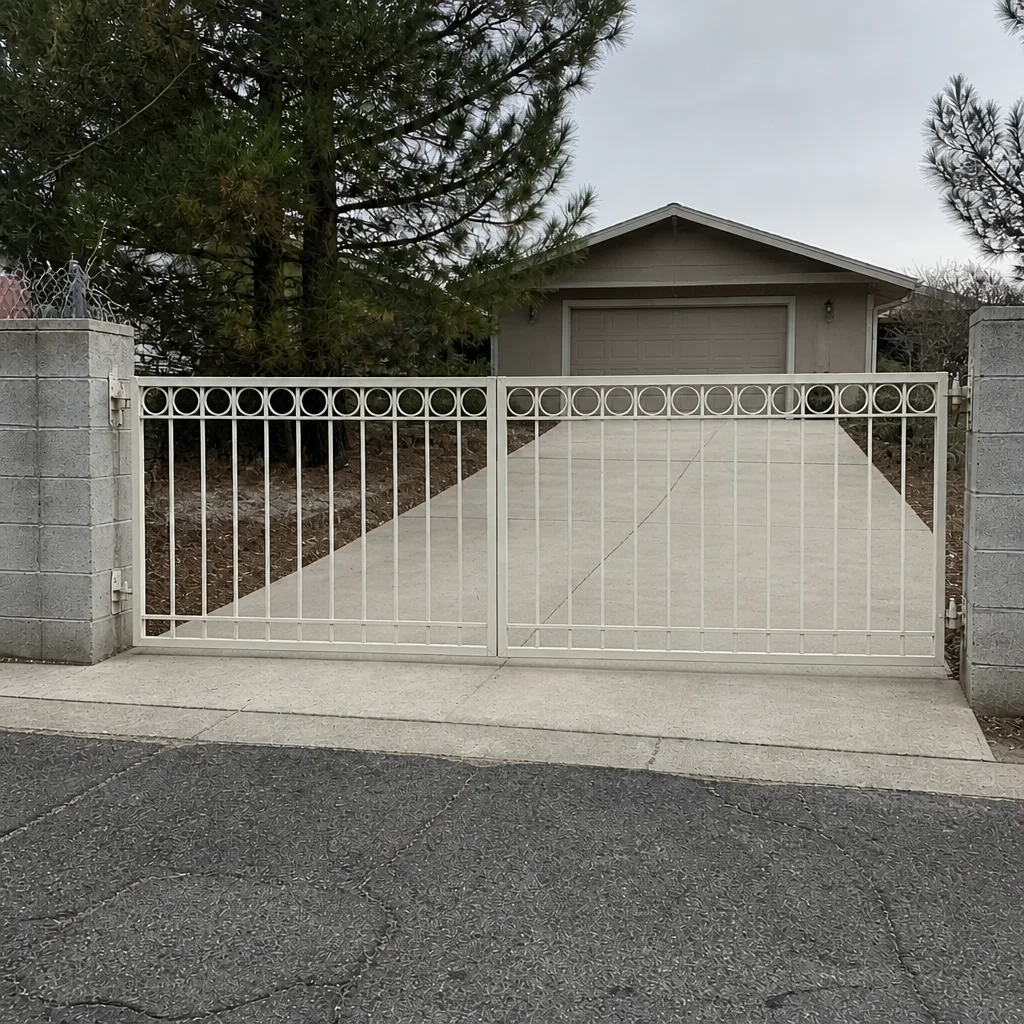 After
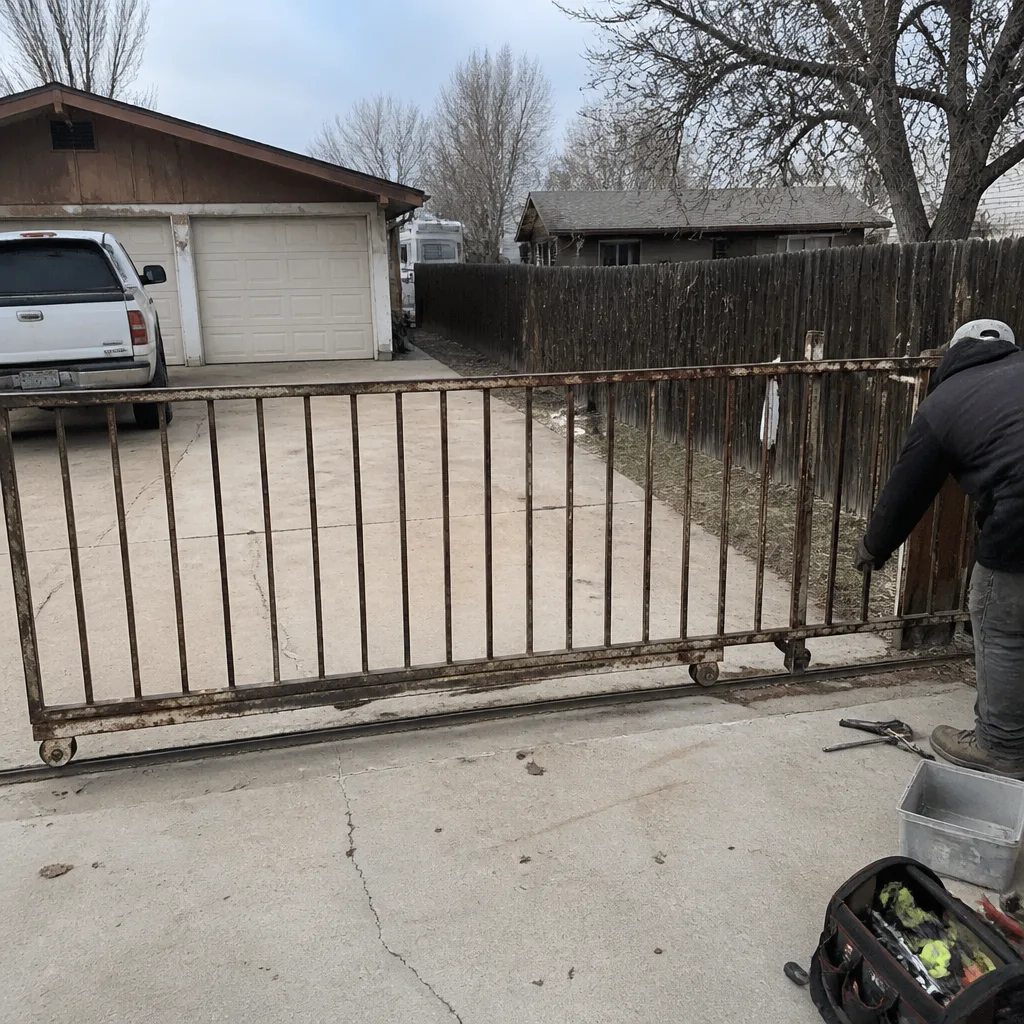 Before
 After
When to Call a Professional
Most of the seasonal checks in this guide are gentle and safe to do yourself: cleaning lenses, spinning rollers, tracing emitters, writing readings in a log. The line is wherever the work involves stored energy, the control board’s live electronics, or the mechanics that hold the gate’s weight. If the gate stalls against its stop, reverses randomly, runs hot, or if a track joint has opened to something you can feel, that’s worth a trained eye. And any work near a counterbalance spring or cable is not a homeowner job – those parts store energy and move fast if released incorrectly. Vance Gate Repair Winchester offers free estimates in Winchester – call (866) 983-9213. We’ll put the price in writing before any work starts, hand you a photo record when we leave, and stand behind the repair under our 365-Day Done Right Promise.
Frequently Asked Questions
Twice a year is right for Winchester: once in late spring before the May – September heat and once in late fall before the November – February cold. The two inspections focus on different things. The spring check targets UV damage to photoeyes and seals plus chain or spring tension, and the fall check targets track-joint gaps from contraction and roller drag. A gate on the west side with heavy afternoon sun, or one on aluminum track sections, may want an extra look in July.
The most common summer failure is a motor or board pushed into heat stress by a tension or limit-switch setting that’s off, not a part that suddenly died. A limit switch set past the gate’s real stop makes the motor stall briefly every cycle; in July that stall is a motor running hot. There’s also the circuit-board side: small components expand slightly faster than the aluminum housing in the heat, and that closed gap can stress the board. Have the settings checked before you replace anything. Call (866) 983-9213 for an exact quote – estimates are free.
Look for flaking paint at the base of the post and a ring of darker, damper soil around it that stays wet longer than the rest of the yard. Rust below eye level comes later. If you see either, move or cap the nearby emitter and give the post a dry season, then have the footing checked before the anchor loosens. Left alone, continuous moisture reaches the steel footing and weakens it, which is a much bigger repair than moving an emitter.
Chain tension, yes, if you’re careful and patient. Spring tension on a swing gate, no – high-tension springs and cables store serious energy and can release suddenly. That’s a trained-professional job. For chain-drive operators, the safe check is a little slack at mid-travel with the power off; for anything involving a counterbalance spring, leave it alone and have it set correctly.
Getting the tension right for your operator type. On a chain-drive gate, set the chain slack correctly; on an arm or screw operator, confirm the limit-switch travel. In our experience that one adjustment eliminates the majority of summer calls, because a gate running on wrong tension overheats the motor and wears the rollers faster than the sun does. Record the reading and the travel time so next spring tells you something.
Yes. We service nine major automation brands, including LiftMaster, FAAC, BFT, and Mighty Mule, so we can work on whatever motor is already installed rather than steering you toward a replacement. If you’re not sure which brand you have, the plate on the operator housing usually tells you, or call (866) 983-9213 and describe the arm – estimates are free. And if you do need a new unit, our gate installation in Winchester page covers how we handle the full setup, the written quote, and the documented hand-off.
The Bottom Line
Winchester’s gate care really comes down to two inspections done well. In late spring, before the UV and heat grind, clean your photoeye lenses, check the seals, and get chain or spring tension right – that last adjustment prevents most summer calls. In late fall, before the freeze, walk the track for joint gaps, spin every roller, and test the safety edges. Report the footing moisture at the end of irrigation season, and keep both log pages with readings, not observations. Do that and you’ll catch the failures at the adjustment stage, when they’re cheap, instead of the broken-down stage.
When a seasonal check turns into a repair, Vance Gate Repair Winchester keeps the process plain: the price is written down and agreed before any tool is picked up, every visit leaves a photo record of what we found, set, and installed, and the 365-Day Done Right Promise stands behind the repair. Our technicians have up to 12 years of experience, live person answers the phone around the clock, and a free second opinion is available on any written estimate from another company. Call (866) 983-9213 for a free estimate.
Written by the team at Vance Gate Repair Winchester.