
Last updated November 18, 2026
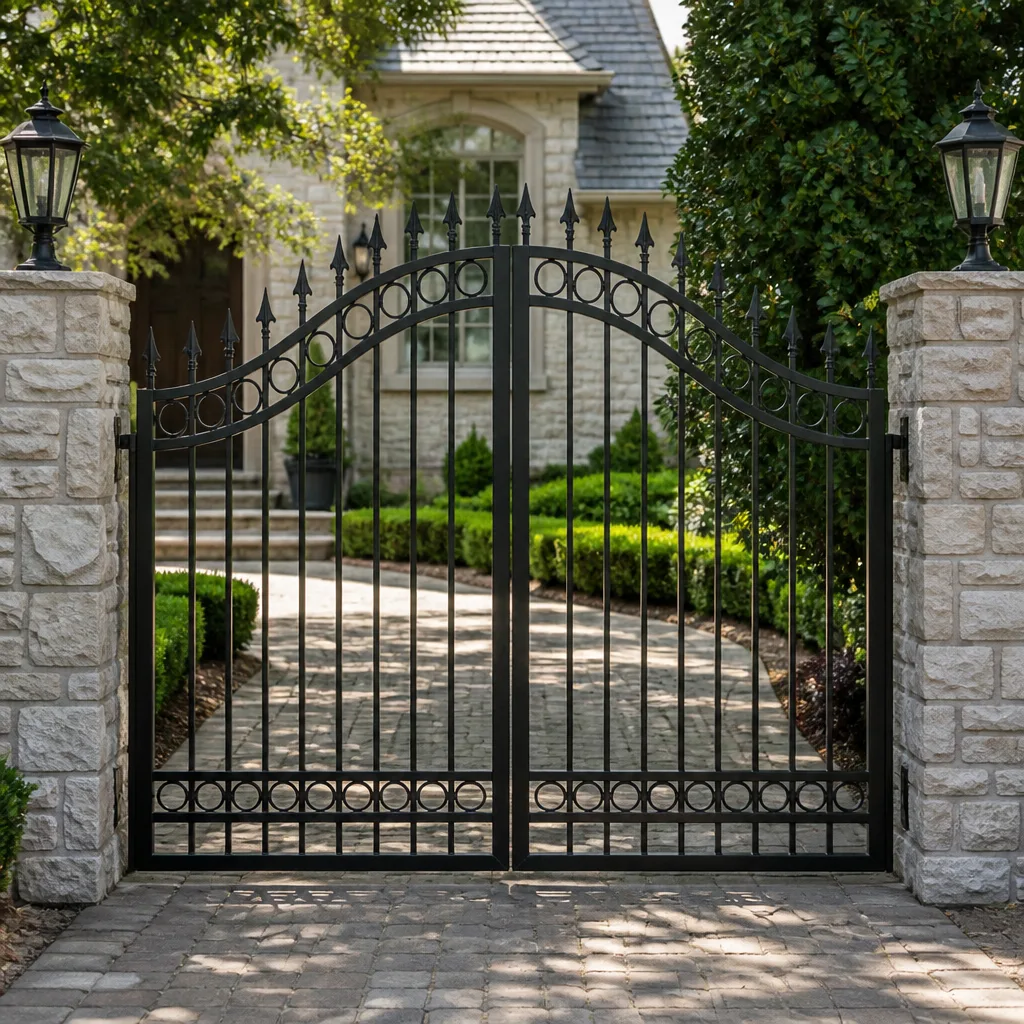 Wrought iron
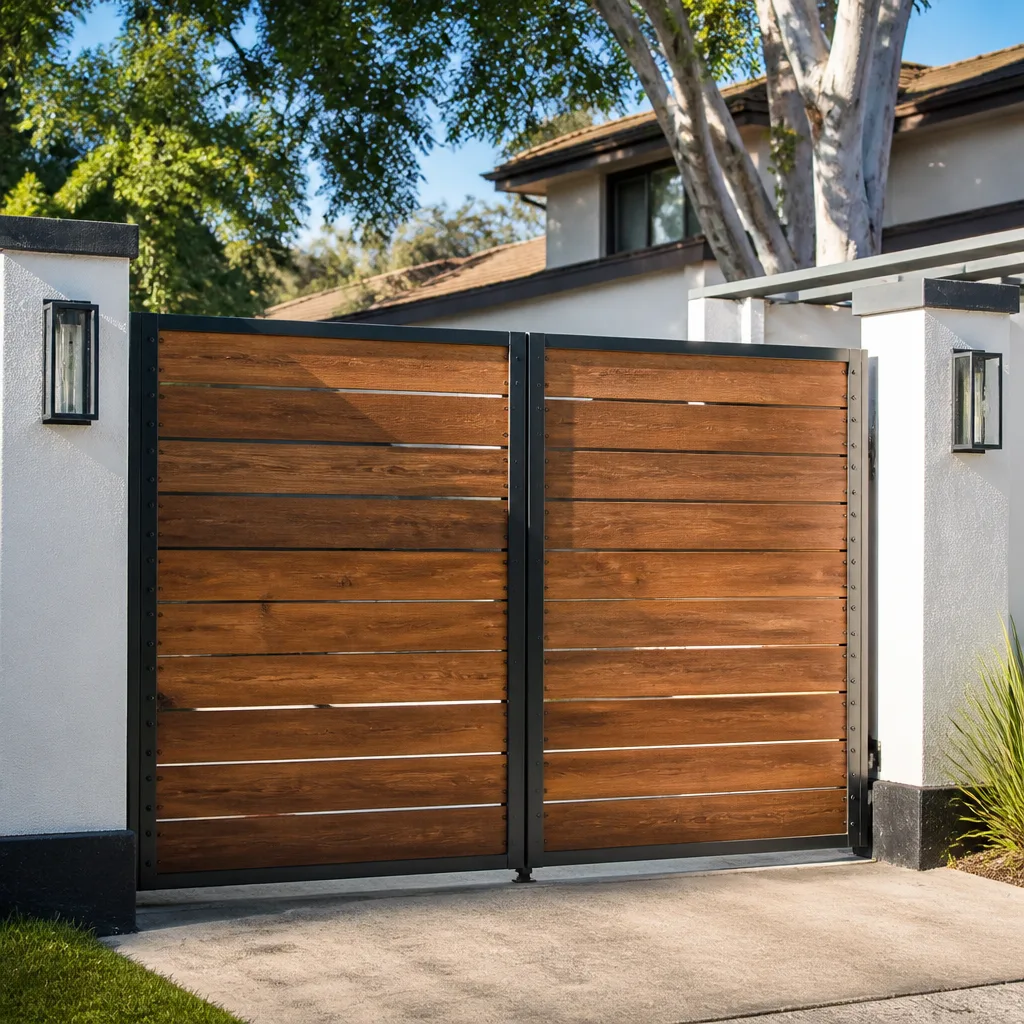 Wood & steel frame
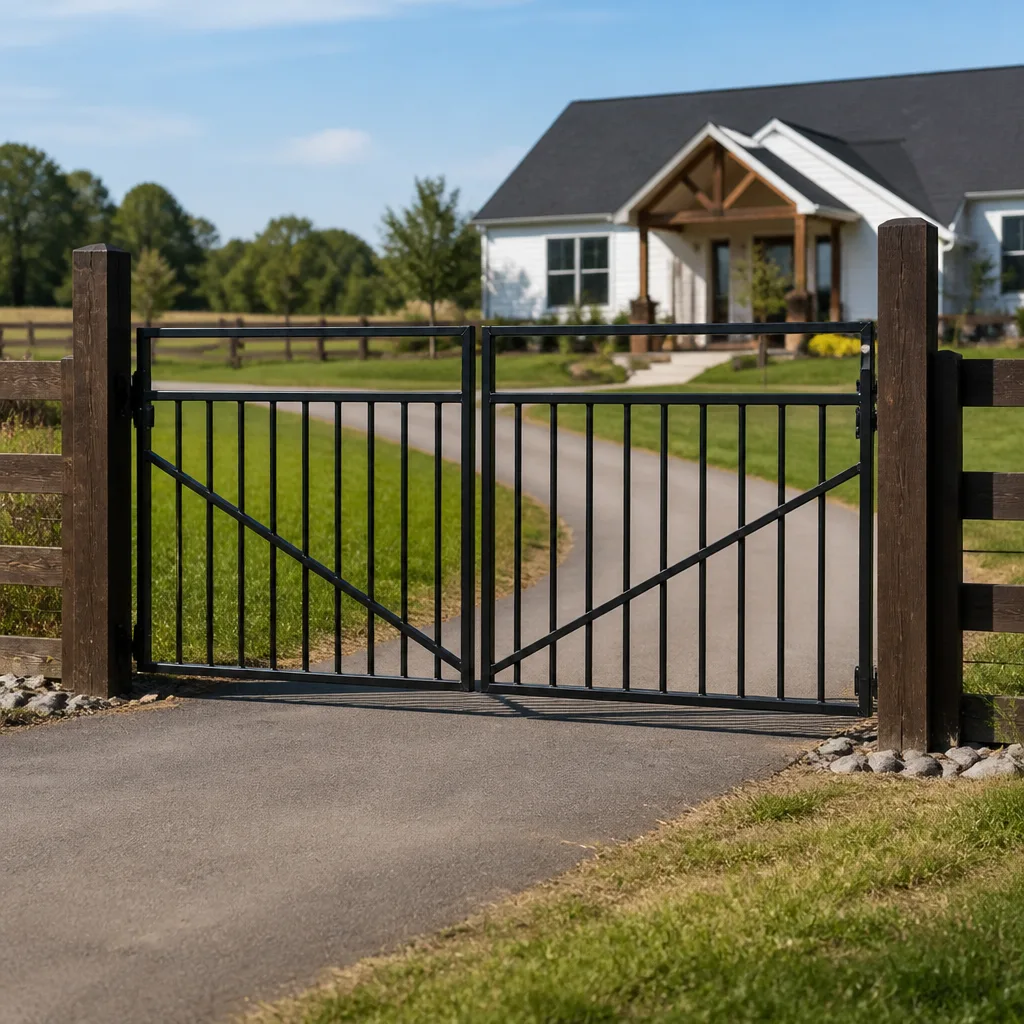 Farm & ranch
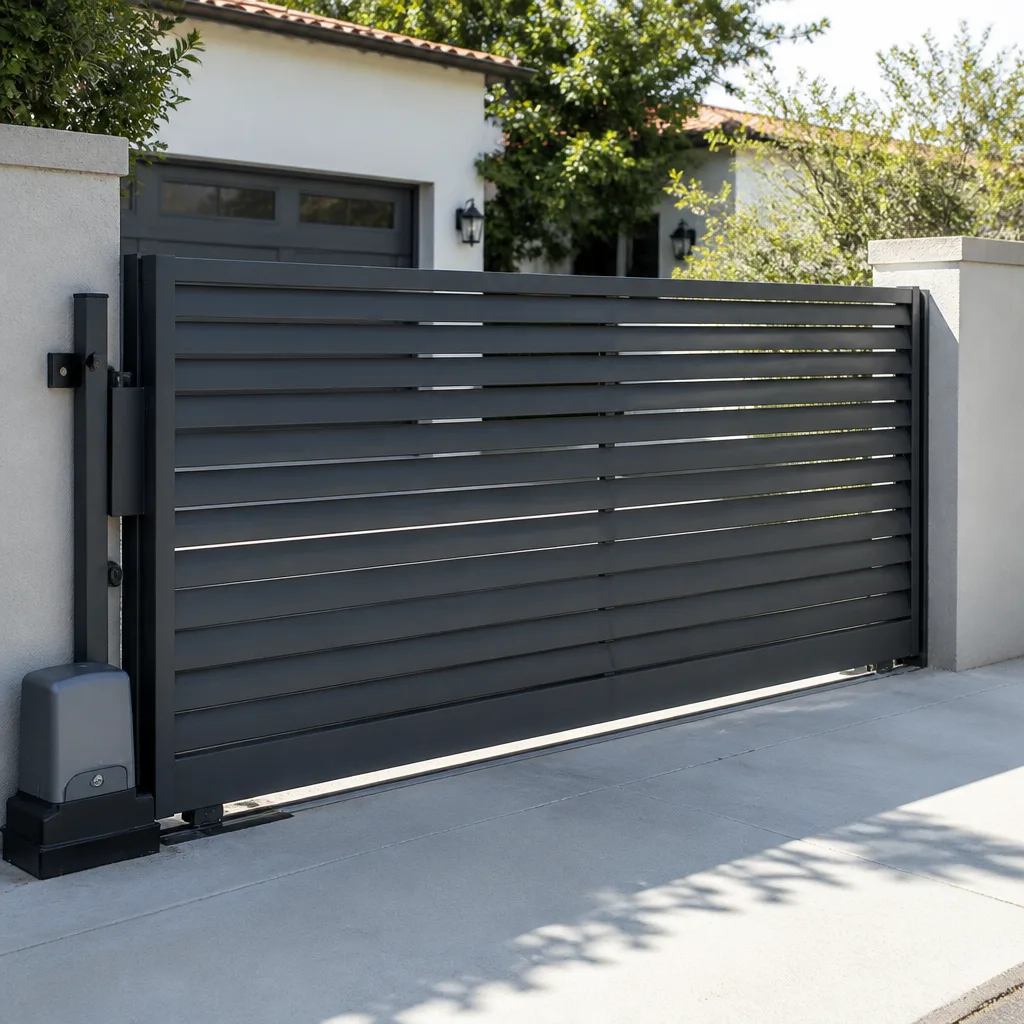 Sliding driveway gates
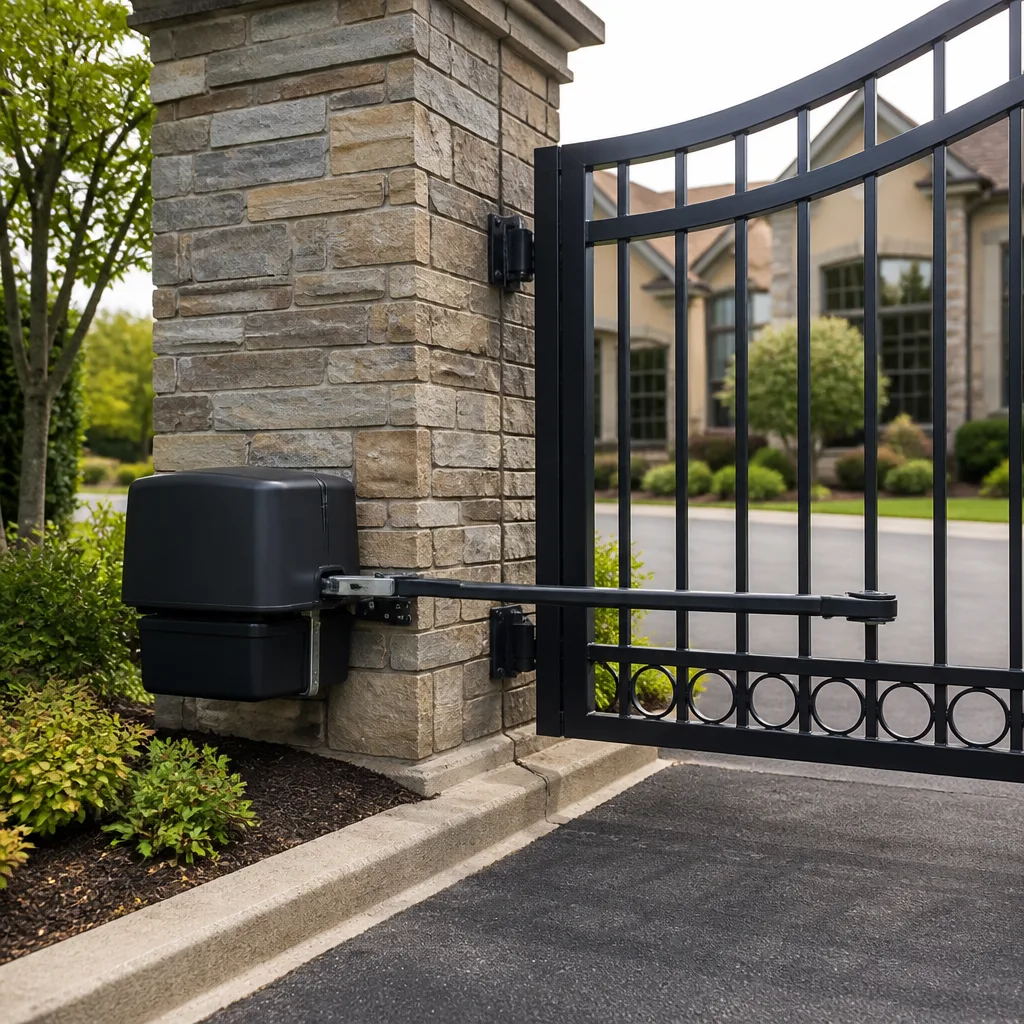 LiftMaster operators
Free on-site gate assessment - hinges, posts, and your LiftMaster or Nice gate operator checked before anything is quoted
The assessment is free and the quote is the invoice.
Get your free estimateThe Complete Gate Installation Guide for Winchester Homeowners
The most common expensive installation mistake in the high desert isn’t buying the wrong gate. It’s pouring footings at the wrong depth for the soil expansion coefficients in this specific climate zone. We’ve watched a $9,400 wrought-iron swing gate in Winchester start dragging on its hinges within two summers because the footer sat 16 inches deep in expansive clay that heaves when the monsoon moisture arrives. The gate was fine. The ground moved.
This guide covers what most buying guides skip: how Winchester’s alkaline soil eats through galvanized posts, why prevailing southwest wind load should decide between a swing and a slide gate before you ever look at a catalog, how to read your survey for setback lines, and the documentation you should demand before the installer’s truck pulls away.
Quick Answer
A residential gate installation in Winchester typically runs $3,200 to $11,500 depending on width, material, and whether the opener and low-voltage wiring are included. The single biggest factor in whether that gate still works correctly in year five is site preparation: footer depth matched to local soil expansion, post anchoring rated for alkaline concrete contact, and a documented as-built record you keep. A written scope with foundation specs and opener duty cycle should be in your hands before any deposit changes hands.
Styles & brands we work with
- Wrought iron
- Wood & steel frame
- Farm & ranch
- Sliding driveway gates
- LiftMaster operators
Table of Contents
- Why Gate Installation in Winchester Is a Site-Engineering Decision
- Soil, Sun, and Wind: The Three Local Forces That Shape Your Gate
- How to Read Your Property Survey Before You Buy Anything
- How to Evaluate an Installation Proposal
- The Documentation You Should Demand at Completion
- Five Installation Shortcuts That Fail Within 18 Months
- What Gate Installation Costs in Winchester
- Common Mistakes to Avoid
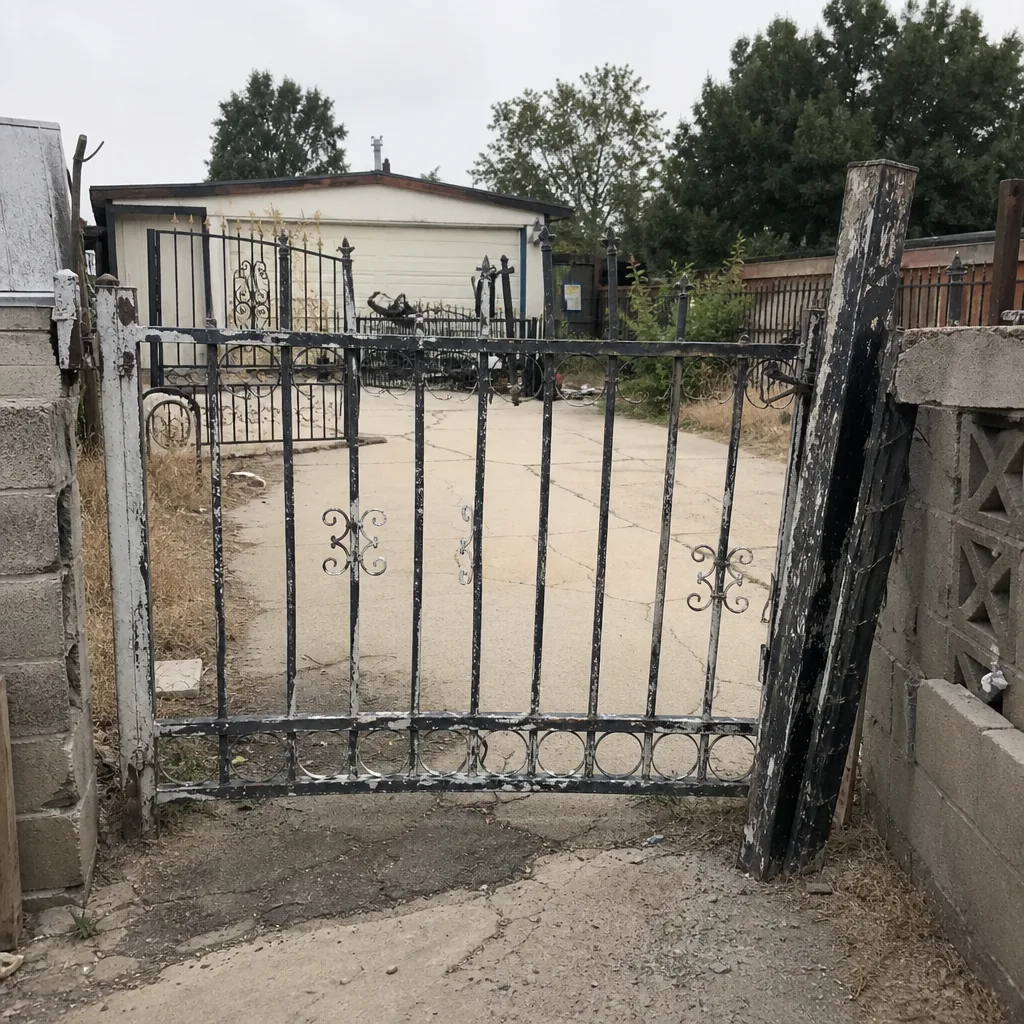 Before
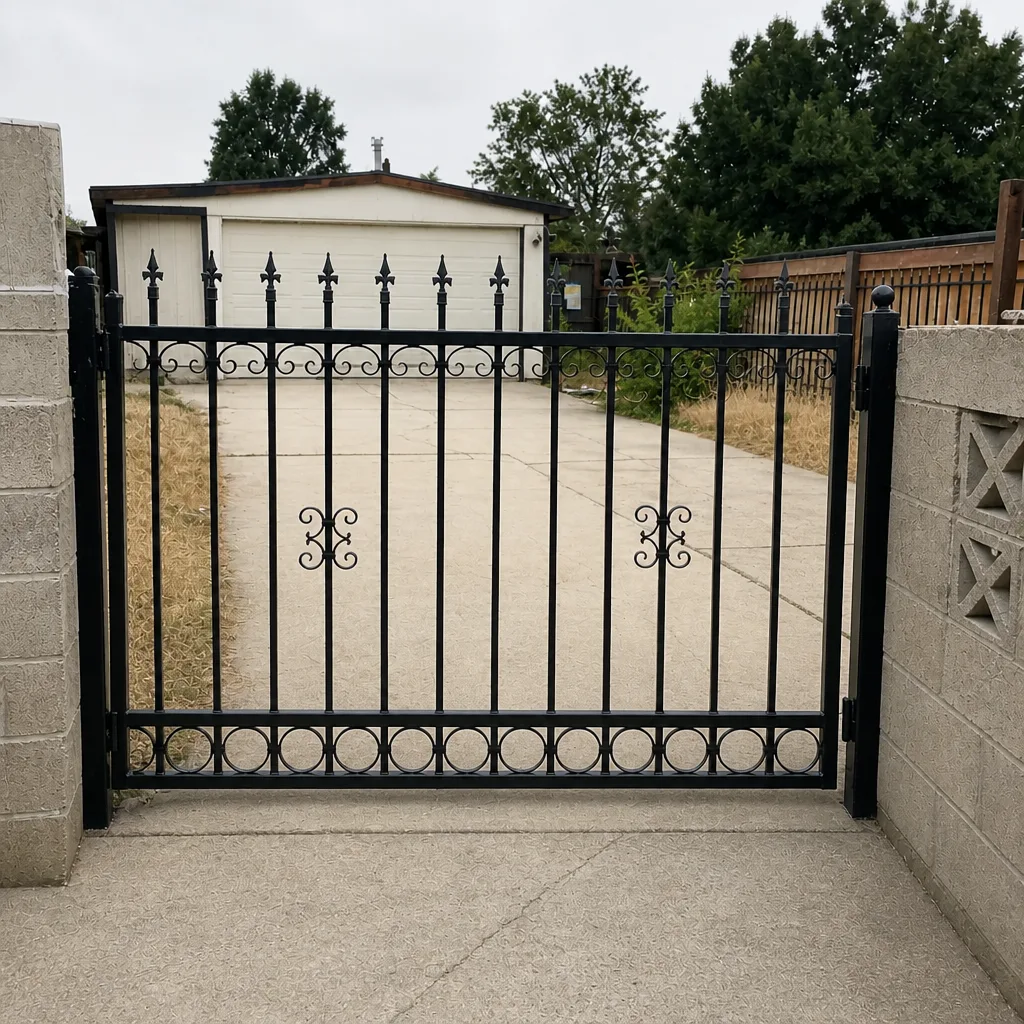 After
Why Gate Installation in Winchester Is a Site-Engineering Decision
Most gate buying guides treat installation like furniture delivery: pick a style, pick a width, bolt it to the ground. That works in a mild coastal climate. It doesn’t work on the eastern edge of the Las Vegas Valley, where the ground under a Winchester driveway swings between long dry cycles and sudden saturation during July and August storms.
Clay-heavy soil expands when it absorbs water and contracts as it dries. A footer that sits above the active zone – the depth where moisture still moves seasonally – will heave upward during a wet stretch and settle unevenly afterward. On a swing gate, that means the hinge post tilts. On a slide gate, that means the track rides a roller-coaster you can’t see until the gate starts binding.
What homeowners in Winchester actually need to decide before purchase:
- Footer depth matched to the local frost-free and active-soil depth, not to a generic “24 inches is fine” rule from a national installation manual.
- Post material and coating rated for soil contact in an alkaline environment. Untreated steel in direct contact with high-pH soil corrodes faster than the same steel rated for neutral soil.
- Swing versus slide decided by driveway slope, wind exposure, and available setback – not by which one photographs better.
- Opener duty cycle sized to how often the gate will actually cycle: a two-car household running 8 to 12 cycles a day has different requirements than a single occupant opening twice.
Every one of these is a site question, and none of them appear on a manufacturer’s product page.
Soil, Sun, and Wind: The Three Local Forces That Shape Your Gate
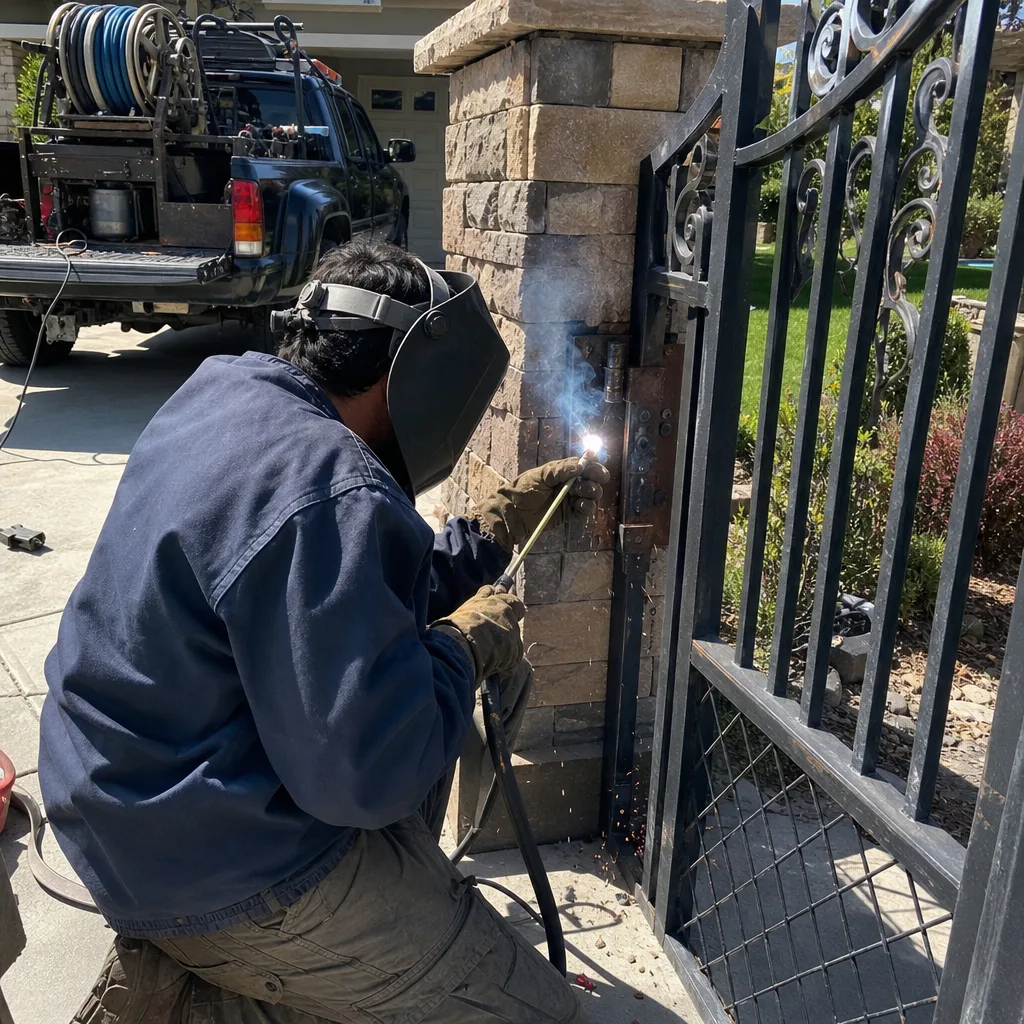
In our experience across Winchester, three environmental factors account for most premature gate failures we’re called to look at: alkaline soil, relentless sun exposure, and prevailing wind load from the southwest.
Alkaline soil and steel posts
Concrete and soil in this region run high on the pH scale. A galvanized steel post set directly into alkaline soil has a corrosion clock running from day one – not dramatically, but steadily. In Winchester, we regularly see posts that look fine above grade and show rust bloom below the soil line at year three. The fix at installation time is a proper barrier: a bituminous or epoxy coating rated for soil contact, or a post material that doesn’t depend on a zinc layer to survive. It’s a cheap upgrade at install and an expensive retrofit later.
Sun and finish degradation
Powder coat on a gate facing full afternoon sun goes chalky and fades faster here than in cooler zones. That’s cosmetic – it doesn’t affect structure – but it matters for a wood-look aluminum gate where the customer expects a specific appearance. If your gate faces southwest with no shade, ask the installer what powder-coat durability rating the finish carries.
Wind load and swing versus slide
Prevailing summer wind in this part of the valley comes from the southwest, which puts broadside pressure on any gate that faces that direction. A single-swing gate on a windy corner becomes a sail. Slide gates handle wind load much better because they run on a track and don’t have an open-swing moment where the wind catches the panel. If your driveway points southwest, slide is worth strongly considering before a swing gate is even quoted.
How to Read Your Property Survey Before You Buy Anything
Before you buy a gate, find your property survey. It’s usually in your closing paperwork, and it tells you two things that determine whether your gate is a legal installation or a future dispute.
- Setback lines. A gate cannot cross into a setback area in most Winchester subdivisions, and HOA covenants often impose setbacks beyond what the county requires. A gate that sits two feet into a setback is a gate you may be ordered to remove.
- Easements. Utility easements cross a lot at specific widths. If your gate or its footer lands inside an easement, the utility has a legal right to remove it to service the line. That’s an expensive surprise.
Read the survey carefully for the exact dimension of the setback and any labeled easement. If the survey is unclear or you don’t have one, request a copy from the county recorder’s office before you sign a contract. We’ve had to redraw a gate design twice for Winchester homeowners who bought first and checked survey second.
How to Evaluate an Installation Proposal
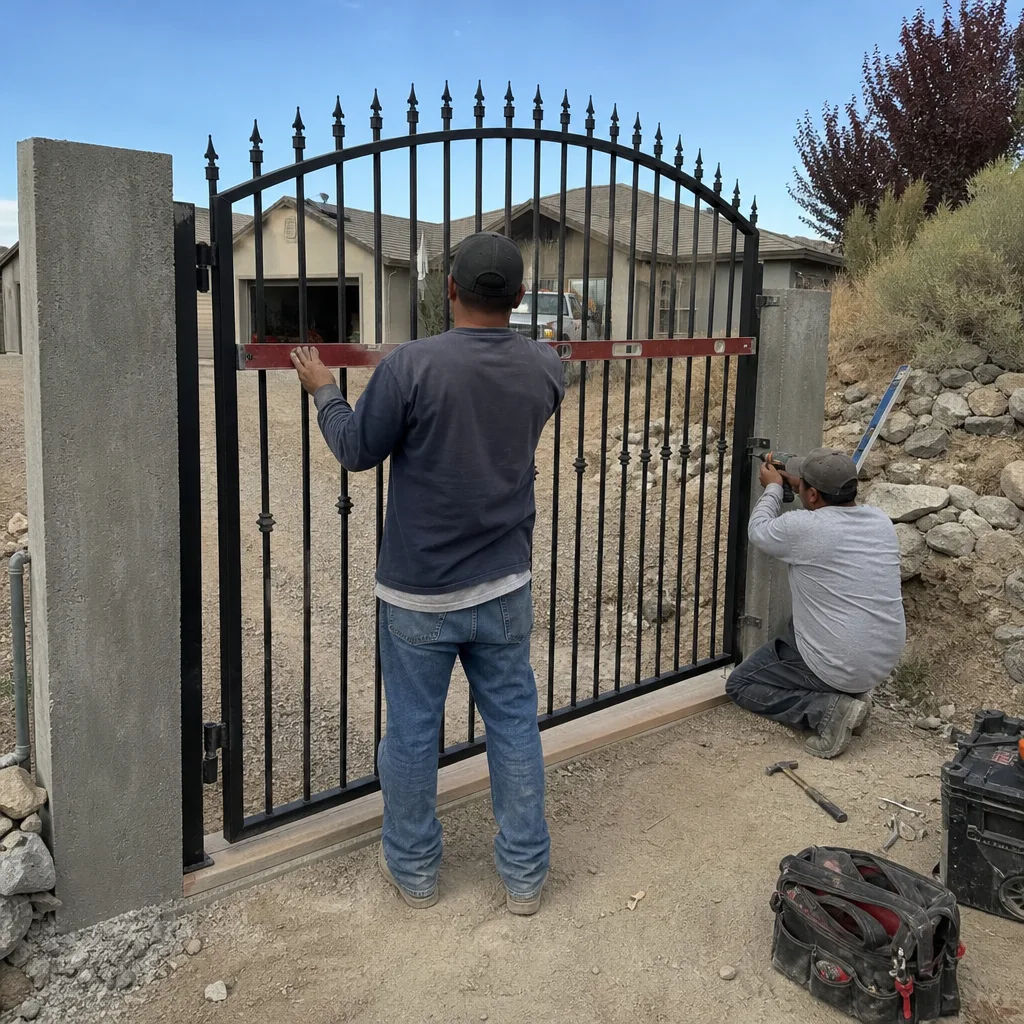
A verbal promise means nothing at installation time. A written scope does. When you receive a proposal, check for each of the following:
- Foundation specifications: footer depth in inches, concrete mix strength, post diameter and wall thickness, and the anchoring method.
- Wire gauge and conduit depth: the low-voltage wire runs to the opener should be named by gauge and the conduit named by depth and material. Skimping on either creates voltage drop and intermittent opener faults.
- Opener model and rated duty cycle: not just a brand name – the specific model number and cycles-per-hour rating.
- Safety devices: photo-eye placement and whether safety edges are included for a slide gate.
- Written price before work starts. This is the non-negotiable line item. The price on the proposal should match the final invoice.
If any of these are missing, ask for them in writing before you deposit. What we do at install time – written scope, written price, and a documented record of each visit left with the homeowner – is a habit that came from commercial access-control work, and it’s just as useful on a residential gate. For a full breakdown of what a completed installation includes, see Gate Installation in Winchester.
The Documentation You Should Demand at Completion
The 18-month window is where most installation failures show up. Whether you’ll have an easy diagnosis or an expensive guess depends on what the installer hands you on the last day.
Demand all four documents at completion:
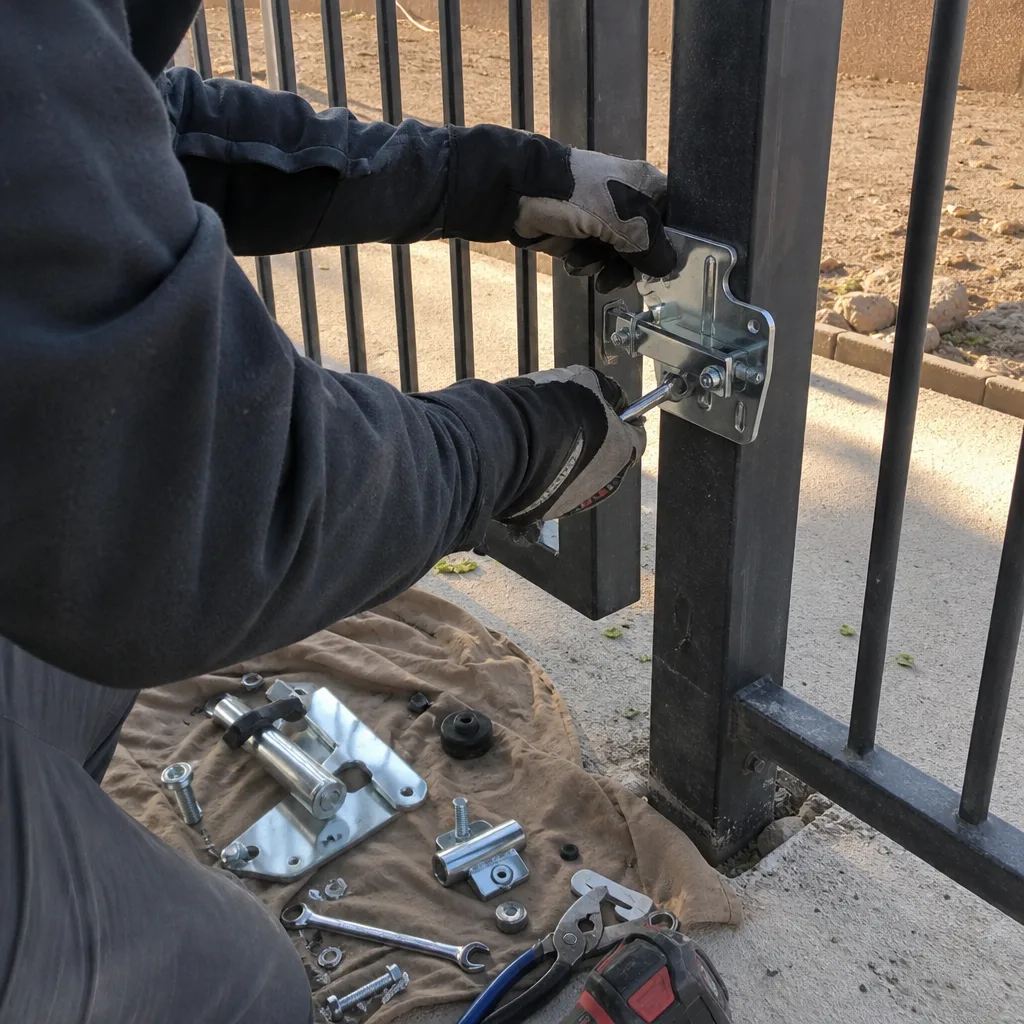
- As-built photos. Photos of the footer before concrete, the post setting, the conduit run, and the completed installation from both sides. Filed so a future technician can see what’s under the surface.
- Wiring diagram. The exact wiring for the opener and the safety devices, drawn or photographed as installed – not the manufacturer’s generic schematic.
- All programmed settings. Open and close force limits, travel distances, delay settings, remote codes, and any keypad programming.
- Limit-switch readings. On a slide gate or swing gate with limit switches, the exact reading at open travel and closed travel. This is your baseline. If a future service call shows the reading has drifted from that number, the technician knows exactly where the gate was set on day one.
That record is why a repeat service call should take 40 minutes instead of 90, and why you should never pay twice to rediscover the same problem. For the repair side of that equation, our Gate Repair in Winchester service uses the same documentation habit.
Five Installation Shortcuts That Fail Within 18 Months
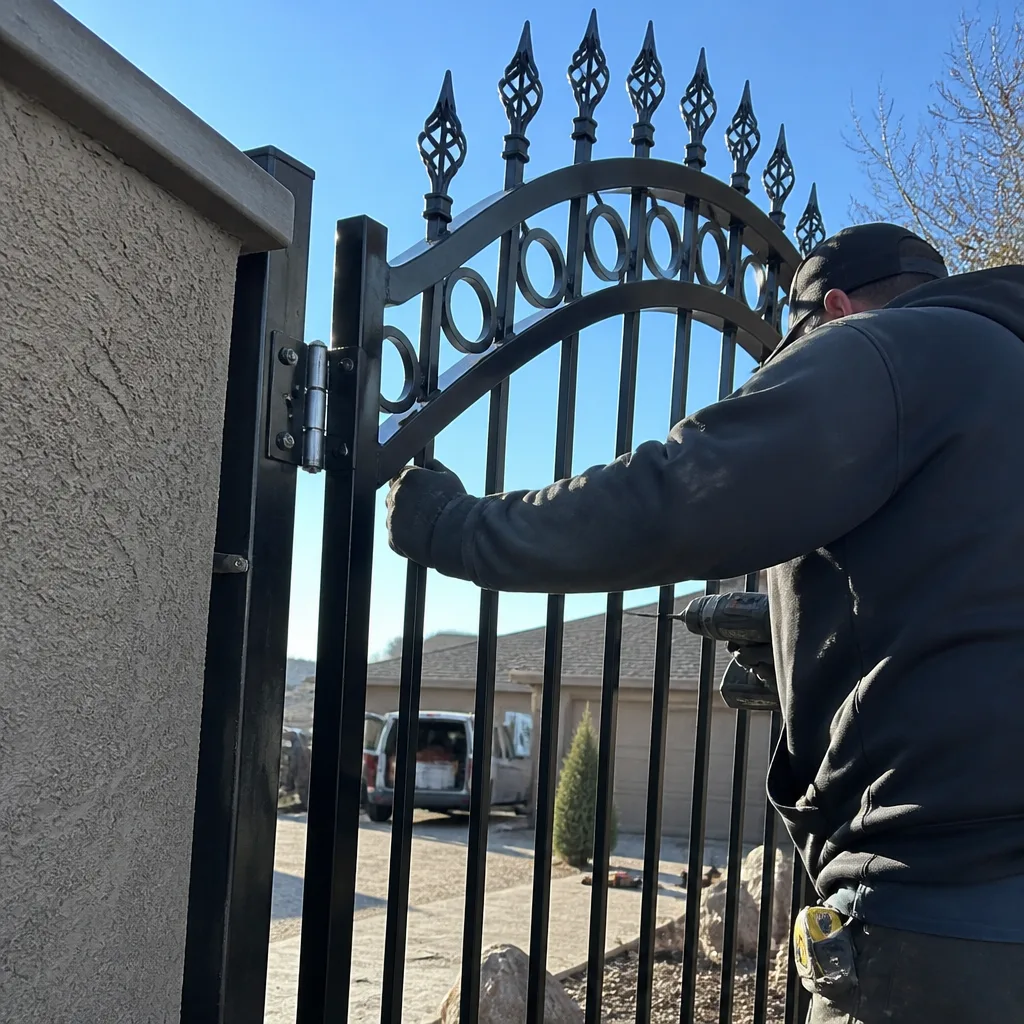
Each of these looks fine at punch-list and shows up as a service call a year and a half later. Here’s how to spot each one before the installer leaves.
- Footer poured at a nominal depth without soil testing. If the installer doesn’t ask about soil conditions or check the active zone, the footer is either too shallow or overbuilt. Either way, ask for the target depth in writing.
- Post set in concrete without a soil-contact-rated barrier. Look at the base of the post before it’s patched. Bare galvanized steel in alkaline soil will not survive as long as the gate it holds.
- Undersized wire to the opener. Voltage drop causes intermittent faults that look like a bad motor. Check the gauge on the wire run against the opener’s manual – not against what’s on the truck.
- Photo-eye aimed at nothing. The infrared safety beam must align across the gate’s closed path. If the beam is aimed at a wall or hits a plant that grows, the gate will refuse to close within a season. Watch the installer aim it and confirm it trips by hand before they leave.
- Limit switches set “close enough.” If the swing stops a few degrees past travel, the motor strains at each full cycle and the arm bracket wears out early. Ask for the exact limit reading.
Most of these are not visible on the final walkthrough unless you know what to look for. That’s why the record you demand in the previous section matters as much as the installation itself.
What Gate Installation Costs in Winchester
Prices below are typical installed ranges for Winchester residential gates. The written price you receive covers the whole scope, not a portion of it.
- Single swing gate, steel or aluminum, no opener: $2,400 – $4,800
- Single swing gate with opener and safety devices: $4,200 – $7,600
- Double swing gate with opener: $6,500 – $11,000
- Slide gate up to 16 feet, with opener: $5,800 – $10,500
- Opener retrofit on existing gate (LiftMaster, FAAC, Elite, Mighty Mule or similar): $1,400 – $3,200
- Low-voltage wiring run and conduit, typical 40-80 foot driveway: $600 – $1,600
- Ground loop or keypad access control: $450 – $1,400
Two things move the price more than anything else: whether the driveway slope requires grading work, and whether the site needs a longer wire run than the driveway suggests. Powder-coated finishes, custom widths, and ornamental panels add cost on top. What does not move the price after the fact is labor discovered to be more than expected – our written price is what you pay. For a deeper look at opener costs specifically, see Gate Motor & Opener in Winchester.
Common Mistakes to Avoid
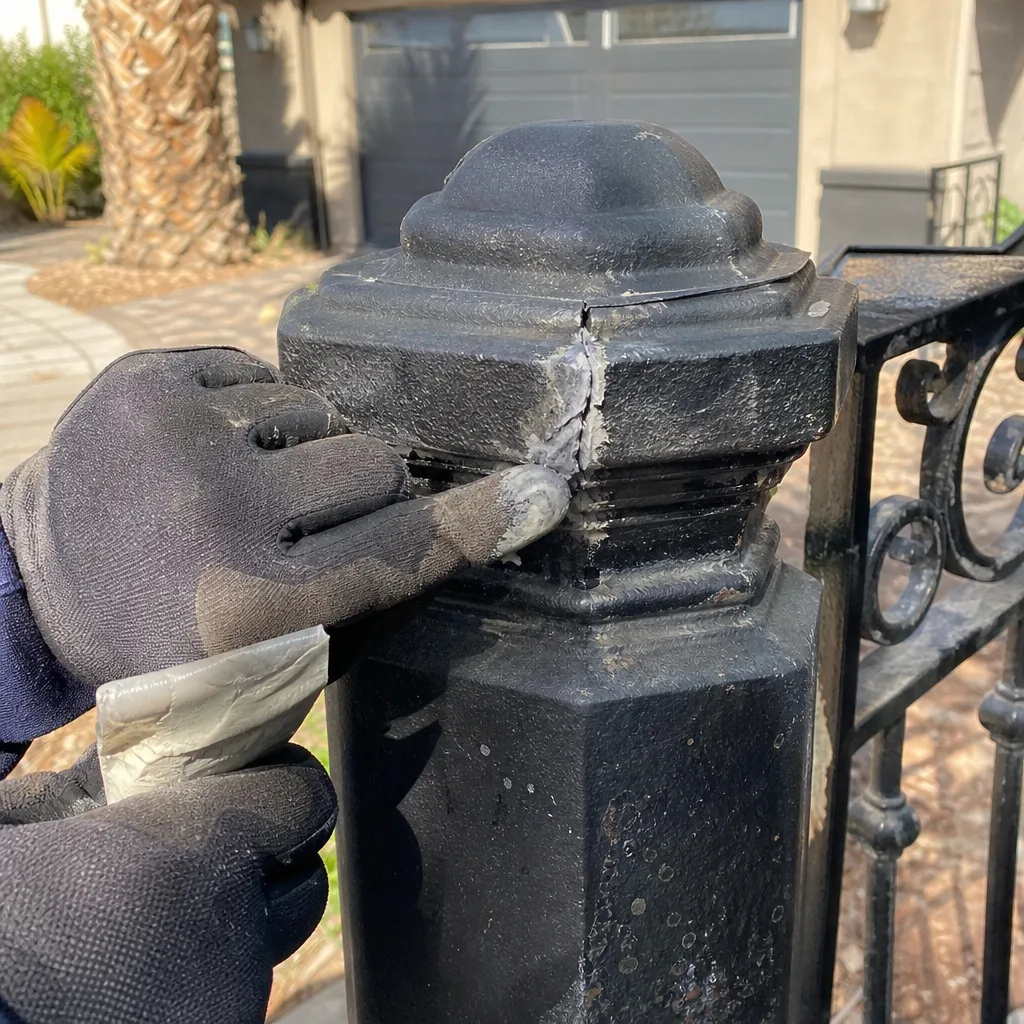
- Buying the gate before reading the survey. A beautiful gate across a setback line is a gate the county or HOA can order removed. Survey first, product second, every time.
- Choosing swing vs. slide on looks alone. In Winchester, the prevailing southwest wind is the deciding factor on exposed driveways. A wide-swing gate on a windy corner is a maintenance problem waiting to start.
- Accepting a verbal scope. Verbal scopes leave the wire gauge, footer depth, opener model, and duty cycle undefined, which is exactly where surprise costs live.
- Skipping the soil barrier on posts. It’s a $40-80 upgrade at install and a $400-800 post replacement later in alkaline Winchester soil.
- Not asking for limit-switch readings. Three numbers on a page at completion time turn a diagnostic mystery into a five-minute check at the next service call.
- Letting the installer leave without a photo record. Photos of what was buried are only available on the day it’s buried. There is no second chance.
- Assuming the cheapest quote saves money. The cheapest quote is usually the one that skips the soil barrier, uses the smaller wire gauge, and pours a nominal footer. The gate looks identical on day one and completely different on day 550.
See the difference
BeforeAfter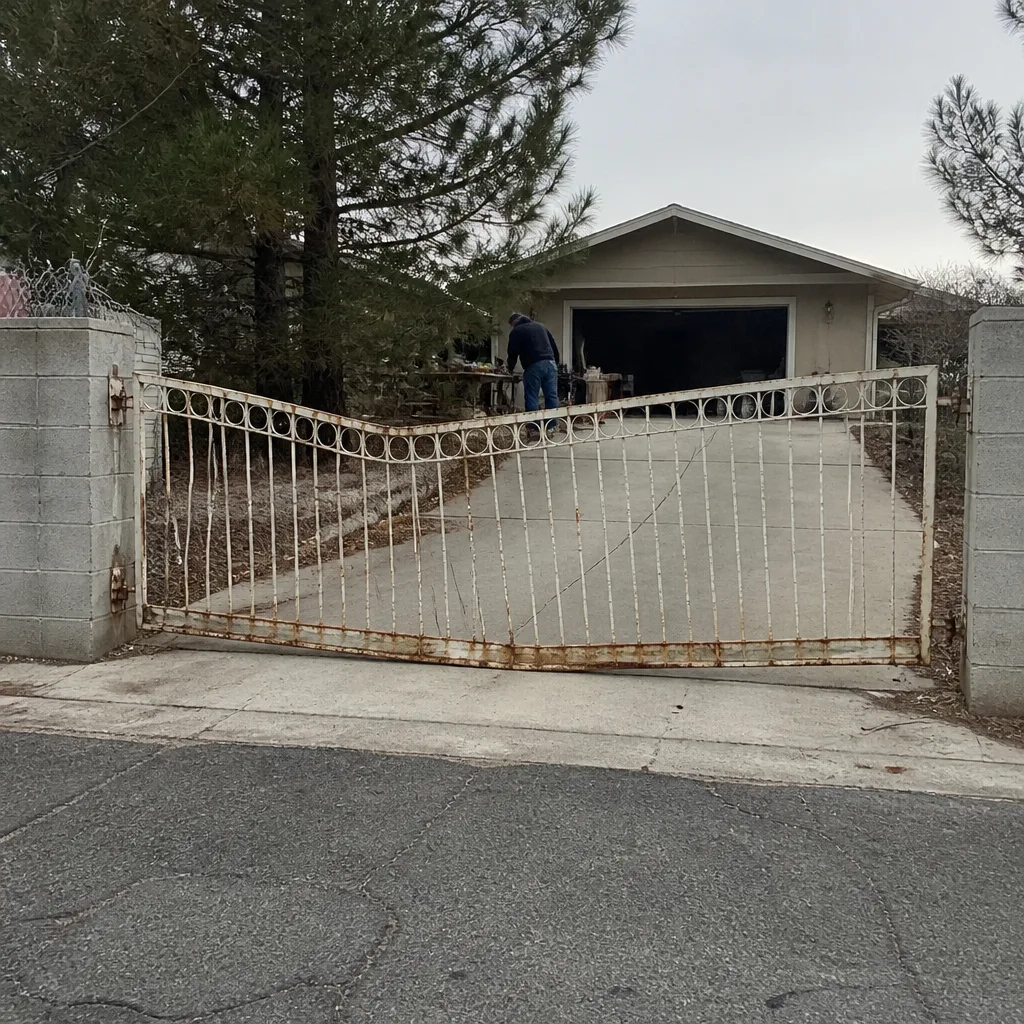 Before
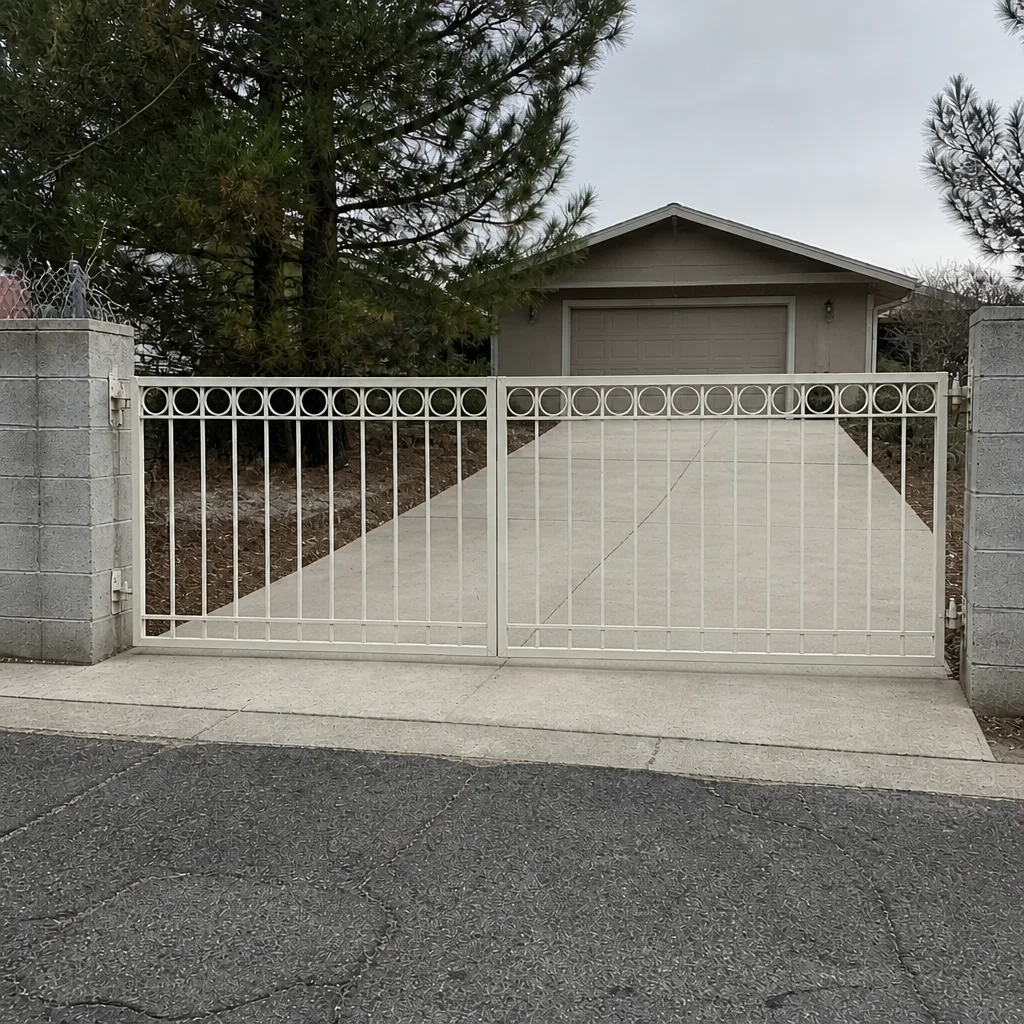 After
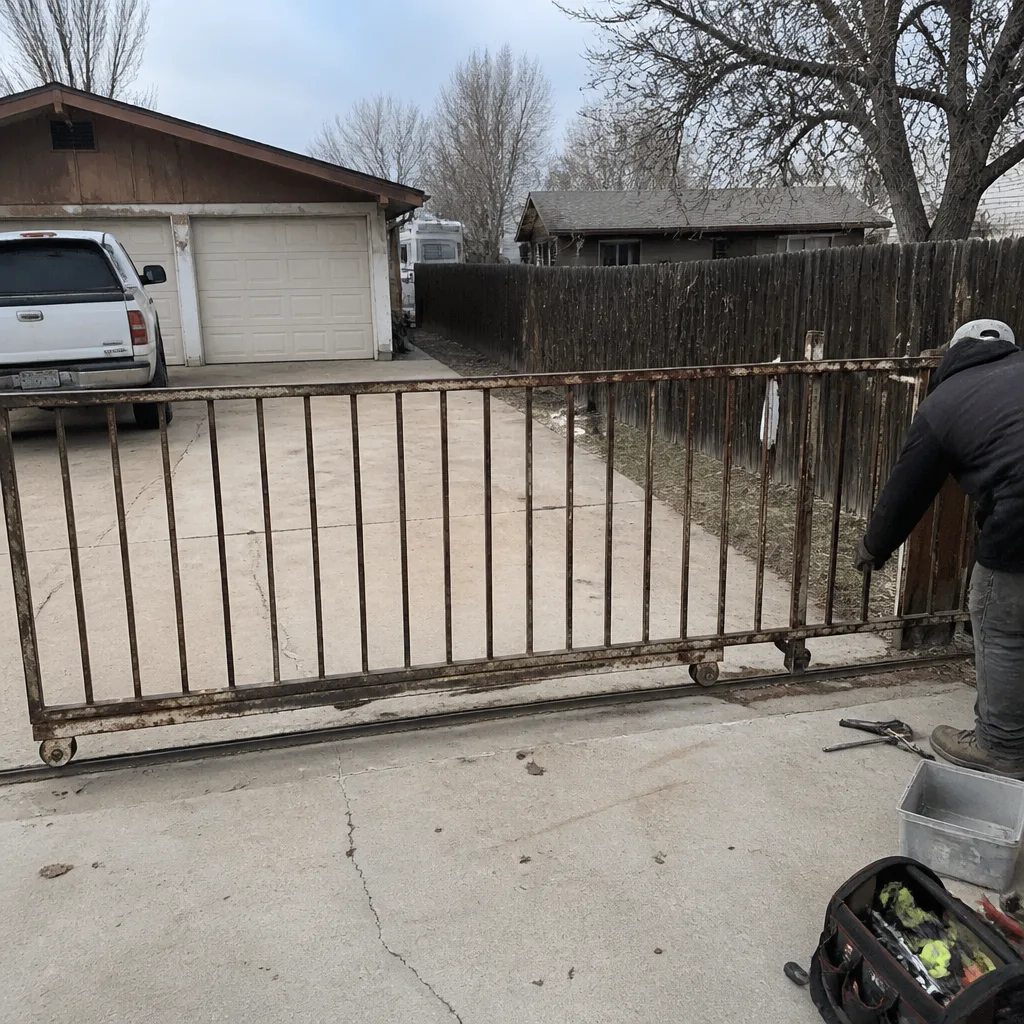 Before
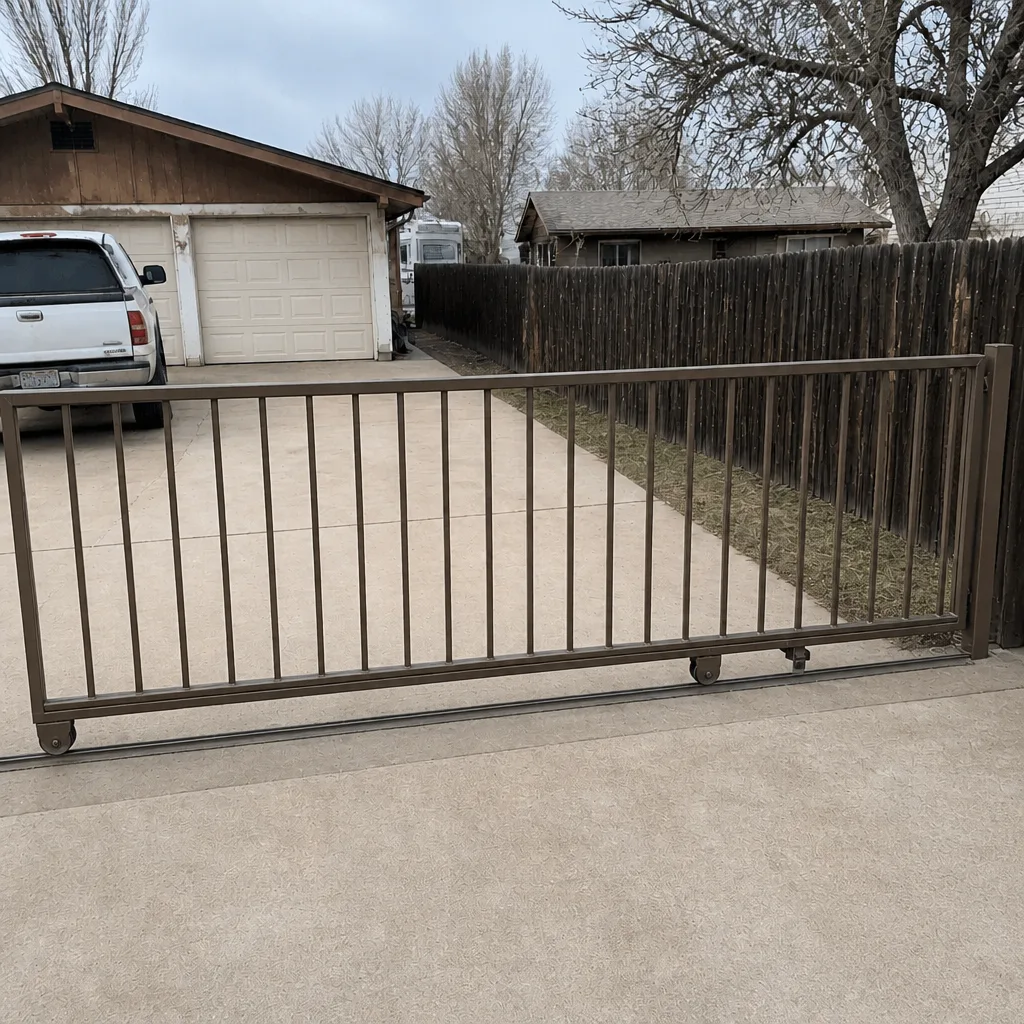 After
When to Call a Professional
Gate installation involves buried electrical runs, structural footings, and on any linear or swing gate with an opener, a motor that can close on a person or a car. That’s the line where DIY stops being a good idea. If your driveway has any slope, if your survey shows an easement, if the site needs a low-voltage power run from the house, or if the gate itself weighs more than a cargo door, get a professional in before the shovel comes out. The same holds if an existing gate is failing and you want to understand whether replacement is really necessary or a repair is the right answer. Vance Gate Repair Winchester offers free estimates in Winchester – call (866) 983-9213. Every estimate is a written scope, a written price, and a document you can keep.
Frequently Asked Questions
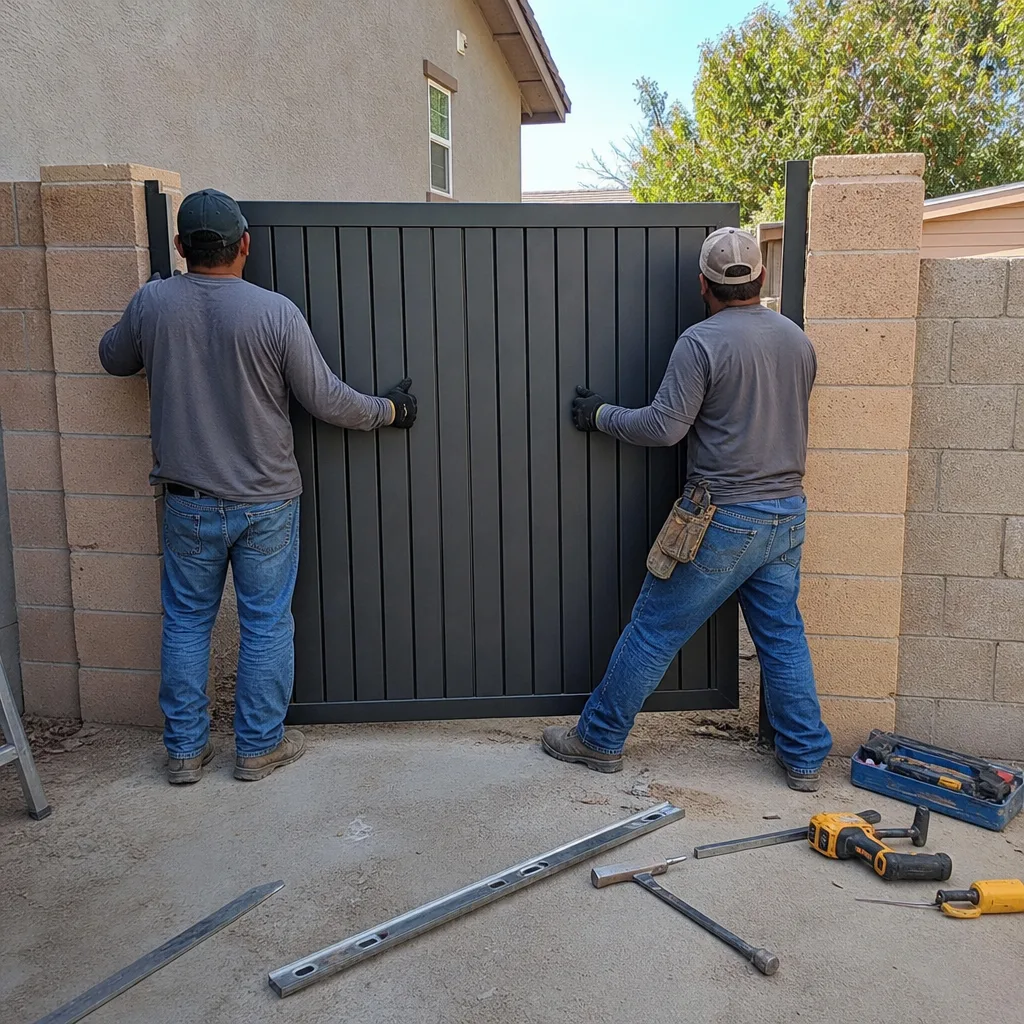
Most residential gate installations in Winchester run $3,200 to $11,500 installed, with single swing gates at the low end and slide gates or double gates with openers at the high end. The written price you receive before work starts is the price you pay, so ask for every line – footer depth, wire gauge, opener model, and finish – before you sign. Call (866) 983-9213 for an exact quote; estimates are free.
A slide gate is usually the better pick for a driveway exposed to prevailing southwest wind in Winchester. A swing gate has an open-swing moment where the full panel face catches the wind load, which puts steady strain on the hinge post and opener arm. A slide gate runs on a track and handles wind load with less stress. The right answer still depends on your available setback and driveway slope – that’s a site-by-site decision.
Depth depends on the active-soil zone at your address, which in this part of the valley means footer depth should be chosen from local soil behavior, not a national rule of thumb. Expansive clay soil heaves seasonally, so a shallow footer will lift and tilt a heavy swing gate within a couple of seasons. Ask for the target depth in writing in the proposal, along with the concrete mix strength and post anchoring method.
For a small pedestrian gate, possibly – for a driveway gate with an opener, no. The install involves buried low-voltage conduit, a footer rated for the gate’s weight and soil behavior, and safety devices that stop the gate if a person or car is in its path. Those are the components that carry real safety risk if set wrong. A free estimate from a professional will tell you what your specific site needs and what it will cost.
Four things: as-built photos of the footer and wiring, a wiring diagram as installed, every programmed setting on the opener, and the limit-switch readings at open and closed travel. Those numbers are your baseline. If a future service call shows the reading has drifted, the technician knows exactly where the gate was set on day one. Ask for all four before the installer leaves.
Usually yes, and the approval process is where most setbacks get missed. Many Winchester subdivisions impose HOA setback rules that go beyond the county requirement, and a gate that crosses the HOA line can be ordered removed. Read your survey and check your CC&Rs before choosing a design. If the paperwork is unclear, an installer experienced with Winchester subdivisions will know what to check.
The Bottom Line
Gate installation is a site-engineering decision before it’s a product decision. In Winchester, the variables that matter most are soil expansion and alkaline corrosion, prevailing wind load, HOA and survey setbacks, and the documentation left behind. Buy the right gate and the installation still fails if the footer sits wrong – so get the scope in writing, get the as-built record on completion, and get the limit-switch readings before the truck pulls away. Our Vance Gate Repair Winchester home page covers the full service range. When you’re ready, call (866) 983-9213 for a free estimate with a written price before any work starts.
Written by the team at Vance Gate Repair Winchester. Have a Winchester gate project? Call (866) 983-9213 for a free estimate.