
Last updated November 18, 2026
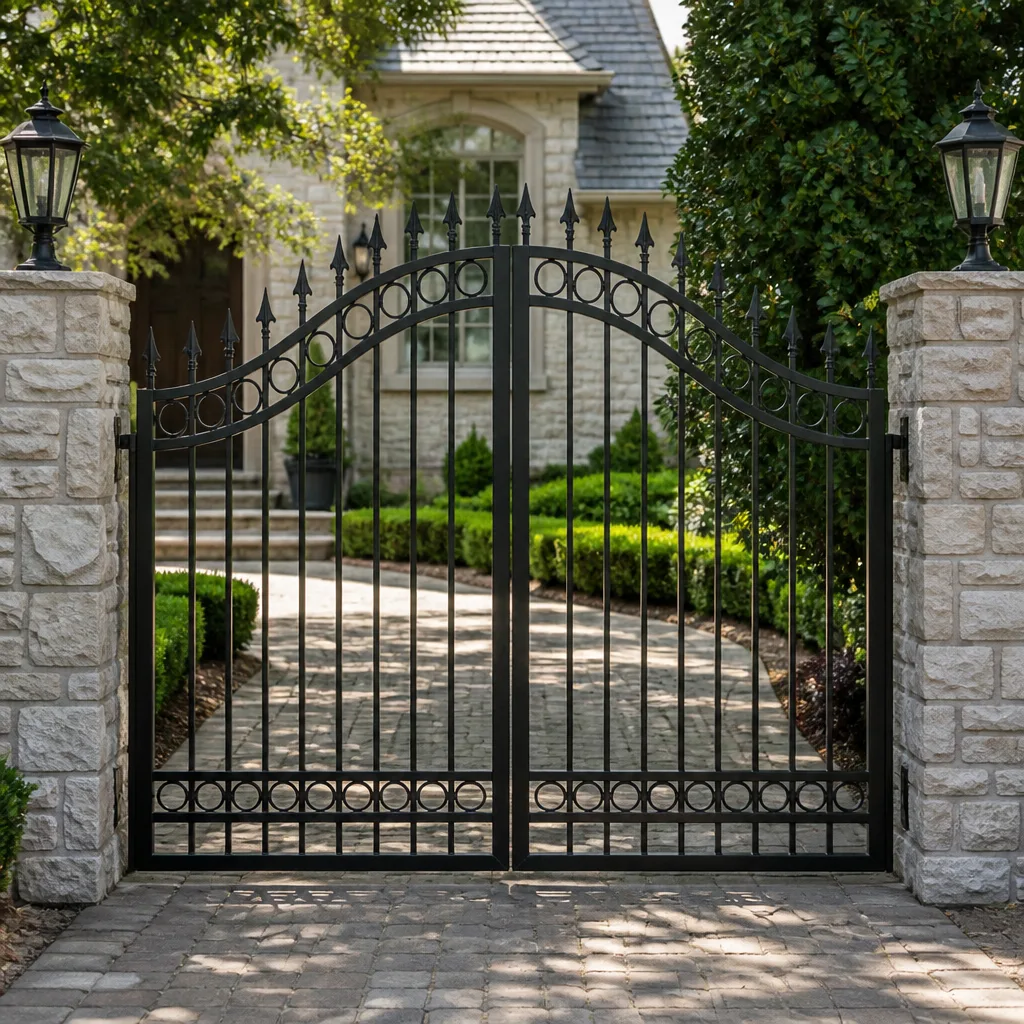 Wrought iron
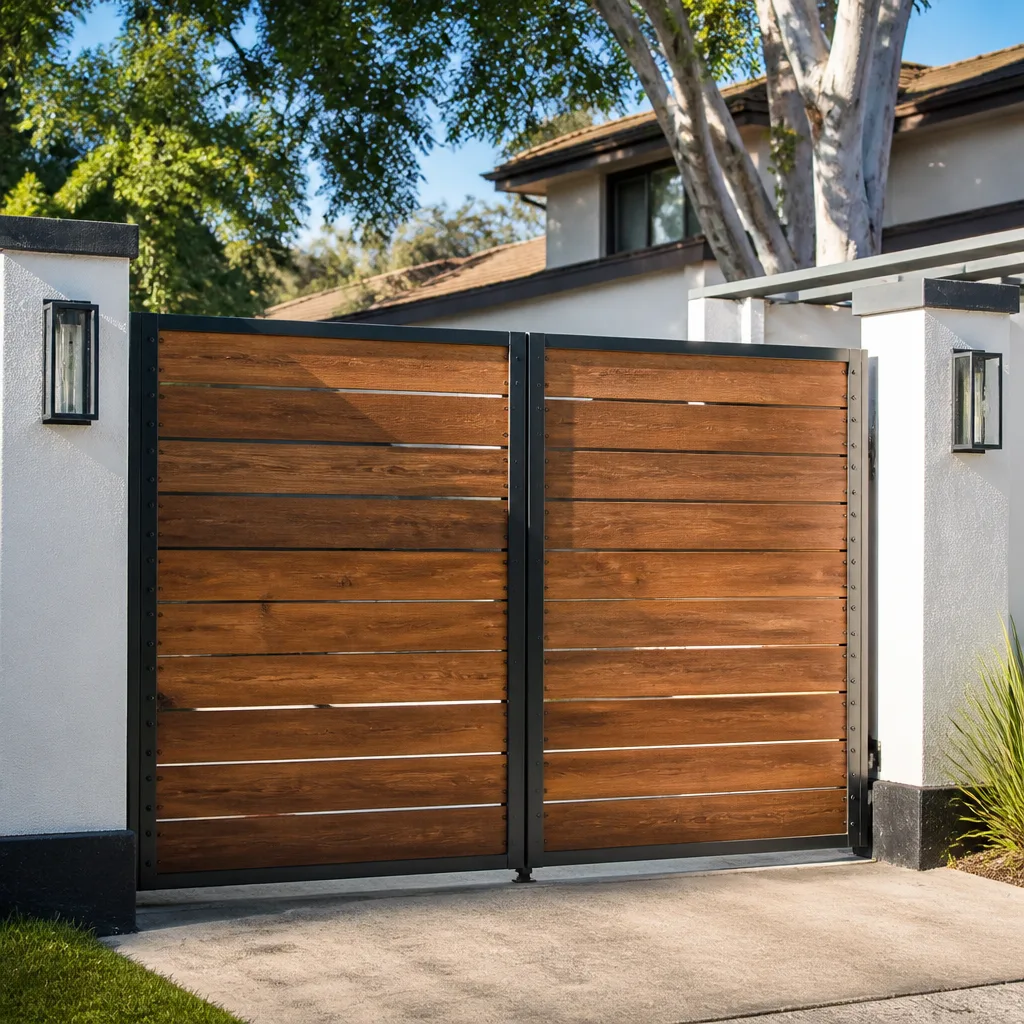 Wood & steel frame
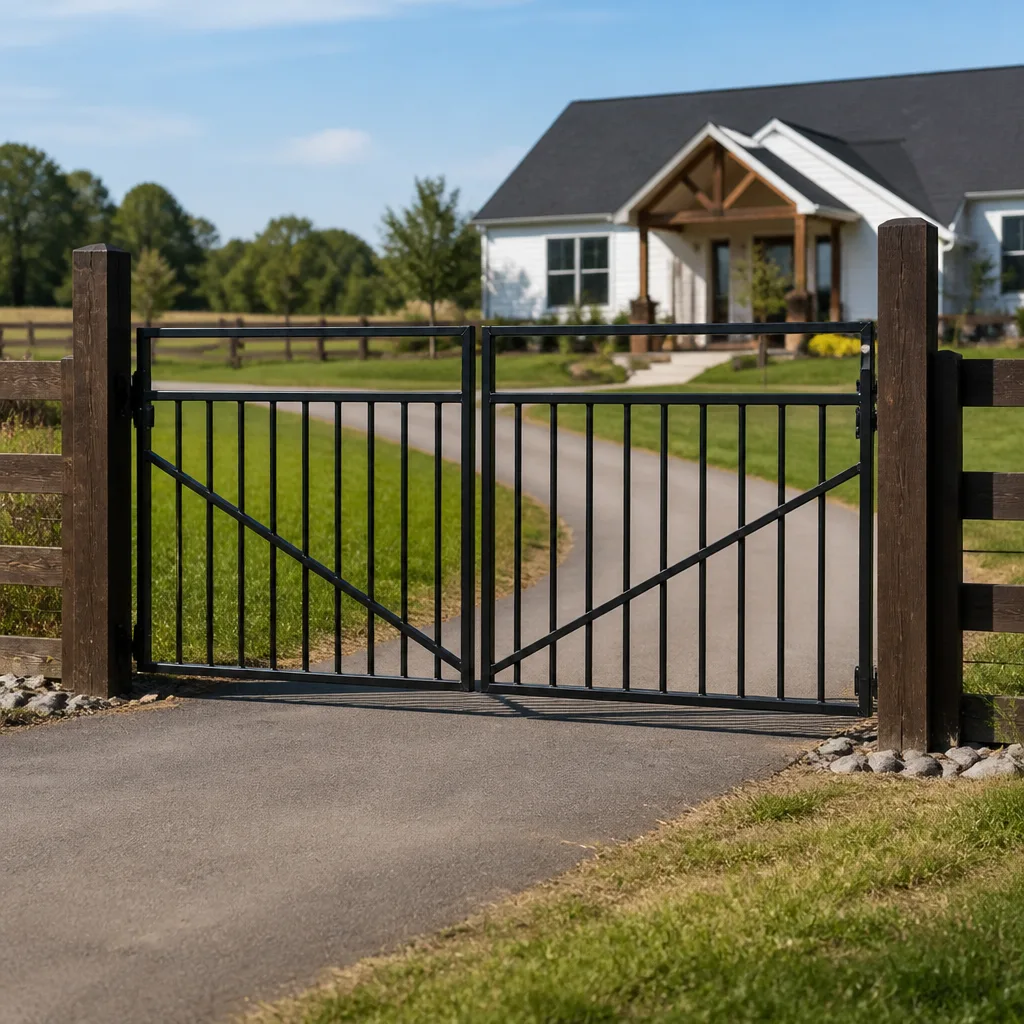 Farm & ranch
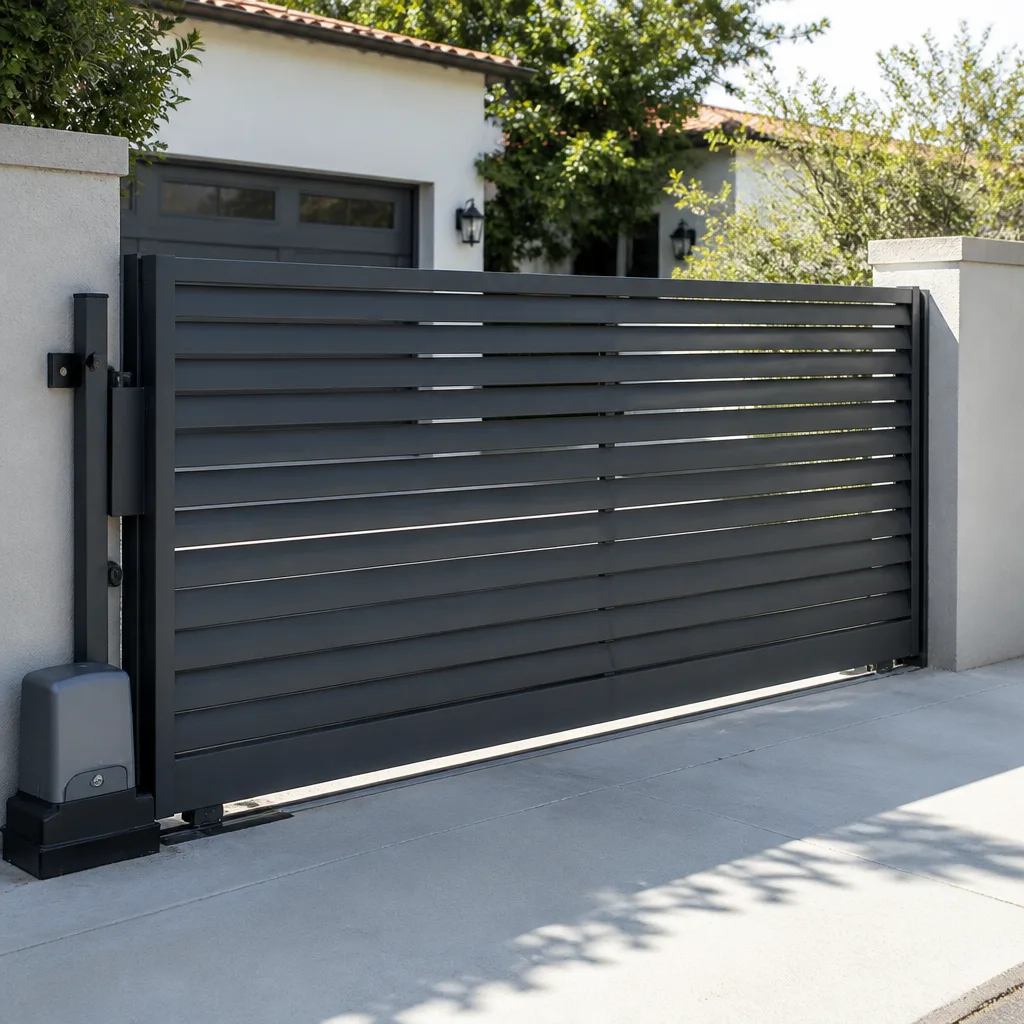 Sliding driveway gates
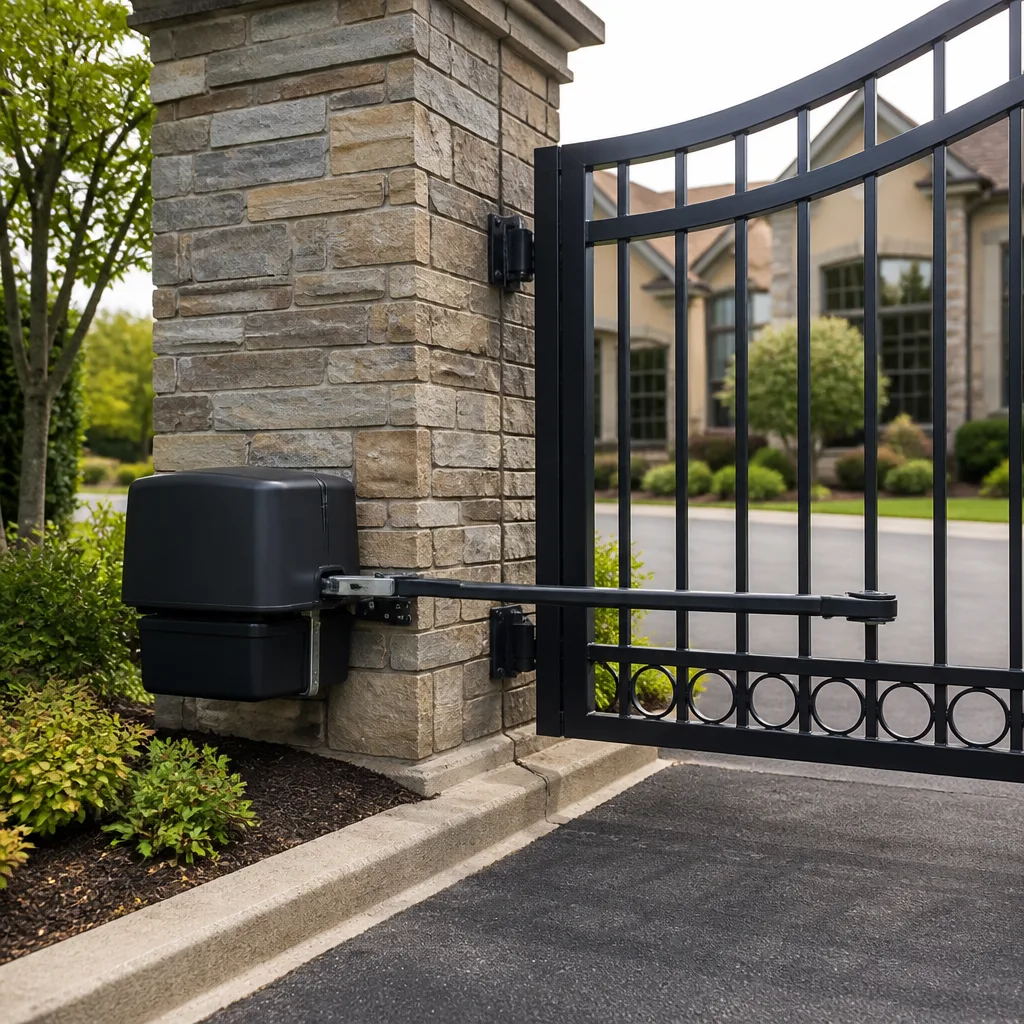 LiftMaster operators
Free on-site gate assessment - hinges, posts, and your LiftMaster or Nice gate operator checked before anything is quoted
The assessment is free and the quote is the invoice.
Get your free estimateThe Complete Gate Motor & Opener Guide for Winchester Homeowners
A motor sold as “residential duty” in a mild coastal climate can cycle out within two summers in Winchester, where July afternoons push past 105°F and the gate’s steel frame gets hot enough to burn a bare hand. The failure usually isn’t the motor winding itself. It’s the thermal cutoff tripping mid-cycle at 2 p.m., the grease thinning and migrating off the drive gear, and a battery backup that was sized for 70°F nights. This guide gives you the framework most buying guides skip: how duty cycle, heat tolerance and vandal resistance actually interact in Winchester conditions, what a proper written quote should itemize, and how to answer the three or four selection questions honestly before you agree to any motor.
Quick Answer
Choosing a gate motor in Winchester comes down to four specs, not one: the duty-cycle rating (how many cycles per hour the operator can sustain), the thermal-cutoff threshold and housing material, the operator type that fits your gate’s travel and footprint, and whether backup power is sized for our summer heat. A motor that fits all four will usually outlast a “bigger” motor that only wins on horsepower. Get the written spec sheet before you agree to anything.
Styles & brands we work with
- Wrought iron
- Wood & steel frame
- Farm & ranch
- Sliding driveway gates
- LiftMaster operators
Table of Contents
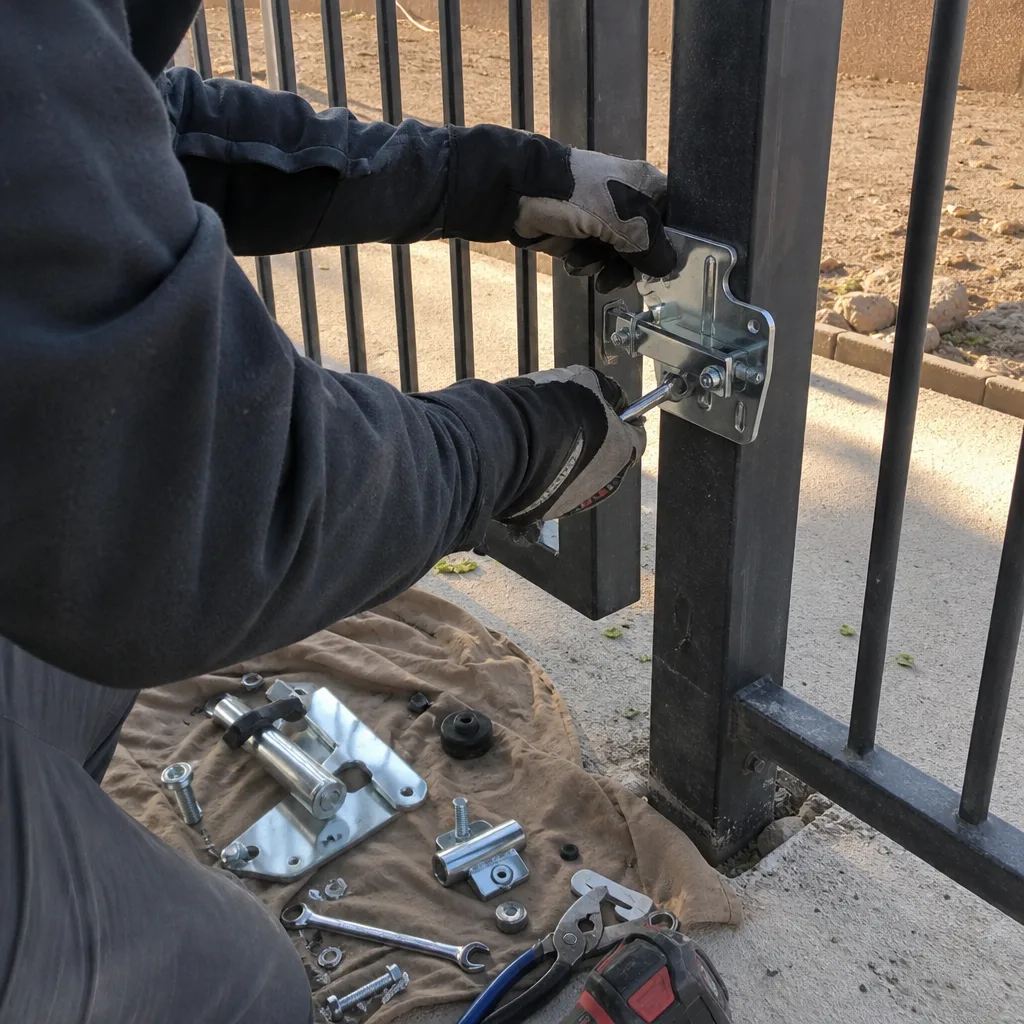
- Duty Cycle Ratings, Explained in Plain Terms
- How Winchester Heat Changes the Motor You Should Buy
- Swing vs. Slide Operators: Footprint, Access, and Failure Mode
- What a Written Quote for a Motor Installation Should Itemize
- The Decision Framework: Five Questions Before You Agree
- Matching a Motor to the Brand Already on Your Gate
- What Annual Maintenance Actually Prevents in Winchester
- Common Mistakes to Avoid
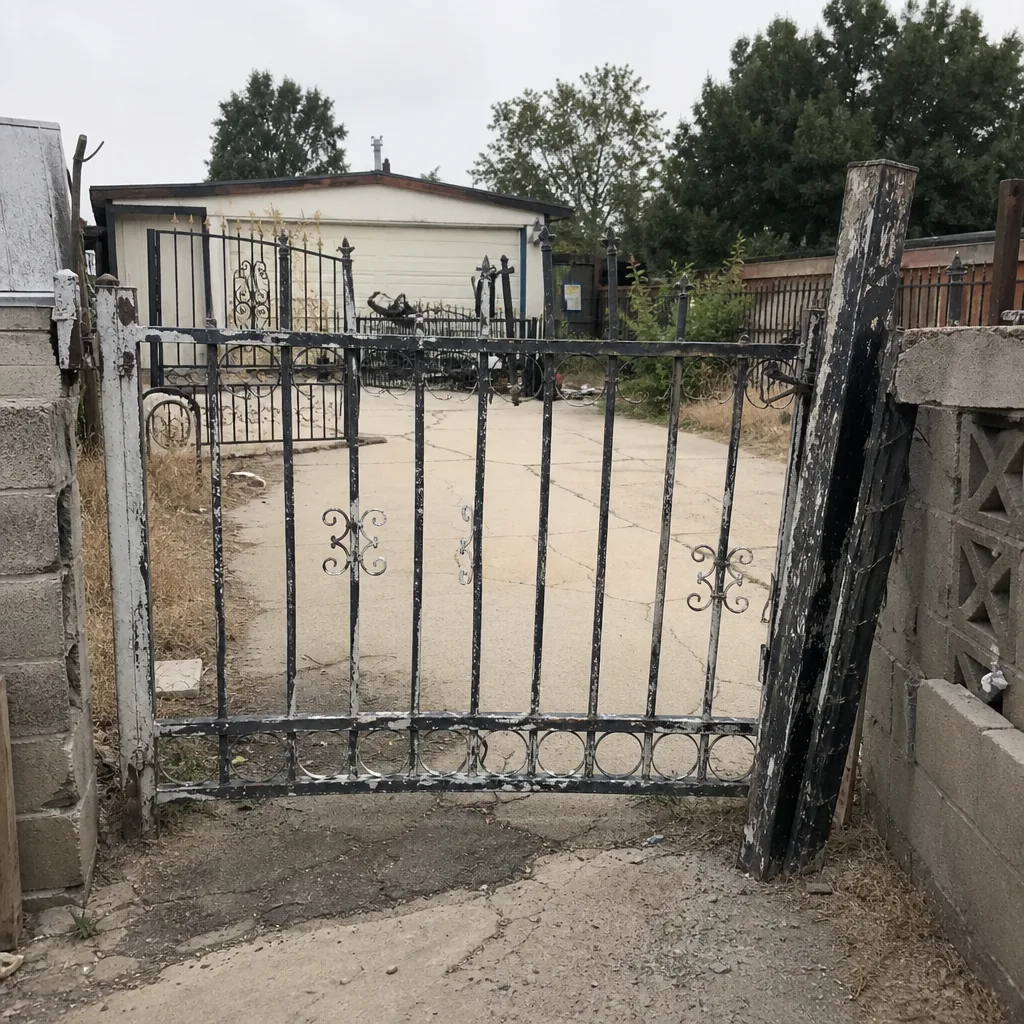 Before
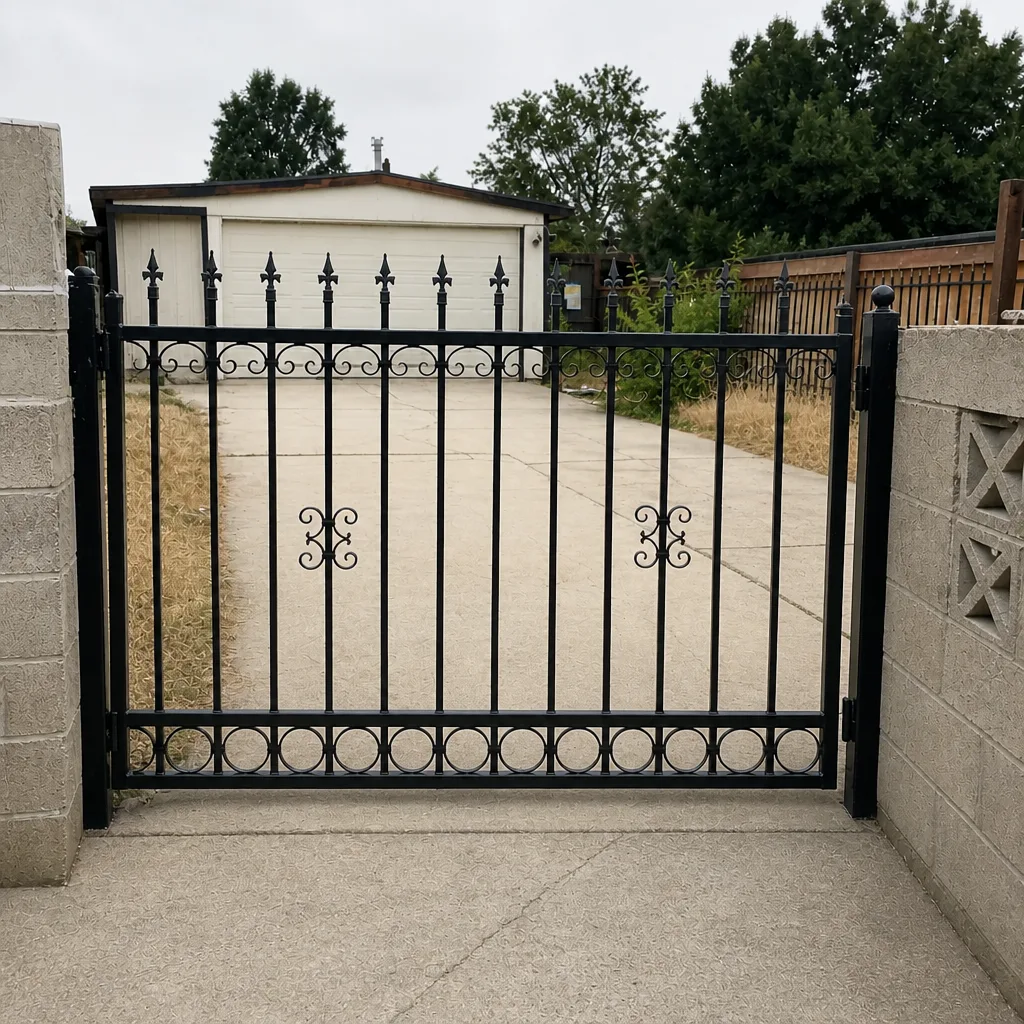 After
Duty Cycle Ratings, Explained in Plain Terms
Duty cycle is the manufacturer’s honest admission of how hard the operator can work before it needs to rest. It’s expressed two ways, and both matter. The first is a percentage: a 25% duty cycle means the motor can run for 15 minutes out of every hour and must cool for the other 45. The second is a raw cycle count per hour, which is what you’ll see on most residential spec sheets because it’s easier to picture against your own driveway.
Most homeowners never see this number because it isn’t printed on the box. It’s on the spec sheet, three pages into the manual, under “Operating Specifications.” Ask for it. Here’s how the residential categories map to actual household traffic:
- Low duty (roughly 12 – 20 cycles per hour): a single family where both adults work away from home, the gate opens for the morning commute and the evening return, plus a few deliveries. Two cars, maybe 8 – 14 openings a day. A low-duty operator handles this fine provided the gate isn’t heavy.
- Medium duty (roughly 20 – 40 cycles per hour): a household with kids coming and going, a home business with client visits, or a rental property where the tenant count pushes daily openings toward 30. This is where most “residential” motors start to sweat in July.
- High duty (roughly 45 – 60-plus cycles per hour, sometimes rated continuous for short windows): a small commercial lot, a short-term rental with turnover traffic, or a homeowner who runs a landscape or contractor business out of the property. Here you’re buying what the trade calls a light-commercial operator whether the building is a house or not.
The mistake we see most is a homeowner matching motor size to gate weight and ignoring cycle count entirely. A 400-pound ornamental steel gate that opens eight times a day needs a smaller motor than a 200-pound aluminum gate that opens forty times a day. Weight tells you how much torque you need. Cycle count tells you how much thermal capacity the motor housing and controller have to absorb. In Winchester, that second number is the one that fails first.
If you’re unsure what your gate actually weighs, our Gate Repair in Winchester team can measure it on a service visit rather than guess.
How Winchester Heat Changes the Motor You Should Buy
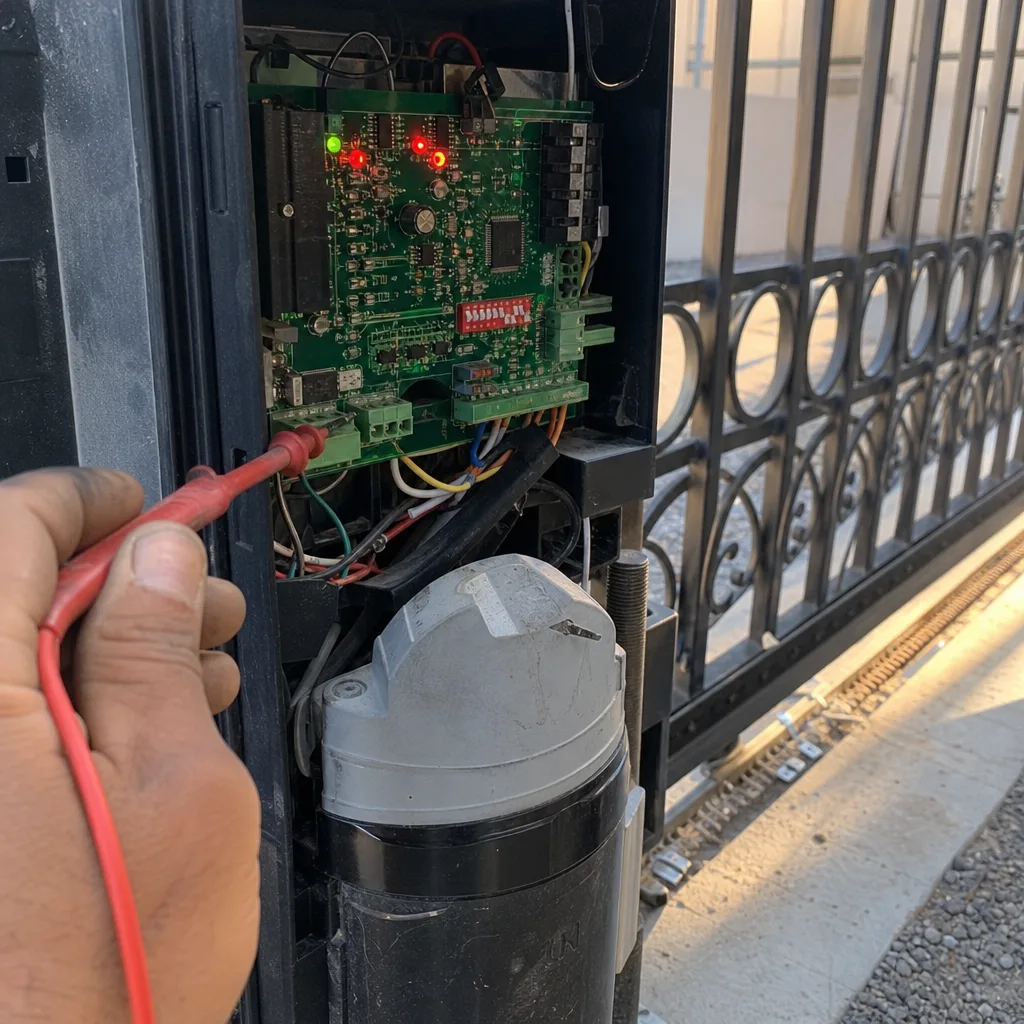
Ambient heat changes three components of a gate operator, and each one has a clear buying consequence.
The housing material. A painted steel housing holds heat and radiates it back onto the motor windings. A die-cast aluminum or UV-stabilized poly housing sheds it faster. In Winchester’s June-through-September run, when the gate’s own frame is 20 to 30 degrees above air temperature from sun loading, the housing becomes a secondary oven. We recommend aluminum or poly for any west- or south-facing install and, where the gate is shade-free at midday, a unit with the highest thermal cutoff you can afford.
The lubricant. Motor gearboxes ship with grease rated to a certain temperature band. Standard lithium grease starts to soften and migrate above roughly 180°F at the gear interface, which is well within reach when a dark steel housing sits in direct sun and the motor runs a full cycle. When grease walks off the drive gear, you get metal-on-metal wear, then noise, then a stall. Ask what lubricant the operator uses at its rated temperature and whether the gearbox is sealed or serviceable. Sealed is easier. Serviceable is honest.
Backup battery sizing. Gate operators that run on battery-with-solar-assist are the common setup on rural and semi-rural lots around Winchester. Batteries lose capacity in heat and charge slowly in the same heat, so a battery sized for a 70°F duty cycle will not hold through an August power outage. Size the battery bank against your highest-cycle summer week, not the mild-weather average. A controller that reports battery state to a phone app is worth the small upcharge here, because a battery that isn’t checked is a battery that fails at the worst time.
One more Winchester-specific point: our swings between 105°F afternoons and 40°F nights in the shoulder seasons stress seals and gaskets faster than a stable climate would. A gasket that cracks lets dust into the gearbox. That’s a $200 repair you avoid by speccing a unit with a proper seal from the start.
Swing vs. Slide Operators: Footprint, Access, and Failure Mode
Swing and slide operators differ in more than price, and the differences show up in maintenance access and in how the gate fails when something goes wrong. Compare them on three axes, not one.
- Installation footprint. A swing operator mounts beside the gate and swings a lever arm through an arc that needs clearance behind the gate. If your driveway is tight against a block wall, the arm won’t travel. A slide operator mounts parallel to the gate and needs a fixed run of level track equal to the gate’s width plus some. If your gate opens across a slope or a narrow setback, slide is often the only physically possible option. Neither is “better.” The property decides.
- Maintenance access. Swing arm operators are easy to reach for lubrication and limit-switch adjustment because the mechanism sits out in the open. Slide operators hide the drive in the gate body, so servicing the chain or the rack gear means getting panels off. That’s a real labor difference on a repair visit, and it’s worth knowing before you buy.
- Failure mode. When a swing motor fails or loses power, most units release on a manual key so the gate swings free by hand. When a slide motor fails, the gate is stuck on its track until the manual release is used, and that release sometimes needs a specific tool. In a power outage, the swing gate usually gets you out faster with a key. If evacuation speed matters, that’s the deciding factor.
The best move in Winchester is to have a technician look at the actual gate travel, the setbacks, and the grade before anyone quotes a motor. Choosing swing when the property wanted slide (or vice versa) means a re-quote and lost money. If your property is new construction, the Gate Installation in Winchester side of our work handles the frame and footing so the operator has a proper base to mount on.
What a Written Quote for a Motor Installation Should Itemize
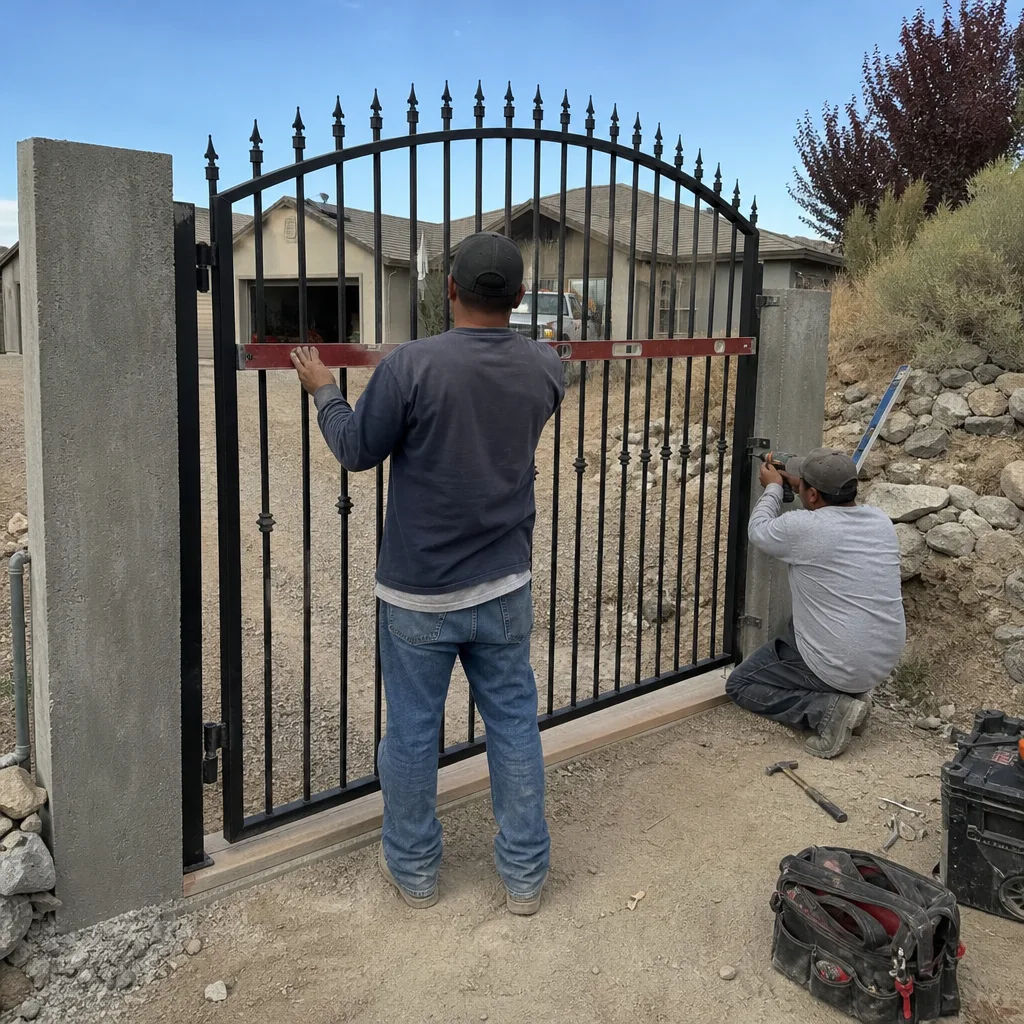
A written quote for a gate motor installation in Winchester should itemize six things: the operator model and spec sheet, the wire gauge and run length, the controller model, the accessory list (safety edges, photo-eyes, keypad or receiver), the obstruction-force setting at commissioning, and a stated price that does not change after work begins. If any of those six lines is missing from the paperwork you’re handed, ask. A “call for pricing” line item is the single biggest warning sign, because it means the number you’re agreeing to isn’t finished yet.
Here’s what a complete quote looks like line by line:
- Operator model and horsepower, plus its duty-cycle rating and cycle count. You should be able to read the spec sheet. If the installer can’t produce it, walk.
- Wire gauge and total run length from panel to controller. Undersized wire on a long run causes voltage drop, and voltage drop makes the motor work harder and run hotter. This line is what separates a quote written by someone who read the manual from one written from memory.
- Controller and receiver model. The controller is the brain. A good operator paired with a cheap controller is a motor waiting to stall.
- Accessory list. Photo-eyes (the infrared beam that reverses the gate if something crosses the path) and safety edges on the closing edge are standard, and in many jurisdictions a legal requirement. Ask whether the quote includes them or lists them separately.
- Obstruction-force setting recorded at commissioning. The gate should be set to reverse on a set-press force, and that force should be recorded in writing so the next technician doesn’t have to re-discover it. We photograph the reading and hand it to you.
- A stated price with the word “firm” on it. Your written quote should be handed over before work starts, and it should not change. That’s the whole point of a written price. If a company can’t commit to one, you’re agreeing to an estimate, not a price.
Every job we quote in Winchester includes that level of documentation under our Haven Standard: a written scope, a written price, and a photographed record of the settings we left behind. If you want a second opinion on a written estimate from another company, we’ll review the paperwork at no charge.
The Decision Framework: Five Questions Before You Agree
Before you agree to any motor selection, you should be able to answer five questions about your own property. If you can’t, the conversation isn’t done. Here they are, in the order that matters:
- How much does the gate actually weigh? Not the number on the sales tag, which is often the shipping weight and not the hung weight. Gate weight affects the torque you need and the operator frame that should hold it. Get it weighed or get it stated on the quote.
- How many cycles per day does the gate take? Count a real week, not an average guess. Include delivery drivers, mail, kids, and any second household member. Then add 30% for the days the count is a lie (holidays, guests, contractors). Match the motor’s duty-cycle rating to that number, not to a single family assumption.
- What is your primary access credential? A remote transmitter, a keypad code, a phone-app entry, a magnetic card, or a manual key arrangement. This decides your controller type and, if you want remote management, whether the operator has a native app or needs a separate module. It’s the single most overlooked question in residential motor selection.
- How much sun hits the gate housing? West- or south-facing, shade-free at midday means a higher thermal-band motor and, if battery-backed, a larger battery bank.
- What is your backup-power duration target? Do you need the gate to work through a 4-hour outage, an overnight one, or a two-day one? Be honest, because solar-assist sizing turns on this number and Winchester heat eats battery capacity faster than the spec sheet assumes.
If a technician can’t answer how each of these questions shapes the model they’re recommending, don’t sign. If you’d rather have someone look at the gate first, our Gate Motor & Opener page for Winchester is the starting point, and we’ll walk the property and give you a written selection before anything is ordered.
Matching a Motor to the Brand Already on Your Gate
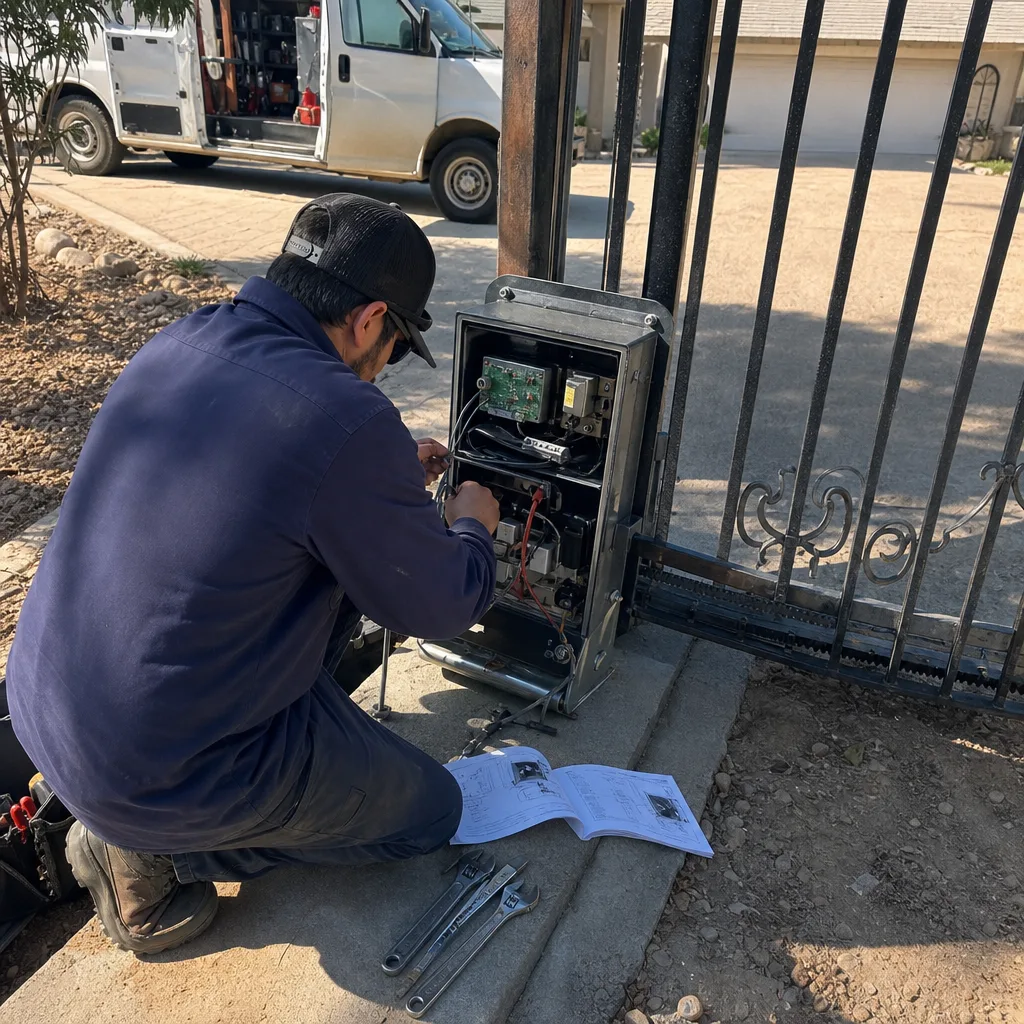
Most gates already have an operator on them, and the question is rarely “replace the whole thing” but “can this motor be serviced.” Nine major brands show up in Winchester driveways: LiftMaster, FAAC, BFT, Linear, Viking, Ghost Controls, DoorKing, Elite, and Mighty Mule. Each has its own controller logic, its own limit-switch travel, and its own parts catalog. A company that only carries one brand will steer you toward a replacement when a repair is what you actually need.
Two brand notes from local work. Ghost Controls operators are common on the semi-rural lots around Winchester where solar-assist is on the gate, because the units are designed around battery and solar input. DoorKing is the brand you’ll often find on a small commercial property or a gated residential community, not the standard single-driveway install. Neither brand is “better.” Each one is a different animal to work on, and that’s why we service all nine rather than steering buyers toward replacement.
When a motor is worn out and a replacement is the right call, the swap should reference the existing controller, the existing wire run, and the existing gate weight, so nothing has to be re-engineered from scratch. Before any company orders a new operator, ask them for the make and model currently on the gate. If they don’t ask you first, that’s a red flag.
What Annual Maintenance Actually Prevents in Winchester
Gate operator maintenance is not a luxury line item. It’s the cheapest way to keep a $1,500 motor out of the shop. Here’s what a proper annual visit covers and what each item prevents in Winchester conditions:
- Limit-switch check and re-set. Heat and metal expansion move the limit switch off its proper travel by a few degrees each season. A switch set 12 degrees past travel stalls the motor against its own force limit and eventually burns the controller. Catching it in spring is a 20-minute reset. Catching it in August after a failure is a controller replacement.
- Battery load test. A battery that tests fine at 70°F in March can fail at 110°F in July. Testing under load and matching to your backup target tells you whether to replace the battery before the first heat wave.
- Gearbox lubrication check. Confirm the grease hasn’t migrated off the drive gear. If it has, re-grease with the temperature-correct lubricant for your unit.
- Safety-device test. Photo-eyes and safety edges should reverse the gate on a set obstruction every year. A photo-eye misaligned by two inches is a real hazard, and the fix is a two-minute adjustment.
- Documentation. Every item above should leave you with a photo record of the reading you started with and the reading you left. If a technician can’t show you the before-and-after, you’re paying for a visit that won’t help the next one.
On working gates, a documented annual visit is what separates a motor that lasts a decade from one that lasts three summers. Our Vance Gate Repair Winchester home page lays out what different service tiers include.
Common Mistakes to Avoid
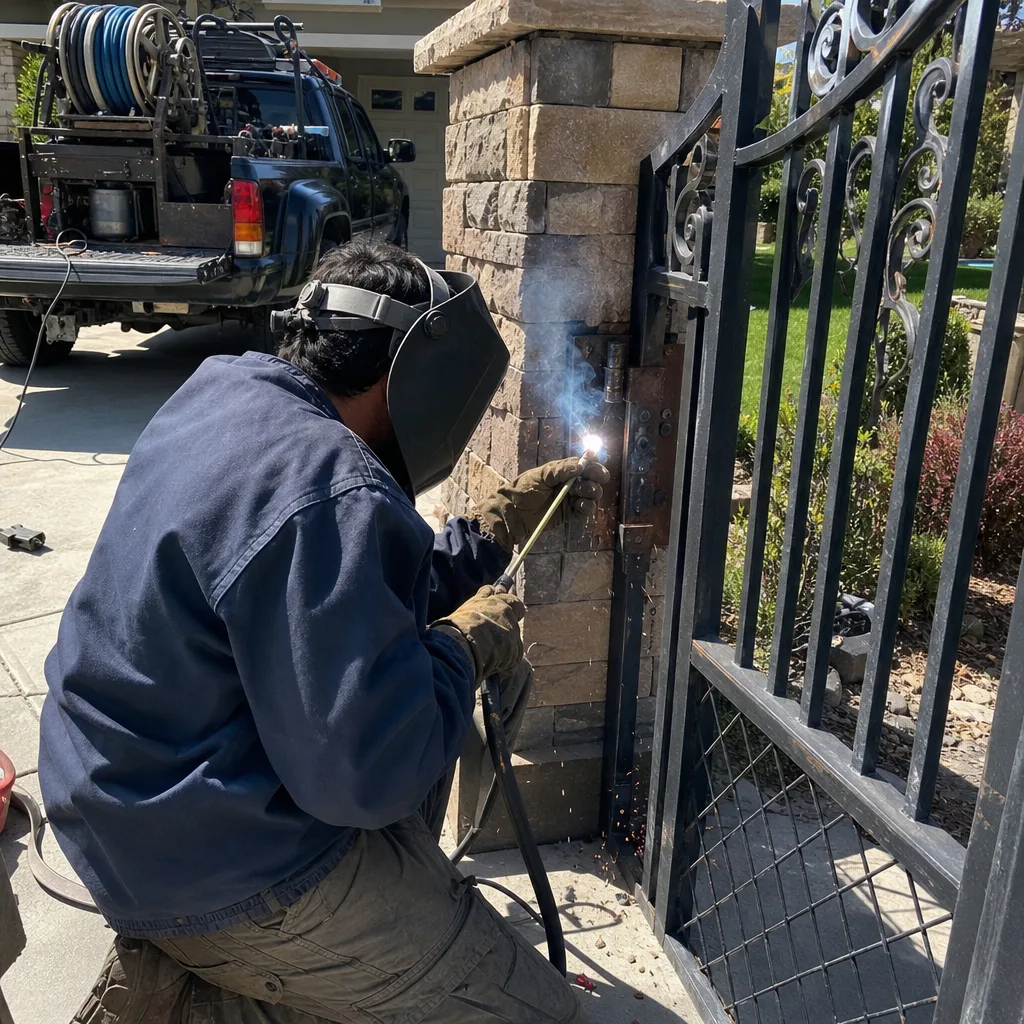
- Matching motor size to gate weight and ignoring duty cycle. A lightly used gate on a small motor can outlast a heavily used gate on a “heavy-duty” unit every time in Winchester heat, because thermal capacity is the bottleneck, not torque.
- Buying on horsepower alone. A larger motor with a low thermal cutoff is a hotter, worse motor in our climate. Read the cutoff number, not the spec-sheet tagline.
- Accepting a “call for pricing” line item. That means the price isn’t written, and it isn’t firm. Paying for a verbal estimate on a gate motor is how homeowners end up with a $600 invoice where they were told $400.
- Skipping the obstruction-force record at commissioning. A gate force set too high on installation is a gate that will not reverse when something crosses the path. Get the reading in writing.
- Sizing the solar battery bank for mild-weather cycles. In Winchester, batteries lose usable capacity in summer heat, so the backup size that “works on paper” is 30% too small by August. Size to the highest-cycle summer week.
- Assuming the brand on the gate can’t be serviced because it’s not the “popular” one. Nine brands are serviceable in Winchester with the right parts catalog. Ask who services your specific brand before you accept a replacement quote.
- Trusting a verbal-only visit. If a technician didn’t leave a photo record of what they found and what they set, the next visit starts from zero. That cost gets paid twice.
See the difference
BeforeAfter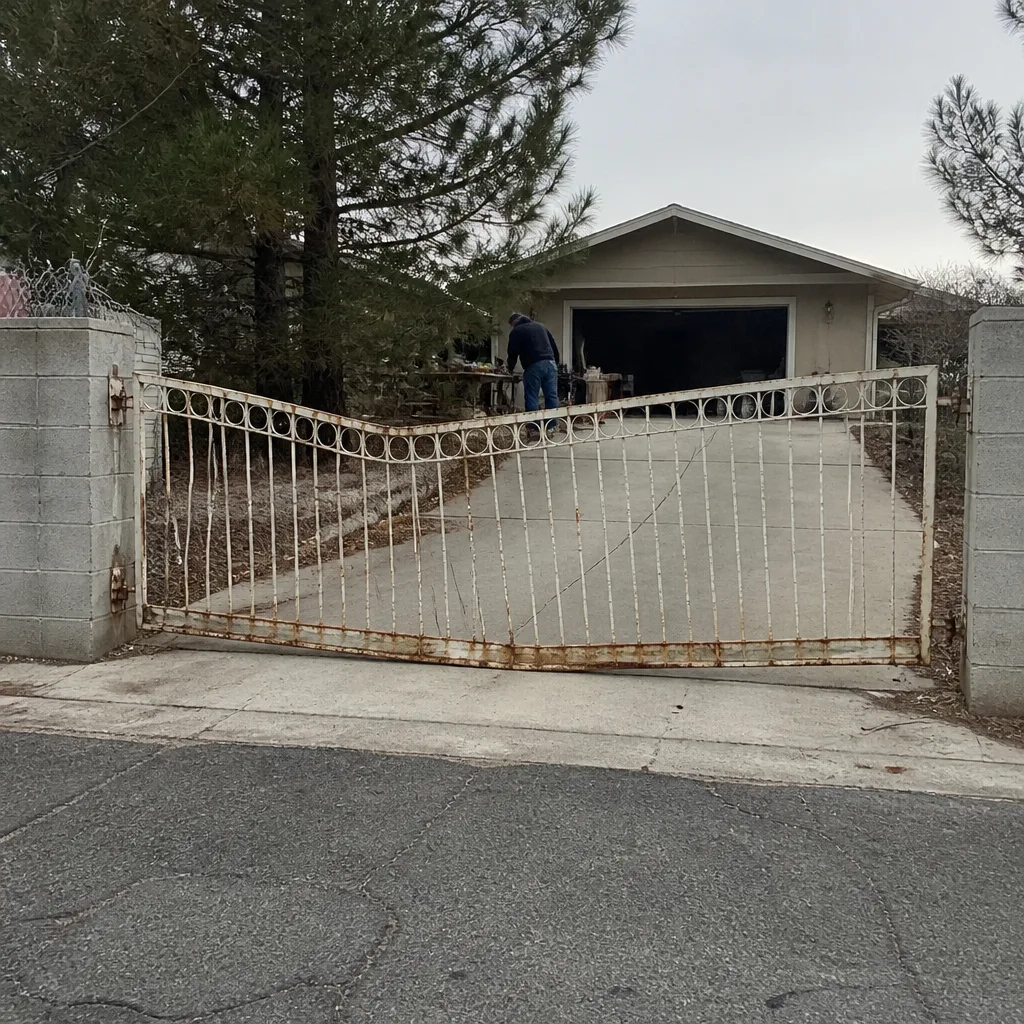 Before
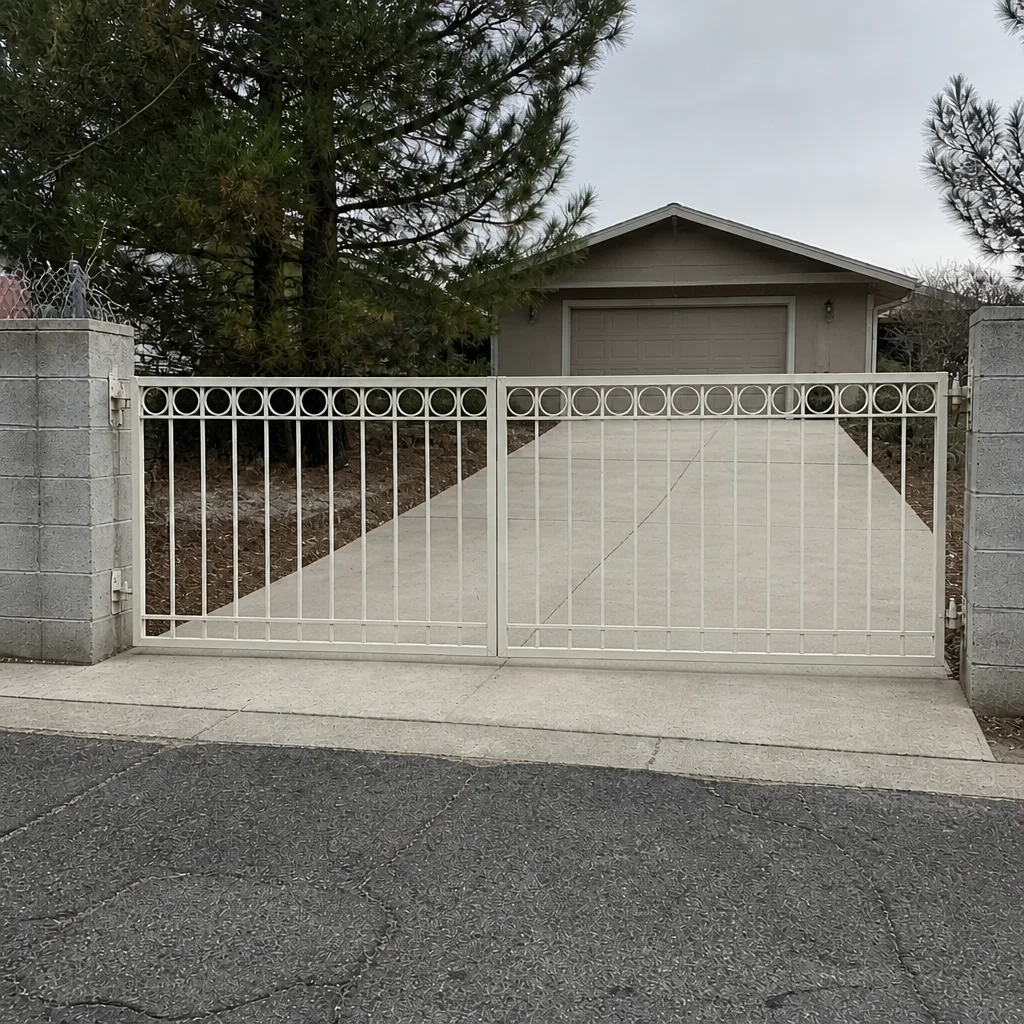 After
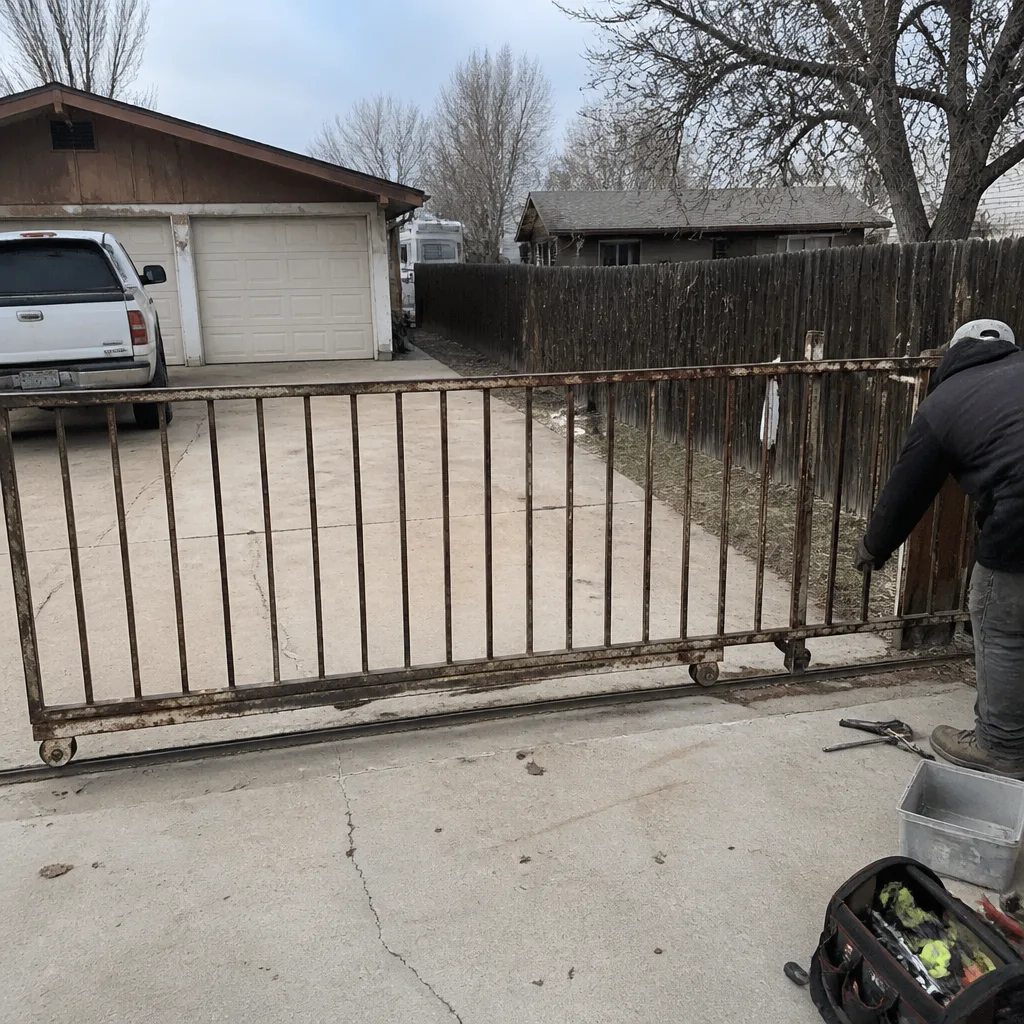 Before
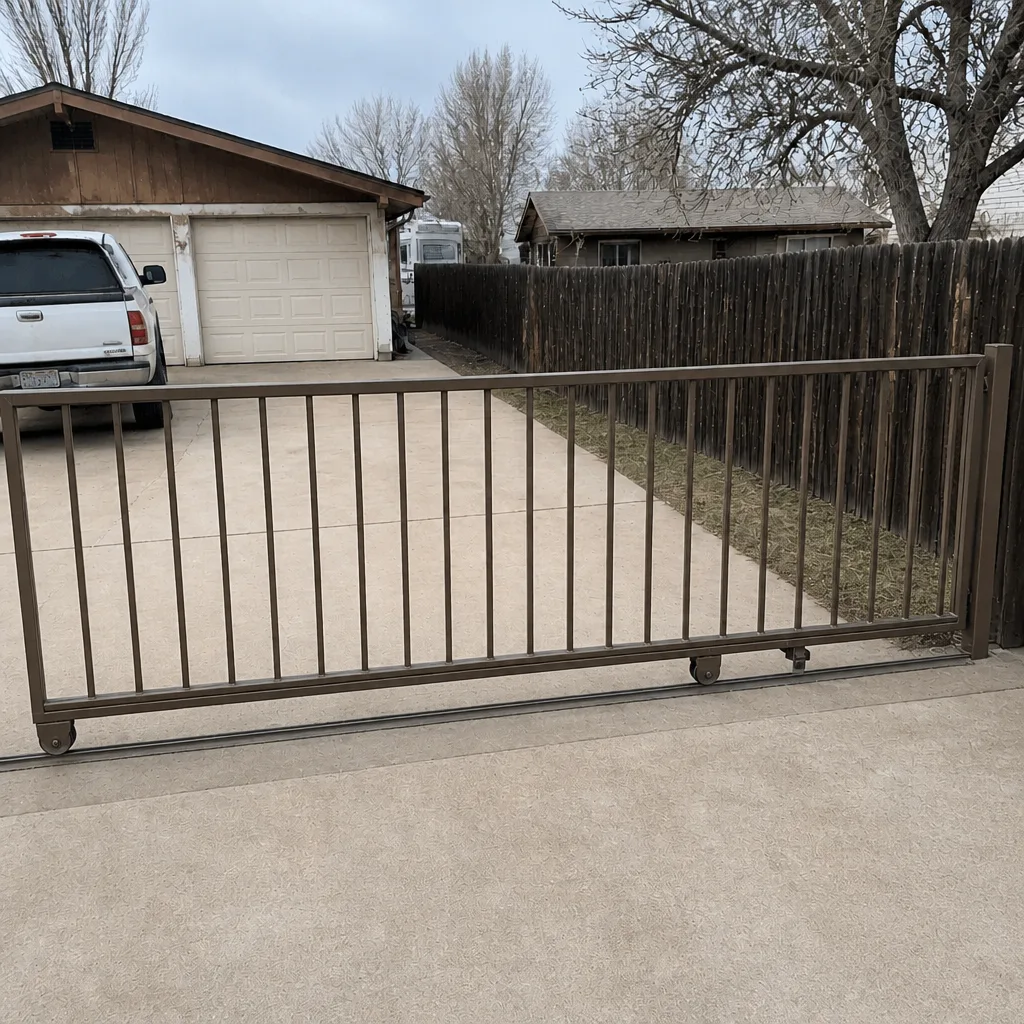 After
When to Call a Professional
Call a professional if the motor stalls mid-cycle, the gate reverses without warning, the housing smells hot or is physically hot to the touch after a normal cycle, the battery has failed through an outage, the safety photo-eye or safety edge isn’t reversing the gate, or the operator has tripped its thermal cutoff more than once. All of those are signals a trained technician needs to read with a meter, not a homeowner with a screwdriver. High-tension springs, high-voltage wiring, and any work on the gate body or its electrical feed can injure you badly if handled without training. A gate operator carries line voltage; treat it accordingly and call someone.
Vance Gate Repair Winchester offers free estimates on motor service and installation in Winchester. A live person answers the phone 24 hours a day. Call (866) 983-9213 to schedule.
Frequently Asked Questions
Most residential gate motor installations in Winchester fall in the $1,200 to $2,800 range depending on the operator brand, the gate weight, the wire run length, and whether a new controller and safety devices are part of the job. Heavy or commercial-grade gates and long wire runs push the top end. You get a written price before work starts. Call (866) 983-9213 for an exact quote – estimates are free.
Duty cycle is the percentage of every hour the motor can run before it needs to cool down, or its rated cycle count per hour, and both numbers describe how hard the operator can work in Winchester heat. A low-duty motor is fine for eight to fourteen daily openings; a household with more traffic needs a higher-duty unit. The duty rating matters more than horsepower in our climate. Call (866) 983-9213 to find the duty rating you need.
Not always – “residential” is a duty-cycle category, not a heat tolerance guarantee, and a low-duty motor rated for a mild climate will trip its thermal cutoff mid-cycle in Winchester by the second summer. What matters is the thermal cutoff threshold, the housing material, and the lubricant rating for your specific gate. Ask for the spec sheet before you buy. Call (866) 983-9213 for a heat-matched recommendation.
The property decides, not the price tag. A swing operator needs clearance behind the gate for the arm to travel and is easier to service and evacuate by hand in a power outage. A slide operator needs a level run of track equal to the gate width plus some, but works when the swing arc won’t fit. A technician should measure the gate travel and the setbacks before quoting. Call (866) 983-9213 to have your gate measured.
Yes – we service nine major gate-automation brands, including Viking, Ghost Controls, DoorKing, and Elite. If the existing motor is serviceable, we repair it rather than steer you toward a replacement. Bring the model number or let us read it off the housing. Call (866) 983-9213 to book a service visit.
A written gate motor quote should itemize six things: operator model and spec sheet, wire gauge and run length, controller model, the accessory list (safety edges, photo-eyes, keypad or receiver), the obstruction-force setting at commissioning, and a stated price that does not change. If any line is missing or says “call for pricing,” ask why. Call (866) 983-9213 for a written quote.
The Bottom Line
Choosing a gate motor in Winchester is a heat, duty-cycle, and vandal-resistance decision more than a horsepower one. Get the operator’s duty rating and cycle count in writing, size the battery bank to a summer, spec aluminum or poly housing for a sun-exposed install, match swing or slide to the actual property footprint and failure-mode tradeoffs, and require a written quote that itemizes all six lines. If a company can’t produce a spec sheet or a firm price before work starts, the quote isn’t finished yet. Call (866) 983-9213 for a free estimate in Winchester, and we’ll walk the gate and put the price in writing before anyone picks up a tool.
Written by the team at Vance Gate Repair Winchester.