
Last updated November 18, 2026
 Wrought iron
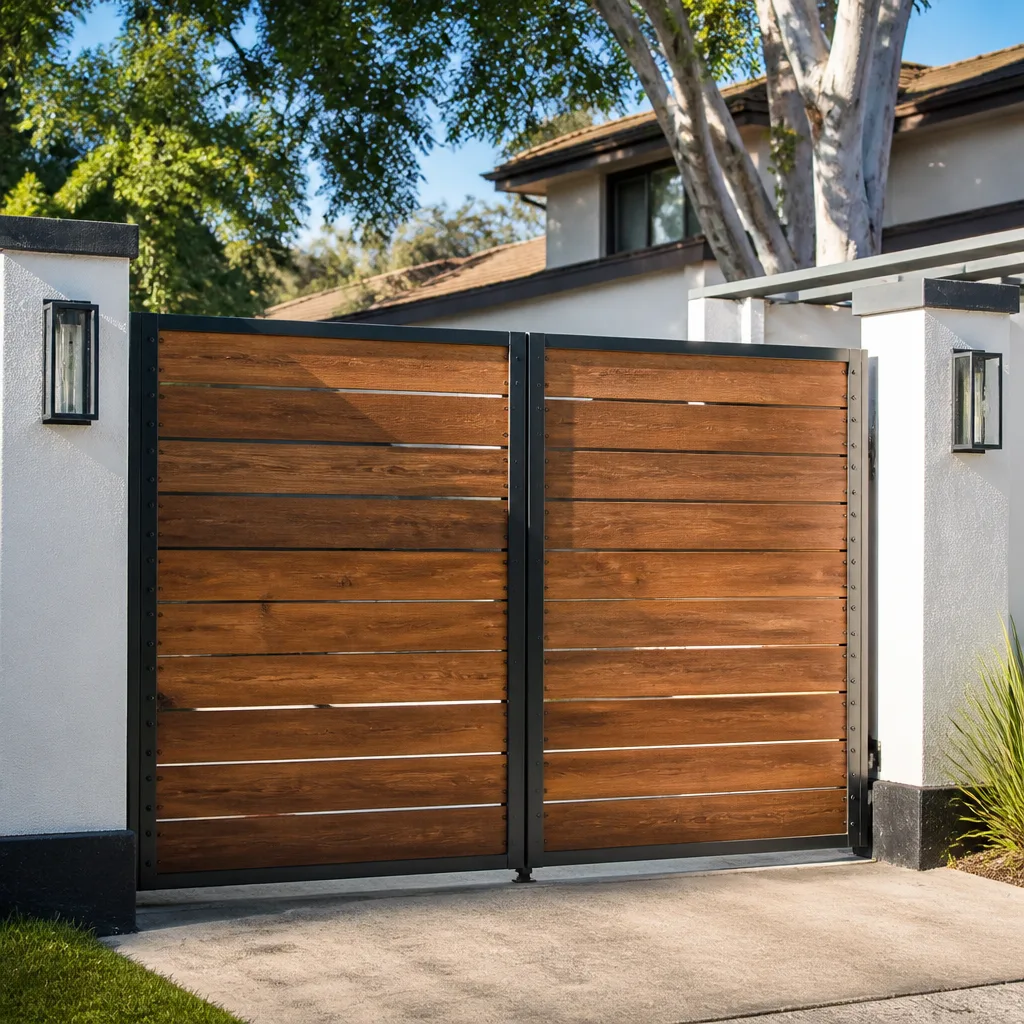 Wood & steel frame
 Farm & ranch
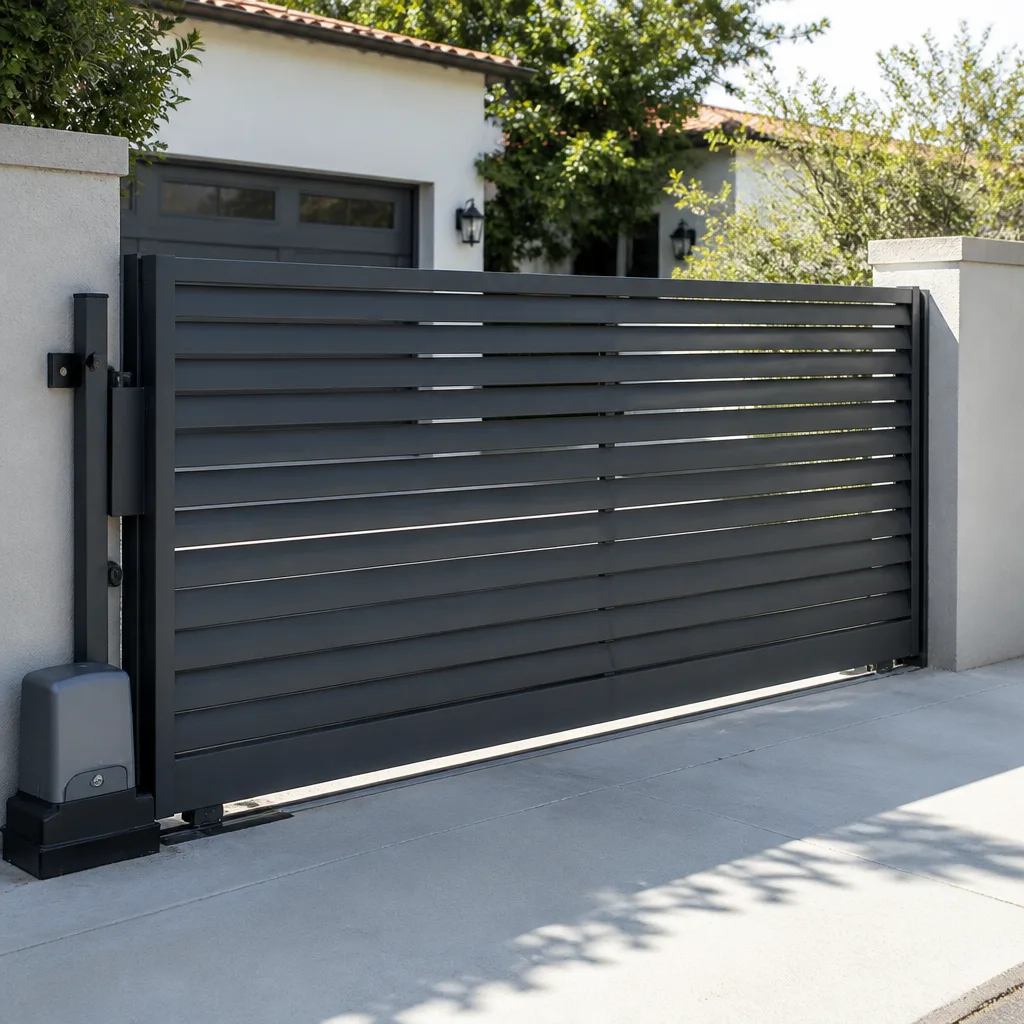 Sliding driveway gates
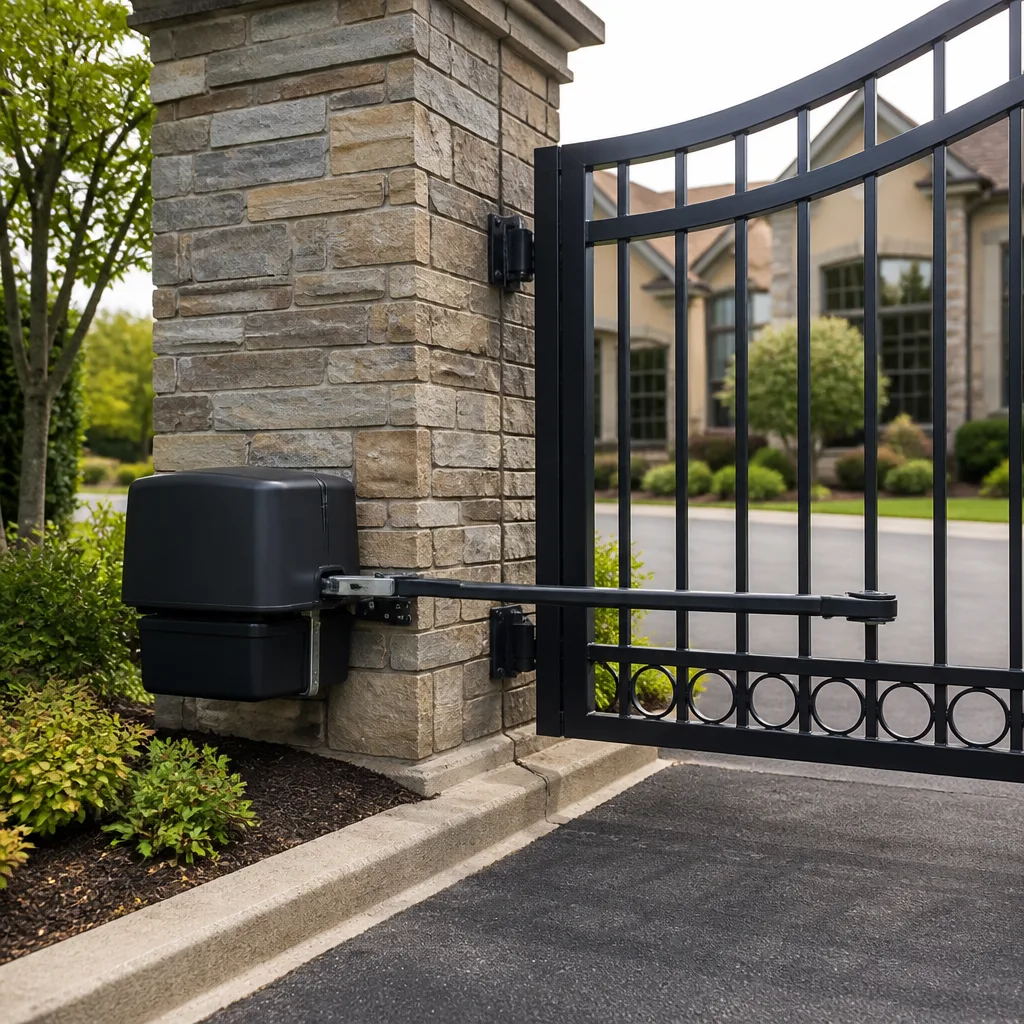 LiftMaster operators
Free on-site gate assessment - hinges, posts, and your LiftMaster or Nice gate operator checked before anything is quoted
The assessment is free and the quote is the invoice.
Get your free estimateHow to Hire a Gate Repair Contractor in Winchester: A Step-by-Step Guide
Of all the gate and fence complaints filed with the Nevada contractors board, the plurality share one detail: the work performed went beyond what was discussed verbally. No paper trail. No approved scope. No number the homeowner ever agreed to. That single missing document is what turns a routine repair into a dispute you can’t win. This guide walks through how to hire a gate repair contractor in Winchester so the price, the parts, and the labor are all in writing before a wrench comes out of the truck, and so you know exactly what record you should be handed when the technician leaves.
Quick Answer
To hire a gate repair contractor in Winchester, get a written scope that names every component, separates parts cost from labor cost, and states a not-to-exceed price before work starts. Verify the contractor’s Nevada license classification, confirm they service your specific motor brand, and insist on a photo record of the work performed. The written scope, not the review count, is what protects you.
Styles & brands we work with
- Wrought iron
- Wood & steel frame
- Farm & ranch
- Sliding driveway gates
- LiftMaster operators
Table of Contents
- What a Written Scope Must Contain
- Three Questions That Separate Specialists from Handymen
- How to Verify a Nevada Contractor License
- Red Flags in Verbal Estimates
- What Documentation to Demand After the Repair
- The Step-by-Step Hiring Process
- Common Mistakes to Avoid
- Frequently Asked Questions
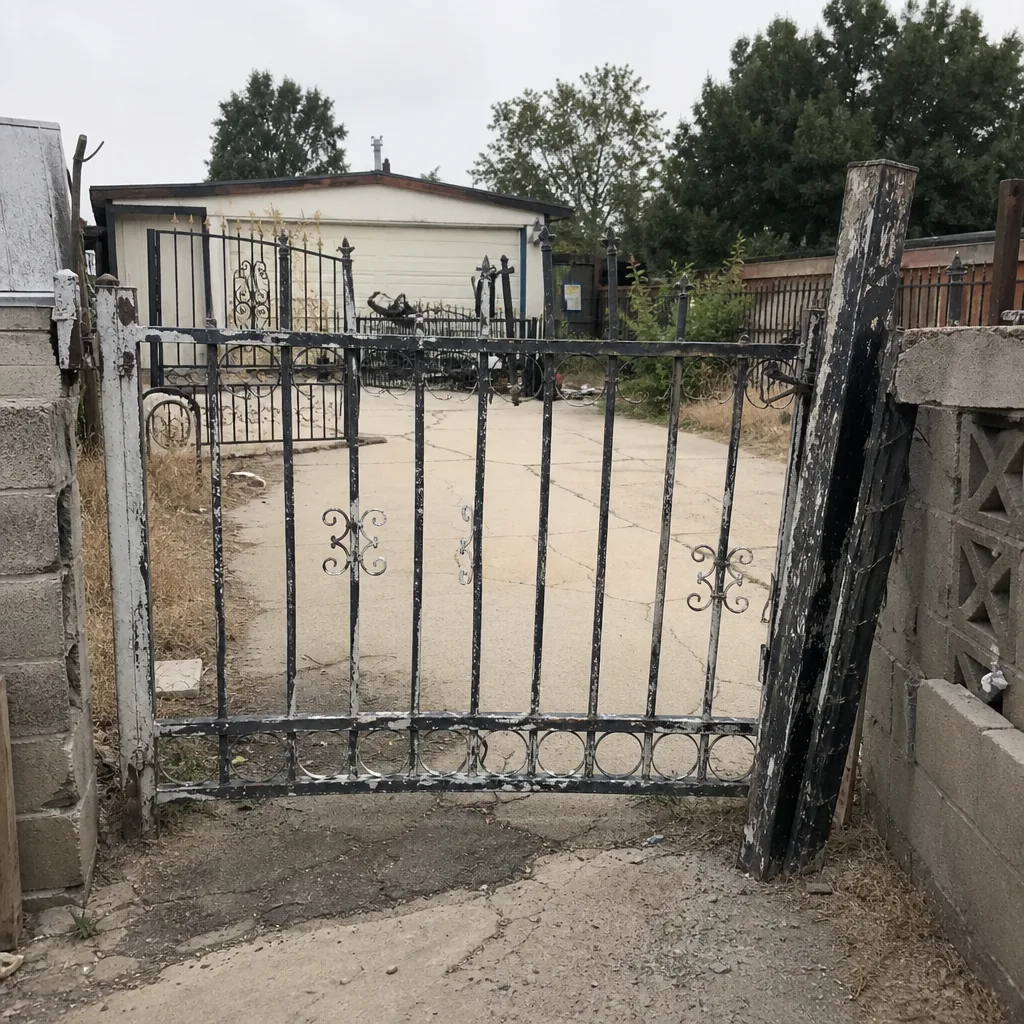 Before
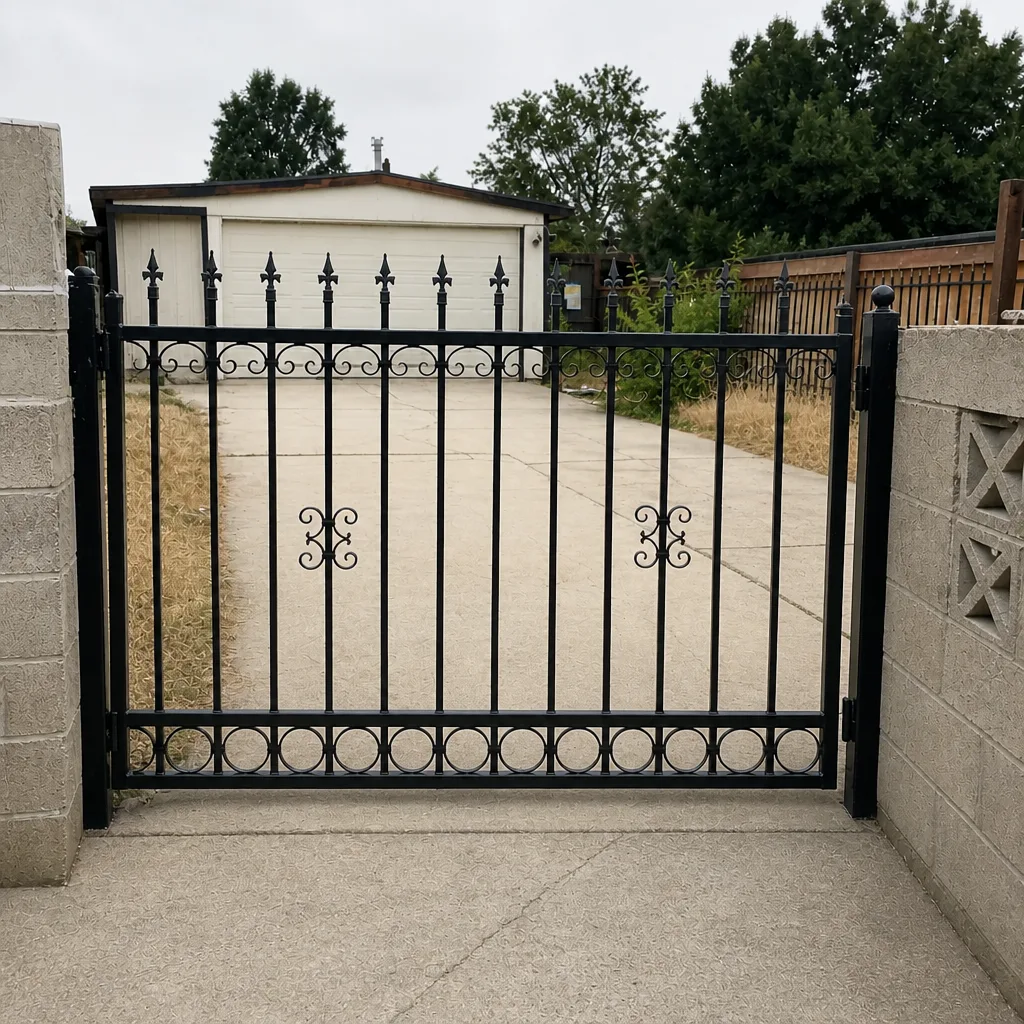 After
What a Written Scope Must Contain
A written scope that will actually hold up in a dispute has to be specific enough that a third party could read it and understand exactly what was agreed. Most estimates we’re shown as a free second opinion fail this test in the first line. “Repair gate opener” is not a scope. “Replace the control board on the FAAC 740, reset the limit switches, test the safety edges” is.
Here’s what a scope should include, at minimum:
- Named components. Not “the motor” but the specific model. “Linear LA500” or “Viking K-2” or whatever is actually on your property.
- Labor hours estimated. Not just a total number. If the job runs long, you want to know whether you’re paying for the extra hours and at what rate.
- Parts cost separated from labor cost. A single lump sum hides whether the expensive part of the job is the hardware or the time. Splitting them lets you compare quotes honestly.
- A not-to-exceed number. The scope can say “up to $X” as long as that ceiling is written down and agreed before anyone starts.
- What’s excluded. If the wiring run isn’t included, the scope has to say so. Exclusions are where surprise invoices hide.
Winchester’s older residential gates often sit on properties where the original install was done decades ago and parts have been swapped by several different companies. When the history is unclear, the scope needs to account for that uncertainty. A contractor who writes “inspect and repair as needed” hasn’t given you a scope. They’ve given you permission to bill whatever they find.
Three Questions That Separate Specialists from Handymen
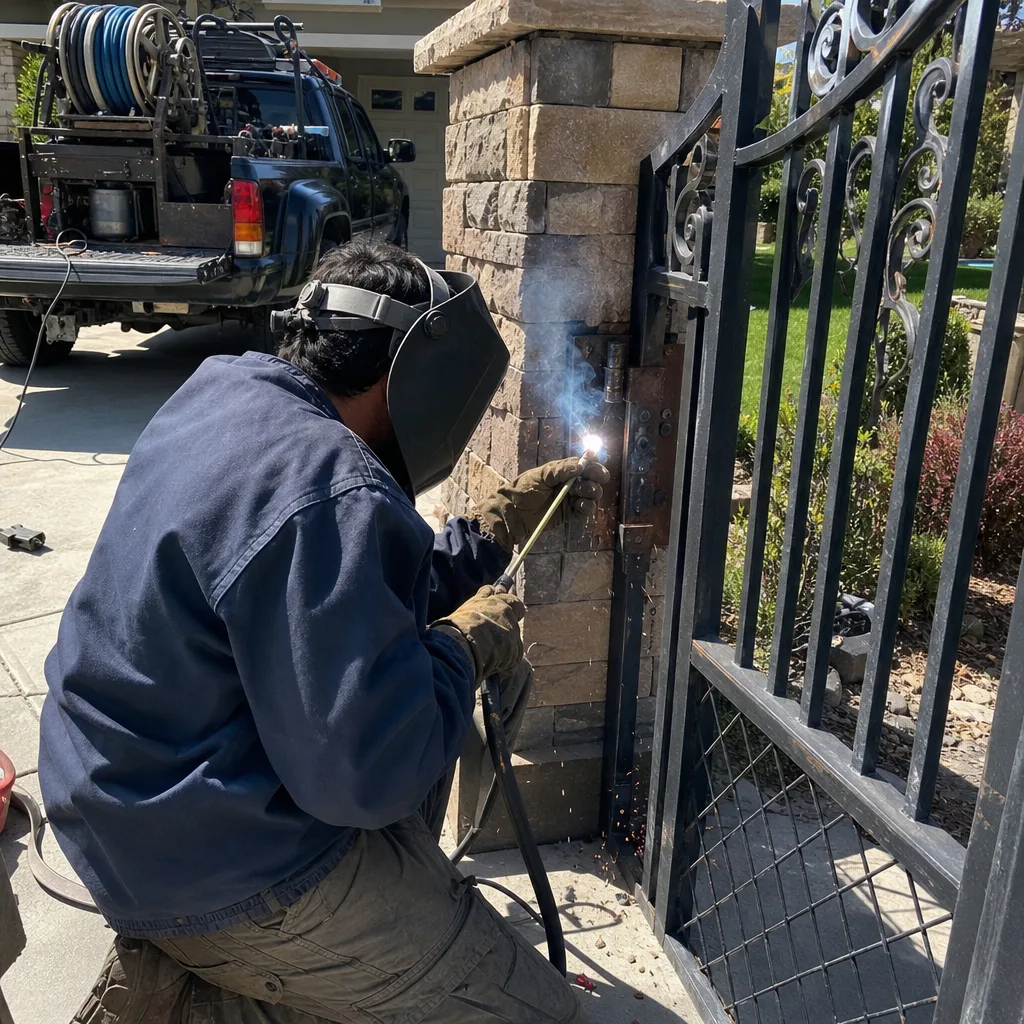
Not every contractor who says they work on gates does gate work as a specialty. Plenty of general handymen will take a gate call because it sounds straightforward, then discover mid-job that the motor is a BFT and they’ve never opened one. Three questions will sort them out before you commit.
- “Which automation brands do you service regularly?” A gate specialist will rattle off names without hesitation. If the answer is “we can work on anything,” press them. Which specific motors have they serviced in the last month? Which ones do they have parts access for?
- “How do you set the limit switches on my model?” This one requires them to know your gate’s control board. A specialist will describe the process in specifics. A handyman will say “we figure it out on site.”
- “What documentation do I get when you leave?” The answer you want names photos, readings, and part numbers. If it’s “an invoice,” that’s not documentation. That’s a bill.
There’s no shame in a handyman who’s honest about not being a gate specialist. The problem is the one who isn’t honest. In Winchester we’ve seen plenty of gates where the original issue was a misaligned photo-eye and the handyman’s repair involved replacing the entire control board because he didn’t know where to look. The homeowner paid for the wrong part and the problem came back a month later.
How to Verify a Nevada Contractor License
Nevada requires contractors to be licensed by the State Contractors Board, and the license classification matters for gate work. Gate repair typically falls under one of two classifications:
- C-14 (Fence and Gate Contractor). Covers installation and repair of fences, gates, and related hardware. Most residential gate repair and installation work should be done under this classification.
- C-2 (Electrical Contractor). Required when the work involves running new electrical service, modifying the panel, or doing anything that connects to the home’s electrical system beyond the existing low-voltage circuit. A gate contractor working on an existing 120V line to the motor is generally covered under C-14, but pulling a new circuit or working inside the panel is C-2 territory.
You can look up any Nevada contractor’s license number, status, and classification on the State Contractors Board website for free. Do it. Ask the contractor for the license number before they arrive, look it up, and confirm the classification matches the work you need done. A contractor who can’t or won’t provide the number is not someone you want with a welder on your property.
If your job involves both a new electrical run and the gate hardware, expect to see two licenses or a specialty contractor who brings in an electrician. That’s normal. What’s not normal is a single handyman with no license offering to “handle everything” on a gate that needs a new power feed.
Red Flags in Verbal Estimates
The verbal estimate is the single biggest risk in this trade. Here’s what to watch for when a contractor gives you a price over the phone and says “we’ll see what we find.”
- “We’ll check the wiring and go from there.” Check the wiring for what? What is the deliverable? What’s the not-to-exceed? A scope with no defined outcome is an invitation to bill hourly for discovery.
- No number on the phone call. If you can’t get a range over the phone, you should at least get a written price after they’ve looked at the gate. If they won’t put anything in writing until the work is done, walk.
- “It’s probably just the board.” Probably. On what evidence? A specialist walks to the gate, opens the control box, checks the fault codes, and tells you what the codes indicate. A guess isn’t a diagnosis.
- Hourly pricing with no ceiling. Hourly rates are fine for some jobs, but not without a cap. “It’ll be $95 an hour plus parts” is not a price. It’s a lottery ticket that only one party can cash.
- “The price depends on what I find.” True for every repair. That’s why the scope says “diagnose, then call the homeowner with a written price before proceeding.” A contractor who agrees to stop at the diagnosis and get sign-off is a contractor worth hiring.
For a closer look at how a written-price gate repair visit actually works in practice, our gate repair service in Winchester describes the Haven Standard we apply on every job: written price before work starts, photo record when the technician leaves.
What Documentation to Demand After the Repair
Most homeowners keep the receipt and throw away everything else. That’s a mistake. What you want to keep is the photo record, and here’s why: limit-switch settings determine how far your gate travels in each direction, and a future technician needs to know what those settings were when the gate was working. Without photos, they start from scratch. With photos, they can compare.
The documentation you should demand after any gate repair includes:
- Photos of the limit-switch positions before and after any adjustment. The switch is a small mechanical or magnetic sensor that tells the operator when to stop. Its position is a number, and that number matters.
- Fault code readings from the control board before the repair, if the motor was throwing codes. That record tells the next technician what failed, not just what was replaced.
- The part number of anything installed. Not “a new motor.” The part number. A field replacement in three years needs the exact number to order the right piece.
- A wiring diagram if wiring was touched. The wiring between the motor, the safety edges, and the control board is not always obvious. A photograph of the connections before disassembly is the difference between a five-minute fix and a two-hour reconstruction in five years.
- The written scope itself, signed. The document is the receipt.
The same standard applies whether the technician worked on a gate motor and opener or installed a new gate entirely. Documentation isn’t a courtesy. It’s the record that prevents you from paying twice to rediscover the same problem.
The Step-by-Step Hiring Process
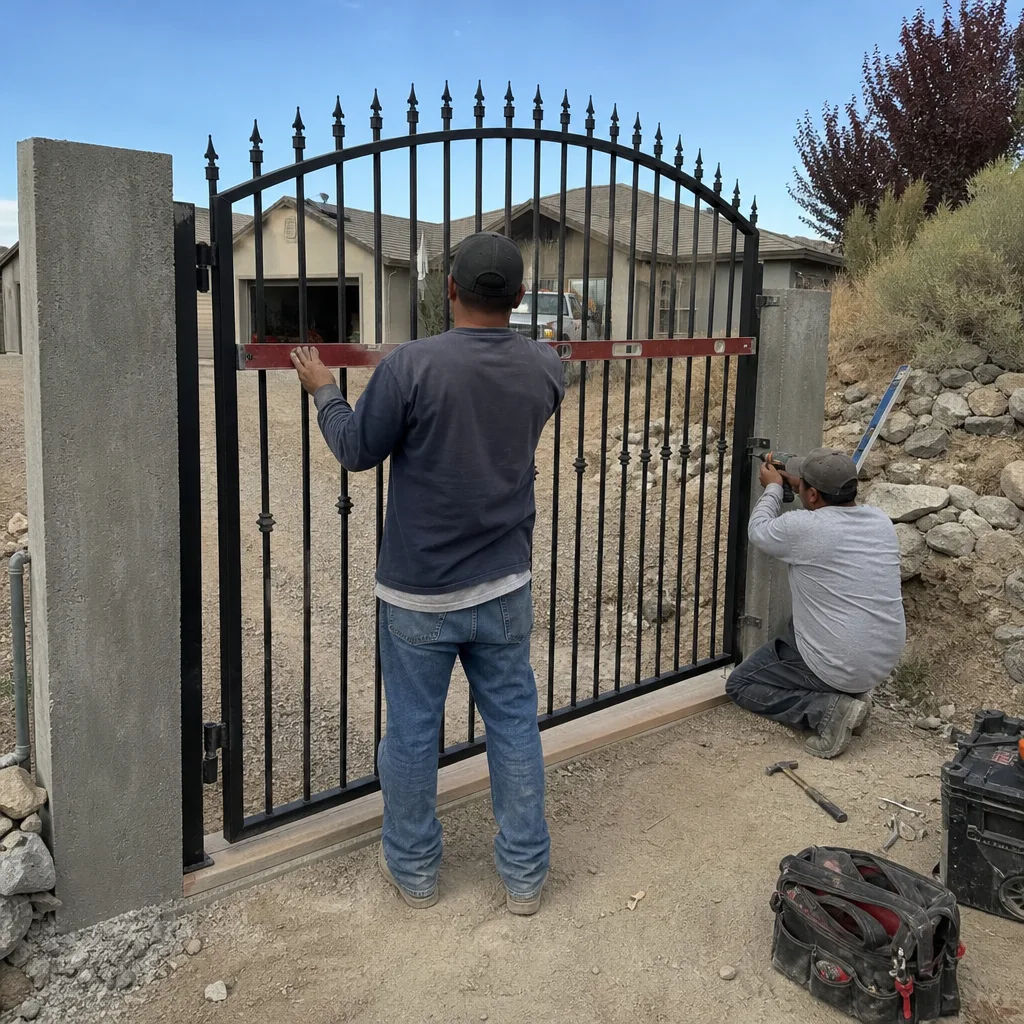
Here’s the process in order. Follow it and you’ll hire correctly the first time.
- Identify what’s actually wrong. Note the symptoms: does the gate open slowly, stop mid-travel, reverse for no reason, or fail to respond at all? Write them down. Describe them exactly when you call.
- Ask for the motor brand and model before the contractor arrives. The nameplate is usually inside the operator housing or on the arm. A specialist will know whether they service that brand.
- Request a written price after diagnosis, before repair. Not a verbal estimate. A written scope that names the parts, the labor, and the not-to-exceed price. Agree to it or don’t.
- Verify the license and classification. Pull the number on the Nevada State Contractors Board site before the appointment. Confirm C-14 (or C-2 where required).
- Ask what documentation you’ll receive before the tech leaves. Photos of settings, part numbers, and a written record of what was adjusted.
- Keep the whole package. Scope, photos, part numbers, and receipt. File them together. Future-you will thank present-you.
For a new gate rather than a repair, the same process applies but the timeline is different. New gates are measured, ordered, and scheduled, not dispatched same-day. Our gate installation in Winchester page walks through what a measure appointment looks like and what gets quoted in writing before any order is placed.
Common Mistakes to Avoid
- Accepting a verbal price with no scope. The verbal number is the one you’ll never be able to prove was agreed to. It’s also the one most likely to grow by the time the invoice arrives.
- Not asking what happens if the price goes over. Even a fair contractor finds surprises. The scoped question is: “If you discover something additional, do you stop and call me before proceeding?” Get a yes before the work starts.
- Hiring a general handyman to work on a gate motor. Gate operators are not household appliances. Each brand has its own control board, fault codes, and limit-setting procedures. A handyman who’s never seen your model is going to learn on your gate at your expense.
- Skipping the license check. Nevada’s lookup tool is free and takes a minute. There’s no good reason to skip it, and plenty of bad outcomes when you do.
- Throwing away the part-number record. When the same component fails in four years, the same part number keeps the fix quick. Without it, a technician has to identify the model from scratch, and you pay for that time.
- Letting the first quote be the only quote. Comparing two written scopes is the easiest way to know whether a price is fair. If one contractor writes the whole thing in detail and the other hands you a lump sum, the honest comparison is impossible. Ask both for a detailed scope.
- Assuming the gate is safe after a non-specialist repair. A gate that reverses incorrectly or fails to stop on obstruction is a real hazard. Safety edges and photo-eyes (the infrared beam that stops the gate if something crosses the path) need to be tested against a real obstruction, not just observed opening and closing in the air.
See the difference
BeforeAfter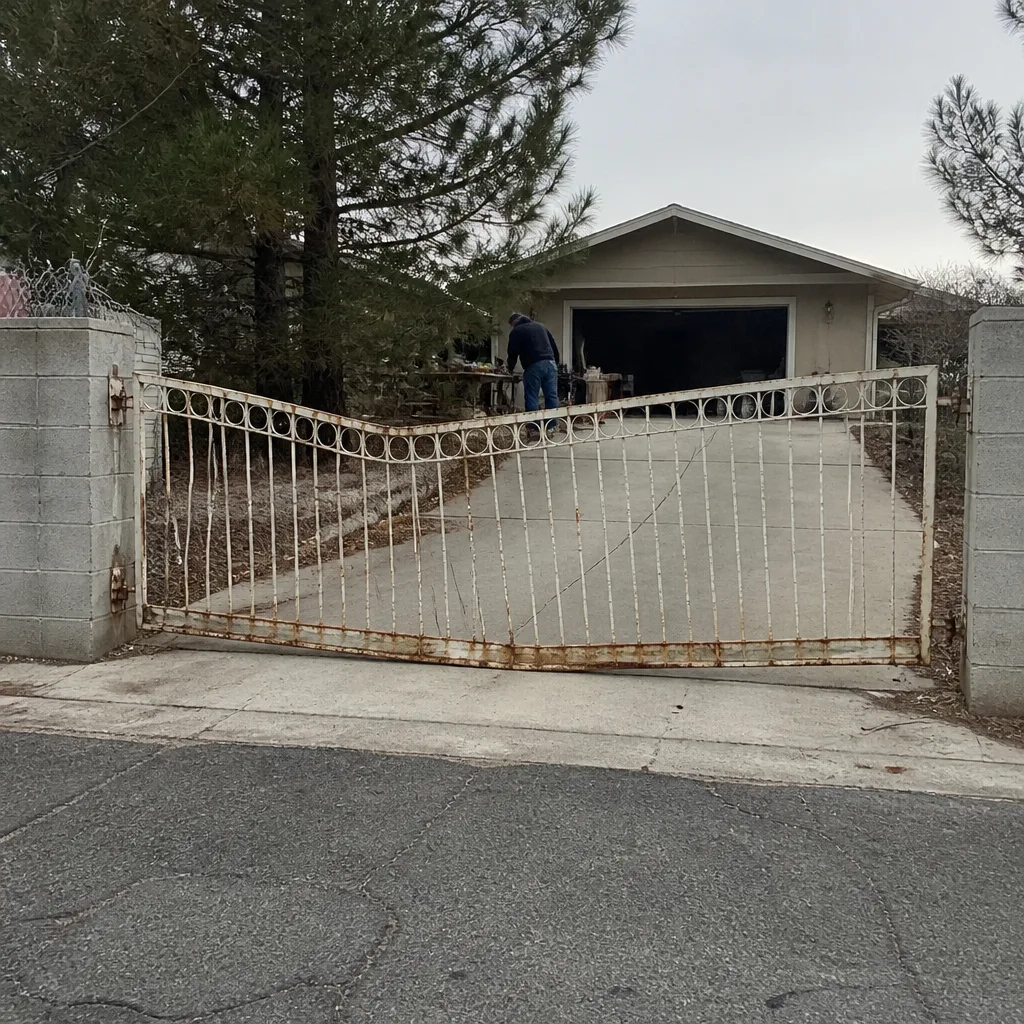 Before
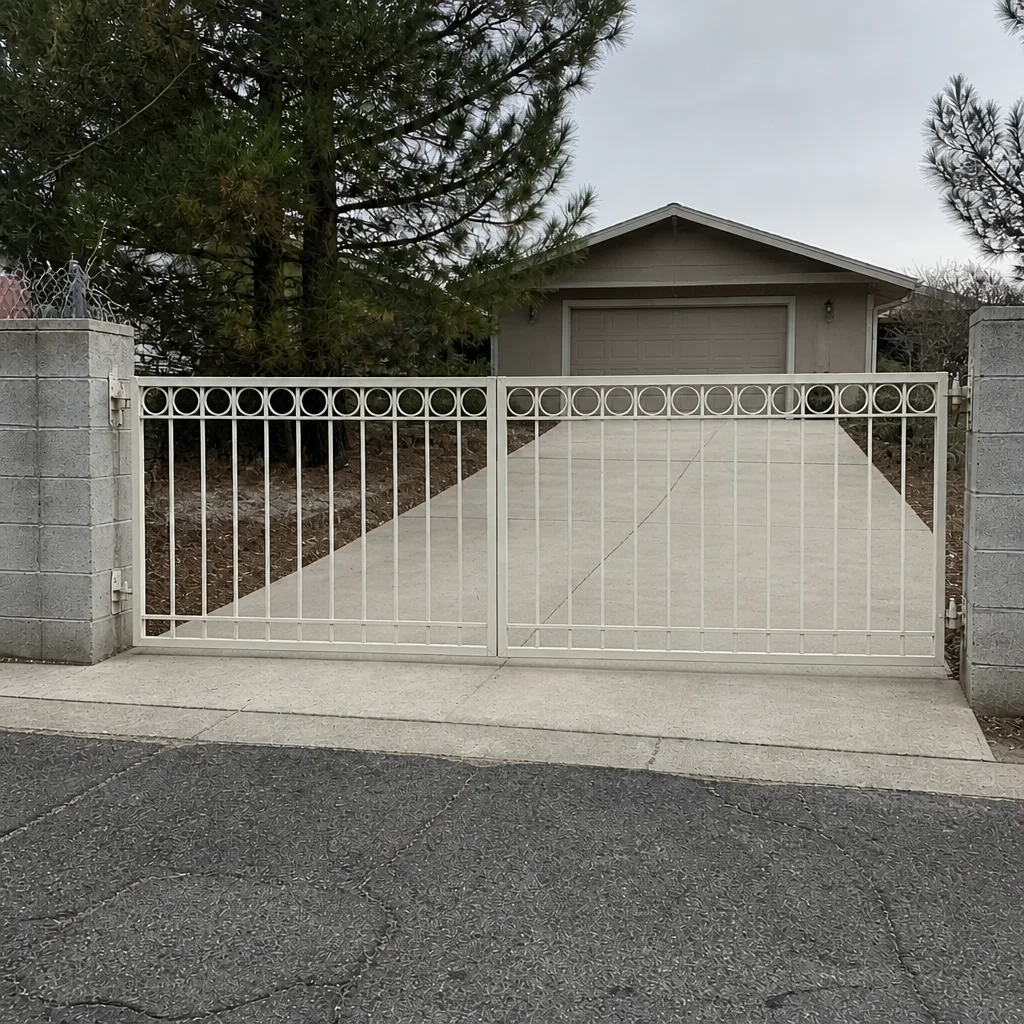 After
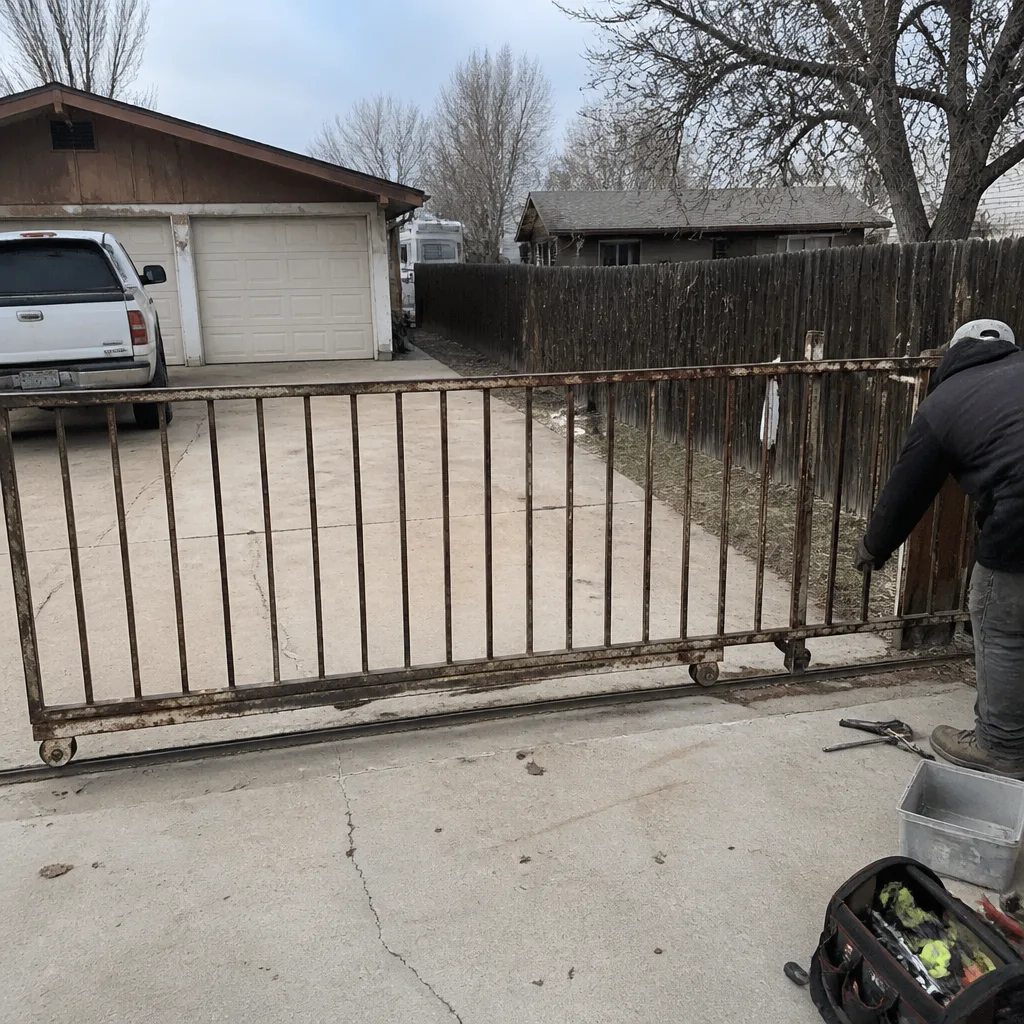 Before
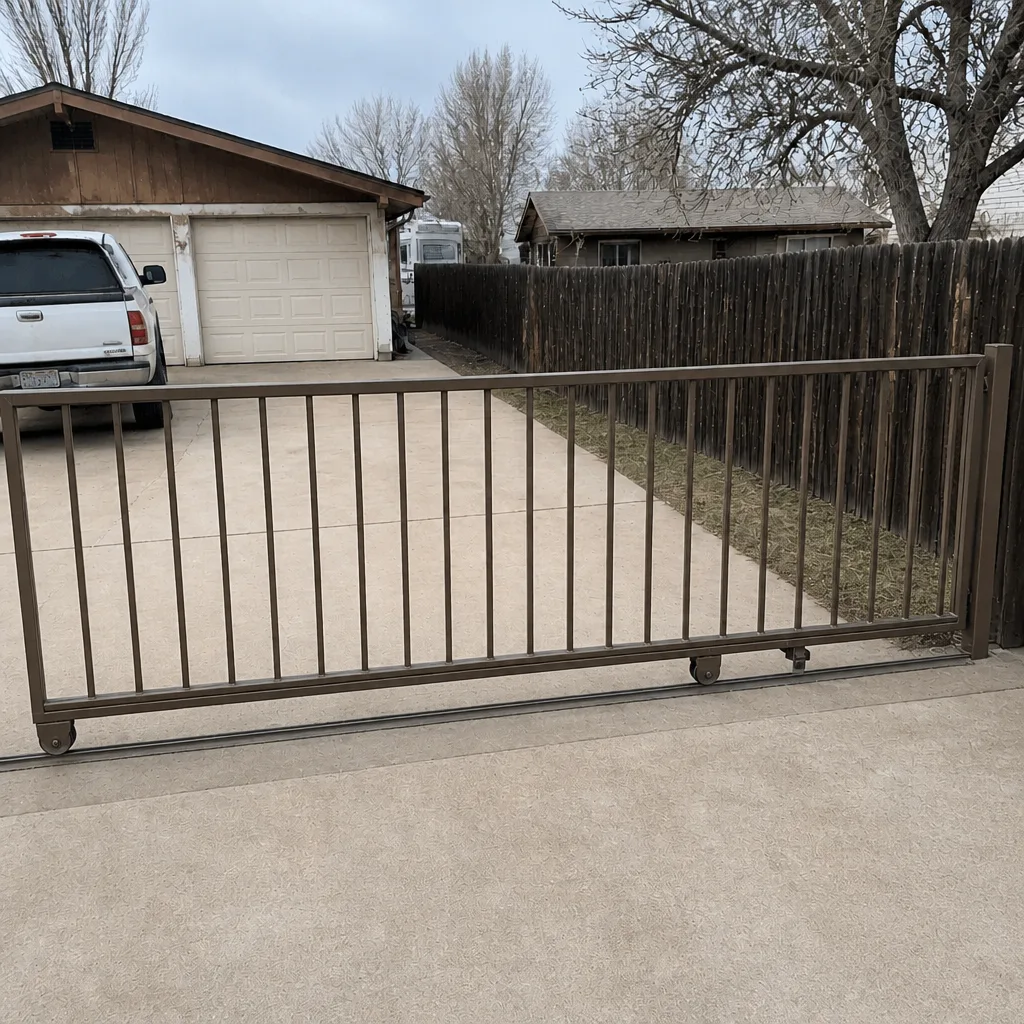 After
When to Call a Professional
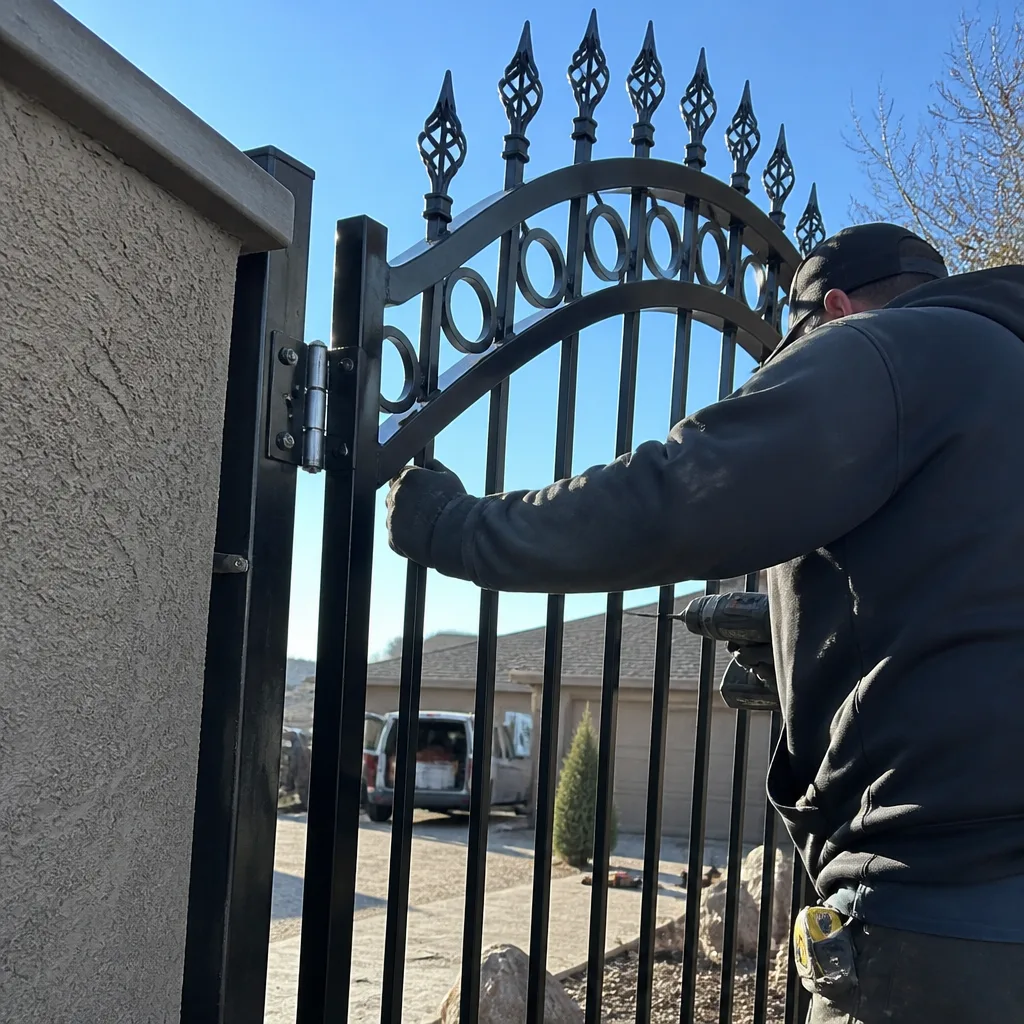
Some gate issues are cosmetic and safe to ignore for a while. Many are not. Call a professional when the gate reverses without obstruction, stops mid-travel, fails to close fully, produces a burning smell from the operator housing, or runs on a motor old enough that parts availability is questionable. Call immediately if a safety edge or photo-eye has failed, if the gate has drifted beyond its normal open or closed position, or if any high-voltage wiring to the operator looks damaged. Gate operators combine mechanical force with electrical power, and a gate that swings or slides on its own is a genuine safety risk. Vance Gate Repair Winchester offers free estimates in Winchester and a free second opinion on any written estimate you’ve received from another company. Call (866) 983-9213 to schedule a visit. A live person answers 24 hours a day, every day.
Frequently Asked Questions
A written scope needs named components (the exact motor model, not just “the motor”), a labor hour estimate, parts cost separated from labor cost, a not-to-exceed price, and an explicit list of exclusions. With those five elements, a third party can read the scope and understand exactly what was agreed to. Without them, a dispute comes down to he-said-she-said. Call (866) 983-9213 for a written scope on your Winchester gate.
Most residential gate repair falls under the C-14 (Fence and Gate) contractor classification. If the job requires running a new electrical circuit or working inside the home’s electrical panel, a C-2 (Electrical) classification is also required. Verify any contractor’s license number and classification on the Nevada State Contractors Board website before the work begins. If you’re not sure which classification your job needs, call (866) 983-9213 and we’ll tell you what to ask for.
The receipt tells you what you paid. The limit-switch photos tell the next technician what positions the gate was actually set to when it was working. Without photos, every future repair starts from scratch. With photos, the technician can compare current readings to the previous working settings and know immediately whether the switch has drifted. Our technicians leave a photo log on every Winchester visit, no exceptions.
A specialist is the safer choice for any work involving the gate operator itself. Handymen are fine for some hardware adjustments, but gate motors have their own control boards, fault codes, and limit-setting procedures that vary by brand. A handyman learning a FAAC or BFT board for the first time on your gate is going to take longer and might replace a part that wasn’t the problem. Call (866) 983-9213 if you’re not sure whether your issue needs a specialist.
Bring the written estimate, and we’ll review it at no cost. We look at whether the scope is complete, whether the diagnosis matches the symptoms, and whether the price is in a range we can vouch for. No obligation to hire us afterward. That’s the whole point of a free second opinion: you get a sanity check on the paperwork before you commit. Call (866) 983-9213 to arrange a review.
They should stop and call you with a written price for the additional work before proceeding, never afterward. That’s the difference between a scoped repair and a blank check. Ask about this behavior explicitly when you hire: “If you discover additional work, will you stop and get written approval before proceeding?” A contractor who says yes is following the process correctly. A contractor who says “we’ll just handle it” is a contractor you should avoid.
The Bottom Line
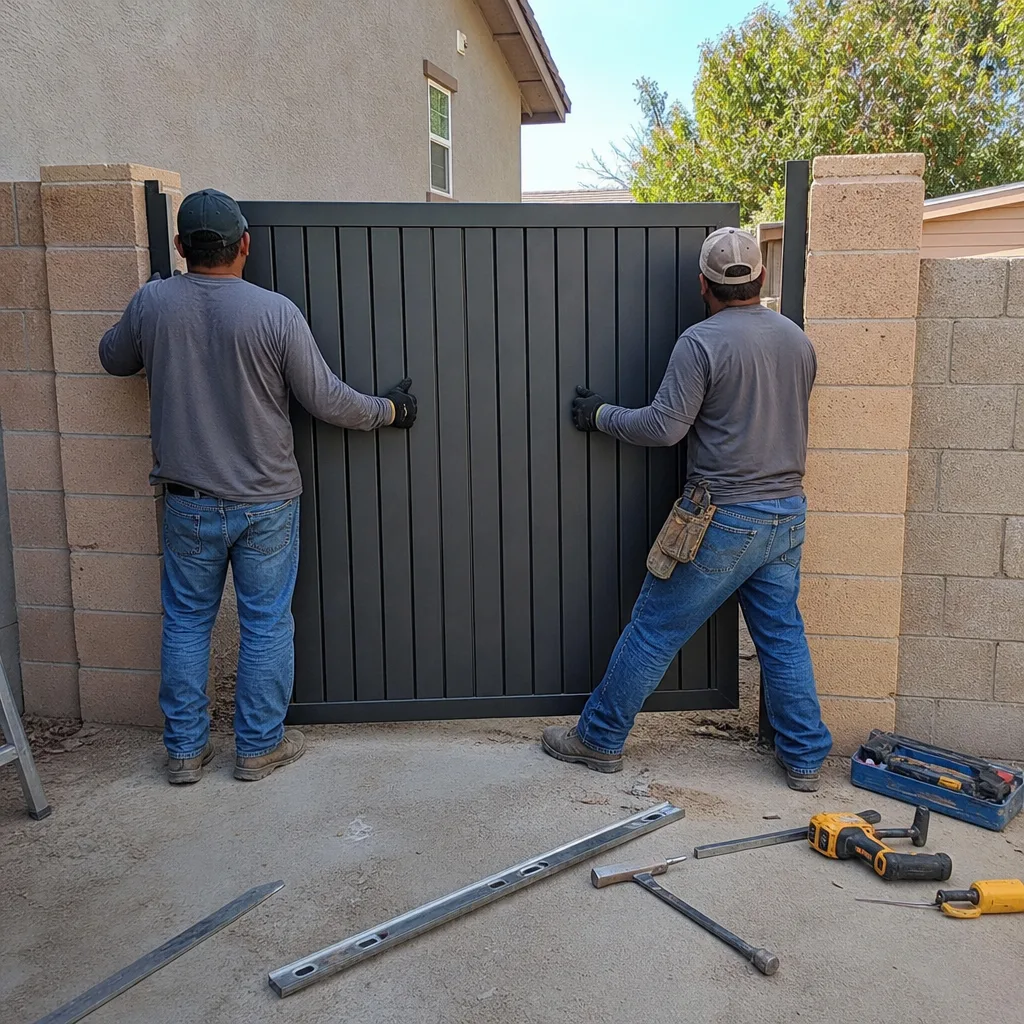
Hiring a gate repair contractor in Winchester comes down to one filter: the written scope. Reviews and referrals matter, but the document is what protects you when something goes wrong. Get the scope in writing, verify the license, ask what documentation you’ll receive, and confirm the contractor will stop and get approval before doing anything beyond what’s quoted. Do those four things and you’ll hire correctly the first time. Skip them and you’re betting your money on a verbal understanding. Before you call anyone, look at our Vance Gate Repair in Winchester home page for what a Haven Standard visit actually looks like. Our technicians have up to 12 years of experience, we service nine major automation brands including FAAC, BFT, Linear, and Viking, and we put the price in writing before any tool comes out of the truck. If a repair isn’t right, the 365-Day Done Right Promise covers it for a full year at no additional charge.
Call (866) 983-9213 for a free estimate on your Winchester gate. A live person answers around the clock, and we’ll walk you through exactly what a written scope on your property would look like before you commit to anything.
Written by the team at Vance Gate Repair Winchester.