
Last updated November 18, 2026
 Wrought iron
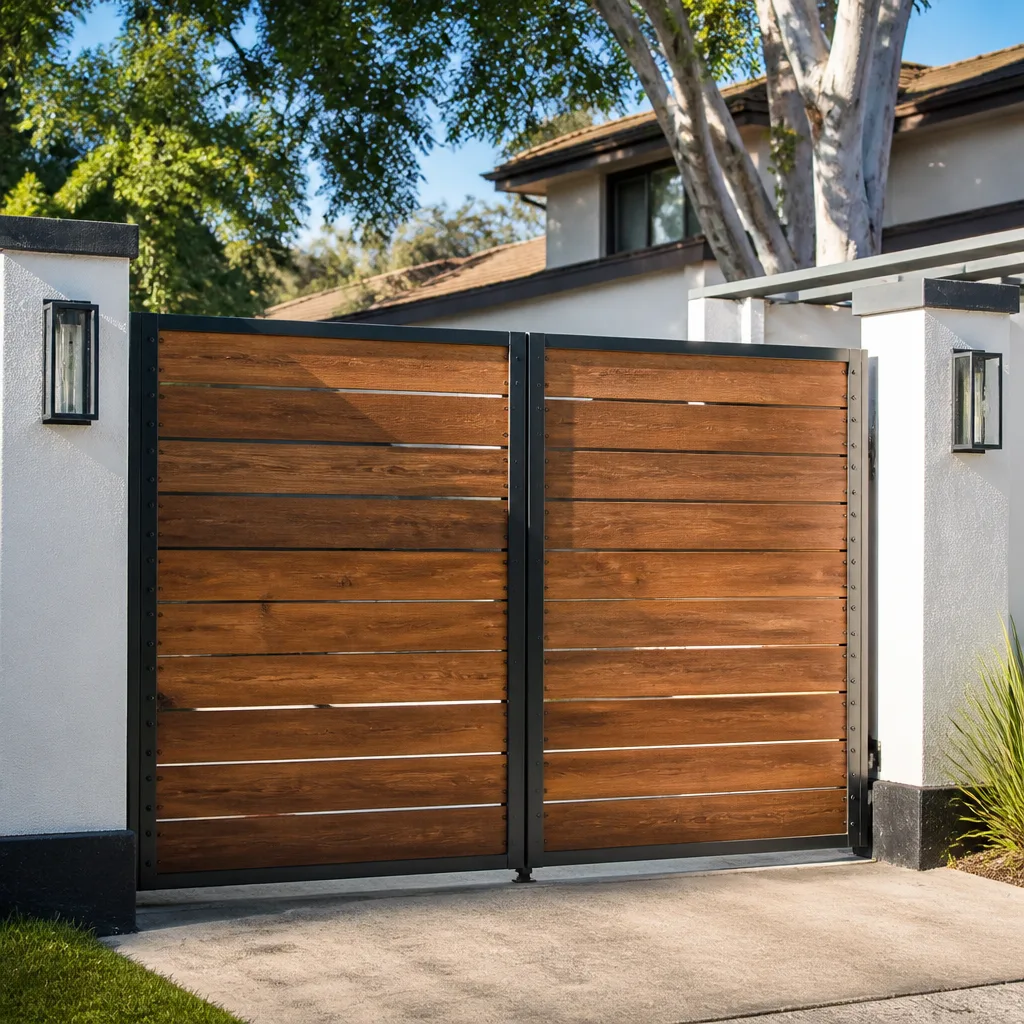 Wood & steel frame
 Farm & ranch
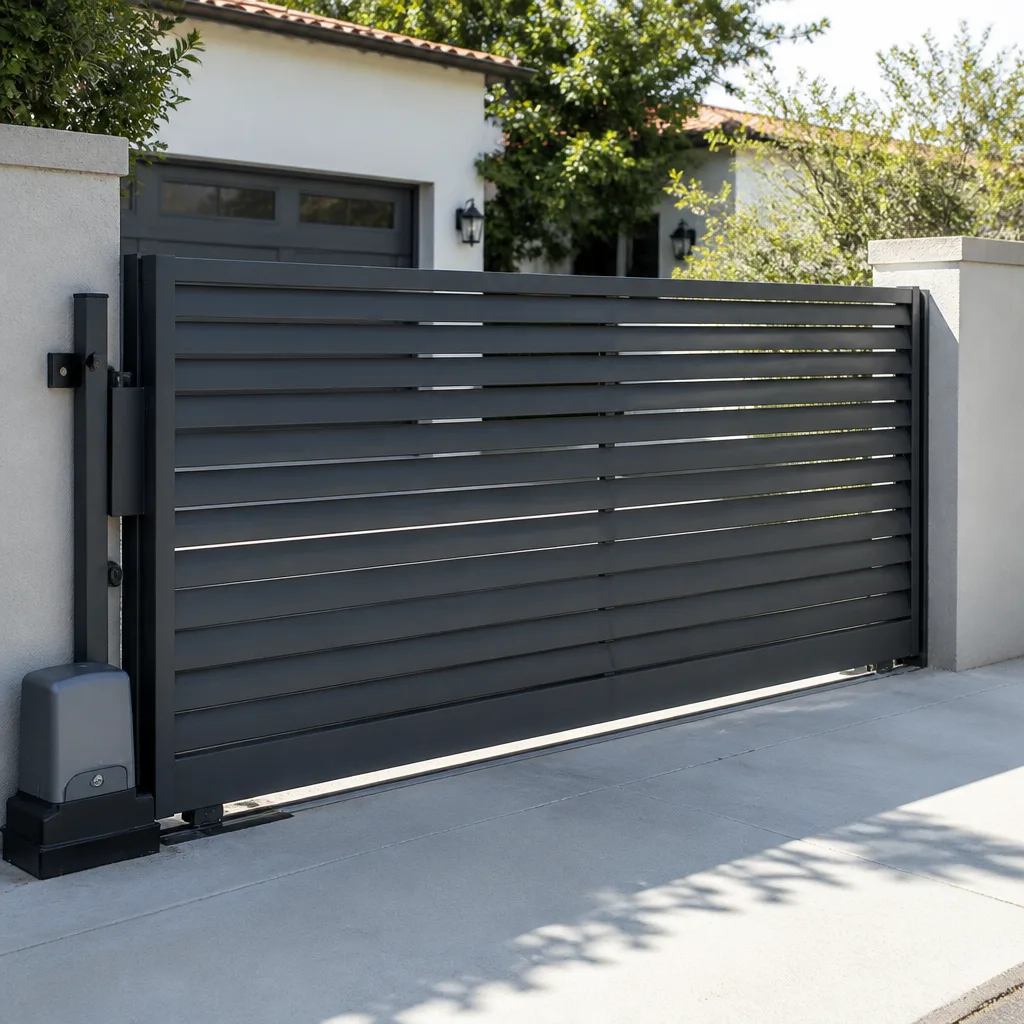 Sliding driveway gates
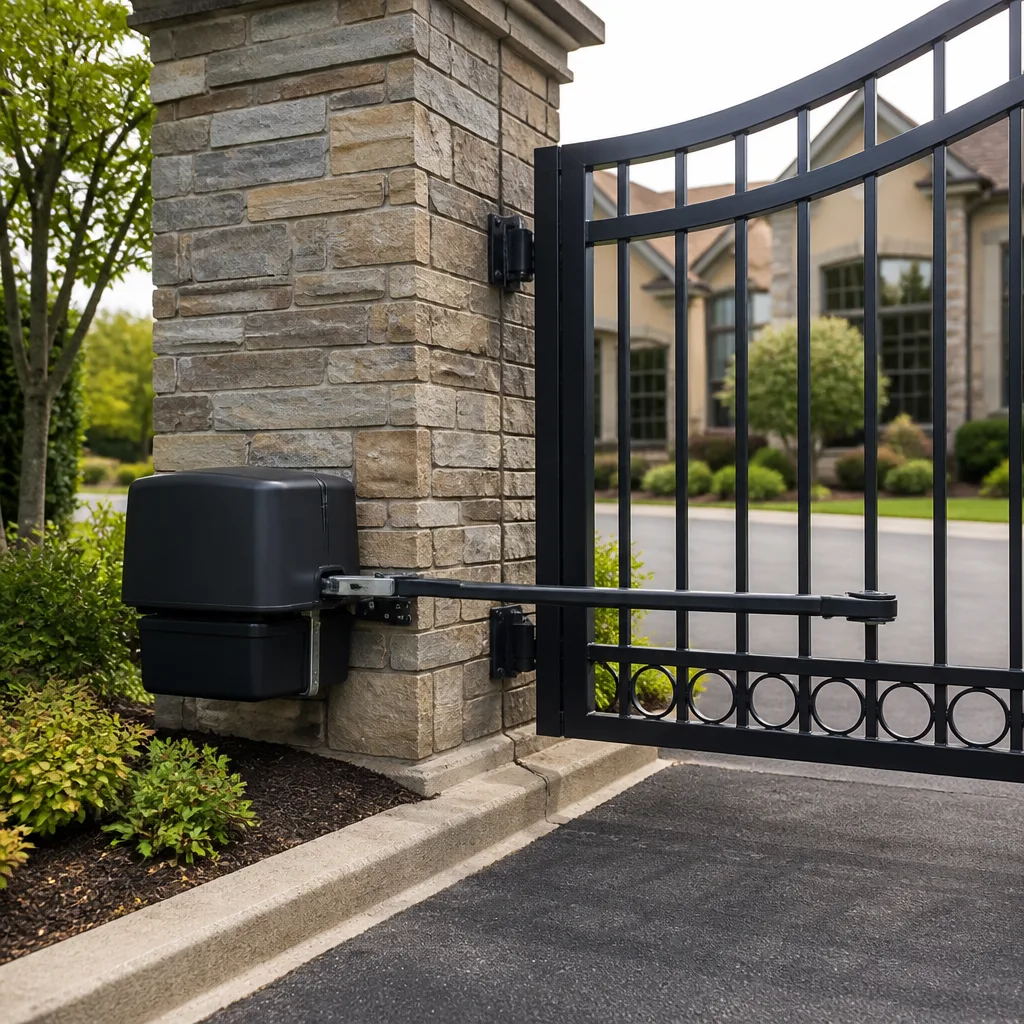 LiftMaster operators
Free on-site gate assessment - hinges, posts, and your LiftMaster or Nice gate operator checked before anything is quoted
The assessment is free and the quote is the invoice.
Get your free estimateGate Repair Maintenance Schedule: What to Do and When
Lubricating a gate hinge on a fixed quarterly schedule is better than nothing, but it’s also how you miss the hinge that’s been walking out of its socket since January. Calendars tell you when a task is due; they don’t tell you whether the gate needs it. The gates we open up across Winchester have three or four moving parts that fail on a predictable wear curve and a dozen more that mostly take care of themselves – and the operators that fail earliest are almost always the ones where nobody was measuring anything. This guide replaces the calendar with thresholds. You’ll learn which tasks need a number attached, which are genuinely time-based, and how to build a one-page log that makes every future service call faster and cheaper.
Quick Answer
A practical gate maintenance schedule is split between time-based tasks you do on a fixed interval (lubrication, visual inspection, fastener checks) and measurement-based tasks you do when a reading crosses a threshold (hinge play over about 1/8 inch, chain slack beyond 1/2 inch total deflection, limit-switch drift of more than a couple of degrees). Measure the three predictable wear points – hinges, chain or drive, and limit switches – once a season, log the readings, and replace components when the numbers move rather than when the calendar says so.
Styles & brands we work with
- Wrought iron
- Wood & steel frame
- Farm & ranch
- Sliding driveway gates
- LiftMaster operators
Table of Contents
- Why Calendar Schedules Fail and Thresholds Don’t
- The Tasks That Are Genuinely Time-Based
- The Tasks That Need a Measurement to Be Useful
- Winchester Freeze-Thaw: When to Check Concrete Post Footings
- Five Components With Predictable Wear Curves
- How to Build a One-Page Gate Log
- Maintenance You Probably Don’t Need
- A Seasonal Checklist You Can Actually Follow
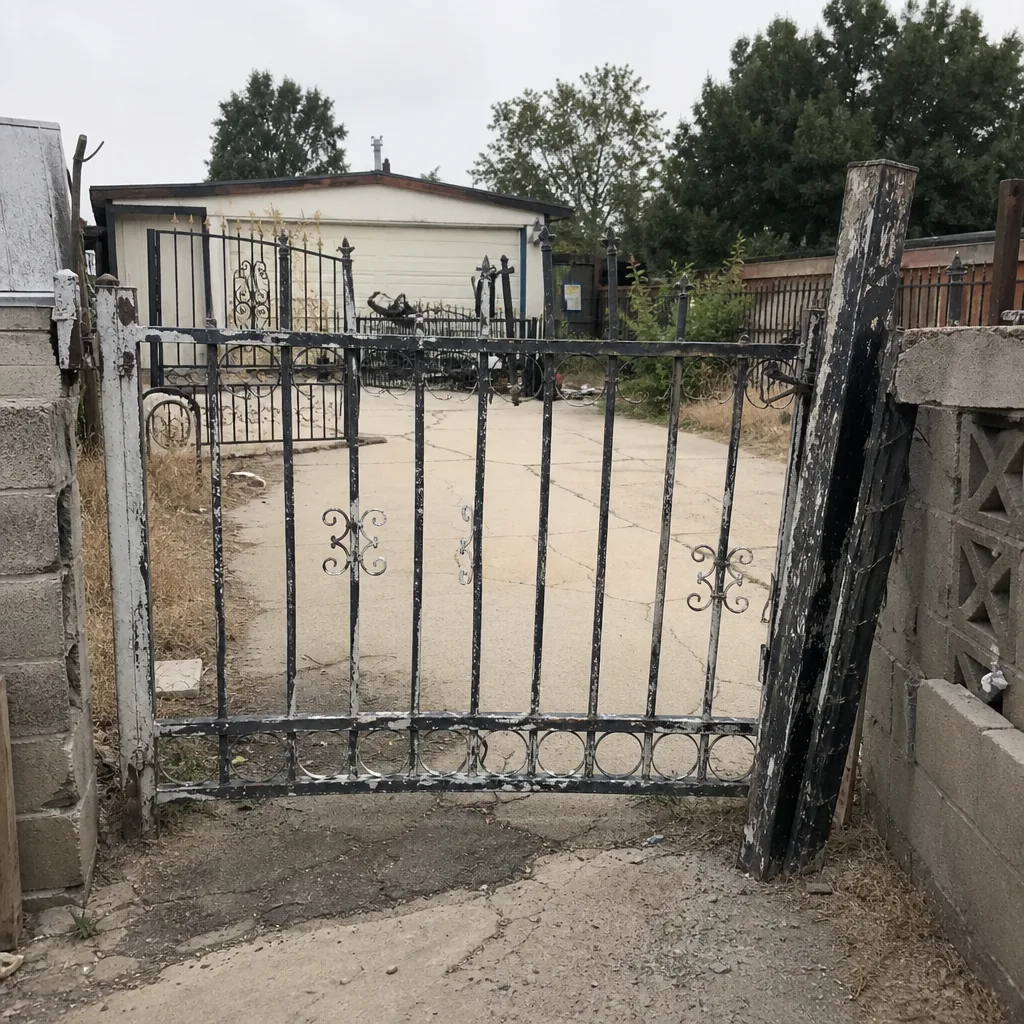 Before
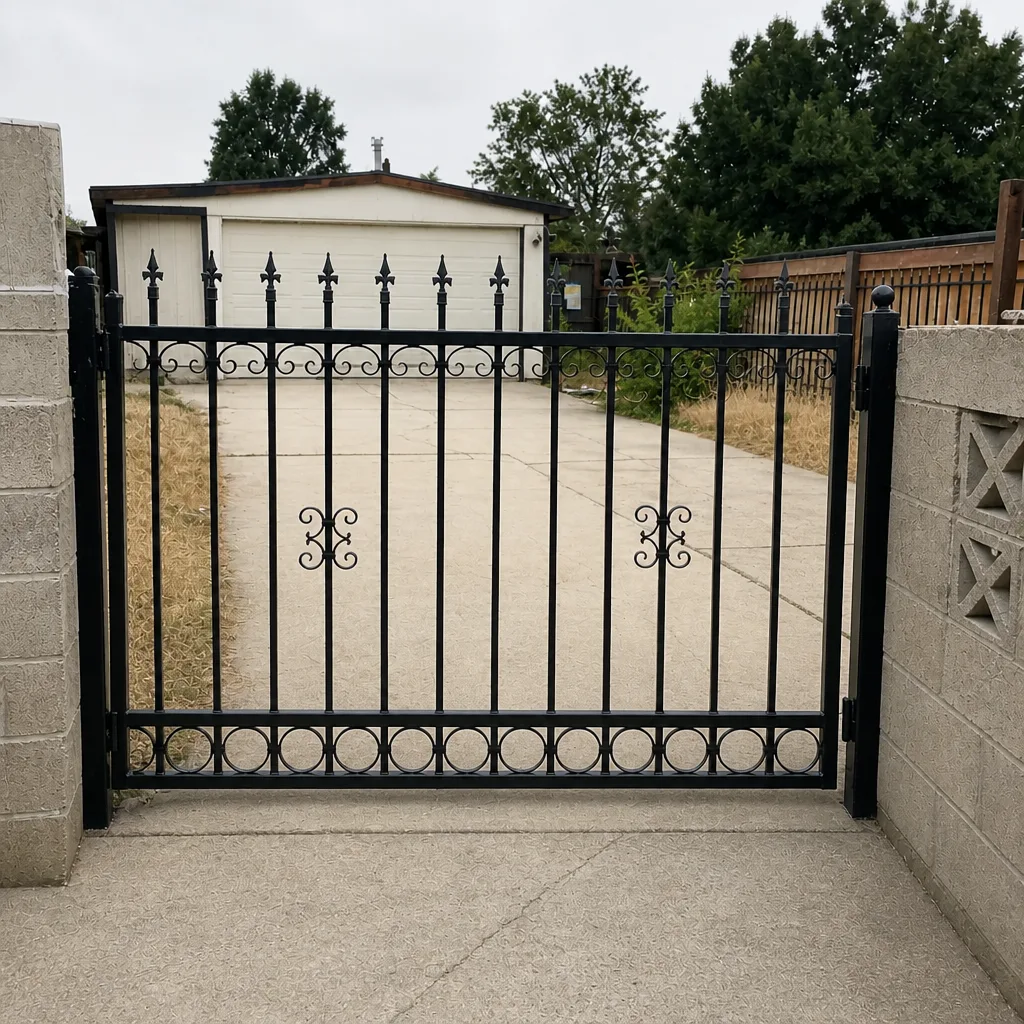 After
Why Calendar Schedules Fail and Thresholds Don’t
A quarterly schedule assumes every gate wears at the same rate. They don’t. A double swing gate on a windy ridge above Winchester that opens forty times a day will wear its hinge bolts three or four times faster than a lightly used single gate on a sheltered lot a mile downhill. The same calendar hits both gates at the same moment, which means one gets serviced too late and the other too often. Neither outcome is efficient, and the one that’s too late is the one that costs real money.
Threshold-based maintenance flips that. You inspect on a schedule, but you act on a reading. When the gate is within its tolerances, you write the number down and move on. When it crosses a limit, you do the work. That’s how a commercial access-control technician approaches a managed property – not “lubricate everything every ninety days,” but “measure, log, act on variance.”
The difference matters most on the parts that fail gradually. Hinges don’t snap; they loosen a quarter-turn at a time until the gate sags and the latch stops catching. Chains don’t break; they stretch by fractions of an inch until the operator strains and the sprocket chews itself. Limit switches don’t fail outright; they drift a few degrees past travel until the gate slams into its stop and cracks the weld. All three of those failures are visible in the readings weeks before they happen.
If you only do one thing after reading this guide, measure your gate’s three thresholds once a season and record them. That habit alone prevents most of the emergency calls we handle across Winchester. For a deeper look at the repair side of that equation, our Gate Repair in Winchester page covers what each failure looks like in practice.
The Tasks That Are Genuinely Time-Based
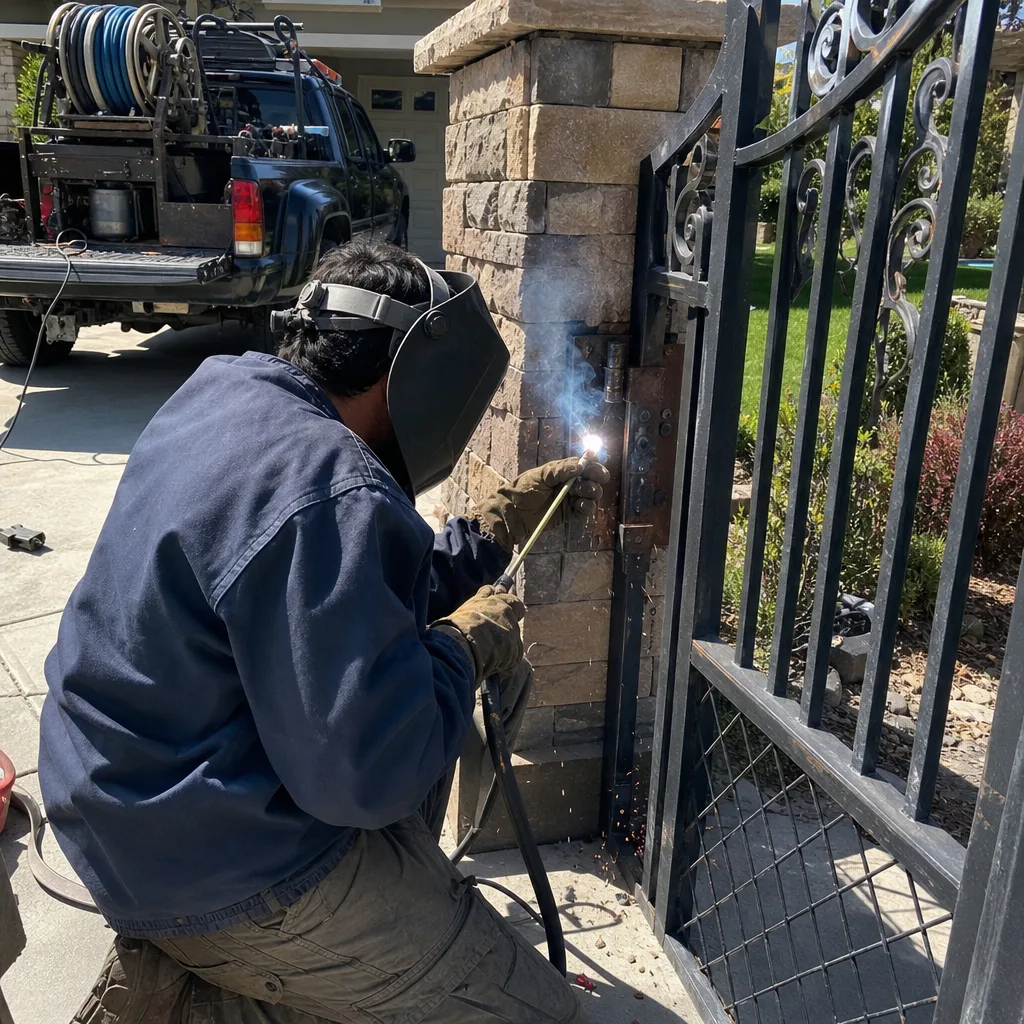
Some maintenance is done on an interval because the calendar is genuinely the right trigger. Lubrication degrades with time and weather regardless of how often the gate moves. Visual inspection catches things that measurements on a specific component would miss. Fastener checks after a wind event are cheap and catch problems early.
- Lubricate hinges, rollers and latches every 60 to 90 days. Use a lithium or silicone-based grease, not WD-40 alone – the spray displaces water but doesn’t leave the film a hinge needs. Two pumps per hinge, wipe the excess. If it’s over 90 days since the last application, it’s overdue.
- Walk the full swing path and inspect the gate edges, posts, and operator housing once a month. Look for rust bubbling under paint, dents, cracks at welds, and debris in the track. This takes four minutes and catches more problems than any tool.
- Test the safety devices (photo-eyes, safety edges, loop detectors) once a month. Walk across the photo-eye beam while the gate is closing; it should reverse immediately. Press the safety edge with your palm; same result. If either fails, stop using the automatic operation until it’s repaired.
- Check and clear drainage around the footing every 90 days. Standing water around a post accelerates concrete deterioration. A dry well or gravel bed maintained around the base prevents most footing failures.
- Battery backup load test every 6 months. Most modern operators with battery backup will self-test, but a manual check by unplugging the transformer for 30 seconds tells you whether the gate still works on battery alone. If it doesn’t, the cell needs replacing before the next windstorm.
Those five tasks are where a calendar makes sense. Everything else in a good schedule exists to tell you whether a component is still within spec – which is a measurement question, not a date question.
The Tasks That Need a Measurement to Be Useful
This is where most homeowner maintenance routines fall apart. “Check the chain” without a tolerance is not a maintenance task – it’s a glance. A chain that looks fine at 3/4 inch of slack is about to start eating sprocket teeth. The number is what tells you to act.
Three measurements cover 80% of the failures we see. None of them require tools beyond a tape measure, a straightedge, and a marker.
Hinge Play
Open the gate about 45 degrees and grab the free edge. Try to lift and rock it firmly. Movement at the hinge should be imperceptible. If the free edge rises or drops by more than roughly 1/8 inch, the hinge pin or bolt is worn. Beyond 1/4 inch, you’re heading for a sag that will misalign the latch and stress the operator arm. Hinge bolts are one of the cheapest parts to replace and one of the most expensive to ignore.
Chain Tension and Slack
On chain-driven slide gates, check the total deflection at the midpoint of the longest unsupported span. Push the chain down firmly with your thumb; the deflection should be about 1/4 to 1/2 inch. Beyond 1/2 inch, the sprocket teeth start wearing on the loaded side. Beyond 3/4 inch, you can hear it in the operator and it’s already shortening sprocket life. A tensioner adjustment fixes the problem in ten minutes; a worn sprocket replacement is a much bigger job.
Limit-Switch Position
This is the one homeowners should never touch themselves. Limits tell the operator when to stop; a drift of even three or four degrees means the gate hits the physical stop instead of the electronic one, and every cycle stresses the arm, the hinge and the frame. What you can do is note where the gate stops in each direction and how hard it hits. If the gate visibly “bumps” its stop, that’s limit-switch drift and it needs a proper reset. We measure limit-switch position with a straightedge and photograph the reading so the next technician starts from a known setting instead of guessing. That habit – photo, measurement, written record – is at the heart of Vance Gate Repair Winchester home and its Haven Standard, and it’s what keeps a drift from quietly becoming a broken arm.
Measurements are quick but they’re worth doing with the same care a commercial access-control tech would bring to a managed site. That’s part of why we only hire technicians with real hands-on experience – our technicians have up to 12 years of it.
Winchester Freeze-Thaw: When to Check Concrete Post Footings
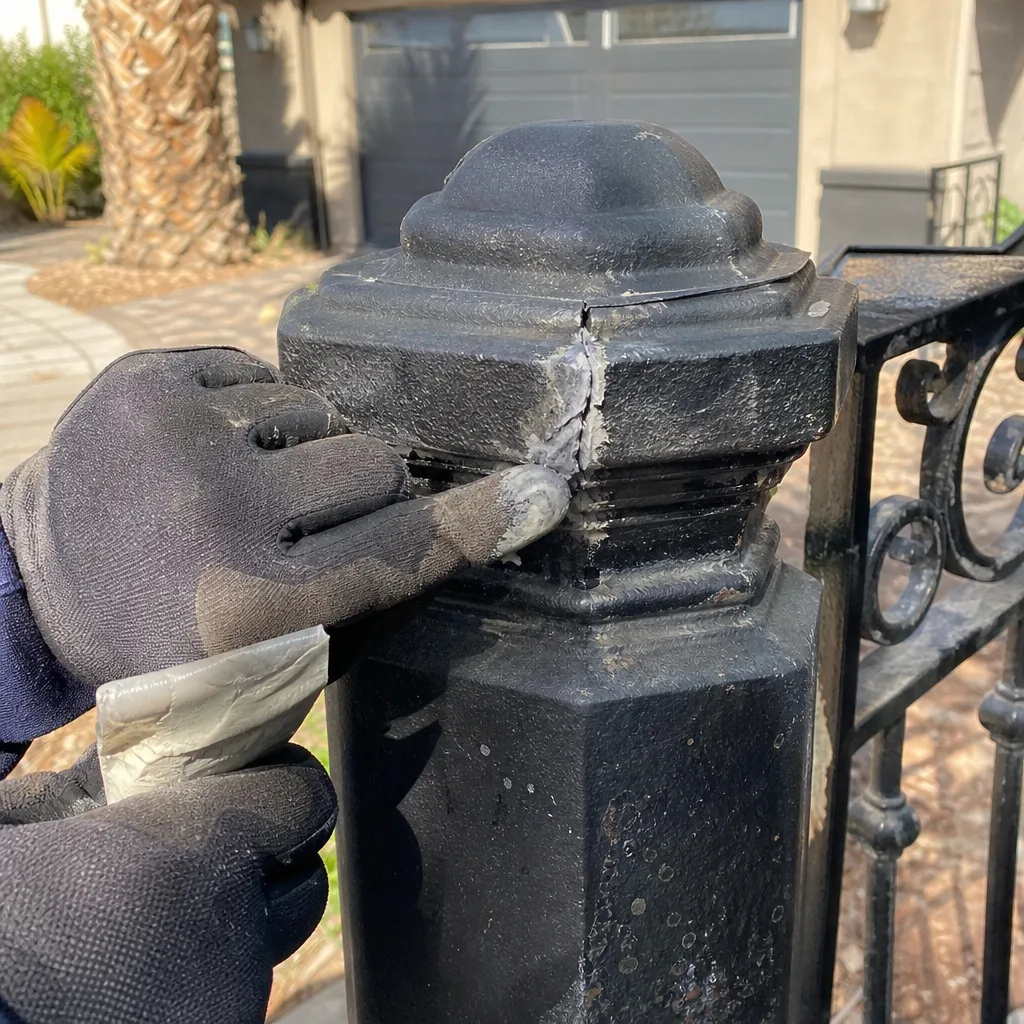
Winchester’s high-desert elevation produces one of the harshest freeze-thaw cycles in the region. Winter nights drop below freezing regularly, days swing well above it, and the soil around a post footing can cycle between expansion and contraction dozens of times in a single season. That’s fine for a footing poured to depth in well-drained soil. It’s hard on a shallow footing, a footing without a proper drainage bed, or a footing that’s been undermined by runoff from a slope.
The right time to check is early spring – roughly March and April, after the worst of the freeze-thaw is over and before the summer heat dries the soil and locks in any misalignment. Look for:
- Cracks running vertically or diagonally up the post’s concrete collar.
- Any gap between the concrete foot and the ground on the downhill side.
- Soil pulled away from the base by runoff, leaving the footing partially exposed.
- The gate post leaning even a couple of degrees – visible against a plumb line or the fence next to it.
- The gate sagging where it meets the latch, which often traces back to a footing issue rather than hinges.
A footing that’s moving can’t be fixed with hinge adjustments or operator tuning. If a post is tilting, the whole gate assembly is out of alignment. Early spring is also when the ground is soft enough that a repair – underpinning, re-pouring a collar, or in the worst case a new post – is easier to do correctly. Catch a footing problem in April and it’s a modest job; catch it in August and you’re often replacing hinges that wore out trying to compensate.
While you’re walking the footing, check your operator’s ground-level enclosure too. Rodent damage to the low-voltage wiring, corrosion in the junction box, and moisture in the control cabinet all show up after the winter. Any of those can mimic a motor failure, which is a common reason a gate gets abandoned for a few weeks before someone finally calls. Our Gate Motor & Opener in Winchester page walks through the diagnostics.
Five Components With Predictable Wear Curves
Most parts on a gate fail on a curve you can anticipate. Knowing the realistic replacement intervals means you buy parts before they fail, not after – which is cheaper and far less disruptive. The intervals below assume a residential gate in regular daily use; heavy cycles or a wind-exposed site will shorten each one.
- Drive sprockets: 4 to 7 years. Look for worn or “hooked” teeth. Once the wear reaches the tip of the tooth, the chain climbs and the sprocket strips in days. A $30 sprocket replaced early saves a $400 chain-and-sprocket job.
- Limit cams: 6 to 10 years. These are the physical cams on the operator shaft that trigger the limit switches. They wear on the profile and eventually shift the stop point. If you’re resetting your limit switch more than once a year, the cam is due.
- Hinge bolts and pins: 5 to 9 years on a swing gate. Bolt wear is measured by the play test above. Replace in pairs when you replace either hinge on a pair, never just one.
- Battery backup cells: 3 to 5 years. AGM and sealed lead-acid cells lose capacity silently. A load test every 6 months will catch the year the cell exits spec before the first wind outage does.
- Loop detector sensitivity: 8 to 12 years. The wire in the ground doesn’t wear, but the detector card’s sensitivity does, and it gradually stops sensing vehicles or starts detecting objects that aren’t there. Erratic gate behavior that doesn’t follow any pattern is often the loop card.
On the nine brands we service – Viking and Ghost Controls among the residential swing operators, DoorKing and Elite among the heavier slide and commercial-grade units – the intervals above hold fairly steady. Where they tighten is on fobs and remotes: those don’t wear on a curve, they just stop. If you have a specific operator in the driveway, service history is more useful than a generic table, so our Gate Installation in Winchester page covers what a properly commissioned system looks like and how to read the manufacturer’s maintenance schedule against what the gate actually does.
How to Build a One-Page Gate Log
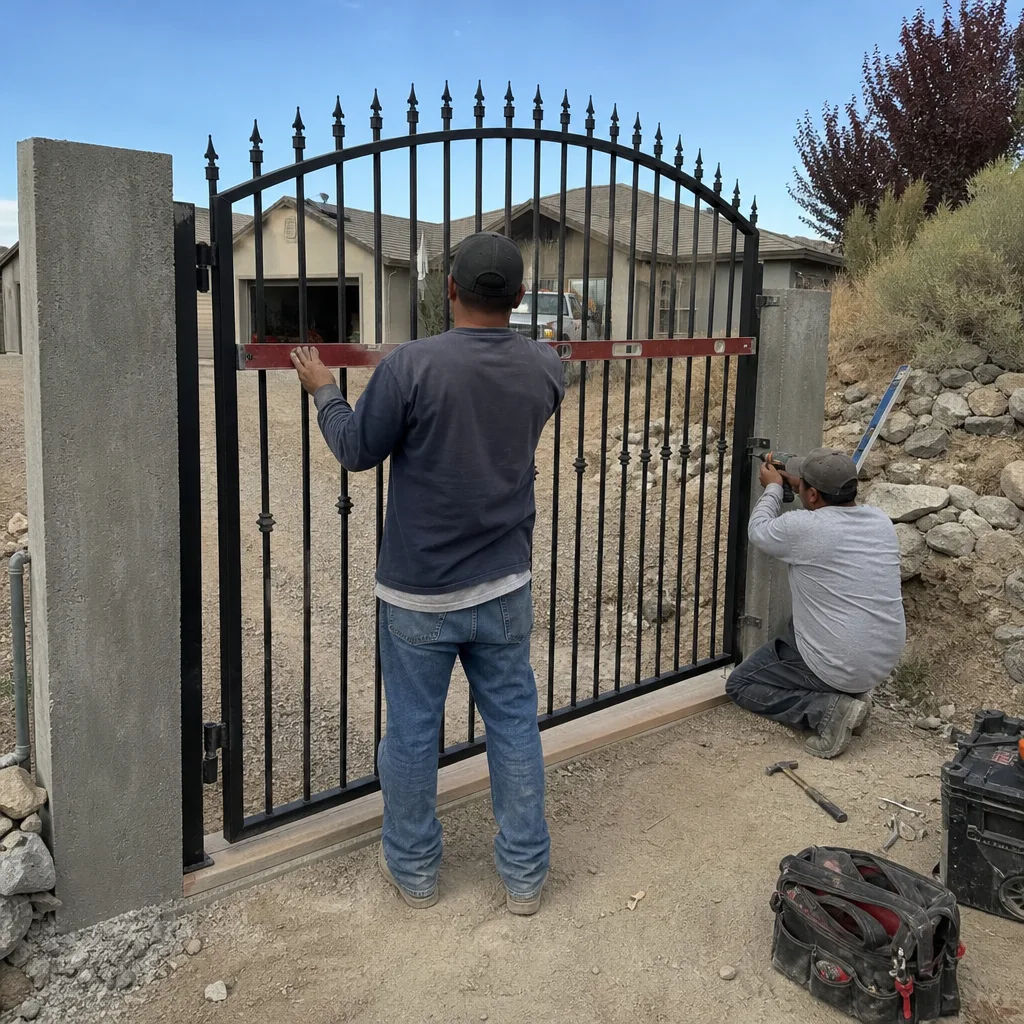
The single highest-leverage thing you can do for your gate’s long-term cost is start a log. One page, four columns, kept with the operator manual. Every maintenance visit – whether you do it or a technician does – gets an entry. The next person to touch the gate starts from a record instead of from scratch, and every future service call gets faster.
The columns look like this:
- Date. The day the work was done. Include the day of the week if you can – it makes pattern-matching easier (“always fails on the weekend” is a real pattern on gates used more heavily during peak family time).
- Observation. What you saw. Not “looked fine” – “chain had 5/8 inch deflection at midpoint, three sprocket teeth visibly hooked on loaded side.” Describe the gate, not your opinion of it.
- Measurement. The number. Hinge play in inches, chain deflection in inches, limit-switch reading in degrees, battery voltage at rest and under load. Even a rough number is worth logging.
- Action taken. What you did about it. “Replaced both hinge bolts on lower hinge, old bolts measured 1/4 inch play.” Or “no action, within spec, retest next quarter.” No-action entries are as valuable as action entries – they show the rate of change.
The log pays off in three specific ways. It makes a small problem obvious when it starts moving; a hinge play reading that goes from 1/16 inch to 3/16 inch across two seasons is a hinge that needs replacing before it sags. It makes warranty conversations straightforward when a technician can see exactly what was done when. And it makes any future repair faster, because the next person doesn’t have to re-measure every setting from zero. We leave exactly that kind of record on every job, with photos of limit-switch positions and installed part numbers filed with the homeowner. That’s Clause 4 of the Haven Standard, and it’s why our service calls tend to be shorter than a first-time visit on an undocumented gate.
Maintenance You Probably Don’t Need
Not all “maintenance” packages are worth the money. Some of what gets sold as routine care doesn’t match what most residential gate systems actually need, and paying for it just adds cost to the annual budget without making the gate any safer or longer-lived. Here’s how to tell the difference between maintenance that matters and maintenance that’s just on a price sheet.
- “Annual full operator replacement of internal wear parts” on a low-cycle gate. If your gate opens fewer than 20 times a day, the motor brushes, gearbox, and control board don’t need annual attention. Ask for the measured cycle count from the operator’s diagnostic menu before accepting the work.
- “Complete hinge replacement” on a gate with no hinge play. If the play test shows under 1/8 inch, replacing hinges is replacing parts that are still in spec. Measure first, replace when the number moves.
- “Weatherproofing treatment” on a modern powder-coated gate. Powder coat holds up for a decade or more on its own. Wax-on/wax-off treatments that some companies sell annually mostly protect the reputation of the product, not the gate.
- “Safety device recalibration” on photo-eyes that just passed a walk test. If the beam activates, reverses the gate, and holds the reversal, the device is calibrated. Recalibration without a failing test is the kind of work that gets billed for want of a check.
- “Battery backup cell replacement” on a cell that passed load test in the last six months. Cell lifespan is 3 to 5 years with load testing. Until a test fails, the cell is doing its job.
If a written estimate shows up describing any of the above and you want a second read on it, we’ll review another company’s estimate at no charge. That’s part of the free second-opinion service. You bring the paperwork, we tell you which items are in spec and which aren’t – the number is on the page, not in a phone call.
A Seasonal Checklist You Can Actually Follow
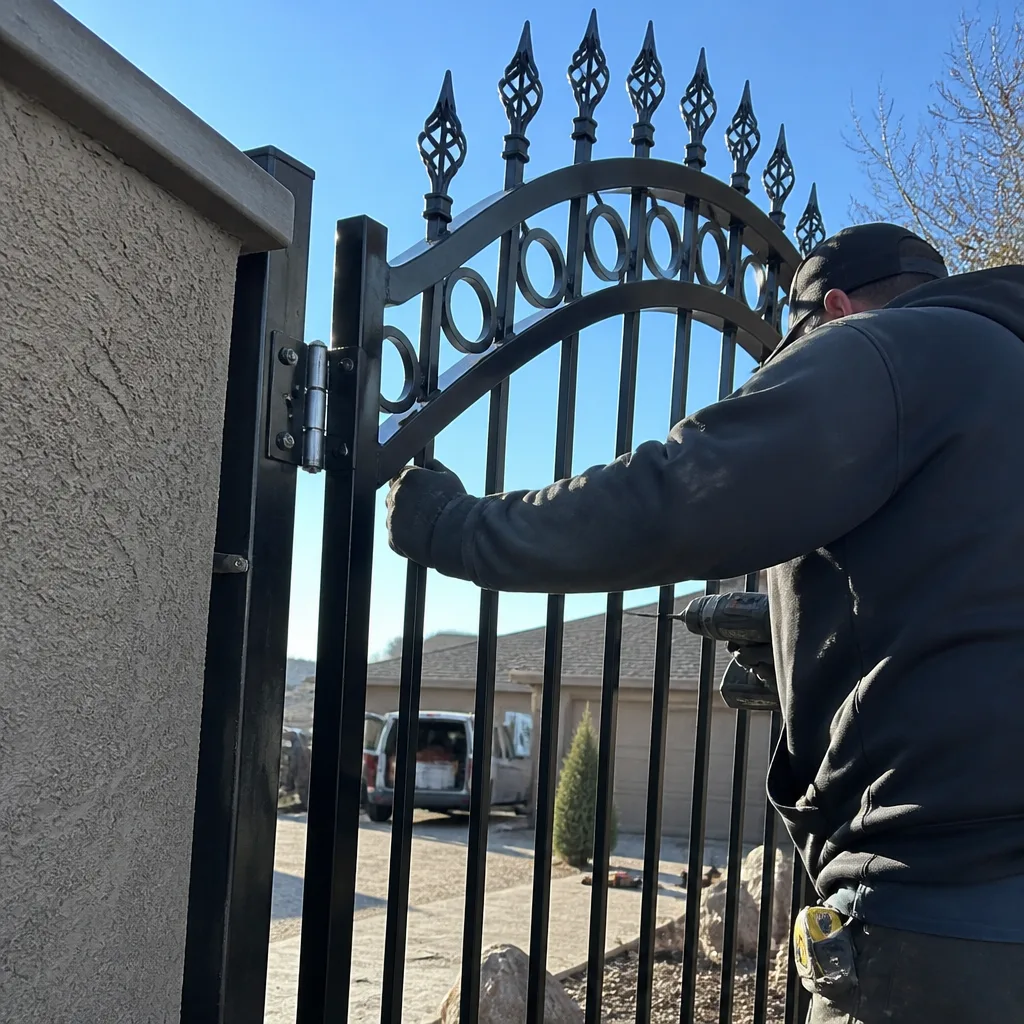
What follows is the actual annual routine we’d recommend for a residential gate in Winchester. It’s organized by season because the weather dictates when certain tasks are practical, not because the calendar is itself the threshold. Every check has a corresponding action or a corresponding “confirm within spec, log the number, retest next season.”
- Spring (March – April): Footing inspection after the freeze-thaw cycle. Full walk of the gate edges and operator housing. Lubricate hinges, rollers, and latches. Measure hinge play and chain deflection. Walk-test the photo-eye and safety edge.
- Early summer (May – June): Battery backup load test. Clean and inspect the operator housing and enclosure for rodent or moisture damage. Verify the loop detector’s ground-fault and sensitivity card. Lubricate.
- Late summer (July – August): Hinge play measurement. Chain tension measurement. Lubricate. Note any drift in limit-switch stop position. Notice any change in gate speed – a slowing gate is a warning.
- Fall (September – October): Full fastener check after any wind events. Battery load test again. Lubricate ahead of the cold season. Check drainage around the footing before the rainy months.
- Winter (November – February): Visual inspection only. No lubrication when temperatures are near freezing (grease doesn’t get where it needs to go). Clear any snow or ice from the swing path. Check that the safety devices work after any ice event.
That’s five inspection windows, one of them light. Log every entry. If you note a reading that moves faster than the wear curve above, act on it before the next scheduled window – that’s the whole point of threshold maintenance.
Common Mistakes to Avoid
- Greasing hinges on a calendar without checking play. A quarterly dab of grease on a hinge that’s already walked 1/4 inch out of its socket just makes a failing hinge fail more quietly. Measure play before you lubricate.
- Setting chain tension by sound instead of by measurement. A chain that “sounds” tight can still be 5/8 inch slack at the midpoint. Use a ruler and a thumb; it takes thirty seconds.
- Adjusting limit switches yourself. This is a real safety item. Limits tell the operator when to stop; mis-set limits drive the gate into its physical stop at full power. We’ve seen bent operator arms from residential limit adjustments gone wrong. Have a technician reset and photograph the reading.
- Ignoring a slowly sagging gate because it “still closes.” A gate that closes only with a lift and a shove is a hinge or footing problem, not a latch problem. The longer it goes, the more components the misalignment wears.
- Assuming a Winchester winter didn’t move the footing. High-desert freeze-thaw is unforgiving. Check the footing every spring even if the gate looks fine – a cracked collar is easier to catch early.
- Skipping the battery load test because the gate still opens. Backup cells fail silently. The gate works fine until the first power outage, and then it doesn’t.
- Paying for annual maintenance packages that address things you can measure and confirm are fine. Get the readings. If a package replaces something that was in spec last season, ask why.
See the difference
BeforeAfter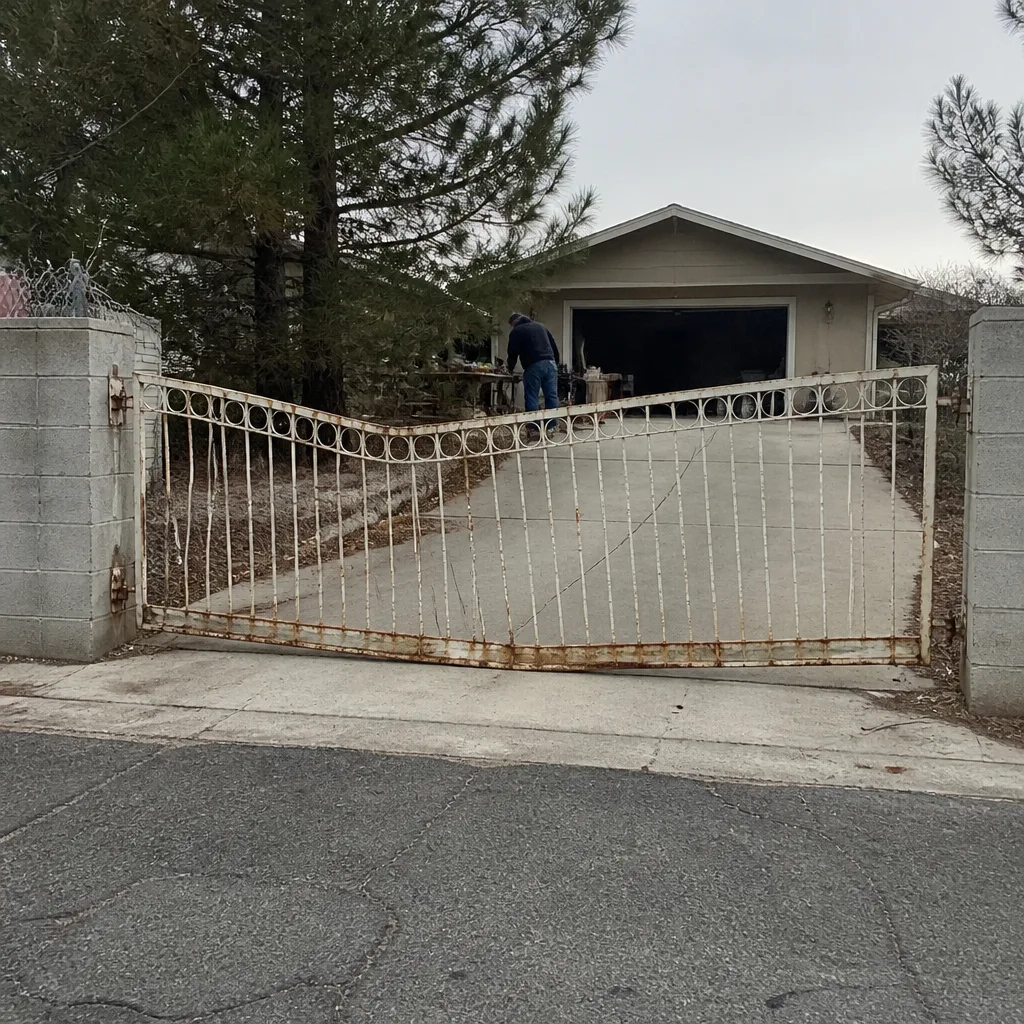 Before
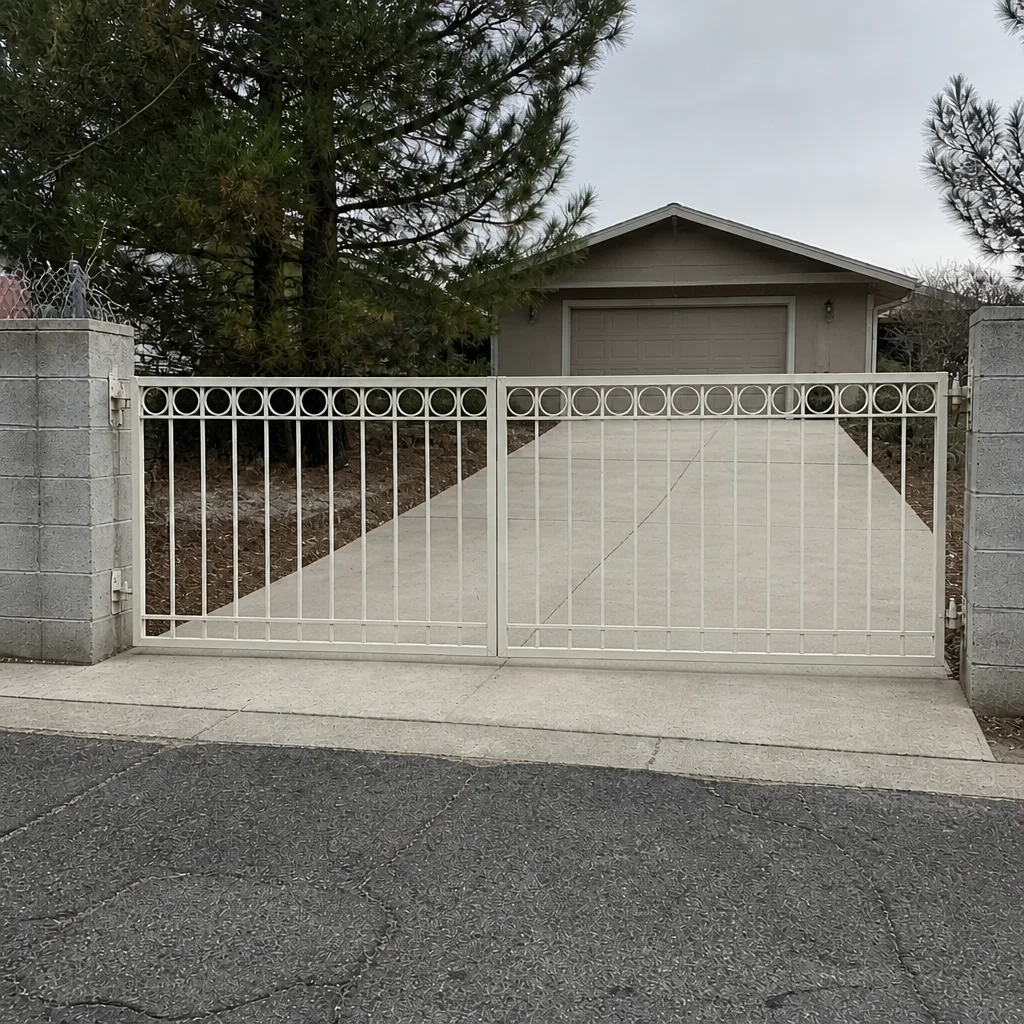 After
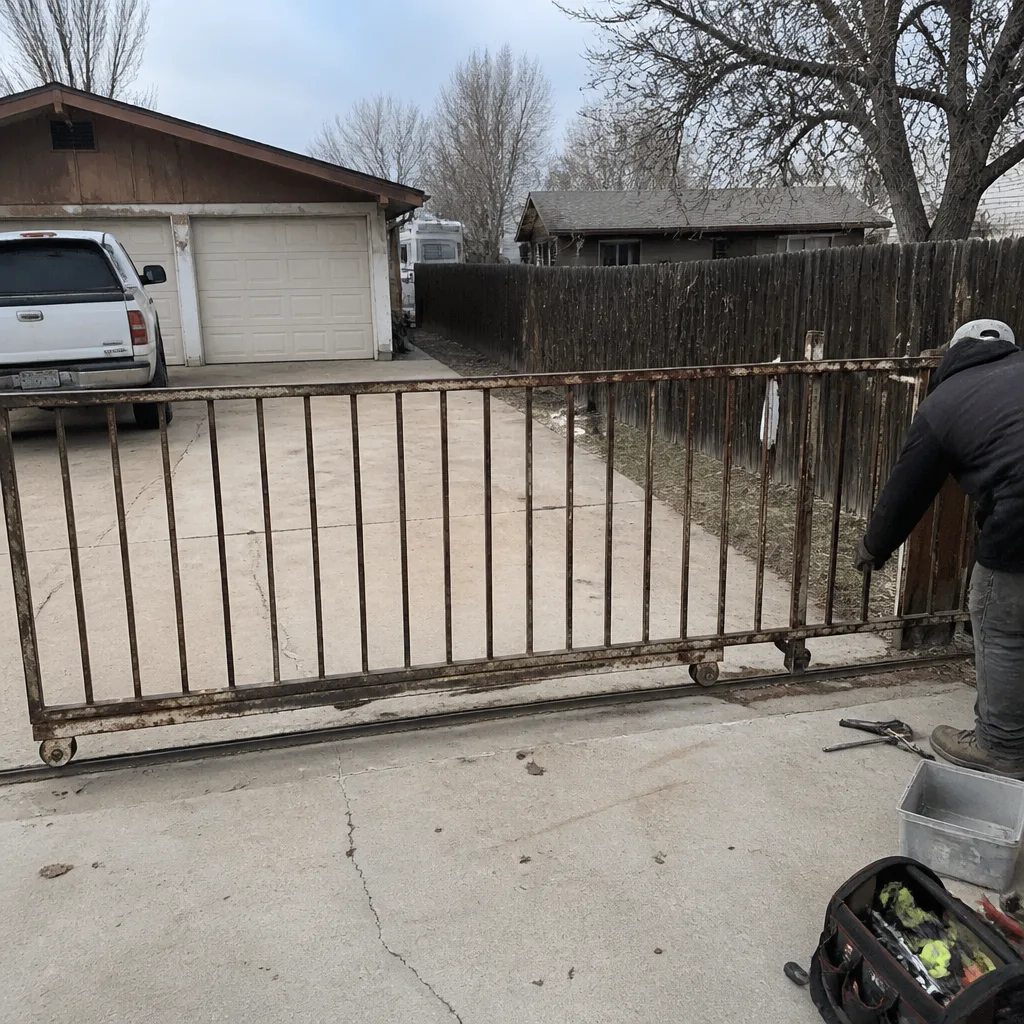 Before
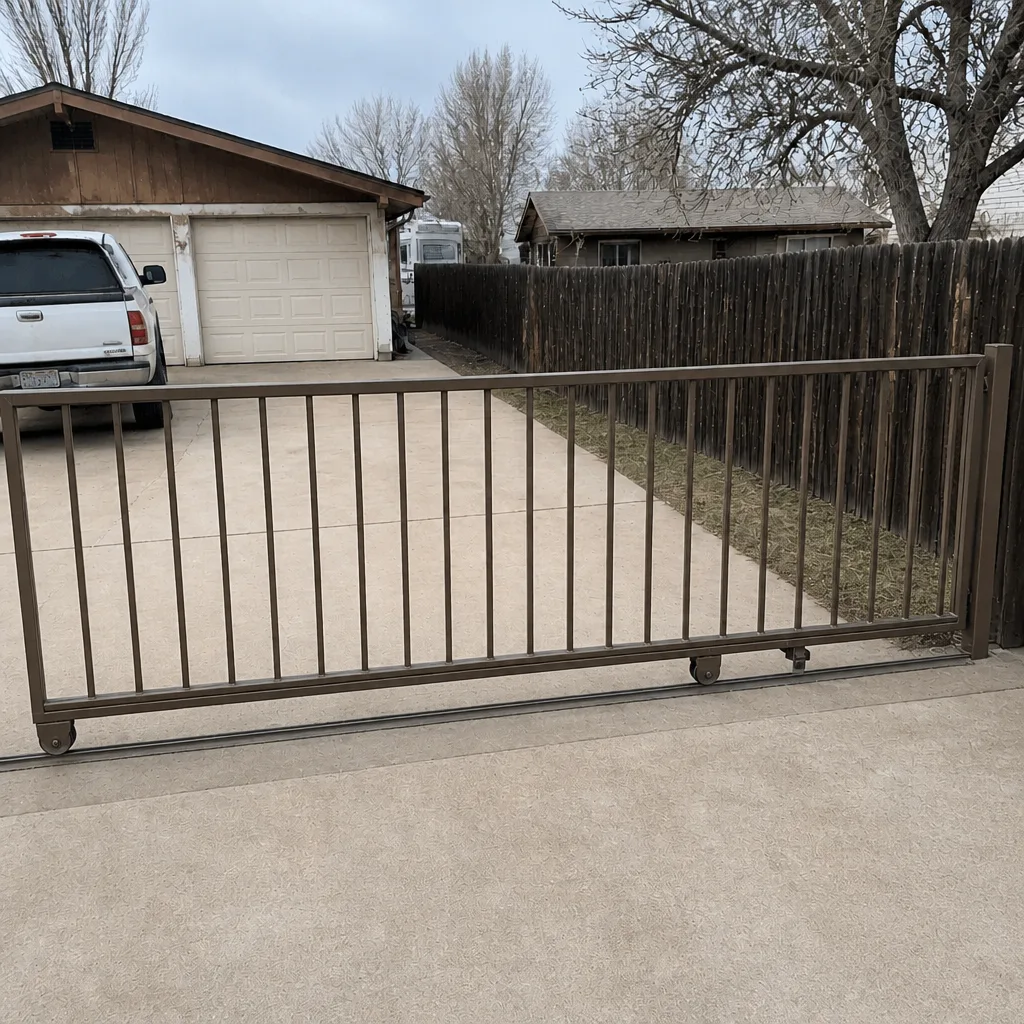 After
When to Call a Professional
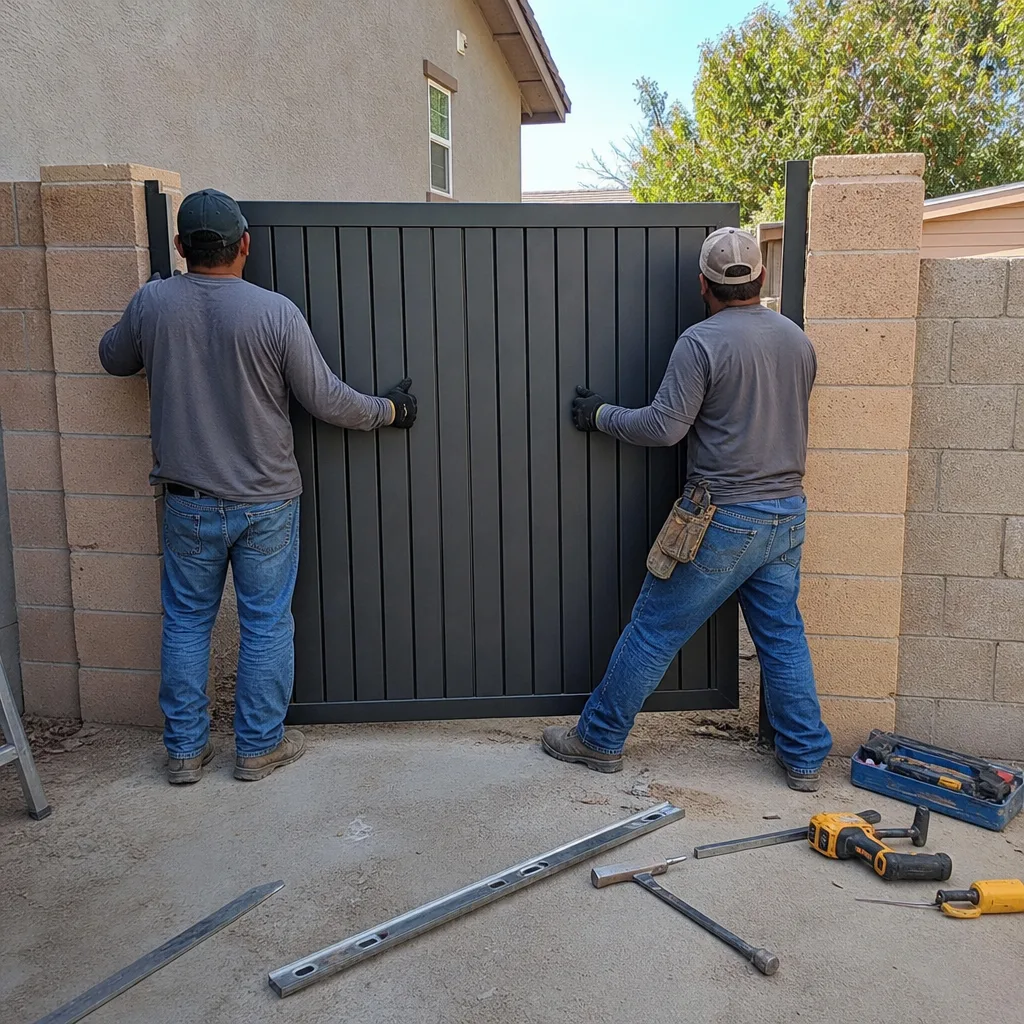
Some maintenance belongs in your hands; some doesn’t. Call a technician – don’t attempt it yourself – when the gate visibly bounces off its stop (limit switch), when a hinge has developed more than 1/4 inch of play and the gate sags into its latch, when the operator cycles on and off without a command (control board or loop detector fault), when a safety edge or photo-eye fails its walk test, when a post is tilting, or when the gate runs on battery backup only because the transformer or low-voltage run needs diagnosis. High-tension spring systems on swing gates are a hard safety line – those springs store enough energy to break a wrist, and there’s no residential adjustment worth the risk. If the gate has stopped entirely or the power run is in question, that’s an emergency call and a live person answers at (866) 983-9213 around the clock. We’re ready to walk through what you’re seeing on the Gate Repair in Winchester page or get a technician to you quickly; Vance Gate Repair Winchester offers free estimates in Winchester.
Frequently Asked Questions
A residential gate should get a light inspection monthly, a full measurement-based inspection quarterly, and a footing and operator check every spring. Lubrication runs on the 60- to 90-day interval; hinge play, chain tension, and limit-switch position are checked once a season and acted on when they cross threshold. Call (866) 983-9213 if a reading moves faster than the schedule expects.
Hinge play on swing gates and chain tension on slide gates are the two measurements that prevent the most expensive repairs. Both are cheap to check and cheap to fix when they’re out of spec. Limit-switch position is equally important but should be measured by a technician, not a homeowner.
Yes, if the gate is on a wood or steel post set into concrete. Winchester’s high-desert elevation produces repeated freeze-thaw cycles through the winter, and those cycles can crack the concrete collar or leave the footing partially undermined. One spring check – March or April – catches it while the repair is still modest.
No. Limit-switch adjustment requires understanding the operator’s travel range, and a mis-set limit will drive the gate into its physical stop at full power, which can bend the arm and crack a weld. It’s a safety adjustment, not a maintenance task. A trained technician measures and photographs the setting so the reading is on record. Call (866) 983-9213 for a technician visit; estimates are free.
Annual full-operator wear-part replacement on low-cycle gates, hinge replacement when play is under 1/8 inch, powder-coat “weatherproofing treatments,” safety-device recalibration on a passing photo-eye, and battery replacement on a cell that recently passed a load test are the common unnecessary charges. Ask for the measurement before you approve the work.
A documented photo record of what was found, what was measured, and what was replaced – plus a written record of the part number for anything installed. Under Clause 4 of the Haven Standard (Evidence on every job) this record is included at no additional charge, and it’s one reason a future service call on a documented gate is faster than a first visit on an undocumented one. If the visit ends without that record, ask for it.
The Bottom Line
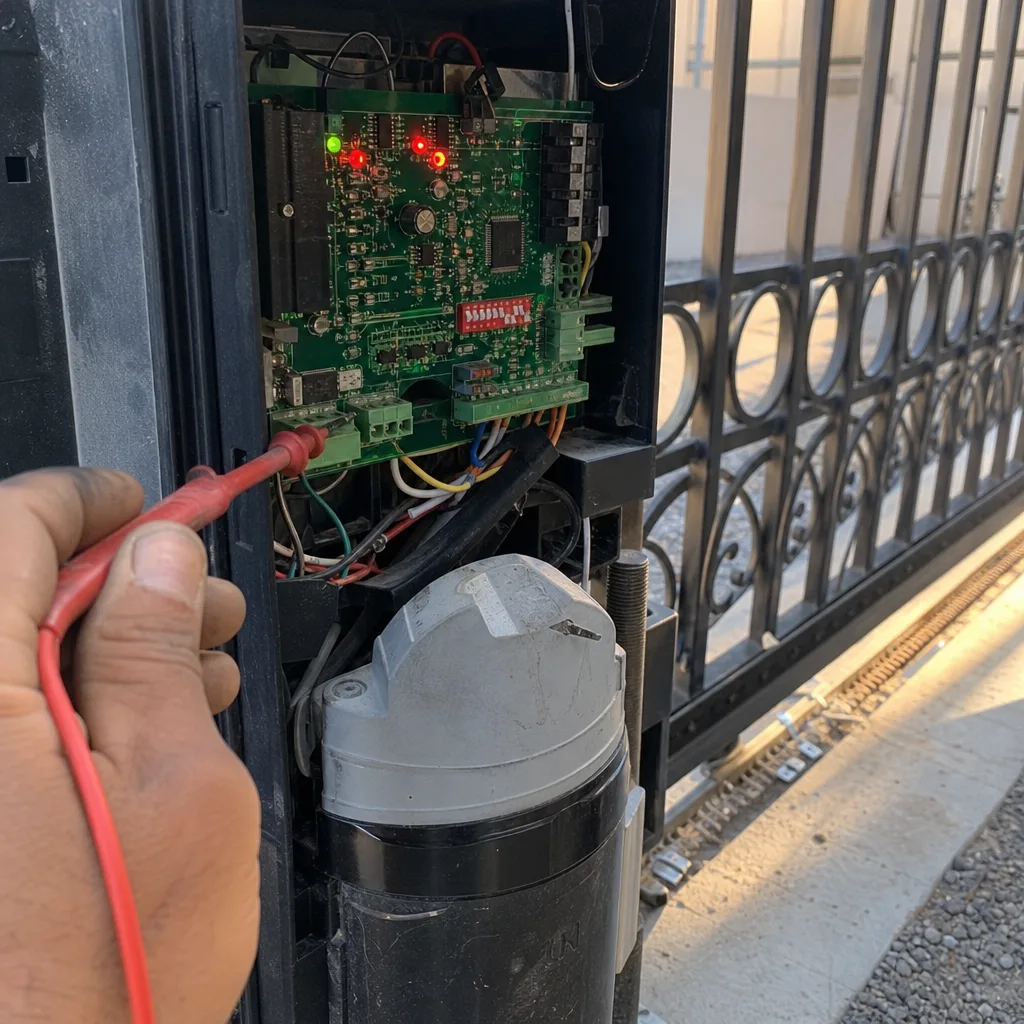
Calendar-based gate maintenance is a starting point; threshold-based maintenance is the real schedule. Measure hinge play, chain tension, and limit-switch position once a season. Log the numbers. Act when a part crosses spec, not when the calendar crosses a date. Check your footing every spring so the Winchester freeze-thaw doesn’t quietly undermine the post under the gate you depend on. Keep the safety devices tested and the battery load-tested. And keep the log – it’s the single best tool for making future service faster, cheaper, and less likely to involve an emergency. If a reading moves unexpectedly or a safety test fails, call (866) 983-9213. The estimate is free, and the written price is in your hands before any work starts.
Written by the team at Vance Gate Repair Winchester.