
Last updated November 18, 2026
 Wrought iron
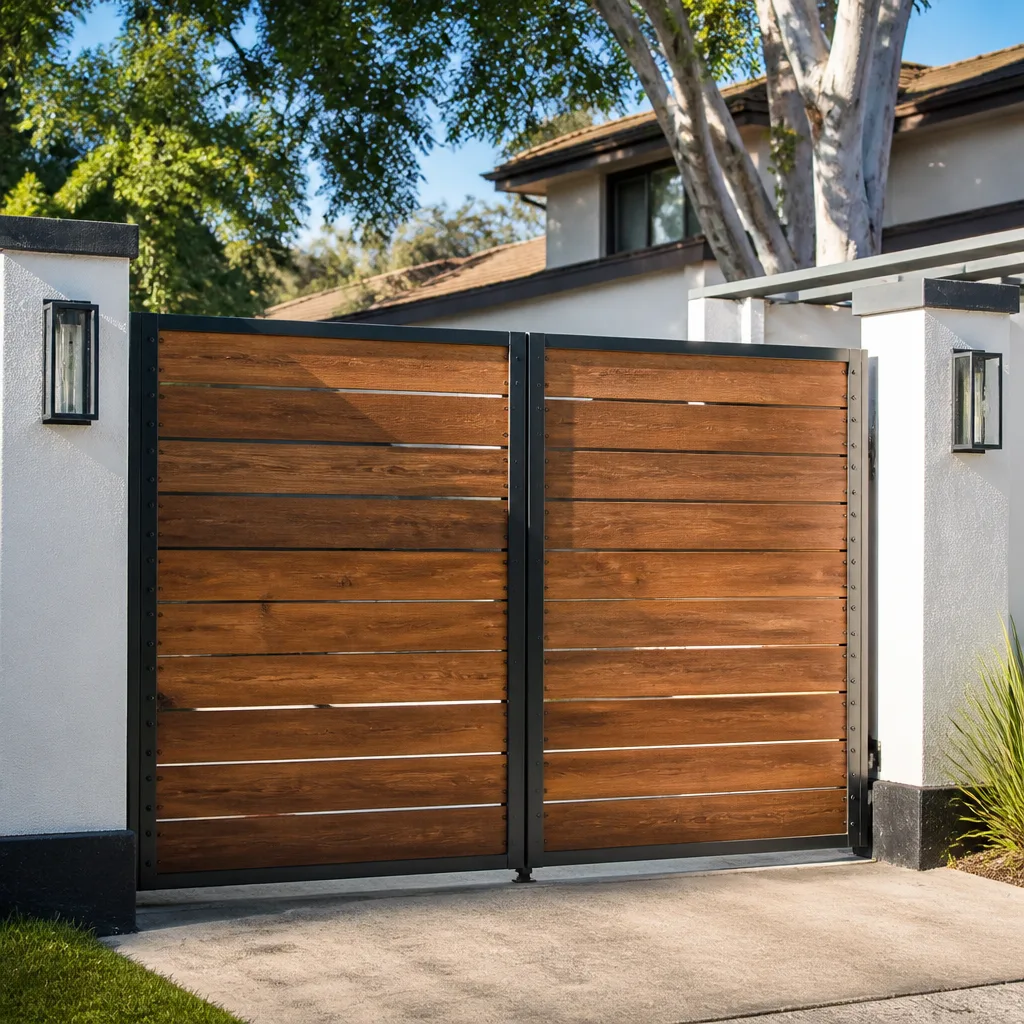 Wood & steel frame
 Farm & ranch
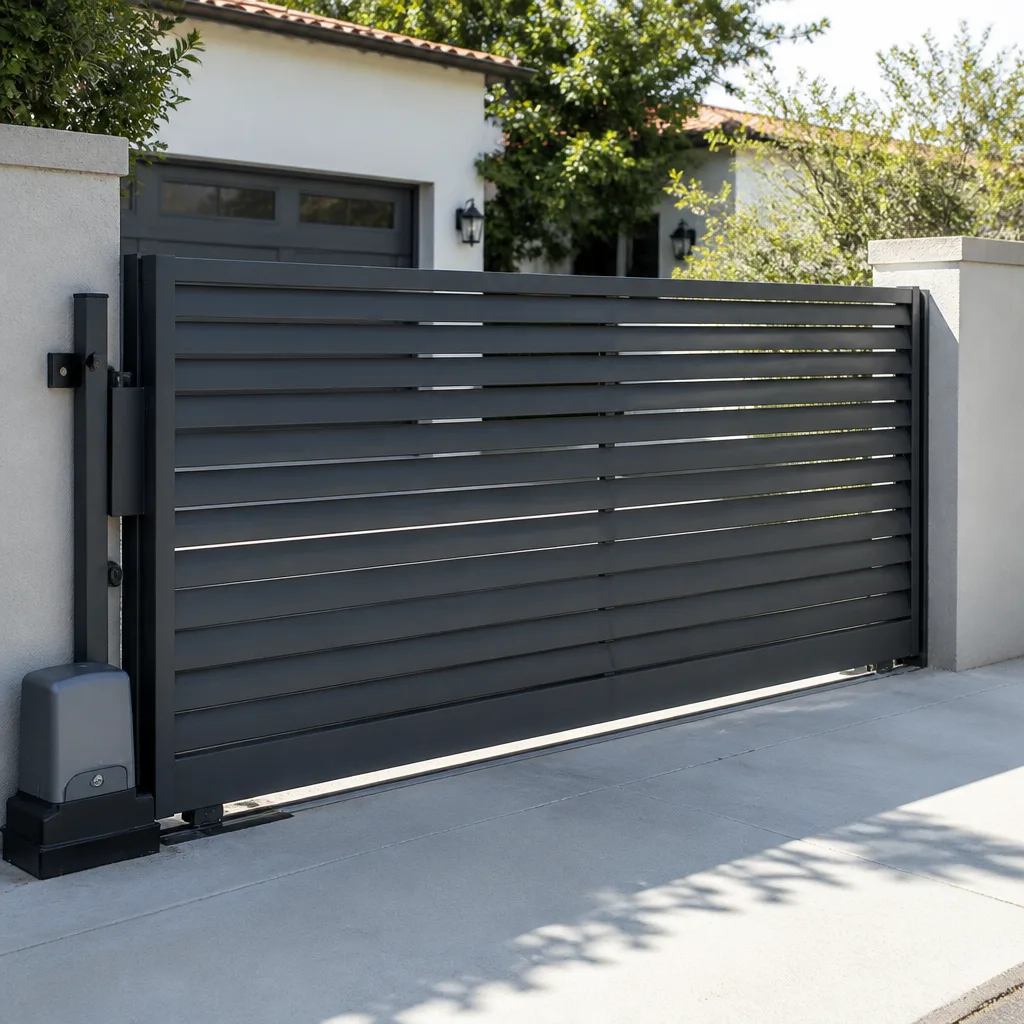 Sliding driveway gates
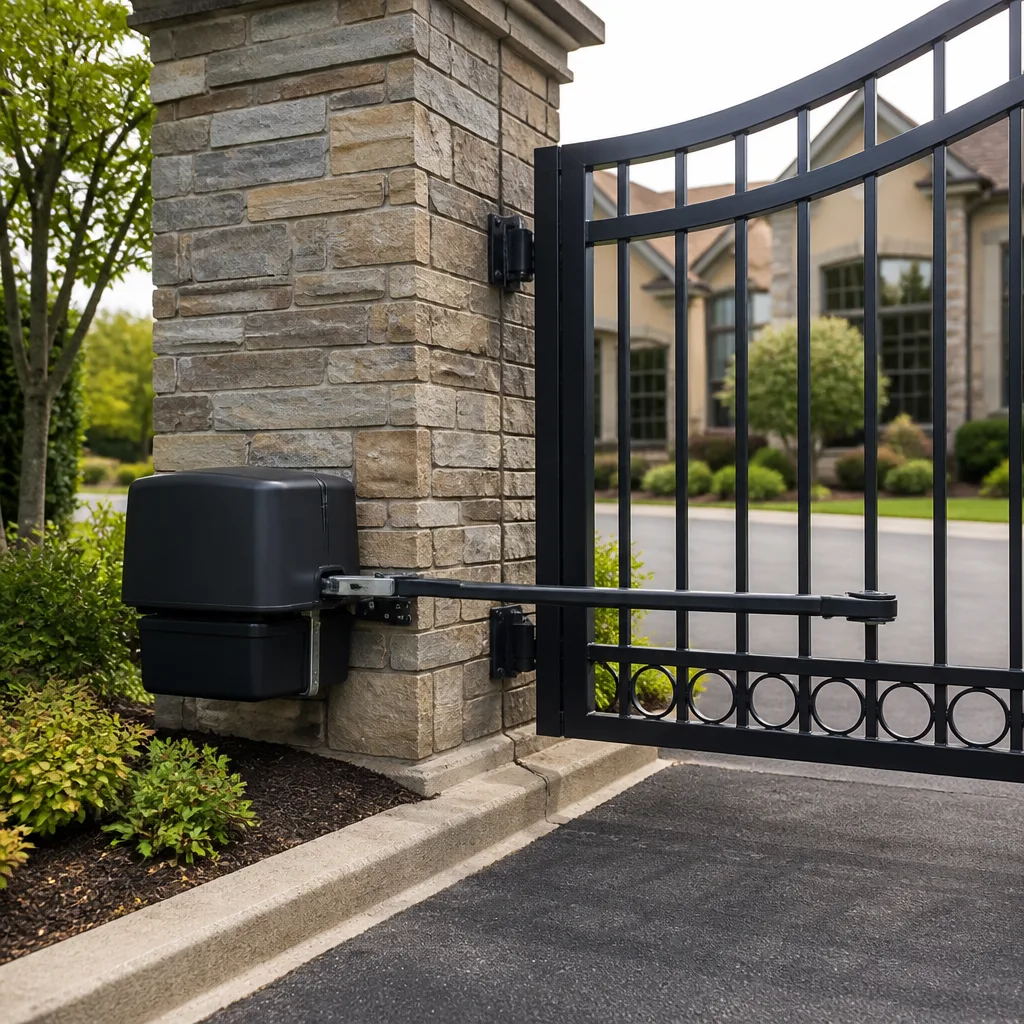 LiftMaster operators
Free on-site gate assessment - hinges, posts, and your LiftMaster or Nice gate operator checked before anything is quoted
The assessment is free and the quote is the invoice.
Get your free estimateGate Repair Warning Signs Every Homeowner Should Know
Half a second. That’s the tell. A gate that hesitates before it opens is not being temperamental, and it isn’t “just getting old.” In almost every case we diagnose, that pause is a motor drawing excess current because something downstream is dragging: a hinge that lost its grease, a roller binding in a worn track, a post that shifted an inch through concrete heave. Left alone, that extra current cooks the control board, and a repair that started as a $150 hinge service turns into a motor replacement measured in four figures. In this guide, we rank the warning signs we see across Winchester by how fast they get expensive, separate the cosmetic from the critical, and show you how to capture a symptom on your phone so a technician sees it without having to catch it live.
Quick Answer
The warning signs that matter most are hesitation before movement, reversed or random direction changes, grinding or whining under load, and gates that reverse on their own with nothing in the path. Those four point to motor strain, travel-limit drift, or a failing obstruction sensor, and all three get more expensive the longer they run. Cosmetic signs like faded paint or a scuff on the pickets can safely be watched. In Winchester, UV bleaching and post-cap water intrusion are the two environmental clues we check first because the desert climate accelerates both.
Styles & brands we work with
- Wrought iron
- Wood & steel frame
- Farm & ranch
- Sliding driveway gates
- LiftMaster operators
Table of Contents
- The Ranked Symptom List: Early-Stage vs. Expensive-Later
- What Each Sound Tells You About the Failure
- Desert-Climate Clues Specific to Winchester
- The Most Dangerous Sign: A Gate That “Works Fine” but Reverses
- How to Document a Warning Sign on Your Phone
- What Repairs Cost Now vs. in Six Months
- Common Mistakes to Avoid
- When to Call a Professional
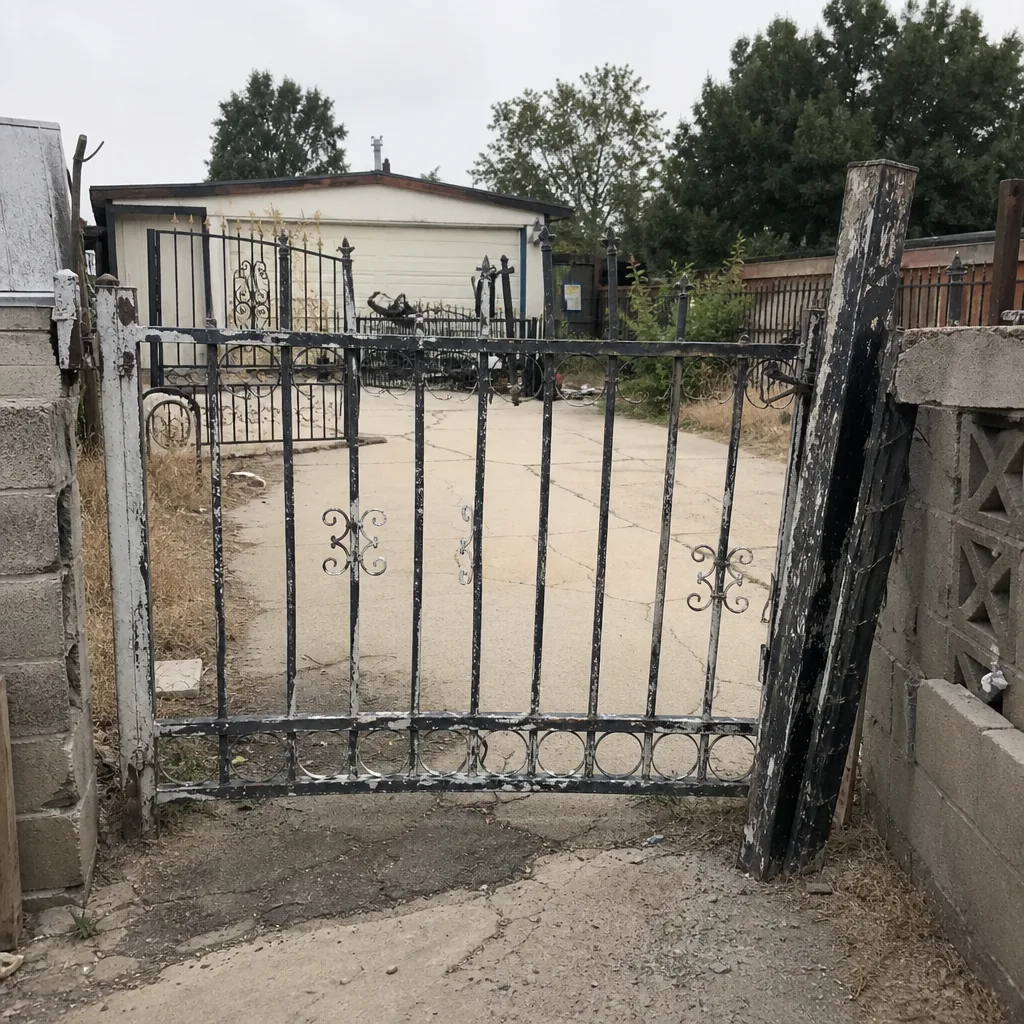 Before
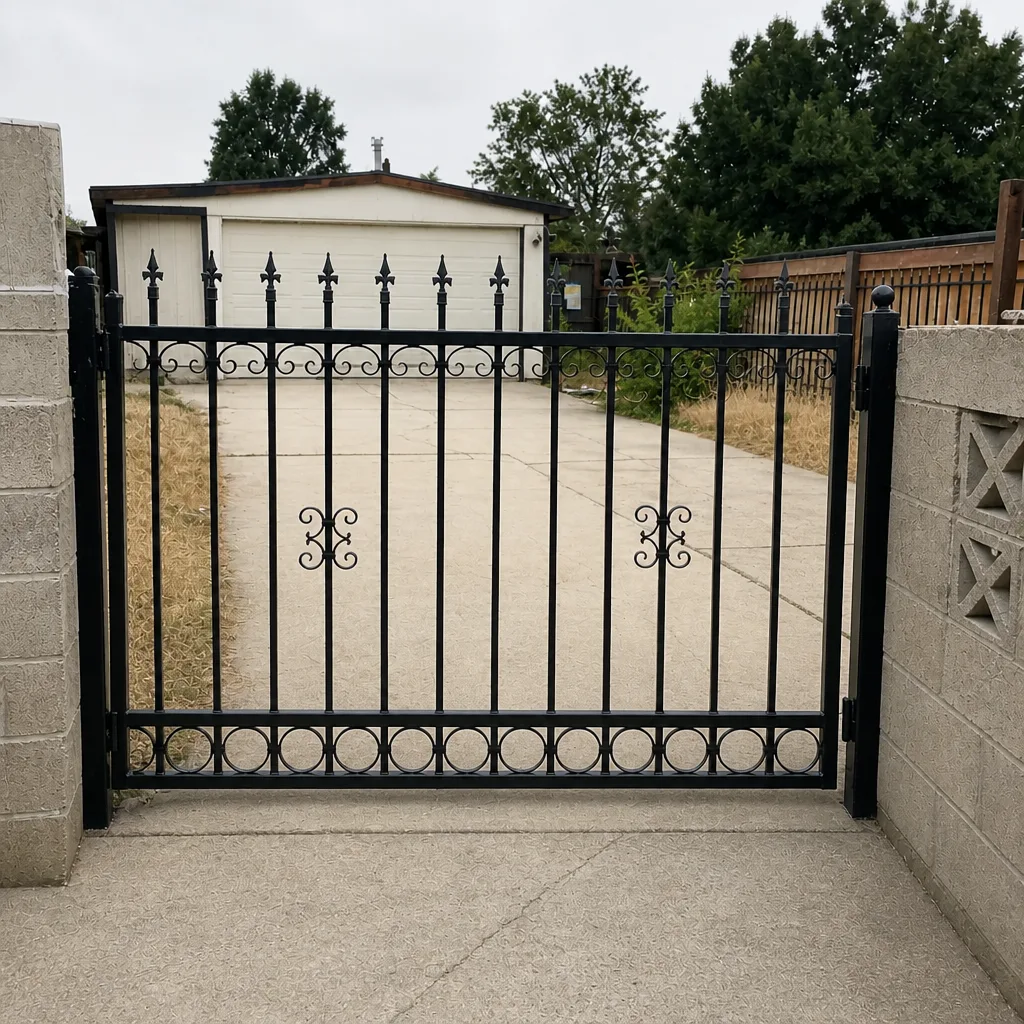 After
The Ranked Symptom List: Early-Stage vs. Expensive-Later
Most gate repair guides hand you a flat checklist. That’s not useful. What you actually need is a ranking by cost trajectory – how much the fix costs today versus what it costs if you wait six months and let the symptom grind into the parts around it. Here’s how we sort what we find on Winchester driveways.
- Hesitation before opening (1-2 seconds). Mechanically, this is motor strain: the arm is pushing against a dragging hinge or a bound roller. Today it’s a hinge service or roller replacement in the low hundreds. In six months, the control board that’s been absorbing the excess current needs replacing, and that’s a mid-hundreds line item on its own.
- Slowing down near the end of travel. Usually a travel-limit switch set slightly past where the gate can physically go, so the motor fights the stopper. Cheap to reset now. Left alone, the motor bearing wears and the whole operator is in question.
- Rhythmic clicking during travel. Chain or rack wear. A worn chain section is a modest part cost now. A chain that jumps the sprocket can snap and take the motor mount with it.
- Gate reverses on contact with nothing in the path. Obstruction sensing is unreliable. This is the category we treat as urgent, and we’ll explain why below.
- Visible rust bleeding from the post cap. Water is getting in. Today it’s a cap reseal and a look at the anchor bolts. In six months it’s rusted anchor hardware and a post footing that needs concrete work.
- One leaf sagging below the other. Hinge wear or footing movement. A hinge swap is small. A shifted footing means resetting the post in new concrete.
That ranking is the whole point of this guide. If you watch a symptom for two seasons and it gets worse, it usually doesn’t just cost more of the same; it costs the next component up the chain. A hinge that drags eats the motor. A motor that strains eats the board. Each stage pulls the one above it into the repair.
What Each Sound Tells You About the Failure
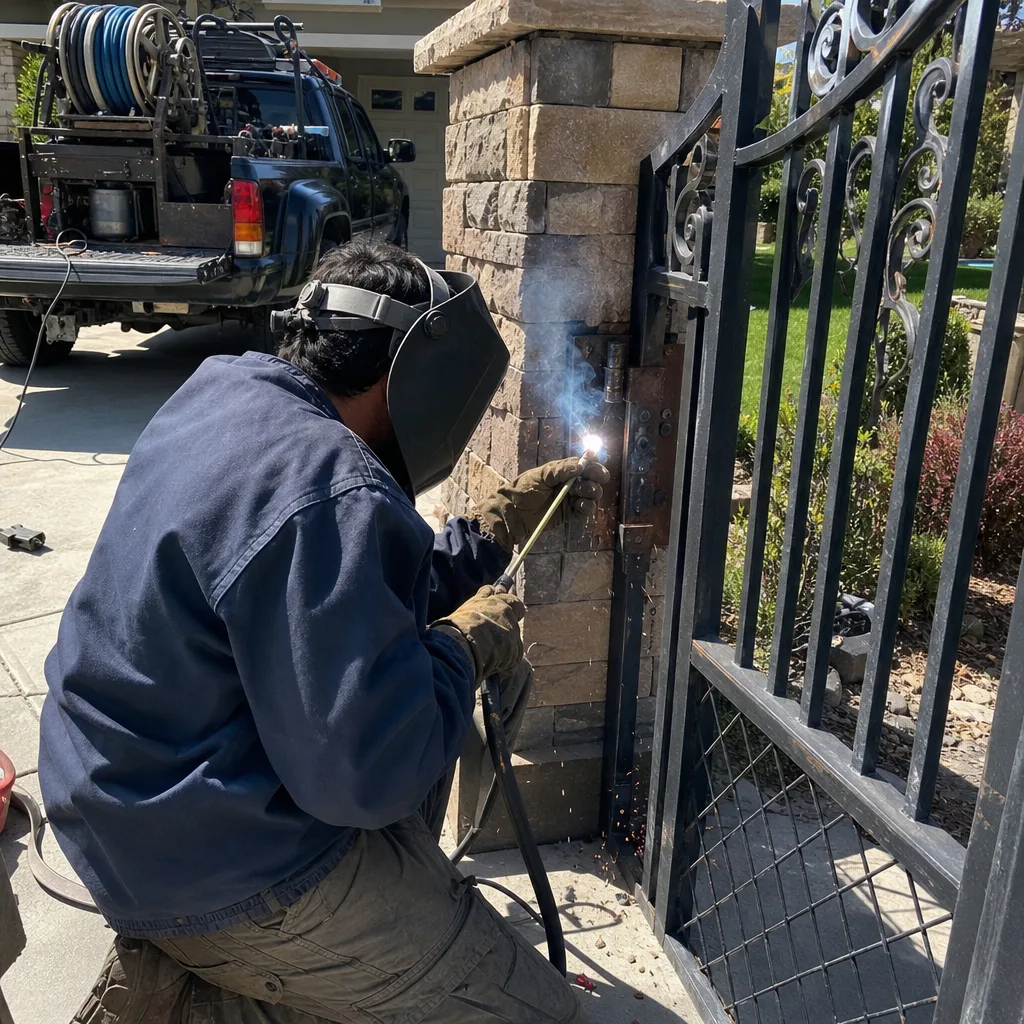
Sound is the most reliable diagnostic tool a homeowner has, because you can hear a gate from inside the house and you don’t need to be standing at it. Different failure modes make distinctly different noises, and once you know which is which, you can tell us what you’re hearing on the phone and we’ll arrive with the right part.
- Metal-on-metal grinding. Almost always a hinge. The pin has lost its grease and the two metal surfaces are running dry against each other. It’s the cheapest fix on this list and the one with the biggest hidden cost if ignored, because that drag is what makes the motor overdraw current.
- High-pitched whine under load. Motor bearing. The arm is working harder than the motor was designed for, or the bearing itself is wearing. A whine that shows up only on the return swing tells us the gate is heavier in that direction, which points at a hinge or roller, not the motor.
- Rhythmic clicking that speeds up with the gate. Chain or rack wear. A stretched chain link or a worn tooth on the rack makes a click with every rotation. Catch it early and it’s a chain or rack section. Ignore it and the chain can jump the sprocket and jam the whole operator.
- A single loud clunk when the gate reaches full open or full close. The travel limit is set past the physical stop and the gate is slamming into it. This is the noise that precedes motor bearing failure, and it’s a five-minute adjustment if you catch it before the bearing is gone.
- A low electrical hum with no movement. The motor is trying to move but something is mechanically locked. Stop cycling the gate; continued attempts can overheat the motor or trip the breaker.
If you’re hearing any of these on a gate driven by a LiftMaster or FAAC operator, tell us which one when you call. Our technicians work on nine major automation brands, so the part is likely already in the plan rather than a special order.
Desert-Climate Clues Specific to Winchester
A gate in Winchester fails differently than one on the coast, and the clues that matter here are mostly environmental. The Mojave sun and the dry-then-flash-flood soil cycle leave a signature on every gate we service, and reading it is how we predict which symptom is about to appear.
- UV-bleached wire insulation. Years of sun make the low-voltage wire running to your operator turn chalky and brittle. When it cracks, the control board loses signal intermittently, and the gate starts behaving randomly. If the exposed wire at the operator looks pale and dry, schedule an inspection before it fails in July.
- Rust patterns that trace upward from the post cap. Water gets into the post through a cracked or missing cap, then rusts the anchor hardware from the inside. On a sunny Winchester day you won’t see the water, but you’ll see the orange stain bleeding down from the cap seam. That stain is telling you the footing is taking on water.
- Concrete heave around the post base. The desert soil swells and cracks after heavy rain, and a footing that has lifted even a quarter inch knocks the gate out of plumb. That’s the source of the sag and the dragging hinge you can’t fix by greasing anything. Look for a crack radiating from the post or a lip of concrete pushed up at the base.
- Warped pickets and a gate that binds in the afternoon. Metal expands in the heat, and a gate set tight in the morning can bind against its strike post by 3 p.m. If the symptom is time-of-day dependent, the fix is clearance, not the motor.
We check the wire at the operator, the post cap, the footing, and the strike-post clearance on every gate we touch, because in Winchester those four spots predict more failures than anything else on the property. If you’re scheduling a broader repair, our Gate Repair in Winchester page covers the full inspection we run.
The Most Dangerous Sign: A Gate That “Works Fine” but Reverses
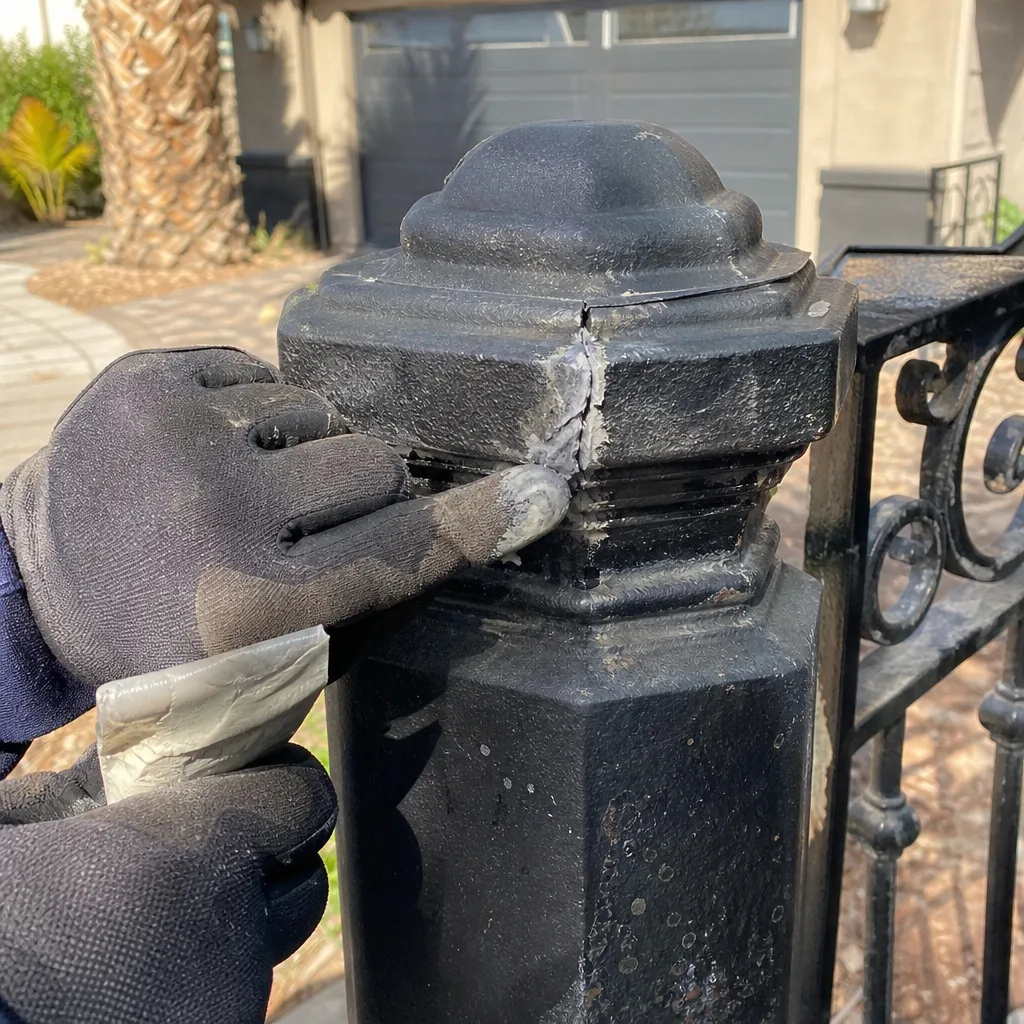
This is the category homeowners most often downgrade to “annoying,” and it’s the one we treat as the highest priority. If your gate occasionally reverses direction with nothing in its path, the problem isn’t that it’s stubborn. It’s that the obstruction sensor – the photo-eye or the load-sensing feature in the operator – has become unreliable, and the safety system you’re relying on to stop the gate on a child or a pet is no longer trustworthy.
A gate that reverses on its own is telling you the sensor is triggering on nothing. Which means it may also fail to trigger on something. The two behaviors come from the same unreliable signal. On an older Mighty Mule with a mechanical limit, that drift is often in the limit switch. On a newer LiftMaster, a misaligned photo-eye (the infrared beam that stops the gate if something crosses the path) is a common cause – and we’ve seen beams knocked out of alignment by nothing more than a garden hose or a weed trimmer. Two inches of drift is enough.
We don’t recommend leaving this one to watch. Have the obstruction sensing tested properly before the gate cycles on anyone. If you want that done, our Gate Motor & Opener in Winchester service covers sensor alignment and safety testing as a routine visit.
How to Document a Warning Sign on Your Phone
The hardest part of a service call is catching an intermittent symptom live. A gate can hesitate for months, then open perfectly the one afternoon a technician is standing there. Here’s how to capture the behavior so we can see it before we arrive.
- Record a full open and full close cycle. Film from the hinge side so the tech sees the leaf travel and any lag at the start. Start filming a few seconds before you trigger the gate, because the hesitation happens at the very first movement.
- Record the sound separately. Walk to the operator housing and record 10 seconds while the gate moves. The whine, click, or grind is the diagnostic, and your phone captures it better than you’d expect.
- Note the time and weather. If the hesitation only happens at 4 p.m., say so. If the gate reverses only after rain, say so. The pattern is often the answer.
- Photograph the evidence spots. Get a close shot of the hinge pin, the post cap seam, the wire where it enters the operator, and the concrete at the post base. Wide-angle plus close-up on each.
- Write down what brand the operator is. Check the housing label. LiftMaster, FAAC, Elite, Mighty Mule and the rest are all on our service list, and knowing the brand on the phone shortens the visit.
Send that clip along with your address and the symptom description. This is the same evidence habit we carry on every job under The Haven Standard – the photo record goes with the job so the next technician, or the next homeowner, never has to guess what happened.
What Repairs Cost Now vs. in Six Months
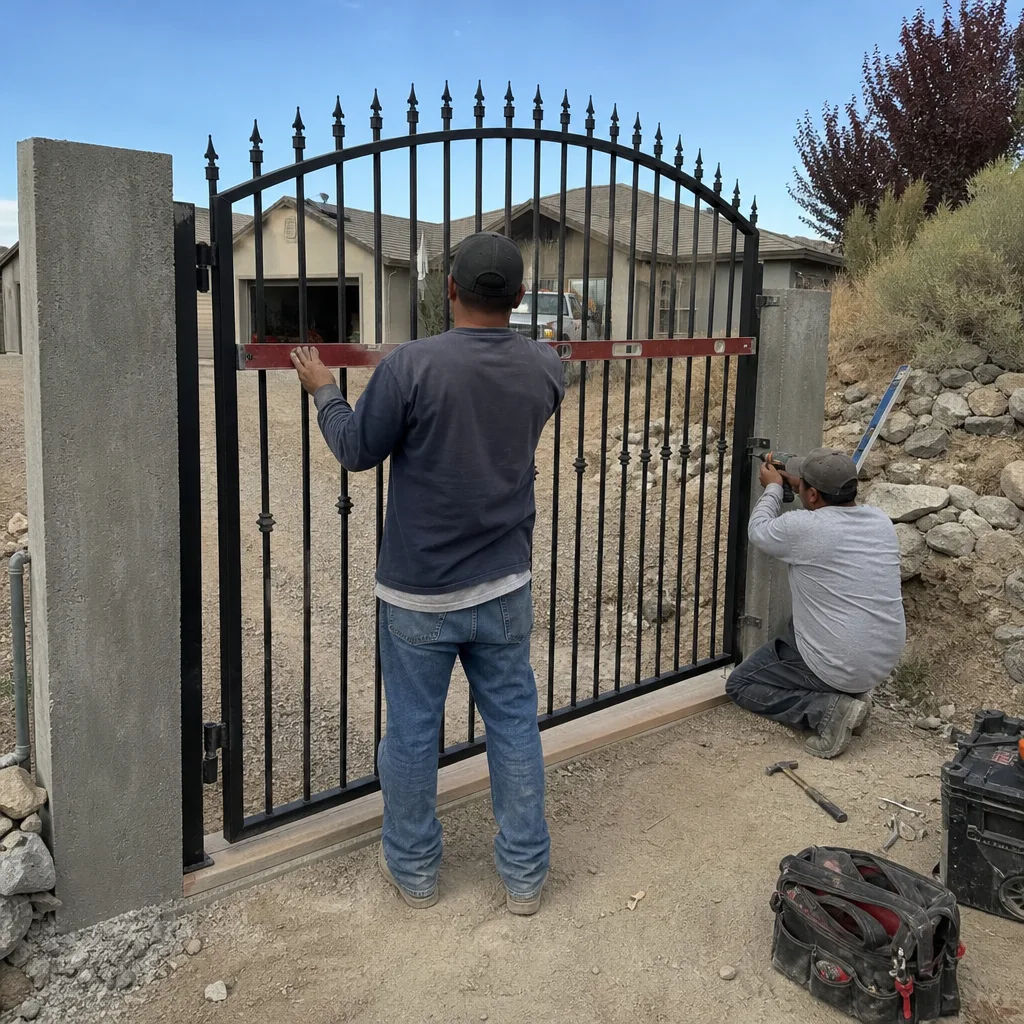
Here’s the honest math on the ranked symptoms. Prices vary with clearance and access, but this is the trajectory we quote from:
- Hinge service or roller replacement. Low hundreds now. If it continues, control board replacement adds several hundred on top, because the motor that’s been overdrawing current spends that strain on the board.
- Travel-limit adjustment. A small diagnostic line item now. If the bearing fails from repeated slamming, the operator service or replacement runs into four figures.
- Chain or rack section replacement. Modest part and labor now. A snapped chain that jumps the sprocket can damage the motor mount, adding structural repair to the bill.
- Obstruction sensor alignment and testing. A routine service visit now. A safety failure is not a cost question, and we won’t price it that way. Have it tested.
- Post-cap reseal and hardware check. Small now. A rusted footing that needs resetting in new concrete is a construction job, not a repair.
Before any of these is done, you get the flat price in writing and you approve it. That’s Clause 1 of The Haven Standard: have it in writing. No surprise invoice at the end. If another company has already handed you a written estimate and you want a second read on it, we’ll review it at no cost before you spend a dollar. For the full picture of what we service, start at the Vance Gate Repair Winchester home page.
Common Mistakes to Avoid
- Greasing a hinge that’s actually a moved footing. If the gate is out of plumb, grease won’t fix the sag and will just quiet the symptom while the drag keeps eating the motor. Look for the concrete crack around the post base first.
- Treating a self-reversing gate as a quirk. This is the mistake that has a real safety consequence. A gate that reverses on nothing may not reverse on something. Get the obstruction sensing tested.
- Cycling a gate that’s barely moving to “see if it clears up.” A stuck gate that the motor keeps trying to push is a motor overheating, not a reset. Stop and call.
- Running new low-voltage wire without a conduit check. In Winchester, UV-damaged conduit over the run is what cracks the wire in the first place. Replacing the wire into the same sun-baked sleeve gets you a repeat call.
- Replacing the motor when the hinge is the problem. This is the most expensive common mistake, and it happens when no one diagnosed the drag. A dragging hinge is a low-hundreds fix; a new operator is not.
- Skipping the photo record. If a technician works on your gate and leaves you with a verbal “all good” and no photos, you can’t see what changed. Under Clause 4 of our standard, every visit leaves a documented photo record at no additional charge.
When to Call a Professional
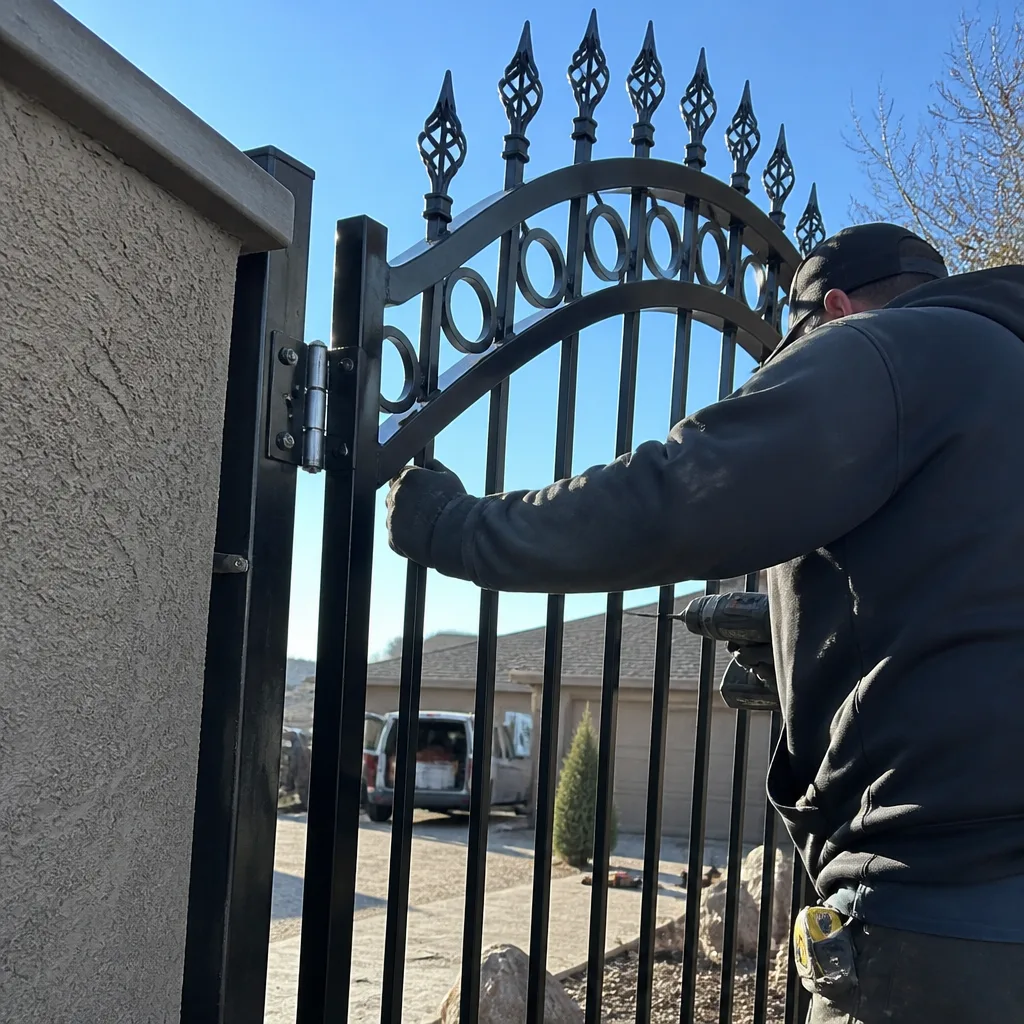
Call a professional if the gate reverses with nothing in the path, if the motor hums without moving, if you hear grinding or clunking that wasn’t there last month, if a post looks out of plumb or the concrete at its base has cracked, or if you see any gate hesitate before opening more than once. High-tension gate hardware and the electrical work behind an operator are genuinely dangerous to handle without training – a spring, a counterbalance, or a live motor circuit can cause serious injury, and none of it is a homeowner fix. Our technicians are background-checked and uniformed, and our estimate is free. Vance Gate Repair Winchester offers free estimates in Winchester – call (866) 983-9213. A live person answers 24 hours a day, and if you’ve had a repair done that isn’t holding, the 365-Day Done Right Promise covers it. If you’re weighing replacement against repair, our Gate Installation in Winchester page covers the decision honestly.
See the difference
BeforeAfter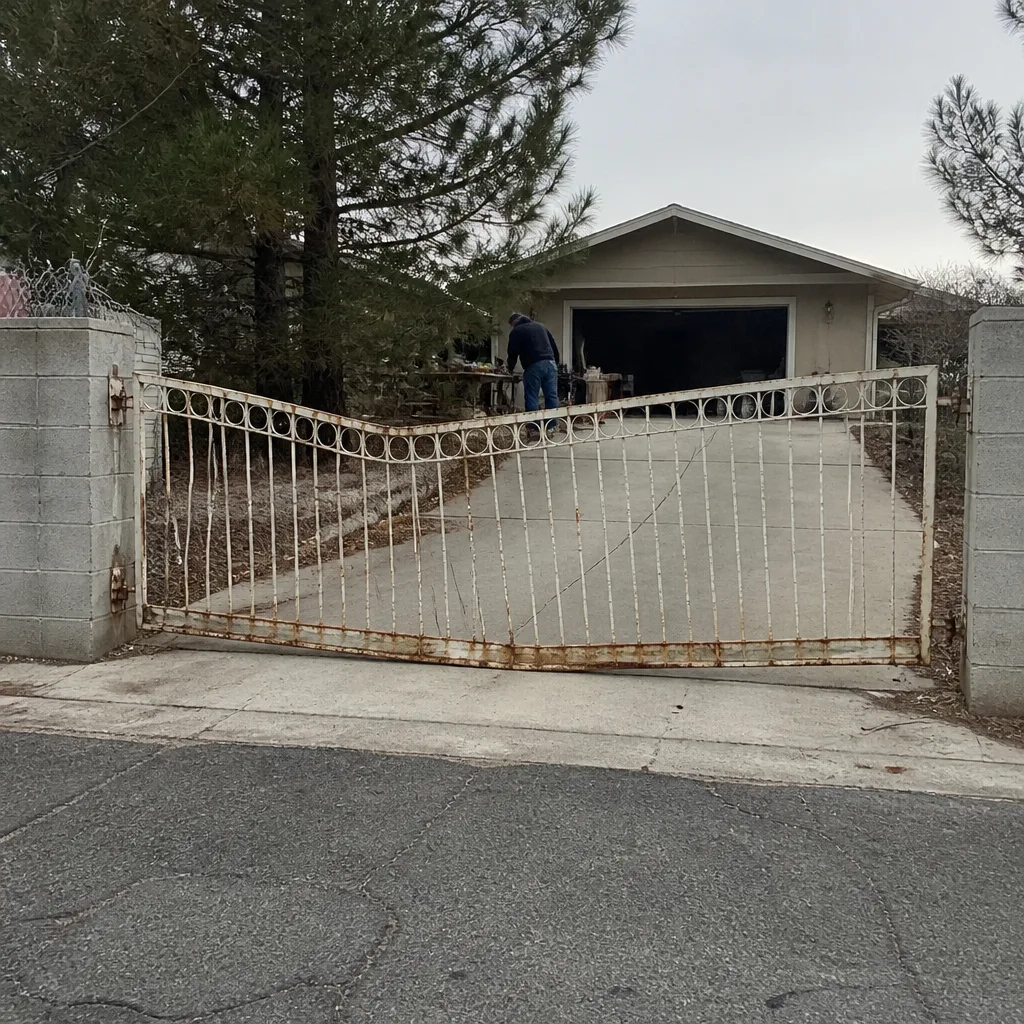 Before
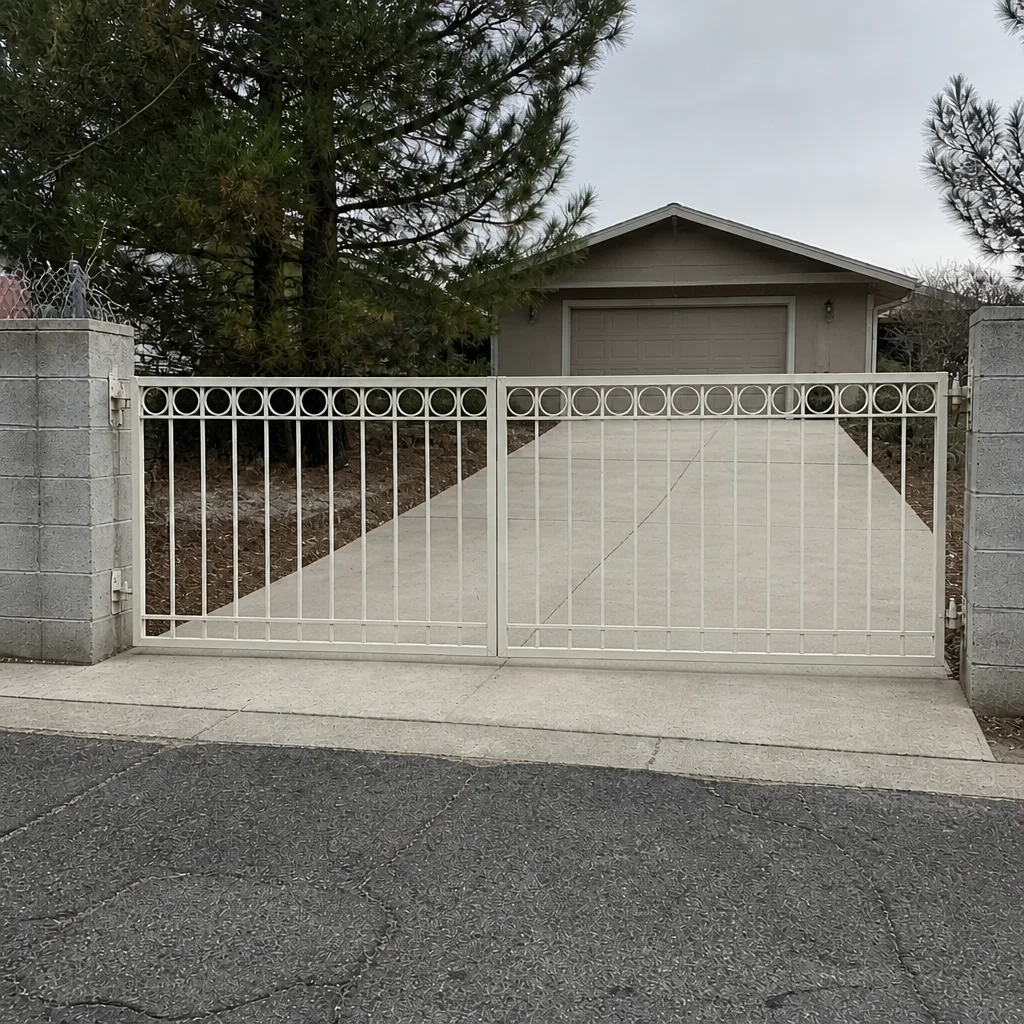 After
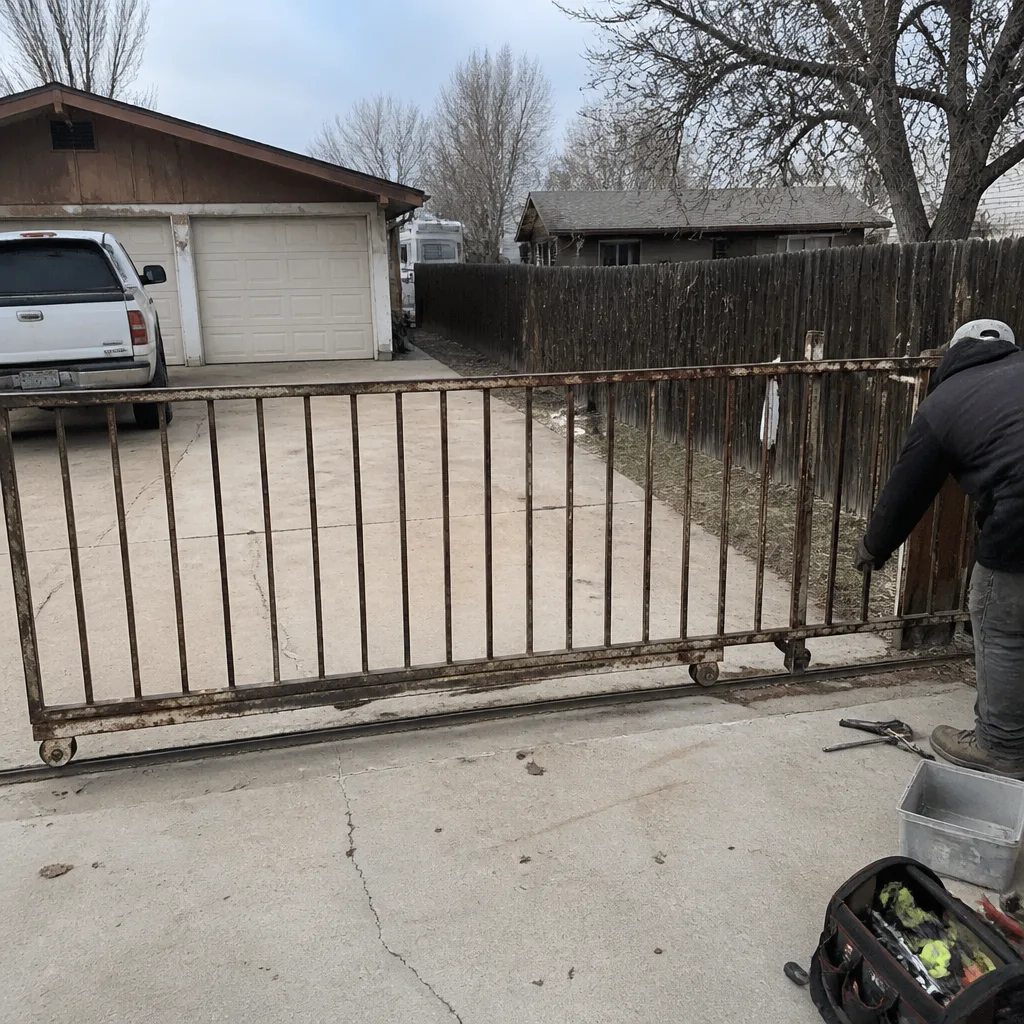 Before
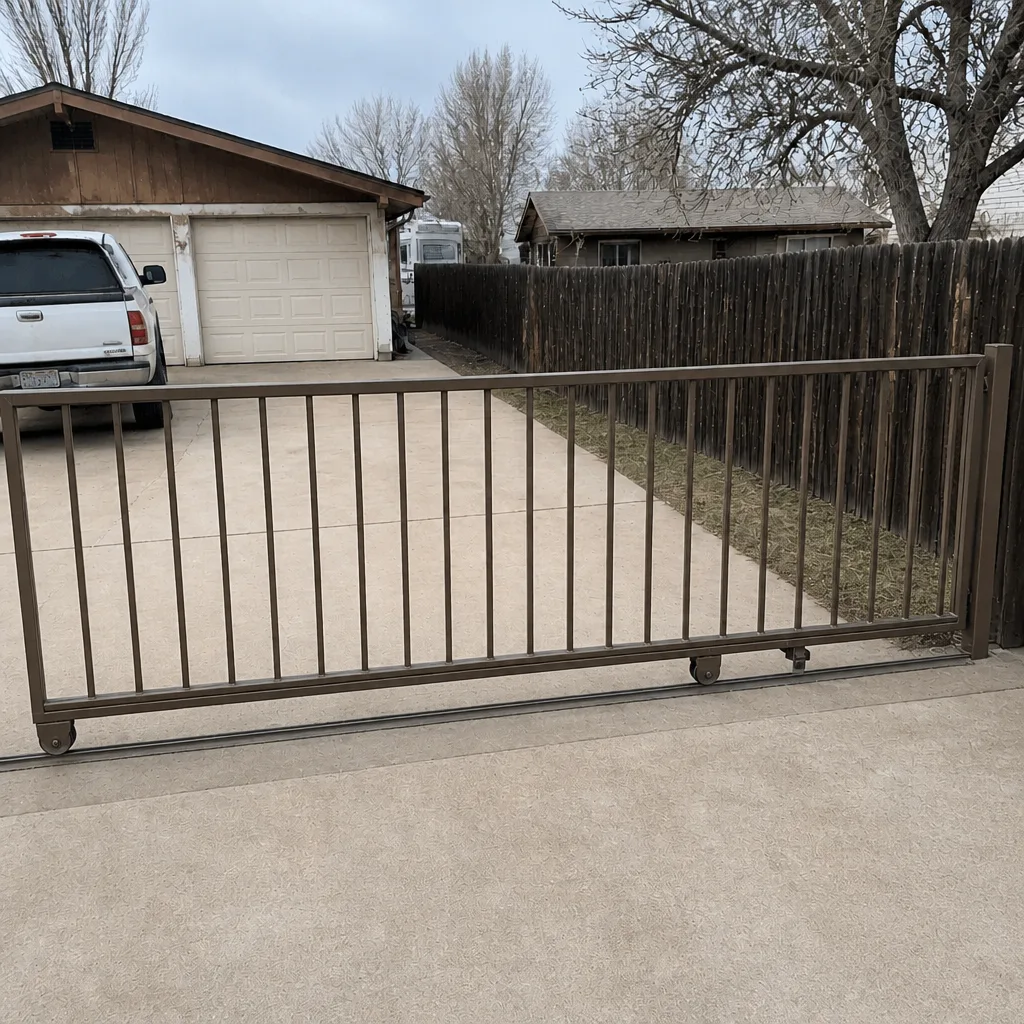 After
Frequently Asked Questions
A gate that reverses with nothing in its path is the most urgent warning sign, because it means the obstruction sensor is unreliable and the safety system may not stop the gate on a person or pet. Get it tested before the gate cycles again. Call (866) 983-9213 for an estimate – estimates are free.
Most gate repairs in Winchester run from the low hundreds for a hinge or roller service to several hundred for an operator or control board line item, and the exact price is quoted in writing before any work starts. Swinging-gate motor work is priced on the brand and whether the arm bracket is intact. Call (866) 983-9213 for an exact quote – the written price comes before the first tool.
Yes, we take calls around the clock and a live person answers at any hour, so a repair visit can often be scheduled the same day. If the gate is stuck, stop cycling it and call so we can talk through what’s happening while we dispatch. Call (866) 983-9213.
Hesitation before opening usually means the motor is drawing excess current because something is dragging – a dry hinge, a bound roller, or a gate set too tight against the strike post. Left alone, that extra load shortens the control board’s life. It’s worth a diagnostic before a small fix becomes an operator replacement. Call (866) 983-9213.
Yes, and it’s the one we treat as the highest priority. A gate that reverses on nothing has unreliable obstruction sensing, which means it may also fail to stop on something. The sensor drift is often in the photo-eye (the infrared beam that stops the gate if something crosses the path) or a mechanical limit switch. Have it tested. Call (866) 983-9213.
We service nine major gate-automation brands, including LiftMaster, FAAC, Elite, and Mighty Mule, so the goal is a repair of what’s on your gate rather than a steer toward replacement. Tell us the brand on the housing when you call and we’ll bring the right plan. Call (866) 983-9213.
The Bottom Line
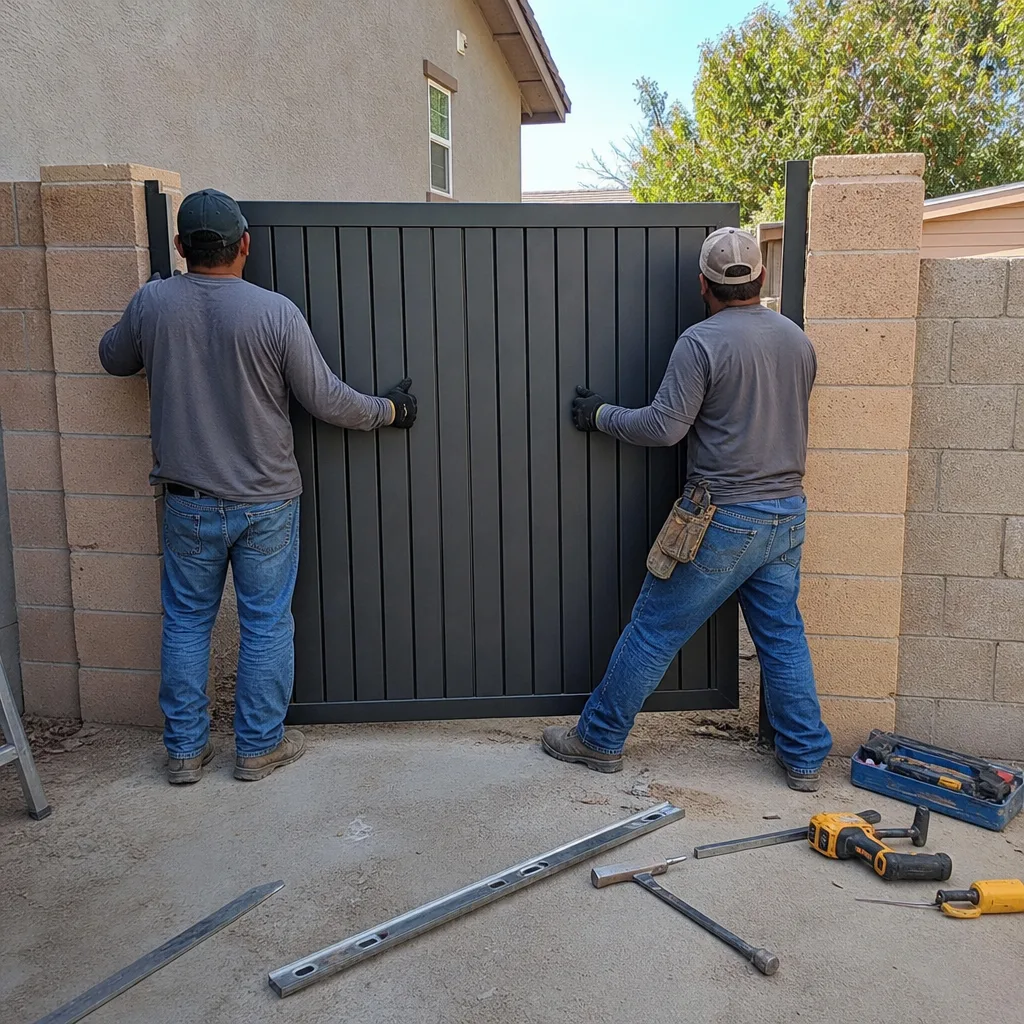
Gate warning signs are only useful if you rank them. The cheap-now, expensive-later symptoms – hesitation, whining, clunking, clicking, rust from the cap, concrete heave at the post – all point at a small fix that’s quietly dragging a bigger one into the repair. The one that isn’t about cost at all is the self-reversing gate, which is a safety failure and should be tested before anything else. In Winchester, the sun and the swelling soil leave their own signature on the wire, the post caps, and the footing, so look for those before the symptom even shows. When in doubt, capture the sound on your phone and call – you’ll have the evidence and we’ll have the plan. Written by the team at Vance Gate Repair Winchester.
Written by the team at Vance Gate Repair Winchester.