
Last updated November 18, 2026
 Wrought iron
 Wood & steel frame
 Farm & ranch
 Sliding driveway gates
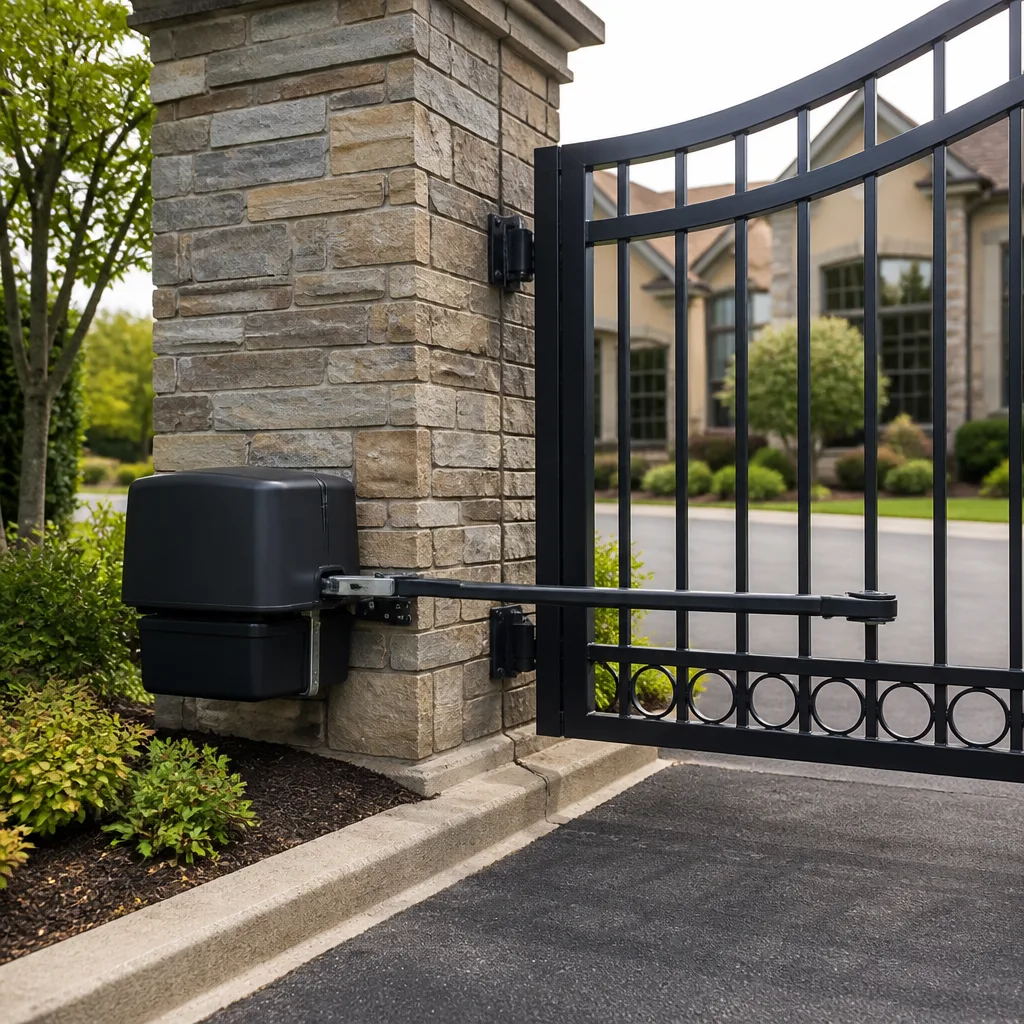 LiftMaster operators
Free on-site gate assessment - hinges, posts, and your LiftMaster or Nice gate operator checked before anything is quoted
The assessment is free and the quote is the invoice.
Get your free estimateHow Long Does Gate Parts & Welding Take? Timelines and What to Expect
The weld that fixes your gate hinge takes twelve minutes. Getting the gate off its hinges, grinding the base metal back to bright steel, letting the weld cool before you rehang it, and testing the swing takes closer to two and a half hours. That gap between arc time and job time is where almost every surprise on a welding quote comes from. In this guide we’ll break down realistic timelines for the four most common gate welding repairs, explain why your gate’s weight and hang matter more than the repair itself, and show you how a written scope keeps the schedule honest. We’ve done this work across Winchester long enough to know which jobs finish in one visit and which don’t.
Quick Answer
Most gate welding repairs take between 1.5 and 5 hours of on-site work, even though the actual welding usually runs under 20 minutes. A hinge plate weld averages 2 – 3 hours, a post anchor repair runs 3 – 5 hours if excavation is needed, a frame crack repair takes 1.5 – 2.5 hours, and a full hinge replacement with weld lands at 2 – 4 hours. The weld is fast. The prep, cooldown, rehang, and alignment testing are what fill the clock.
Styles & brands we work with
- Wrought iron
- Wood & steel frame
- Farm & ranch
- Sliding driveway gates
- LiftMaster operators
Table of Contents
- Time Breakdown by Repair Type
- Why Arc Time Is the Smallest Part of the Job
- When Can a Welding Repair Be Finished Same-Day?
- How Heat and Metal Temperature Affect Your Schedule
- The Real Cost of a Rushed Timeline
- What a Written Scope Does for Timeline Predictability
- Parts Availability and Lead Times
- Common Mistakes to Avoid
- When to Call a Professional
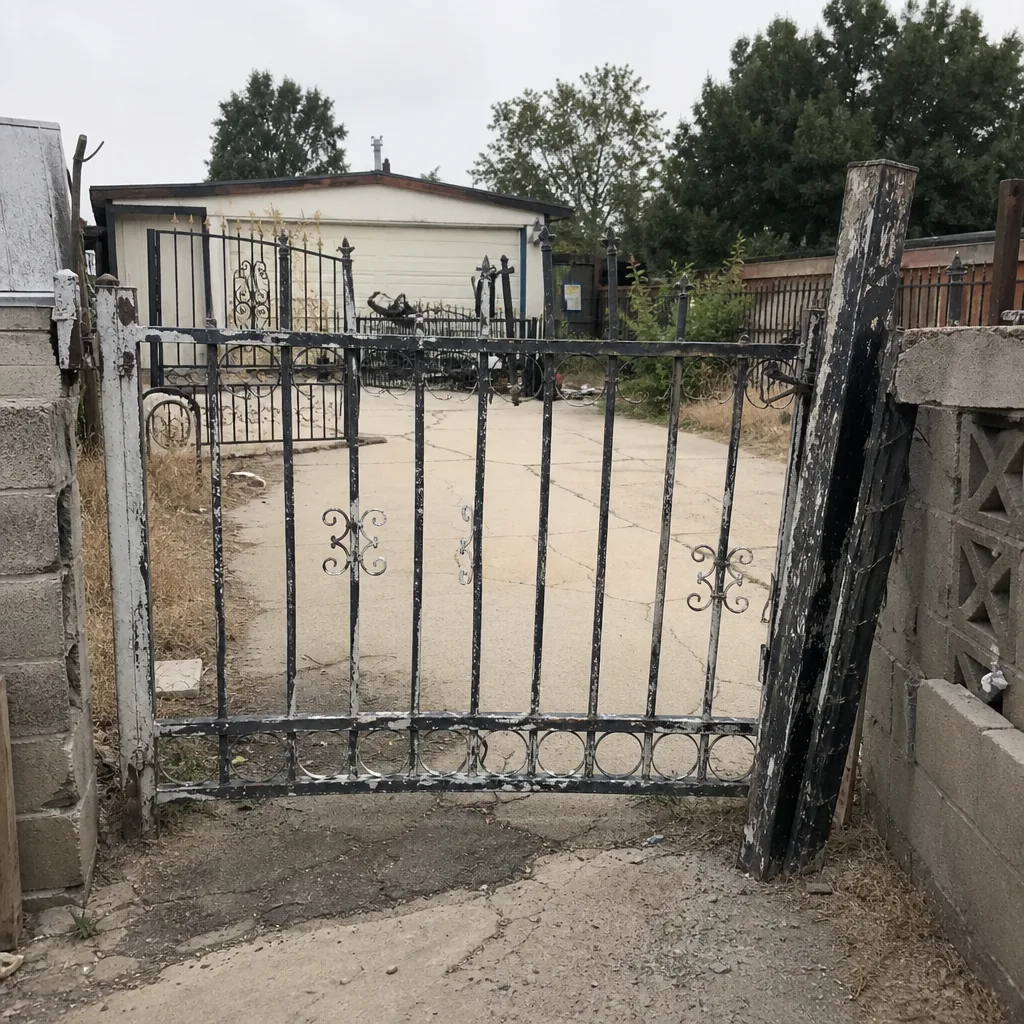 Before
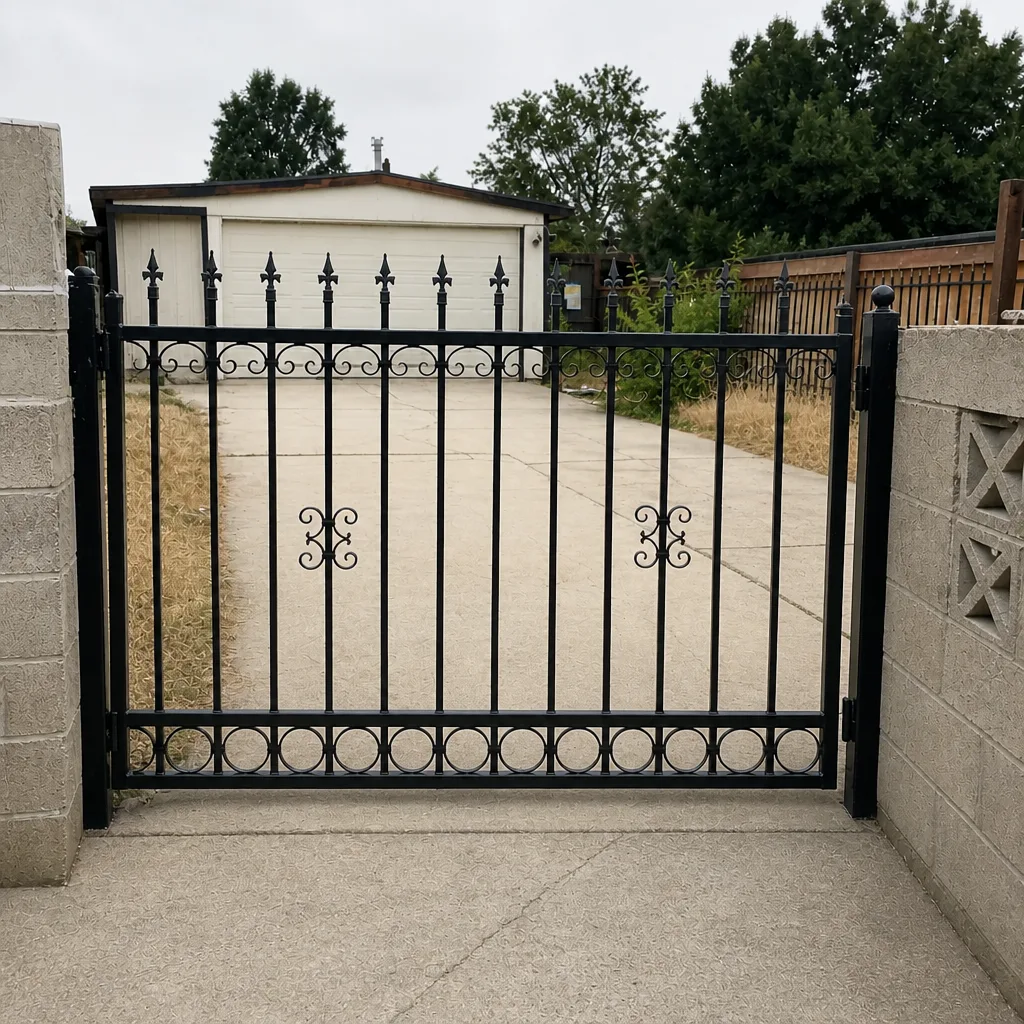 After
Time Breakdown by Repair Type
Gate welding isn’t one job with one timeline. What you’re actually scheduling depends on what failed. Here’s how the four most common repairs play out in hours, from arrival to the moment the gate swings clean again:
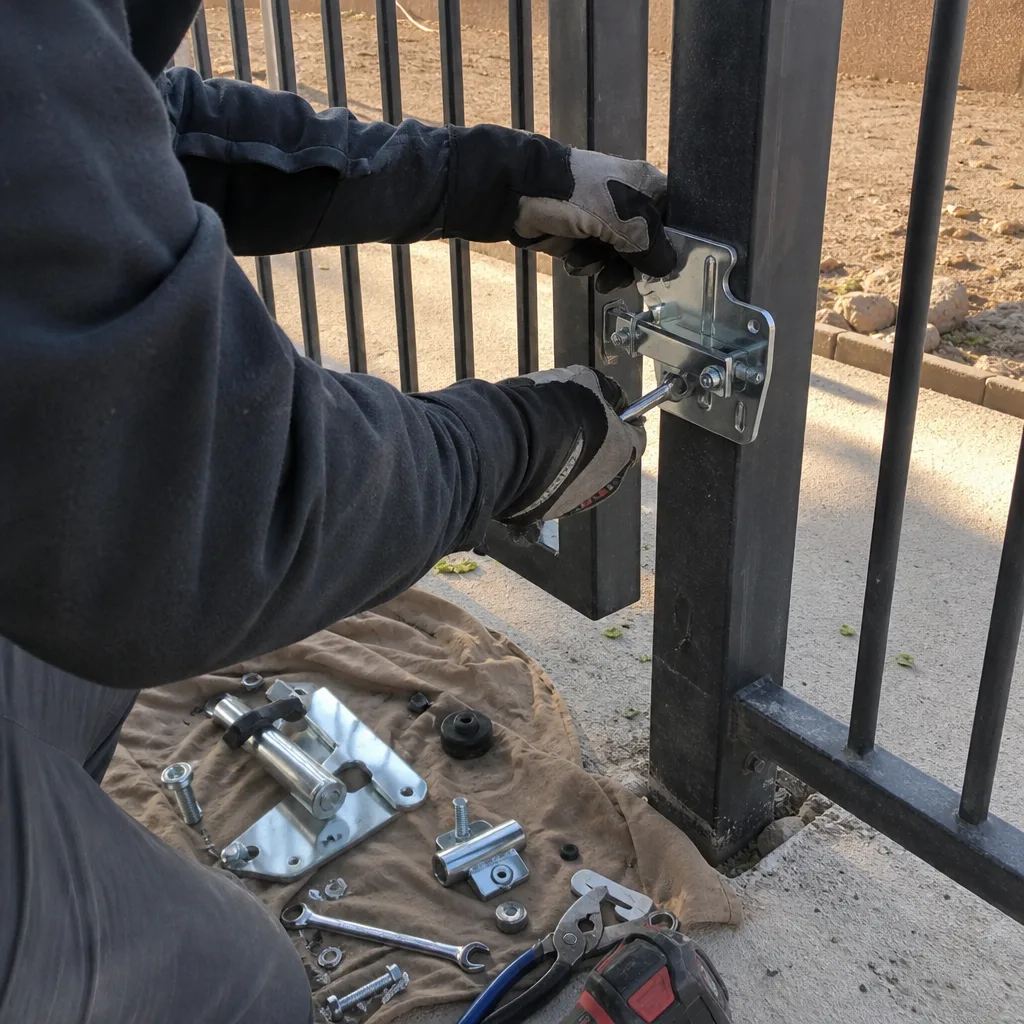
- Hinge plate weld: 2 – 3 hours total. Roughly 15 minutes of welding, the rest split between removing the gate leaf, grinding the plate and frame to bare metal, clamping the plate true, cooling, rehanging, and testing the swing arc.
- Post anchor repair: 3 – 5 hours. The wildcard here is excavation. If the anchor has pulled below grade, we’re digging a footing, sometimes pouring and curing concrete, and that pushes the job toward the long end.
- Frame crack repair: 1.5 – 2.5 hours. Cracks in the gate frame usually need a V-groove ground into the crack, a root pass, and a cap weld, plus cooling time before any load goes back on the frame.
- Full hinge replacement with weld: 2 – 4 hours. Cutting the old hinge off, fitting the replacement, welding it in position, and realigning the gate leaf takes longer than a straight plate weld because the geometry has to be re-established from scratch.
The pattern holds across every job: welding is the quick part, and the surrounding work is the schedule. If a quote only accounts for the weld, either the person quoting hasn’t done many of these or they’re planning to cut corners on prep and cooldown.
Why Arc Time Is the Smallest Part of the Job
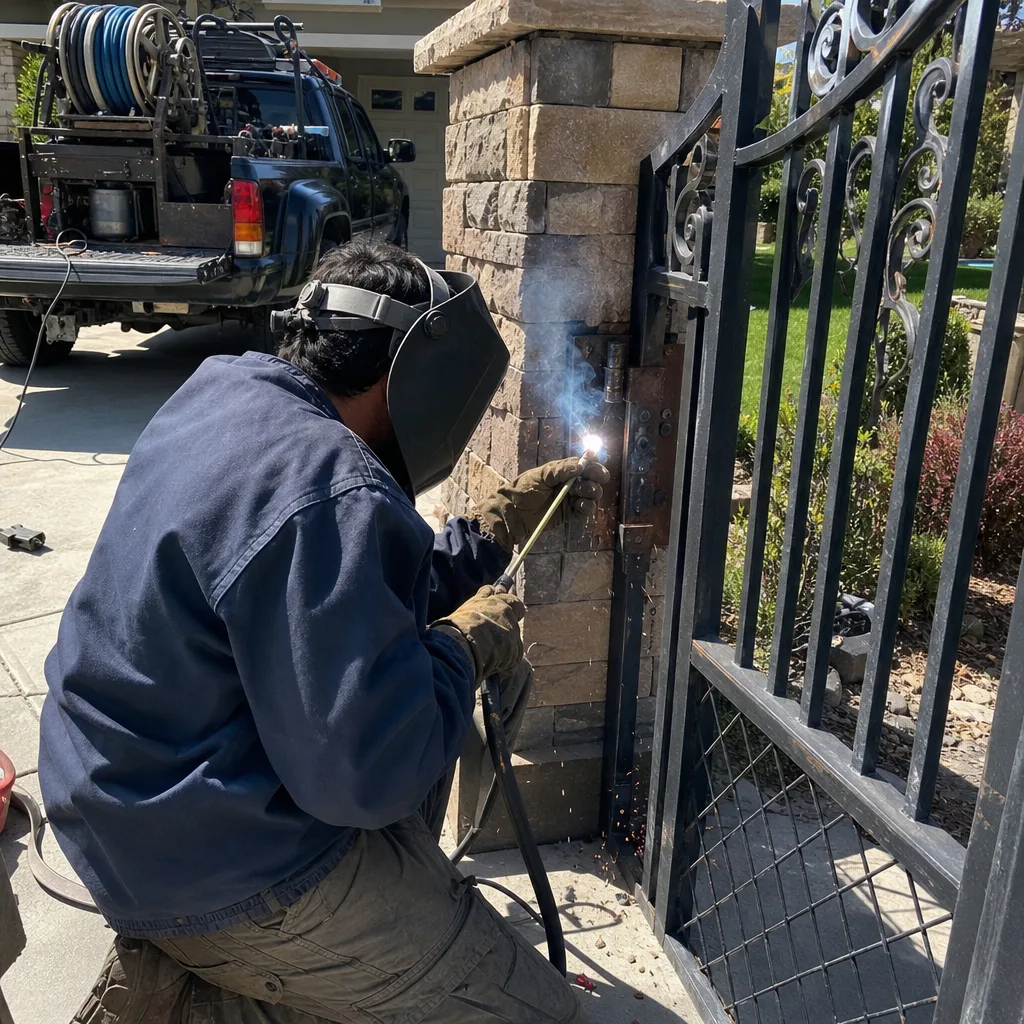
A welding arc running on a gate hinge moves fast. Twelve to eighteen minutes of actual weld time on a hinge plate is typical. So why does the job take two to three hours? Because the weld has to be surrounded by work that can’t be rushed without compromising the result.
Here’s how the hours add up on a standard hinge plate replacement:
- Assessment and access (15 – 25 min): Inspect the hinge, confirm the failure mode, photograph the existing setup, and safely secure the gate leaf before removal.
- Gate removal (10 – 20 min): Depends entirely on gate weight and whether it’s a swing or slide gate. A heavy ornamental steel gate on a wide span can take twice as long to de-hang safely as a lighter aluminum gate.
- Surface prep (20 – 40 min): Grinding the base metal back to bright steel. Skipping this is the number one cause of weld failure, and it’s invisible once the weld is laid.
- Clamping and fit-up (10 – 20 min): Getting the hinge plate square and true against the frame before the arc ever strikes.
- Welding (12 – 18 min): The actual arc time. Yes, this is the short one.
- Cooldown (15 – 30 min): Letting the weld reach ambient temperature before load is applied. Rushing this is how welds crack.
- Rehang and alignment (20 – 40 min): Rehanging the gate, adjusting the swing arc, checking clearances, testing the opener if one is installed.
Add it up and you’re at 2 to 2.5 hours before factoring in a single complication. In Winchester, we’ve watched gates with powder-coated finishes push that cooldown window longer because you can’t quench hot metal without damaging the coating. We’ve also seen plenty of finish work where matching paint or a small touch-up was needed after the weld cooled. None of that is billable time most customers anticipate. All of it is honest time.
When Can a Welding Repair Be Finished Same-Day?
Whether a repair finishes in one visit comes down to two things: gate weight and whether the gate can be safely de-hung and re-hung in a single window. A 90-pound aluminum pedestrian gate? Almost always same-day service. A 400-pound ornamental steel driveway gate on a wide span? Sometimes, but it depends on what’s waiting behind the hinge.
The deciding factors we look at:
- Gate weight and span: Heavier gates need more equipment and more people to remove and rehang safely. That can push a repair into a second visit if the crew isn’t sized for it.
- Whether the gate is automated: If there’s a Viking or Ghost Controls operator on the gate, the repair extends by 15 – 30 minutes to disconnect, reconnect, and retest cycle limits after rehanging. Occasionally the operator’s limit switches need to be reset after the gate’s plane shifts slightly from the new weld.
- Excavation scope: A post anchor repair that requires digging below grade and pouring new concrete almost never finishes same-day because the concrete needs cure time before load.
- Parts on hand: A stock hinge plate for a common gate gauge gets welded today. A custom-machined plate matched to a specific ornamental pattern might need a trip to the fabricator.
- Weather: Rain or high winds in Winchester can make outdoor welding unsafe or ineffective. A dry, wind-free window is required for a clean weld in the field.
Because welding repairs are scheduled rather than dispatched, if you want your gate looked at this week, the fastest path is a written estimate and a booked window. Our Gate Repair in Winchester service covers welded repair alongside the rest of the gate-repair trades, and the estimate is written before anything gets scheduled.
How Heat and Metal Temperature Affect Your Schedule
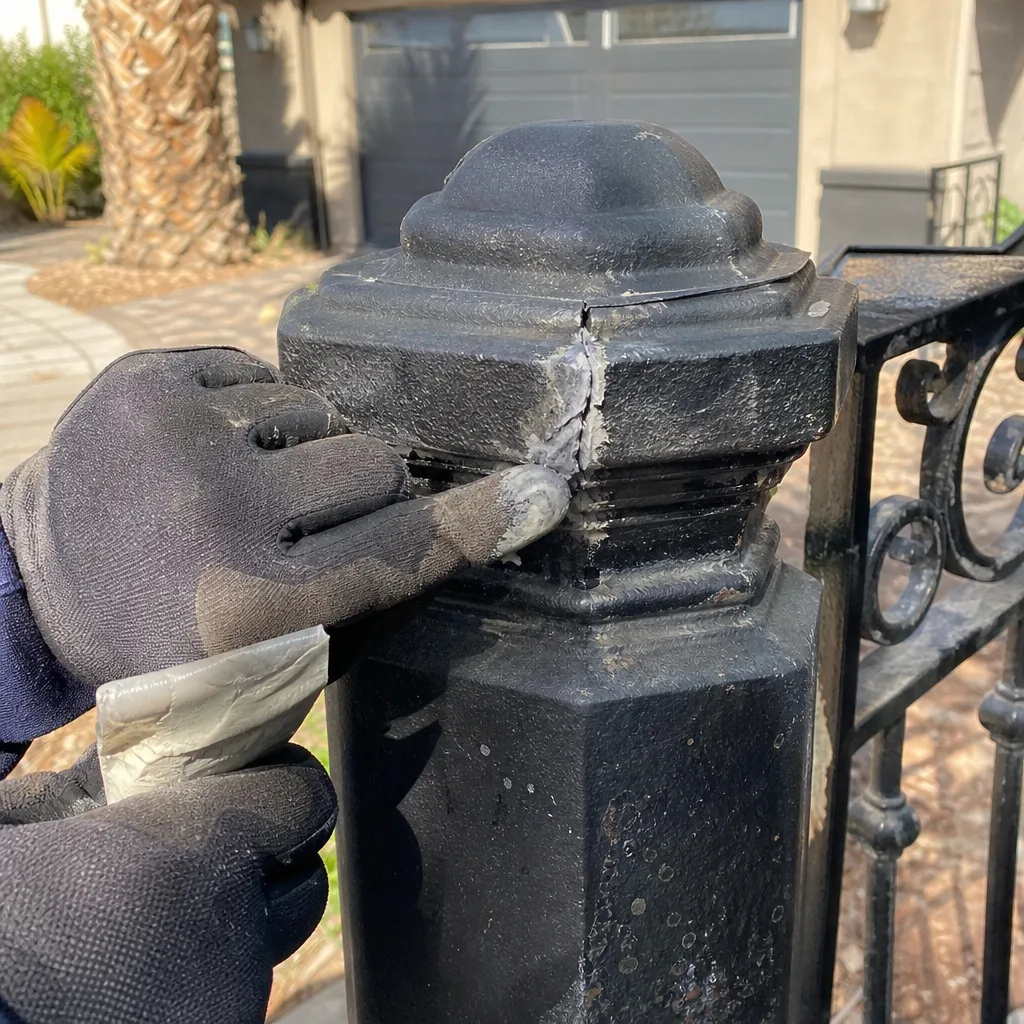
High-desert summers change the welding schedule more than most homeowners expect. When the ambient temperature in Winchester pushes past 95°F in the afternoon, the metal on a west-facing gate can already be sitting well above that in direct sun. Welding hot metal into hot metal changes both the cooling profile and the fit-up tolerance.
What that means in practice:
- Morning welding often beats afternoon welding on sun-exposed gates. The metal starts cooler, the weld cools more predictably, and the alignment check reflects ambient conditions rather than a heat-swelled frame.
- Cooldown windows stretch in peak summer. A weld that would reach ambient in 20 minutes in spring can take 30 – 40 minutes when the surrounding metal is already hot.
- Alignment should be checked at ambient temperature. A gate that swings free at noon under load can bind or sag once the sun drops. This is the single most common cause of a call back on a welding job that looked fine at handoff.
- Powder coat and paint finish need care. Quenching a hot weld with water is fast but wrecks the finish. Slow cooling protects the coating but adds time.
We structure Winchester welding appointments around this. If you call in July about a hinge weld on a west-facing driveway gate, expect the first available window to skew toward morning. Not because we’re being picky, but because a weld laid at 105°F ambient cures differently than one laid at 78°F. A competent tech remembers this. A rushed one doesn’t.
The Real Cost of a Rushed Timeline
A welding repair quoted at 45 minutes means one of four things happened: the prep was skipped, the cooldown was skipped, the alignment was checked hot, or the scope of work was underestimated. None of those are cheap in the long run.
Here’s what goes wrong when a timeline gets compressed:
- Load applied to a hot weld: The metal around a fresh weld is at its weakest point until it reaches ambient. Rehanging a heavy gate before that window closes is how welds crack, sometimes within days, sometimes within a season.
- Alignment checked hot instead of at ambient: A gate that looks true at 3 pm can bind the next morning. The customer calls back, and the second visit costs more than the first because the weld has to be cut before it can be re-set.
- Prep skipped on rust or scale: A weld laid over rust or mill scale doesn’t penetrate. It sits on the surface, looks fine for a month, and then separates under load.
- Fit-up improvised: Clamping takes time. If it’s skipped, the hinge plate gets welded slightly out of plane, which shows up as a gate that swings unevenly or clears the post only at one end.
Every one of these failures traces back to the same root cause: a verbal estimate that quoted only the arc time. When a scope is vague, the timeline is vague, and any extra work becomes a surprise charge at the end. Our Vance Gate Repair Winchester home page covers the basics of how we approach gate work, but the short version is that we write the scope and the price before the first tool comes out.
What a Written Scope Does for Timeline Predictability
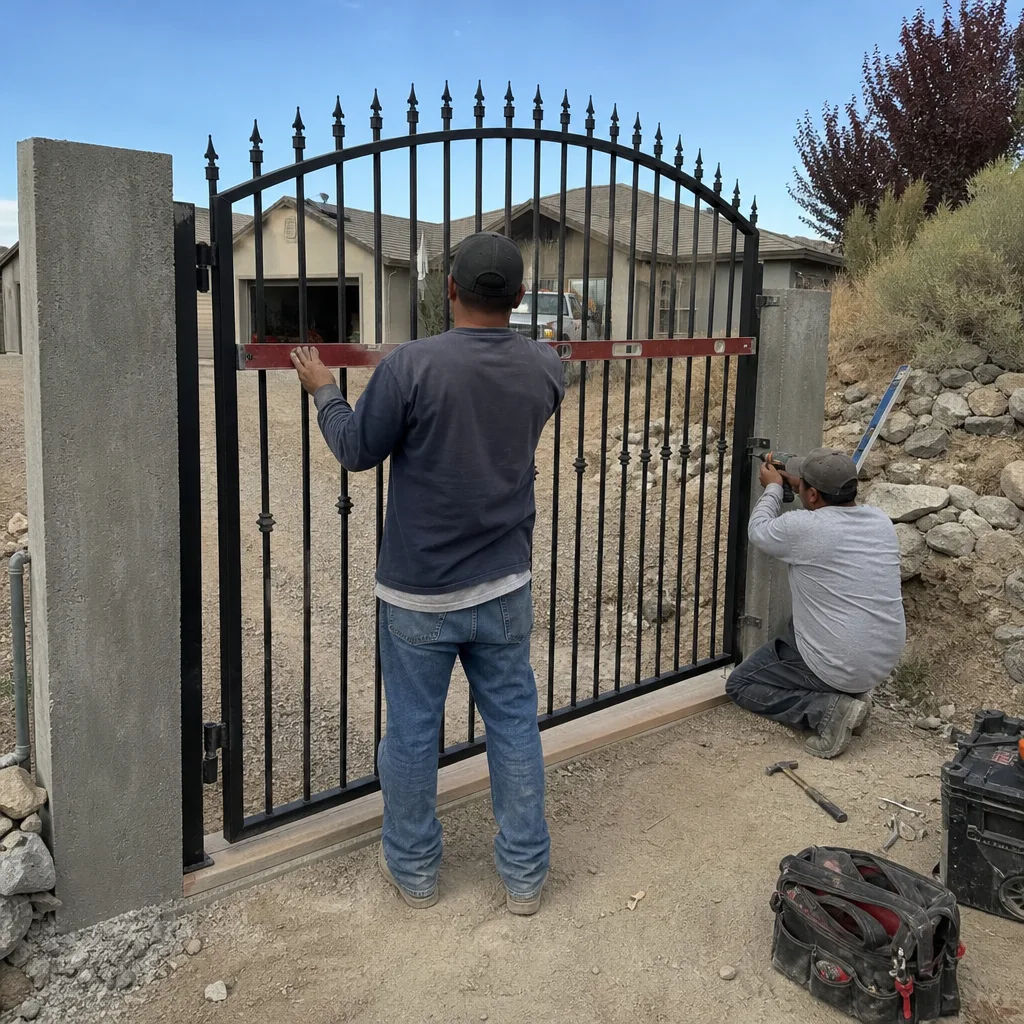
A verbal estimate and a written scope aren’t the same document in disguise. A verbal estimate is a number someone said out loud, and it expands. A written scope is a priced, itemized commitment, and it doesn’t. The difference shows up most clearly on jobs with any unpredictability, which is most welding jobs.
Here’s how a written scope makes a timeline stick:
- It names the repair precisely. “Repair hinge plate” is vague. “Cut and remove failed hinge plate on north-side swing leaf, grind frame to bare metal, clamp, weld a replacement plate in the original position, cool to ambient, rehang, test swing arc” is a scope.
- It names what’s excluded. If excavation below grade turns out to be necessary, that’s a known line-item with a known price, not a surprise add-on.
- It names the sequence. Since you can see the steps, you can see why the job takes the hours it takes and where any delay would come from.
- It sticks. Under the Haven Standard Clause 1 (Have it in writing), the flat price is written and handed over before any work starts. If a complication surfaces mid-job, we come back to you with a revised written scope and price before continuing. The timeline doesn’t gap open. It gets revised on paper.
This matters especially on post anchor repairs. Excavation is the biggest unknown in gate welding, and it’s the one thing a verbal quote cannot account for honestly. A written scope prices the above-grade repair, the below-grade repair, and the concrete cure window separately, so you can see exactly what drives the schedule on your specific gate. It also means no surprise invoice at the end. The number on the page is the number on the bill.
Parts Availability and Lead Times
Welding is often only part of the job. Many welding repairs go hand in hand with a hinge replacement, a post anchor, or a roller repair, and the part itself can push your timeline further than the weld ever could. A stock hinge for a standard gate gauge is on hand. A custom ornamental hinge or a specific bracket for a DoorKing or Elite operator assembly has a lead time that depends on the manufacturer.
- Stock hinge plates and standard gauge anchors: typically available without delay.
- Brand-specific brackets and operator-anchor plates: a lead time that depends on whether the brand is currently stocked. When we quote, we tell you whether the part is on hand or on order, and the timeline reflects it.
- Powder-coated or custom-finished parts: the finish coating adds a scheduling layer of its own. The repair can be welded in one visit and finished cosmetically in a second.
We service nine major gate automation brands, including Viking, Ghost Controls, DoorKing, and Elite, which means a welding repair alongside a motorized gate rarely stalls on finding a compatible part. You can read more about our brand coverage on the Gate Motor & Opener in Winchester page, and if you’re considering a new gate entirely, Gate Installation in Winchester covers how we handle that process.
Common Mistakes to Avoid
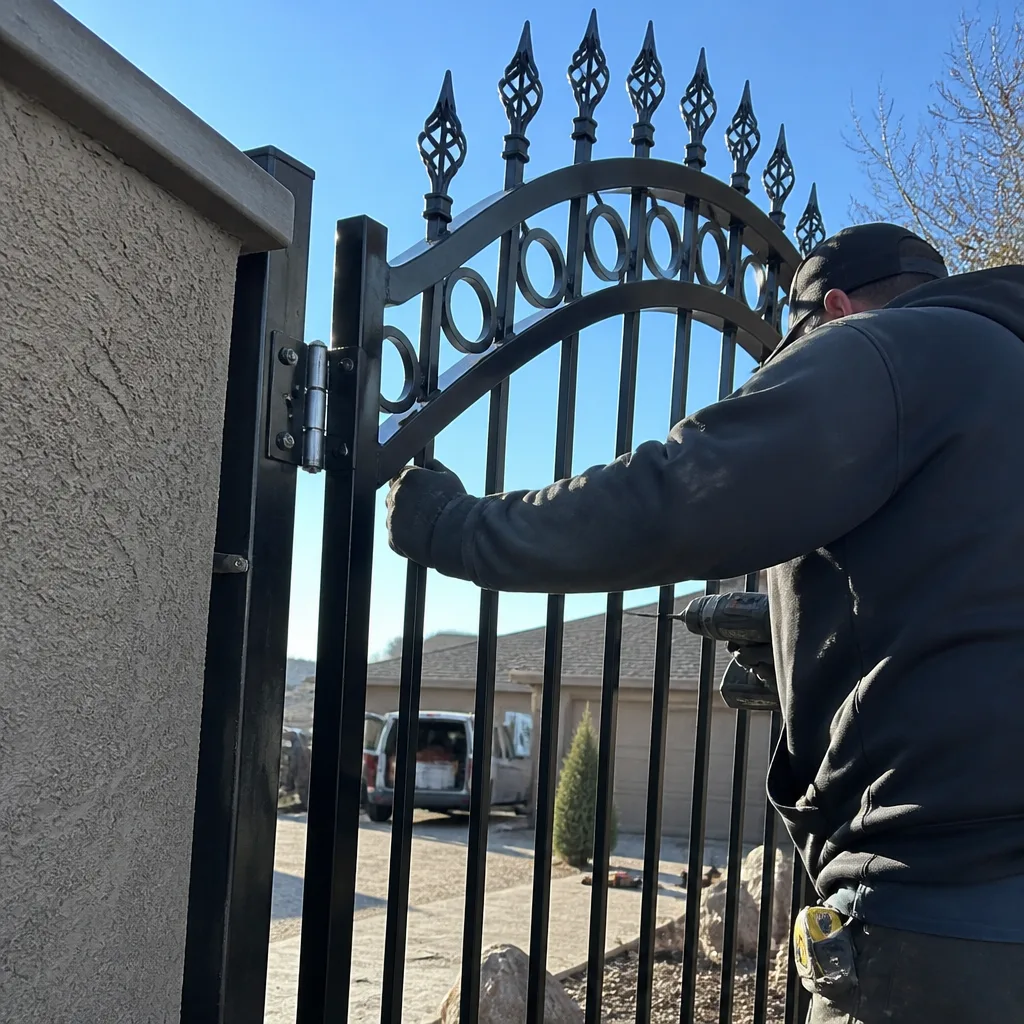
- Quoting from a photo alone. A photo shows the crack. It doesn’t show the rust on the back of the frame or the fact that the anchor has already pulled halfway out of the footing. Photos guide a conversation, they don’t replace an on-site look.
- Accepting a verbal timeline with no written scope. Verbal timelines expand. When the repair turns out to need a plate instead of a weld, the “extra” never shows up on paper until the invoice arrives.
- Scheduling an outdoor weld during Winchester’s windy season. Wind disrupts shielding gas and creates porosity in the weld. It’s a perfectly good reason to push a job a day, and a technician who drives out anyway is going to cost you more in rework.
- Testing a repaired gate on the hottest part of the day. A gate that swings free at 2 pm under direct sun can bind at 8 am the next morning. Always test at ambient.
- Rehanging before the weld cools. This is the classic shortcut. It shows up as a cracked weld weeks later, and diagnosing it costs more than the original repair.
- Using a welding repair as a substitute for structural failure. If the gate frame is genuinely twisted or the post is failing, welding alone won’t fix it. Welding a hinge onto a failing gate delays the real work, it doesn’t replace it.
- Ignoring the operator’s limits after rehanging. When a welded gate shifts by even a few degrees, the motor’s limit switches often no longer match the new travel. Resetting them is a five-minute job if you remember it and an expensive repair if you don’t.
When to Call a Professional
Some welding repairs are genuinely straightforward, and some hide surprises that make them genuinely dangerous. Call a professional when the gate is heavier than two people can safely lift, when the post anchor is failing below grade, when a motorized gate prevents easy de-hanging, or when the visible crack turns out to be part of a larger frame failure. Gate welding is not the same as welding on a bench in a shop. Any repair involving a heavy gate, an automated gate, or an anchor that reaches into a footing should go to a trained technician. Cutting corners on a gate that could fall onto a person, an animal, or a vehicle is a real safety issue. Vance Gate Repair Winchester offers free written estimates in Winchester: call (866) 983-9213. A live person answers 24 hours a day.
See the difference
BeforeAfter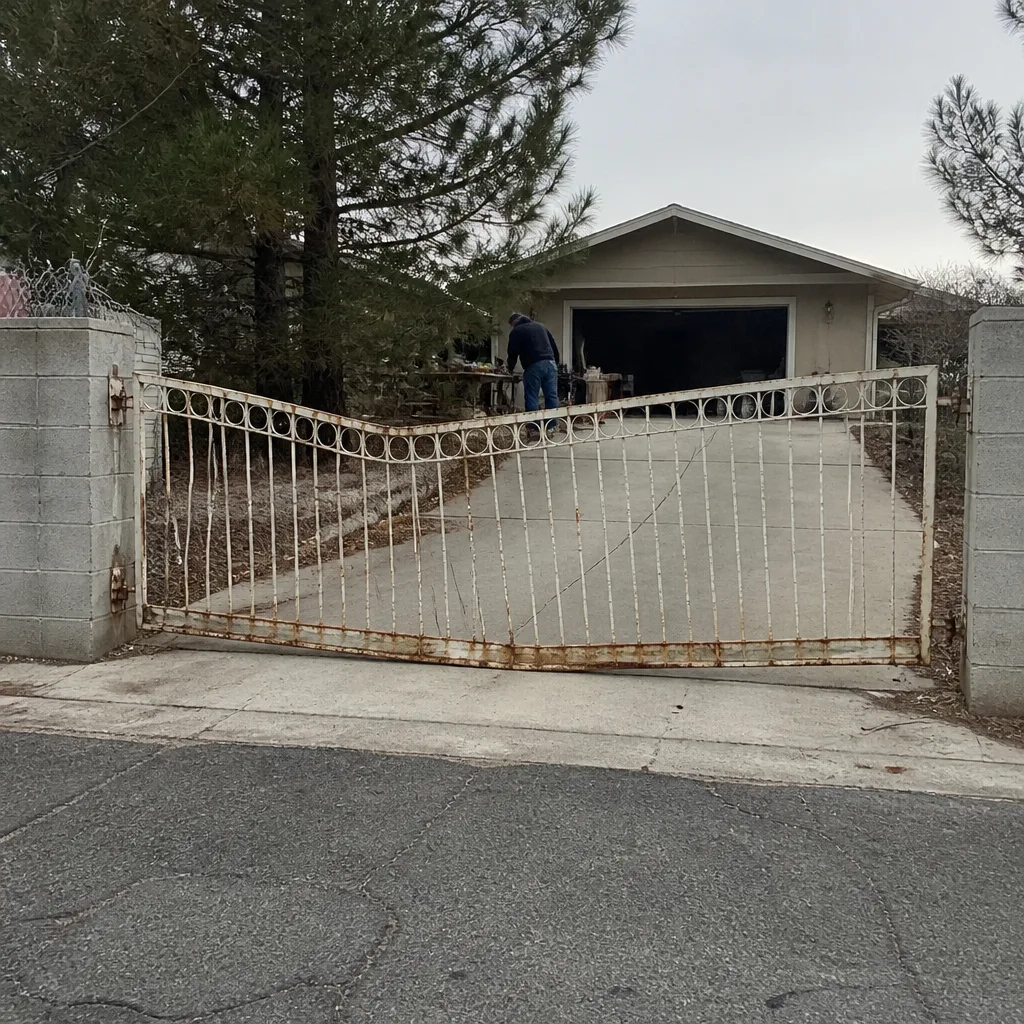 Before
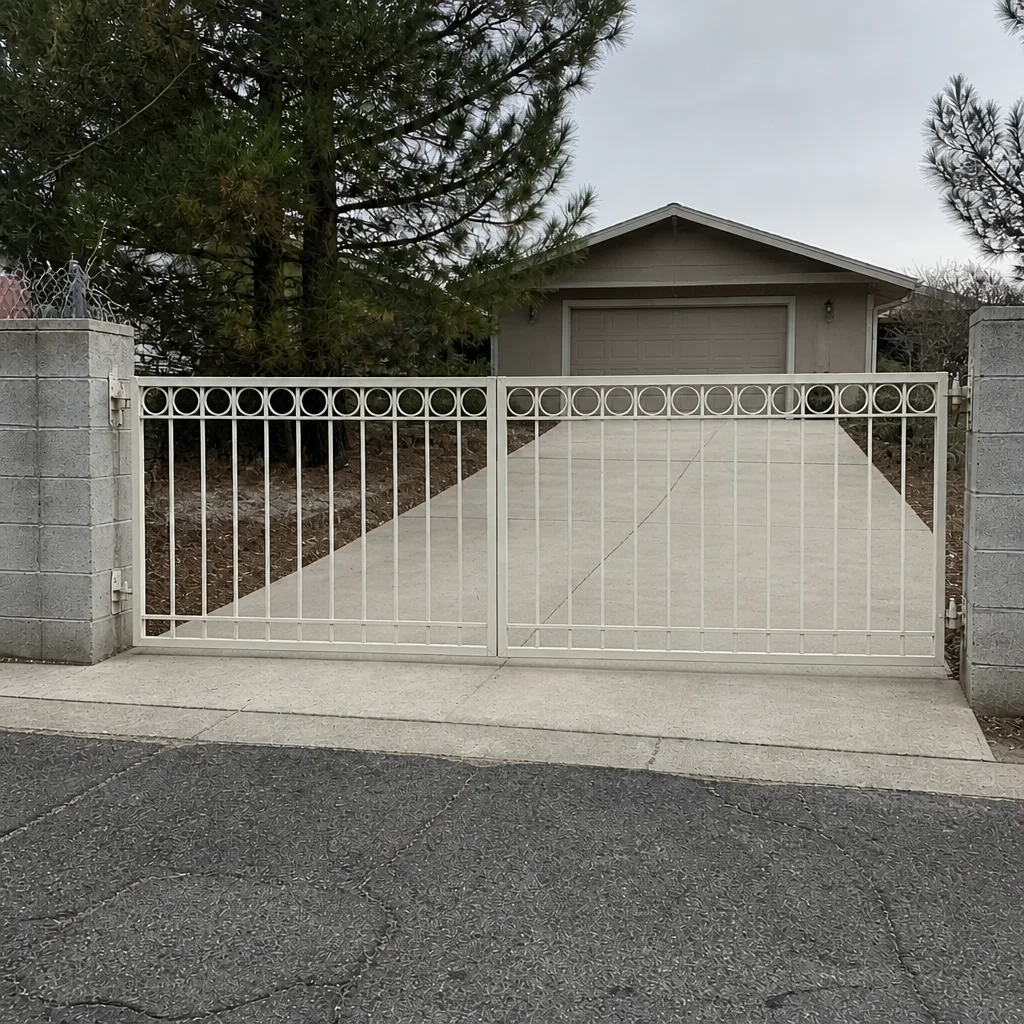 After
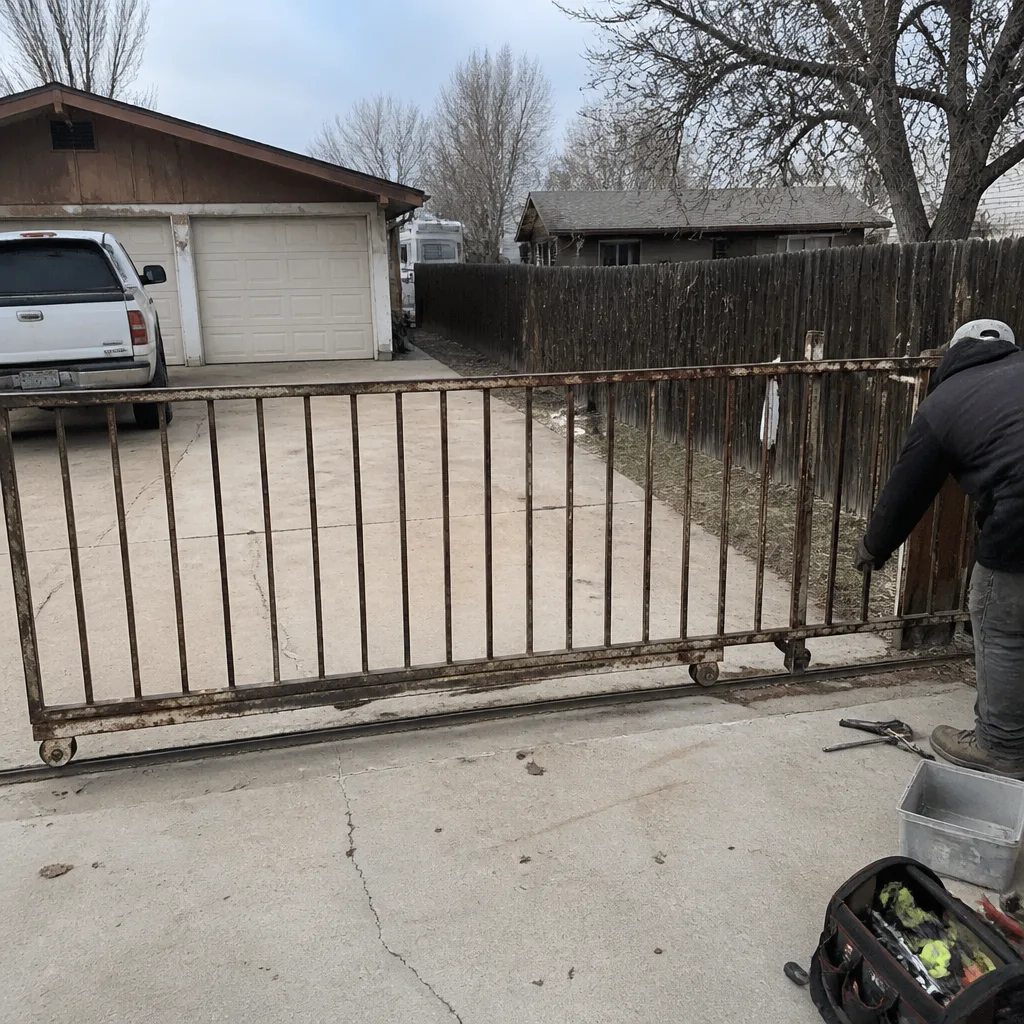 Before
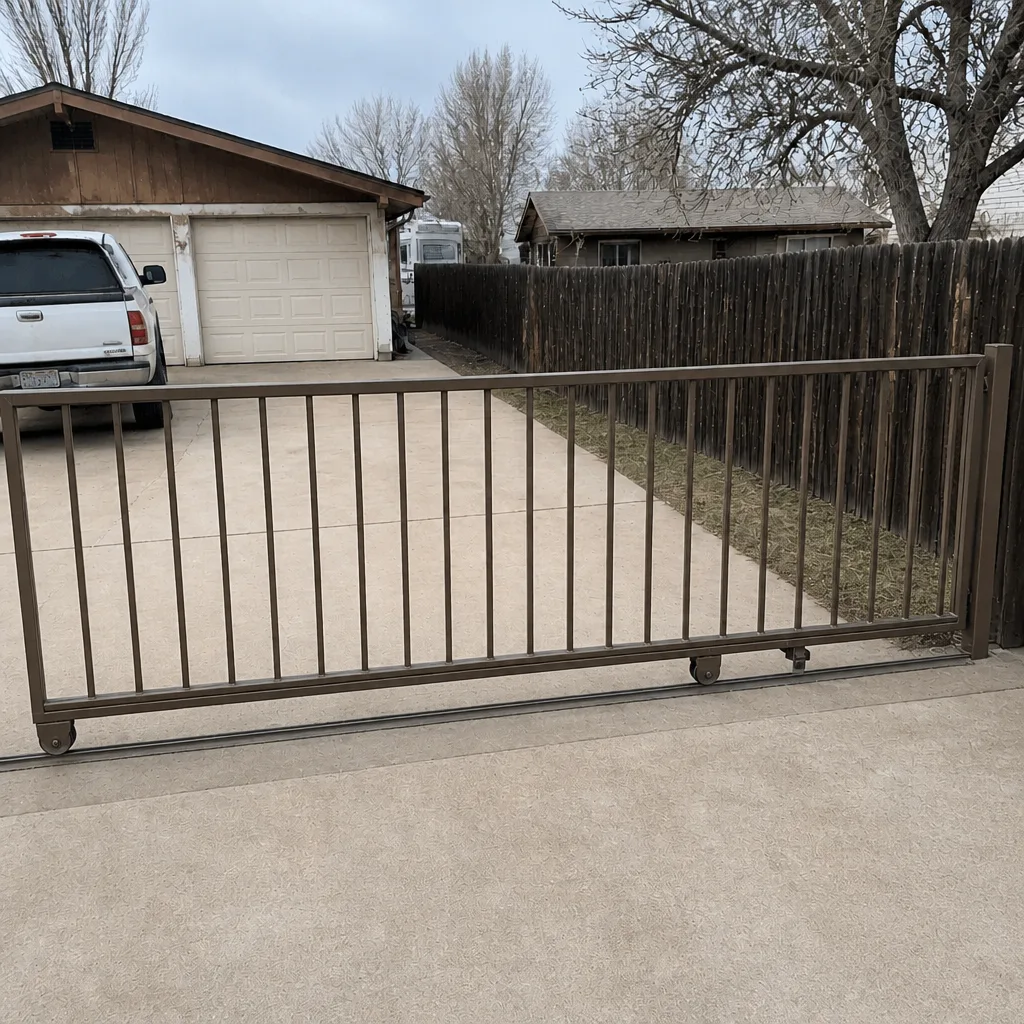 After
Frequently Asked Questions
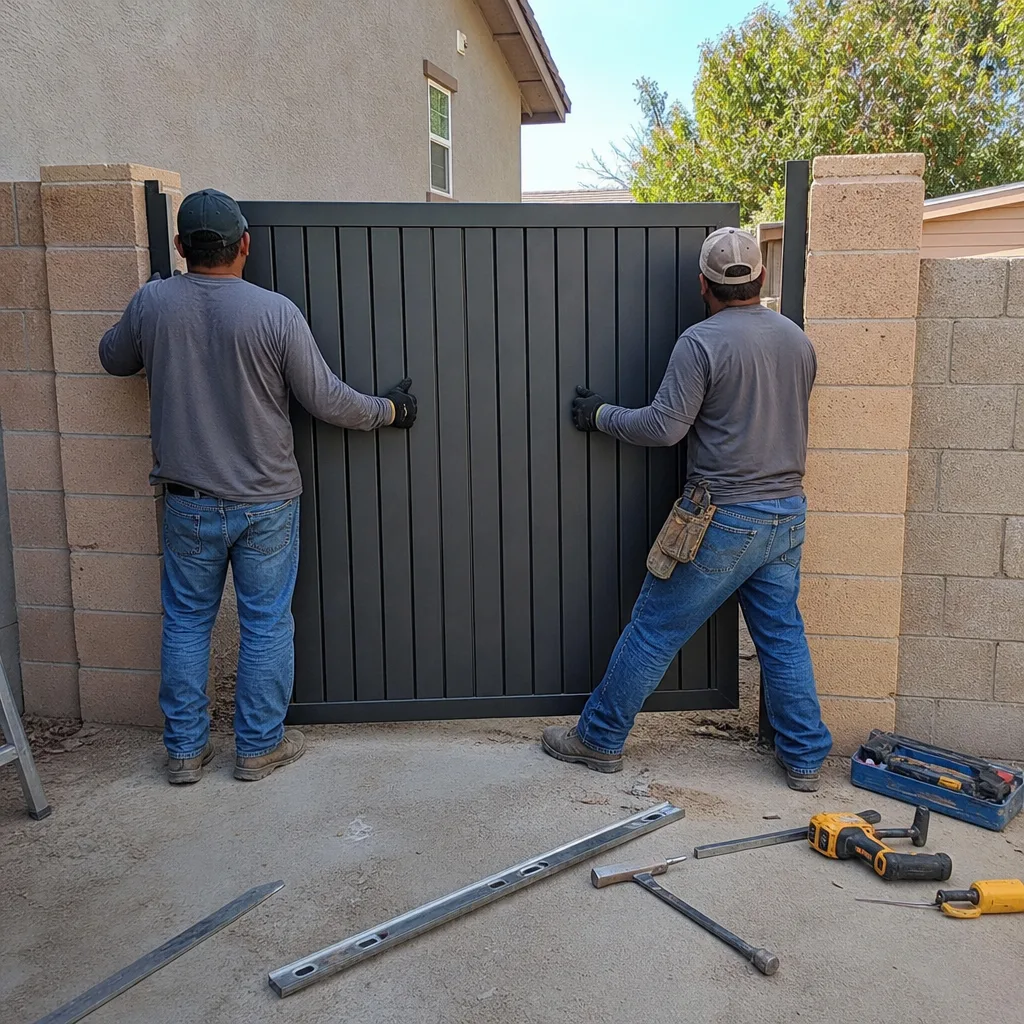
Most gate welding repairs take between 1.5 and 5 hours of on-site work, even though the actual welding is usually under 20 minutes. A hinge plate weld averages 2 – 3 hours, a post anchor repair can run 3 – 5 hours if excavation is needed, a frame crack repair takes 1.5 – 2.5 hours, and a full hinge replacement with weld lands at 2 – 4 hours. Call (866) 983-9213 for a written estimate specific to your gate.
The weld is fast. The access, surface prep, clamping, cooldown, rehang, and alignment testing take the bulk of the time. A 12-minute weld surrounded by two hours of prep and testing is a normal gate repair. A 12-minute weld with no prep and no cooldown is a job that will fail.
Same-day completion depends on gate weight, whether the gate can be safely de-hung and re-hung, and whether the part is on hand. Light pedestrian gates often finish same-day. Heavy ornamental driveway gates, below-grade post anchor repairs, and custom parts typically schedule across more than one visit. Call (866) 983-9213 for a realistic window on your specific gate.
Yes. Peak-summer afternoon heat stretches the cooldown window and can throw off alignment checks taken hot. We usually schedule sun-exposed gate welding in Winchester for the morning when possible, especially on west-facing driveways. The result is a weld that cools predictably and an alignment check that holds the next morning.
A written scope names the exact repair, the steps, the part if one is being replaced, and a flat price before any work starts. Under the Haven Standard, you also get a photo record of what was found, what was welded, and the cooldown and alignment readings, filed with the job record. Bring a written estimate from another company and we’ll review it free of charge.
Motorized gates add 15 – 30 minutes to a welding repair for disconnecting, reconnecting, and retesting cycle limits on the operator. If the gate’s plane has shifted at all after the weld, the limit switches usually need a reset. We service nine major brands including Viking, Ghost Controls, DoorKing, and Elite, so a compatible part is rarely a sticking point. Call (866) 983-9213 for pricing before we schedule.
The Bottom Line
Gate welding timelines aren’t about the weld. They’re about access, prep, cooldown, and testing, and the honest number is 1.5 to 5 hours depending on the repair type. A hinge plate weld runs 2 – 3 hours, a post anchor 3 – 5, a frame crack 1.5 – 2.5, and a full hinge replacement 2 – 4. Any quote that only accounts for the arc is going to expand the moment it goes verbal. Get the scope in writing, get the schedule in writing, and expect the timeline to hold. In Winchester, that’s what we do on every welding job: written price first, documented record at handoff, and the 365-Day Done Right Promise covering the work.
Call (866) 983-9213 for a free written estimate. A live person answers the phone every hour of every day, and the price on the page is the price on the bill.
Written by the team at Vance Gate Repair Winchester.