
Last updated November 18, 2026
 Wrought iron
 Wood & steel frame
 Farm & ranch
 Sliding driveway gates
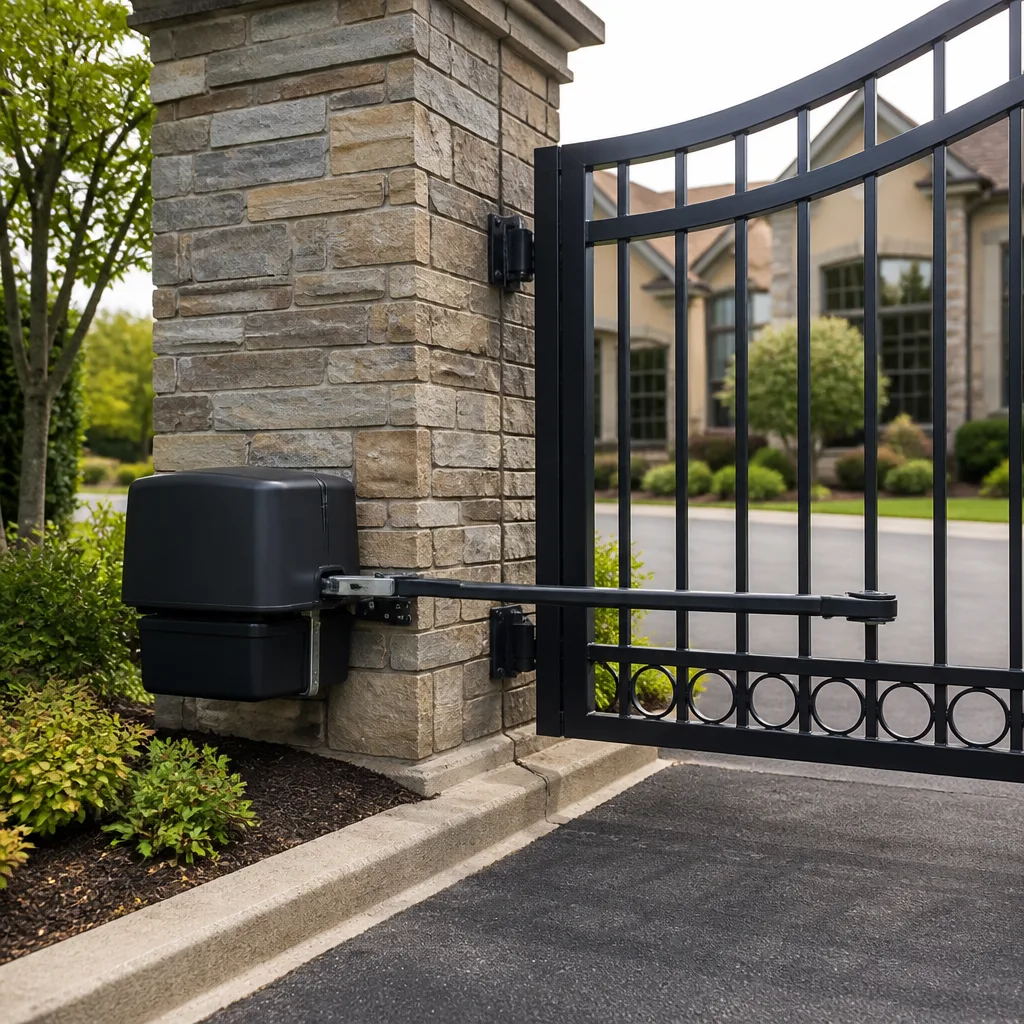 LiftMaster operators
Free on-site gate assessment - hinges, posts, and your LiftMaster or Nice gate operator checked before anything is quoted
The assessment is free and the quote is the invoice.
Get your free estimateGate Access Control Warning Signs Every Homeowner Should Know
A gate that hesitates half a second longer than it used to before reversing is showing you a limit-switch drift reading. Not a random glitch. That half-second becomes a full stop within two to four months, usually on a morning when you’re already late. The signs that matter on a residential gate are rarely dramatic; they’re small changes in cycle timing, response latency, and indicator behavior that most homeowners file under “quirks” and forget. This guide teaches you to read your gate as data instead of noise, and it’s written from what we see on Winchester gates every week.
Quick Answer
The warning signs that matter most on a residential gate access control system are a delayed response to keypad input, inconsistent loop detector triggering, the gate stopping short of full open or close, control board indicator lights cycling in unfamiliar patterns, and battery backup activating during normal power hours. Each of these is a measurable signal, not a cosmetic annoyance. Logging the behavior with dates and times turns a vague complaint into something a technician can diagnose in one visit.
Styles & brands we work with
- Wrought iron
- Wood & steel frame
- Farm & ranch
- Sliding driveway gates
- LiftMaster operators
Table of Contents
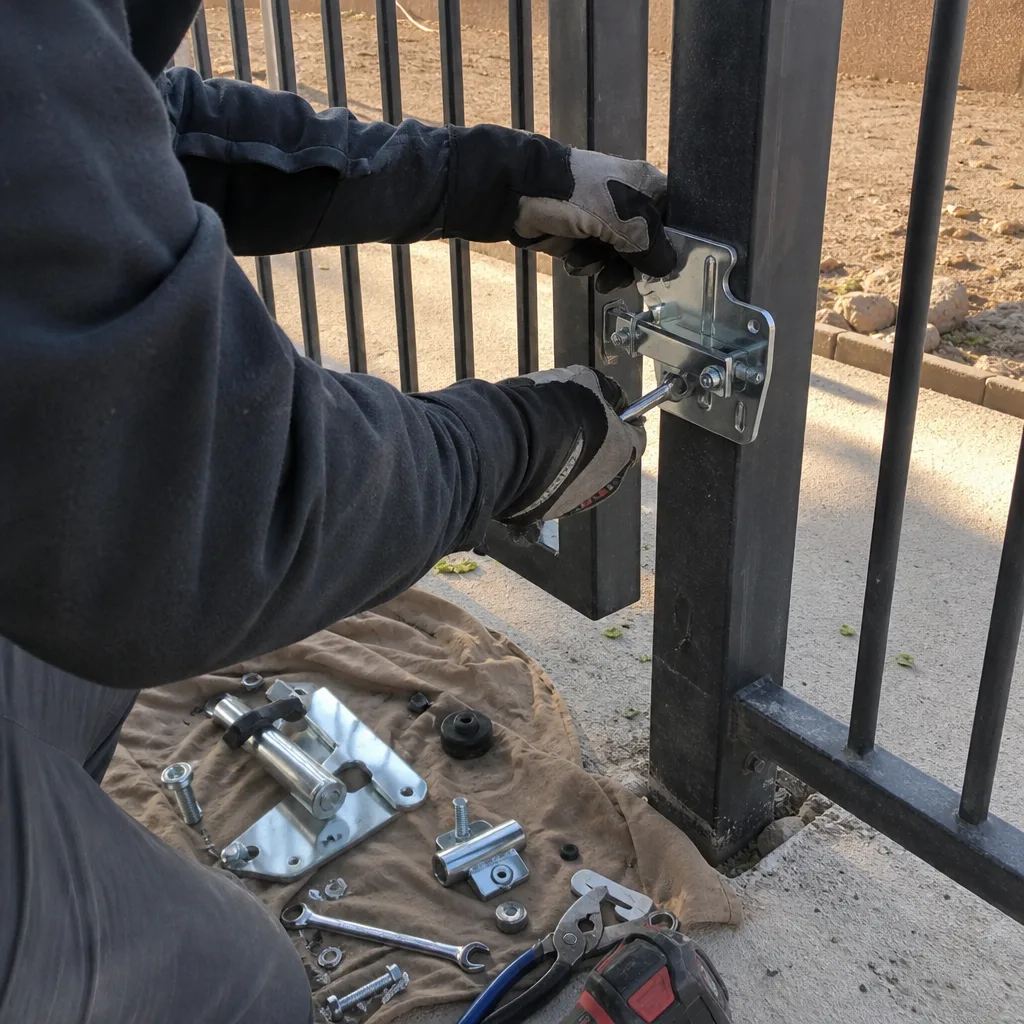
- The Five Behavioral Tells That Actually Matter
- How to Log Warning Signs So a Technician Can Read Them
- Nuisance or Liability? The Distinction That Changes Your Timeline
- Winchester Climate and the Warning Signs It Creates
- Keypad, Loop, and Access Control Signals Specific to Entry Systems
- What Documentation to Request After a Repair
- Common Mistakes to Avoid
- When to Call a Professional
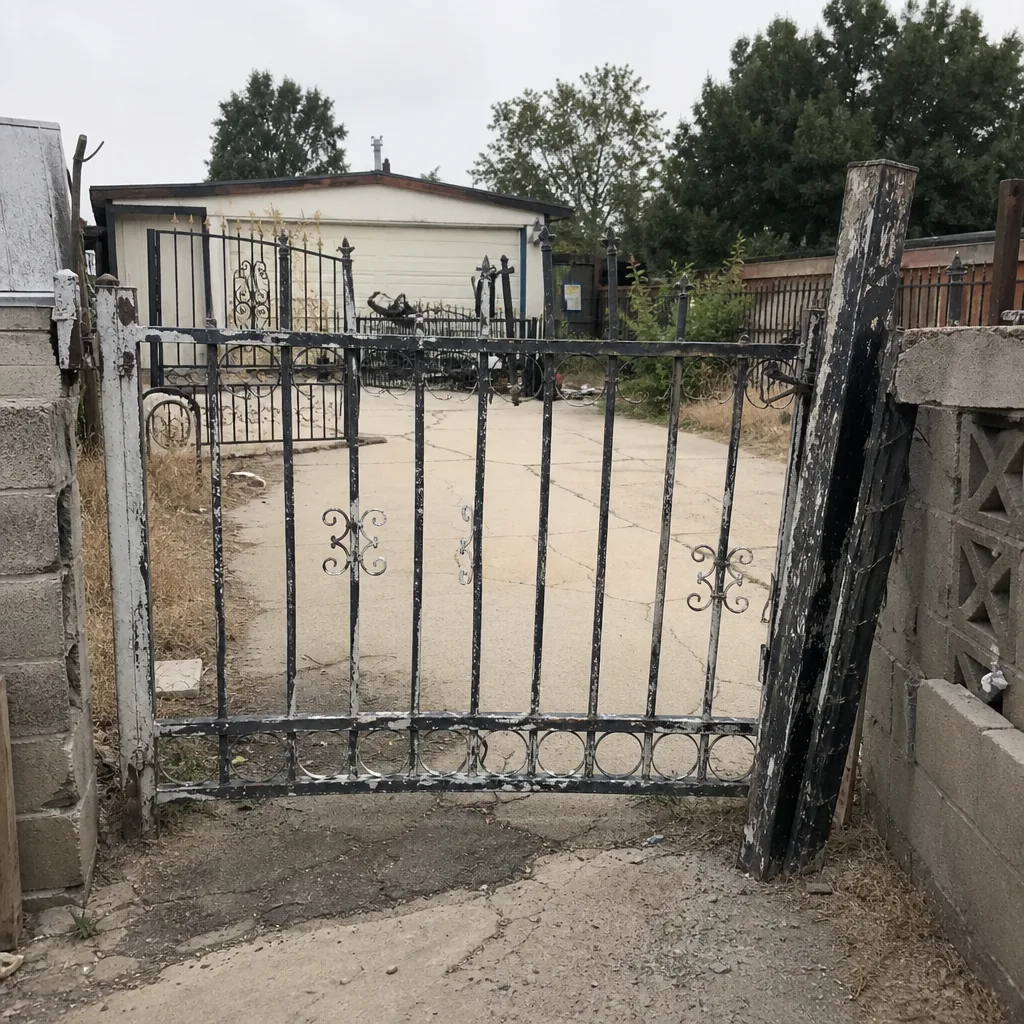 Before
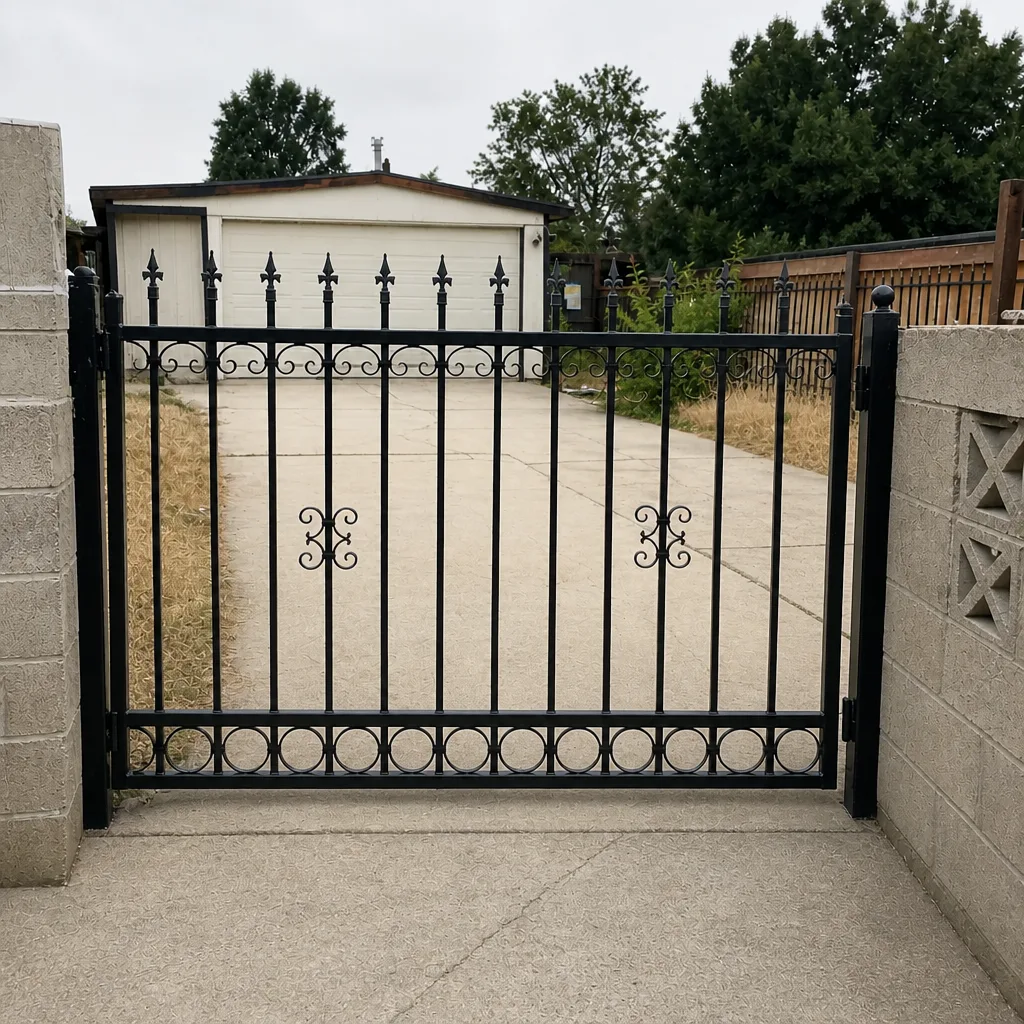 After
The Five Behavioral Tells That Actually Matter
Most homeowners notice the loud failures: a gate that won’t move, an arm that snaps, a motor that grinds. The expensive failures announce themselves quietly first. These five behaviors are the ones we ask about on every diagnostic call in Winchester, because each one maps to a specific component and a specific progression.
- Delayed response to keypad input. You press the code, and there’s a pause before the gate reacts. A new pause of one to two seconds points at the control board’s input processing or a weakening keypad connection, not at the motor. Left alone, a growing delay usually ends in a keypad that accepts the code but doesn’t trigger at all.
- Inconsistent loop detector triggering. The loop is the buried wire that senses a vehicle and tells the gate to hold open or close. If your gate sometimes closes while a car is still crossing the loop, or sometimes refuses to close when the driveway is clear, the loop or its detector card is drifting. This is the tell we treat most seriously, because it’s the one that touches a vehicle.
- Gate stopping short of full open or close. A gate that stops eight inches before the post, or reverses a foot before the closed position, is usually reporting a limit-switch position that has moved. Sometimes the cause is mechanical; sometimes it’s a photo-eye (the infrared beam that stops the gate if something crosses the path) knocked out of alignment by a fraction of an inch.
- Control board indicator lights cycling in unfamiliar patterns. Every board has a diagnostic LED. A steady blink or a steady light is normal. A pattern that changes after a rain, after a power flicker, or after a heavy use day is the board telling you something it won’t tell you in words.
- Battery backup kicking in during normal power hours. If you hear the gate running on battery while the house has power, the charging circuit or the battery itself is failing. In Winchester, this one hides well in spring and announces itself in the first cold snap.
None of these five are dramatic. All five are measurable. That’s the point.
How to Log Warning Signs So a Technician Can Read Them
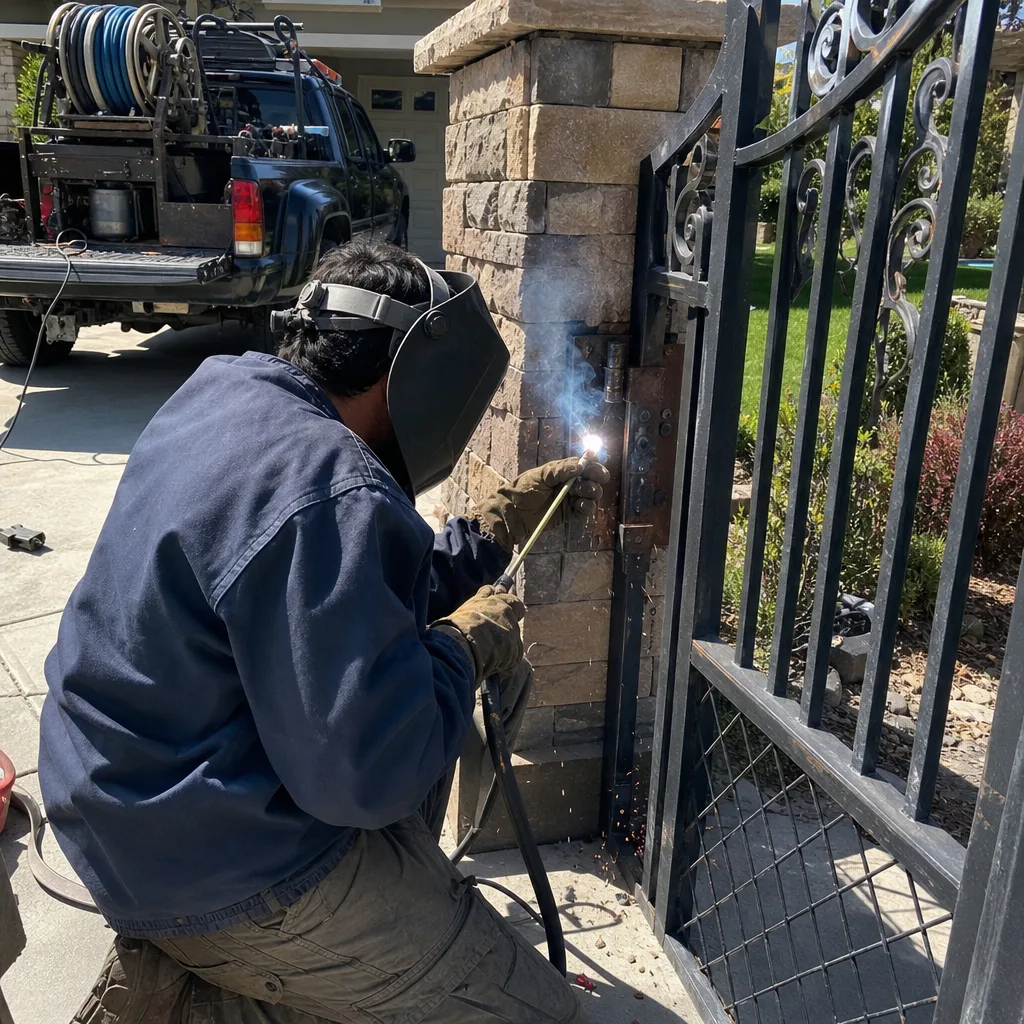
When a homeowner calls and says “the gate is acting weird,” we have to start from zero. When a homeowner calls and says “the gate delayed about a second and a half on Tuesday at 7:40 a.m., again Wednesday, and by Friday it was two seconds,” we can often order the right part before we arrive. A log takes minutes to keep and saves hours of guessing. Here’s the method.
- Pick a fixed observation window. Don’t try to track everything. Note the gate’s behavior during your two most regular cycles: the morning departure and the evening return. That’s usually enough to see a pattern.
- Timestamp each event. Date, time, and what you observed in plain language. “Delayed 1 second before opening” beats “felt slow.”
- Record the weather and power conditions. Hot afternoon, cold morning, after rain, after a breaker trip. Winchester’s temperature swings make this note more useful than you’d expect.
- Count the occurrences. “Three times this week” is a pattern. “Once last month” is an outlier. The frequency tells a technician whether you’re looking at a drift or a fault.
- Photograph the control board indicator. A phone photo of the LED pattern, taken while the gate is misbehaving, is worth more than any description. Get the board in frame with the light visible.
- Note what you changed. A new keypad code, a fence repair near the loop wire, a landscape crew working the driveway. These details explain a surprising share of “sudden” faults.
Bring that log to the appointment, or read it off to us on the phone. It’s the difference between a diagnostic visit and a return visit, and under the way we work, every visit leaves with a photographed record of what was found and what was set. That documentation habit is part of Vance Gate Repair Winchester home practice on every job, and it’s why your own log pairs so well with ours.
Nuisance or Liability? The Distinction That Changes Your Timeline
Not all warning signs carry the same urgency, and treating them all the same wastes money and attention. The question to ask about any signal is simple: if this fails completely, does it damage property, strand a vehicle, or touch a person? If yes, it’s a liability sign. If no, it’s a nuisance sign. Nuisance signs get scheduled. Liability signs get looked at now.
- Nuisance signs: a gate that cycles slowly, a keypad that requires a firmer press, a remote that works from 30 feet instead of 60, a squeak that shows up in dry weather. These degrade comfort and convenience. They rarely fail violently.
- Liability signs: a gate that reverses on a vehicle, a loop detector that releases the gate onto a car, a photo-eye misaligned so the gate closes with an obstruction in its path, a gate that stalls partway and sits in the drive lane, and any sign of strain or movement at the hinge or arm bracket. These are the ones that can cost a bumper, a windshield, or worse.
Reversing on a vehicle is the most common liability signal we hear about in Winchester. It’s also the easiest to misread as “the gate’s just being fussy.” A gate that closes partway and reverses without anything in its path is usually reporting a photo-eye problem or a strain fault at the arm. The gate is doing exactly what it’s supposed to do under a fault condition. The fault is what needs attention. If you have one of these, don’t wait for the log to fill up. That’s the moment to book a diagnostic. For a full picture of what repair involves in this market, see our page on Gate Repair in Winchester.
Winchester Climate and the Warning Signs It Creates
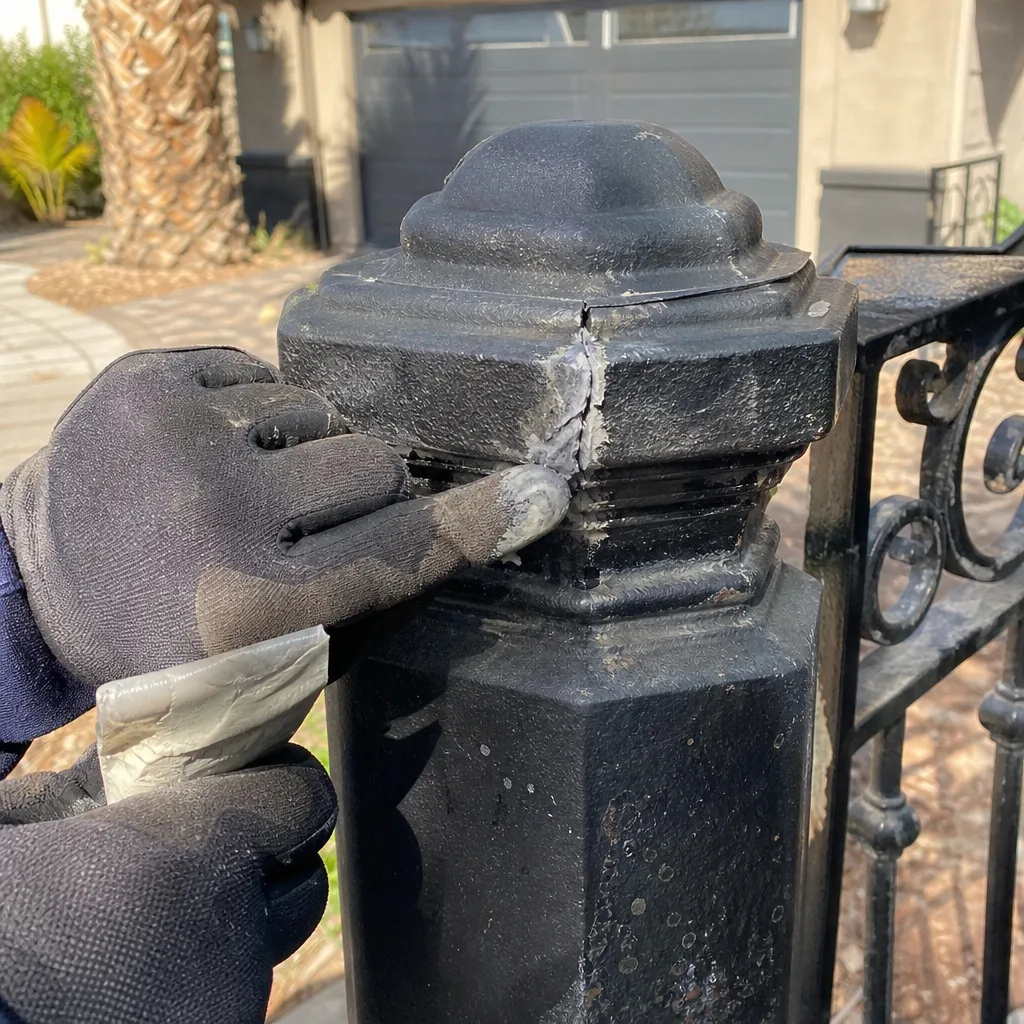
A gate in Winchester is subject to a real temperature range across the year, and that range produces warning signs you won’t read about in a generic troubleshooting guide. Two patterns come up again and again in our work here.
Summer thermal expansion and false limit-switch trips
Metal expands with heat. On a swing gate with a metal frame, the frame’s actual travel distance changes by a measurable amount between a cool morning and a hot afternoon. When the limit switch was set on a mild day, a July afternoon can push the gate past the switch’s set point, triggering a false “over-travel” fault. The gate stops two or three inches short of the post and refuses to close. Nothing is broken. The setting was just made in one temperature and is being tested in another. We see this most on gates that face direct afternoon sun on a driveway with little shade, and we regularly reset limit switches with a temperature note so the position is documented against the conditions.
Winter battery voltage drop
Battery backup systems in cold weather report lower voltage, and a battery that was marginal in October can start failing to hold in December. The tell is the gate running on battery during normal power hours, or the control board cycling a low-battery indicator the moment the morning temperature drops. A battery failing this way usually doesn’t fail completely: it fails enough to make the gate slower, which is one of the quiet warning signs most homeowners dismiss. Test and, if needed, replace the battery before the deep cold, not after. On the access-control side, cold is also when keypad contacts, sealed enclosures, and cable jackets are most likely to introduce a fault. If your keypad has gone intermittent in winter, a diagnostic visit is usually cheaper than waiting for it to fail outright.
Whichever motor is on your property, whether it’s a Linear, a Viking, a Ghost Controls, or a DoorKing, the underlying diagnostic logic is the same: what changed, when, and under what conditions. That’s why we work across the major brands rather than pushing a single one.
Keypad, Loop, and Access Control Signals Specific to Entry Systems
Access control components have their own warning signs, separate from the motor and gate frame. Because our work started in commercial access control, these are the signals we read fastest. Watch for these five across your keypad, loop, and entry hardware.
- Keypad delay that grows with use. A keypad that responds instantly in the morning and slowly in the afternoon is usually a wiring or contact issue, not a firmware one. The pattern to note is whether the delay correlates with temperature, time of day, or recent rain.
- A keypad that works, then stops, then works again. Intermittent keypad behavior is almost always a connection problem. It’s a nuisance sign until it strands a guest at the gate on a night when you’re not home.
- Loop detector chatter. If the gate opens and closes repeatedly when nothing is on the driveway, the loop or its detection card is picking up a false signal. This can come from a settling slab, a nearby metal fixture, or a damaged loop wire. It’s a liability sign the moment the gate starts reversing on a real vehicle.
- Photo-eye misalignment. A gate that refuses to close in direct sunlight but closes fine in the shade is reporting a photo-eye (the infrared safety beam) offset by a small amount. The sun’s angle crosses the beam differently than an overcast sky. We typically measure the misalignment and can often close the gap and photograph the corrected alignment in one visit.
- Strain at the hinge or arm bracket. A keypad press that starts with a slight pause, then a lurch, usually means the arm is working harder than it should. Hinge wear, a damaged bracket, or a frame that has moved are all common. Left alone, a slow start becomes a seized arm.
If your gate’s entry system is doing any of these, the sooner the diagnostic the better the fix. The cost of addressing a warning sign at the first appearance is nearly always less than the cost of addressing it after the failure. That’s been true across the 22,000+ gates we’ve handled since 2014, and it holds on the residential gates of Winchester the same way it did on commercial sites.
What Documentation to Request After a Repair
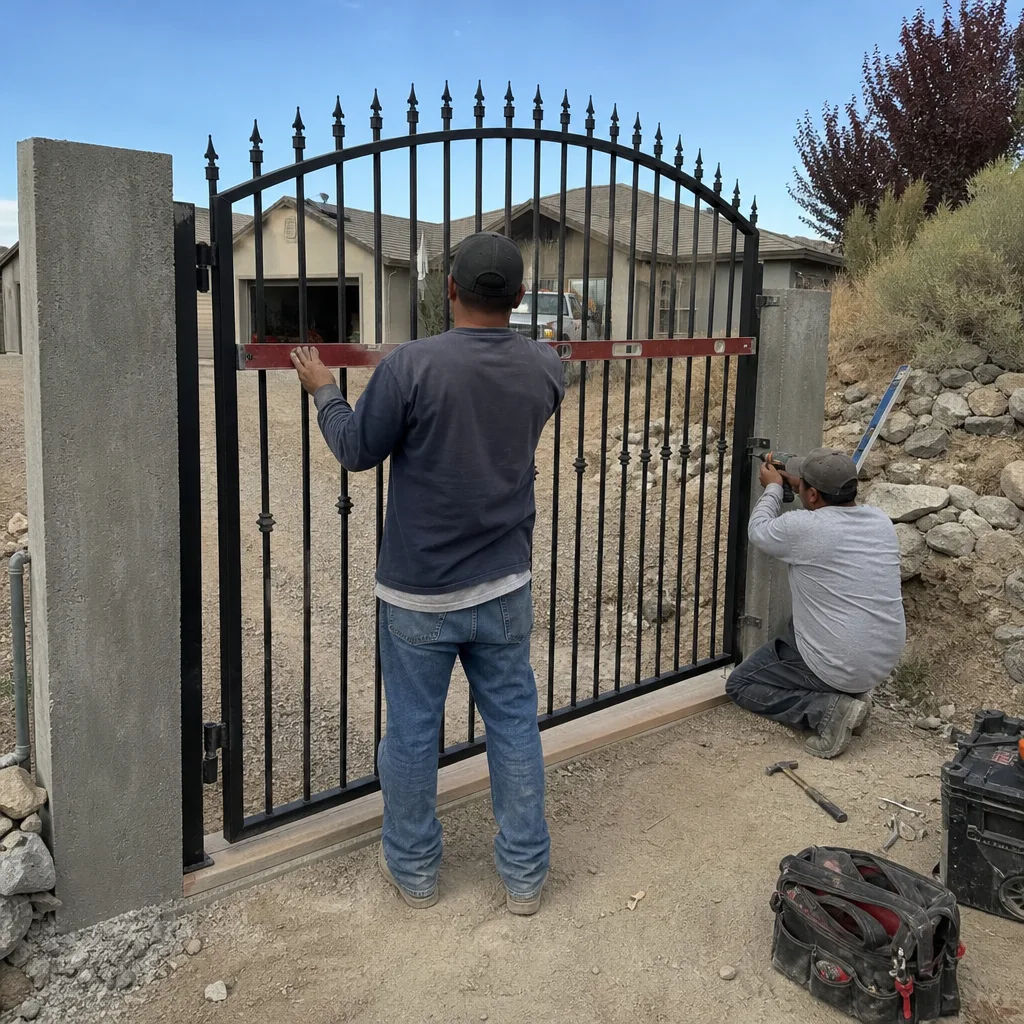
Here’s the point most homeowners miss. The warning sign you saw last month can come back. Not because the repair was wrong, but because a different component was being stressed by the same root cause. The way to know whether a returning signal is new or a recurrence is to have documentation from the last visit. Ask for these five things after any diagnostic or repair.
- The written price you agreed to before work started. Your copy. This is the reference point if a future technician quotes a different number for the same fault.
- A photo log of every adjustment. Limit-switch positions before and after, photo-eye alignment readings, wiring connections as installed. These photos let a different technician see the state that was set, not just read about it.
- Part numbers for anything replaced. The exact model of control board, keypad, arm bracket, or detector card. Without this, the next visit starts from “I think it was a Linear” rather than “it was a Linear X-X-X.”
- A record of the root cause as it was found. Not just “replaced the limit switch,” but “limit switch was set 12 degrees past travel; reset and photographed the new position.” The reason is what tells you whether the warning sign is a one-time fault or a drift.
- The warranty terms in writing. Under our 365-Day Done Right Promise, any repair that doesn’t hold is made right at no additional charge within a full year. That’s a specific term, and you should have it in writing regardless of who does the work.
That’s the practical reason we treat documentation as a clause in a standard rather than a nice touch. When a homeowner in Winchester hands us a photo of a limit-switch position and a part number, the diagnostic window narrows from hours to minutes. That’s a visit that costs less and that gets the problem addressed the first time. It’s covered in more detail on our Gate Motor & Opener in Winchester page. And if you’re thinking about upgrades, new automation, or access control hardware as part of the fix, the planning process is described under Gate Installation in Winchester. That work is measured, ordered, and scheduled – not dispatched same-day.
Common Mistakes to Avoid
Every one of these mistakes shows up in the phone calls we take from Winchester. Avoiding them saves a diagnostic visit, and often a part.
- Dismissing a half-second delay as a quirk. The delay is a limit-switch drift reading that will become a full stop in weeks to months. Treating it as nothing is the single most common reason a homeowner pays for a repair that could have been a reset.
- Adjusting the limit switch yourself. Two turns the wrong way can push the gate past the frame, strip the arm bracket, or disable the safety reverse. Limit switches are one of the components that stay in the technician’s hands for good reason.
- Replacing the battery without testing the charging circuit. A dead battery is sometimes a symptom of a failed charger, not the cause of the fault. Swap the battery without diagnosing the charge side and you’ll be doing it again next season.
- Forgetting the log. “It’s been doing this for a while” costs more diagnostic time than “three times this week, Tuesday, Wednesday, Friday, all at 7:40 a.m.” The log is nearly free to keep.
- Assuming the loop detector is fine because the gate still opens. The loop’s job is to sense a vehicle and hold or reverse the gate. A loop that opens the gate but releases it onto a car is failing at its most important job.
- Ignoring the control board indicator pattern. A board whose LED cycles in a new pattern is reporting a fault that can be read directly. Take a photo. It takes seconds and saves a visit.
- Accepting a verbal estimate. A number said out loud at the gate isn’t a price. Get the written price in hand before anyone touches the gate. That’s the first principle of how we work, and it should be standard for any technician you hire.
When to Call a Professional
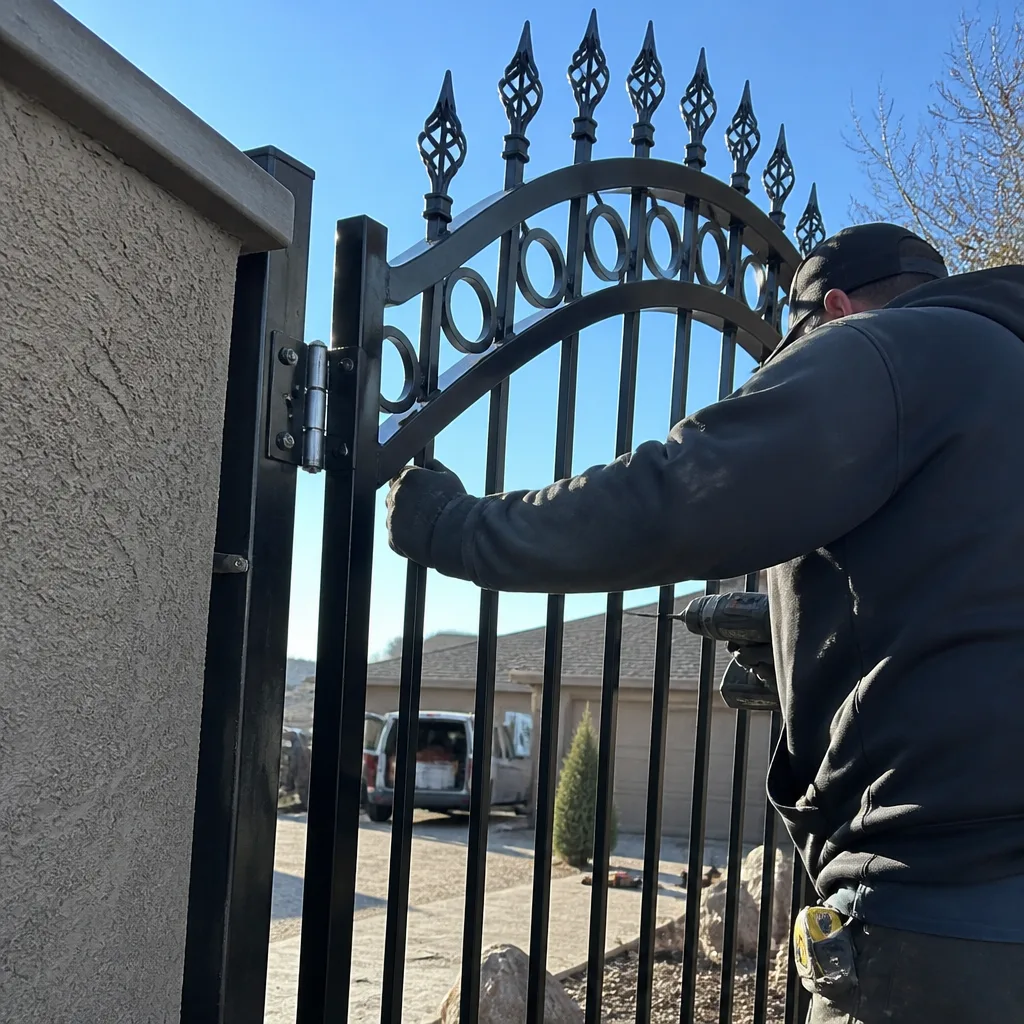
Call us when the gate reverses on a vehicle, when the loop detector releases the gate onto a car, when the photo-eye (the infrared safety beam) is out of alignment, when a gate stalls in the drive lane, or when the control board shows an unfamiliar indicator pattern more than once. Call when the gate has stopped short of full open or close on two separate days. Call when the battery backup runs during normal power hours. Call when the keypad delays more than a second and the delay is growing. None of these are DIY-safe diagnoses, and the risk of adjusting the wrong setting is real. Vance Gate Repair Winchester offers free estimates in Winchester, with a live person answering the phone at any hour and a written price delivered before any work starts. That number is (866) 983-9213. If you’ve had a repair done elsewhere and want a second look, bring the paperwork. Our free second opinion on another company’s written estimate is exactly the kind of review that saves money.
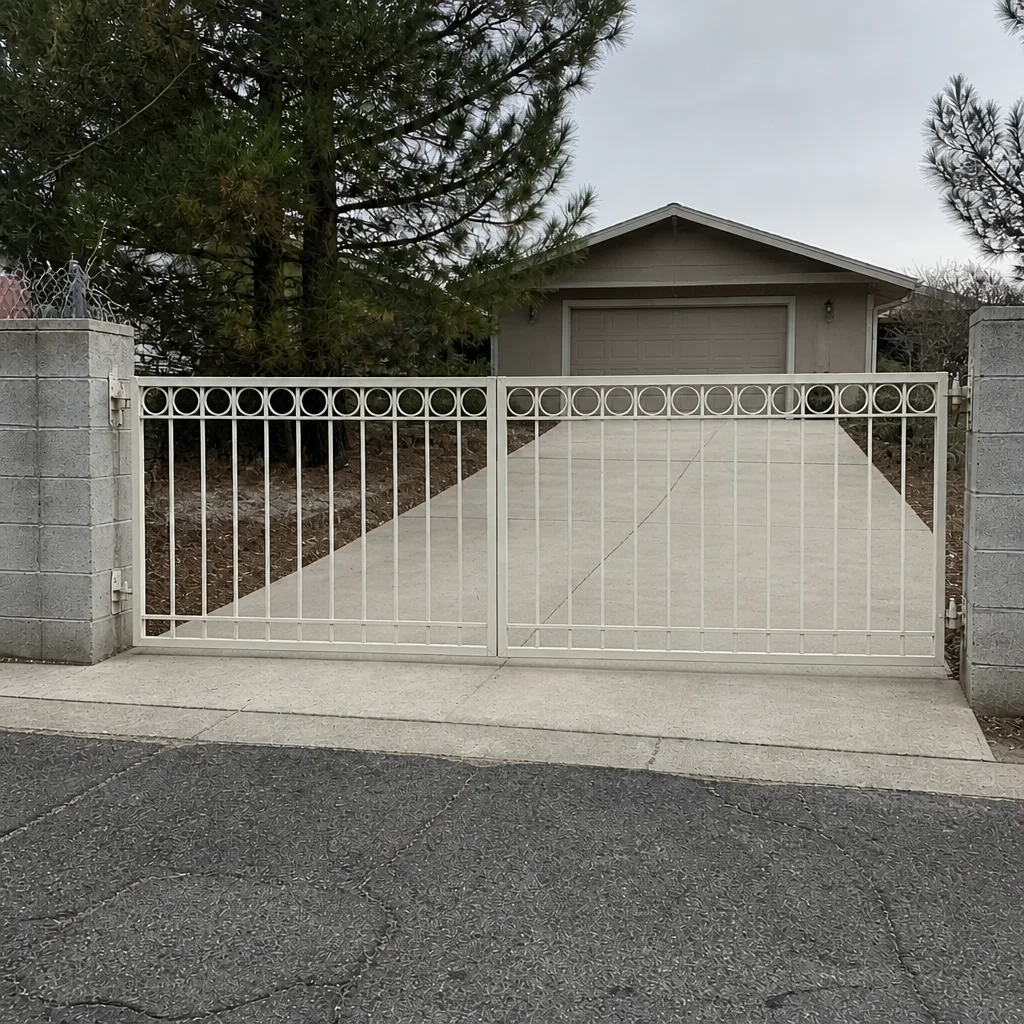
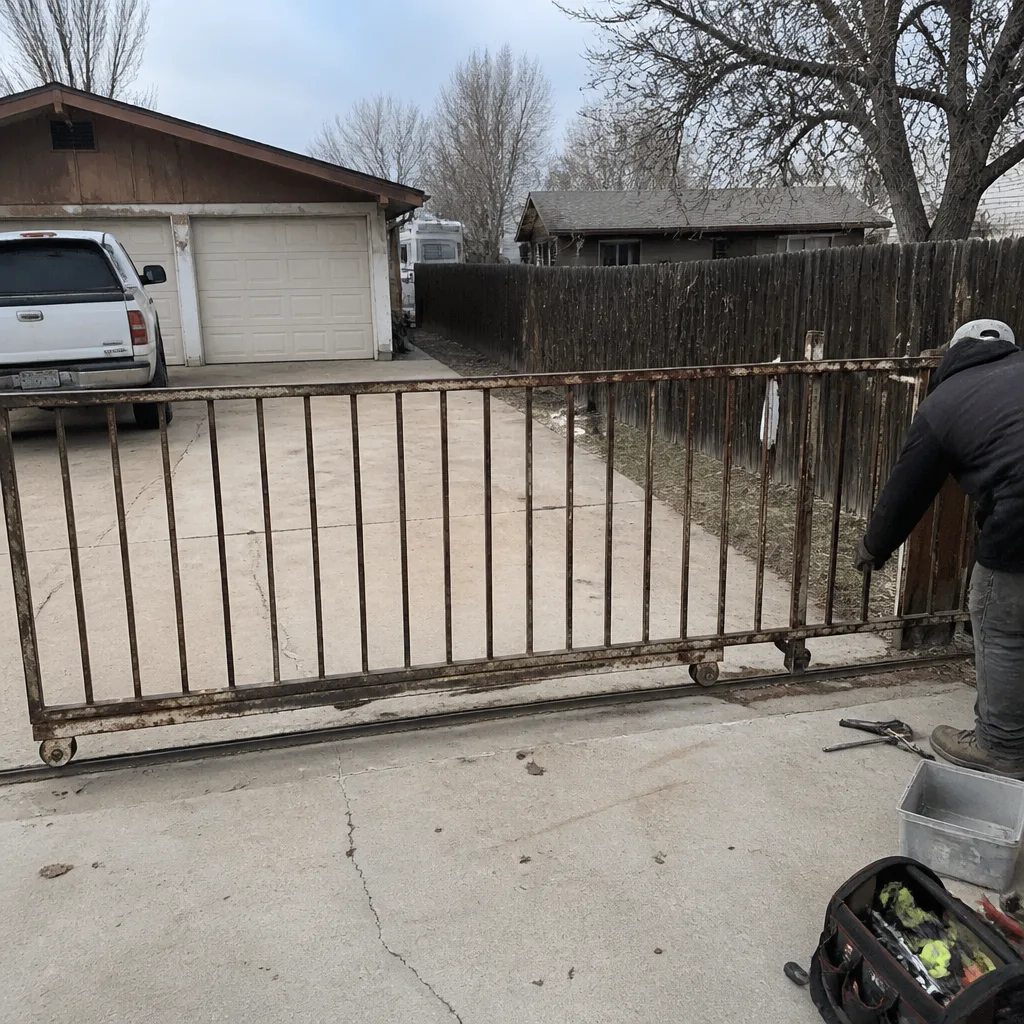
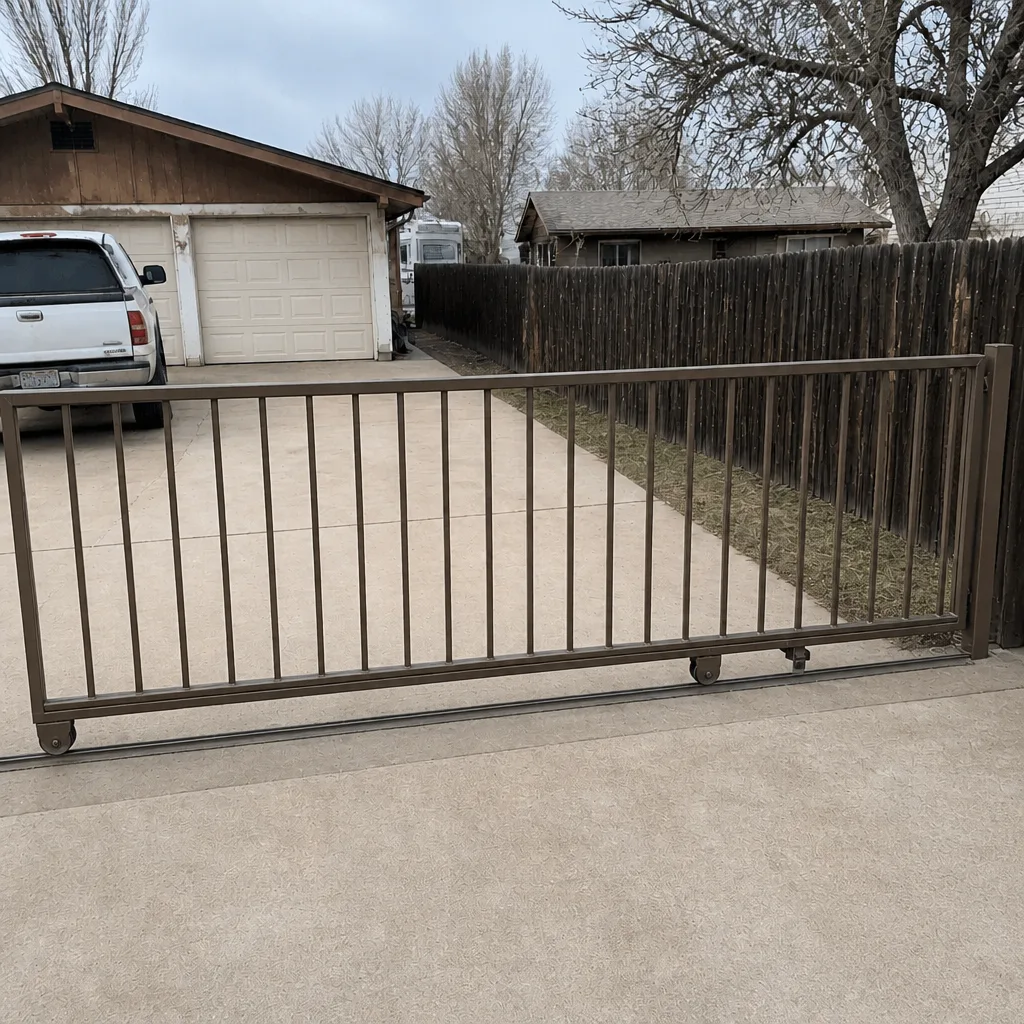
See the difference
BeforeAfter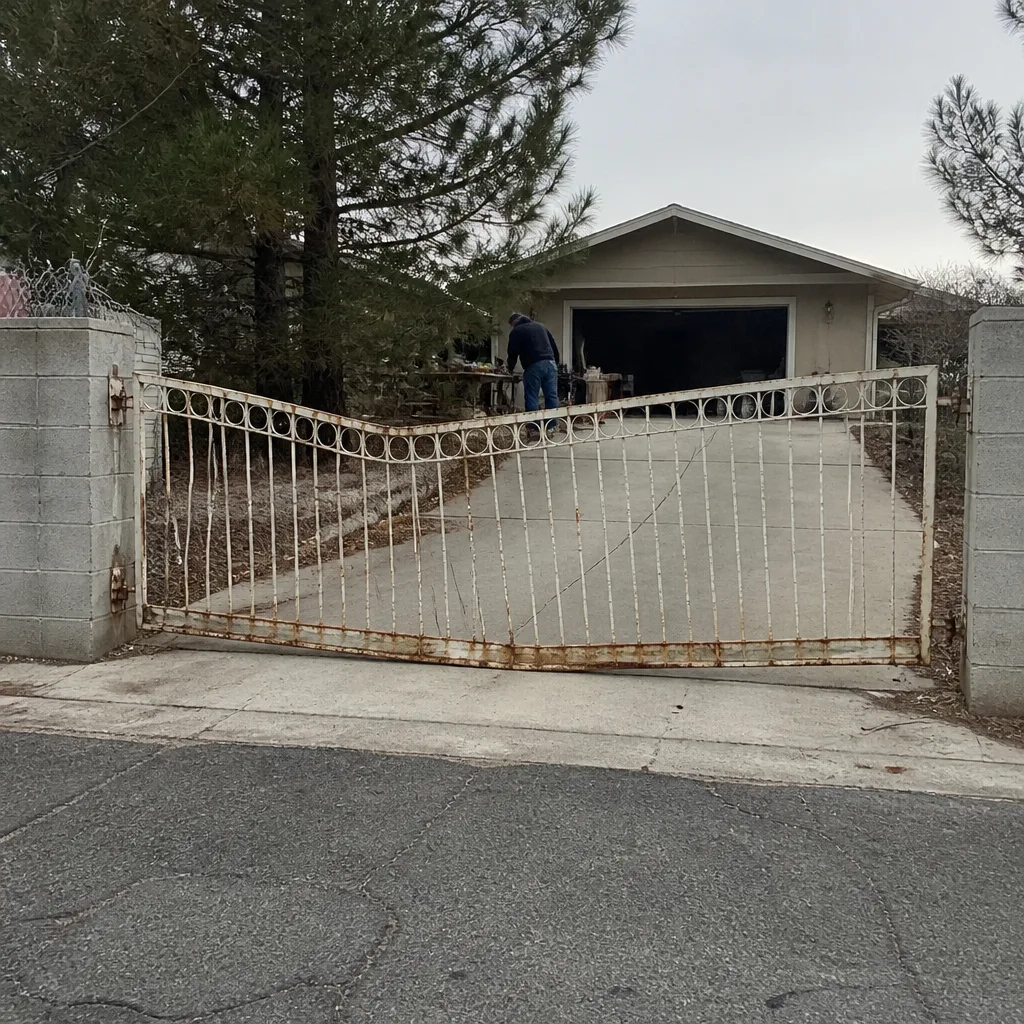 Before
 After
 Before
 After
Frequently Asked Questions
The first warning signs are a delayed response to keypad input, inconsistent loop detector triggering, the gate stopping short of full open or close, an unfamiliar control board indicator pattern, and battery backup activating during normal power hours. Any of these showing up twice in a week is a pattern rather than a random glitch. Call (866) 983-9213 for an exact diagnostic quote – estimates are free.
Most residential access control diagnostics and repair visits in Winchester run in the low-to-mid hundreds of dollars, with the exact price depending on the component involved. A limit-switch reset, keypad repair, or photo-eye realignment is at the low end. A loop detector card replacement, a control board swap, or an arm bracket repair runs higher. The price is written and handed to you before any work starts. Call (866) 983-9213 – the written estimate is free and there’s no surprise invoice at the end.
No. A gate that reverses without an obstruction in its path is reporting a fault, usually at the photo-eye (the infrared safety beam), the loop detector, or the arm’s strain sensor. The gate is doing its job; the fault is the part that needs attention. Call (866) 983-9213 so a technician can read the board and photograph what’s set.
Yes, and more often than most homeowners realize. Metal frames expand with heat, so a limit switch set on a mild day can false-trip on a July afternoon and leave the gate short of the post. Cold weather drops battery voltage and can make a marginal backup battery read as a fault during normal power hours. Both are Winchester-specific patterns we address all year.
A written log with dates, times, and conditions is significantly better than a description from memory. The log lets a technician see frequency and progression in one visit; a memory description often means a second visit. A few minutes of notes over a week usually shortens the diagnostic visit by half. Call (866) 983-9213 to schedule.
Ask for the written price you agreed to, a photo log of every adjustment made, part numbers for anything replaced, the root cause as documented by the technician, and the warranty terms in writing. Under the 365-Day Done Right Promise, every completed repair is covered for a full year at no additional charge. Call (866) 983-9213 and we’ll walk you through what you’ll receive before we start.
The Bottom Line
Your gate’s warning signs are data, not annoyances. The half-second delay, the inconsistent loop trigger, the gate stopping eight inches short, the unfamiliar indicator pattern, the battery that runs when it shouldn’t: each one points to a specific component and a specific progression. Log what you see, timestamp it, photograph the control board, and bring the log to the appointment. The garage-door springs and gate drive arms on a residential gate carry real force; if you see a sign of strain at the hinge or arm, that’s a technician’s job, not a DIY adjustment. Nuisance signs get scheduled. Liability signs get looked at now. Either way, the sooner a warning sign is read, the cheaper and simpler the fix.
Call Vance Gate Repair Winchester at (866) 983-9213 for a free estimate. A live person answers at any hour. Every visit starts with a written price before any work begins, ends with a photographed record of what we found and what we set, and is covered by our 365-Day Done Right Promise. Whether your gate is on a Linear, a Viking, a Ghost Controls, or a DoorKing operator, we work on what’s already there rather than steering you toward a replacement you don’t need. Our technicians have up to 12 years of experience, and we work across nine major gate-automation brands. If you’ve already had a repair, bring the paperwork – our second opinion on any written estimate from another company is free.
Written by the team at Vance Gate Repair Winchester.