
Last updated November 18, 2026
 Wrought iron
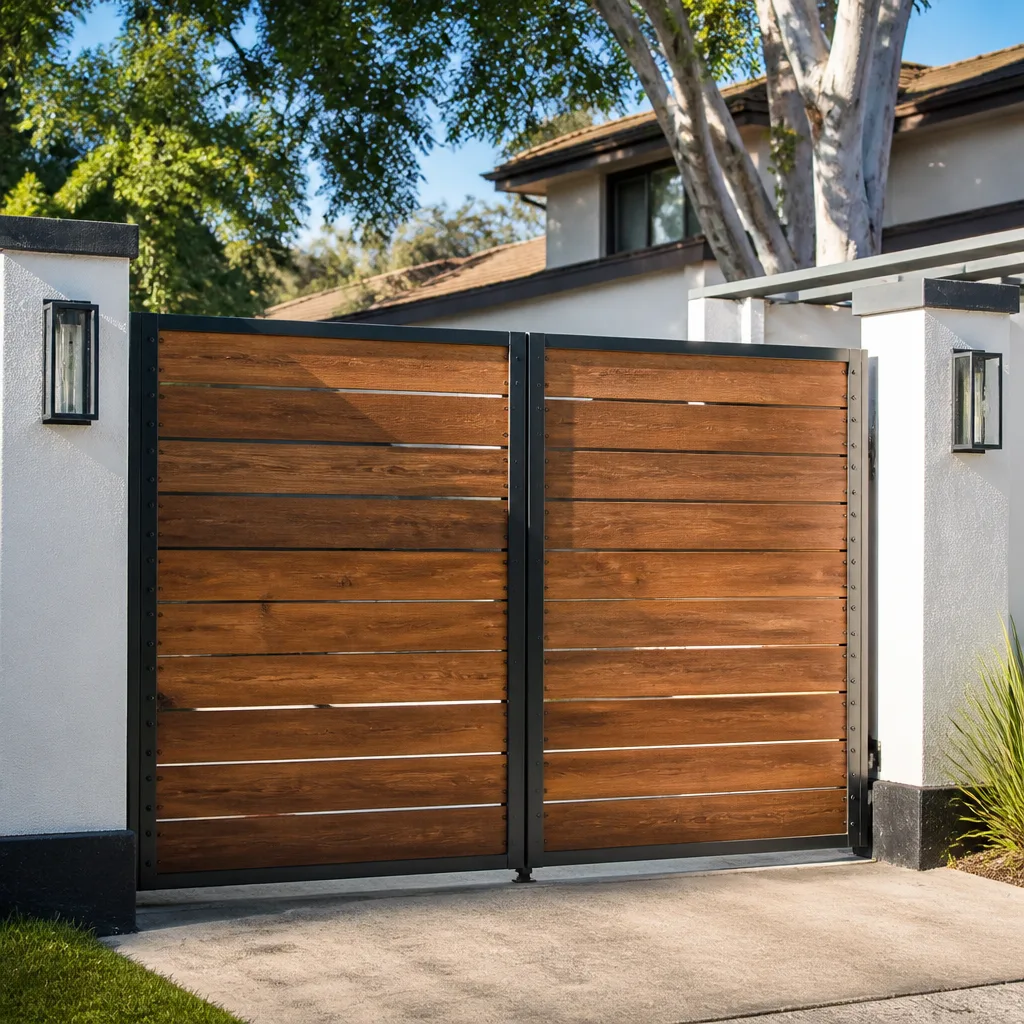 Wood & steel frame
 Farm & ranch
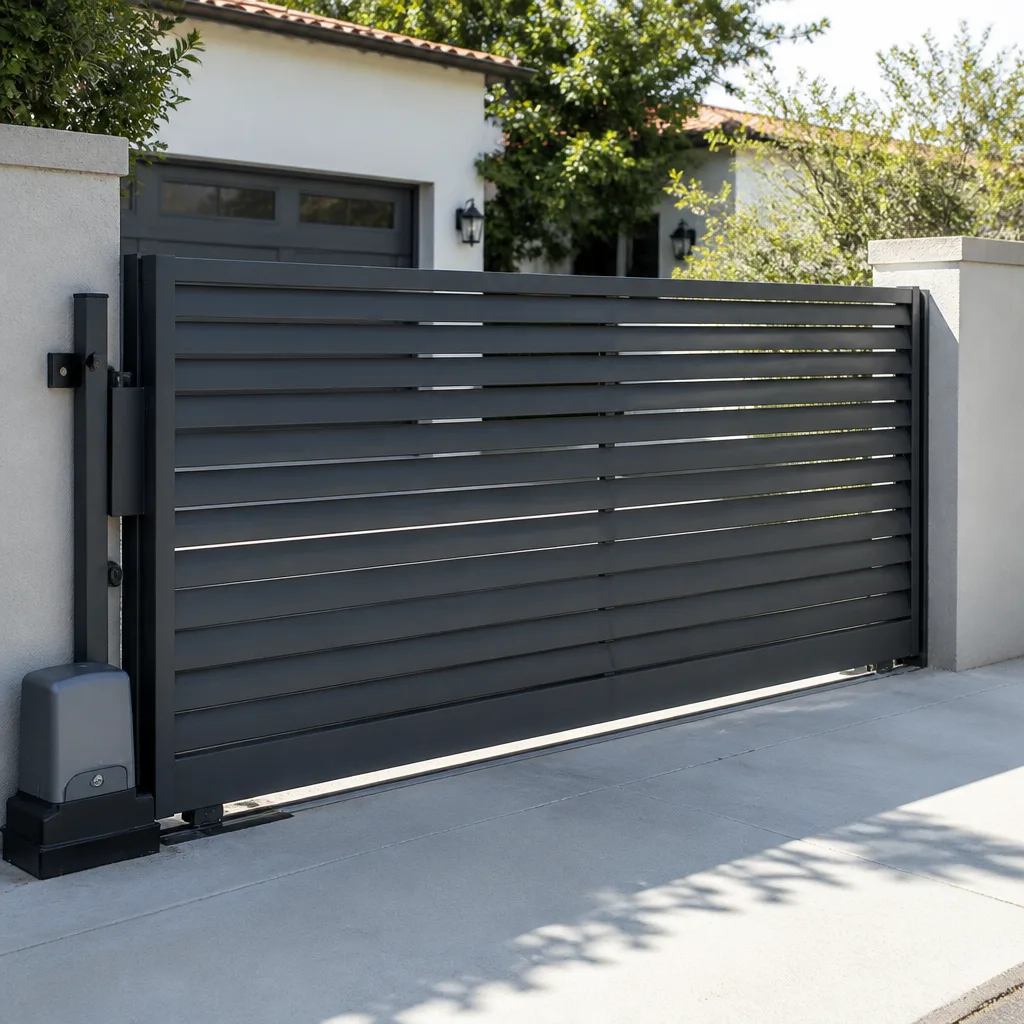 Sliding driveway gates
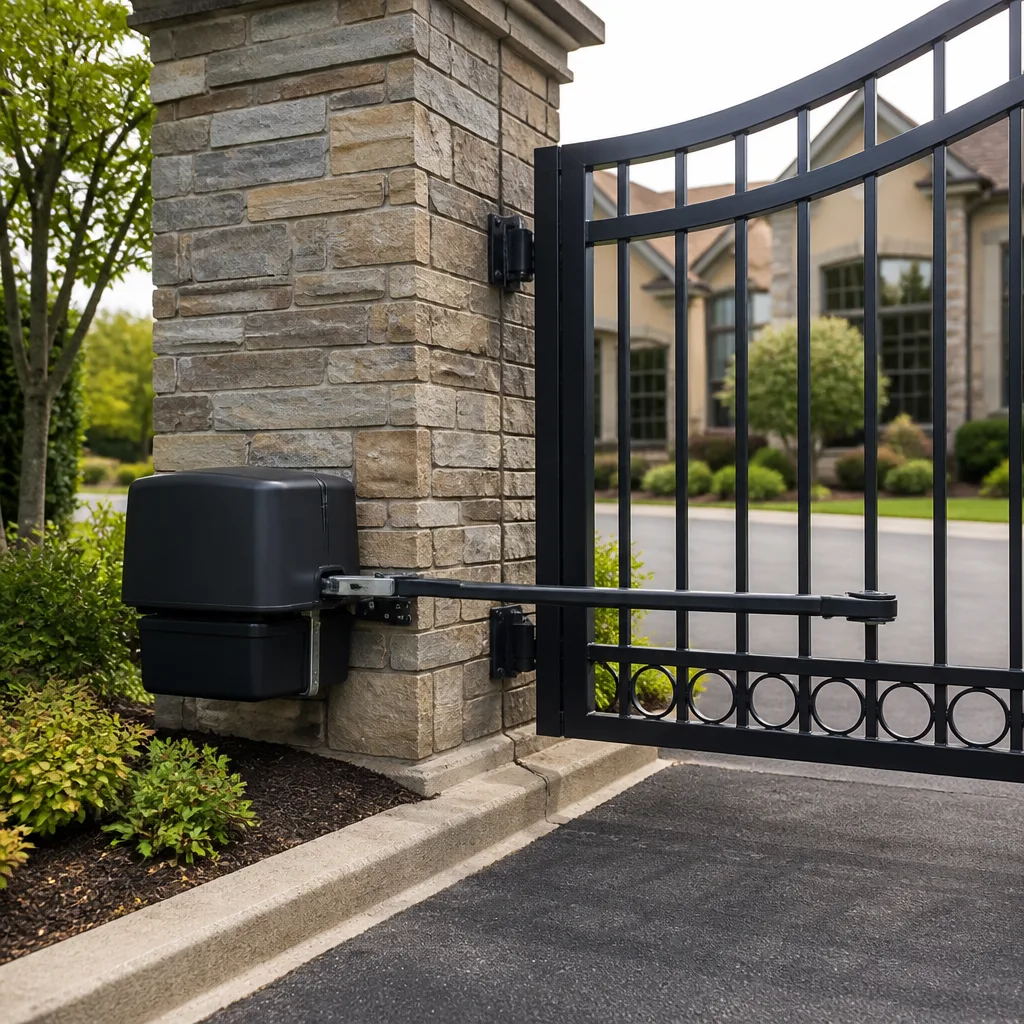 LiftMaster operators
Free on-site gate assessment - hinges, posts, and your LiftMaster or Nice gate operator checked before anything is quoted
The assessment is free and the quote is the invoice.
Get your free estimateGate Repair Maintenance Checklist for Winchester Homeowners
Hard water mineral deposits on a battery terminal can drop effective voltage by 0.4V. That’s often enough to make a healthy gate motor behave like a failing one. We’ve seen it repeatedly on Winchester gates, where irrigation water leaves a white crust on every exposed contact and homeowners end up paying for a motor replacement they never needed. This guide is built from failure patterns we actually find on Winchester driveways, not a manufacturer PDF with the city name swapped in. You’ll get a seasonal checklist, the two tasks that quietly void most warranties, and the exact documentation to keep on every visit.
Quick Answer
A proper gate maintenance checklist for Winchester covers battery terminals (cleaned of hard-water mineral crust), circuit-board dust infiltration, hinge and roller wear under 100°F-plus temperature swings, limit-switch and photo-eye alignment, and a photo log of every adjustment. Most swing and slide gates in Winchester need a full inspection twice a year: once in late spring after the dusty season and once in late fall before the cold swings in. Skipping either interval is the single most common reason a gate that worked fine in March fails in July.
Styles & brands we work with
- Wrought iron
- Wood & steel frame
- Farm & ranch
- Sliding driveway gates
- LiftMaster operators
Table of Contents
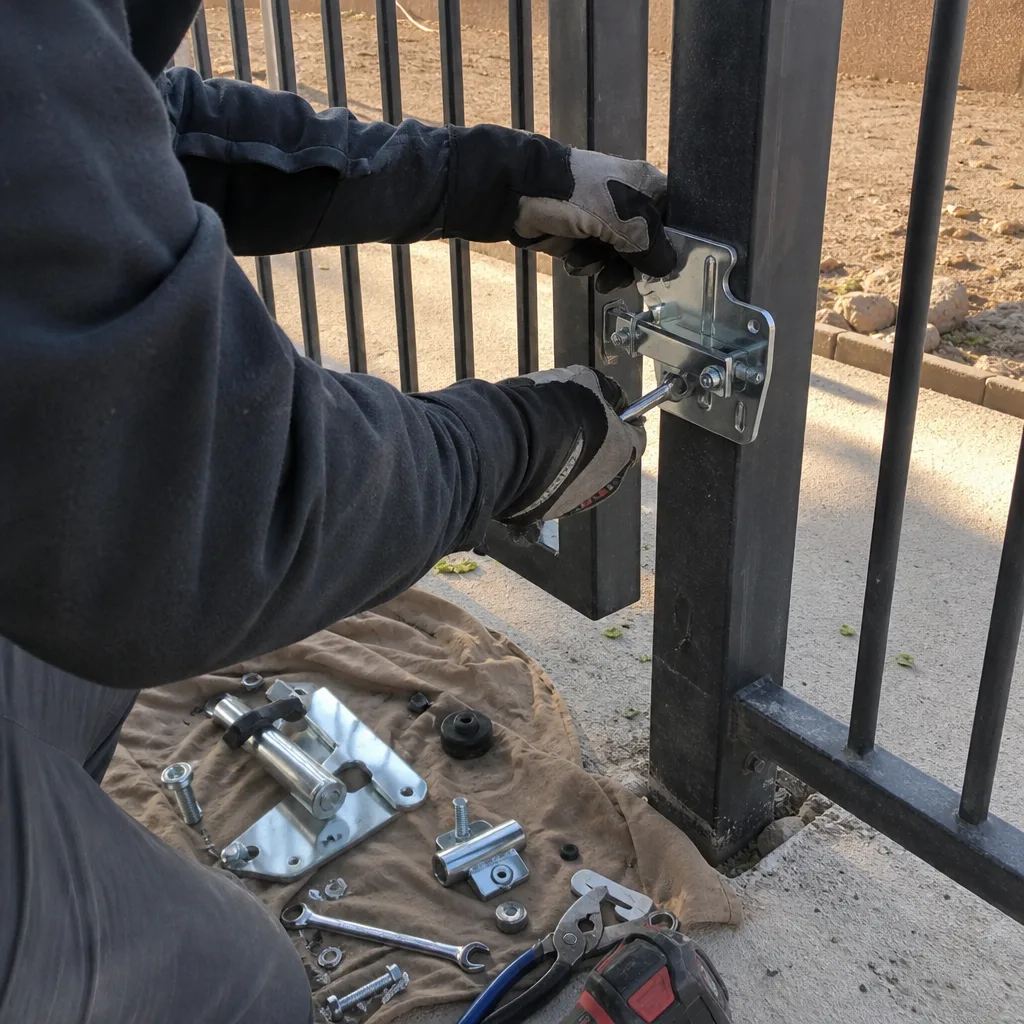
- Why Winchester Gates Fail Differently
- The Battery Terminal Protocol
- Dust Infiltration and Circuit Boards
- Hinge and Roller Wear Intervals
- The Two Tasks That Void Warranties
- What to Photograph and Log
- A Seasonal Checklist for Winchester
- Safety First: Springs, Power, and Moving Parts
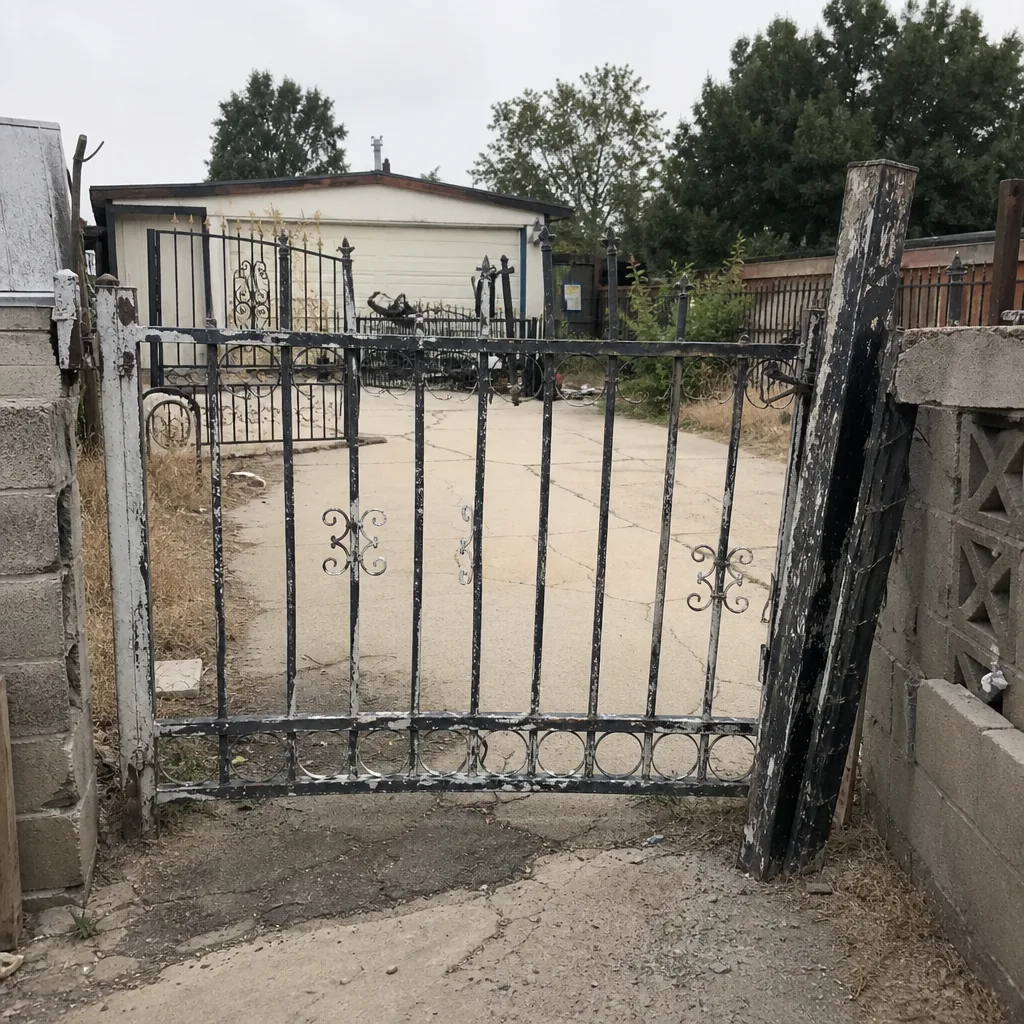 Before
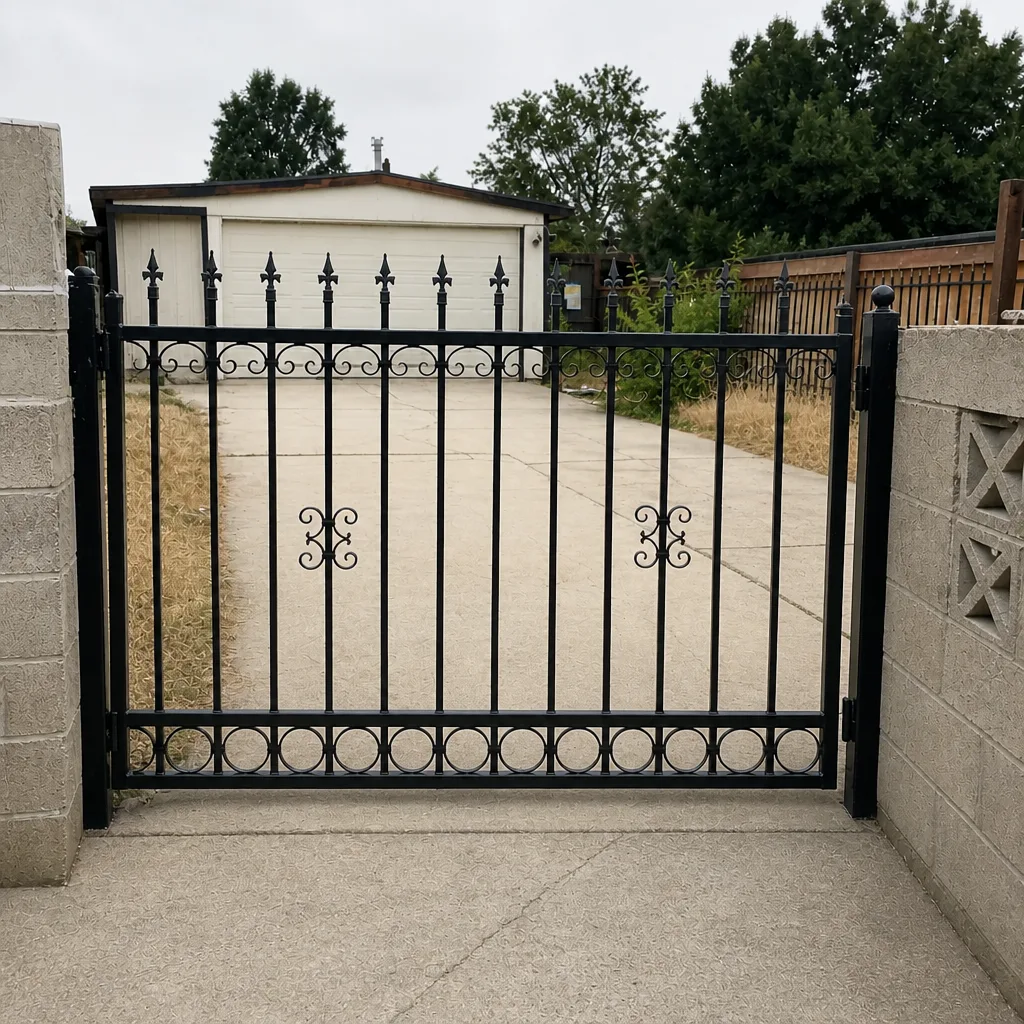 After
Why Winchester Gates Fail Differently
Winchester sits in a pocket of the desert Southwest where three stressors stack on top of each other. First, alkaline dust. It’s fine, it’s persistent, and it settles into every enclosure and limit-switch housing on a property. Second, temperature swing. A gate operator here can sit in 105°F afternoon heat and 35°F overnight lows within the same month. Third, hard irrigation water. Sprinkler overspray hits battery terminals, hinge pins, and photo-eyes, then dries into a mineral film that insulates electrical contacts and accelerates corrosion.
What that combination does is specific. Steel expands and contracts more than the aluminum and bronze bushings around it, so hinge clearances open up faster here than the manufacturer’s baseline schedule assumes. Dust bridges gaps on circuit boards that would stay clean in a wetter climate. And the mineral film on a battery terminal reads to the control board as a dying battery, which means a motor that tests healthy on the bench still stutters on the driveway. If you want the broader repair picture, our Gate Repair in Winchester page covers how we diagnose these failures.
Winchester homeowners in neighborhoods with heavy landscape irrigation tend to see battery and contact problems roughly twice as often as properties with drip systems. That’s not opinion, it’s a pattern that shows up in the photo records we keep on every visit.
The Battery Terminal Protocol (Winchester-Specific)
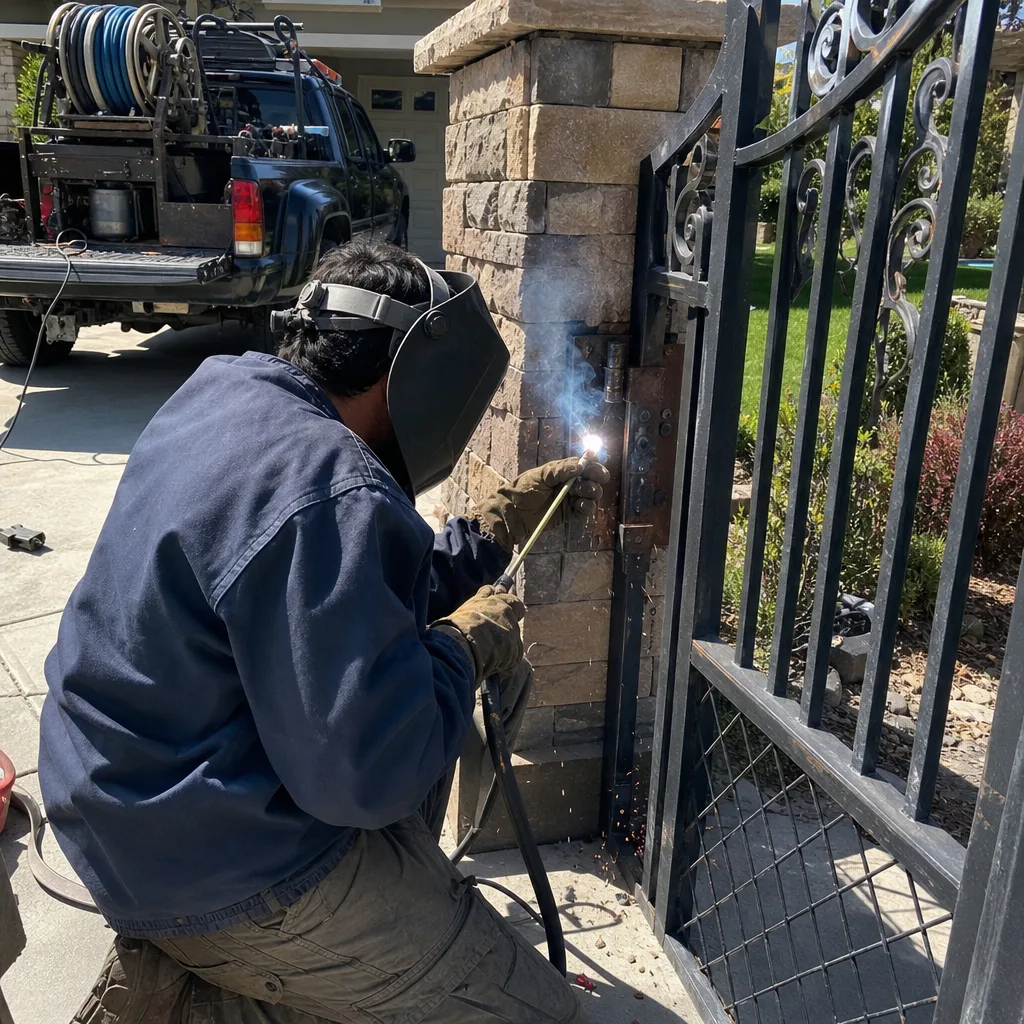
This is the item most checklists skip, and it’s the one we find most often. On a battery-backup gate operator, the terminal can carry a visible white or pale-green crust from Winchester’s hard water. That crust adds resistance. A 12V battery reading 12.4V at the terminal can deliver only about 12.0V to the board once the deposit is in the path. That 0.4V drop is enough to trigger low-voltage faults, incomplete open cycles, and a control board that logs the battery as failed.
Here’s the cleaning protocol we follow. Do this with the operator powered down at the breaker, and only if you’re comfortable working near low-voltage wiring:
- Photograph the terminal first. A before photo is part of the record. It shows the next technician what the deposit looked like and where it formed.
- Disconnect the negative terminal, then the positive. Never the other way around.
- Brush the crust off with a stiff nylon brush, not a wire brush. A wire brush removes plating along with the deposit and speeds future corrosion.
- Neutralize with a baking-soda-and-water paste. Apply, let it sit for a minute, then wipe clean with a dry cloth.
- Dry the terminal completely before reconnecting. Moisture plus alkaline dust is the exact combination that restarts the crust.
- Apply a thin coat of terminal protector or dielectric grease. This is the step that prevents the next 0.4V drop.
- Reconnect positive first, then negative, and photograph the clean terminal with a voltage reading on the meter visible in the frame.
If the terminal won’t clean up or the battery reads below 12.2V after charging, the battery needs replacing, not another cleaning. Call (866) 983-9213 for an exact quote; estimates are free and the written price is handed over before any work starts.
Dust Infiltration and Circuit Boards
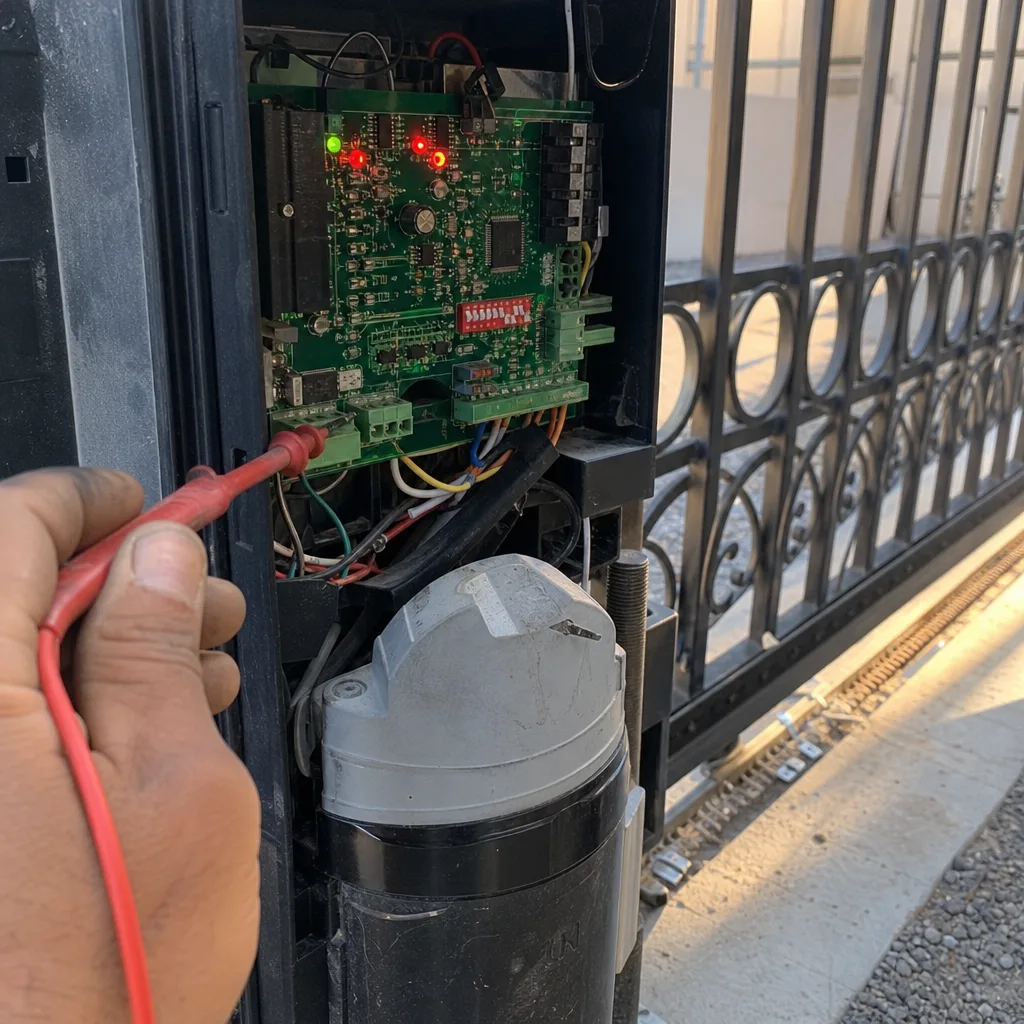
Alkaline desert dust is not just grit. It’s mildly conductive, and in a control enclosure it bridges small gaps between traces on a circuit board. We’ve pulled boards from Winchester gates where a fine tan film had created a low-resistance path between two logic pins, causing intermittent faults that only appeared on hot afternoons. The gate would open fine in the morning and stall at 3 p.m. The homeowner had already replaced a remote and a receiver that were both fine.
The dust check is straightforward but it needs to happen on a schedule:
- Inspect the enclosure seal every six months. A cracked gasket or missing screw lets dust in faster than any other failure point.
- Check the board for a visible film. A dry, soft brush and low-pressure air removes surface dust. Never use compressed air at high pressure near the board; it drives dust deeper and can crack solder joints.
- Look at the limit-switch housing. Dust in the housing causes limit switches to read short travel, which makes the gate stop early or reverse mid-cycle.
- Photograph the board before and after cleaning. The photo log is what lets the next technician see whether dust was the cause or whether the fault came from somewhere else.
- Verify the enclosure is mounted with the seal facing down or per the operator’s spec. Upside-down seals trap water and dust together, which is worse than either alone.
If your operator is a Ghost Controls, Mighty Mule, or DoorKing unit, the enclosure design and seal location differ enough that the inspection steps vary. We work on all three brands and don’t steer you toward a replacement when a cleaning and a reseal will do. Our Gate Motor & Opener in Winchester page has the brand-by-brand notes.
Hinge and Roller Wear Intervals
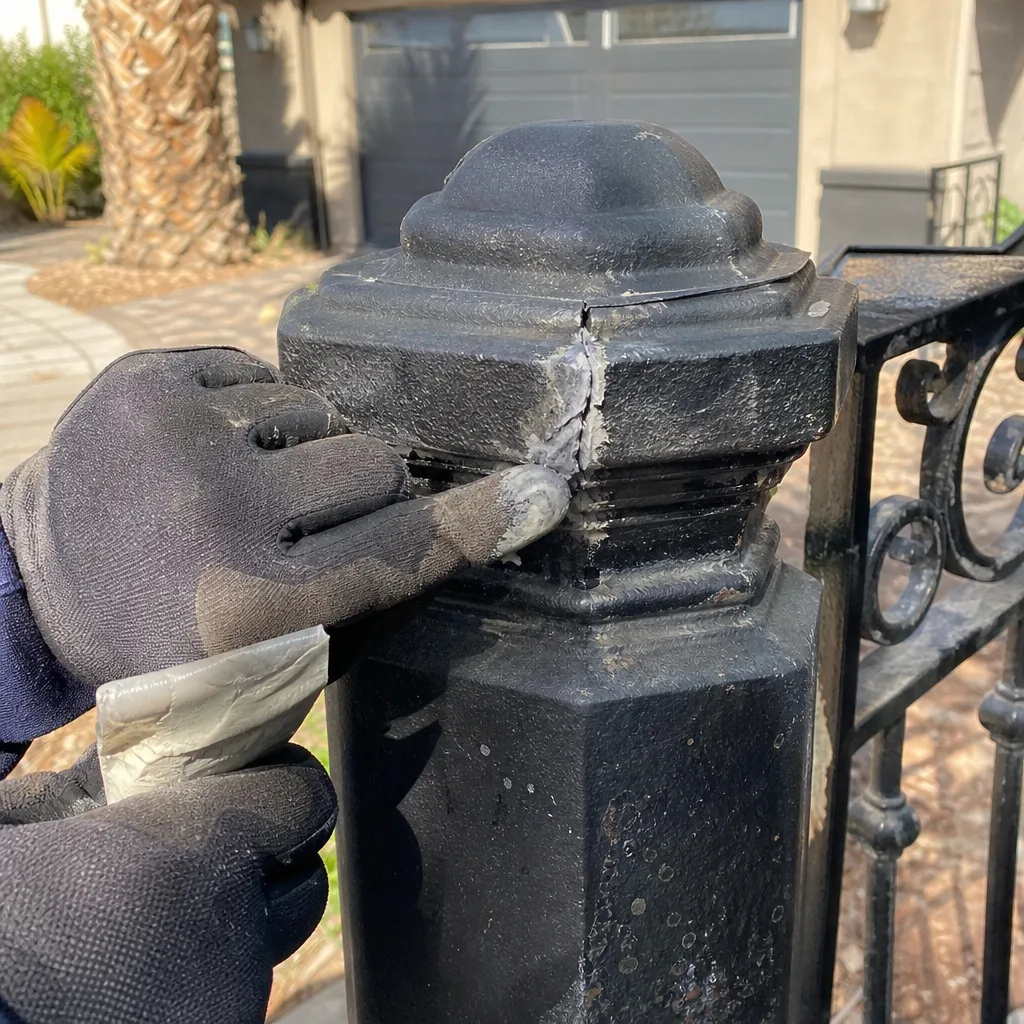
The manufacturer’s wear schedule assumes a temperate climate with a modest seasonal swing. Winchester doesn’t qualify. A steel hinge pin here can see 70°F of differential across the year, and its surrounding bushing doesn’t expand at the same rate. The practical result: hinge clearance that would take two years to open up in a mild climate opens up in roughly 12 to 14 months on a heavily used Winchester driveway.
Our calibrated intervals for Winchester swing and slide gates:
- Swing-gate hinges: inspect every 6 months, grease every 6 months, plan for a pin-and-bushing replacement around the 12-to-18-month mark on gates that cycle more than 10 times a day.
- Slide-gate rollers: inspect every 6 months, replace when you can feel a flat spot on the roller or see a groove worn a sixteenth of an inch deep.
- Track and guide rollers: clear debris and check alignment every 3 to 4 months in dusty months; the track collects grit that accelerates roller wear more than weight does.
- Idler and tension pulleys (chain-drive gates): check every 6 months; a worn idler pulley is the single most common cause of a chain jumping its sprocket.
Listen for a change. A gate that clicks once during an open cycle has a worn pin. A gate that whines or shudders has a roller or an alignment problem. Catching either at the inspection stage is far cheaper than catching it after a hinge pin shears, which can drop a gate leaf and take the operator with it. Call (866) 983-9213 for an exact quote on a wear inspection; estimates are free.
The Two Tasks That Void Warranties
Most gate operator warranties have conditions the owner never reads. Two of them, done wrong, will void coverage without anyone realizing it until a claim is denied.
Task one: removing or bypassing the safety edges or photo-eyes. When a photo-eye (the infrared beam that stops the gate if something crosses the path) is misaligned, the temptation is to bypass it, because it makes the gate work “normally” again. Every major brand, including the models we service from Ghost Controls, DoorKing, Elite, and Mighty Mule, voids the warranty on a bypassed or removed safety device. It’s also the single most dangerous thing you can do to a residential gate. If the photo-eye keeps tripping, the fix is alignment, wiring, or replacement – never a bypass.
Task two: adjusting the force or travel limit beyond the spec without documenting it. Turning up the motor force to push through a stiff hinge is a common shortcut. It masks the real problem and stresses the operator past its designed load. It also voids the warranty. The correct fix is to free the hinge, then reset the limit switches to spec and photograph the new positions.
To verify both were done right, ask for the documentation. Under the Haven Standard’s evidence clause, every Vance visit includes a photographed record of the safety-device alignment and the limit-switch readings, with the readings visible in the photo. That record is what you hand to the manufacturer if a claim is ever contested.
What to Photograph and Log on Every Visit
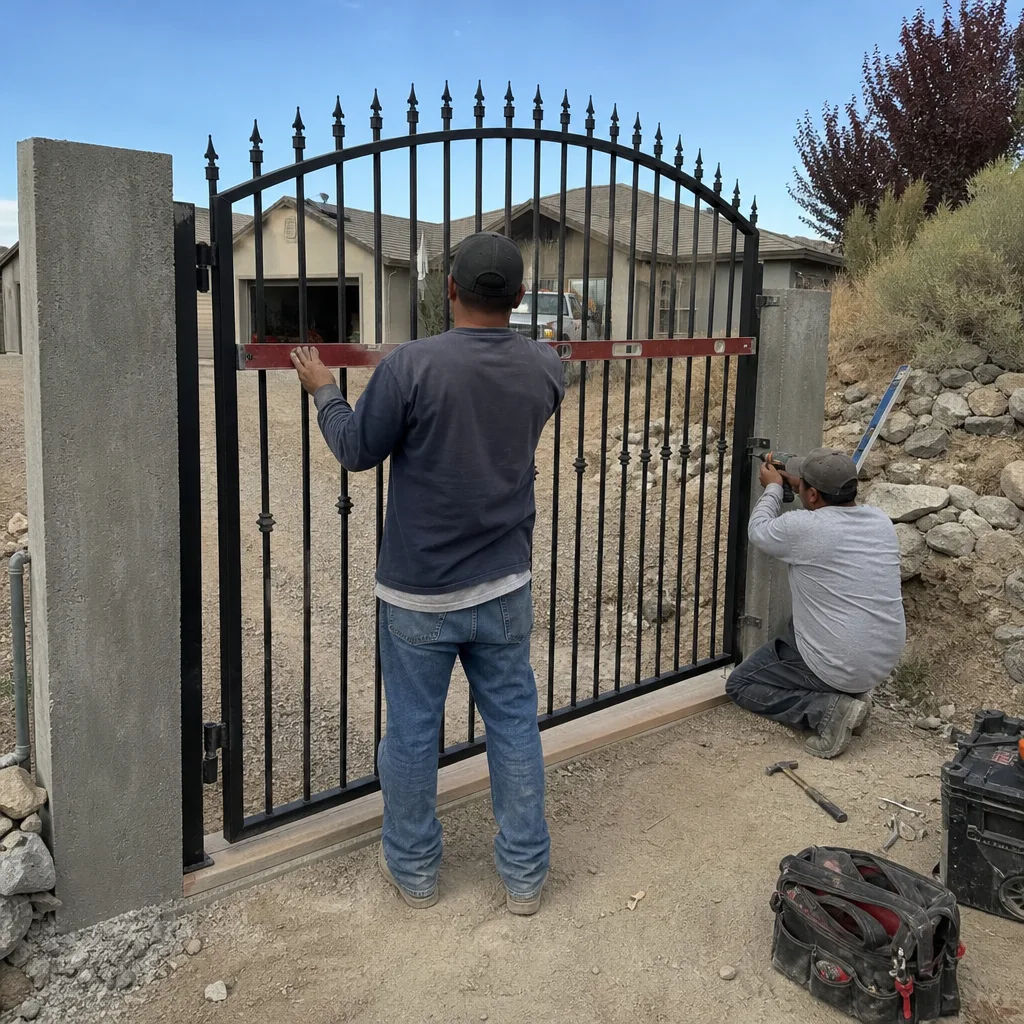
Bad documentation is worse than none, because the next technician trusts it. A photo of a hinge from six feet away tells nobody anything. Here’s the record we leave on every job, and the record you should ask for from whoever maintains your gate:
- The battery terminal, before and after cleaning, with a voltage reading visible. The reading is what makes the photo useful.
- The control board, before and after dust removal. Any discoloration should be noted in the written record, not just photographed.
- Limit-switch positions and the readings at each. The number is what matters; a photo without the reading is not a record.
- Photo-eye alignment, photographed from the line of sight. Note the distance between emitter and receiver if adjusted.
- Hinge or roller wear, with a measurement. A caliper reading or a marked photo showing the gap tells the next technician exactly what was found.
- The part number and brand of anything replaced. Written down, not just photographed. This is how you avoid paying twice to rediscover the same part number.
- The seal on the operator enclosure, photographed with the lid off. The next technician can see whether the gasket was intact or whether dust ingress is a recurring problem.
That record is what makes a maintenance schedule worth the money. A generic checklist says “checked hinges.” A useful one says “left hinge pin at 0.038 inch clearance, grease applied, photographed.” The difference matters when a problem returns six months later and nobody can remember what was found.
A Seasonal Checklist for Winchester
Two full inspections a year, timed to Winchester’s specific stressors, catch most failures before they cost real money.
Late Spring (May to June), after the dusty season:
- Clean the battery terminals of hard-water crust and check voltage under load.
- Open the enclosure, clean the circuit board of alkaline dust, and inspect the seal.
- Clear the slide track or swing path of grit and check roller and hinge wear.
- Re-align photo-eyes and test the safety reverse by hand.
- Check the enclosure for sun damage; UV degradation of plastic covers is a real summer risk here.
Late Fall (October to November), before the cold swings:
- Grease hinges and lubricate rollers with a cold-rated grease, not a summer weight.
- Verify the battery holds charge at cold-morning temperatures, not just warm-afternoon ones.
- Re-check hinge clearance after the summer expansion; what was snug in May may have opened up by October.
- Test the manual release; if the gate doesn’t release cleanly, the operator has a mechanical problem that cold weather will make worse.
If your gate is on a heavy daily cycle, add a mid-season check of the battery terminal and the photo-eye alignment. Those two items fail fastest in Winchester, and both are cheap to address at the inspection stage. If you’re scheduling a first installation or a replacement, our Gate Installation in Winchester page covers what a proper commissioning visit should include.
Safety First: Springs, Power, and Moving Parts
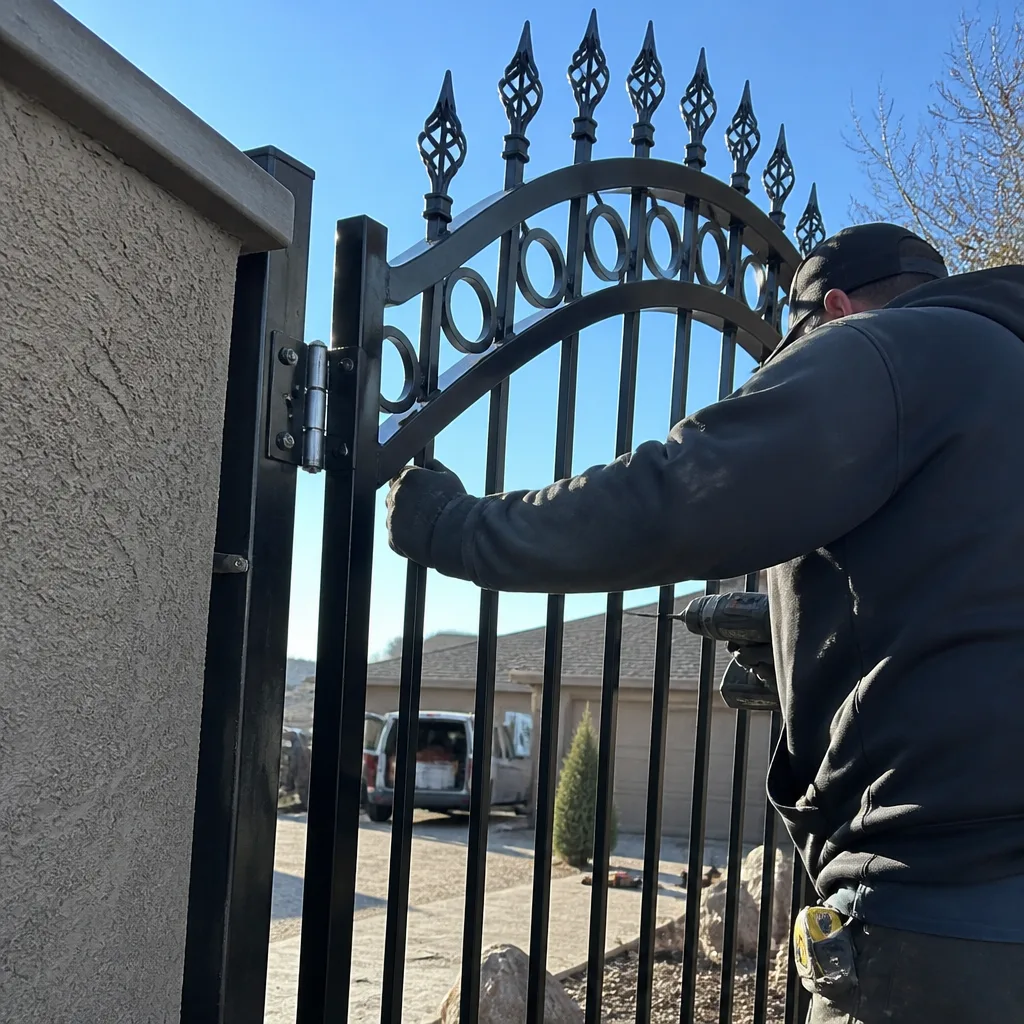
Some parts of a gate are safe to inspect. Others require a trained hand. High-tension springs, anything on the line-voltage side of the operator, and any work that requires reaching past a partially open gate are not DIY tasks. A loaded swing-gate spring can release suddenly and cause serious injury, and the line-voltage feed to an operator is a shock hazard even on a powered-down circuit if the disconnect isn’t verified.
What you can safely do: look, listen, photograph, and note. Look at the terminal for crust. Listen for a click or a whine in the cycle. Photograph the limit-switch position. Note the voltage reading on a battery. Then call a professional for the adjustment, the cleaning near energized components, and anything involving the spring or the power feed. We’d rather you hand us a photo and a note than a serious injury.
Common Mistakes to Avoid
- Skipping the battery terminal because the battery is “new.” A new battery in Winchester can grow a hard-water crust in a single season if irrigation overspray hits the enclosure.
- Turning up the motor force to push through a stiff gate. This masks a hinge or roller problem and stresses the operator past spec. It can also void the warranty.
- Bypassing a misaligned photo-eye to get the gate working again. That removes the safety edge, voids the warranty on most brands, and is the most dangerous shortcut in gate maintenance.
- Greasing hinges once a year in summer and calling it done. Winchester’s temperature swing opens hinge clearance in a way a summer-only schedule doesn’t catch. Fall grease matters more than summer grease.
- Using high-pressure air on a control board to clear dust. It drives the alkaline dust deeper and cracks solder joints. Use low pressure and a soft brush.
- Not keeping a photo record. Without a record, a recurring problem gets re-diagnosed from scratch every time, and you pay twice for the same discovery.
- Ignoring a new click in the gate cycle. A single click is a hinge pin starting to go. Left alone, it becomes a sheared pin and a dropped gate leaf within a season or two in Winchester’s heat.
See the difference
BeforeAfter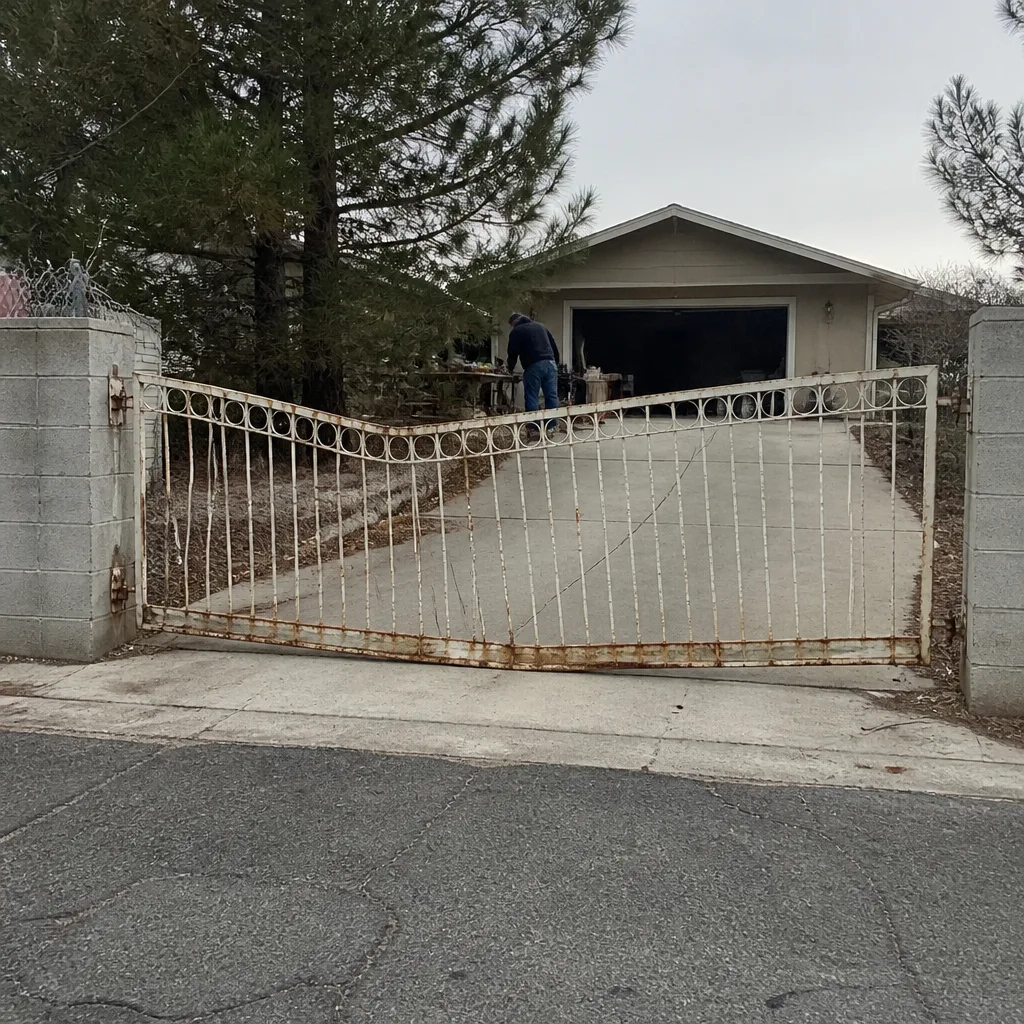 Before
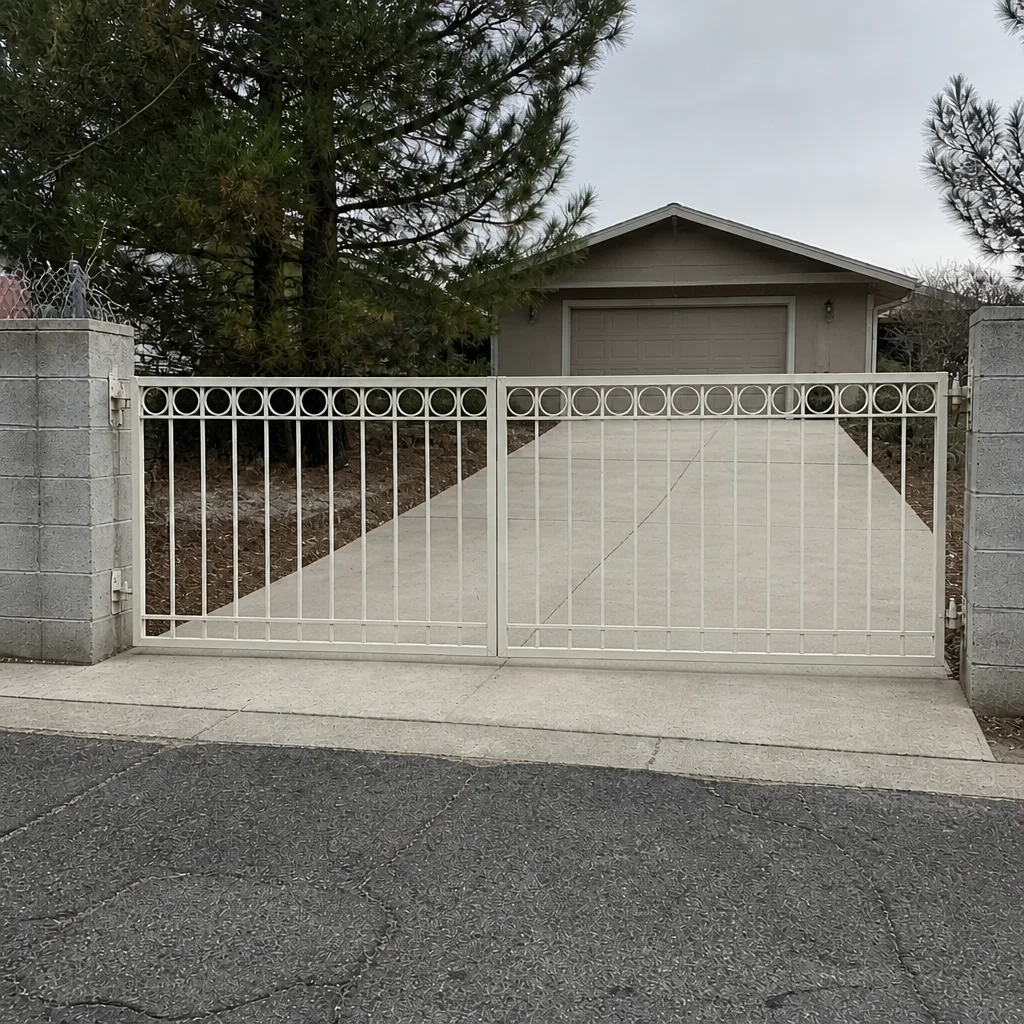 After
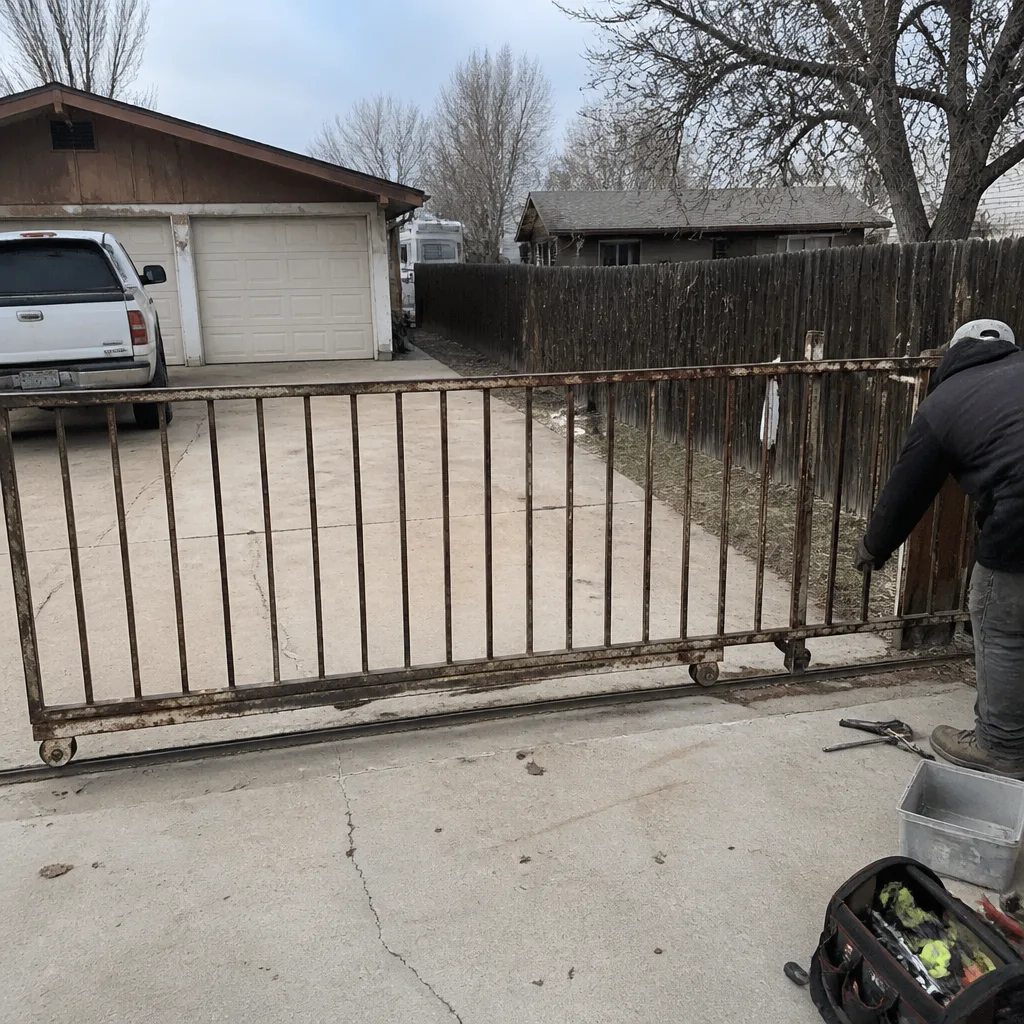 Before
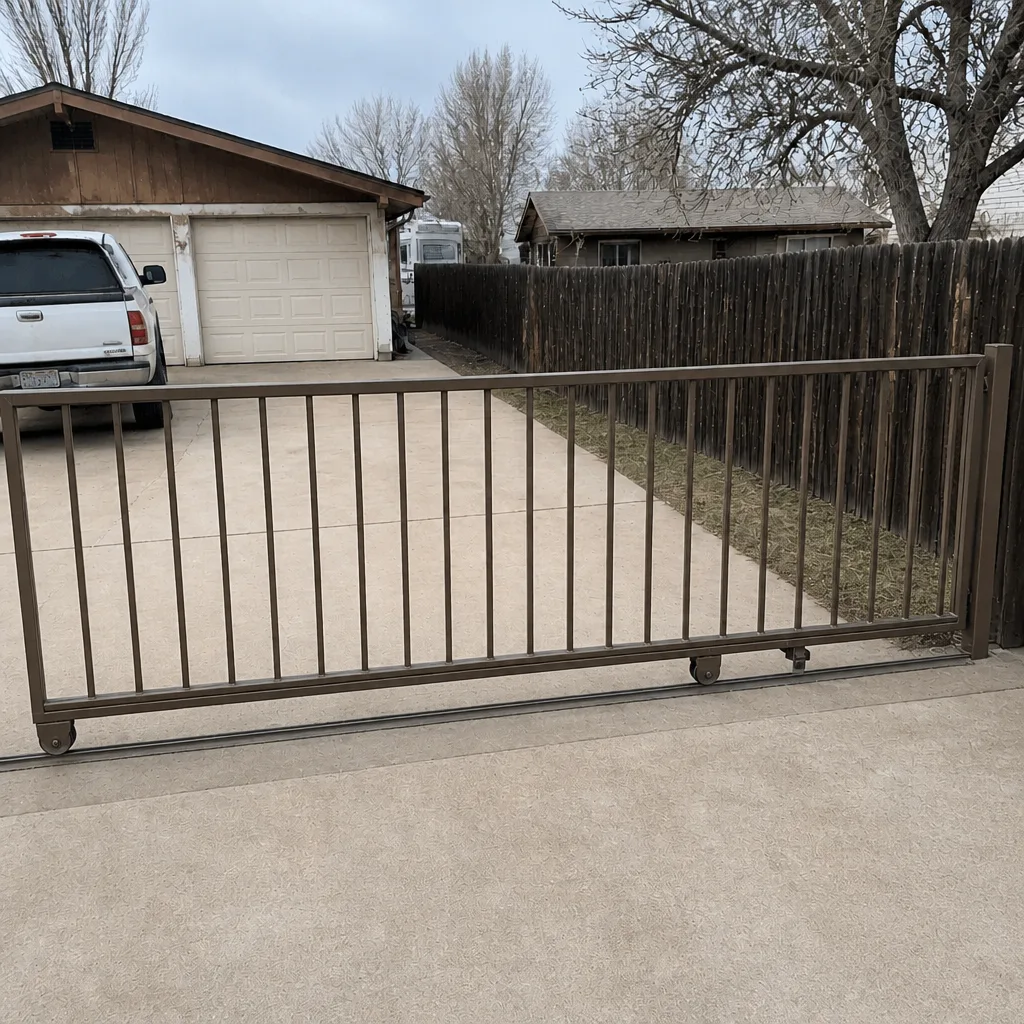 After
When to Call a Professional
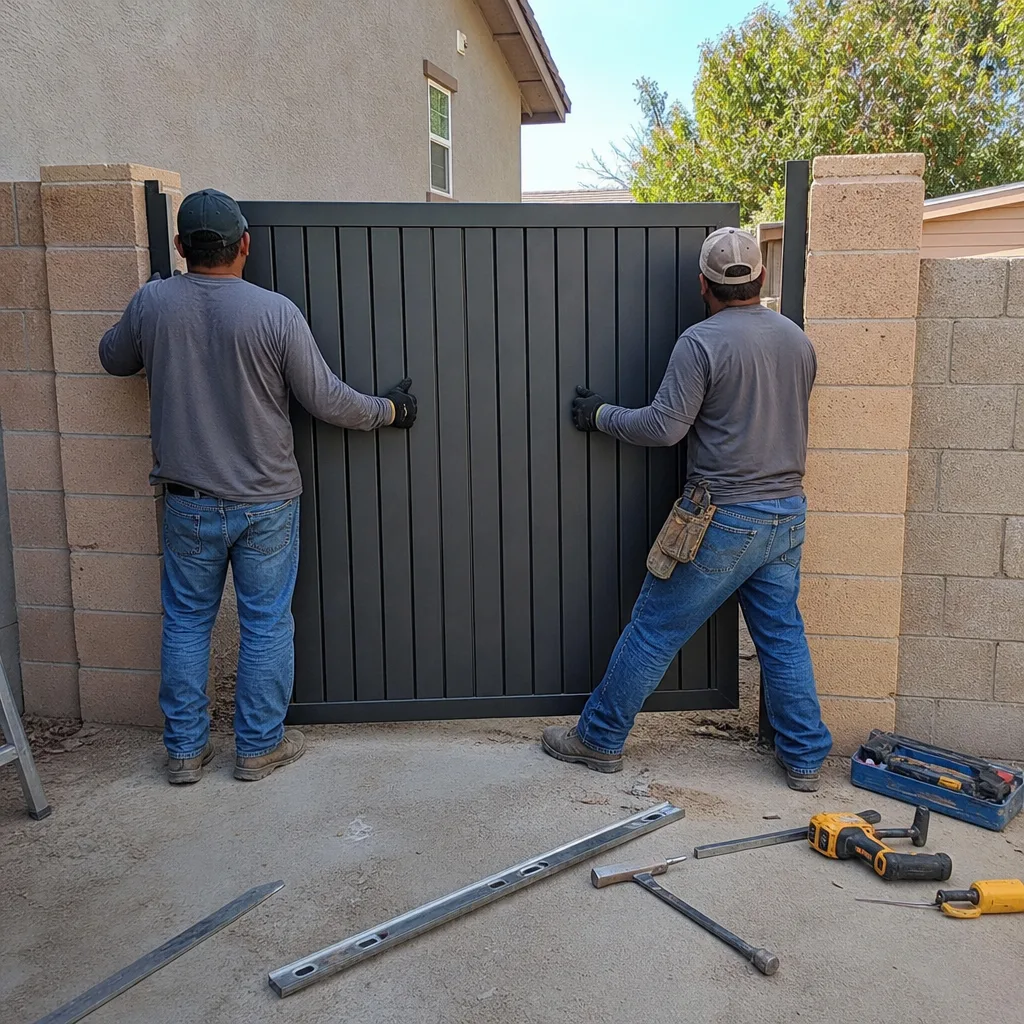
Call a professional when the gate reverses mid-cycle, when the operator won’t respond to a remote, when you see a sheared hinge pin or a roller with a visible flat spot, when the manual release won’t operate cleanly, or when a photo-eye keeps tripping after a cleaning. Call immediately if the gate has dropped, is hanging off its track, or shows any sign of a spring problem. Any work near the line-voltage feed or the loaded springs should always go to a trained technician. Vance Gate Repair Winchester offers free estimates in Winchester. Call (866) 983-9213 and a live person answers, day or night. You’ll get a written price before any work starts and a photo record when the technician leaves.
Frequently Asked Questions
Twice a year is the standard for residential gates in Winchester: once in late spring after the dusty season and once in late fall before the temperature swings deep. That schedule catches the battery-terminal crust, dust on the control board, and hinge wear before any of them turn into a repair.
Because the terminal, not the battery, is usually the problem. Hard-water mineral deposits on a Winchester battery terminal can drop effective voltage by about 0.4V, which is enough to make a healthy motor behave like a failing one. A cleaning and a thin coat of dielectric grease usually resolves it. Call (866) 983-9213 for an exact quote; estimates are free.
Yes. Alkaline desert dust is mildly conductive, and in Winchester it settles on control boards and limit-switch housings where it can bridge small gaps and cause intermittent faults. The gate opens fine in the morning and stalls in the afternoon heat, which sends homeowners into replacing remotes and receivers that were never the problem.
Bypassing a misaligned photo-eye. It removes the safety edge that stops the gate if something crosses the path, voids the warranty on most brands we service, and is the most dangerous shortcut we see. The fix is always alignment, wiring, or replacement, never a bypass. Never touch a loaded swing-gate spring or the line-voltage feed yourself. Call (866) 983-9213 for an exact quote on a safety check; estimates are free.
Voltage readings from the battery terminal, limit-switch readings, photo-eye alignment photos, hinge or roller measurements, and the part number and brand of anything replaced. A photo without the reading is not a useful record. A logged reading is what lets the next technician see what changed and avoid re-diagnosing the same fault.
We service nine major automation brands, including Ghost Controls, DoorKing, Elite, and Mighty Mule, and we work on whatever motor is already on the property rather than steering you toward a replacement. Our Vance Gate Repair Winchester home page has the full picture of what we handle. Call (866) 983-9213 for an exact quote; estimates are free.
The Bottom Line
Winchester’s gates fail on a pattern that a generic checklist misses: hard-water crust on battery terminals, alkaline dust on control boards, and hinges that wear faster than the manufacturer’s baseline because of the temperature swing. The fix is a twice-a-year inspection timed to the dusty season and the cold swing, a written record with readings and measurements, and the discipline to never bypass a safety device or over-torque the motor to push through a stiff gate. Most of the repairs we see in Winchester are preventable at the inspection stage. That’s the whole point of the checklist.
If you’d rather have it done by someone who leaves a record behind, Vance Gate Repair Winchester is ready. Call (866) 983-9213 for a free estimate, and you’ll have the written price in your hand before any work starts. Our technicians have up to 12 years of experience, and every completed repair is covered by the 365-Day Done Right Promise. If you’ve already got a written estimate from another company, bring it by. We’ll review it at no cost.
Written by the team at Vance Gate Repair Winchester.