
Last updated November 18, 2026
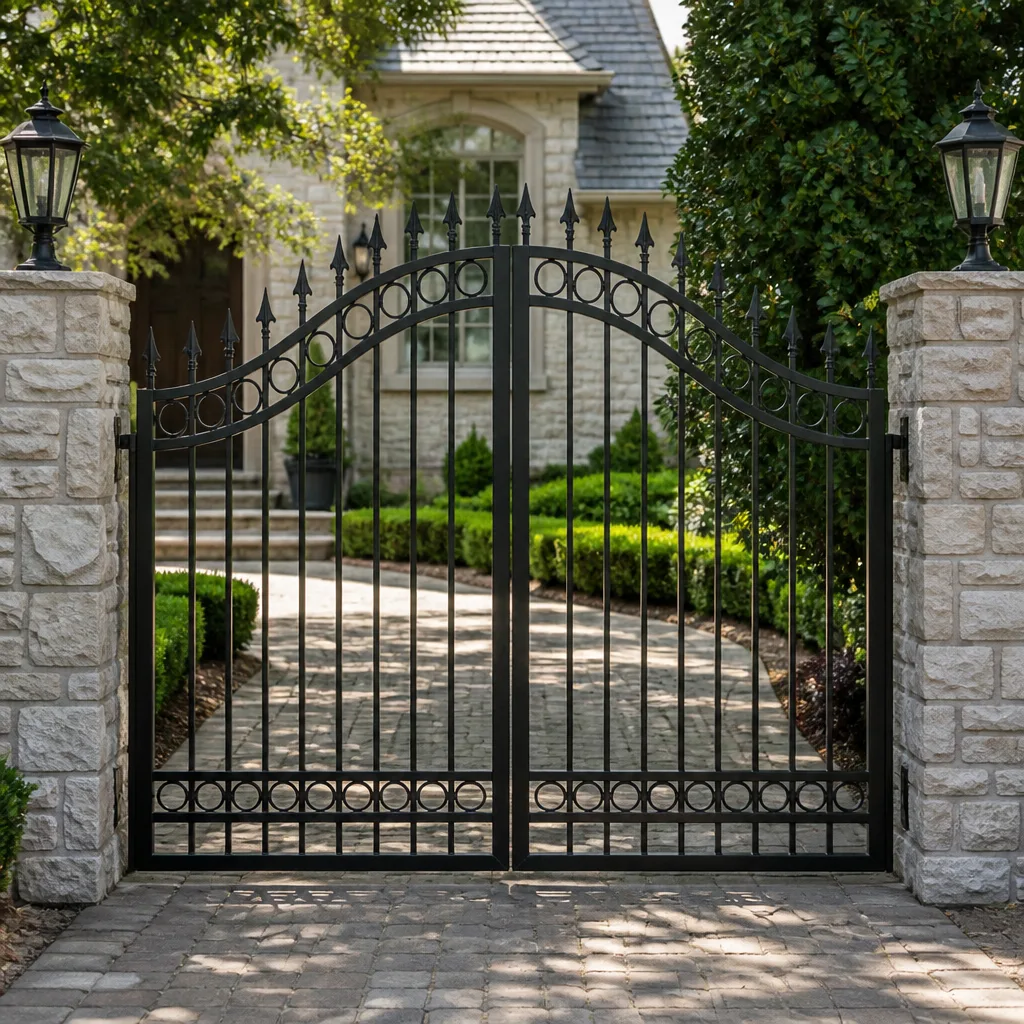 Wrought iron
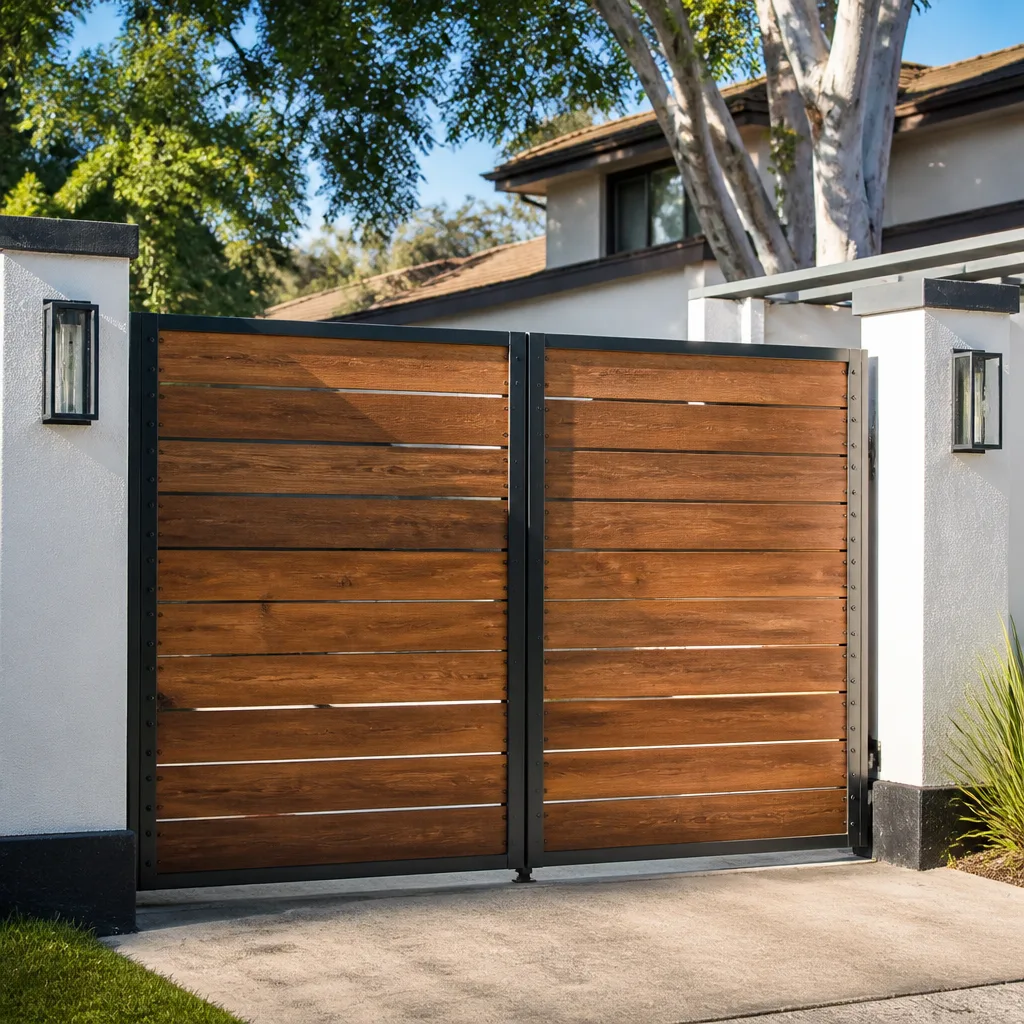 Wood & steel frame
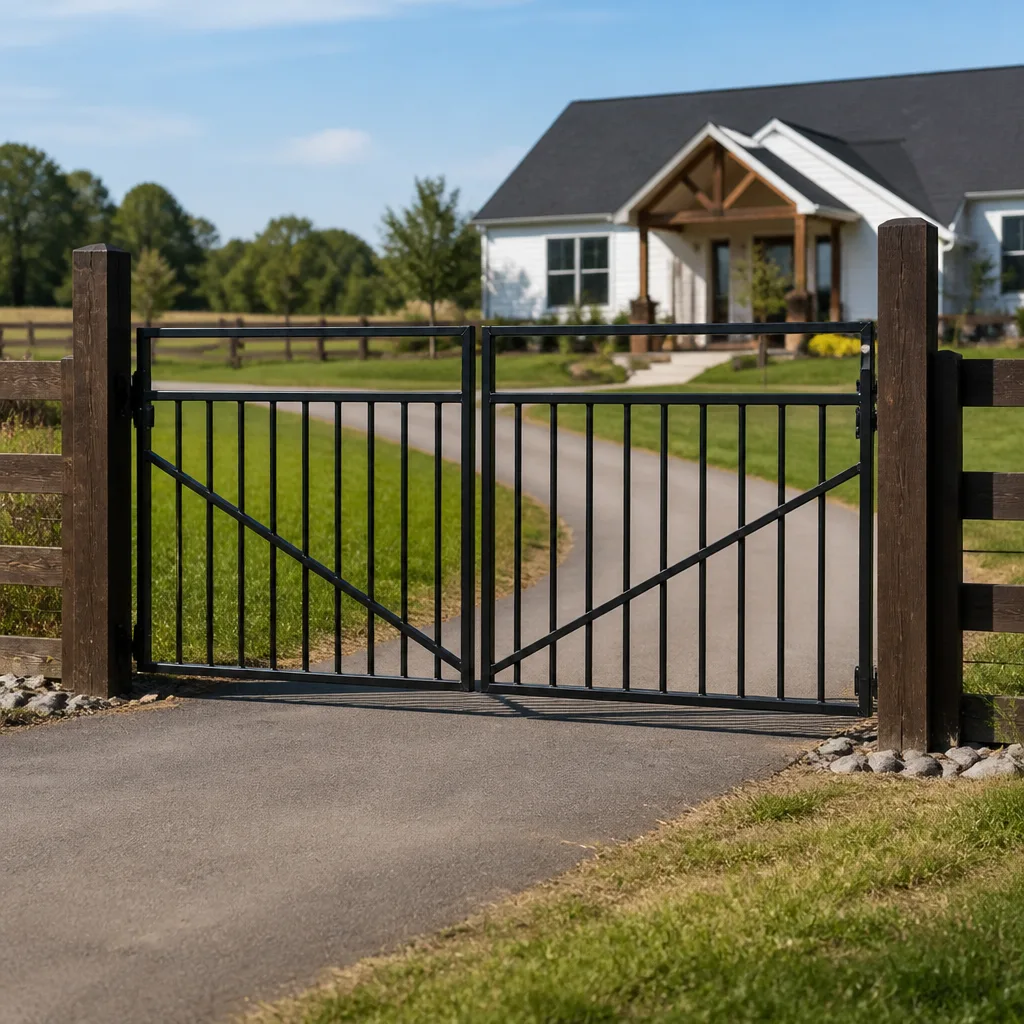 Farm & ranch
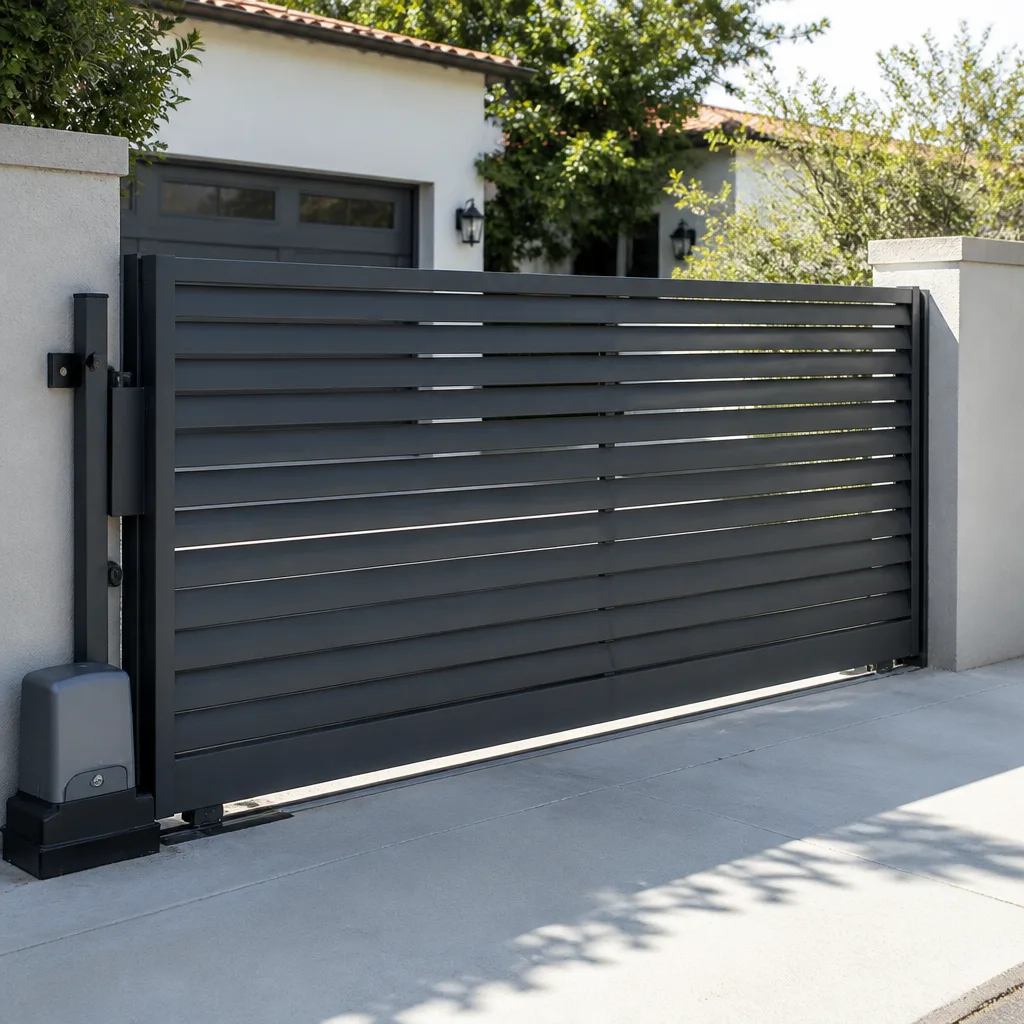 Sliding driveway gates
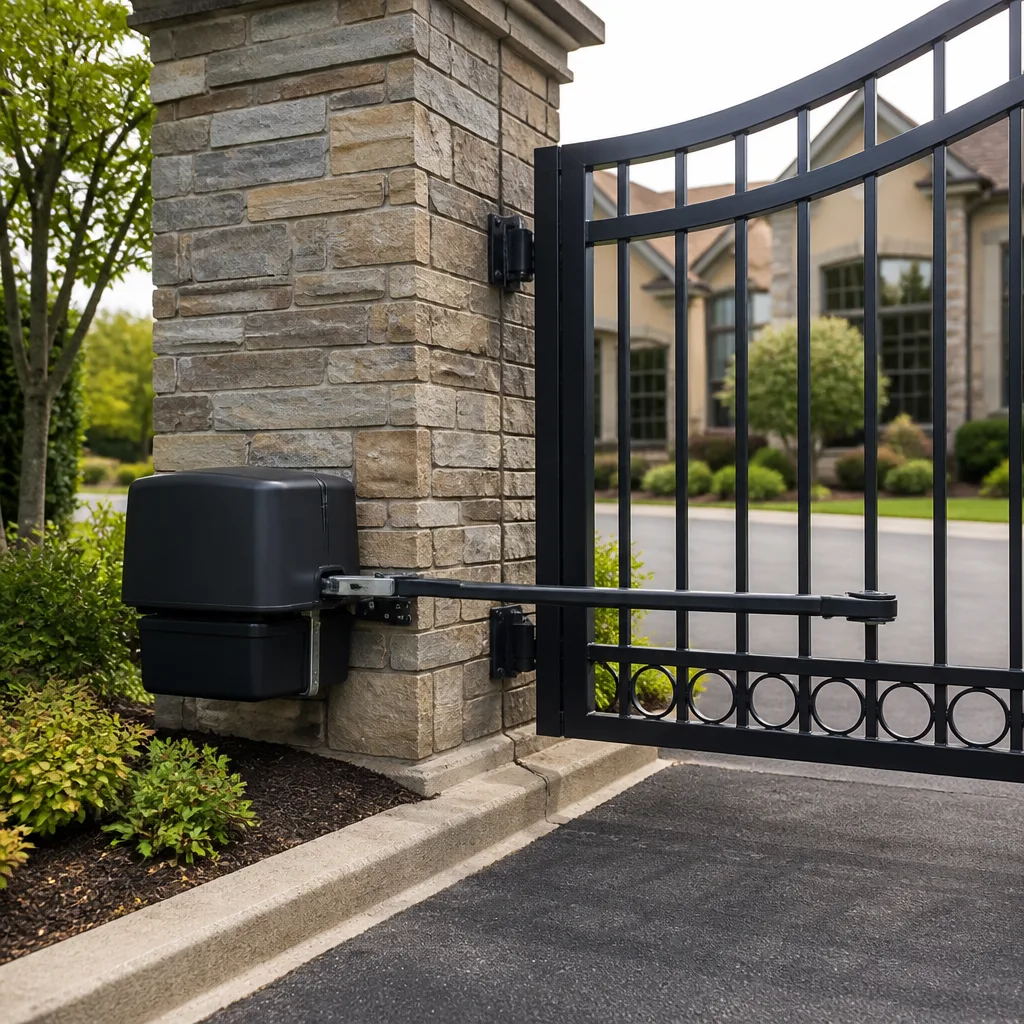 LiftMaster operators
Free on-site gate assessment - hinges, posts, and your LiftMaster or Nice gate operator checked before anything is quoted
The assessment is free and the quote is the invoice.
Get your free estimateGate Parts & Welding Warning Signs Every Homeowner Should Know
A gate that drags across the ground on the latch side is showing you a post that has moved. Most homeowners adjust the wheels. The post will keep moving. That single habit, fixing the symptom instead of measuring the cause, is how a $180 hinge-and-weld adjustment turns into a $2,400 post reset two winters later. Structural gate failure doesn’t announce itself with a loud crack. It accumulates in numbers nobody was tracking: a quarter inch of new drag, a gap at a weld seam that wasn’t there last spring, a hinge bolt that backs out three weeks after you torqued it. This guide gives Winchester homeowners the specific measurements and observations that separate cosmetic wear from a frame that’s quietly giving up, plus what to photograph and when to call.
Quick Answer
The structural warning signs on a gate are measurable, not just visible: more than 1/4 inch of new drag on a swing gate, a widened or opening gap at a weld seam, hinge bolts that re-loosen within 30 days, rust bleeding from a previously clean weld line, and a frame that no longer measures square corner to corner. Any two of those together usually mean the post or the frame has moved and needs a professional look. Cosmetic oxidation on flat surfaces is normal; active corrosion at a load-bearing weld is not. Track your gate’s diagonal frame measurements with a tape measure twice a year and you’ll catch racking long before it becomes a collapse.
Styles & brands we work with
- Wrought iron
- Wood & steel frame
- Farm & ranch
- Sliding driveway gates
- LiftMaster operators
Table of Contents
- Sign 1: New Drag on the Latch Side (More Than 1/4 Inch)
- Sign 2: A Changing Gap at a Weld Seam
- Sign 3: Hinge Bolts That Re-Loosen Within 30 Days
- Sign 4: Rust Bleed on a Previously Clean Weld Line
- Sign 5: A Frame That No Longer Sits Square
- How to Measure Frame Diagonals and Catch Racking
- Cosmetic vs. Structural: Telling the Difference
- Winchester Triggers That Accelerate Structural Wear
- What to Photograph and When to Call
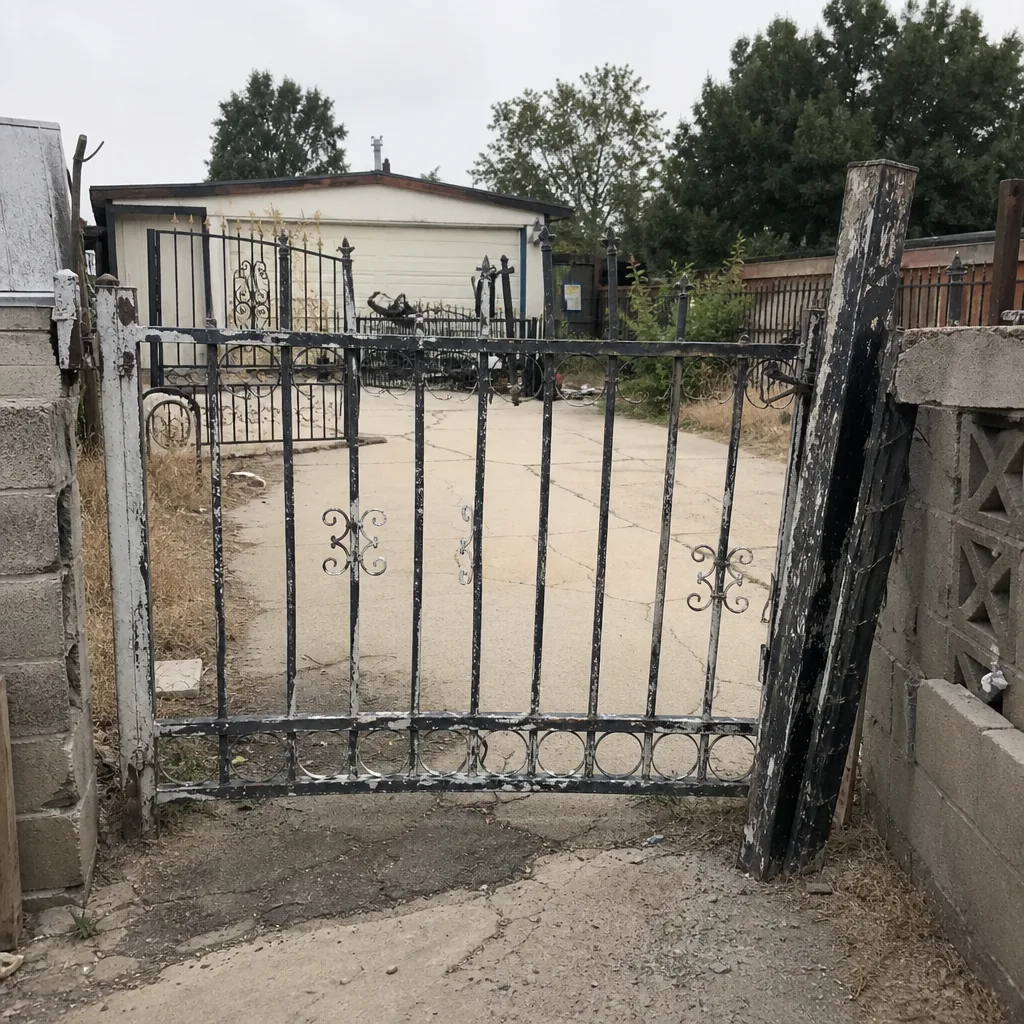 Before
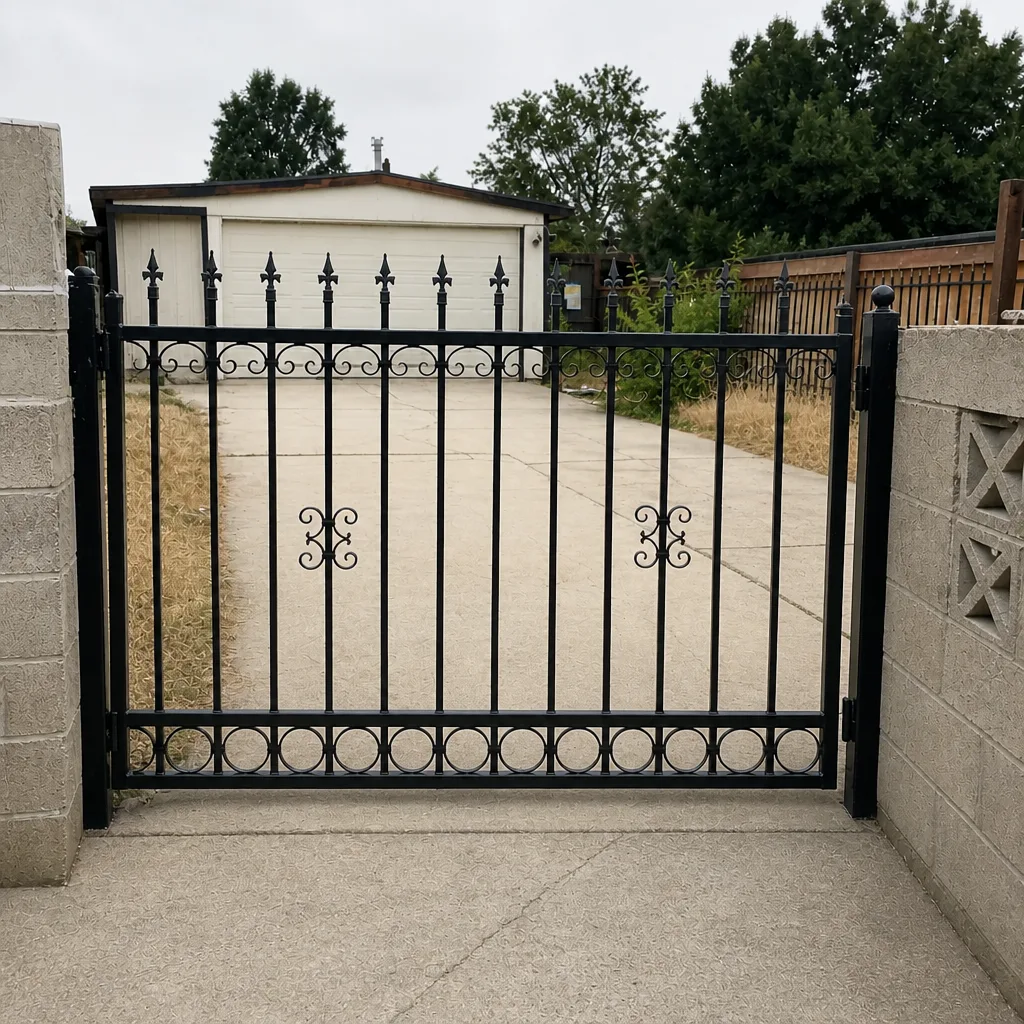 After
Sign 1: New Drag on the Latch Side (More Than 1/4 Inch)
A swing gate that suddenly scrapes the ground near the latch is usually reporting a post that has settled or rotated. The wheels and the hinges get blamed, but the geometry starts at the post. Here’s the measurement that matters: find a fixed reference point, mark the gate’s lowest point on the ground with a chalk line, and check it again in a month. Under 1/4 inch of new drag is often just seasonal ground movement. More than 1/4 inch, especially if it appears within one season, means the post footing is moving and adjusting the wheels won’t stop it. In Winchester, we see this pattern most in driveways where the gate post sits close to an irrigation line or a downspout runoff path; the soil under that corner stays wetter than the rest of the footing and moves first. When we respond to a drag complaint, we photograph the ground clearance at three points along the gate, record the post’s plumb reading, and note whether the drag is on the latch side, the hinge side, or even across the whole bottom rail. A latch-side drag with a plumb post points to a sagging frame. A latch-side drag with a leaning post points to the footing. Two different fixes, two different price ranges, and the measurement decides which one you’re paying for. That’s the kind of record we leave on every visit.
Sign 2: A Changing Gap at a Weld Seam
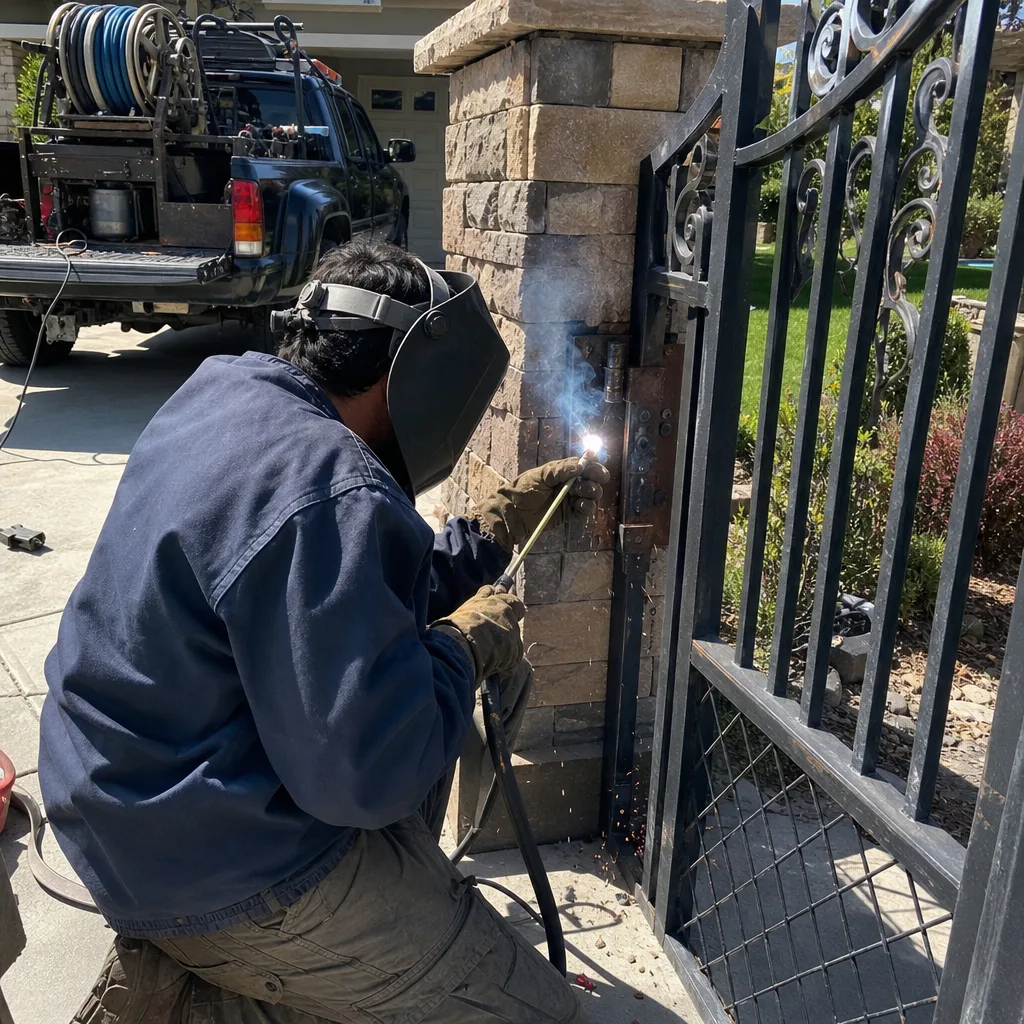
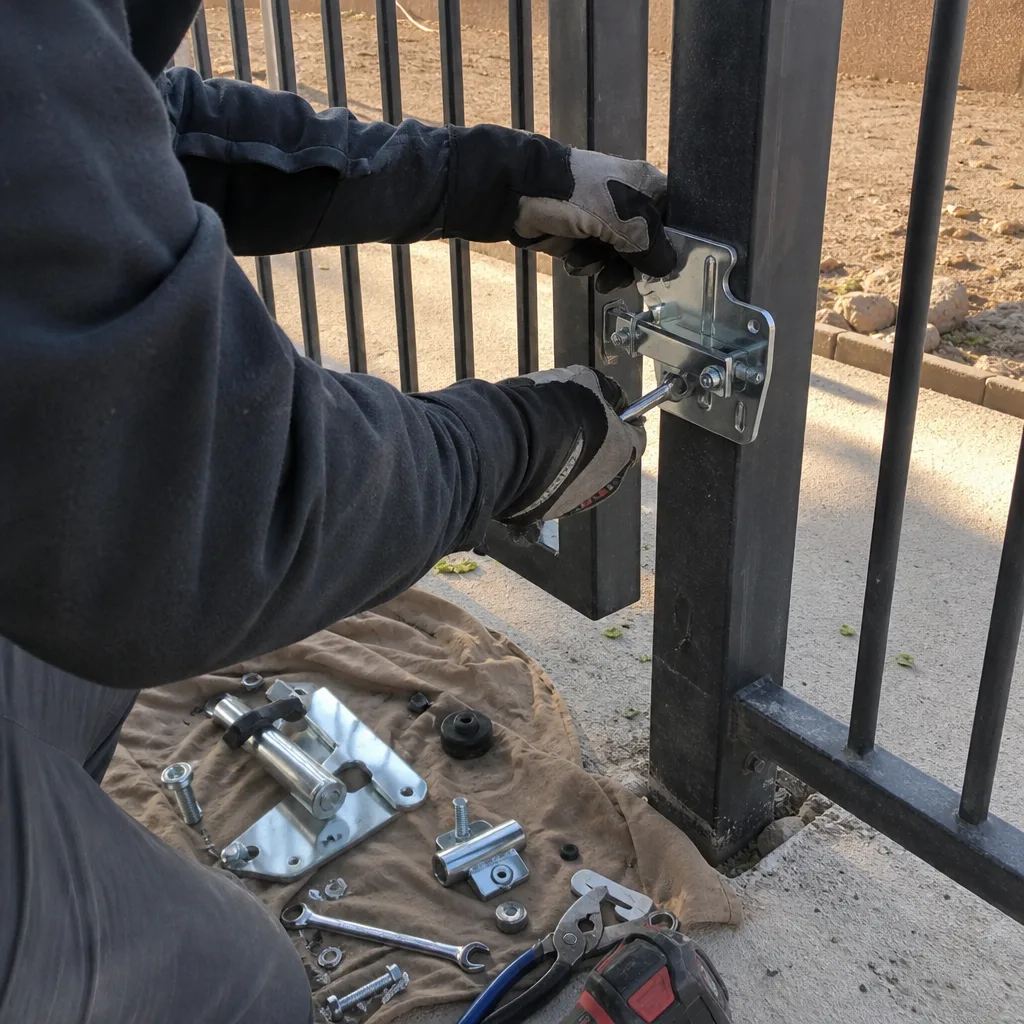
Welds don’t fail all at once. They open. A structural weld at a corner joint or a hinge plate should sit tight with no visible gap between the two pieces of metal. If you can slide a business card into a seam that used to be flush, that weld is under load it wasn’t designed for, and the gap is the first stage of a crack. The check is simple: run a fingertip or a card along each weld line at the corners, the hinge plates, and the latch plate, and note any seam where the metal pulls away. A hairline gap you measured last fall and find again this spring is a monitoring situation. A gap that has widened is a repair situation, because every cycle of the gate opening and closing works that gap a little further open. The classic case we photograph is the bottom hinge weld on a heavy ornamental gate: the weld is intact, but the plate is separating from the frame. The gate still swings. The seam is telling you how long that lasts. On the automation side, that same separation shows up as a gate the operator struggles to close, and we’ve worked on every major brand from gate motor & opener systems in Winchester to know the motor is usually the messenger, not the cause.
Sign 3: Hinge Bolts That Re-Loosen Within 30 Days
Hinge bolts that come loose once are a maintenance item. Hinge bolts that come loose within 30 days of tightening are a symptom. The bolt isn’t failing; it’s being worked loose by movement somewhere else in the system: a post that flexes under load, a hinge plate that’s bending, or a frame that’s racking every time the gate swings. The 30-day window is the threshold we use because that’s about how long a properly seated bolt holds in a stable frame. Here’s how to track it:
- Mark each hinge bolt head with a paint pen or a strip of tape so you can see any rotation.
- Tighten the loose bolt to a firm hand-torque, no more, and note the date.
- Check the mark at 30 days. No movement means you fixed it. Movement means it needs a structural look.
We document the same thing on service calls: the bolt torque, the date, the condition of the hinge plate underneath, and a photo of the bolt head with its mark. If the plate is cracked or the post is flexing, tightening is a two-week fix and the real repair is the weld or the footing, and that’s the point where a written price saves you from paying twice. Under our Haven Standard, that scope and that price are written before any tool comes out, so you know whether you’re paying for a bolt re-torque or a hinge plate weld before the work starts.
Sign 4: Rust Bleed on a Previously Clean Weld Line
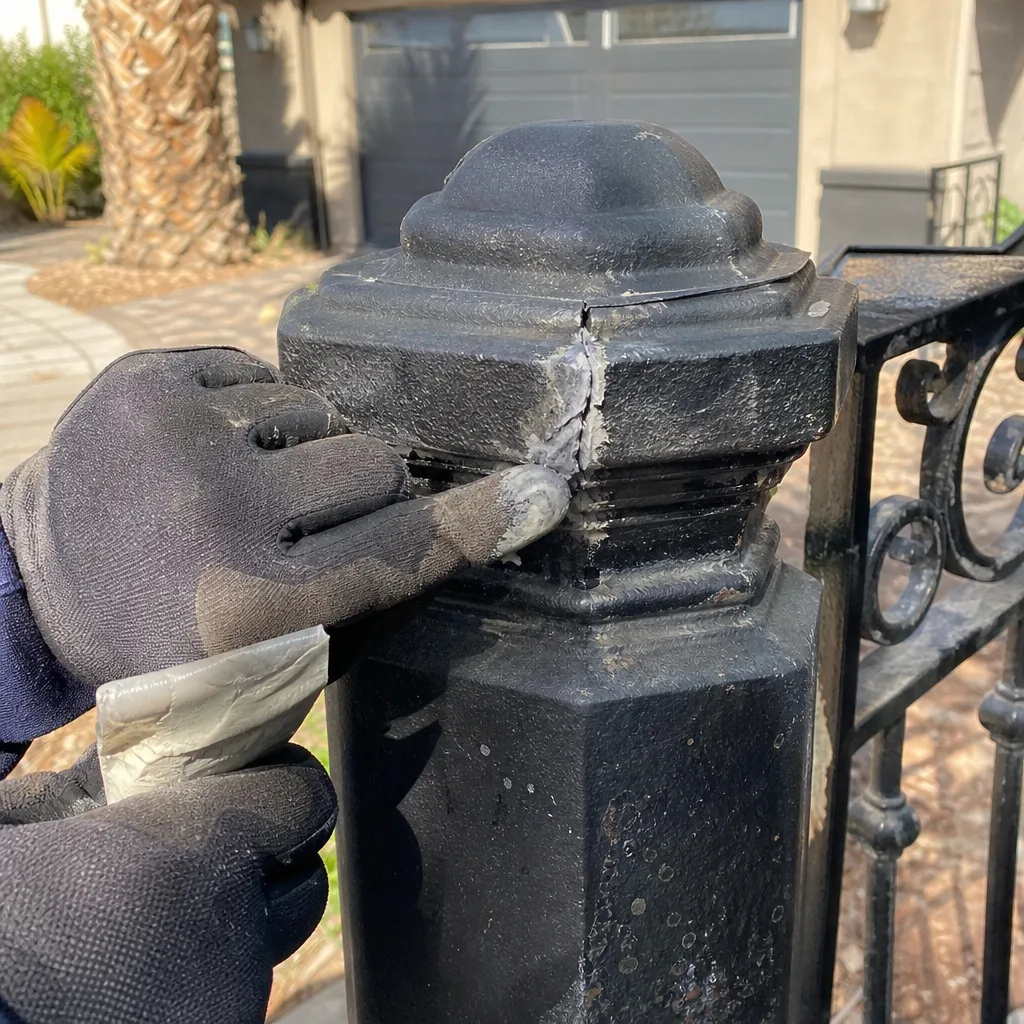
Rust bleeding out of a weld line that was clean last year is active corrosion, and it usually means moisture has gotten into a seam that should have stayed sealed. On a welded gate, the weld bead and the heat-affected zone around it are the most likely spots for the powder coat to fail, because heat from welding changes the metal’s surface and the coating has to grip a different texture. A rust line along a weld is the visual signature of that failure. It’s different from surface oxidation, which shows as an even, thin orange film on flat panels. A rust line at a weld, especially a load-bearing weld at a corner or a hinge plate, is where the metal is thinning from the inside of the joint out. In Winchester, this is the failure mode that shows up most on gates facing the prevailing winter weather, where freeze-thaw and thermal cycling flex the powder coat until it cracks, then water wicks into the seam. When we find rust bleed at a weld, we photograph the seam at close range, note the depth of the pitting, and give a written recommendation: monitor if the rust is a surface stain, weld repair if the metal has started to pit.
Sign 5: A Frame That No Longer Sits Square
A square gate sits evenly in its opening: the same gap at the top, the bottom, the latch side, and the hinge side, and the gate meets the post the same way at the top rail and the bottom rail. A gate that’s out of square shows it in the gaps: wider at one corner, tighter at another, or a latch that lines up at the top but not at the bottom. Run your hand along the perimeter of the opening and note the gap at each of the four corners. If the gate meets the post evenly at the top rail and misses by more than 1/4 inch at the bottom rail, the frame is out of square, and that’s frame movement or a sagging frame, not a latch adjustment. The fix depends on whether the gate is racking (hinges, frame, or post) or the post itself has leaned, and the measurement decides which. On a double gate, check the meeting point at the center: a pair of gates that meet cleanly at the top and never touch at the bottom is showing you two frames out of square, and it’s worth a look before you rebuild anything.
How to Measure Frame Diagonals and Catch Racking
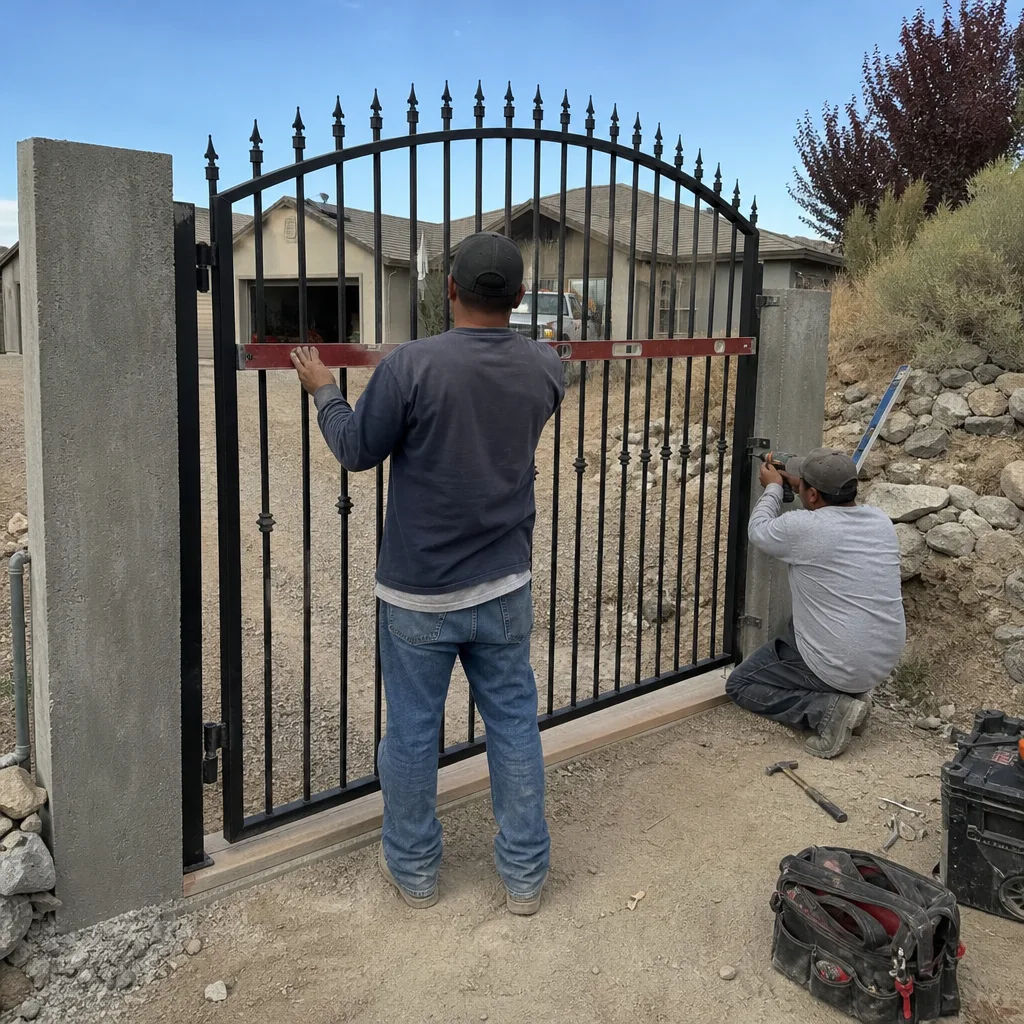
The single most useful measurement a homeowner can take on a gate is the two frame diagonals. Racking, which is when a rectangular frame turns into a parallelogram, shows up first in the diagonals. Here’s the method:
- Measure from the top hinge-side corner to the bottom latch-side corner. Record it in inches to the eighth.
- Measure the opposite diagonal, top latch-side corner to bottom hinge-side corner. Record it the same way.
- Compare. A square frame measures the same or within 1/8 inch across both diagonals.
- Write the two numbers on a piece of masking tape stuck inside your gate post, or photograph them, so you have a baseline.
- Re-measure at the start of every season, ideally after the first hard freeze and again in spring.
A diagonal difference that’s growing, even by a quarter inch over a season, is racking happening in real time, and it’s the difference between a frame weld repair and a full frame replacement. We keep the same reading on file for every gate we service, so the second visit starts with a number instead of a guess. If you’re not sure what you’re looking at, a gate repair service in Winchester can read the diagonals, check the post plumb, and give you a written scope. Most gate problems we’re called out for could have been caught months earlier if somebody had been watching the diagonal numbers.
Cosmetic vs. Structural: Telling the Difference
The difference between cosmetic wear and a structural problem is location and direction. Cosmetic oxidation sits on a flat surface and stays put. Structural corrosion sits in a seam, a weld, or a load-bearing joint, and it moves. Here’s the quick field test:
- Surface oxidation: a thin, even orange film on flat bar, pickets, or panels. Rub it with a rag and it comes away as dust. Cosmetic.
- Weld-line rust: a rust line along a weld bead or at a joint where two pieces of metal meet. Stays put when rubbed. Structural watch item.
- Hinge-plate corrosion: rust bleeding from behind a hinge plate or from the bolt holes. Structural, because it means water is sitting inside the load-bearing joint.
- Paint flaking with metal exposed: cosmetic on a flat panel, structural if it’s inside a joint or on a weld bead.
- Crack in a weld: a hairline crack running from the weld bead into the parent metal. Always structural. Stop using the gate and get it looked at.
In our experience, the gates homeowners are most surprised by are the ones where the paint looks fine but the hinge plates are rusty behind the plate. That’s the kind of thing a photo record catches; a visual walkaround can miss it.
Winchester Triggers That Accelerate Structural Wear
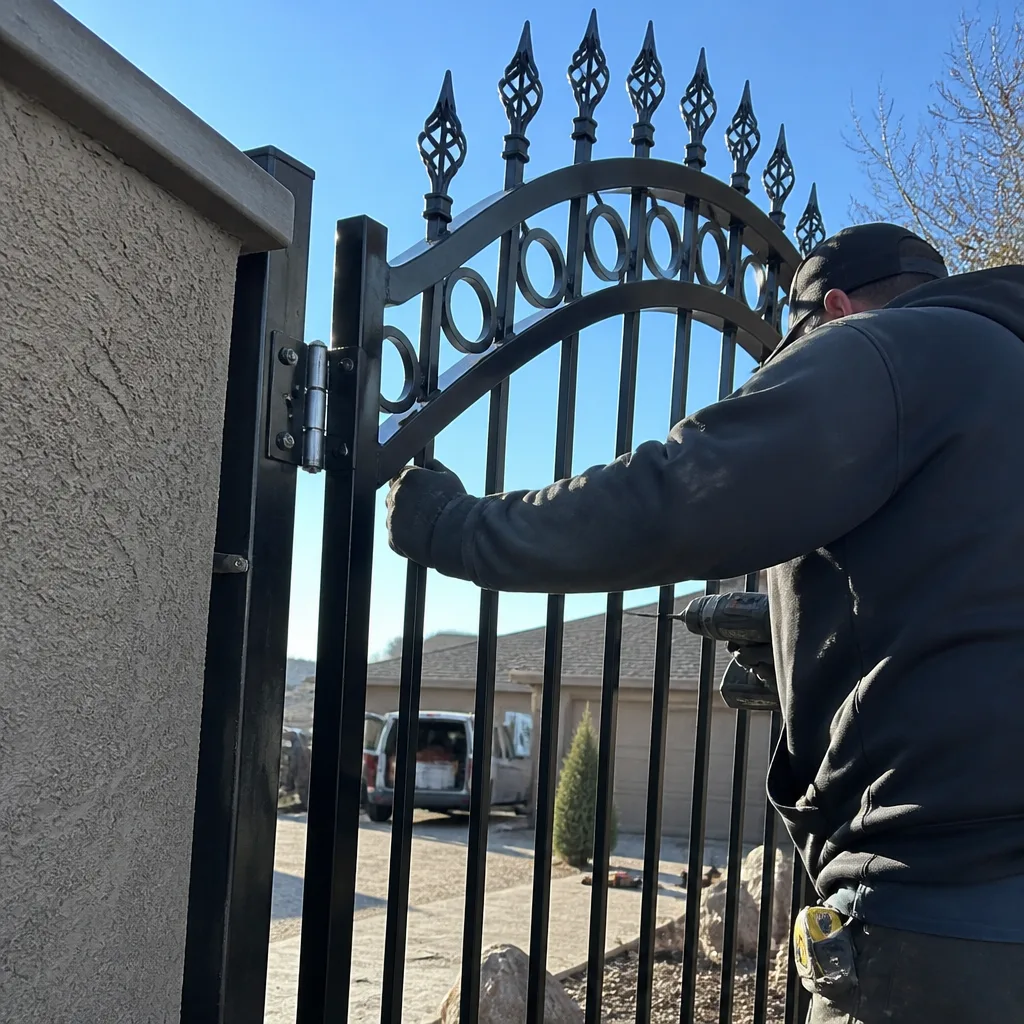
Winchester’s conditions work on a gate in a few specific ways. Winter freeze-thaw cycles move soil, and any gate post set in soil that holds moisture, which is common near irrigation lines and along property lines where runoff collects, will shift slightly each season. That’s the source of the drag-on-the-latch-side pattern above, and it hits Winchester driveways hard because many were built on soils that drain unevenly. Thermal cycling loads the powder coat every day: the metal expands in the afternoon and contracts overnight, and the coating at a weld seam, which is already gripping a different surface texture there, cracks first. And wind exposure on an ornamental gate with large open panels flexes the frame at the hinges and the latch plate, which is where you’ll find the first weld gap. What that means for a Winchester homeowner is that a gate which sat fine for years can start showing warning signs after one hard winter. The fix isn’t a rebuild; it’s catching the numbers early, which is why we recommend a twice-a-year diagonal check rather than a call when something breaks.
What to Photograph and When to Call
A photo record makes the difference between a diagnosis and a guess. Photograph these five things on every check, and date the photos with your phone:
- Ground clearance at three points along the gate bottom, at a fixed reference.
- Every weld seam at the four corners and both hinge plates, close up, in the same framing each time.
- Each hinge bolt head with its paint-pen mark in place.
- Both frame diagonals with the tape measure visible in the photo.
- The latch gap at the top rail and at the bottom rail.
Now the decision framework. Monitor a single cosmetic finding: surface oxidation, a paint chip on a flat panel, a drag of under 1/4 inch that isn’t growing. Book a service call when you have two or more of the structural signs together, when a diagonal measurement has changed between checks, when a hinge bolt re-loosens within 30 days, or when a weld gap has widened. Stop using the gate and call the same day when you see a crack in a weld bead, a hinge plate separating from the frame, or a post that’s visibly leaning. Load classification matters here too: a heavy ornamental swing gate carrying a commercial-grade operator such as a DoorKing or Elite unit is under more continuous load than a light residential gate, so the same warning sign on that gate is more urgent. We’ve serviced all of them, including Viking and Ghost Controls residential units, and the rule holds: the heavier the gate, the less warning you get.
Common Mistakes to Avoid
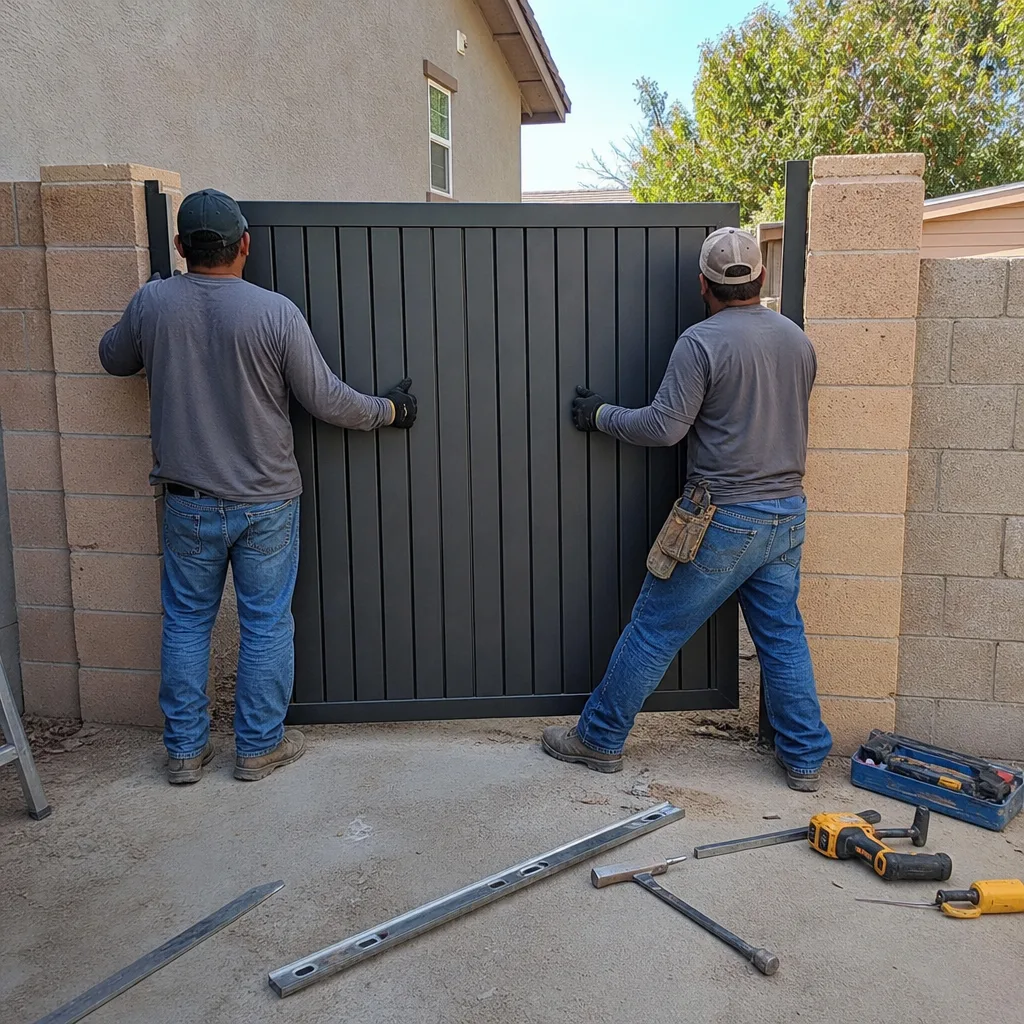
- Adjusting the wheels to fix a drag. The wheels are usually fine; the post has moved. Raise the gate without checking post plumb and the next adjustment comes sooner, and the weld takes the load.
- Tightening hinge bolts and calling it done. A bolt that loosens once is maintenance; a bolt that loosens twice is a symptom. Mark it and check it in 30 days.
- Painting over rust at a weld. Paint hides the seam and the rust keeps working underneath. Clean it, photograph it, and let someone read the depth before coating.
- Ignoring a diagonal change because the gate still opens. A racking frame opens fine right up until the weld gives. Measure the diagonals twice a year; the gate working is not the same as the frame being square.
- Assuming a rust line is cosmetic because the paint looks intact. Rust at a hinge plate can start behind the coating. Look at the plate edge and the bolt holes, not just the visible face.
- Treating a heavy gate like a light one. The same 1/4-inch drag means more on a gate carrying a commercial operator. Load classification should drive the call timing, not the calendar.
- Skipping the photo record. If you have no baseline, the next technician has no baseline. Date your photos and keep them.
See the difference
BeforeAfter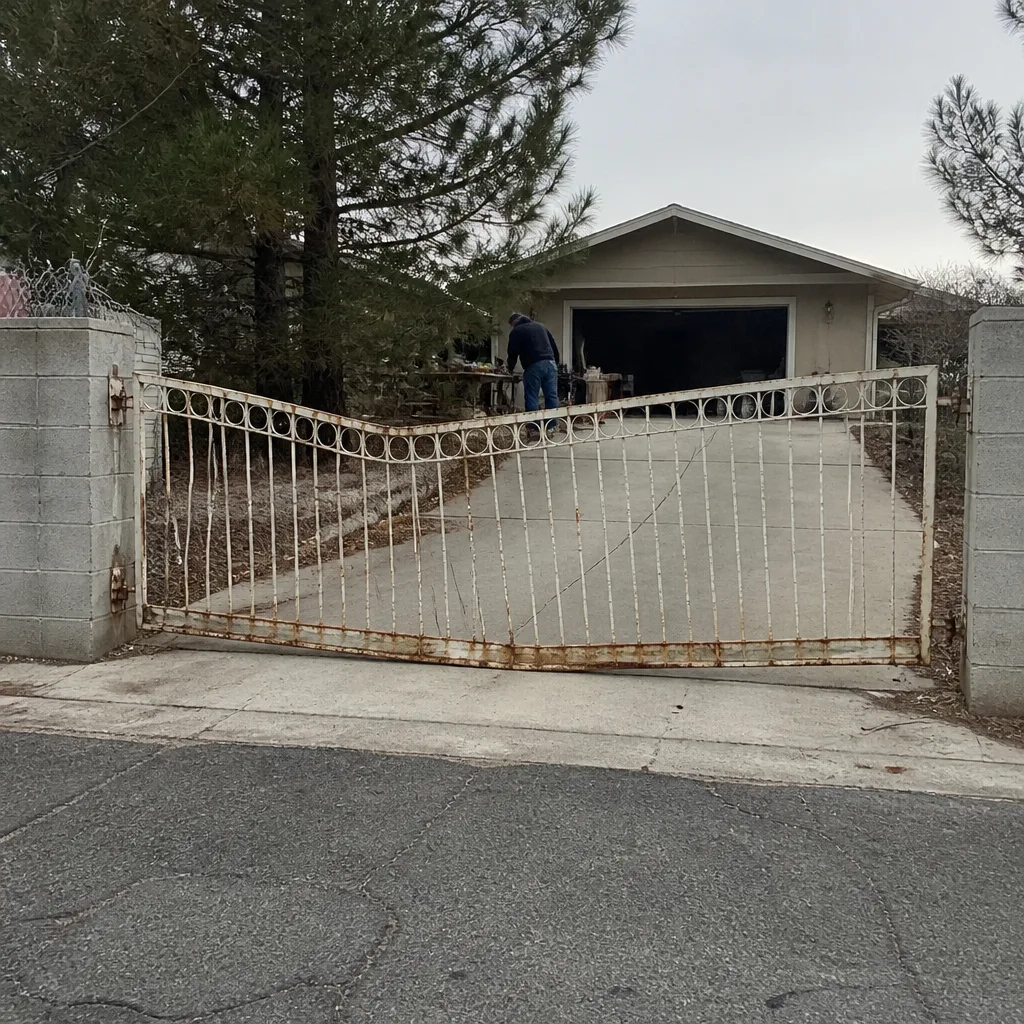 Before
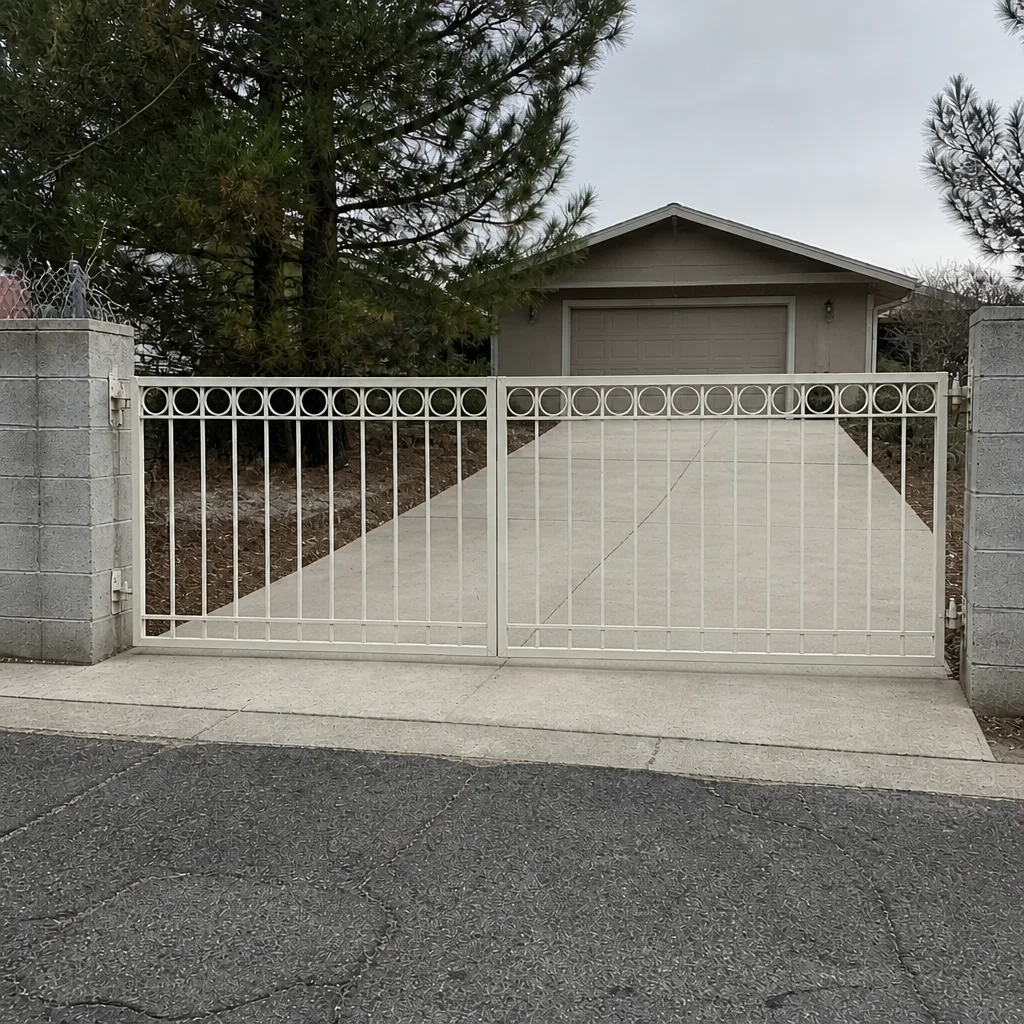 After
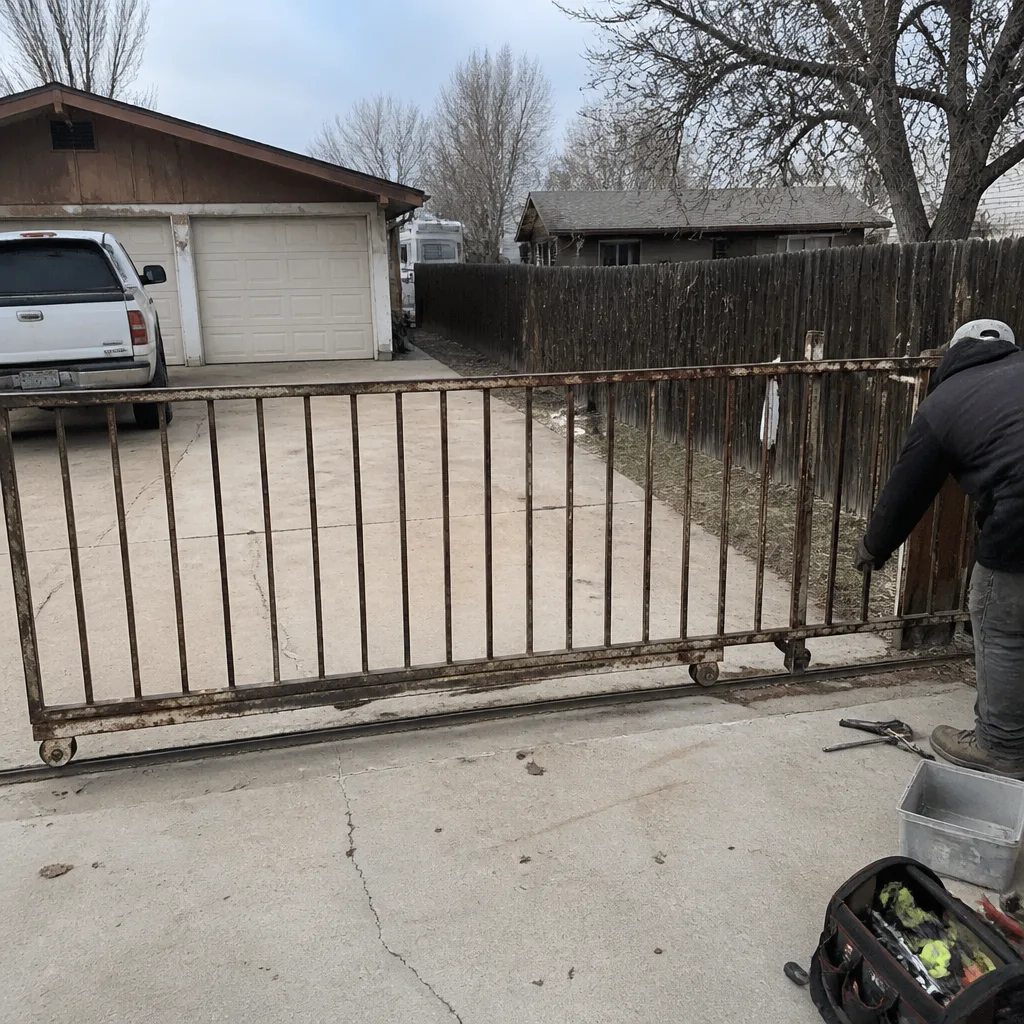 Before
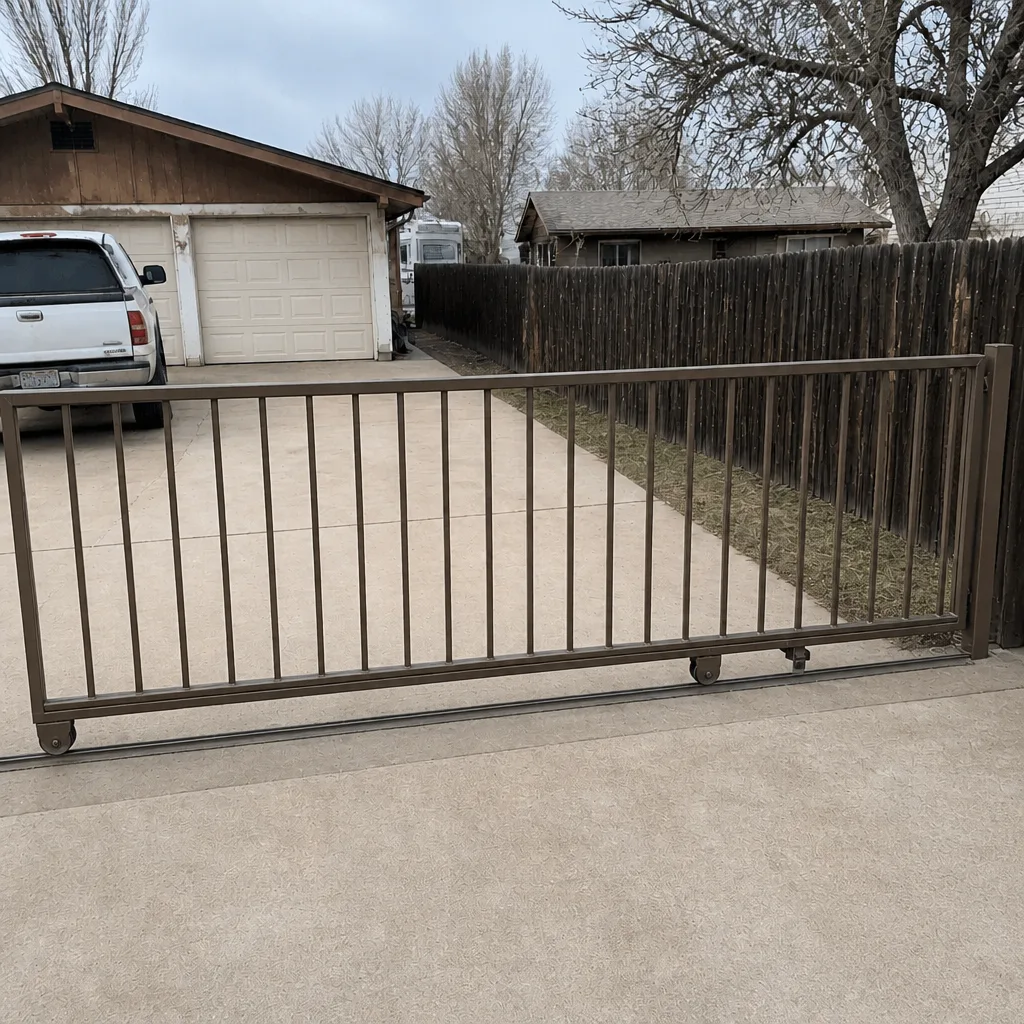 After
When to Call a Professional
Call a professional when any two of the five structural signs appear together, when a diagonal measurement has changed between checks, when a hinge bolt re-loosens within 30 days of tightening, or when a weld gap has widened since your last check. Stop using the gate and call the same day if you see a crack in a weld bead, a hinge plate pulling away from the frame, or a visibly leaning post. There’s also a safety line here: high-tension springs, gate operators, and load-bearing welds under a heavy gate are not homeowner repair territory, and a weld that lets go on a loaded gate can do real damage. Vance Gate Repair Winchester offers free estimates in Winchester; call (866) 983-9213. You’ll get a written scope, a written price, and a documented photo record of what we found. For a full install or a new gate, we book a free measure and a written price rather than a same-day dispatch, because that work is measured and ordered. For repairs, we can often get out the same day.
Frequently Asked Questions
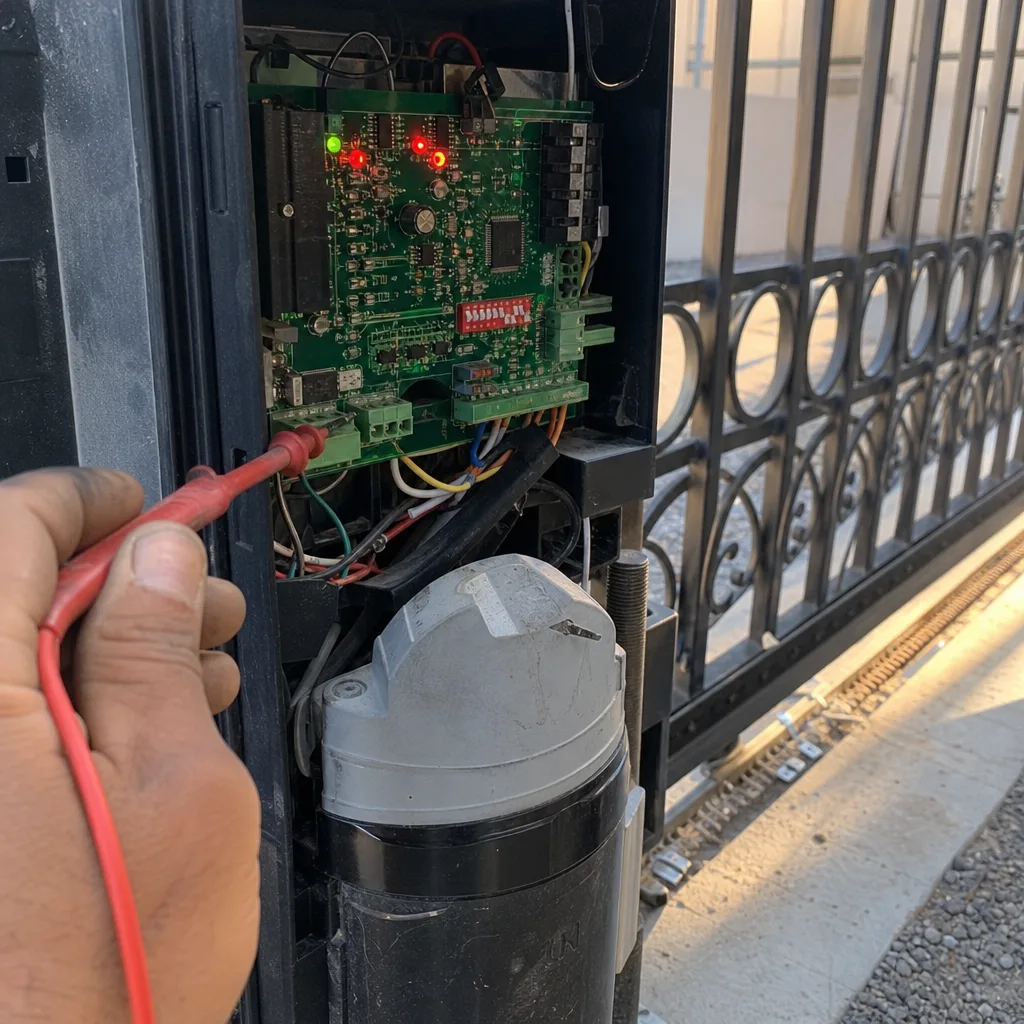
A change in the frame diagonal measurements. Racking shows up in the diagonals before it shows up as a visible gap or a stuck gate, so a homeowner who records the two diagonal numbers twice a year will catch structural movement earlier than any other single check. Call (866) 983-9213 for a free estimate if your numbers are changing.
Not always, but it’s always a watch item. A rust line that rubs away as surface dust is cosmetic. A rust line that stays put, especially at a hinge plate or a load-bearing corner weld, signals active corrosion and should be read by a technician. We photograph the seam and give a written recommendation.
Most gate weld repairs in Winchester fall in a written range we put on the scope before any work starts, and the exact figure depends on access, the number of welds, and whether the hinge plate or the frame needs work. You get the price in writing before a tool comes out. Call (866) 983-9213 and we’ll get you a written number; estimates are free.
Yes. We check the post plumb against a fixed vertical reference and measure ground clearance along the gate bottom at fixed points, then compare the readings to the gate’s diagonals. A leaning post with even diagonals reads differently than a square post with a racking frame, and the combination tells us whether the footing or the frame is the problem.
Not necessarily. Bolts that re-loosen within 30 days usually mean the hinge plate is bending or the post is flexing, which is a structural symptom, not a hinge failure. We check the plate, the post, and the frame welds and write a scope based on what we find.
We service nine major automation brands, including Viking, Ghost Controls, DoorKing, Elite, LiftMaster, FAAC, BFT, Linear, and Mighty Mule, so we work on whatever motor is already on the gate rather than steering toward replacement. For repair, we can often get out the same day; for a new install, we schedule a free measure. Call (866) 983-9213 for a free estimate.
The Bottom Line
Structural gate failure is a numbers problem, not a surprise. Watch five things: drag on the latch side past 1/4 inch, a widening gap at a weld seam, hinge bolts that re-loosen within 30 days, rust bleeding from a clean weld line, and a frame that no longer measures square. Record your two frame diagonals twice a year, photograph the ground clearance, the welds, and the hinge bolts, and compare. Two or more structural signs together, or any change in the diagonals, is a call. Cosmetic oxidation on a flat panel is not. The difference between a $180 adjustment and a $2,400 frame replacement is almost always whether somebody was measuring before the gate announced the failure. If you’re in Winchester and something on this list looks familiar, a free estimate and a written scope are the fastest way to know what you’re dealing with. For the full range of work we do, start at Vance Gate Repair Winchester home, and if the sign you’ve found points to a new gate rather than a repair, see gate installation in Winchester.
Call (866) 983-9213 for a free estimate. A live person answers 24 hours a day, seven days a week, and every job comes with a written price before work starts and a documented photo record when we leave. Under the 365-Day Done Right Promise, if a repair isn’t right, we make it right at no additional charge within that year.
Written by the team at Vance Gate Repair Winchester.