
Last updated November 18, 2026
 Wrought iron
 Wood & steel frame
 Farm & ranch
 Sliding driveway gates
 LiftMaster operators
Free on-site gate assessment - hinges, posts, and your LiftMaster or Nice gate operator checked before anything is quoted
The assessment is free and the quote is the invoice.
Get your free estimateGate Parts & Welding Maintenance Schedule: What to Do and When
Annual inspection is meaningless advice if you don’t know what you’re inspecting for. A gate installed in alkaline soil needs a post-weld check every 18 months; the same gate on a concrete pad can go three years without anyone touching the welds. There’s no universal calendar for gate maintenance because load, climate, and installation quality vary too much from property to property. What works instead is a schedule built around condition indicators: the specific things you can see, measure, or feel that tell you it’s time to look closer. This guide covers the triggers, the inspection checklist, the lubrication intervals by hardware type, and how to record a baseline so future drift is quantifiable rather than guesswork. We’re writing this from Winchester, where desert heat, caliche soil, and seasonal dust all shape what your gate actually needs.
Quick Answer
Gate structural maintenance should follow condition-based triggers rather than fixed calendar intervals. Check welds, hinge torque, post plumb, and frame diagonals every 12 to 18 months in harsh environments like Winchester’s desert climate, and immediately after any vehicle contact, visible rust weeping from a weld line, or a gate that suddenly needs two hands to operate. Lubricate hinge pins and wheel bearings every 3 to 6 months with a heat-stable product, and record baseline measurements at installation or first inspection so you can detect drift before it becomes a failure.
Styles & brands we work with
- Wrought iron
- Wood & steel frame
- Farm & ranch
- Sliding driveway gates
- LiftMaster operators
Table of Contents
- Why Gate Maintenance Has No Standard Industry Schedule
- Condition-Based Triggers That Override Any Calendar
- What a Real Structural Inspection Covers
- Recording Baseline Measurements So Drift Becomes Quantifiable
- Lubrication Schedule by Hardware Type
- When Welds Need Rechecking
- The Documentation Handoff
- Seasonal Rhythms in Winchester
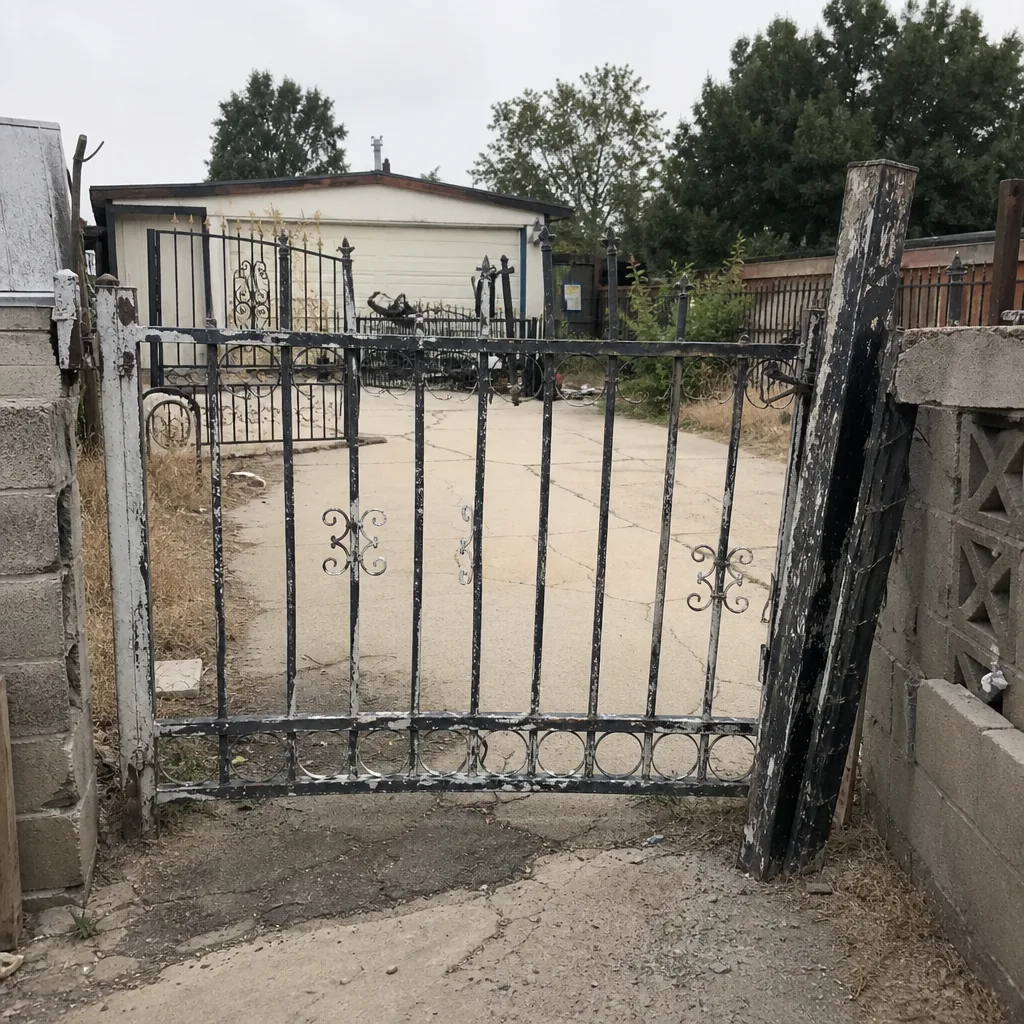 Before
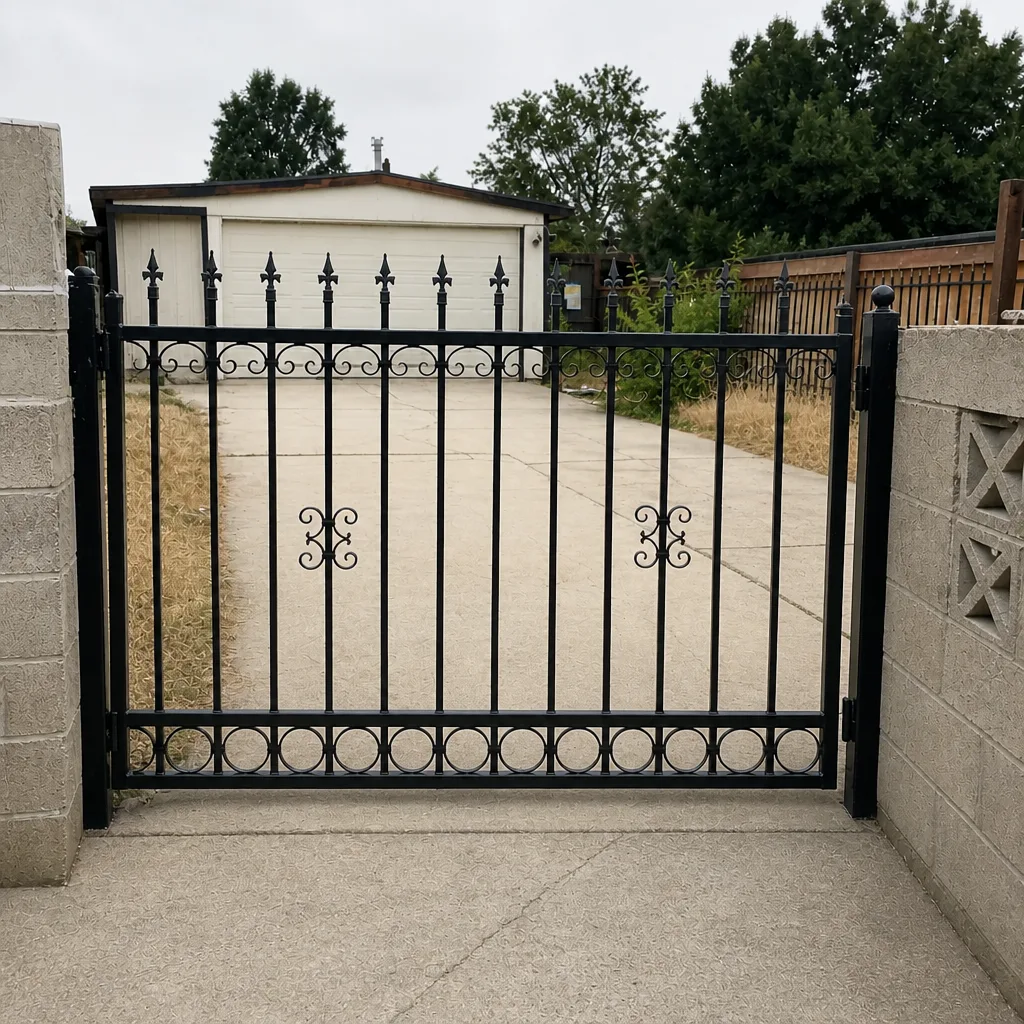 After
Why Gate Maintenance Has No Standard Industry Schedule
A gate on a concrete pad in a sheltered courtyard and a gate bolted into caliche soil two miles away can have the same brand motor, the same steel frame, and completely different maintenance needs. The pad gate might go three years before the welds need attention. The soil-mounted gate might need a post-weld check every 18 months because the ground itself is moving slightly with each wet season, loading the weld beads in ways the fabricator never anticipated.
When a manufacturer publishes a maintenance schedule, it’s based on a median installation – average soil, average rainfall, average use cycle. Winchester is not average. Summer surface temperatures on exposed steel can climb past 140°F, which accelerates lubricant breakdown and thermal cycling at weld joints. The soil in many parts of the valley is alkaline and expansive, meaning it swells with irrigation and shrinks in dry months, and that movement telegraphs up through the posts into the frame.
What that means practically: a fixed calendar will either over-service a stable gate or under-service one that’s working hard. The better approach is to establish condition indicators you check on a schedule, and let those indicators tell you when to escalate. That’s the framework this guide builds on. It’s also why a structural inspection from Gate Repair in Winchester starts with measurement, not with a generic checklist.
Condition-Based Triggers That Override Any Calendar
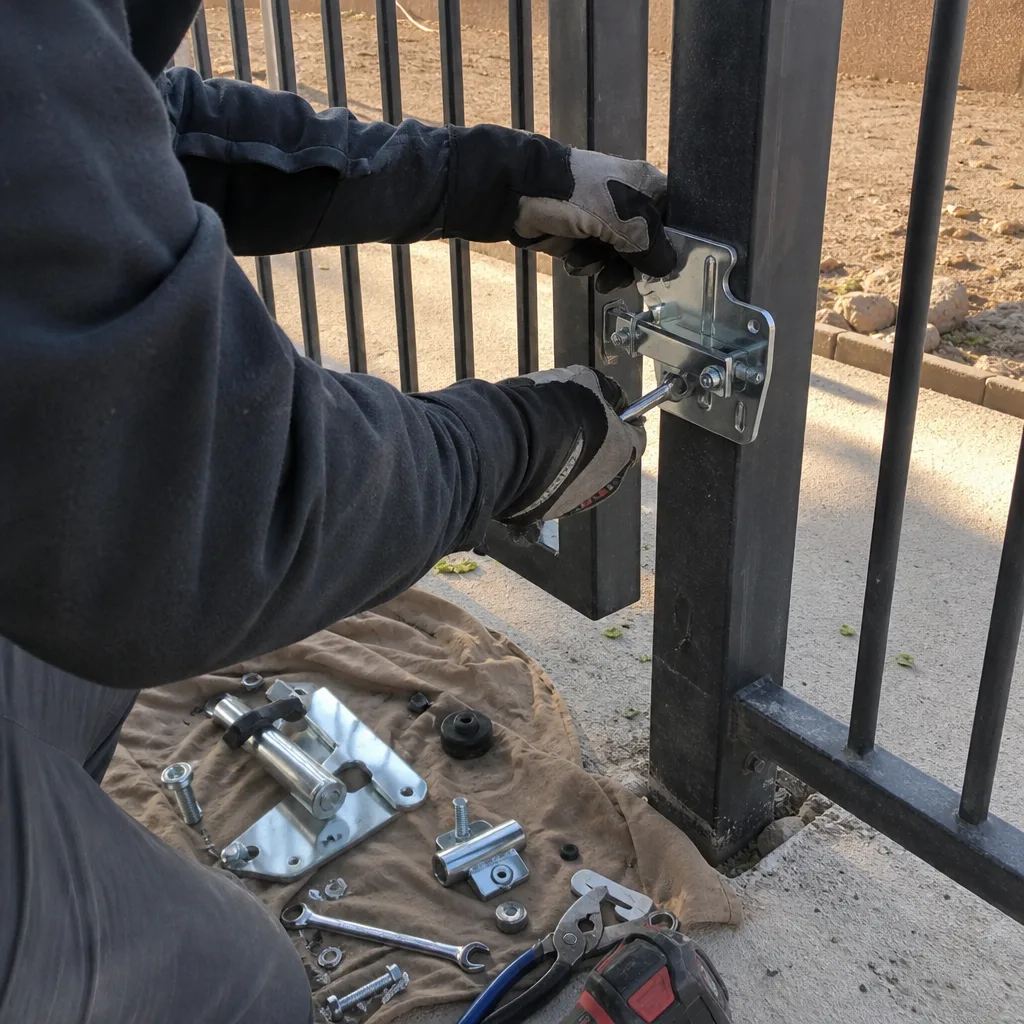
Some signals are urgent enough that you don’t wait for the next scheduled inspection. If you see any of these, get eyes on the gate now:
- Visible rust weeping from a weld line. Not surface rust on the paint – a rust stain specifically at the seam where two pieces of steel meet. That means moisture has penetrated the weld bead, which usually indicates either a pinhole from a poor weld or a stress crack that’s opened up.
- A gate that now needs two hands to operate. If it used to glide and now requires effort, something has changed: hinge binding, post drift, frame racking, or a failing weld that’s redistributed the load. This is the single most reliable early warning you’ll get.
- Any vehicle contact event. Even a slow-speed bump that “looks fine” can crack a weld bead internally. The paint stays intact, the gate swings, and six months later the crack propagates. A post-contact inspection is not optional.
- Visible sag at the latch side. A gate that sags at the far edge but holds plumb at the hinge side is telling you the frame has racked. That’s a structural signal, not a hinge-lubrication problem.
- Post movement or soil cracking around the base. Especially relevant in Winchester where expansive soil and irrigation cycles can loosen a footing.
- Grinding, popping, or groaning during operation. Could be a bearing, could be a weld, could be an operator issue. Worth diagnosing before it becomes a replacement.
Each of these triggers should prompt a full structural inspection, not just a spot fix. Treating a sagging latch as a hinge problem when it’s actually a racked frame is how homeowners end up paying twice for the same root cause.
What a Real Structural Inspection Covers
A structural inspection is not “walk around and look at it.” It’s a defined set of measurements and visual checks that produce a comparable record over time. Here’s what it should include:
- Weld bead continuity. Every weld on the frame gets a visual pass looking for cracks, pinholes, undercut, and rust weeping. Continuity matters more than beauty – a slightly ugly but continuous weld outperforms a pretty weld with a pinhole.
- Hinge bolt torque. Loose hinge bolts are the number one cause of gate sag. Every hinge bolt gets checked with a torque wrench, not just a visual “looks tight.” The spec depends on bolt size and material, and it should be recorded so the next inspection has a comparison point.
- Post plumb measurement. A digital level or plumb bob against each post tells you whether the gate is still hanging true. A post that’s drifted half a degree is fine; two degrees is a problem.
- Frame diagonal measurement to detect racking. Measure corner-to-corner on the gate frame. If the two diagonals differ by more than about 1/8 inch on a typical driveway gate, the frame has racked and the welds are carrying uneven load.
- Ground clearance. Measure the gap under the gate at several points. A gate that was set with 2 inches of clearance at installation and now has 1/2 inch at one corner is telling you the post has settled.
- Operator alignment. If there’s an automatic opener, the gate’s travel should be checked against the operator arm geometry. A gate that’s settled slightly will fight the motor and burn out the actuator over time.
This is the same inspection framework we use on structural checks for Gate Motor & Opener in Winchester installations, because the motor and the frame work as a system. A motor health check without a frame health check misses half the picture.
Recording Baseline Measurements So Drift Becomes Quantifiable
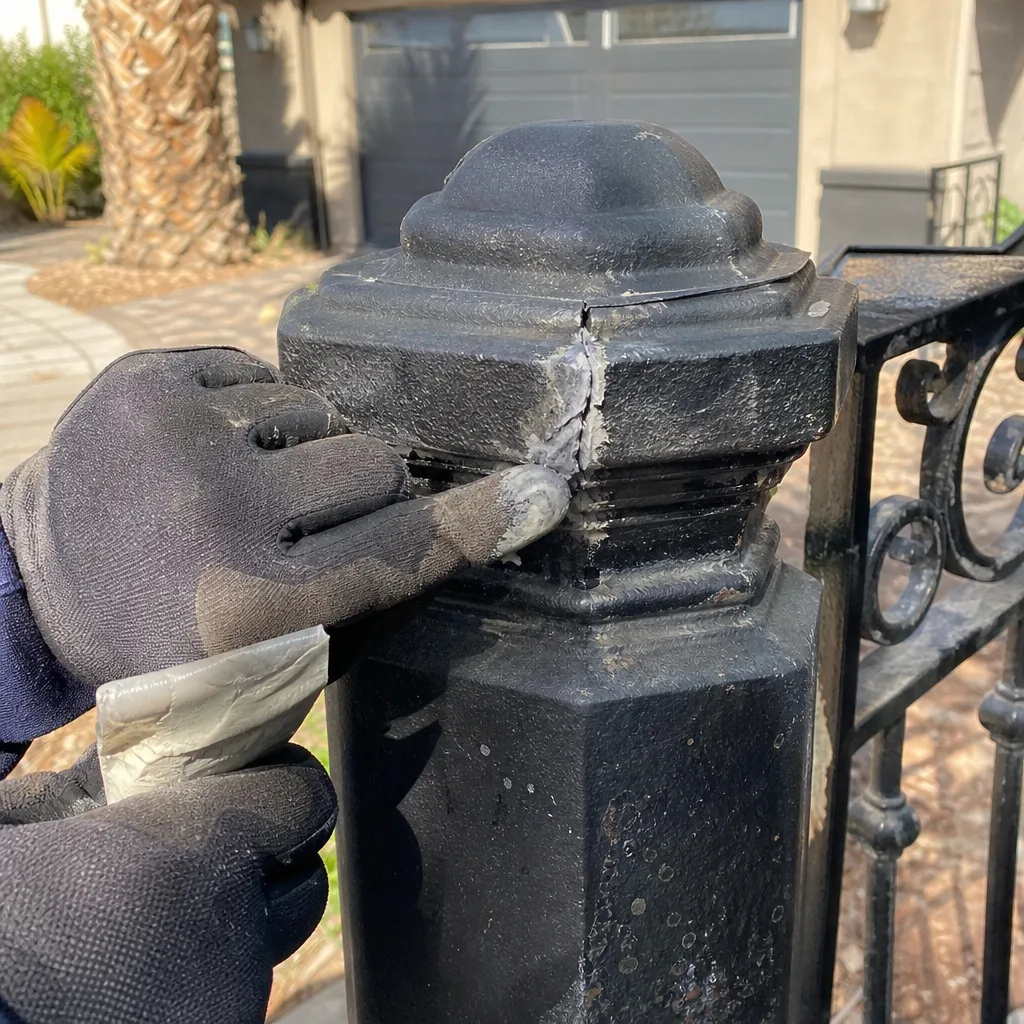
An inspection without a baseline is just a snapshot. The value comes from having numbers to compare against. Every gate should have a baseline record on file – either from installation or from the first time a professional inspects it.
Here’s what belongs in a baseline record:
- Post plumb readings for each post, in degrees from vertical, taken on two axes.
- Frame diagonal measurements in inches, corner to corner, both directions.
- Ground clearance at four points along the swing path.
- Hinge bolt torque values for each hinge, with the bolt size and material noted.
- Operator arm geometry – the distance from hinge axis to operator attachment point and the arm length, if automated.
- Photographs of each weld bead and each anchor point.
With those numbers recorded, future inspections become comparative. When the diagonal measurement moves from 1/16 inch to 3/16 inch over eighteen months, that’s a quantifiable drift that tells you a weld is fatiguing or a post is settling. Without the baseline, an inspector can only say “looks about right,” which is useless six months later.
We record these numbers on every structural visit, and the homeowner keeps a copy – the same documentation habit we apply to Vance Gate Repair Winchester home service calls. It’s the difference between knowing your gate’s health and hoping it’s fine.
Lubrication Schedule by Hardware Type
Lubricant choice matters more in Winchester than in most places. Standard white lithium grease breaks down quickly at 140°F surface temperatures, then attracts grit from the dust. What holds up here is a high-temperature synthetic grease with a higher drop point, and for hinge pins, a dry-film lubricant that won’t hold dust. Here’s the schedule by hardware type:
- Hinge pins (every 3-6 months). Use a synthetic grease rated for high-temperature service, or a dry PTFE spray on exposed pins. In Winchester’s summer heat, we recommend the shorter end of that range from May through September. Grease fittings should be pumped until fresh grease appears at the gap, not just a couple of pumps.
- Wheel bearings on rolling gates (every 6 months). Rolling gate carriages run on sealed or semi-sealed bearings. Check for play first – if the wheel wobbles on its axle, the bearing is already gone and lubrication won’t save it. Grease the ones that hold tight.
- Latch mechanisms (every 6 months, or quarterly if the gate is used daily). Latch springs and pivot pins wear faster than people expect. A dry graphite lubricant is the right call here – grease attracts grit, and grit wears the latch cam faster than dry use.
- Operator tracks and drive chains (every 3 months on sliding gates). Clean first, then lubricate. Never grease a dirty chain – use a chain-specific lube designed for outdoor service.
- Operator arm pivots on swing gates (every 6 months). Both ends of the arm, plus the manual release mechanism. Test the manual release every time you lubricate – it’s the one part that only matters when the power is out.
One more thing on lubrication: more is not better. Over-greasing a hinge pushes grease out where it attracts dust, and dust turns to abrasive paste. A small amount, applied often, beats a lot applied rarely.
When Welds Need Rechecking
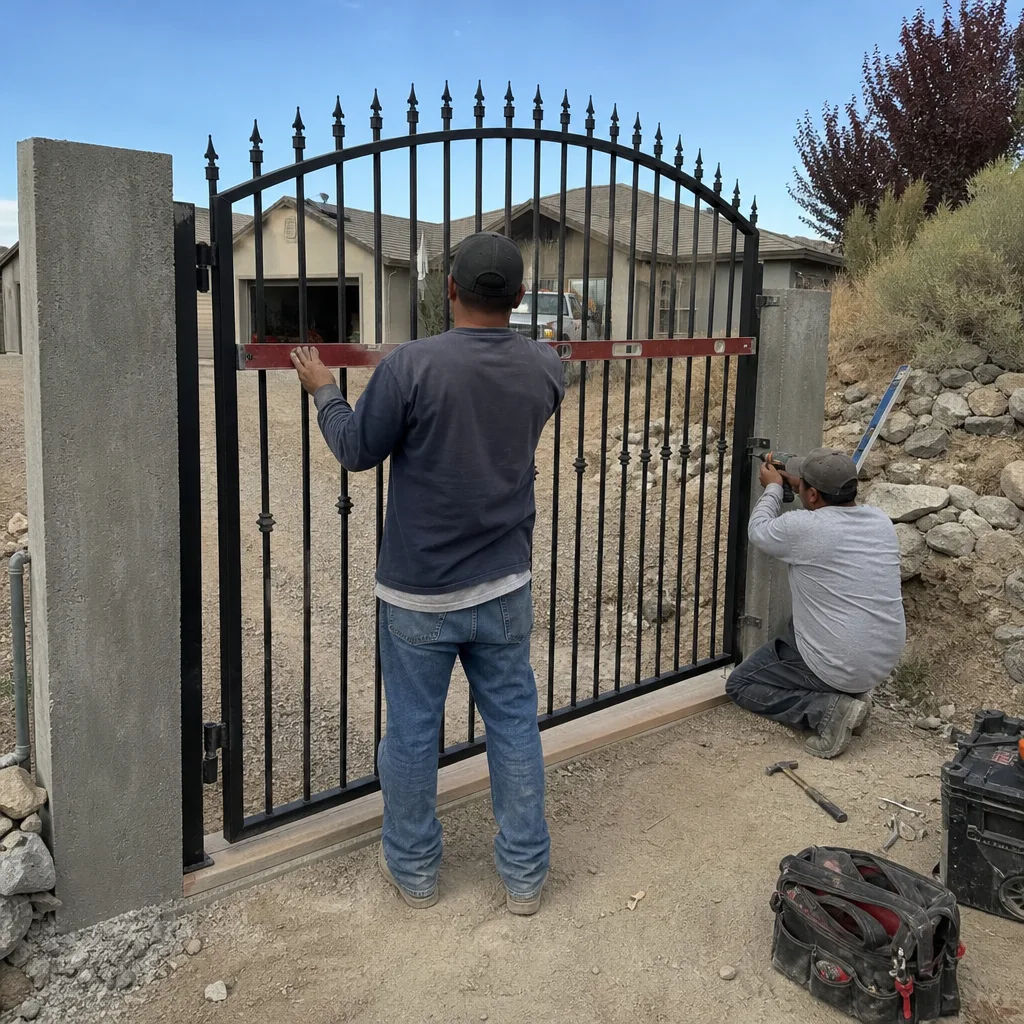
Not every weld needs rechecking on a fixed schedule. The schedule depends on the load the weld is carrying and the environment it sits in. Here’s how we think about it:
- Post bases and anchor welds (every 18 months in alkaline soil, every 3 years on a concrete pad). These carry the full weight of the gate and see the most soil-driven movement.
- Frame corner welds (every 24 months). Every hinge, latch, and diagonal joint gets a visual pass looking for rust weeping, cracks, or paint blistering at the bead.
- Decorative and non-structural welds (every 3 years). Lower priority, but worth a visual pass during any other inspection.
- Any weld on a gate that has taken vehicle contact (immediately, and once more at 3 months). Cracks from impact often propagate slowly – the first check catches obvious damage, the second catches the crack that opened up under load.
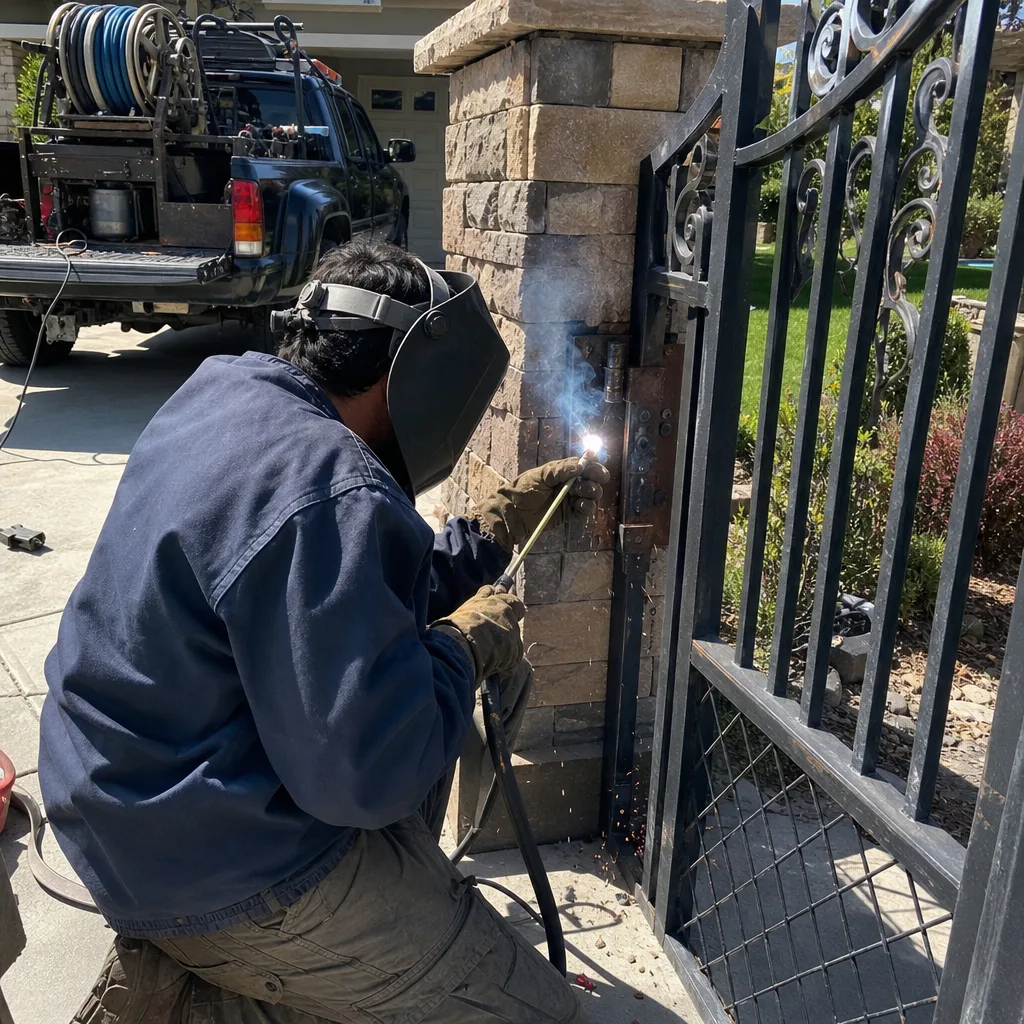
Actual rewelding is a separate decision. A recheck is a visual and measurement pass. Actual welding work is only needed when a crack is confirmed or a weld has clearly lost continuity. When rewelding is needed, we document the original failure mode with a photograph before the repair so the record shows exactly what the weld looked like when it failed.
The same documentation logic applies when a new gate is installed – we mark the fabrication welds on a Gate Installation in Winchester record so future inspections know exactly where to look.
The Documentation Handoff
The single biggest difference between a professional maintenance visit and a neighbor’s visual pass is what you get to keep afterward. A real maintenance visit should produce a document package you can hand to the next technician – or to your insurance company in the event of a damage claim.
Here’s what a proper handoff includes:
- Baseline measurements for this visit, with comparison values against the last inspection.
- Photographs of every weld bead checked, every hinge point, and each post base.
- A written record of what was adjusted, what was lubricated, and with what product.
- Any part numbers or specifications for anything replaced or added.
- Recommendations for the next inspection window, based on the condition indicators found this time.
If you’re paying for a maintenance visit and walking away with a verbal “looks good,” you paid for nothing you can use. Demand the record. Every visit we make leaves this documentation with the homeowner, backed by our photo record on every visit and the 365-Day Done Right Promise covering the work performed.
Seasonal Rhythms in Winchester
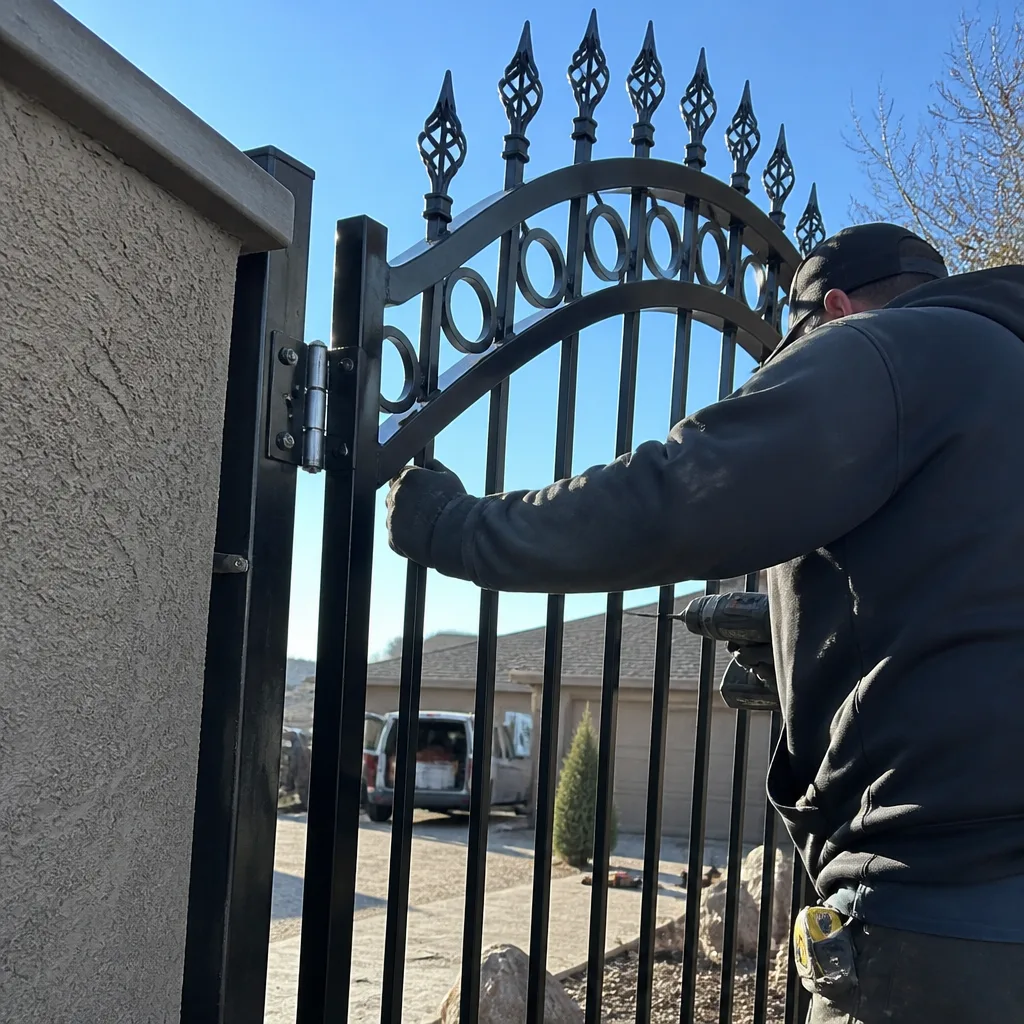
Winchester’s climate creates two distinct gate seasons. Through the summer, exposed steel expands with the heat and lubricants thin out, so hinge and pivot checks in June and early September catch most of the summer’s wear. Through the cooler months, the expansion reverses and weld beads see the thermal cycling that opens pinholes and micro-cracks. That’s why we schedule structural inspections in late fall or early spring, when temperatures are moderate and measurements are stable.
Wind-driven dust is another Winchester factor. Any gate near an unpaved lot or a construction zone accumulates grit in hinges and operators faster than average, and needs lubrication roughly on the shorter end of each interval. If your gate is in a newer development with active construction nearby, plan on checking hinges every three months instead of six until the site stabilizes.
Common Mistakes to Avoid
- Waiting for a gate to fail before inspecting it. By the time a gate stops operating, the underlying cause has usually been visible for months. Condition-based inspection catches it earlier and cheaper.
- Greasing a dirty hinge. Grease on top of grit is an abrasive paste. Clean first, then lubricate – and use the right product, not whatever’s in the garage.
- Treating a sag as a hinge problem without measuring the frame. A sagging latch that measures evenly on both diagonals is a hinge issue. A sagging latch with 1/4 inch of diagonal difference is a racked frame. Different problem, different fix.
- Not recording a baseline. Without initial measurements, an inspector can only guess at drift. Insist on numbers on the first visit.
- Skipping the post-contact recheck. A gate that “looks fine” after a bump should still be measured and photographed at three months, because cracks propagate slowly.
- Using a lubricant that can’t take the heat. White lithium grease and general-purpose oils break down fast in Winchester summers. Use high-temperature synthetics on pins and dry-film on exposed hardware.
- Assuming a manufacturer’s maintenance schedule is enough. Manufacturer intervals are written for average installations. Winchester soil, heat, and dust produce gate loads that are often above average.
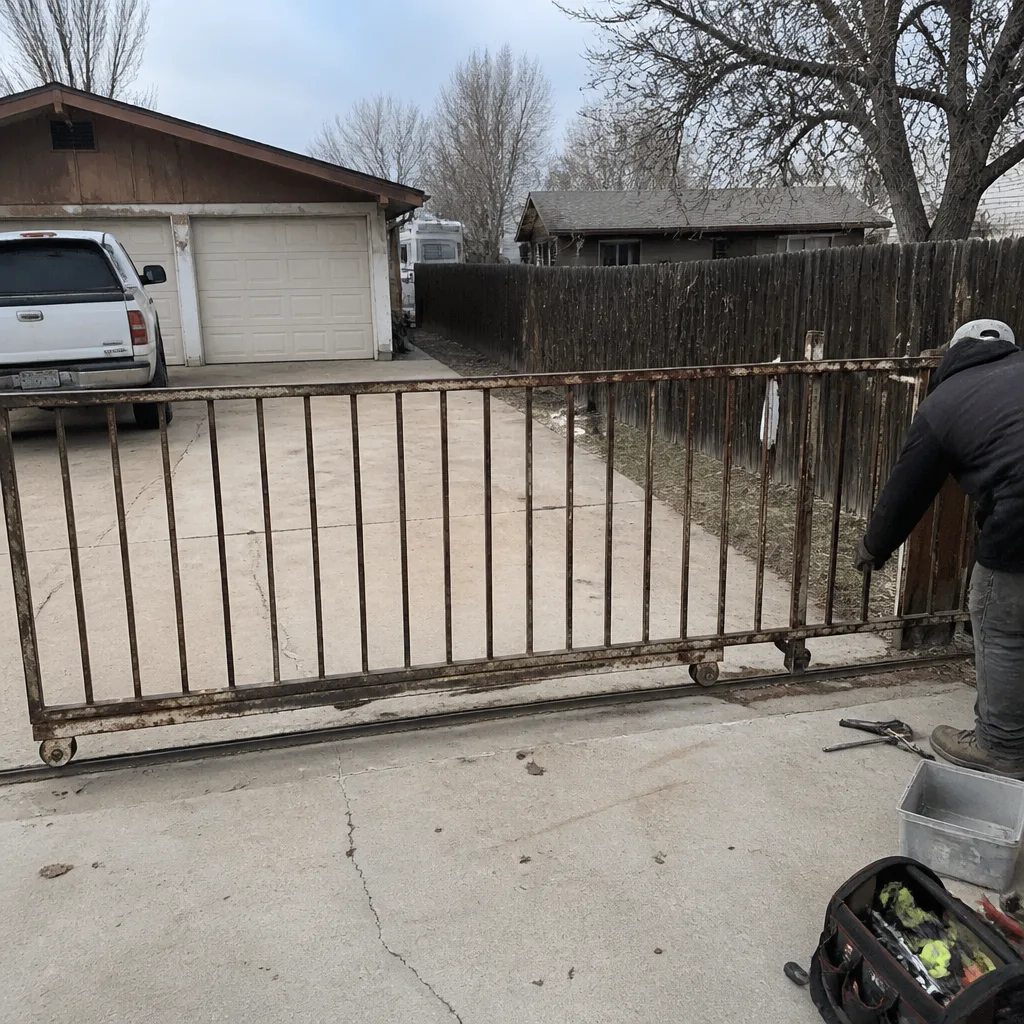
See the difference
BeforeAfter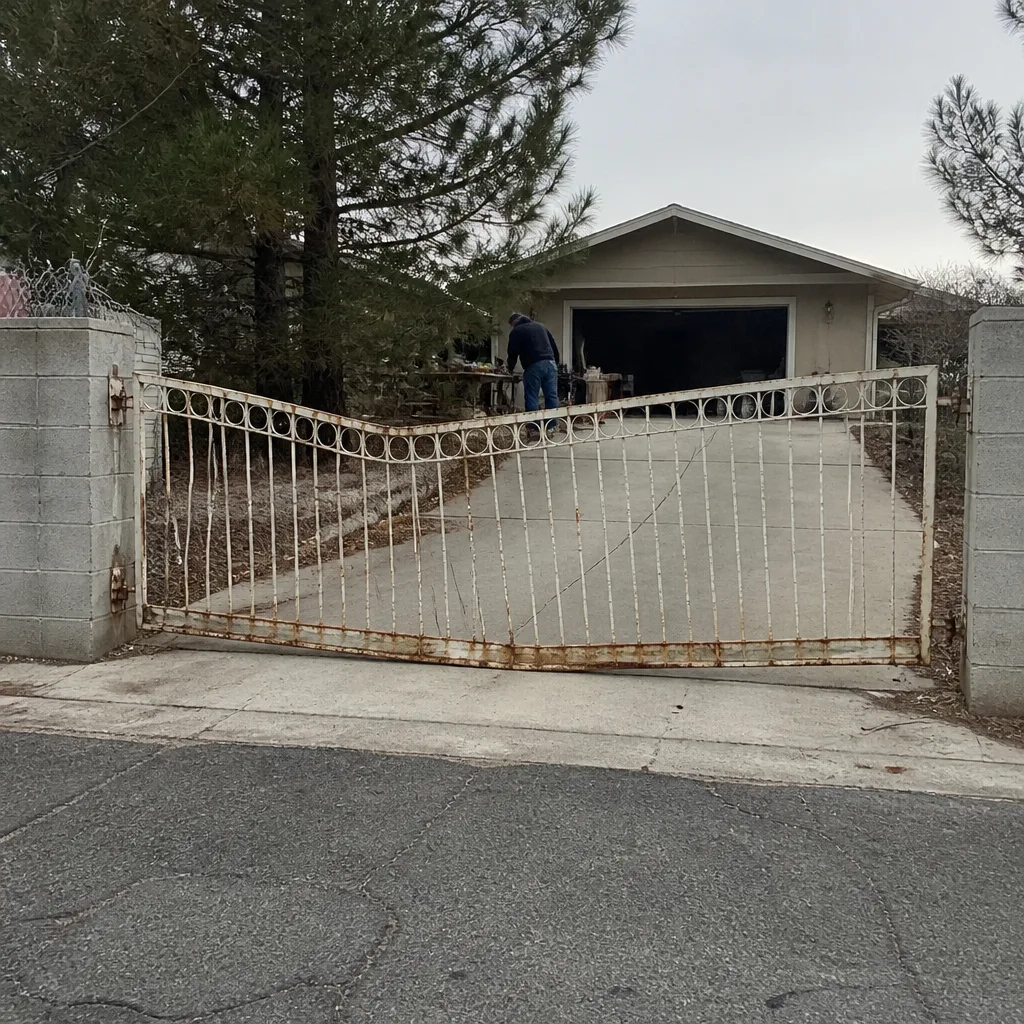 Before
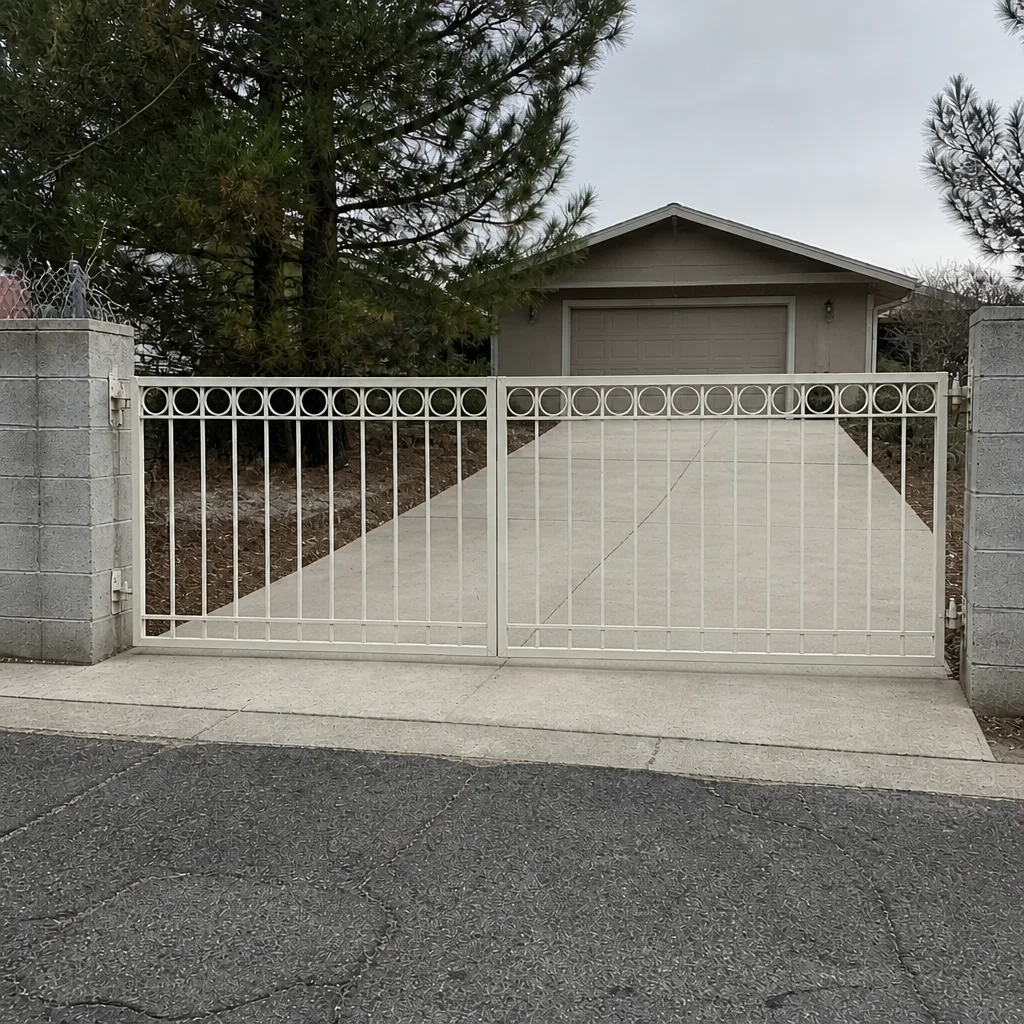 After
 Before
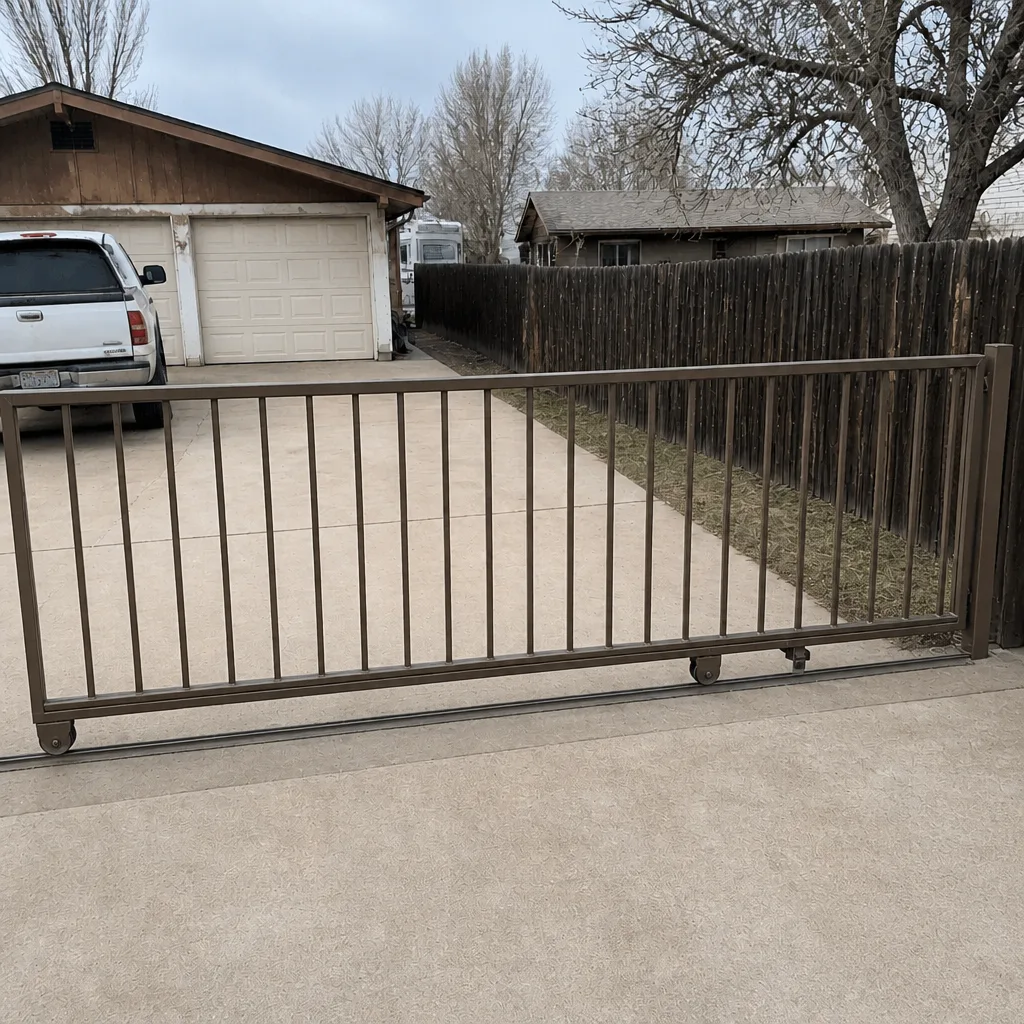 After
When to Call a Professional
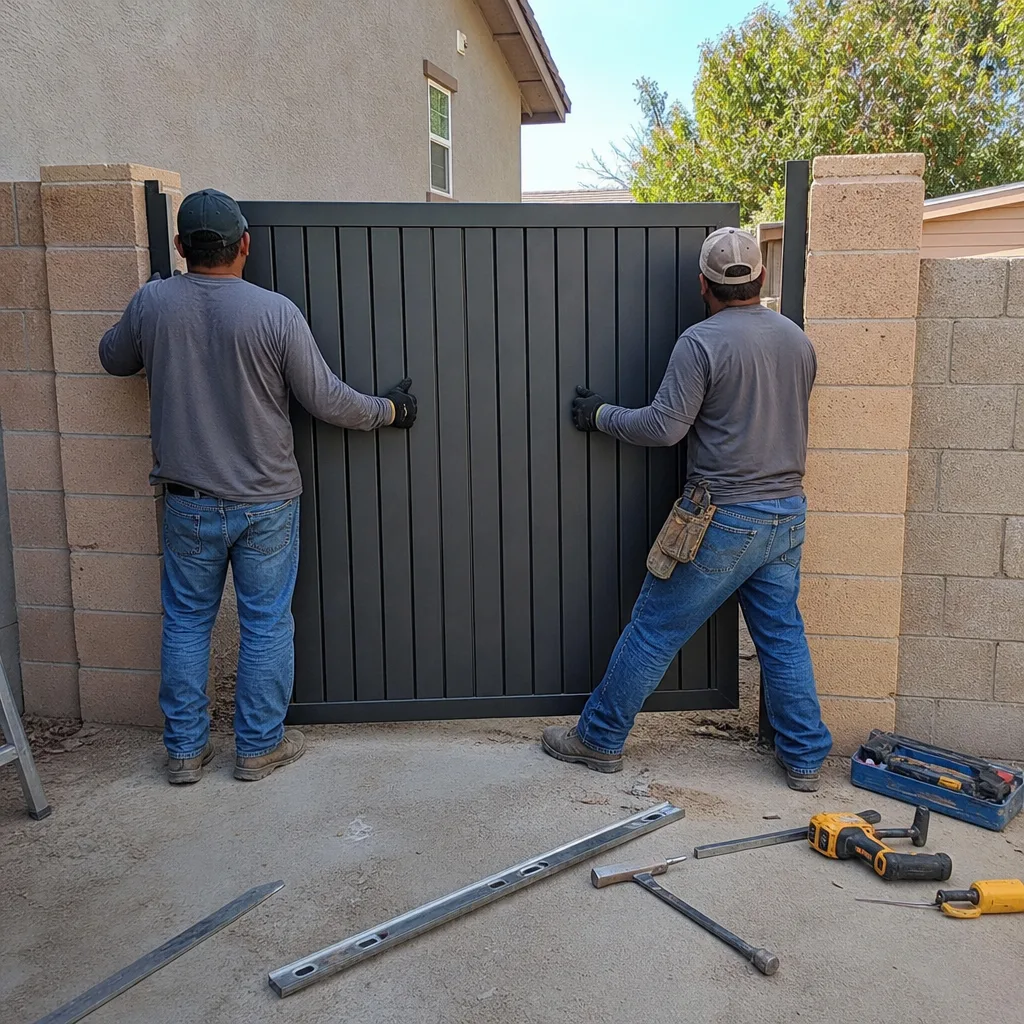
Call a professional when any of these are true: rust is weeping from a weld line, the gate needs two hands to move, any vehicle contact has occurred, a post base has visibly shifted, or you don’t have baseline measurements and want a proper record started. Welding work and structural repairs on load-bearing gate components are not DIY territory – the failure modes include falling gates, cracked welds under tension, and hinge assemblies that let go without warning. A professional inspection catches these before they become an injury. Vance Gate Repair Winchester offers free estimates in Winchester – call (866) 983-9213. We’ll bring a written scope, photograph every weld bead, and leave you with a baseline record you can compare against for years.
Frequently Asked Questions
Every 12 to 18 months in harsh climates like Winchester’s, and every 3 years in mild conditions on a stable concrete pad. The interval depends on soil type, heat exposure, and vehicle use – a gate on expansive alkaline soil needs the shorter interval because soil movement loads the post welds. Call (866) 983-9213 for a free estimate on a structural inspection.
Rust weeping from a weld line means moisture has penetrated the weld bead, usually through a pinhole, stress crack, or zone of incomplete fusion. It’s a sign of an active failure mode, not surface rust, and it needs a professional inspection before the crack propagates. Call (866) 983-9213 – estimates are free.
A high-temperature synthetic grease on hinge pins and pivot points, and a dry PTFE or graphite lubricant on exposed hardware and latch mechanisms. Standard white lithium grease breaks down fast at surface temps above 130°F and then attracts dust that becomes abrasive. Reapply every 3 to 6 months from May through September.
No. A working gate can still have cracked welds, loose hinge bolts, or a frame that’s racked by 1/4 inch without showing symptoms yet. Those conditions fail suddenly under load, and often when someone is walking through. Waiting for symptoms is how a $200 adjustment becomes a $2,000 structural repair. Call (866) 983-9213 to schedule an inspection.
Yes. Baseline measurements taken at installation or first inspection are what make every future inspection comparable. Without them, an inspector can only say “looks reasonable” rather than “the diagonal has moved 1/8 inch since last visit.” Ask for the numbers in writing.
A written record of measurements, photographs of every weld bead and hinge point, notes on what was adjusted and with what product, and a recommended next-inspection window. If you walk away with a verbal “looks good,” you didn’t get a real maintenance visit. Ask for the documentation every time.
The Bottom Line
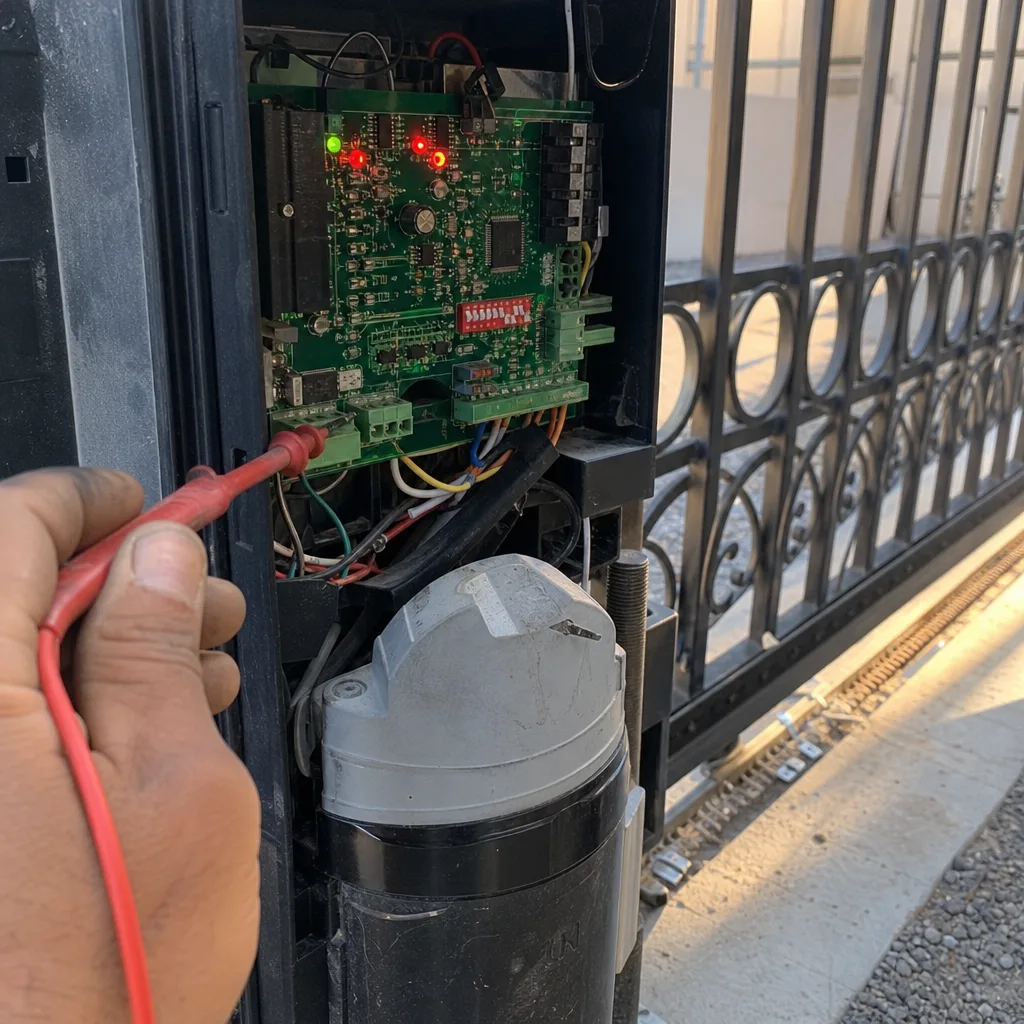
Gate maintenance has no single right answer because every gate sits in a different environment. What it does need is a condition-based approach: known triggers that prompt inspection, a defined structural checklist, recorded baseline measurements so drift is quantifiable, and a lubrication schedule matched to actual hardware and actual climate. In Winchester, that means accounting for alkaline soil, 140°F summer surface temps, and construction dust that accelerates wear. That’s the schedule that works. Anything else is hopeful guesswork. Record the baseline once, and every future inspection gets easier.
Written by the team at Vance Gate Repair Winchester.
Call Vance Gate Repair Winchester at (866) 983-9213 for a free estimate and a written, photographed record of what your gate actually needs.