
Last updated November 18, 2026
 Wrought iron
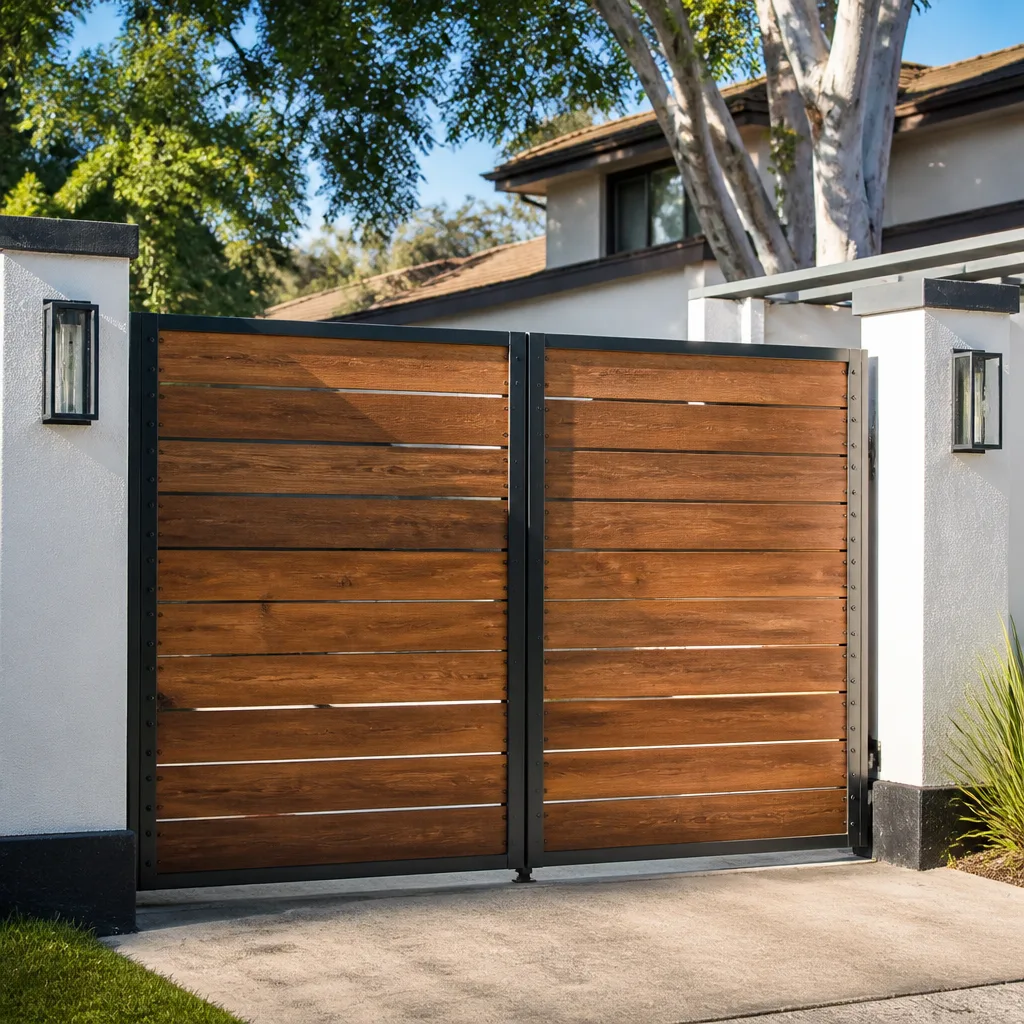 Wood & steel frame
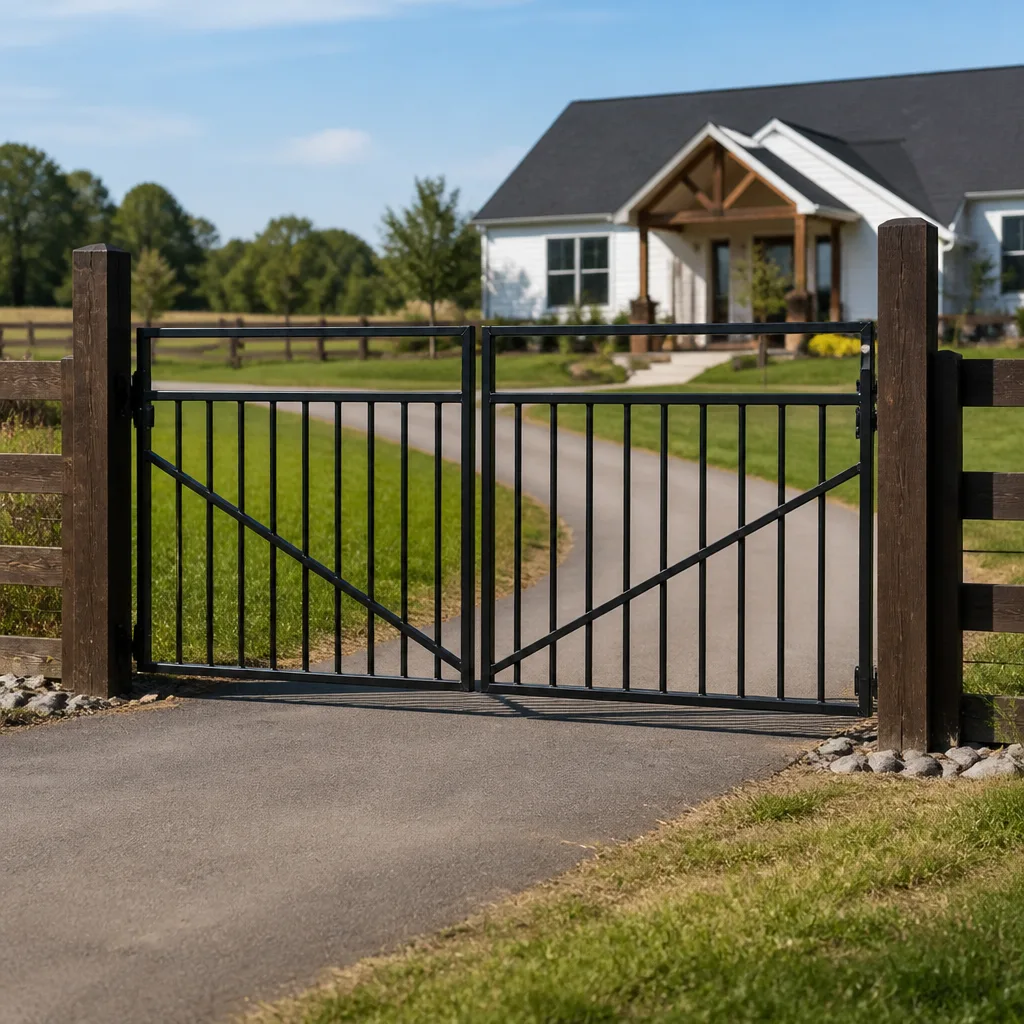 Farm & ranch
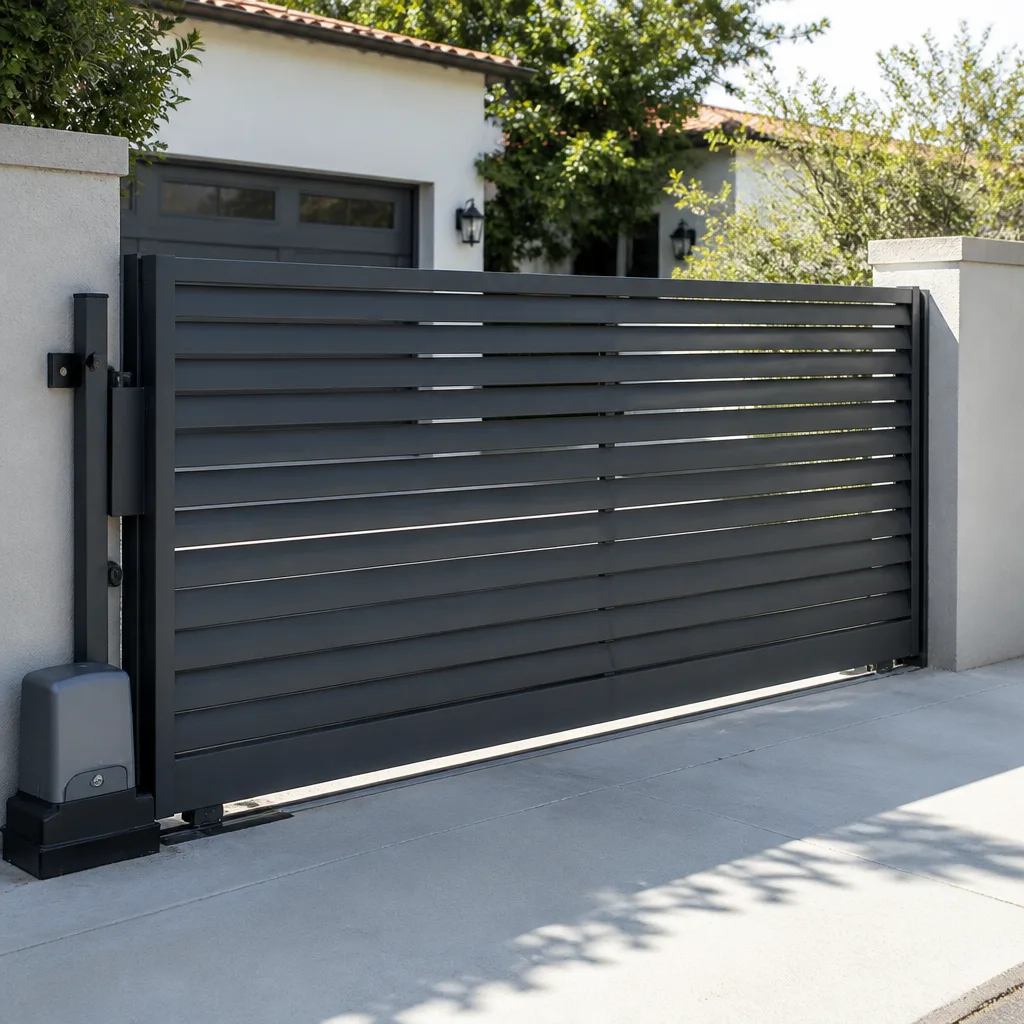 Sliding driveway gates
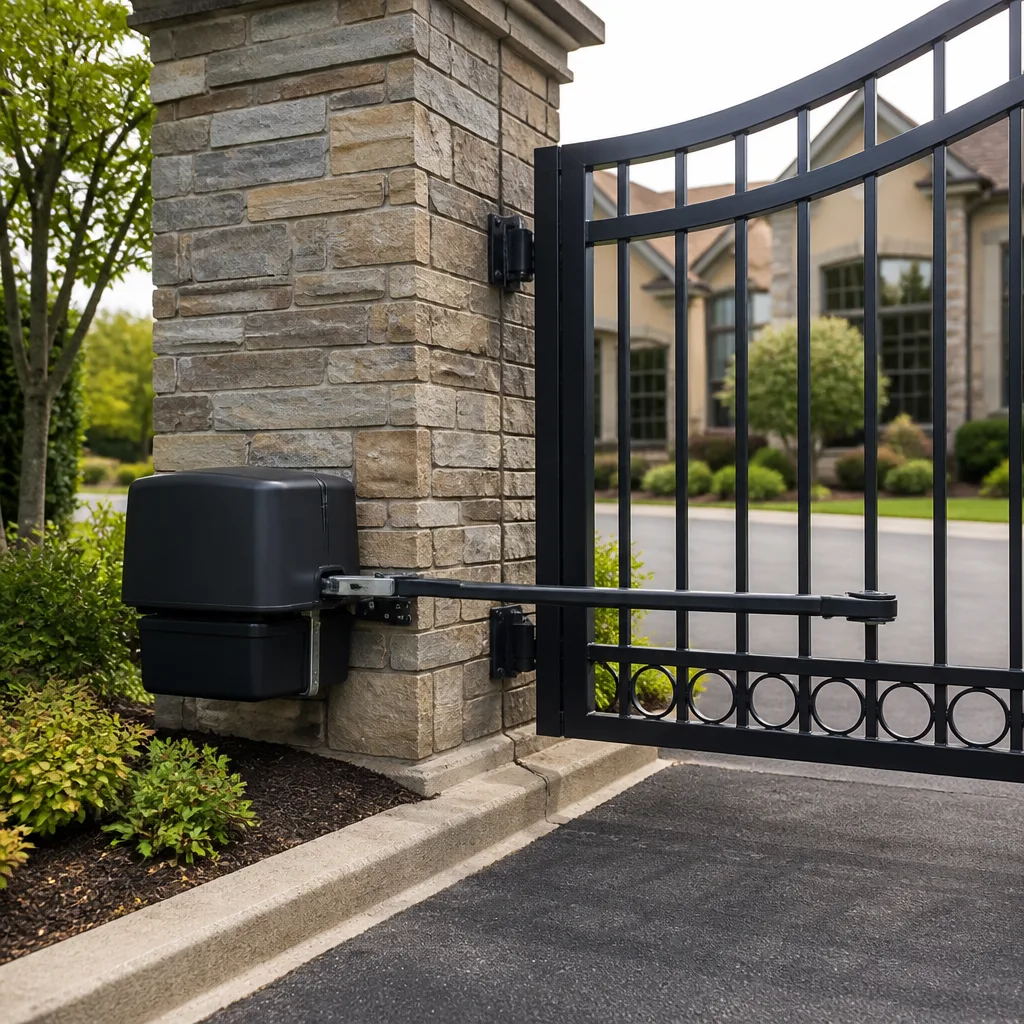 LiftMaster operators
Free on-site gate assessment - hinges, posts, and your LiftMaster or Nice gate operator checked before anything is quoted
The assessment is free and the quote is the invoice.
Get your free estimateHow Long Does Gate Access Control Take? Timelines and What to Expect
A keypad replacement on a gate with a wiring diagram on file takes about 45 minutes. The same keypad replacement on a gate where the last installer swapped wire colors without writing anything down, took no photo, and left no panel schedule, can run three hours and require a return trip once we’ve traced every conductor by hand. Same part. Same gate. Six times the labor. That gap is what this guide is about, because the honest answer to “how long will this take” starts with “how much does the technician have to rediscover.” We work on gate access control across Winchester every week, and the pattern holds: timelines are scope questions in disguise. By the end you’ll know the real benchmarks by task, what missing documentation actually costs you in hours, and how to describe your problem so the visit starts at diagnosis instead of discovery.
Quick Answer
Most gate access control repairs fall between 30 minutes and 2 hours for a single known task (keypad swap, control board replacement, loop detector re-tune), while a full system diagnostic takes 1.5 to 3 hours. Jobs stretch toward the high end when no prior documentation exists or when a fault is intermittent. A written scope delivered before work starts is the single most reliable way to predict the timeline.
Styles & brands we work with
- Wrought iron
- Wood & steel frame
- Farm & ranch
- Sliding driveway gates
- LiftMaster operators
Table of Contents
- Time Benchmarks by Task Type
- The Biggest Time Multiplier: Missing Documentation
- How to Describe Your Problem Before We Arrive
- Same-Day vs. Two-Visit: Choosing the Smarter Structure
- What a Written Scope Does to Your Timeline
- What a Full Diagnostic Actually Involves
- Why Brand Familiarity Shortens the Job
- Winchester Conditions That Affect Timing
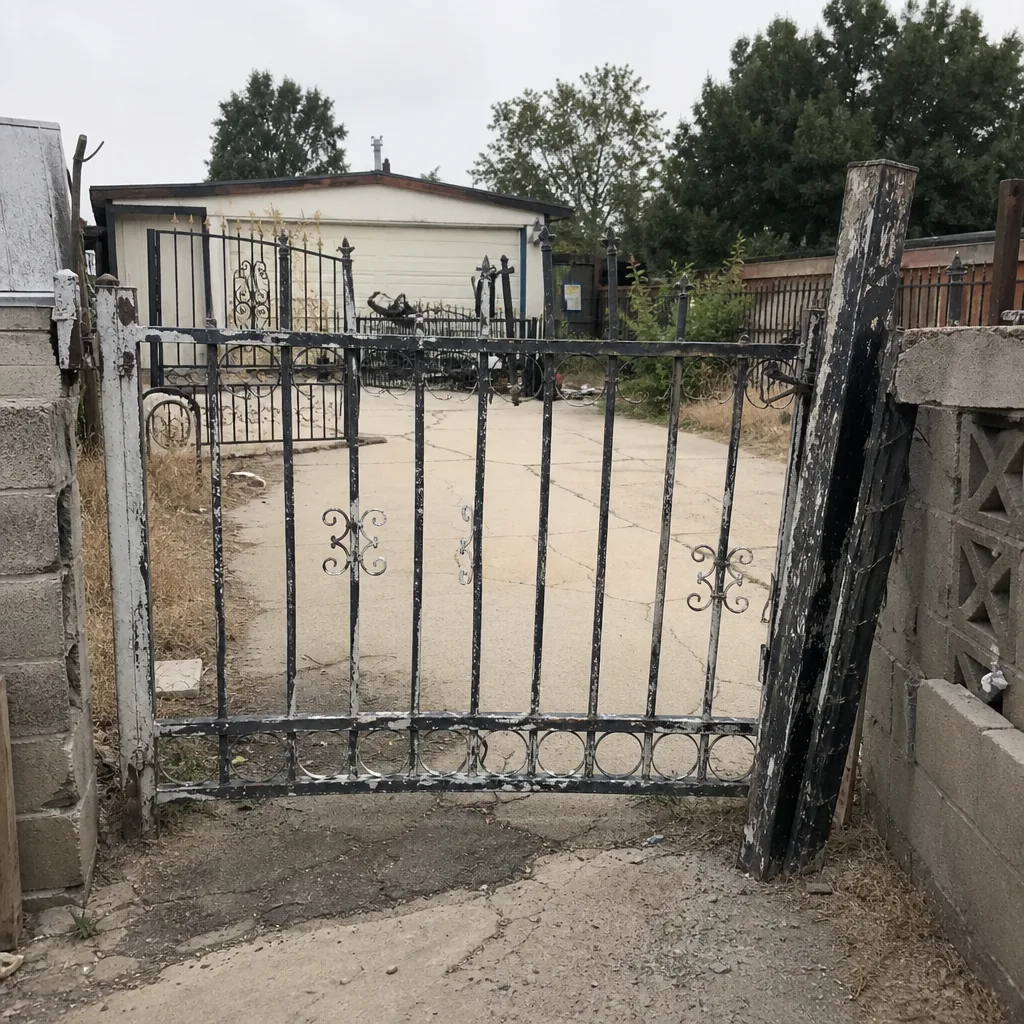 Before
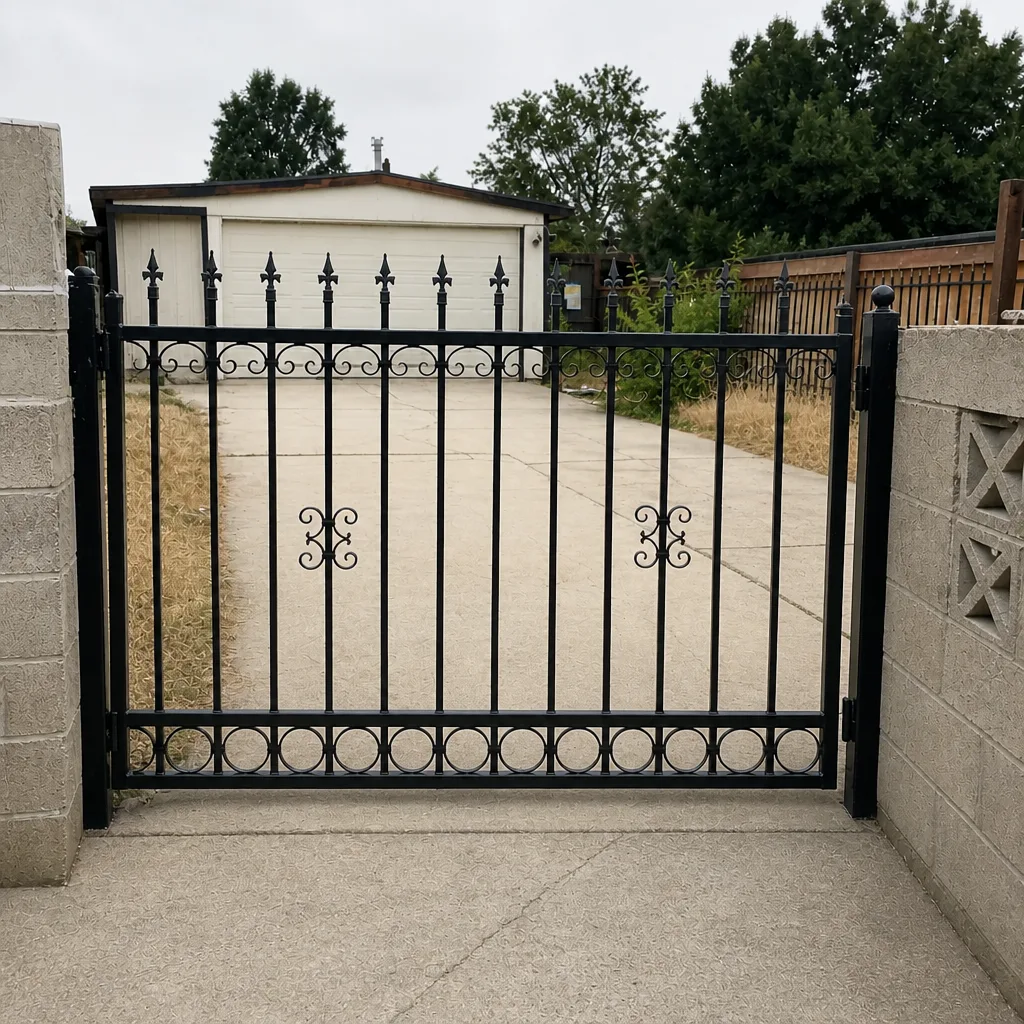 After
Time Benchmarks by Task Type
These are working ranges, not guarantees, and they assume a technician who can read the existing setup. A straightforward task on a documented gate sits at the low end. A task on an undocumented gate, or one where the fault is intermittent, sits at the top or beyond.
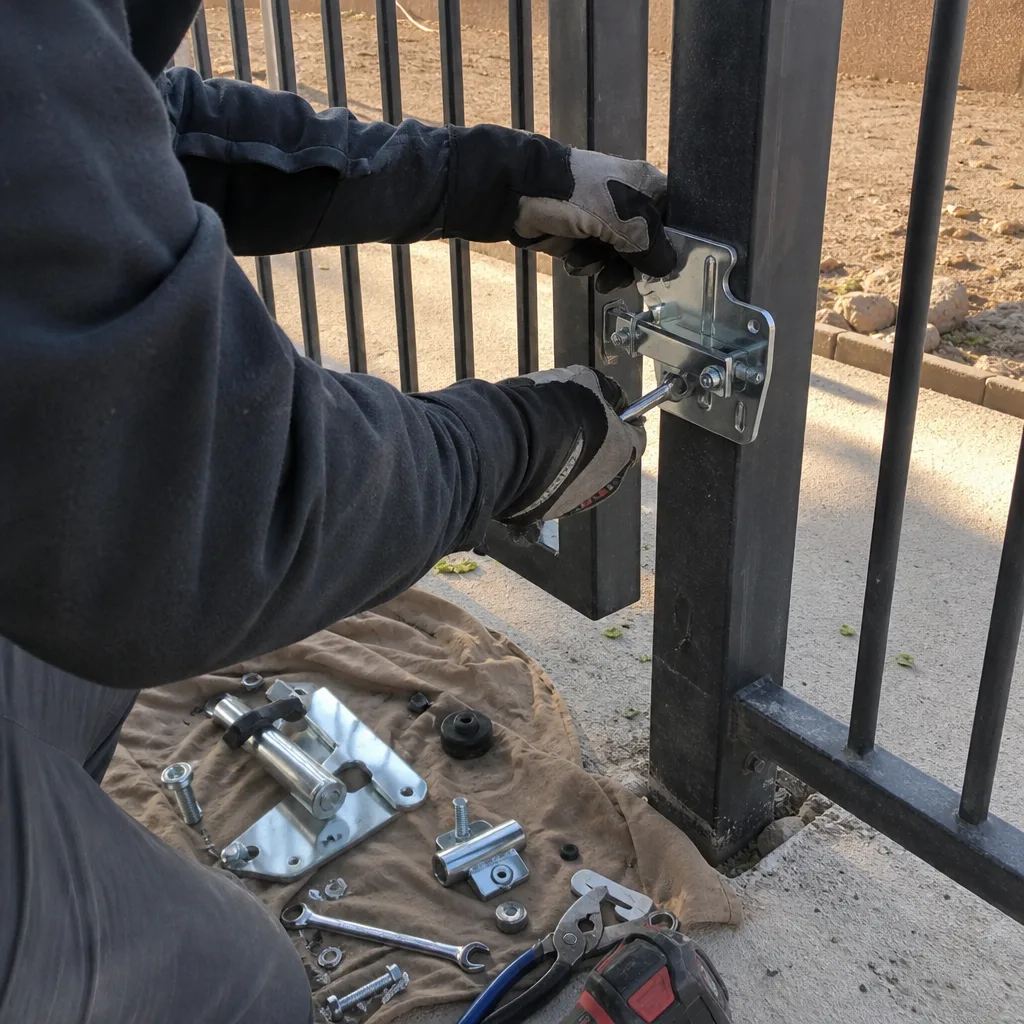
- Keypad or card reader swap: 30 to 60 minutes. Most of that is landing the new conductors and matching the existing relay logic, not the physical removal.
- Control board replacement: 1 to 2 hours. The board itself is quick; verifying every input and output against the gate’s actual behavior is the patient part.
- Loop detector re-tune: about 45 minutes. A vehicle loop that’s picking up a nearby gate or a rebar grid needs sensitivity adjusted, not replaced.
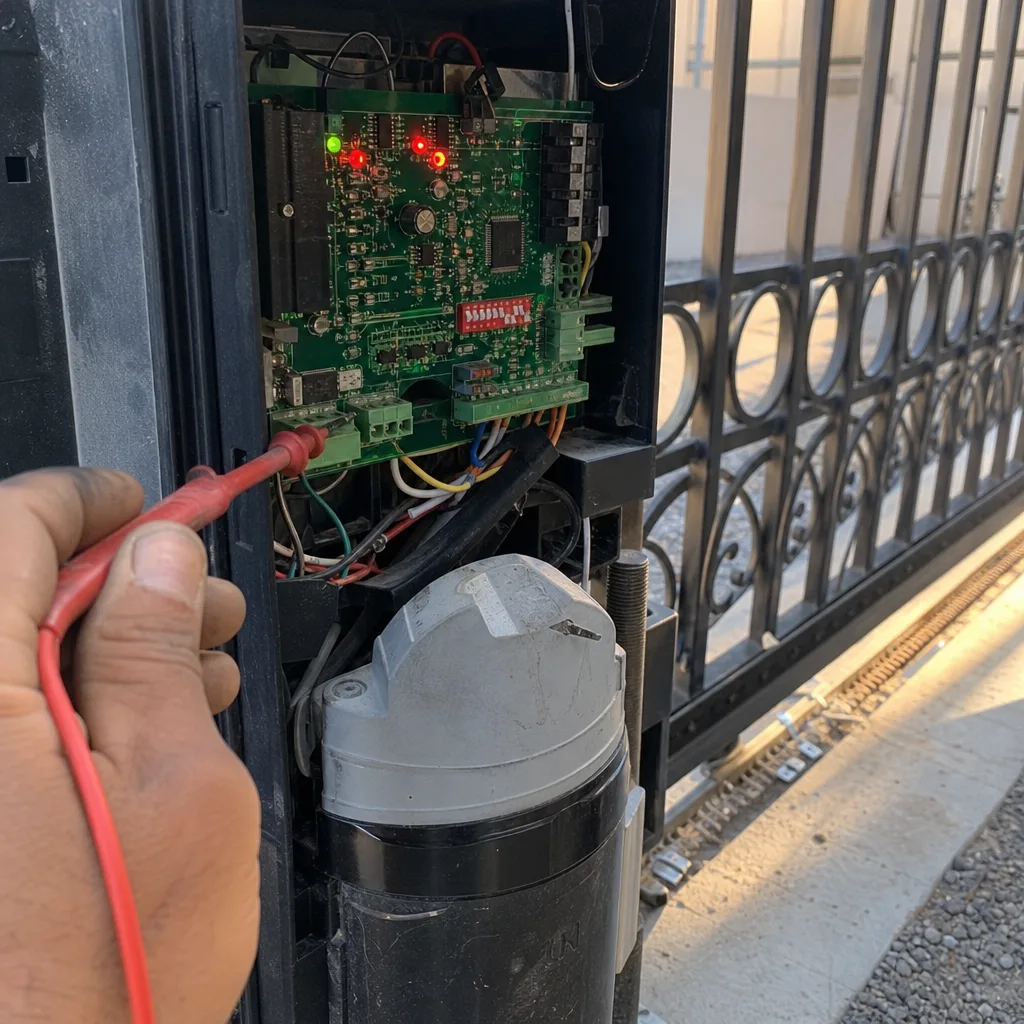
- Full system diagnostic: 1.5 to 3 hours. We’re mapping every device, every conductor, and every limit and photo-eye (the infrared beam that stops the gate if something crosses its path) reading.
- Telephone or app entry integration: 1 to 2.5 hours depending on the panel age and whether the network reach is already present.
On a recent Winchester job, a LiftMaster panel with a clean wiring diagram let us replace the control board and re-tune the loop in under 90 minutes. The photo record we left behind means the next task on that gate starts at the low end of these ranges too. That’s the whole point of the documentation habit – the time you save is on the next visit, not this one.
The Biggest Time Multiplier: Missing Documentation
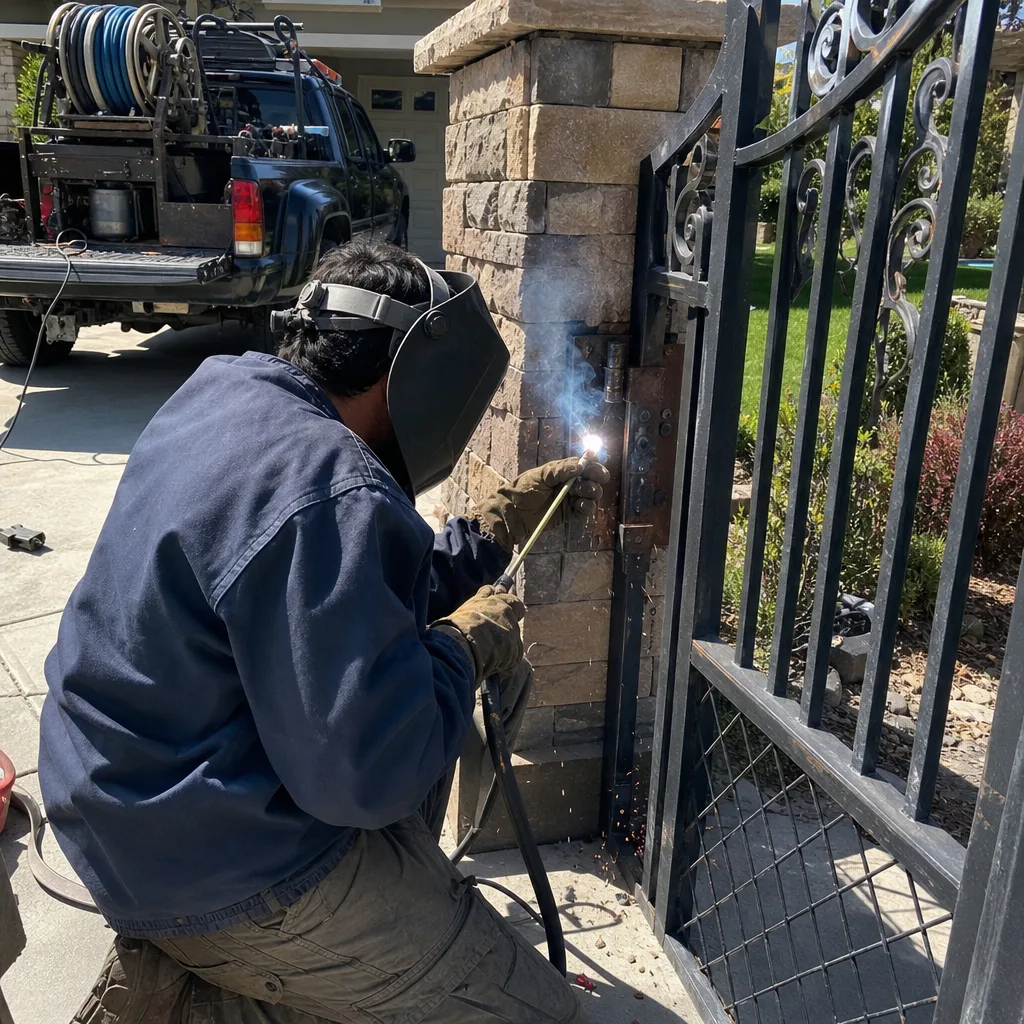
When a gate has no wiring diagram, no photo of the prior panel, and no record of what was installed, the technician starts from zero. That’s the phrase we use internally, and it’s not a metaphor. Here is what “starting from zero” adds to a job, in real time:
- Tracing every conductor (30 to 90 minutes). If the last installer used undocumented color substitutions – red to the common, black to the input – we can’t trust the colors. We ring out each wire by hand to confirm what connects to what.
- Identifying the panel and firmware (15 to 30 minutes). Old access-control panels don’t always match the manual. We verify the model and revision before touching anything.
- Testing each device individually (20 to 60 minutes). Without a baseline, we can’t assume anything still works. Each keypad, reader, loop, and strike gets checked separately.
- A likely return trip. Intermittent faults on undocumented gates often need a second visit to catch the fault in the act, because the first visit is spent mapping the system rather than observing the failure.
Add those up and you’re looking at a job that could have been 45 minutes running three hours, plus a scheduled return. That’s the multiplier. It isn’t labor cost inflation – it’s the cost of rediscovering what nobody wrote down. Under The Haven Standard, every visit we make leaves a photographed record of what was found, what was set, and what was installed, so the next technician never pays that tax again.
How to Describe Your Problem Before We Arrive
The visit starts with a phone call, and how you describe the fault on that call decides whether the technician arrives ready to fix it or ready to investigate. You don’t need gate vocabulary. You need to answer four things plainly:
- What happens, and how often? “The gate opens for cars but not for the keypad” tells us more than “it’s broken.” “It fails every third or fourth time, usually in the morning” tells us it’s likely intermittent and may need a two-visit structure.
- When did it start, and what changed? A new keypad, a power outage, a storm, a new vehicle – any change in the recent past is a clue. A new car with a different windshield angle can throw a loop detector; that alone saves an hour.
- What brand is the panel or motor? Even a photo of the control box helps. If it’s a DoorKing, LiftMaster, Elite, or Mighty Mule, we know the wiring conventions before we arrive.
- What has already been tried? If someone adjusted the sensitivity or reset the board, we need to know so we don’t redo the same step and misread the result.
A photo of the panel with the cover off, taken safely with the power off, is worth more than a paragraph of description. The best call a Winchester homeowner can make is one where we hang up knowing the likely task and the likely time range – because that call is what lets us hand you a written price with confidence.
Same-Day vs. Two-Visit: Choosing the Smarter Structure
Some access control jobs finish same-day and some genuinely shouldn’t. The distinction matters because pushing an intermittent fault into a single visit often means guessing at a fix rather than finding the cause.
Same-day completion is realistic for a single known task: a failed keypad, a dead control board, a misaligned photo-eye, a loop that’s over-sensitive. These are deterministic – we can see the fault, fix it, test it, and document it inside one visit.
A two-visit structure is smarter for intermittent faults. A gate that fails “sometimes” may work perfectly for the three hours we’re standing there, which means a same-day attempt may only prove we tested it on a good day. Smarter structure:
- Visit one: full diagnostic, documentation, and a written scope that names the likely fault and the plan. Any safe, confirmed fix gets done.
- Observation window: you watch the gate for a few days and note every failure with a time and condition – we leave you a simple log sheet.
- Visit two: we return with the pattern, which tells us whether the fault is thermal, moisture-related, or a marginal signal, and we fix the actual cause instead of a guess.
A two-visit plan often reaches a correct fix faster in calendar time than a single aggressive attempt, because it doesn’t gamble on reproducing a fault that isn’t there. If your gate is behaving badly right now, call (866) 983-9213 – a live person answers at any hour – and we’ll tell you honestly which structure fits your symptoms.
What a Written Scope Does to Your Timeline
Timeline predictability is mostly a paperwork problem. A verbal estimate gives you a number and no accountability for how long the job runs or what gets done for that number. A written scope delivered before work starts does three things for your timeline:
- It fixes the task list. The scope states what’s being done, so the job can’t quietly grow. If the technician finds a second fault mid-job, it becomes a written add-on you approve before it starts, not an open-ended hour.
- It hands you the price first. You know the cost before the technician picks up a tool – the flat price written down and given to you. No surprise invoice at the end.
- It sets the finish line. Because the scope names the test and the documentation that close the job, “how long” has a defined end. The visit ends when the scope is done and photographed, not when the technician runs out of ideas.
This is Haven Standard Clause 1 (“Have it in writing”), and it’s the single practice that makes a timeline estimate mean something. When you’re comparing gate companies in Winchester, compare the paperwork, not just the hourly number. A written scope also lets us offer a free second opinion – bring a written estimate from another company and we’ll review it at no charge, so you can see whether their timeline and price account for the work your gate actually needs. For the repair itself, our Gate Repair in Winchester page covers what we handle and how the documentation works.
What a Full Diagnostic Actually Involves
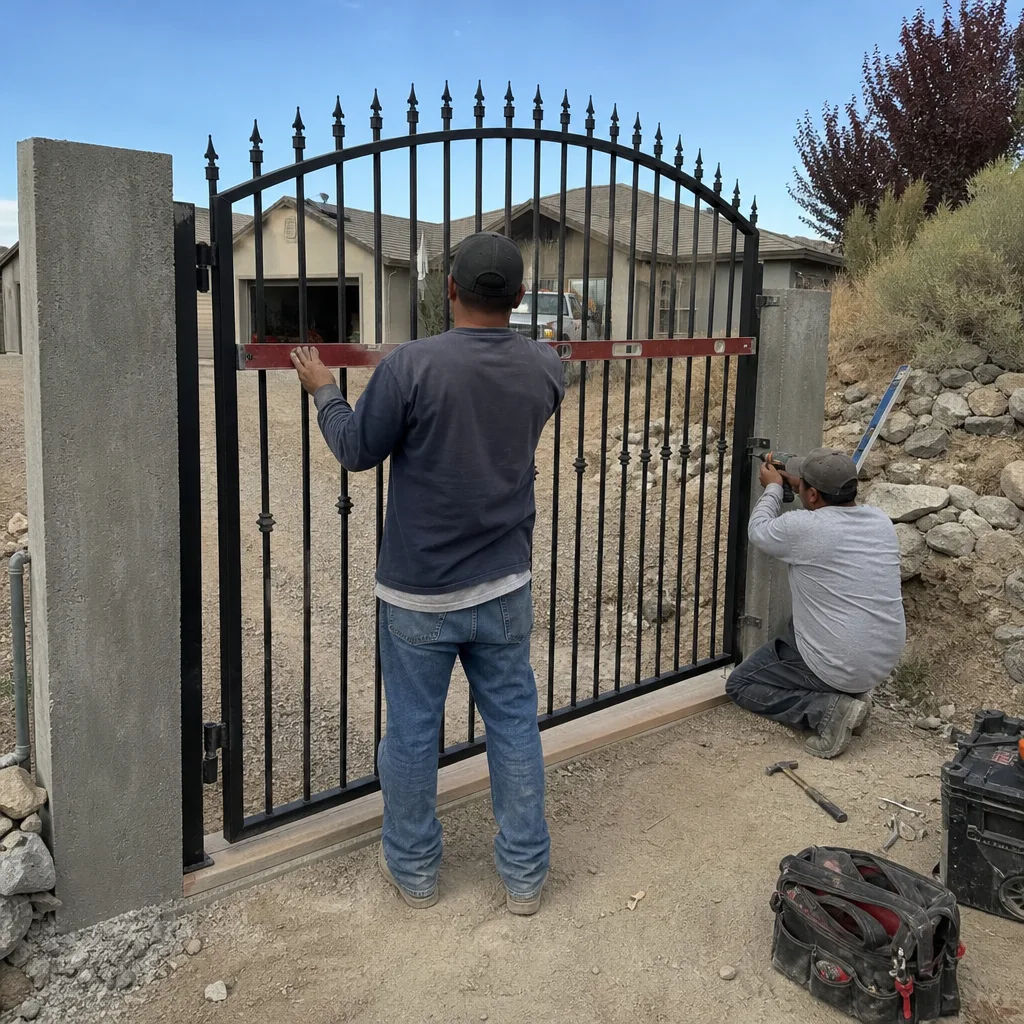
A full system diagnostic is the 1.5 to 3 hour job, and it’s worth knowing what that time buys so you can judge whether you need one. It’s step-by-step, and it’s the foundation for any accurate timeline:
- Panel identification and photo record. We photograph the panel, label the revision, and record what’s installed before changing anything.
- Conductor trace and labeling. Every wire gets confirmed and labeled so the next visit starts fast.
- Device-by-device test. Keypad, card reader, loop detector, photo-eye, strike, and any telephone or app entry are checked individually.
- Limit and travel readings. We photograph the limit-switch settings and note the open and close travel, so a future adjustment has a baseline.
- Written findings. You receive a plain-language record of what was found, what works, what doesn’t, and what we recommend – with the price for each fix written down.
If your gate has never had this done, the diagnostic pays for itself on the next task. Access control repair on a system nobody has mapped is where the three-hour surprise comes from. For motor and automation work specifically, see our Gate Motor & Opener in Winchester page.
Why Brand Familiarity Shortens the Job
Every access-control brand has its own wiring conventions, default settings, and quirks. A technician who knows the DoorKing access panel line knows which terminals the strike lands on without tracing. Someone who’s worked the LiftMaster operators recognizes the diagnostic beep codes. The time saved is real, and it shows up as a shorter visit and a lower final number.
We service nine major gate-automation brands – LiftMaster, FAAC, BFT, Linear, Viking, Ghost Controls, DoorKing, Elite, and Mighty Mule – which matters here because it means we work on whatever motor and panel are already on your property instead of steering you toward a replacement to fit the one brand we carry. On an unfamiliar brand, expect the diagnostic portion to run longer; on a familiar one, the same task often sits at the low end of its range. If you’re not sure what brand you have, a photo of the label on the panel or motor during your call lets us tell you before we arrive, which shortens the visit on its own.
Winchester Conditions That Affect Timing
Local conditions change how long access control work takes here, and they’re worth knowing so you can set expectations. Winchester’s summer heat pushes control panels and operators into thermal shutdown, and a gate that “fails only on hot afternoons” takes longer to diagnose because the fault isn’t present in the morning. Wind-blown dust and grit work into loop detectors and keypad seams, causing false triggers that need cleaning and re-tuning rather than replacement – usually a shorter job than the symptom suggests. Winter cold tightens gate hardware and can put a marginal photo-eye out of alignment, so a “new” fault in January is sometimes a two-inch shift we can correct in the diagnostic window. Newer residential gates in Winchester are increasingly wired for app and telephone entry, which adds a networking step to any panel work – usually 30 to 60 minutes on top of the task. None of these are reasons to delay a call; they’re reasons to describe the conditions when you call, because “it fails when it’s hot” shortens the job before we start.
Common Mistakes to Avoid
- Assuming the last installer left a diagram. Most residential gates in Winchester have no wiring record at all, which is exactly why the same task can triple in time. Ask for the prior documentation when you buy a home with an automated gate.
- Paying for a replacement when the actual fault is a two-inch photo-eye misalignment. The infrared beam being knocked out of line is one of the most common false “dead board” diagnoses. A diagnostic visit costs far less than a new panel.
- Letting a company quote verbally and adjust later. A verbal number with no written scope is where surprise invoices come from. On a gate with undocumented wiring, the “adjustment” can be several hours of tracing.
- Calling the fault intermittent and waiting for it to become permanent. A gate that fails “sometimes” is often a marginal loop or a failing strike, and the sooner it’s documented, the shorter the eventual fix.
- Resetting the panel before the technician arrives. A reset can clear the diagnostic codes that would have told us what failed. Photograph the display first, then call.
- Buying a replacement motor before the panel is checked. On more than one Winchester gate, the motor was fine and the access-control panel was the fault. Checking the cheaper component first is the right order.
- Not asking for the documentation after the job. If the technician leaves without a photo record and a written part list, you own the same rediscovery cost on the next visit. Ask for it every time.
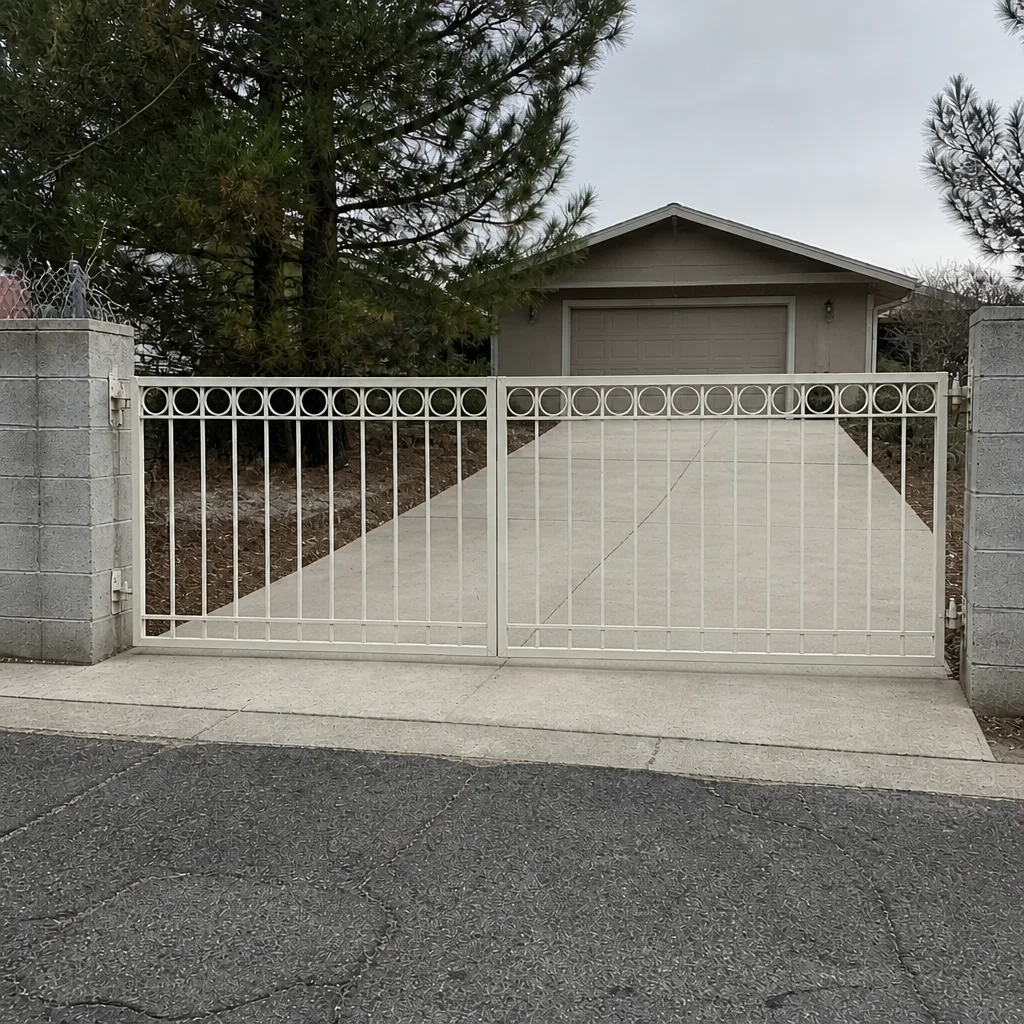
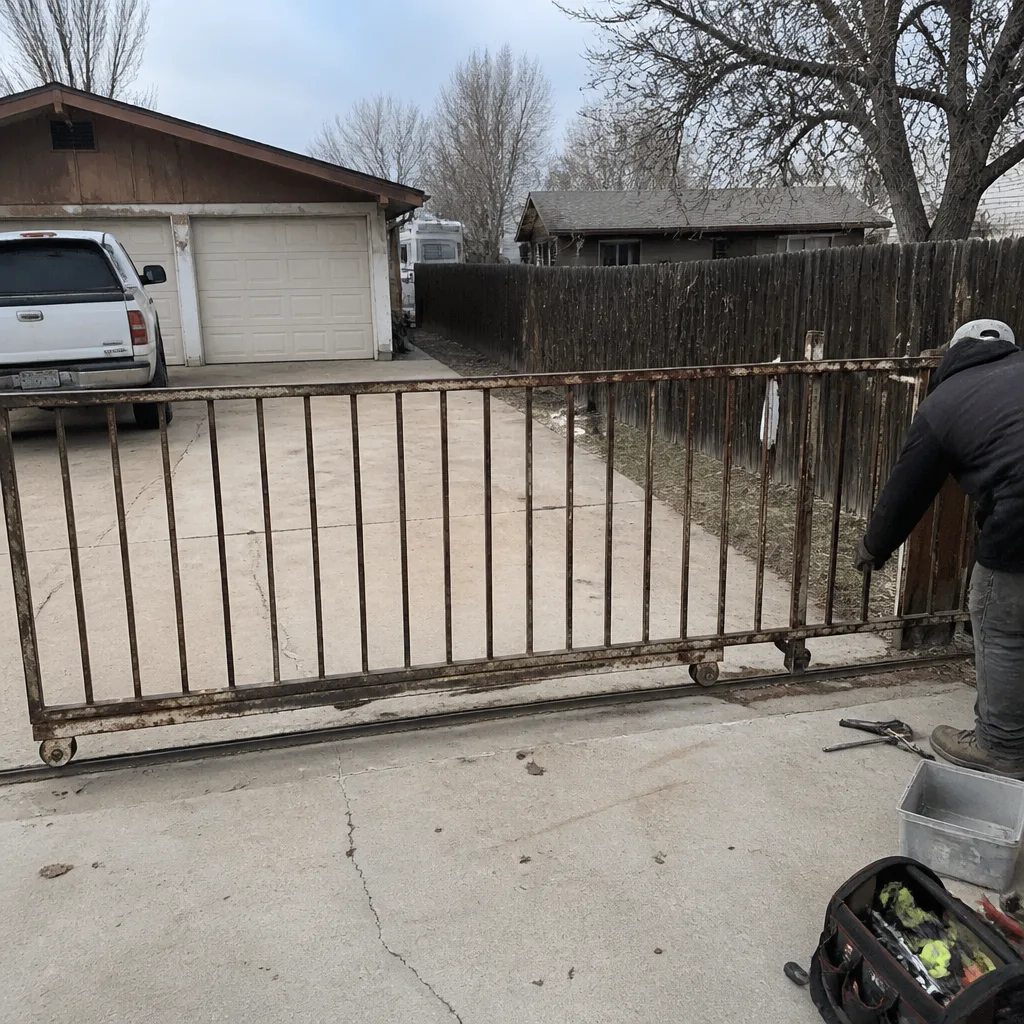
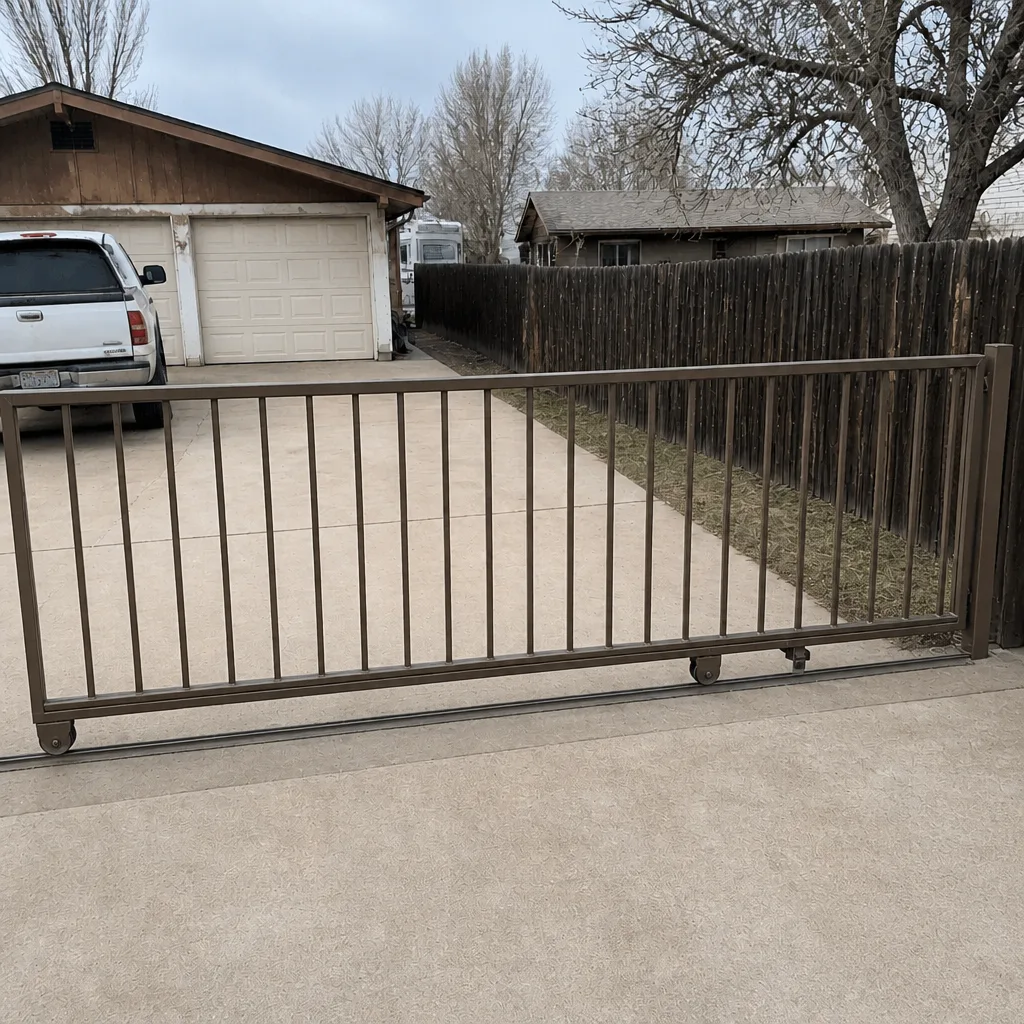
See the difference
BeforeAfter Before
 After
 Before
 After
When to Call a Professional
Call a professional when the gate or its access control involves mains power, a control panel you can’t identify, or any fault you can’t reproduce on demand. High-voltage wiring, gate operators under spring tension, and a panel with unknown conductor colors are not weekend projects – they’re the situations where an untrained fix can cause injury or turn a 45-minute task into a replaced system. Call us too when a company has quoted you verbally and the scope keeps growing, or when you inherit a gate with no record of what’s installed. Safety first: if you see exposed conductors, a sparking panel, or a gate that moves without command, stop using it and call. Vance Gate Repair Winchester offers free estimates in Winchester – call (866) 983-9213 and a live person will help you sort the symptoms into a likely task and a realistic time range.
Frequently Asked Questions
Most gate access control repairs take 30 minutes to 2 hours for a single known task, while a full system diagnostic runs 1.5 to 3 hours. Jobs run longer when prior documentation is missing or the fault is intermittent. Call (866) 983-9213 for a written scope and an exact time range – estimates are free.
A keypad or card reader swap takes 30 to 60 minutes on a gate with a wiring diagram on file. On a gate with no record of prior conductor changes, expect 2 to 3 hours and possibly a return trip. The written price before work starts covers the task, and the photo record we leave keeps the next job fast.
Yes for a single known fault like a dead keypad or a failed control board – we can often confirm and fix it inside one visit. Intermittent faults are better handled with a two-visit structure. Call (866) 983-9213 any hour and a live person will help you decide which fits your symptoms.
Because the technician has to rediscover every conductor, confirm each device, and identify the panel before fixing anything. Starting from zero typically adds 30 to 90 minutes of tracing plus a likely return trip. The documentation we leave after every visit – wiring notes, photos, limit readings – removes that cost going forward.
A full diagnostic includes panel identification, conductor trace and labeling, a device-by-device test of every keypad, loop, photo-eye, and strike, limit and travel readings, and a written findings report with a price for each recommended fix. It runs 1.5 to 3 hours and sets the baseline for every future visit.
We repair first and recommend replacement only when the part genuinely can’t be serviced. Because we work on nine automation brands – including DoorKing and LiftMaster – we don’t steer you toward a replacement to fit a single brand. Every recommendation comes with a written price before work starts.
The Bottom Line
How long gate access control takes is really a question about scope and documentation. A single known task runs 30 minutes to 2 hours; a full diagnostic runs 1.5 to 3 hours; and the gap between the low and high end is almost entirely about how much the technician has to rediscover. The fixes are simple: describe your fault clearly before the visit, get a written scope with the price before work starts, and insist on a photo record when the technician leaves. That record is why the next job on your Winchester gate is faster than this one. Every job we take on is backed by a written price, a documented photo record, and the 365-Day Done Right Promise for a full year. Call (866) 983-9213 – a live person answers at any hour – and we’ll turn your symptoms into a written plan. To see how we work on the full range of gate systems, start at Vance Gate Repair Winchester home, and for a new system or automation upgrade, see Gate Installation in Winchester.
Written by the team at Vance Gate Repair Winchester.