
Last updated November 18, 2026
 Wrought iron
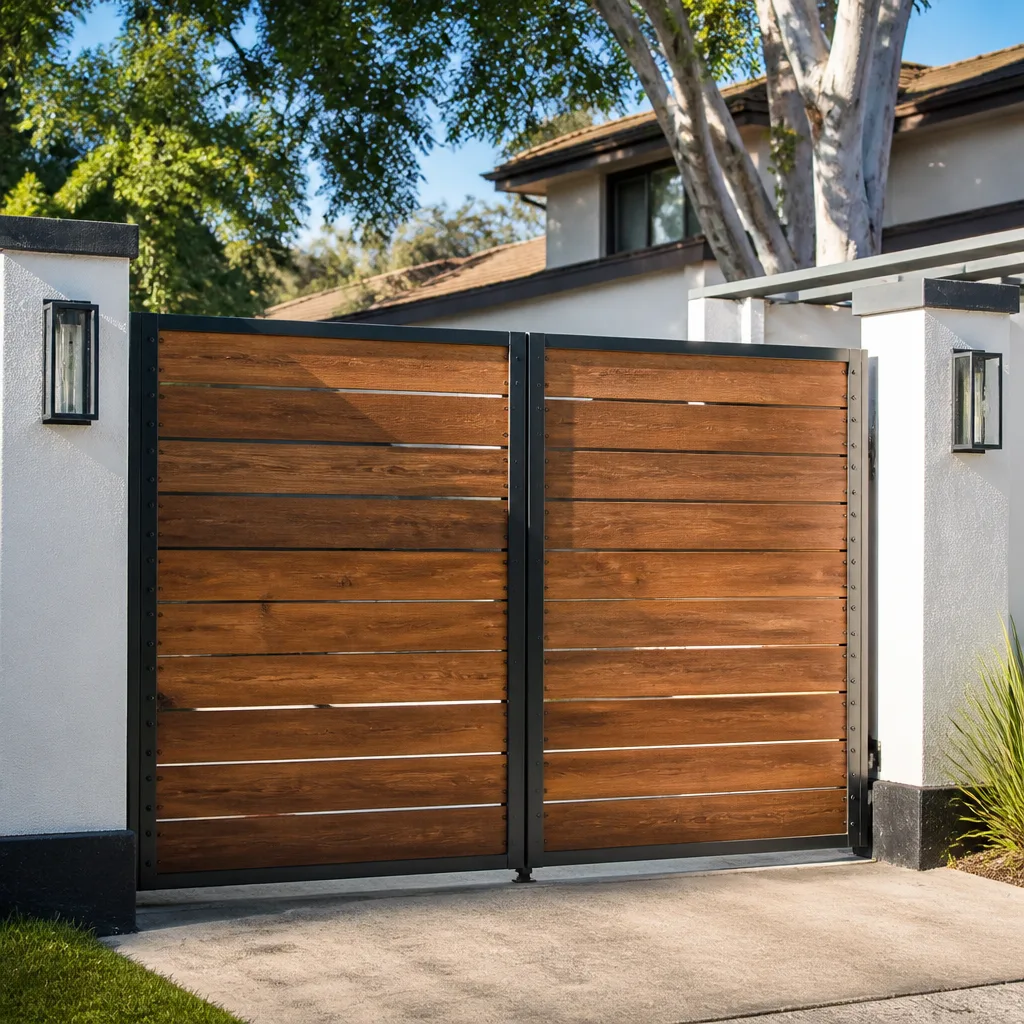 Wood & steel frame
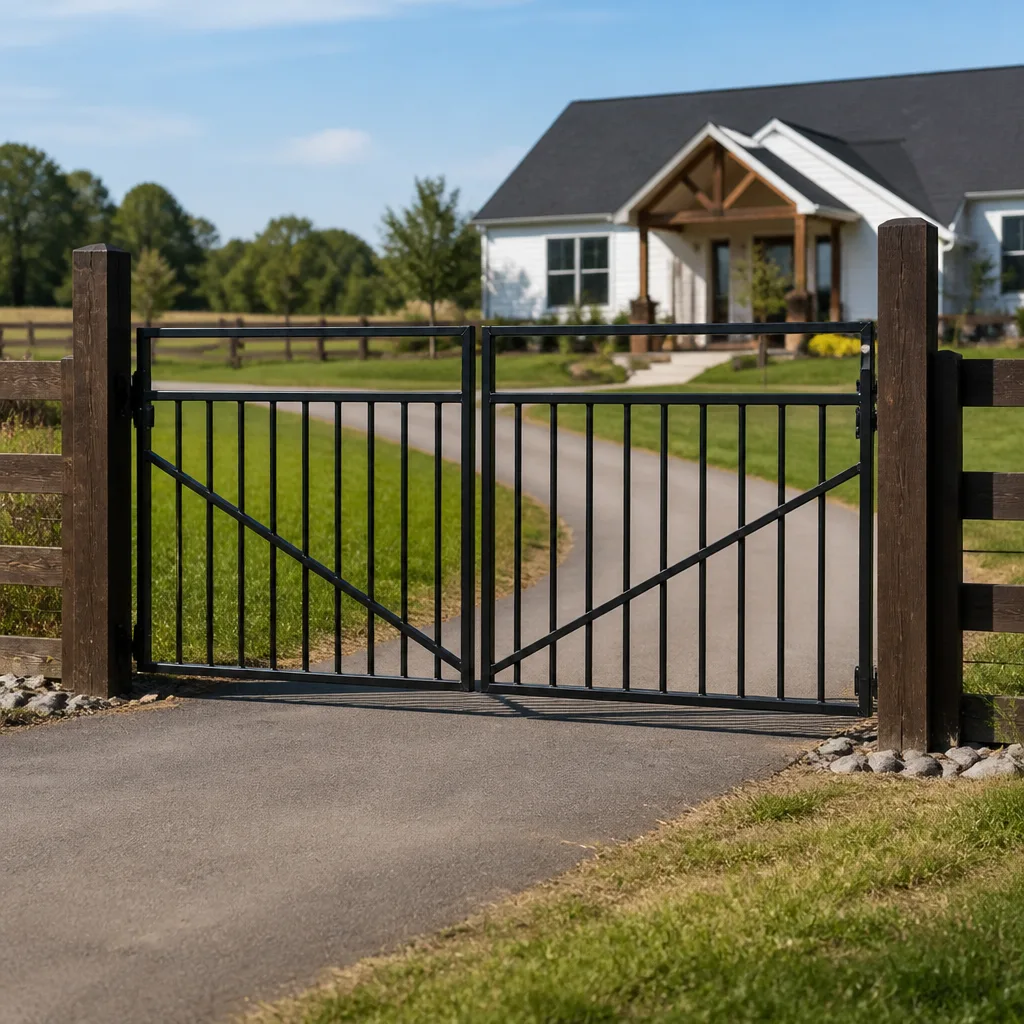 Farm & ranch
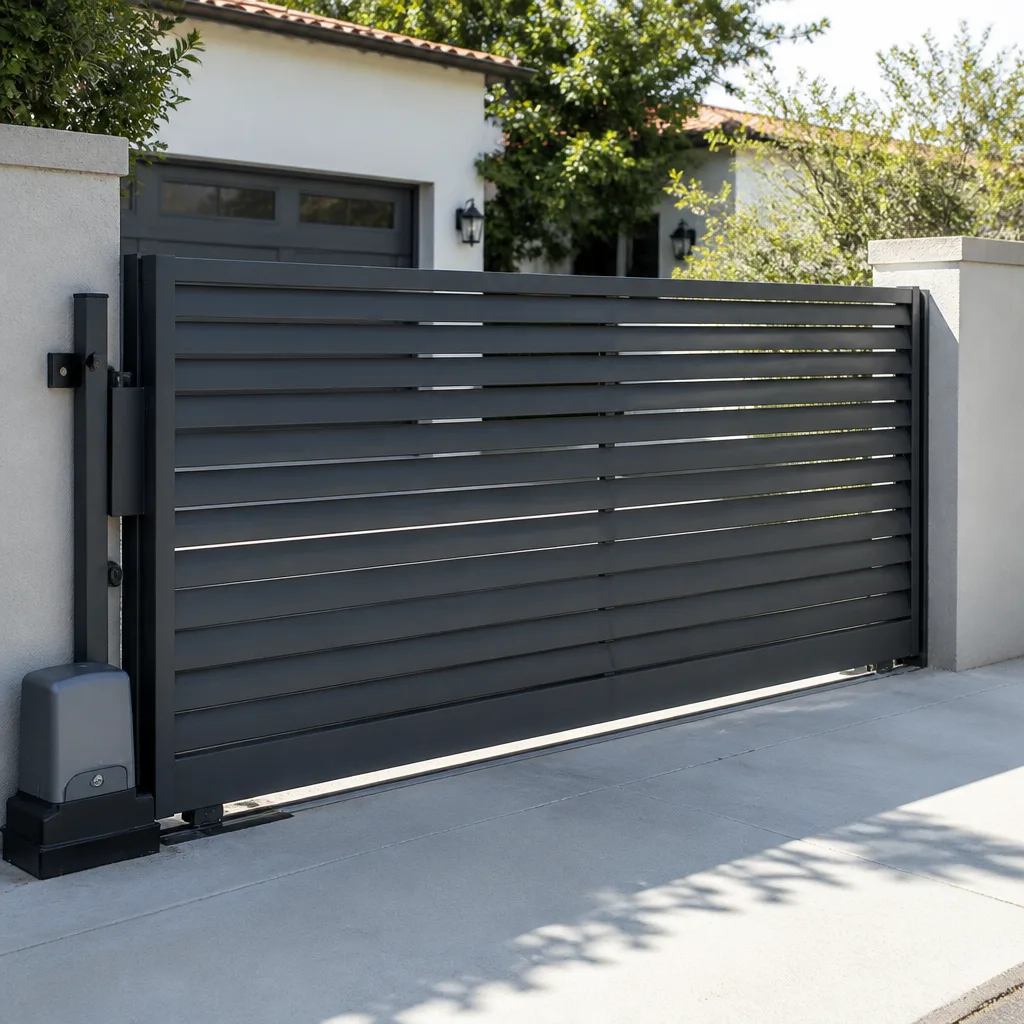 Sliding driveway gates
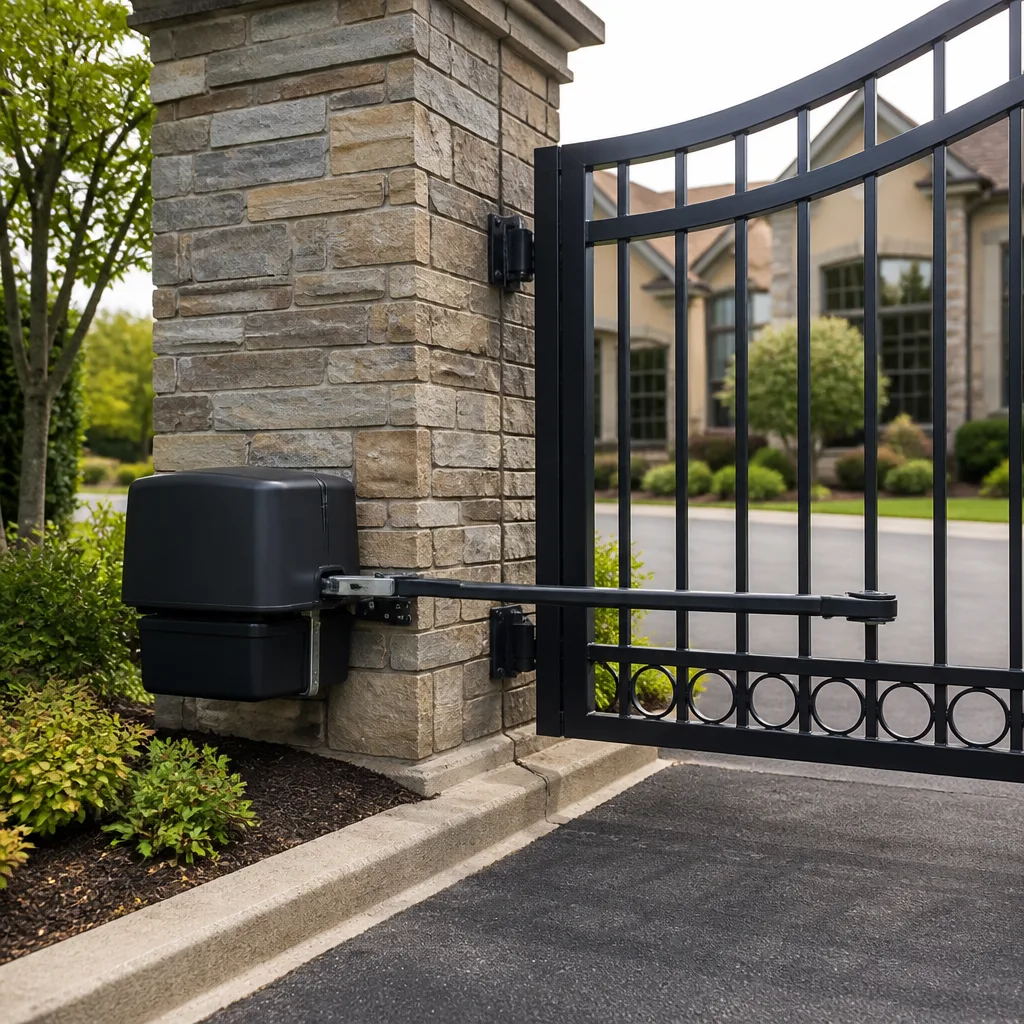 LiftMaster operators
Free on-site gate assessment - hinges, posts, and your LiftMaster or Nice gate operator checked before anything is quoted
The assessment is free and the quote is the invoice.
Get your free estimateHow Long Does Gate Motor & Opener Take? Timelines and What to Expect
The technician who quotes “two to three hours” for a motor installation and the one who quotes “four to six hours” may be describing the same job, or completely different scopes. That gap is the single biggest reason homeowners in Winchester get surprised by a gate motor bill. A direct swap onto an existing mount and existing wiring is a morning. A new installation with a fresh mounting plate, conduit, and controller wiring is a full day, sometimes two. The variables that decide which one you’re getting are knowable before anyone picks up a tool. This guide shows you how to read an estimate and know which job it’s actually describing.
Quick Answer
A direct gate motor swap onto an existing mount, existing wiring, and the same operator type usually takes 2 to 4 hours on site. A new motor installation with new mounting hardware, a conduit run, and controller wiring typically runs 4 to 8 hours, and sometimes spans two visits if parts or commissioning are involved. Commissioning (limit switches, obstruction-force calibration, remote programming, documentation) adds 45 to 90 minutes and should never be rushed.
Styles & brands we work with
- Wrought iron
- Wood & steel frame
- Farm & ranch
- Sliding driveway gates
- LiftMaster operators
Table of Contents
- Swap vs. New Installation: Why the Timeline Differs by Half a Day
- Honest Time Ranges for Each Type of Motor Job
- The Four Site Conditions That Extend a Motor Job
- What Commissioning Includes and Why It Can’t Be Rushed
- What a Written Scope for a Motor Job Should Time-Bound
- Same-Day vs. Multi-Day: When a Second Visit Is Legitimate
- Common Mistakes to Avoid
- When to Call a Professional
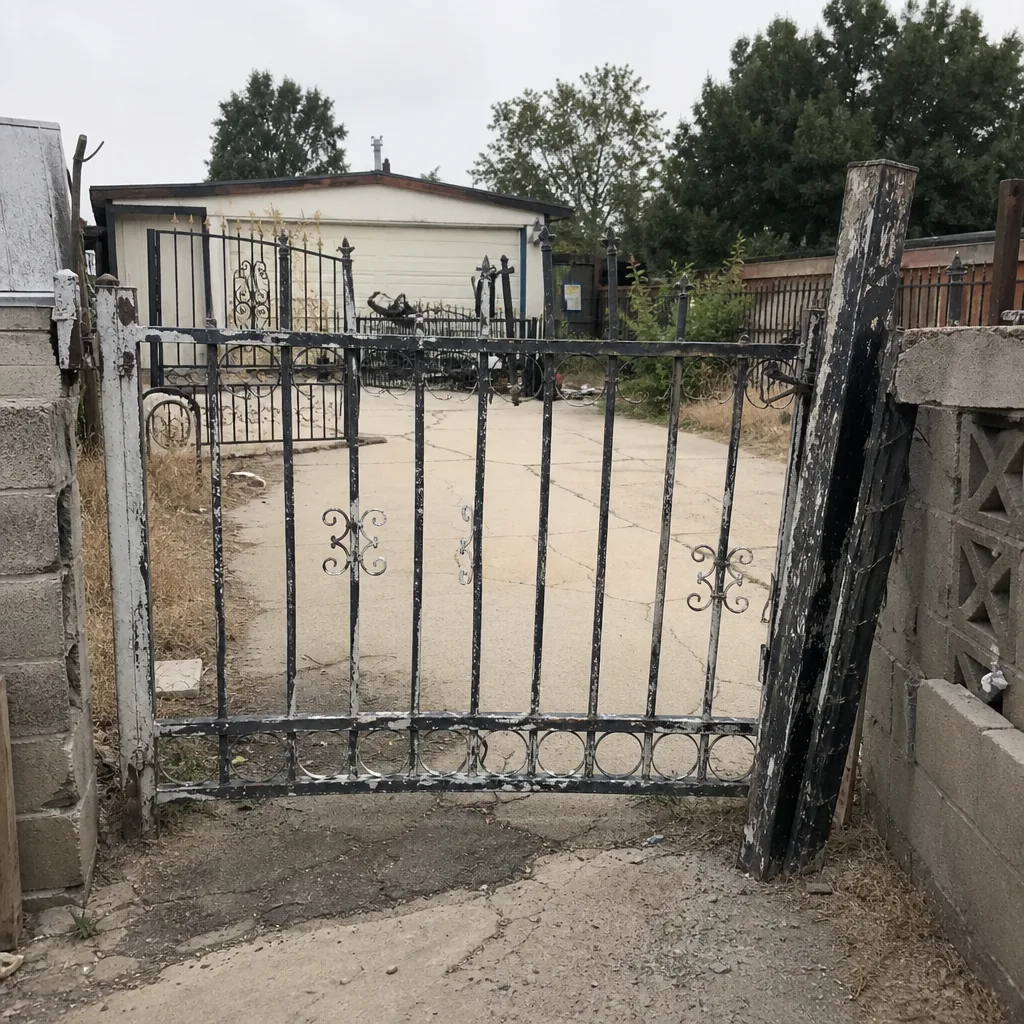 Before
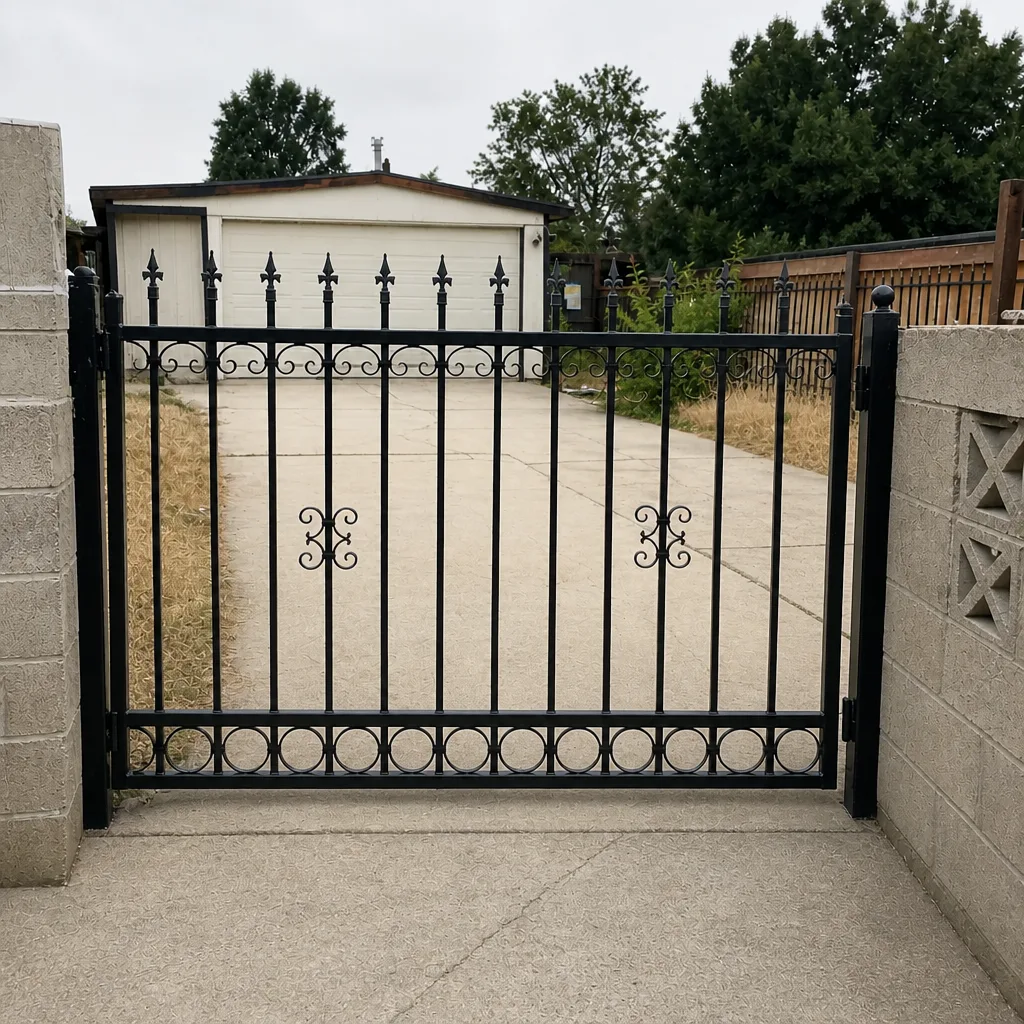 After
Swap vs. New Installation: Why the Timeline Differs by Half a Day
A motor swap and a motor installation are two different jobs. They get quoted with the same three-word phrase (“install a gate motor”), which is where the confusion starts. If you don’t know which one your estimate covers, you don’t know what you’re paying for.
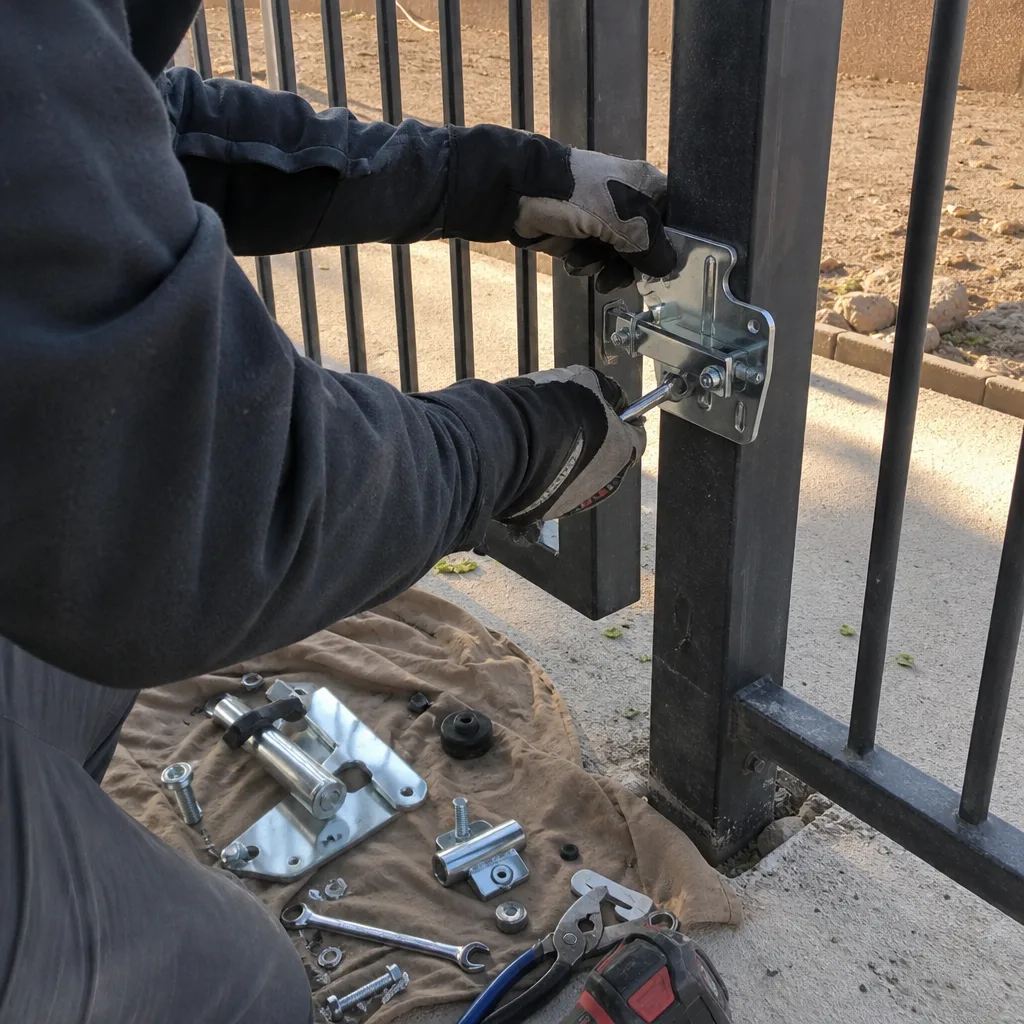
A direct motor swap means the existing operator is being replaced with a compatible unit on the existing mounting plate, using the existing wiring and the existing controller. The old motor comes off, the new one goes on, the arm or chain gets reconnected, and the unit is commissioned. The gate posts, the conduit, and the control box are all left untouched. This is the fastest version of the job.
A new motor installation means one or more of those existing conditions is changing. A different brand or operator type may need a new mounting plate because the bolt pattern doesn’t line up. A new controller may need new wiring because the old controller isn’t compatible. A gate that has never been automated needs conduit run from the house to the gate, a control box mounted, and safety photo-eyes installed on both sides of the opening. That’s a materially bigger job.
In Winchester, we see the split most often on older properties where a Mighty Mule or Linear unit has been on the gate since the house was built. Replacing it with a LiftMaster or DoorKing often means a new mount and a controller swap. Replacing it with the same model is a true swap, and the timeline reflects that. The scope document should say which one you’re getting.
Honest Time Ranges for Each Type of Motor Job
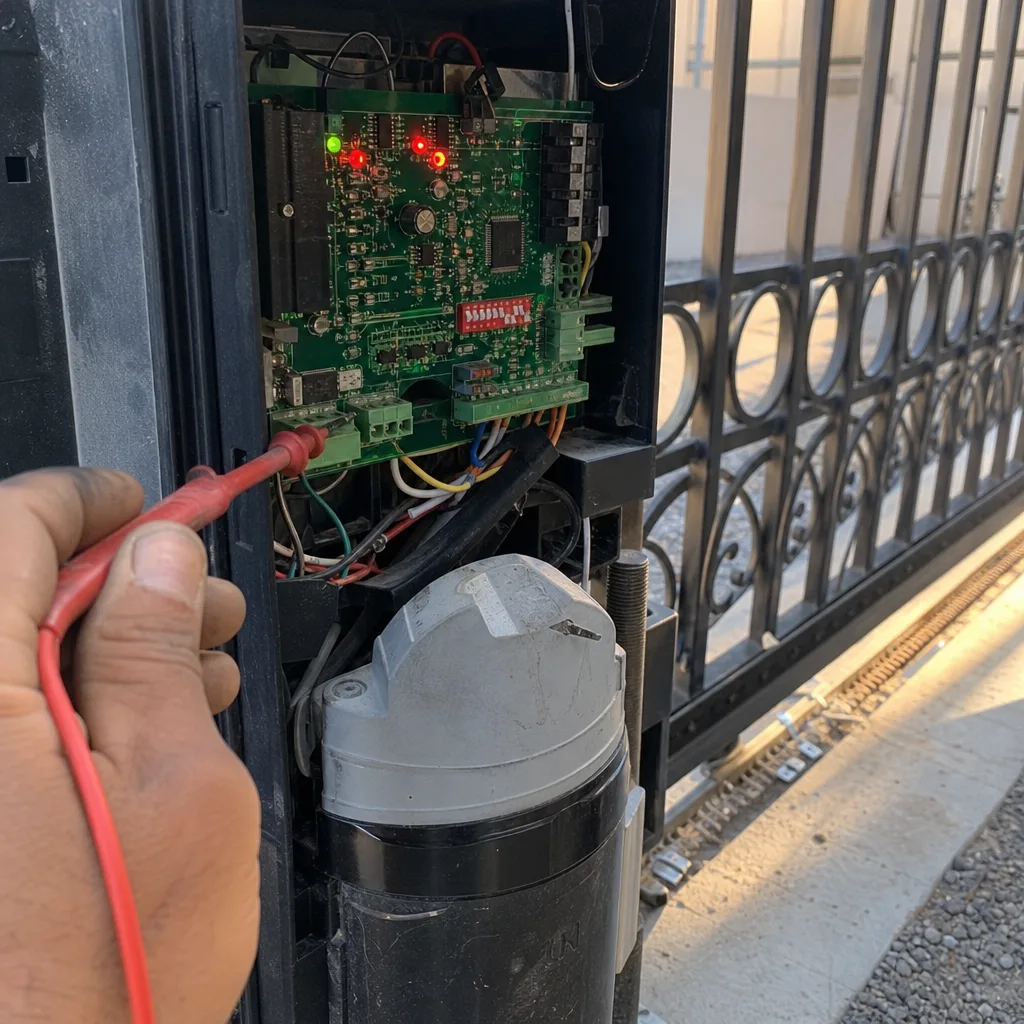
These ranges assume a standard residential swing or slide gate, a single technician with a second on site for the heavy lifting, and normal access to the property. They aren’t promises for every gate, but they’re close for most.
- Direct swap, same model: 2 to 3 hours on site.
- Direct swap, different brand, existing mount fits: 3 to 4 hours.
- New motor on new mounting plate, existing wiring reusable: 4 to 5 hours.
- New motor with conduit run and new controller wiring: 6 to 8 hours, occasionally two visits.
- First-time automation of a manual gate (motor, photo-eyes, keypad or remote, safety edges): a full day, sometimes longer if the gate needs structural reinforcement before it can carry an operator.
Those numbers are time on site, not including travel. A written estimate should say “on-site time” and give you a start window, because a two-hour travel block on either end of the day changes when your gate is actually usable again.
One more variable worth knowing: gate weight and gate condition. A 300-pound slide gate on a bent track needs attention before the new motor goes on, and that attention isn’t part of a motor quote. If your estimate doesn’t include a line for “gate track inspection” or “pre-installation check,” ask whether it’s been accounted for. The full breakdown of what a gate motor & opener installation in Winchester involves is worth reading before you compare quotes.
The Four Site Conditions That Extend a Motor Job
In our experience, nearly every motor job that runs over its quoted time does so because of one of four specific conditions. Each one is discoverable before the technician arrives. Each one should ideally be priced in advance.
- No existing conduit. If the gate has never been automated, there’s no path for the low-voltage control wire from the house to the gate. Running conduit across a driveway, under a walkway, or through landscaping adds 1 to 3 hours depending on distance and surface. Trenching under a concrete driveway alone can eat a couple of hours.
- Undersized wire that must be replaced. Older installs sometimes used wire sized for the original motor, which isn’t adequate for a higher-draw replacement. Pulling new wire through existing conduit is quick when the conduit is clean and slow when it’s not. If the old wire is stapled to a fence post instead of housed in conduit, that’s a full re-run.
- Controller incompatibility with the new motor. A controller built for a LiftMaster doesn’t always speak the same language as a DoorKing or FAAC operator. Either the controller gets replaced or a compatible interface gets added. This is a 30-minute issue on a good day and a two-hour issue when the controller is inside a sealed enclosure behind a locked gate.
- Post or bracket damage discovered during removal. The old mount comes off and reveals rust, a cracked weld, or a bent post. Welding a new bracket onto a compromised post adds time, and on a slide gate the track often needs realignment at the same time. If we can’t safely hang the new motor on the existing structure, we don’t.
Safety matters here more than it does on most gate work. A gate motor is a spring-loaded or chain-driven mechanism that can crush a hand, a foot, or a pet if the mount gives way during a load test. If you see a bracket that’s been repaired with a wooden block and zip ties, that’s not a swap job, no matter what the estimate says.
What Commissioning Includes and Why It Can’t Be Rushed
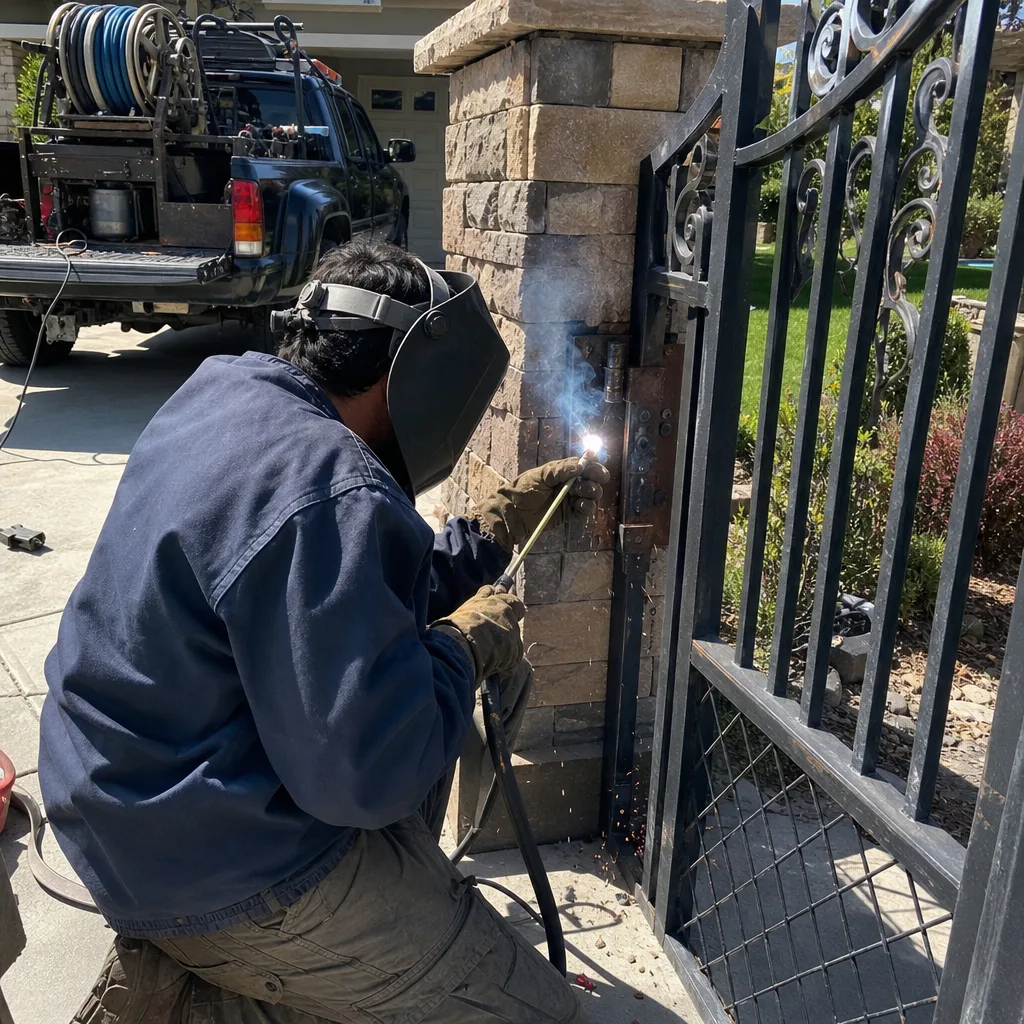
Commissioning is the part of a motor job most often skipped by a rushed installer, and it’s the part that determines whether your gate reverses safely when a child walks under it. A technician who “tests it and leaves” has done half the job.
Proper commissioning for a residential gate operator includes:
- Setting the limit switches. These tell the motor where “open” and “closed” are. A limit switch set a few degrees past travel strains the motor every cycle. We photograph the new switch position so the next technician knows what was set and why.
- Calibrating obstruction-force sensitivity. Every UL-listed residential operator has a force-sensing threshold. If the gate meets an object with more force than the threshold allows, it must reverse. That threshold has to be tested, not assumed.
- Testing the photo-eyes and safety edges. The photo-eye is the infrared beam that stops the gate if something crosses the path. A misalignment of even an inch leaves a blind spot. We walk the path with a test object and confirm the gate reverses.
- Programming remotes and keypads. Including removing old remotes from the receiver’s memory so a previous owner’s clicker doesn’t open your gate.
- Recording the install. Brand, model, serial, wiring diagram, and limit-switch readings, left with the homeowner and filed.
The commissioning phase is 45 to 90 minutes of a proper motor job. It should be listed as a separate line in the estimate, not folded into “installation.”
What a Written Scope for a Motor Job Should Time-Bound
If you take one thing from this guide, take this: a motor estimate that doesn’t time-bound the job isn’t an estimate, it’s a guess written down. Under Clause 1 of The Haven Standard (“Have it in writing”), the written price is handed over before any tool is picked up. That’s the standard every gate motor job should meet, whether it’s ours or anyone’s.
A written scope for a motor job should state:
- Start window. A two-hour arrival window, not “morning” or “afternoon.” You should know when to be home.
- On-site time estimate. Hours, not days. And a line for what happens if the tech discovers one of the four conditions above.
- Completion criteria. What “done” means, in measurable terms. Gate fully opens and closes on command. Force test passed at 90% of rated load. Photo-eyes verified with a test object. All remotes programmed and old remotes cleared. Documentation handed over.
- What’s included in the price. Motor, mount, conduit, wire, photo-eyes, controller. Each line either included or explicitly excluded.
- What triggers a change order. If post damage is found, what’s the process? Does the tech call for a new written price before proceeding, or just continue?
Under Clause 4 (Evidence on every job), every visit includes a documented photo record of what was found, what was adjusted, and what was replaced, at no additional charge. That record is your protection if the job doesn’t hold. If your current gate motor is on its last legs, the full picture of gate repair in Winchester covers how documentation intersects with a repair-versus-replace call.
Same-Day vs. Multi-Day: When a Second Visit Is Legitimate
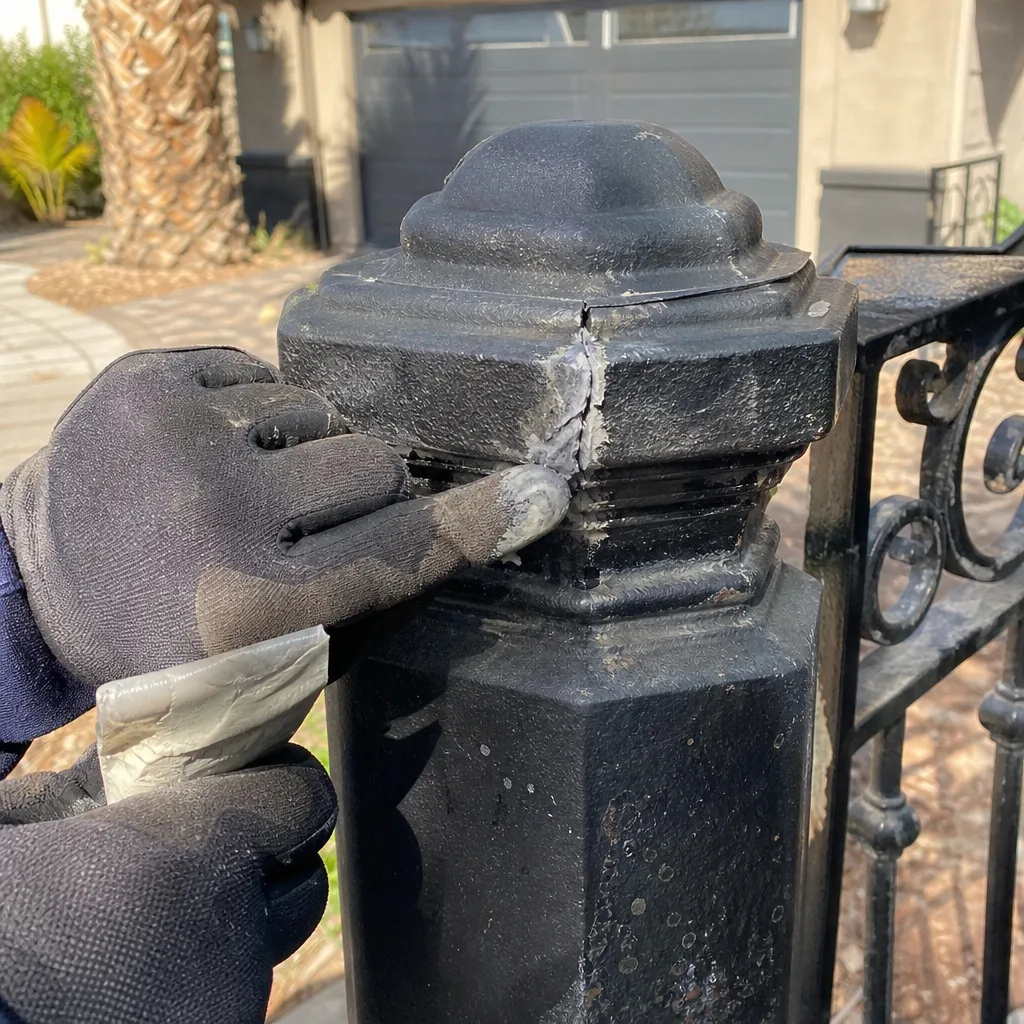
Most motor swaps and most straightforward installations finish in a single visit. Some don’t, and a second visit isn’t automatically a red flag. Here’s how to tell the difference.
A second visit is legitimate when:
- The motor is a special order. LiftMaster, Elite, and DoorKing units often ship from a regional warehouse and aren’t found on a shelf the same day. If the scope said “measure and order” up front, a return visit to install is expected, not a surprise.
- A new mounting plate needs fabrication. We weld and powder-coat custom brackets, and that happens off-site. Measuring on visit one and installing on visit two is normal for a non-standard mount.
- Post or bracket damage is discovered. The right call is to stop, quote the repair in writing, and finish on a return visit. A technician who “makes it work” with a shop-made adapter is a technician who’ll be back.
- Commissioning can’t be completed because power is unavailable. New sub-panel work, a tripped breaker feeding the gate circuit, or a permit-driven inspection can all push final commissioning to a second day.
A second visit is a red flag when: the technician quoted a full day, arrived without the correct parts, and left without the gate operating. That’s not a second visit, that’s an unfinished first one. If you’re already comparing quotes, a gate installation in Winchester written by a competitor is worth a free second opinion, and we’ll review it at no cost before you commit to either.
Common Mistakes to Avoid
- Comparing “install a motor” quotes without matching the scope. A $600 swap quote and a $600 new-install quote are not the same thing. One includes a new mount and wire, the other doesn’t.
- Accepting a verbal estimate. If the price isn’t written, it isn’t the price. That’s the whole point of having it in writing.
- Letting the technician skip commissioning. A gate that opens isn’t the same as a gate that’s safe. Force testing and photo-eye verification are not optional in a proper motor job.
- Assuming a swap if the old unit is more than ten years old. Wire, mounts, and controllers age out even when the motor doesn’t. On older Winchester properties, the swap rarely turns out to be a pure swap.
- Buying a motor online without checking controller compatibility. A $200 internet deal on a Mighty Mule unit doesn’t help if your existing controller isn’t compatible and the mounting plate doesn’t match.
- Forgetting to clear old remotes from the receiver. Every previous homeowner’s remote should be wiped from memory during the install. Ask.
- Skipping the documentation. If a future technician has to rediscover the limit-switch reading and the wiring layout, you’re paying twice for the same information.
When to Call a Professional
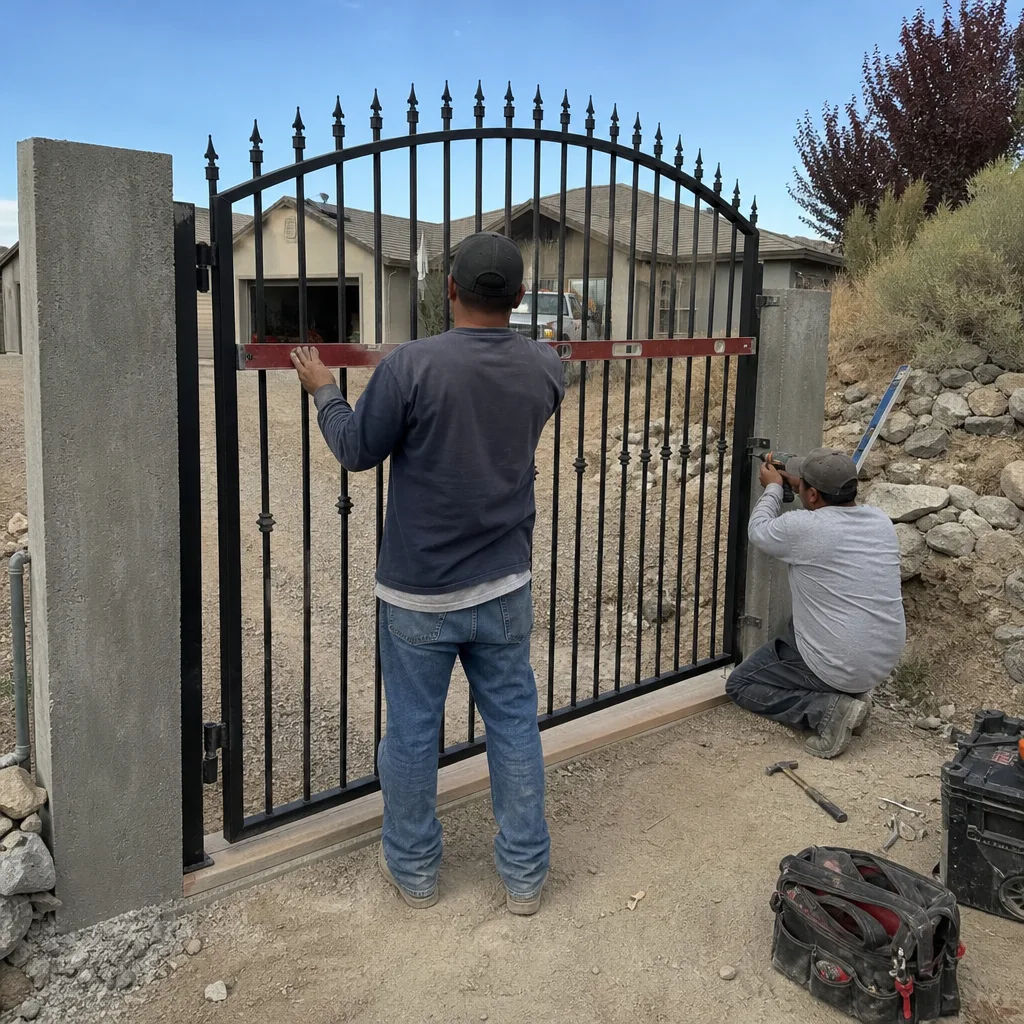
Call for a professional motor evaluation if the gate moves erratically, reverses for no reason, stops partway through travel, or if you’re considering a motor replacement on a gate you haven’t personally maintained. Call before you buy a motor online, because the unit needs to match your controller and mount. Call if a previous install is undocumented, because a motor hanging on a mount with no photo record and no wiring diagram is a liability that will cost real money to untangle. And call if you’re in Winchester and the gate has never been automated: a first install with new conduit, a control box, and safety photo-eyes is a full day, and it should be scoped in writing before any deposit is taken.
Vance Gate Repair Winchester offers free estimates in Winchester and can quote a motor job in writing with a start window and a completion checklist. Call (866) 983-9213 and a live person answers, at any hour.
See the difference
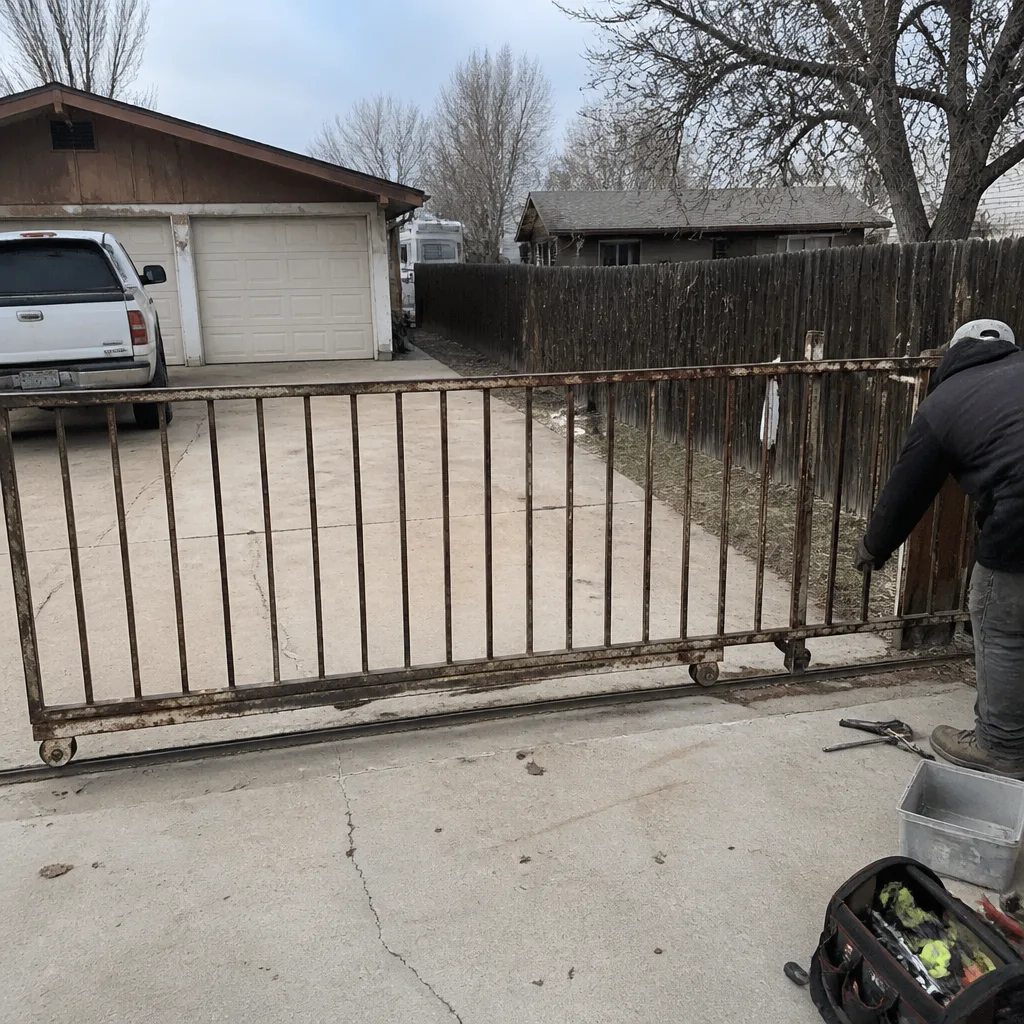
BeforeAfter Before
 After
 Before
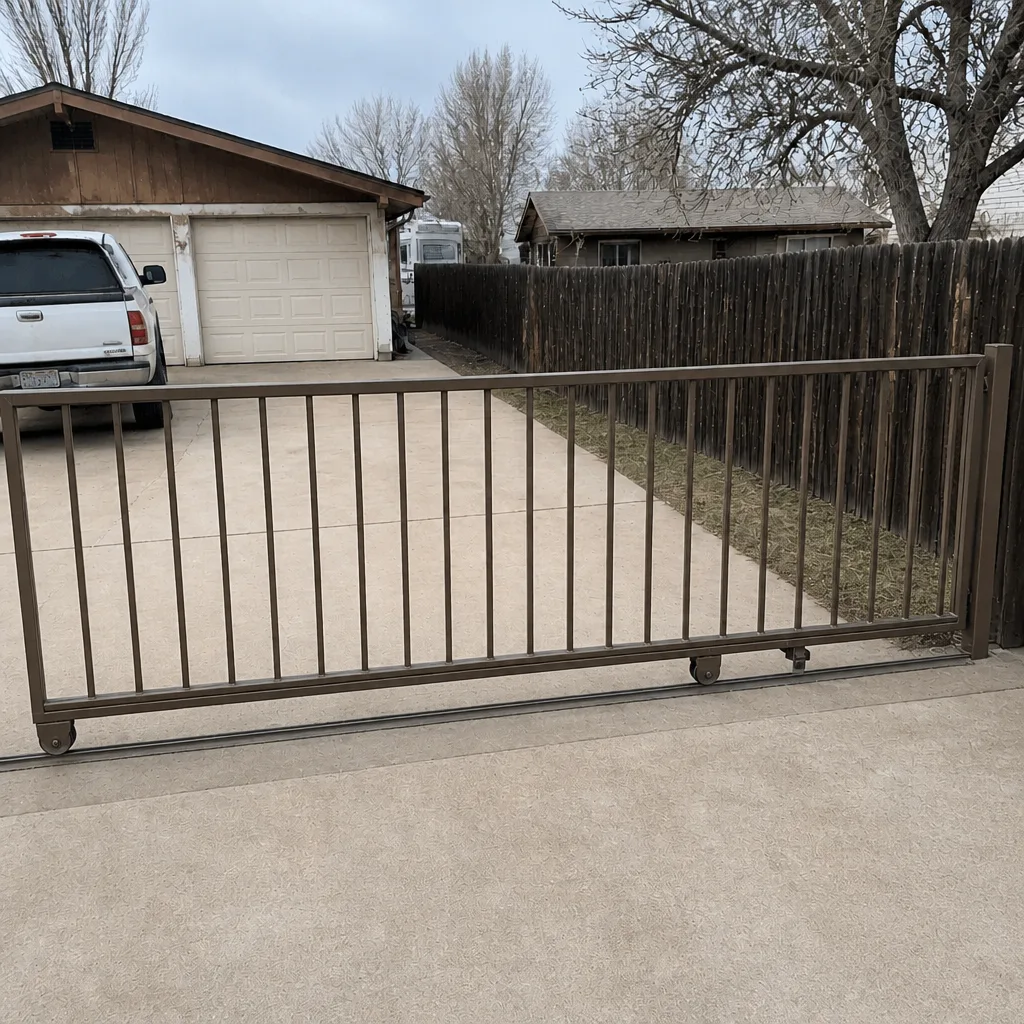 After
Frequently Asked Questions
A gate motor installation in Winchester typically takes 2 to 4 hours for a direct swap and 4 to 8 hours for a full new install with conduit and controller wiring. First-time automation of a manual gate can run a full day. The estimate you receive should specify which job type you’re getting. Call (866) 983-9213 for a free written estimate that names the time range and the start window.
Yes, most direct swaps and many new installations finish in one day. Two conditions push a job into a second visit: a special-order motor that isn’t on the shelf, and post or bracket damage discovered during removal. Both should be disclosed in the written scope, not discovered on the day. Call (866) 983-9213 and we’ll tell you before you commit which side of that line your gate falls on.
We service LiftMaster, FAAC, BFT, Linear, Viking, Ghost Controls, DoorKing, Elite, and Mighty Mule. That range matters because the controller on your property usually dictates whether a motor swap stays a swap or becomes a controller replacement. If you already have a LiftMaster and want a LiftMaster, the timeline is shorter than if you’re switching brands. Call (866) 983-9213 for a free evaluation.
On any new installation, yes: photo-eyes, obstruction-force calibration, and the associated wiring are included in the written price. On a swap where the existing safety devices are already in place and functioning, they get tested and re-certified rather than replaced. If your estimate doesn’t list them separately, ask. Call (866) 983-9213 and we’ll walk through the breakdown line by line before any work starts.
That means the original scope was written against the wrong job type, or one of the four extending conditions (no conduit, undersized wire, controller incompatibility, post damage) wasn’t identified up front. A written scope should name those risks. If your contractor’s estimate already blew past its own time window without a change order, that’s a documentation problem, not a job problem. Call (866) 983-9213 and we’ll give you a free second opinion on the paperwork you have.
Yes, on every job. The written price is handed over before any tool is picked up, which is Clause 1 of The Haven Standard. That’s the policy for any gate motor or opener job in Winchester, whether it’s a swap, a new install, or a repair. Call (866) 983-9213 and the price is in your hand before we pick up a wrench.
The Bottom Line
A gate motor job moves at two speeds. A swap is a morning. A new install with conduit and controller wiring is a full day, sometimes more. The four conditions that extend a job (no conduit, undersized wire, controller mismatch, post damage) are all discoverable before the technician arrives, and every one of them should be spelled out in a written scope with a start window, a completion checklist, and a clear change-order process. Whether you’re in Winchester or anywhere in the valley, a motor job that begins with a written price and ends with a photo record is a job you can hold someone to. Our technicians have up to 12 years of experience working on nine brands, and every visit leaves documentation behind. Call (866) 983-9213 for a free estimate on your gate motor job, and if you’re new to Vance, Vance Gate Repair Winchester home covers how the Haven Standard applies to every visit.
Written by the team at Vance Gate Repair Winchester.