
Last updated November 18, 2026
 Wrought iron
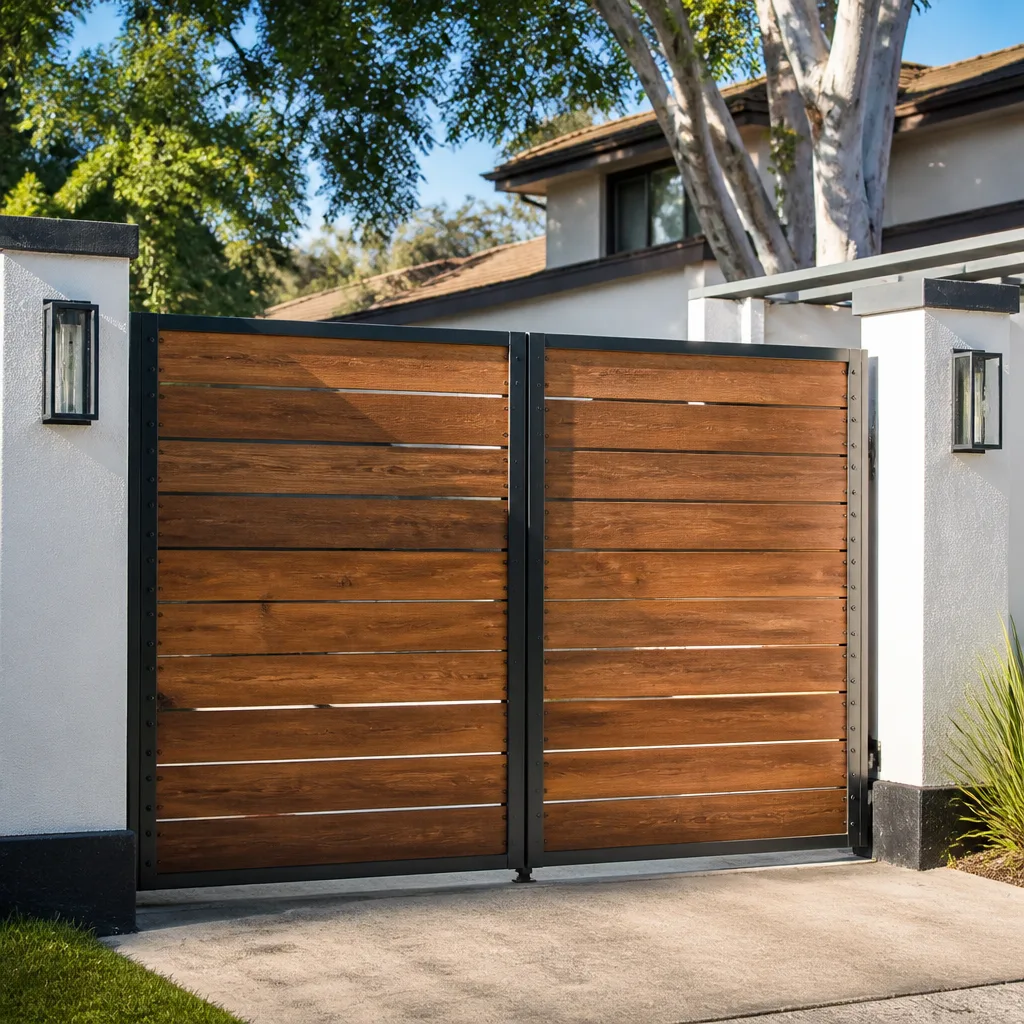 Wood & steel frame
 Farm & ranch
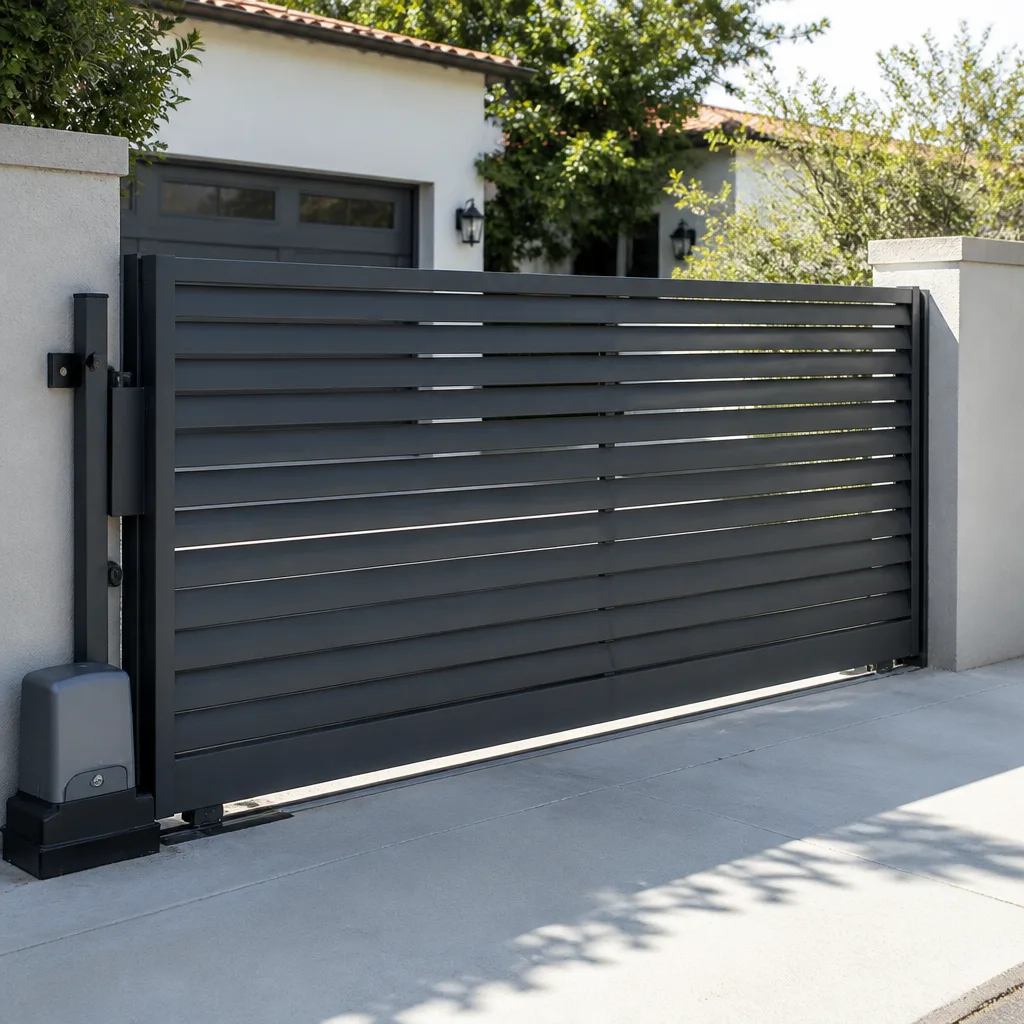 Sliding driveway gates
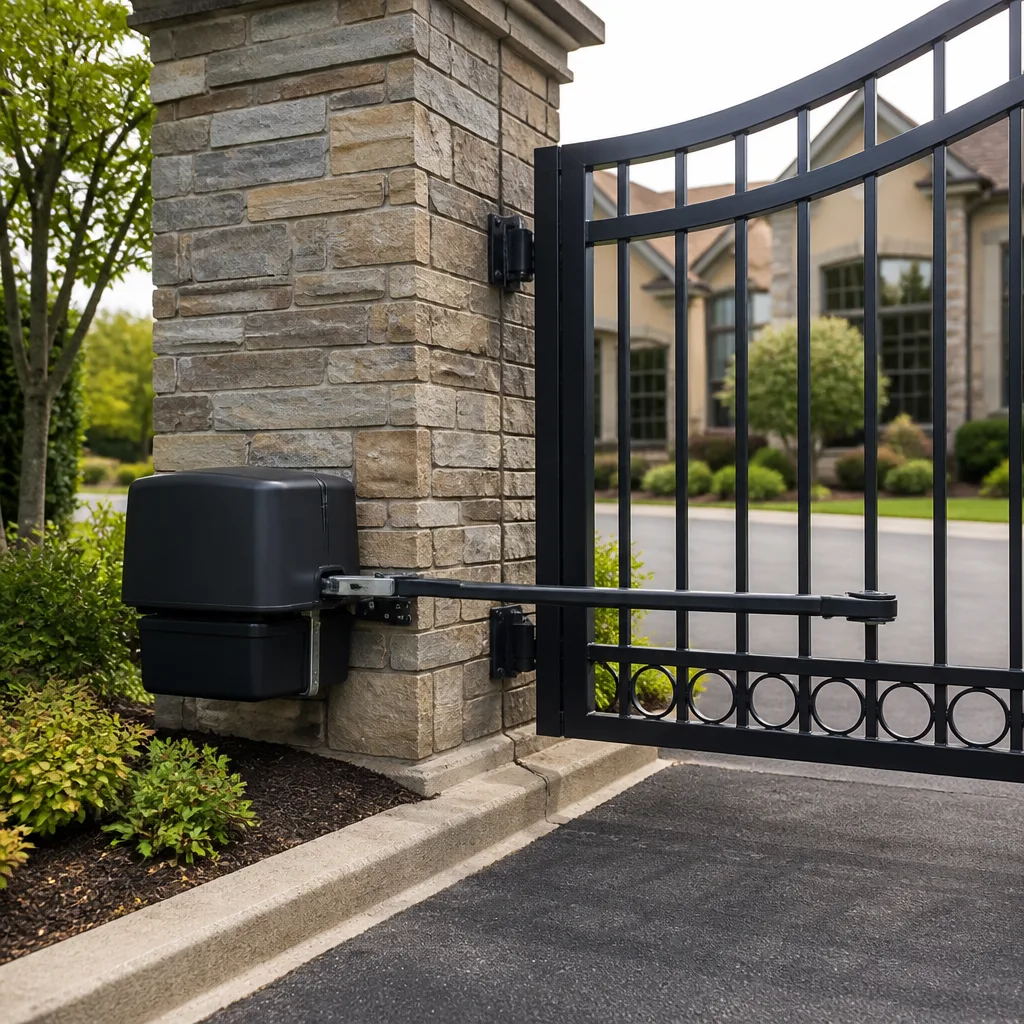 LiftMaster operators
Free on-site gate assessment - hinges, posts, and your LiftMaster or Nice gate operator checked before anything is quoted
The assessment is free and the quote is the invoice.
Get your free estimateThe Complete Gate Repair Guide for Winchester Homeowners
The second repair call is almost always more expensive than the first. Not because the gate got worse, but because nobody wrote anything down the first time. A technician replaces a control board, pockets the old one, and leaves no note about why it burned. Eighteen months later the replacement fails the same way, and you pay again to rediscover a wiring fault that a five-minute photo and a voltage reading would have flagged. In Winchester, where summer heat and winter cold work a gate harder than most national guides account for, that pattern repeats constantly. This guide shows you how to treat your gate as a documented system, read its error history, and demand a scope in writing before anyone touches it.
Quick Answer
Most gate failures in Winchester trace back to two or three compounding root causes: heat and UV damage to control boards and photo-eyes, alkaline soil shifting hinge posts, and wiring faults that destroy motors over months. A proper repair means finding the root cause and documenting the system state (photos, limit-switch readings, board firmware) so the next technician doesn’t start from zero. Repair usually costs less than replacement when the diagnosis is done right and the work is scoped in writing first.
Styles & brands we work with
- Wrought iron
- Wood & steel frame
- Farm & ranch
- Sliding driveway gates
- LiftMaster operators
Table of Contents
- How Winchester’s High-Desert Climate Wears Out Gate Components
- What a Proper Site Documentation Baseline Looks Like
- Symptom Repair vs. Root-Cause Repair
- Reading Your Opener’s Error-Code History Before You Call
- What to Ask For in Writing Before Work Starts
- When a Gate Can Be Repaired and When It Can’t
- A Five-Step Documentation Routine You Can Run Yourself
- Common Mistakes to Avoid
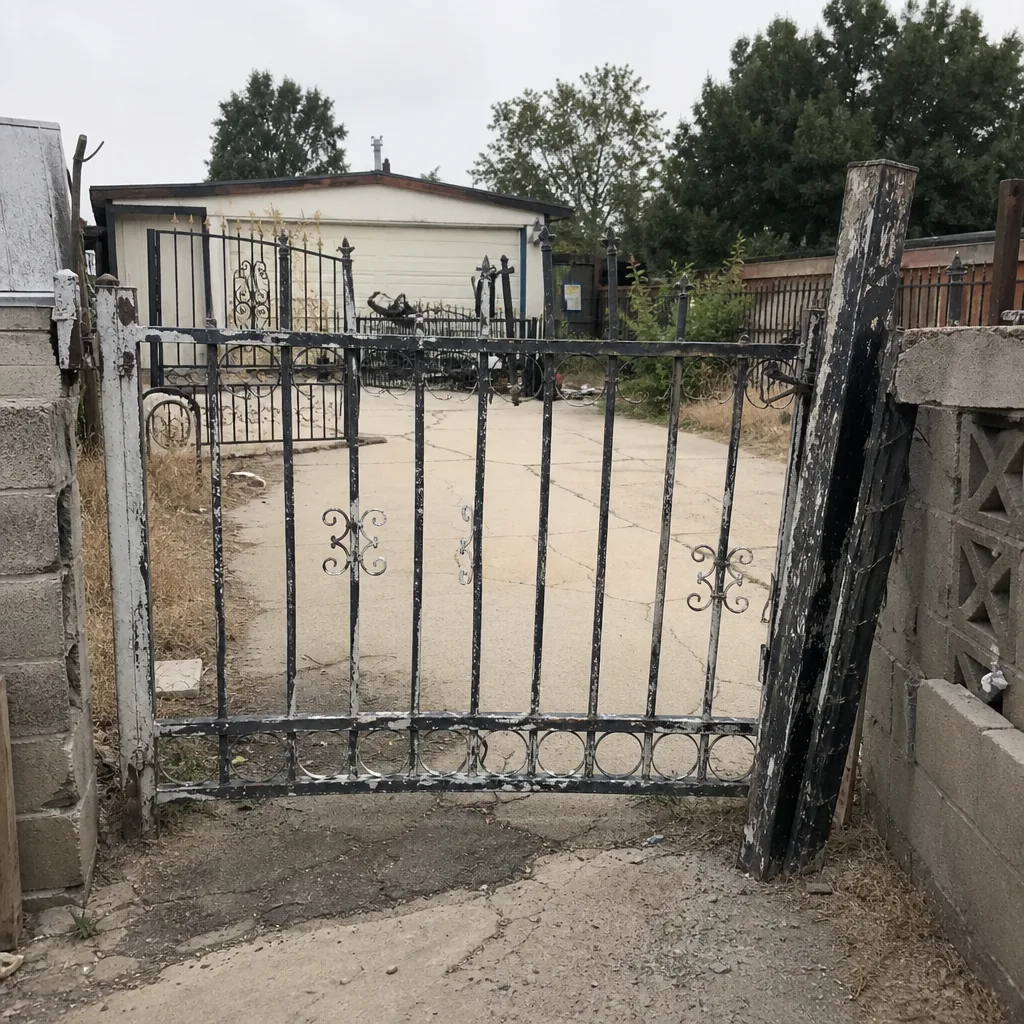 Before
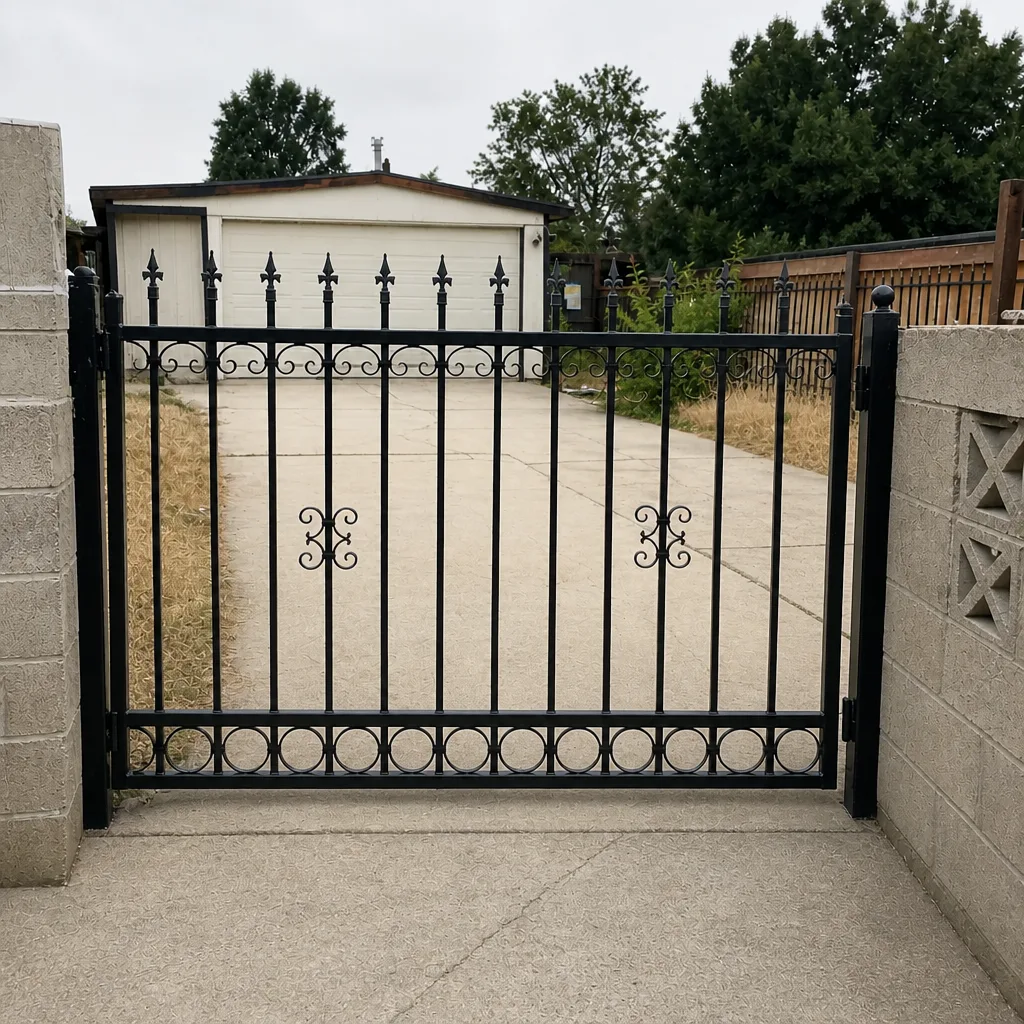 After
How Winchester’s High-Desert Climate Wears Out Gate Components
Gates in Winchester live in a tougher environment than the product manuals assume. The high-desert swing between a blazing afternoon and a cold night expands and contracts metal and plastic parts daily. Over a season, that cycling loosens brackets that were torqued correctly at installation and cracks the plastic housings around control boards. A national guide written for a mild coastal climate won’t warn you that your operator’s enclosure is cooking at 140°F inside by July. We see it every summer.
UV exposure is the quiet one. Sun degrades photo-eye lenses, rubber seals, and the insulation on exposed low-voltage wiring until the plastic goes chalky and brittle. In Winchester, a photo-eye that reads perfectly in spring can fail intermittently by August because the lens has hazed and the beam scatters. Intermittent failures are the hardest to diagnose, which is exactly why a photo record of lens condition on the first visit matters.
The soil is the third factor. Winchester’s alkaline, often sandy soil drains fast but shifts under freeze-thaw and irrigation. Hinge posts set shallow migrate a few degrees over a couple of years. That’s enough to make a swing gate drag, overload the motor, and burn an arm that was fine. When we check hinge torque and post plumb on a gate repair in Winchester call, we’re often measuring the soil’s effect more than the hardware’s wear. A gate that “suddenly” started straining in February usually started moving in the ground the previous fall.
What a Proper Site Documentation Baseline Looks Like
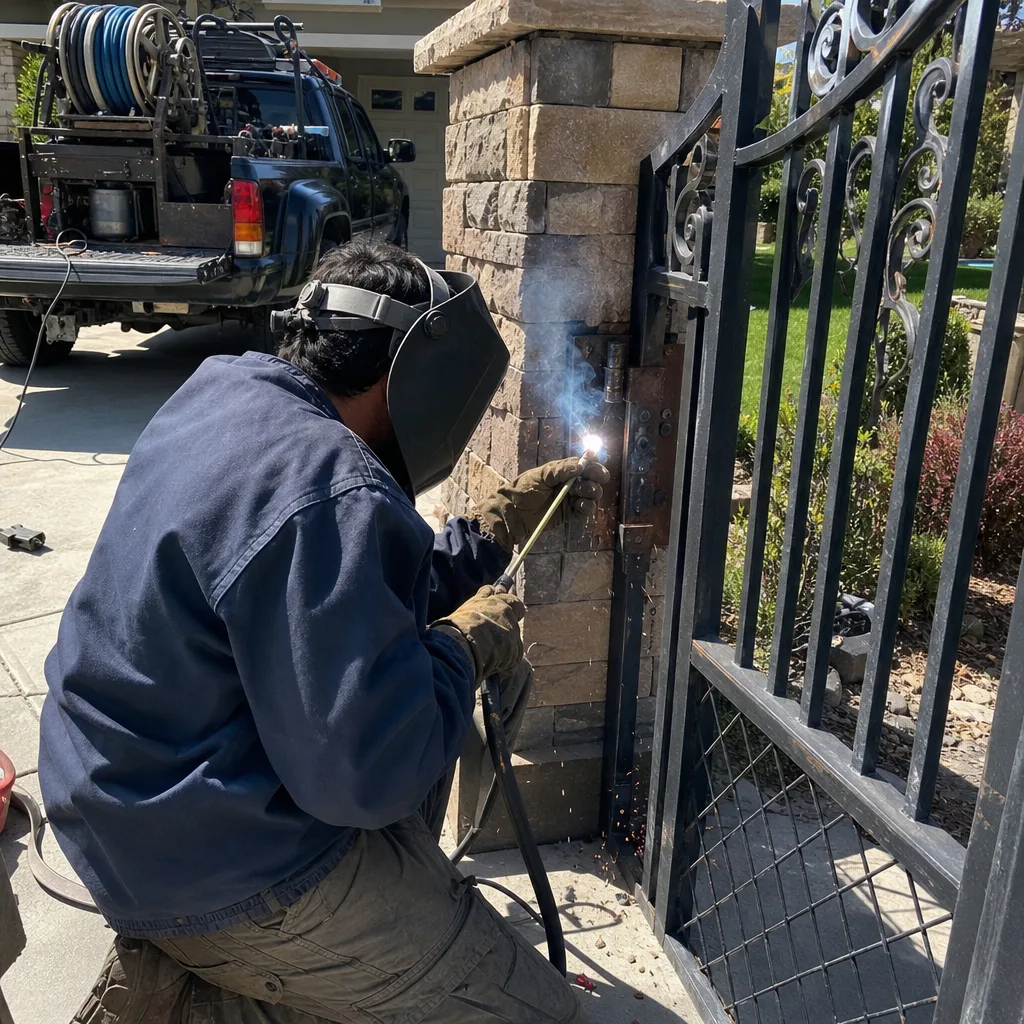
A baseline is a recorded snapshot of your gate’s system state at a known moment. Without one, every future technician, including a good one, has to reverse-engineer what’s normal. Here’s what belongs in a real baseline on any automated gate in Winchester:
- Photos of the whole assembly from four angles, plus close-ups of the operator, control board, battery backup, and every splice or junction box.
- Limit-switch readings in degrees of travel, recorded for both open and closed positions. This is the number a future tech needs to know whether a gate drifted out of adjustment or was set that way.
- Hinge torque values at each hinge, so wear and post movement can be spotted by comparison rather than by guesswork.
- Control board model and firmware version, photographed off the label and the display. Firmware matters because behavior changes between versions and a manual may not match what’s actually installed.
- Photo-eye alignment and signal status, plus battery voltage for any backup system.
- A one-page wiring diagram noting where each conductor lands, especially on aftermarket installations where the original schematic is long gone.
This is the habit that commercial access-control work drills into a technician, and it’s why a residential gate handled this way costs less over its life. Under Clause 4 of The Haven Standard, every visit includes a documented photo record at no additional charge: what was found, what was adjusted, what was replaced, with part numbers. Before we leave, you get that log, and it’s filed in the job record so the next call starts informed. Most gate companies hand you a verbal estimate and a handshake. That handshake is where the second repair bill begins.
Symptom Repair vs. Root-Cause Repair
The most common expensive mistake on a Winchester gate is replacing a part that failed because something else caused it. A commercial-grade board isn’t cheap, and swapping it without finding the fault underneath guarantees you’ll buy another one.
Picture a classic symptom repair. The gate stops responding, a technician diagnoses a dead control board, replaces it, collects payment, and leaves. The board worked, so the symptom is gone. But the board died because a low-voltage wire nicked against a metal housing and shorted intermittently, or because a battery backup was boiling under the summer sun and feeding unstable voltage. Those causes are still there. The new board fails within a year or two, and you’ve now paid twice for a repeat lesson.
Root-cause repair starts by asking why the part failed. On these calls we trace voltage at the board, inspect every conductor for chafe and moisture, check battery health, and read the stored fault log before pulling a single screw. Sometimes that means replacing a $40 wire harness alongside the board. Sometimes it means finding a hinge that dragged and overloaded the motor, which ties back into the gate motor and opener repair side of the work. Either way, the fix addresses the cause, and the documented record proves it. When you price this against a replacement, a root-cause repair is nearly always the less expensive path, which is why we repair rather than steer toward new gates.
Reading Your Opener’s Error-Code History Before You Call
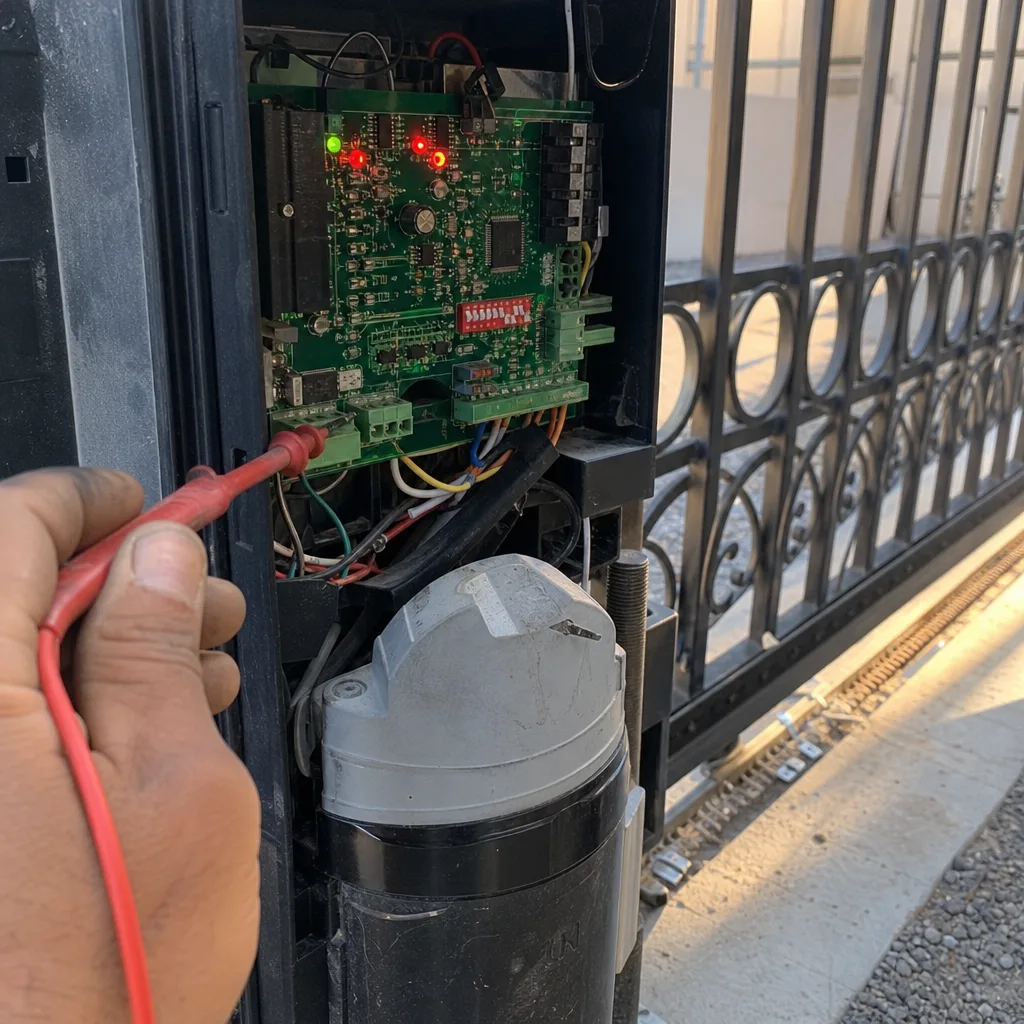
Almost every modern operator stores a fault history, and it’s the single most useful thing you can bring to a repair call. It tells a technician what the gate was doing before it stopped, and it lets you verify a diagnosis instead of accepting one on faith.
Pull up the operator’s manual, or the programming menu on the unit itself, and look for a “fault log,” “error history,” or “diagnostics” screen. Most store the last several codes with a count. A few common patterns to note: repeated “obstruction” errors usually mean a misaligned photo-eye, a dirty lens, or a hinge dragging; “limit” or “travel” faults point to a limit switch or an encoder; “overcurrent” or “motor overload” flags often trace back to post movement or a failing arm. On a LiftMaster or a Linear unit the codes are short numeric strings you can read off the display before you ever call. Ghost Controls and Viking operators show theirs through a similar menu.
Write down each code, how many times it appears, and roughly when the trouble started. That history is ammunition. When a technician tells you the board is dead, you can ask whether the stored log showed a wiring fault first. A real diagnosis accounts for what the log recorded. If it doesn’t, ask them to walk you through it. You’re allowed to do that, and a company that documents its work will welcome the question. This is also where a free second opinion earns its keep: bring a written estimate from another company and we’ll read the fault history against it at no cost.
What to Ask For in Writing Before Work Starts
A verbal estimate is a guess with a friendly face. A written scope is the thing that protects you from the invoice that arrives bigger than the quote. Under Clause 1 of The Haven Standard (“Have it in writing”), the flat price is written and handed over before any tool comes out. Here’s what a scope document should actually contain, and what to check for:
- The diagnosed root cause, stated in plain language, not just the failed part. “Board failed” is a symptom. “Board failed due to a shorted low-voltage conductor at the junction box” is a diagnosis.
- Every part to be replaced, by name and number, so you can confirm what’s actually installed later.
- The flat price, written, before work begins. No “call for a quote,” no hourly rate that floats after the fact.
- What’s included and what isn’t: photo-eye re-alignment, limit-switch resetting, hinge adjustment, cleanup, and the documentation log.
- The warranty term in plain words. Ours is the 365-Day Done Right Promise: if the repair isn’t right, we make it right with no argument, no fee, and no expiration within that window.
- Who’s coming and when, with a name and photo provided before arrival on scheduled work.
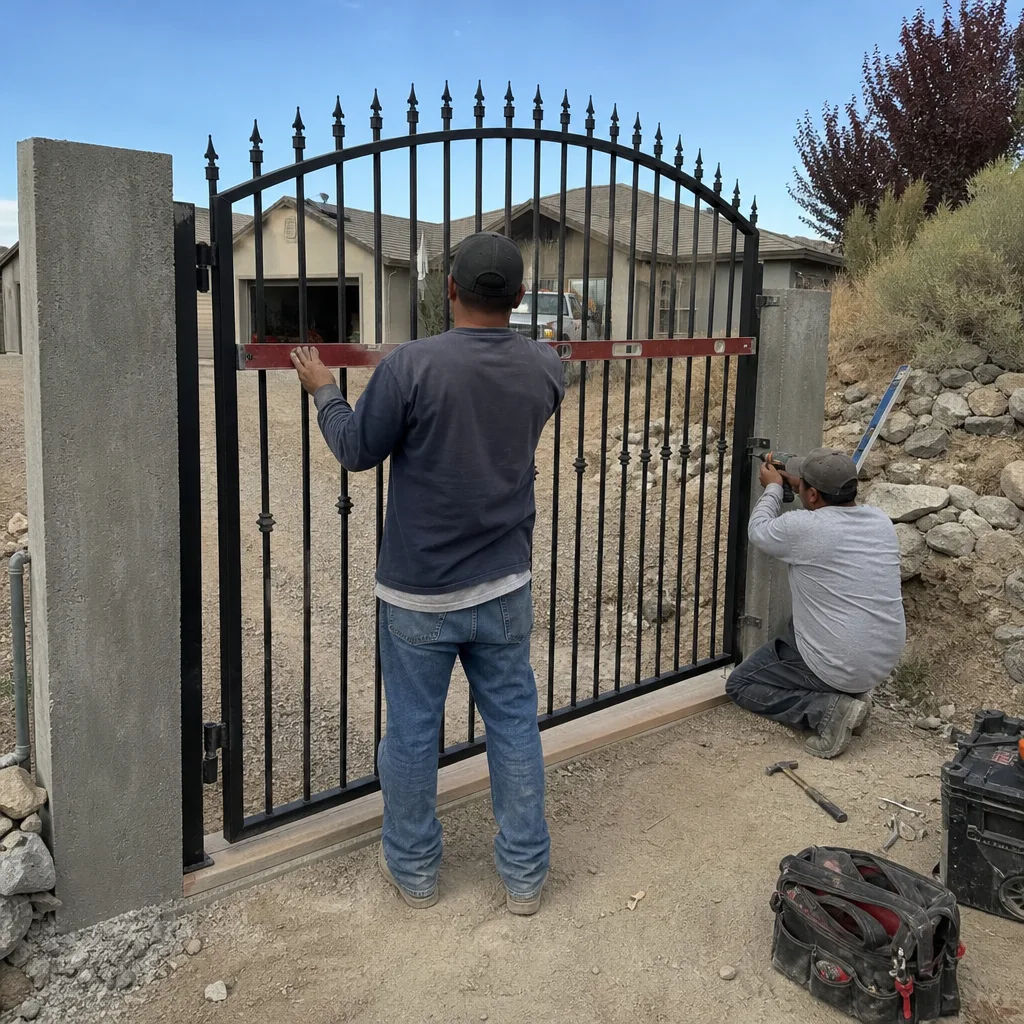
When a gate is automated, the safety gear is part of the scope too, not an add-on. Ask directly whether the photo-eyes, safety edges, and any reverse-on-obstruction function are being tested and documented. A repair that restores movement but leaves a misaligned safety beam is not done. On a new gate installation in Winchester, the same rule applies to the power run, the safety edges, and the written approval before the first post is set. New work is measured, ordered, and scheduled, so we promise a free measure and a written price rather than a same-day dispatch.
When a Gate Can Be Repaired and When It Can’t
Most Winchester gate failures are repairable, and a good diagnosis saves you from a new-gate quote you didn’t need. Operators are built to be serviced. Boards, arms, photo-eyes, limit switches, and hinges are all replaceable parts. We work across nine major automation brands, including BFT, Linear, and Viking, so we can service whatever motor is already on your property rather than steering you toward a replacement you don’t want.
That said, some situations genuinely point to replacement. A post that’s cracked through its base or rotted below grade won’t hold alignment no matter what you do to the operator. A gate frame that’s warped beyond adjustment will keep dragging and burning arms. And steel that’s rusted through at the hinge welds is a structural problem, not a parts problem. Those cases get a written conversation, with photos, about what repair can and can’t fix. We don’t move to new-gate talk because it’s easier to sell. If a repair keeps your gate working, that’s the recommendation.
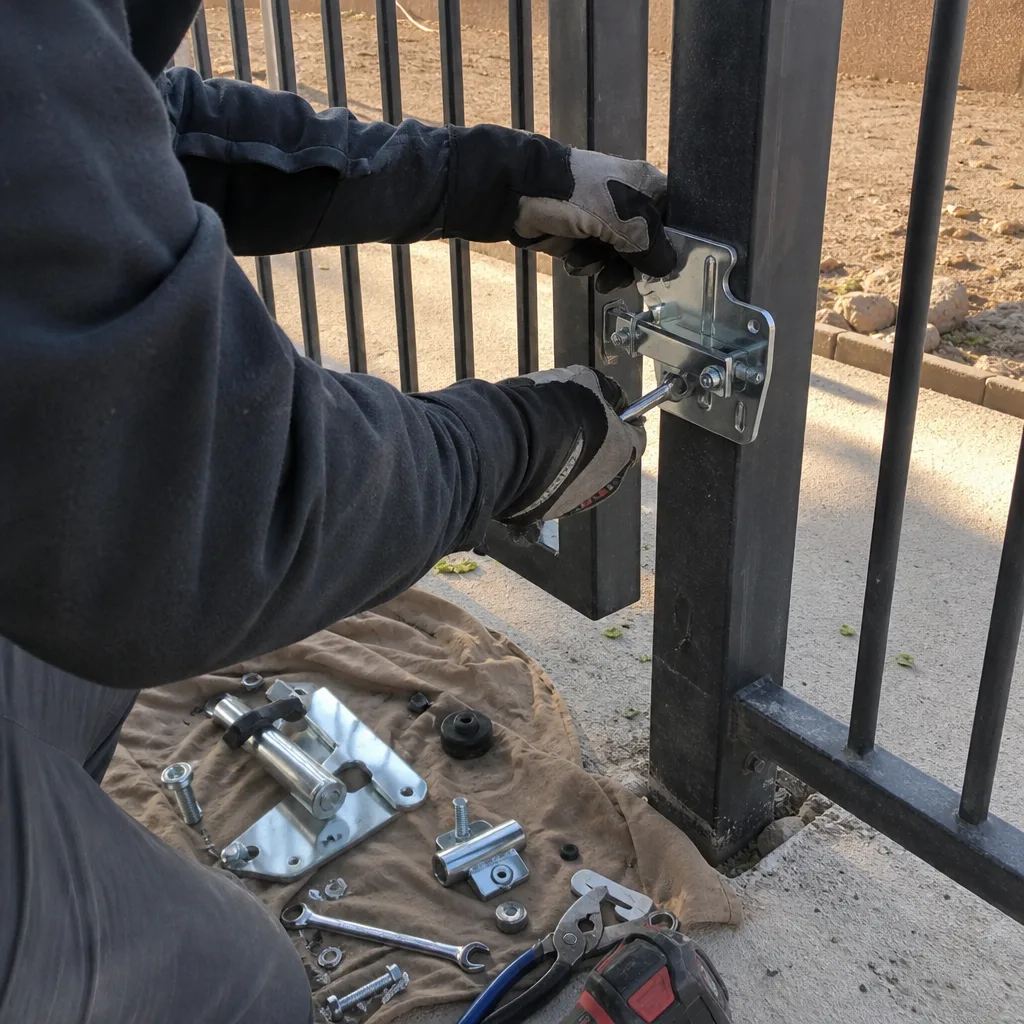
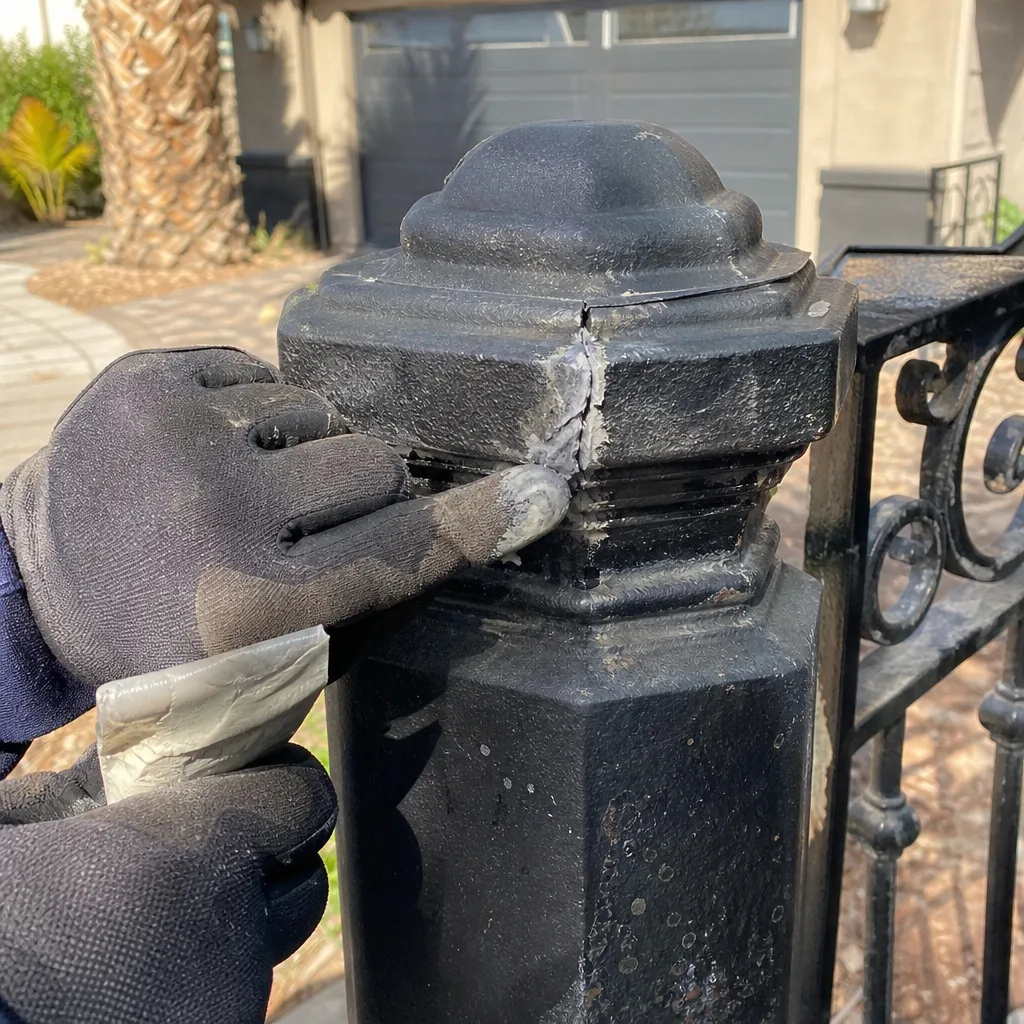
Welding and frame work sit on the same spectrum. A cracked hinge bracket or a snapped weld is repairable on-site in many cases, and it’s the kind of thing that gets photographed before and after so you can see the fix rather than take it on faith. The dividing line is whether the structure can be brought back to safe, aligned operation. When it can, we repair it.
A Five-Step Documentation Routine You Can Run Yourself
You don’t need to be a technician to build a useful record of your own gate. Doing this before you call anyone makes the diagnosis faster and gives you a reference point to check against whatever a company tells you.
- Photograph everything before anything is touched. Four angles of the full assembly, then close-ups of the operator label, the control board, and every junction box. Date the photos.
- Record the travel positions. If your operator displays limit positions or you can read them from the manual, write down the open and closed readings so drift can be measured later.
- Write down the error-code history. Each code, how often it appears, and when the trouble started. This is the highest-value thing you’ll hand a technician.
- Note the board model and firmware version off the display or the label. Matching behavior to the right manual matters.
- Check the ground. Look at each hinge post for movement, cracking, or separation at the base, and note any dragging in the swing. In Winchester’s soil, this is often the real story behind a motor that seems tired.
Keep this record somewhere you’ll find it again, and add to it after every service visit. Over a few years it becomes a history of the gate, and history is what keeps you from paying twice for the same discovery. A documented system is a cheaper system.
Common Mistakes to Avoid
- Accepting a verbal estimate. It’s the direct cause of most invoice surprises. Get the flat price in writing before any work starts; if a company won’t put it on paper, that tells you something.
- Replacing a board without finding why it failed. A new board bolted onto a hidden wiring fault is a repeat purchase waiting to happen. Ask what caused the failure, not just what failed.
- Ignoring intermittent photo-eye faults. In Winchester’s UV and dust, a hazed lens fails on and off for months before it dies clean. Chasing it early is far cheaper than a safety call later.
- Skipping the documentation on the first visit. The cheapest repair is the one that never has to be rediscovered. Leave every job with photos and readings on file.
- Overlooking post movement in alkaline soil. A swing gate that drags is often telling you the ground shifted. Adjust the hardware all you like; if the post moved, the drag comes back.
- Letting a company push replacement before repair is ruled out. Operators are serviceable. Get a written diagnosis that explains why repair won’t work before you consider a new gate.
- Not testing the safety edges after a repair. A gate that moves again but leaves a misaligned safety beam is not fixed. The safety gear is part of the job, every time.
See the difference
BeforeAfter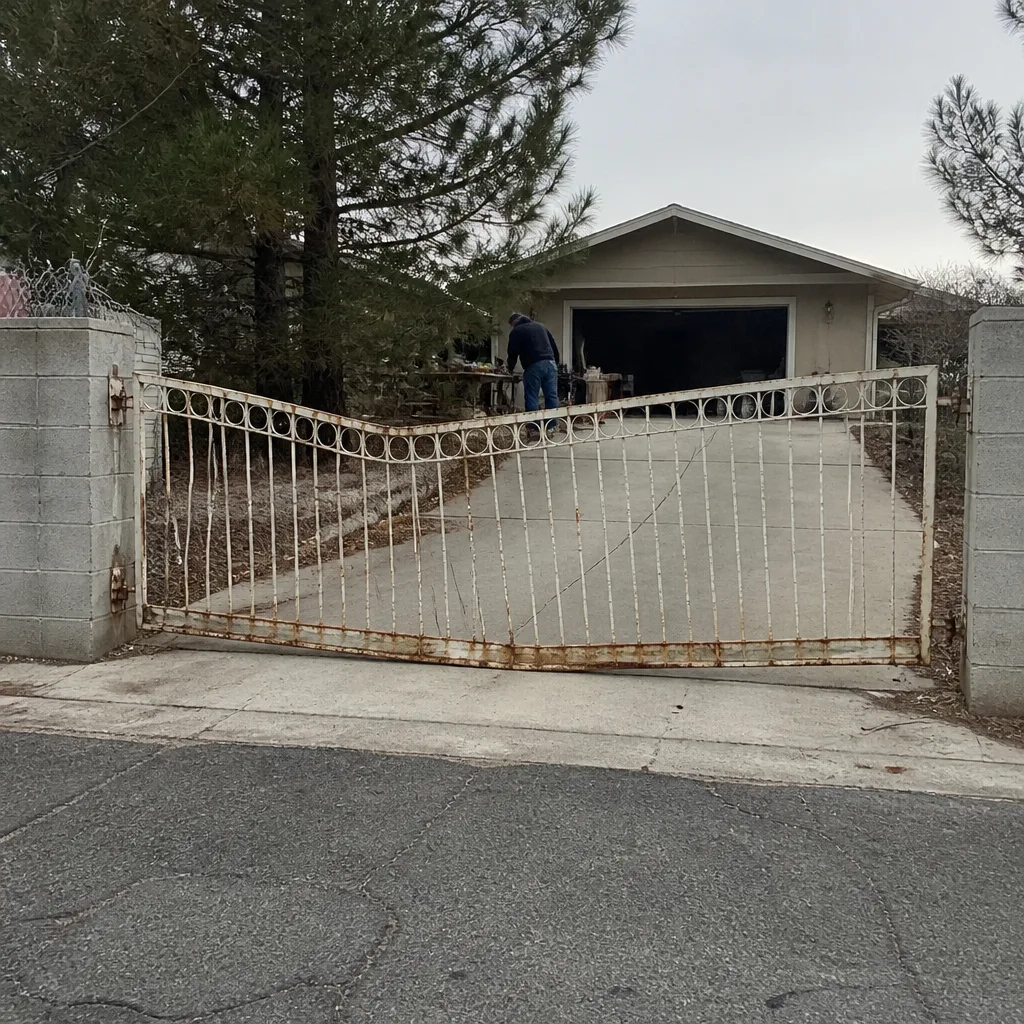 Before
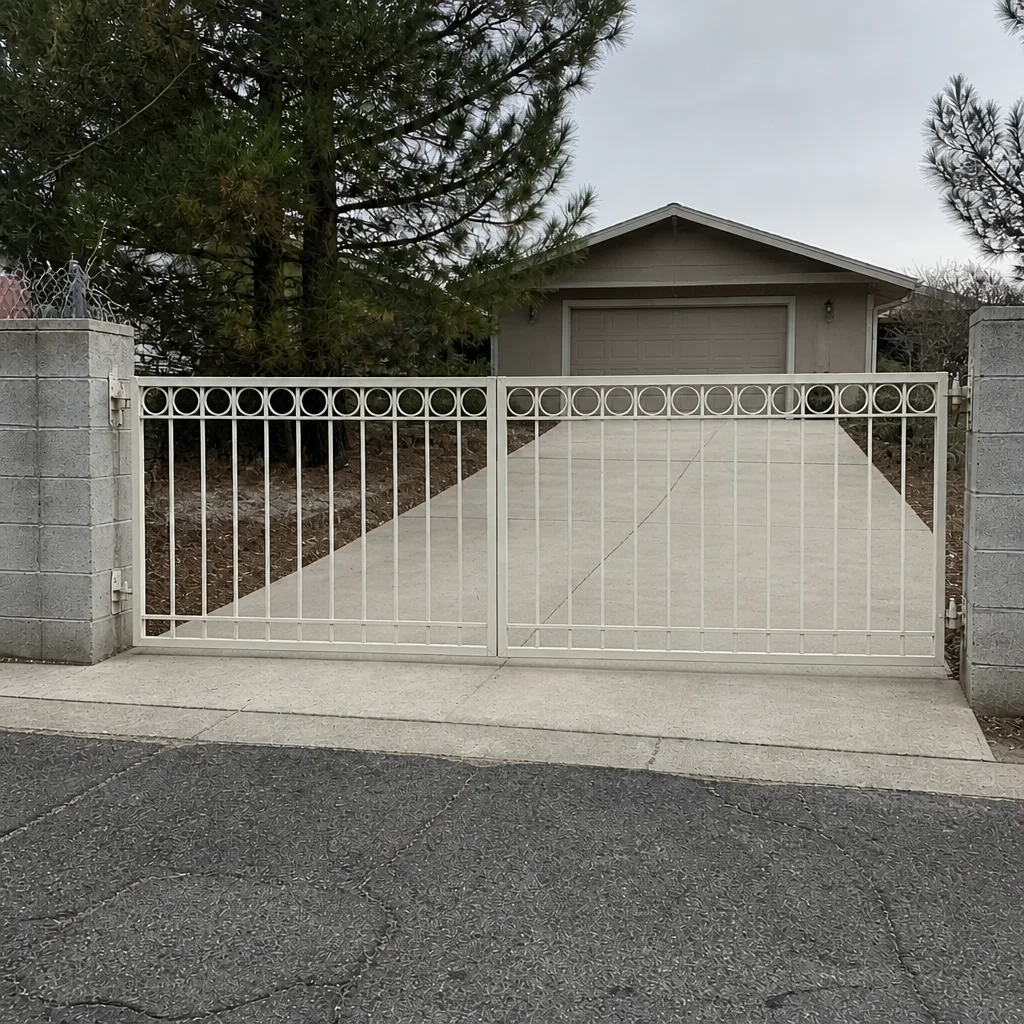 After
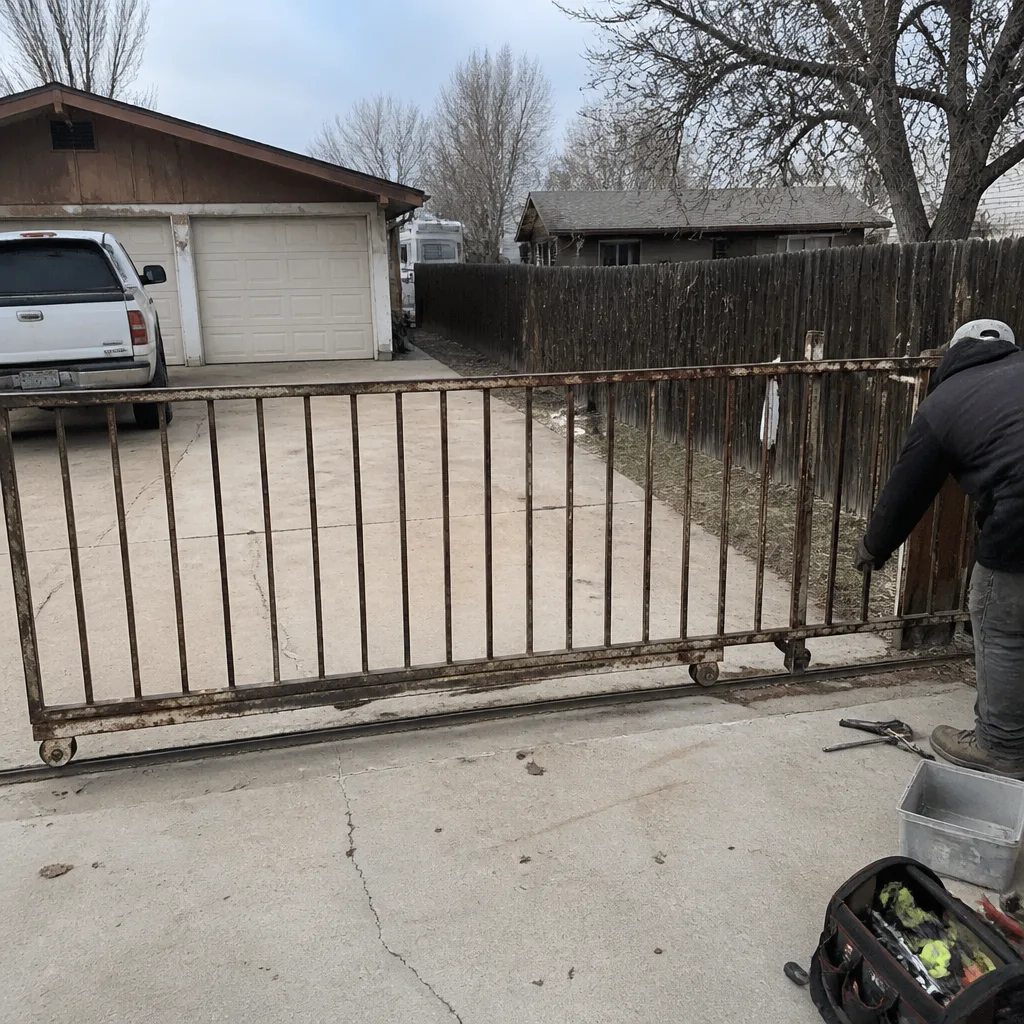 Before
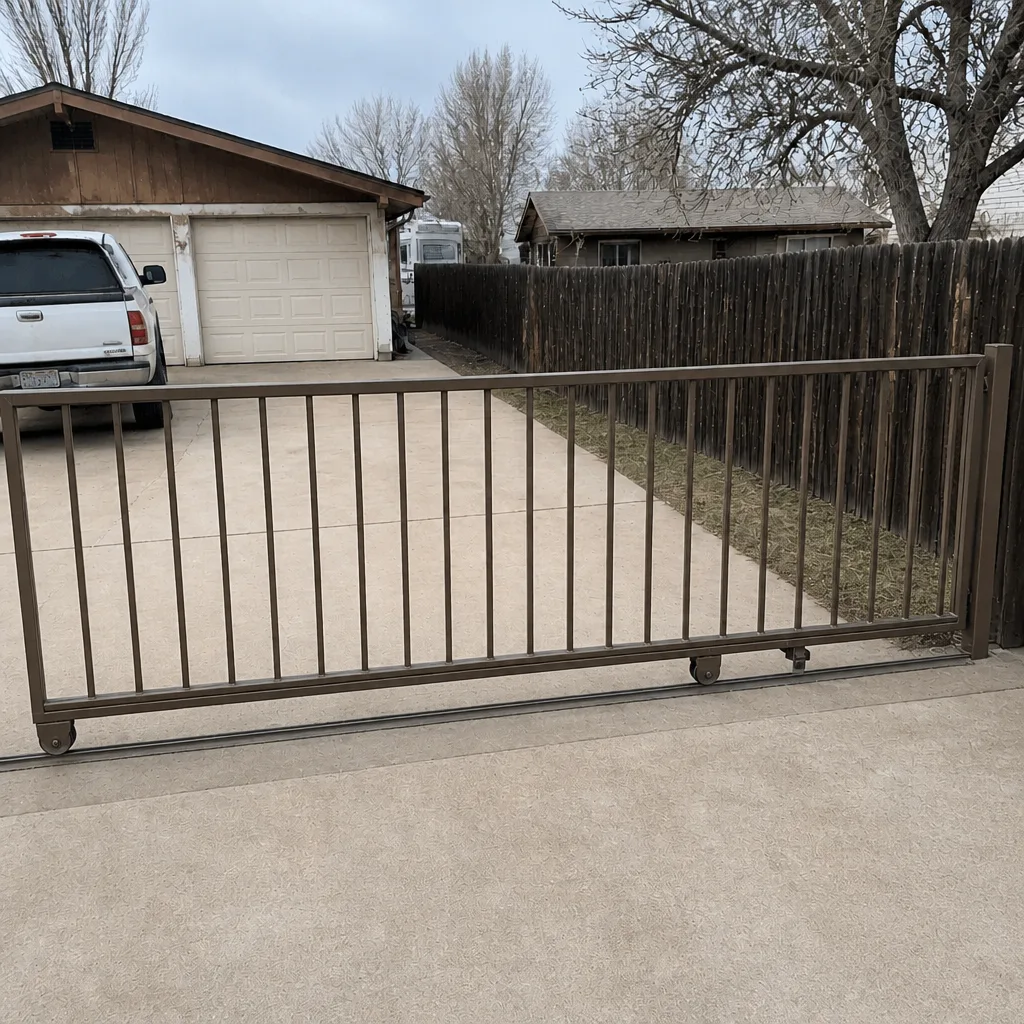 After
When to Call a Professional
Some gate work is genuinely dangerous and belongs to a trained technician. High-tension springs on a swing operator, a gate arm that can swing with force, live wiring at the operator, and any work near a power run carry real injury risk. Don’t put your hands into a spring assembly or a live control box to save a call. Those components store force and can release it without warning.
Call a professional when the operator faults and won’t reset, when a board or arm needs replacement, when a post has moved or cracked, when wiring is damaged or exposed, or when the gate won’t reverse on obstruction. Also call when you’ve read the error history and the pattern points at a limit switch, encoder, or motor overload you can’t safely diagnose yourself. Safety edges and photo-eyes should be tested by a trained hand, because a gate that fails to reverse is a hazard, not an inconvenience.
Vance Gate Repair Winchester offers free estimates in Winchester, and the price is written before any work starts. Call (866) 983-9213 to talk it through with a live person at any hour. Our technicians have up to 12 years of experience, and every visit leaves a documented record you can point to later.
Frequently Asked Questions
Most residential gate repairs in Winchester run from simple parts-and-labor fixes in the low hundreds of dollars up to a few hundred more when a control board or operator arm needs replacing. The exact number depends on the brand, the part, and whether the root cause is a wiring fault or a mechanical issue. You get the flat price in writing before any work starts, so there’s no invoice surprise at the end. Call (866) 983-9213 for an exact quote – estimates are free.
Yes, for repairs and emergencies we can often get to you the same day, and a live person answers the phone 24/7 rather than a voicemail loop. Same-day availability applies to repair and emergency calls. New gate installations, new operators, and access-control jobs are measured, ordered, and scheduled, so we promise a free measure and a written price instead of a dispatch time. Call (866) 983-9213 to check availability for your gate.
Open the programming or diagnostics menu on your operator and look for a “fault log” or “error history” screen that stores recent codes with a count. Write down each code and how often it appears before you call anyone; it tells a technician what the gate was doing before it stopped and lets you check their diagnosis. If your display won’t show the log, note the model and firmware and we’ll read it on-site. Call (866) 983-9213 for a free estimate.
Most board failures in Winchester come from a fault underneath: a nicked low-voltage wire shorting against metal, a battery backup overheated by summer heat, or a motor overloaded by a dragging hinge or shifted post. Replacing the board without fixing the cause brings the failure back. A root-cause repair traces the fault and documents it. Call (866) 983-9213 for a free estimate.
Usually not. A gate that drags in the same place each time is often telling you a hinge post moved in Winchester’s alkaline, shifting soil or that a hinge is worn, which overloads the motor and eventually burns an arm. We measure hinge torque and post plumb before blaming the operator. Call (866) 983-9213 to get it looked at with a free estimate.
A full installation includes the post and frame set to grade, the operator and safety edges with a proper power run, photo-eye alignment, and tested reverse-on-obstruction function, all scoped and priced in writing before work begins. Because it’s measured and scheduled work, you get a free measure and a written price rather than a same-day promise. Call (866) 983-9213 to set up the measure.
The Bottom Line
The gate that costs you least over its life isn’t the newest one. It’s the documented one. In Winchester’s high-desert swing, heat, UV, and shifting alkaline soil compound on control boards, photo-eyes, and hinge posts faster than a national guide would suggest, and the failure that follows is very often a symptom hiding a cheaper root cause. Read your error history, photograph the system before anyone touches it, insist on a written scope and flat price up front, and keep the record. A gate with a paper trail doesn’t make you pay twice to rediscover the same problem.
Ready to put a record behind your gate? Call Vance Gate Repair Winchester at (866) 983-9213 for a free estimate. You’ll get the price in writing before work begins, a documented photo record when we leave, and the 365-Day Done Right Promise behind the repair. Start at our Vance Gate Repair Winchester home page for the full picture of what we do.
Written by the team at Vance Gate Repair Winchester.