
 Wrought iron
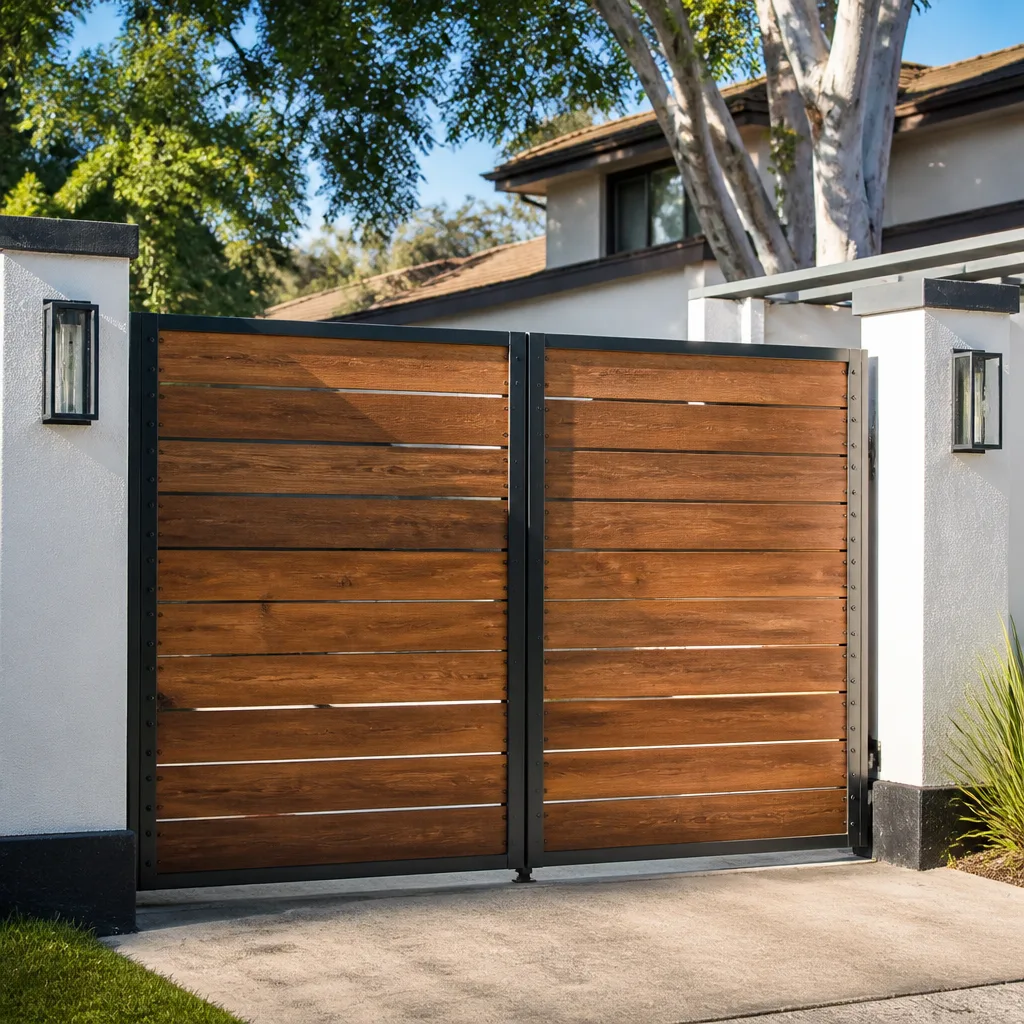 Wood & steel frame
 Farm & ranch
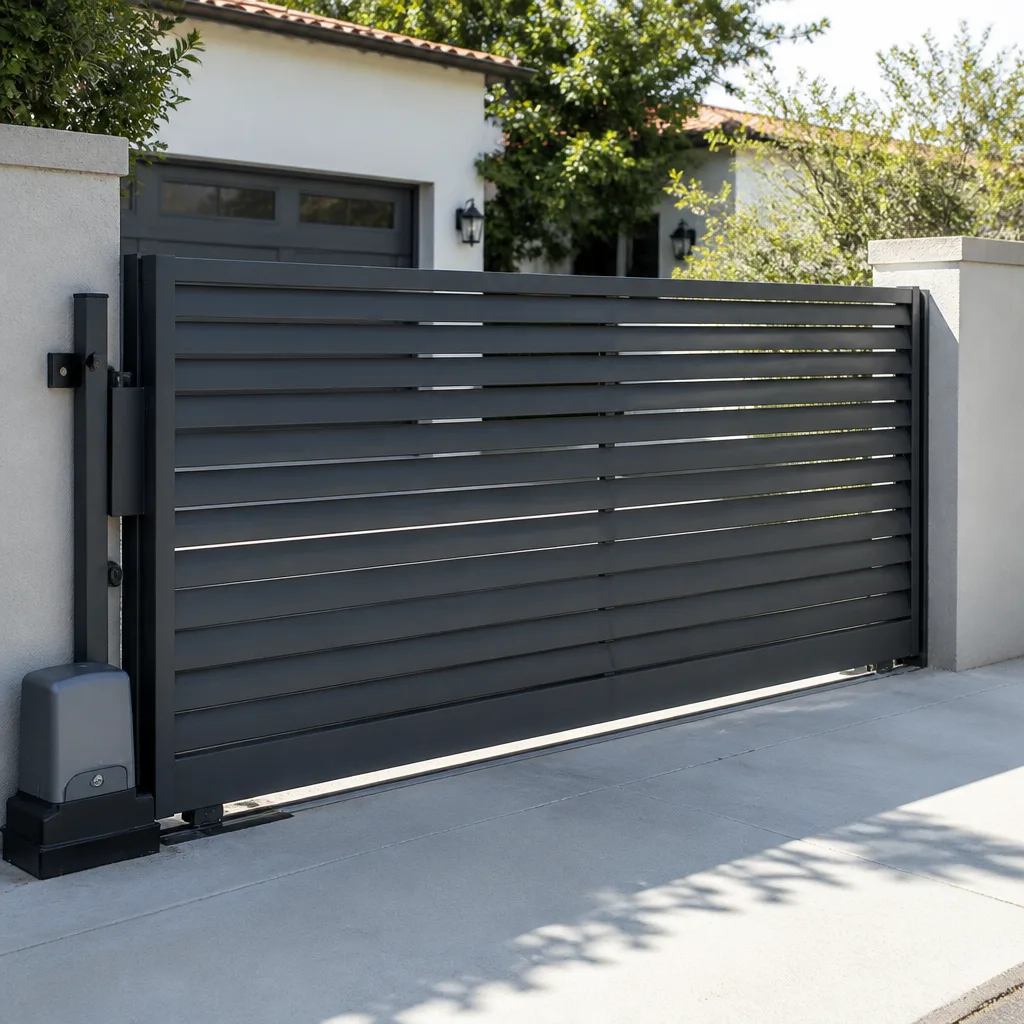 Sliding driveway gates
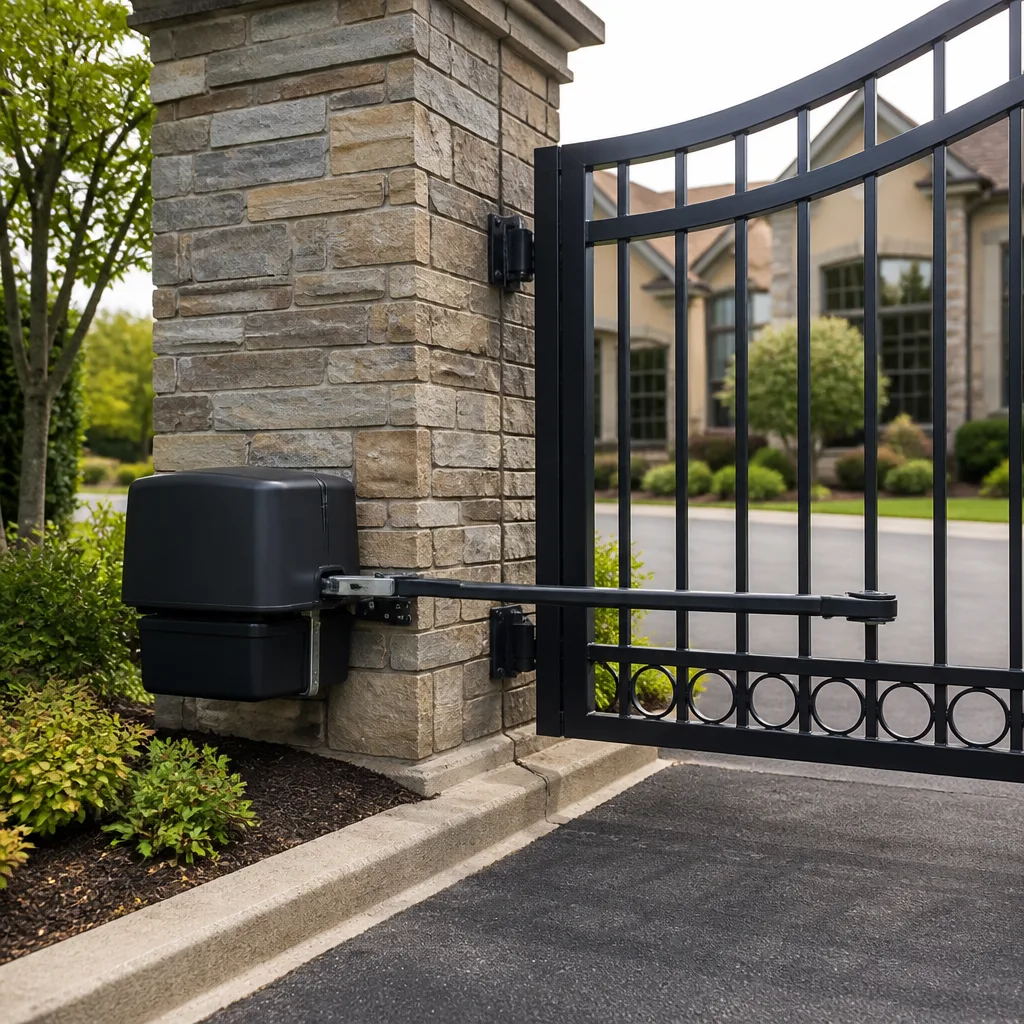 LiftMaster operators
Free on-site gate assessment - hinges, posts, and your LiftMaster or Nice gate operator checked before anything is quoted
The assessment is free and the quote is the invoice.
Get your free estimateStyles & brands we work with
- Wrought iron
- Wood & steel frame
- Farm & ranch
- Sliding driveway gates
- LiftMaster operators
See the difference
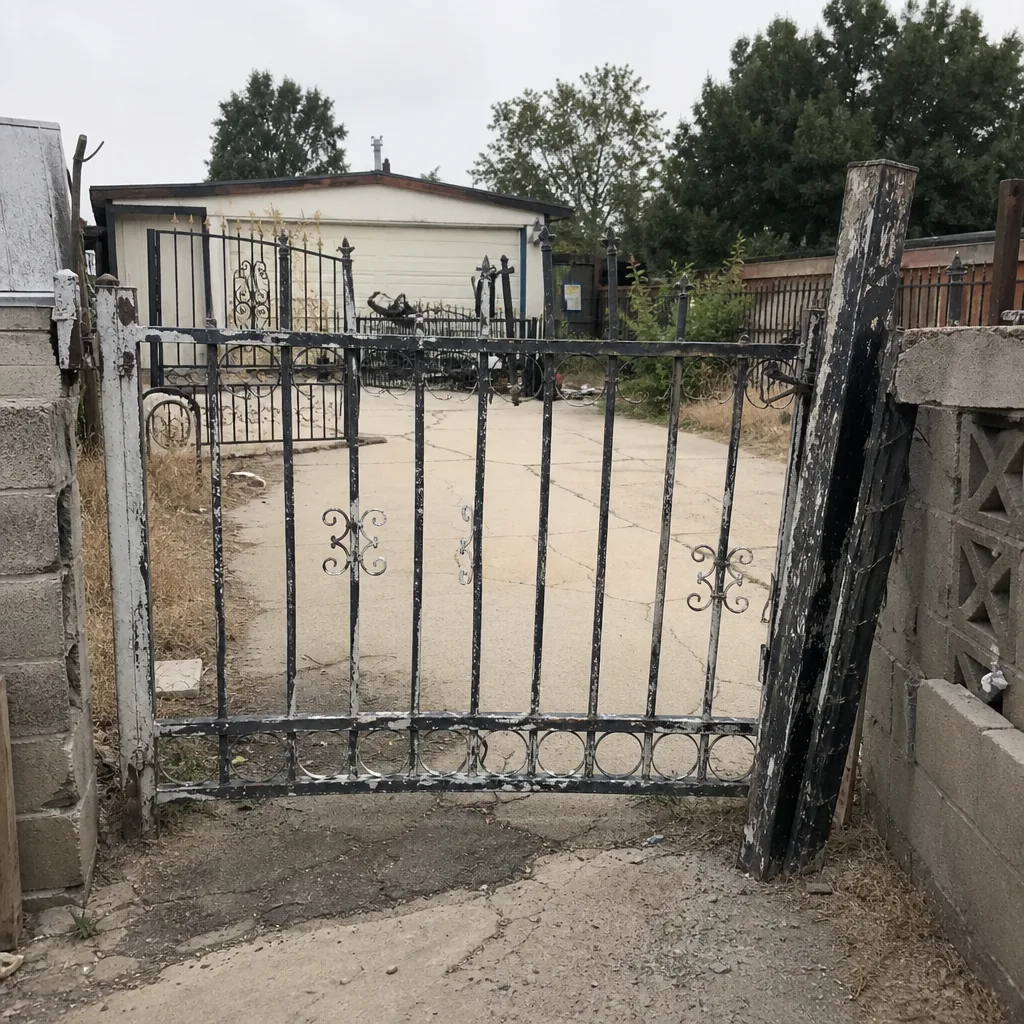 Before
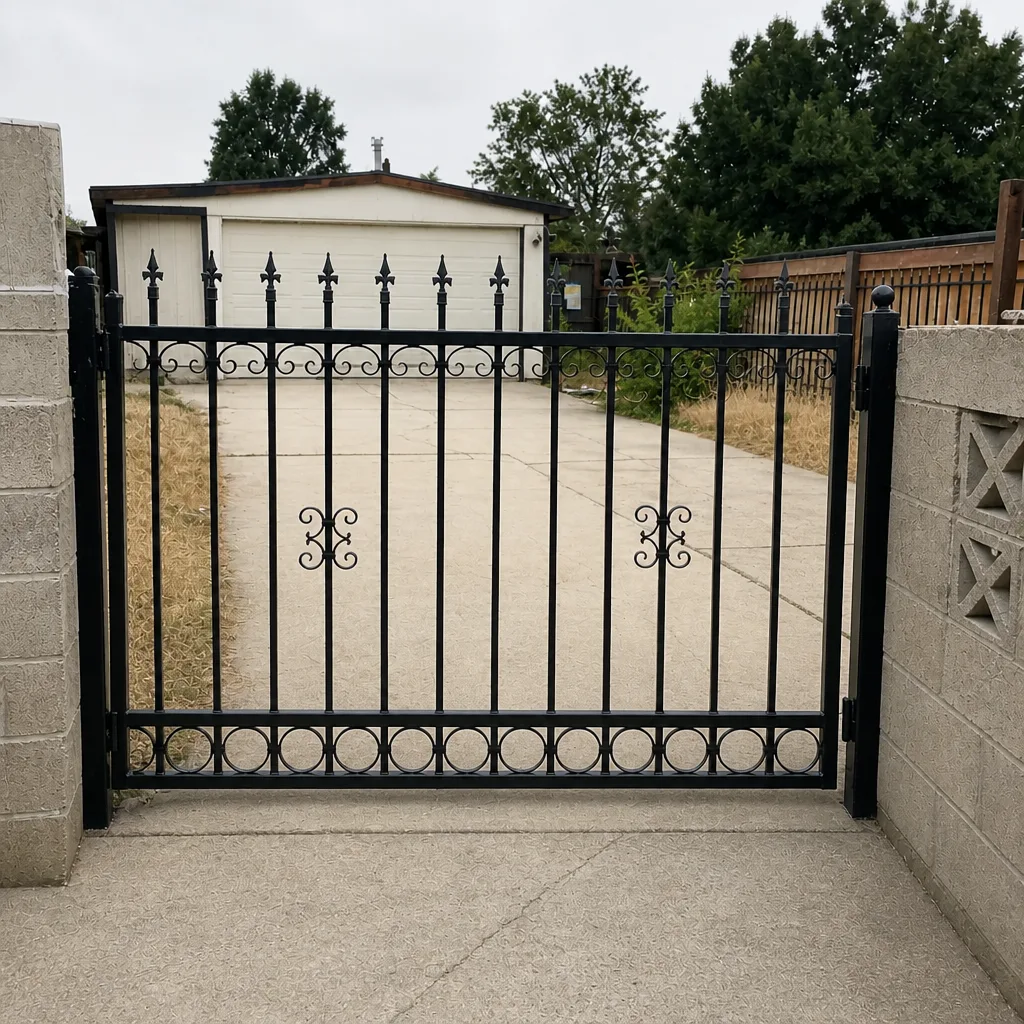 After
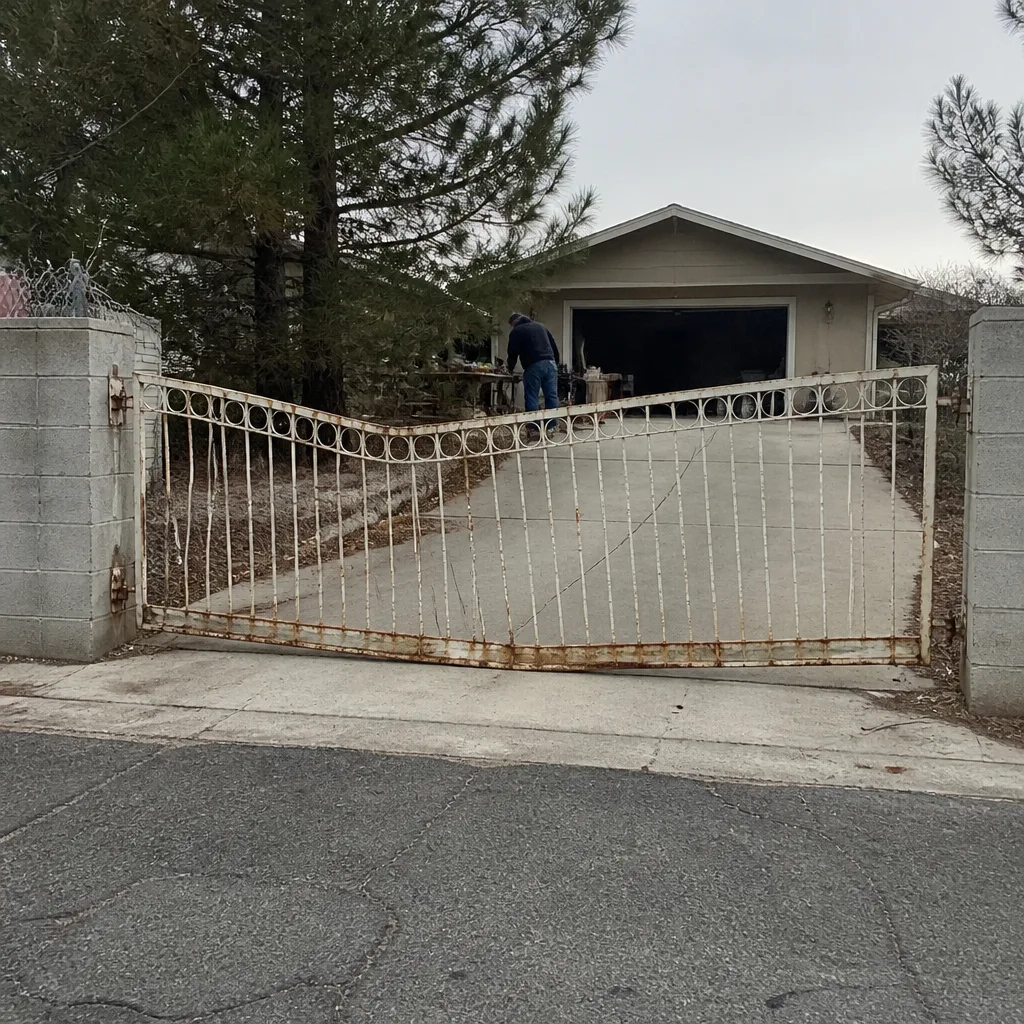 Before
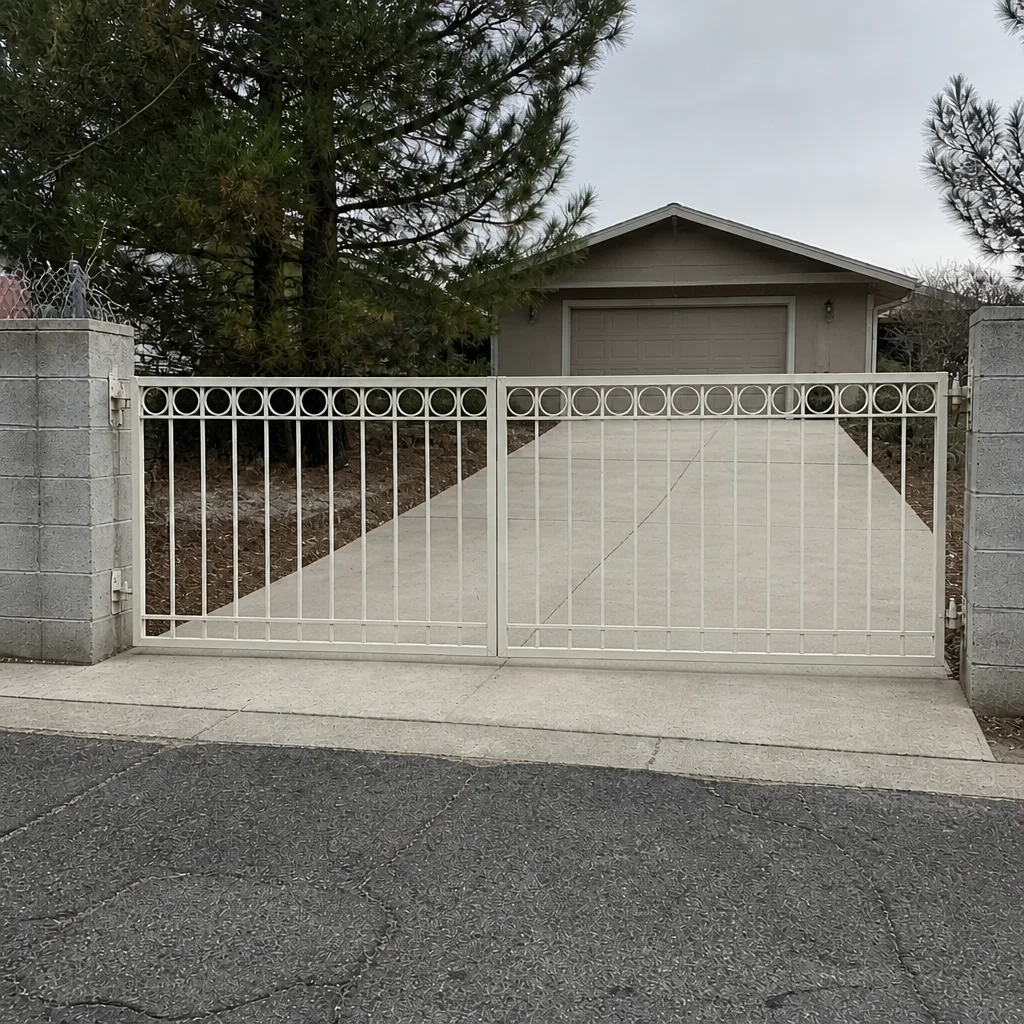 After
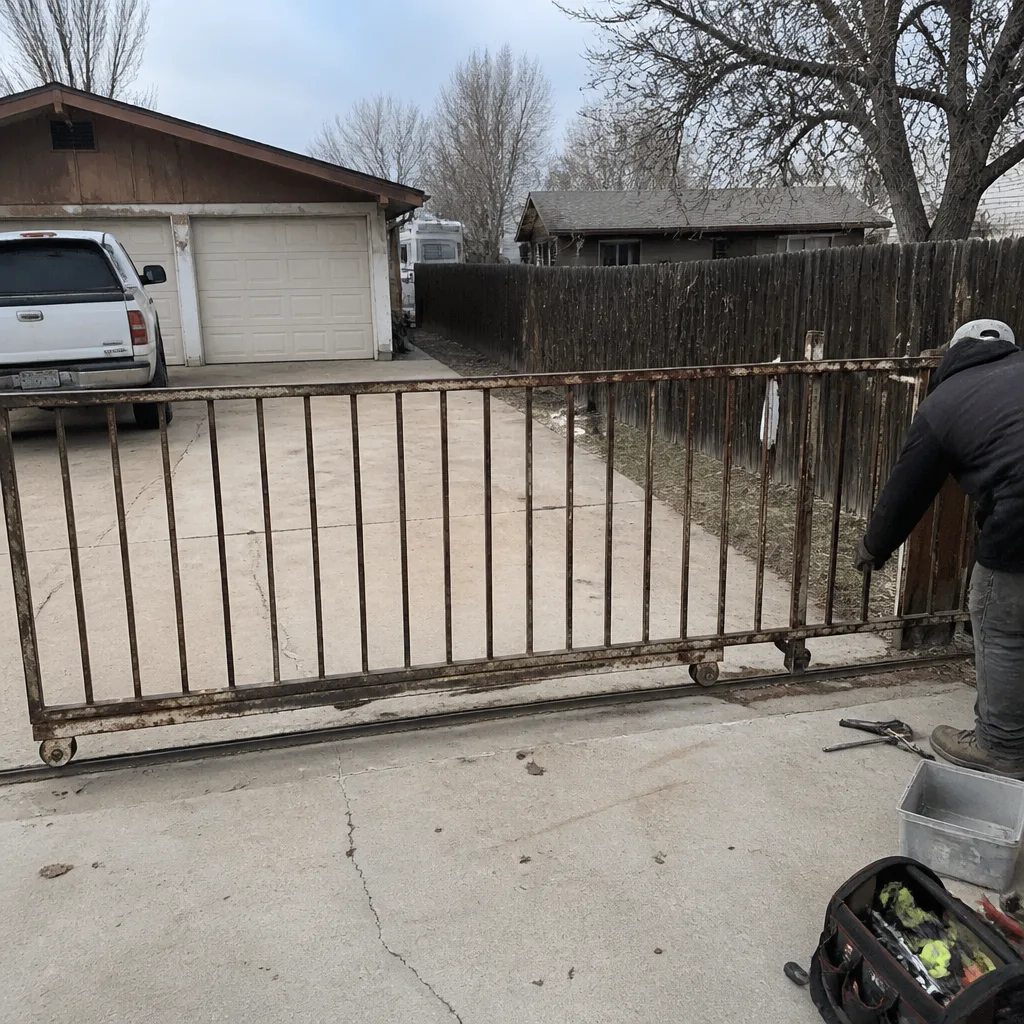 Before
 After
Why Won’t My Automatic Gate Open in Winchester, NV? Start Here.
The single most likely reason a gate in Winchester won’t open is a failed start capacitor in the operator, especially if it quit during a stretch of 110°F-plus summer heat. The second most likely is a roller or track packed with dust and grit after a monsoon wind event. Those two causes account for the majority of no-open calls we handle in Winchester, and neither one shows up first on the generic troubleshooting lists you’ll find online. If you want a written diagnosis with a photo record of what we found, call (866) 983-9213 and we’ll get it on the schedule.
The two Winchester causes the generic lists get wrong
Winchester’s housing stock is mostly 1950s to 1970s tract homes and aging low-rise commercial strips, which means a lot of the gates here are original wrought-iron driveways and older chain-link security gates running early automatic operators. Those operators have been sitting in Mojave sun for decades. That combination produces two failure patterns you won’t read about in a national troubleshooting article.
1. Heat-cracked capacitors (the summer failure)
The start capacitor is a small cylinder inside the operator housing that gives the motor its initial jolt. Sustained heat dries out the electrolyte inside it and the can cracks or bulges. When that happens the motor hums but won’t turn, or it does nothing at all when you press the remote. On an older LiftMaster or Mighty Mule arm operator, a replacement capacitor is typically a $15-$40 part. It’s the most common July and August failure on Winchester gates, and it’s one of the cheapest fixes on the board when it’s caught before the motor windings cook.
2. Debris-packed rollers after a wind event
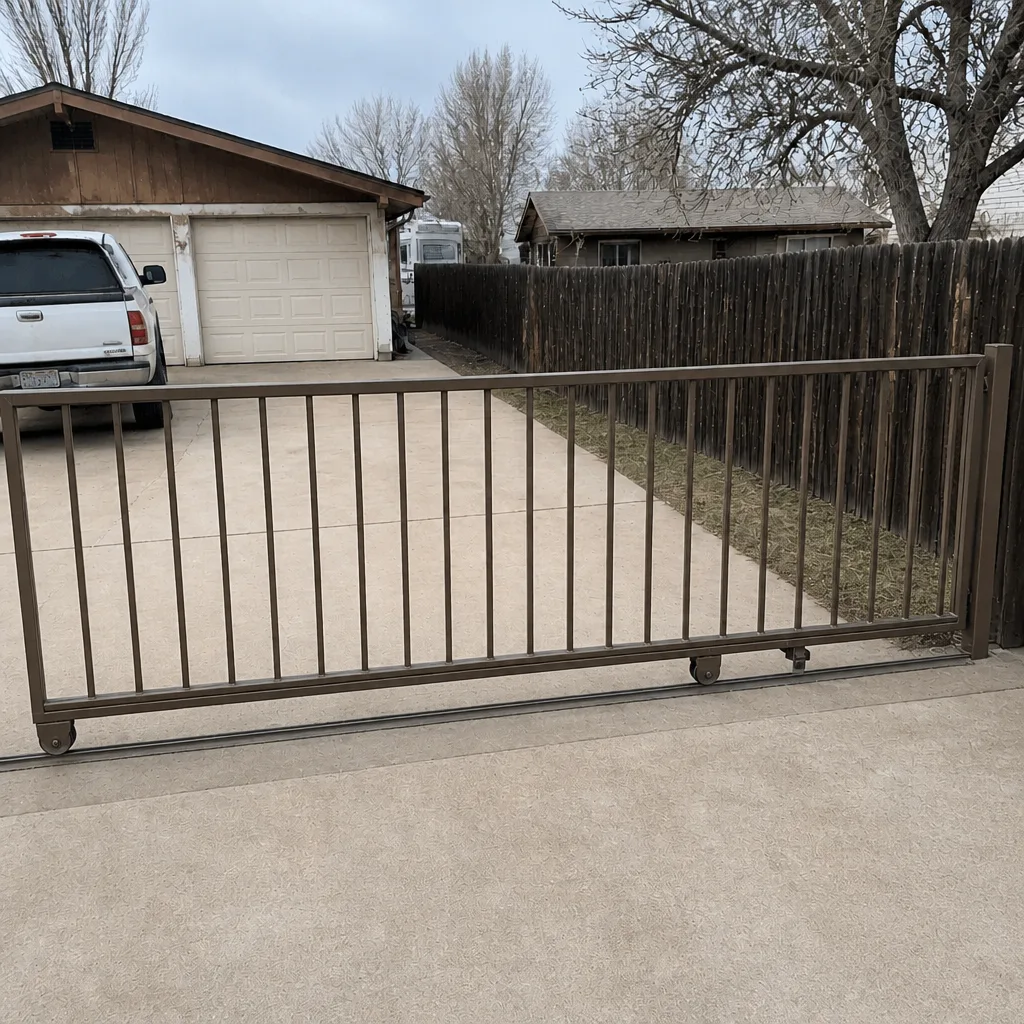
Monsoon winds push fine desert dust into every moving part. On a sliding gate, that dust packs into the roller track and the roller bearings until the gate binds. The operator sees resistance it can’t overcome and stops, or the safety reverse kicks in and the gate never leaves the open position. A visual check of the track takes about 30 seconds and costs nothing: if you can see grit, sand, or a buildup at the roller wheels, that’s your starting point. Cleaning a track is routine. Replacing a drive gear that stripped because the gate was cycled against a jammed roller is not.
What a limit switch actually does, and why it’s the third cause
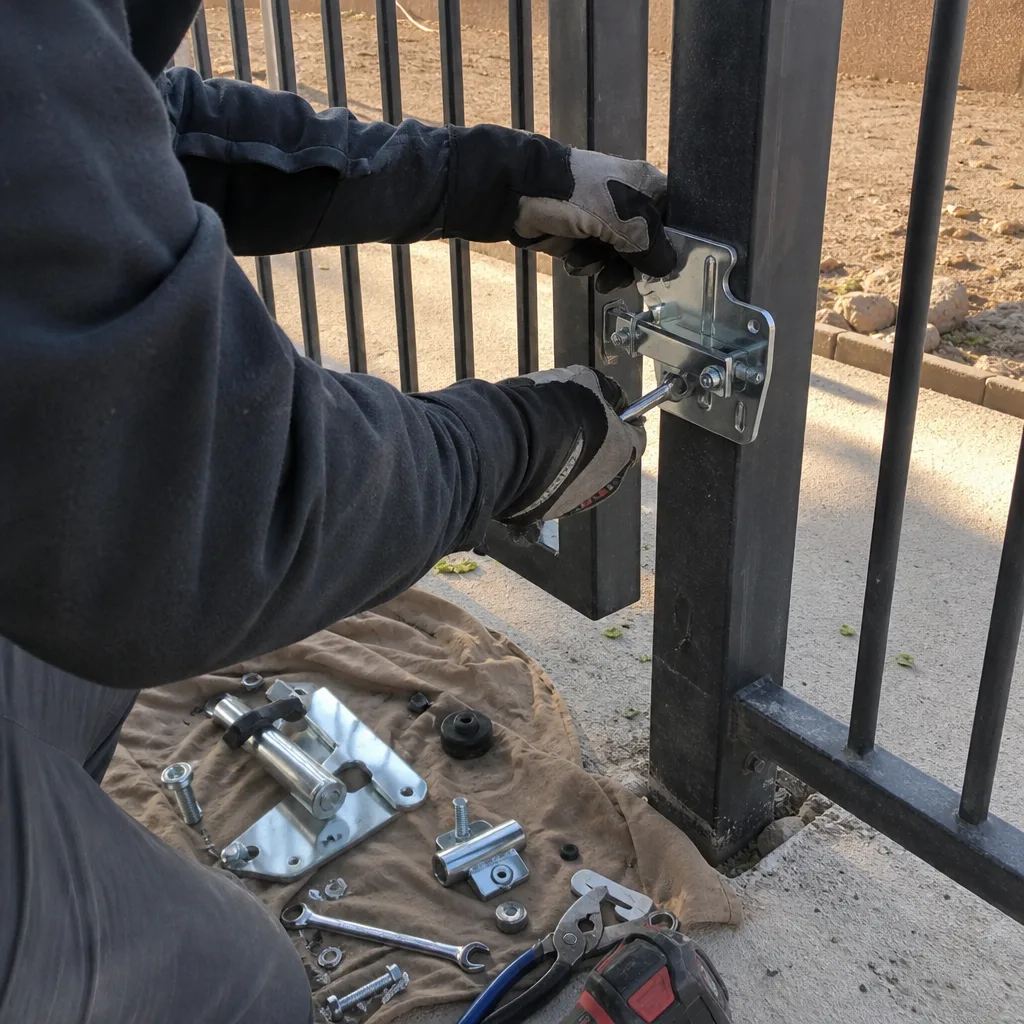
A limit switch is the small physical contact inside the operator that tells it “you’ve reached the end, stop here.” It sets how far the gate travels in each direction. When a gate sags, or a hard wind event shoves it past its usual stopping point, that switch gets knocked out of position. The operator then believes the gate is somewhere it isn’t, and the next command does nothing, or the gate reverses immediately.
This is the failure behind the classic “it worked fine yesterday” call. A limit switch that has shifted is adjustable without replacing any parts. If your gate moved normally last week and now won’t budge, a limit-switch check is where a technician should look third, after the capacitor and the track.
BeforeAfterRun the manual release test first - it splits the problem in two
Every operator we service (the nine major brands, including LiftMaster, FAAC, BFT, and Mighty Mule) has a manual release. On most arm operators it’s a keyed lever or a pull cord on the housing. On slide operators it’s usually a release handle that disengages the drive gear. Releasing it lets you move the gate by hand.
Do this before you call anyone. The result tells you which half of the system is failing:
- The gate moves freely by hand. The mechanics are fine. The problem is electrical or electronic: capacitor, limit switch, control board, remote receiver, or a safety sensor.
- The gate won’t move by hand. The problem is mechanical: a jammed roller, a bent track, a seized hinge, or a failing drive gear. No amount of electrical troubleshooting will fix it.
Either answer narrows a technician’s diagnostic to a couple of branches before they arrive, which saves you time on the clock. Under The Haven Standard, every visit ends with a written record of what was found and what was set, so the next person who works on that gate is not starting from scratch.
The photo-eye problem on small Winchester lots
Photo-eye sensors are the infrared beam across the gate opening that stops travel if something crosses the path. On tight Winchester driveways, those sensors often get mounted low on the wrought-iron gate frame where they collect dust on the lens face. A dirty lens reads as a blocked beam, and a gate that thinks it’s obstructed won’t open.
A damp cloth on both lenses is the fix when this is the cause, and it’s worth checking before anything else. One more detail: sensors on older gates here are sometimes misaligned by an inch or two from a gate that settled or took a hit. If you have to clean them every week to keep the gate working, they’re probably angled wrong and need to be reset and tightened.
When to stop trying and leave the gate in manual mode
A gate that grinds, sparks, or puts off a burning smell when you command it to open should be left in manual release and not cycled again. Continued attempts can strip the drive gear or damage the motor windings, and that turns an $80 capacitor or roller job into a $400 gear-and-motor repair. Leave it disengaged and get someone out to look at it. The same goes for anything involving the high-voltage wiring at the operator or the control board.
What the typical Winchester diagnosis and repair costs
Most of what’s described above is a same-day or next-day repair, and the written price arrives before anyone picks up a tool. Here’s what the common causes run in Winchester:
| Cause | Typical price range | Notes |
|---|---|---|
| Start capacitor replacement | $15-$40 (part), plus service call | Most common summer failure on older operators |
| Track and roller cleaning or replacement | $80-$200 | Climbing after monsoon dust events |
| Limit-switch adjustment | $90-$150 | No parts needed if the switch itself is intact |
| Photo-eye sensor realignment | $75-$140 | Higher on small lots with low-mounted sensors |
| Control board or receiver replacement | $180-$340 | Varies by brand; LiftMaster and Linear among the common ones here |
These are ranges from the Winchester market, not a fixed quote. The written price for your specific gate is set before work begins, and that’s the whole point of Clause 1 (Have it in writing) in our Haven Standard. If another company has already given you a written estimate, we’ll review the paperwork at no cost as a second opinion.
Why Vance Gate Repair Winchester handles this differently
Most of what makes a gate fail here is invisible until someone opens the housing and looks. That’s why every visit, under Clause 4 (Evidence on every job), leaves you a photo log: the capacitor that cracked, the limit-switch reading before and after, the part number installed. You keep the record. It’s filed in the job record too. Technicians are background-checked and uniformed, and you get a name and photo before arrival.
One thing worth noting about Winchester specifically: because it’s an unincorporated township wrapped around Las Vegas, many of these properties sit on small lots without formal HOA oversight. That means gates here are often original hardware that would’ve been replaced years ago under stricter HOA rules. We work on whatever motor is already on the property rather than pushing toward a replacement, and we’re set up to handle the county versus city permitting quirks that come with a repair that touches the gate structure itself. Our technicians have up to 12 years of experience across the nine major automation brands. You can see the full range of what we handle on our Gate Repair page.
FAQs
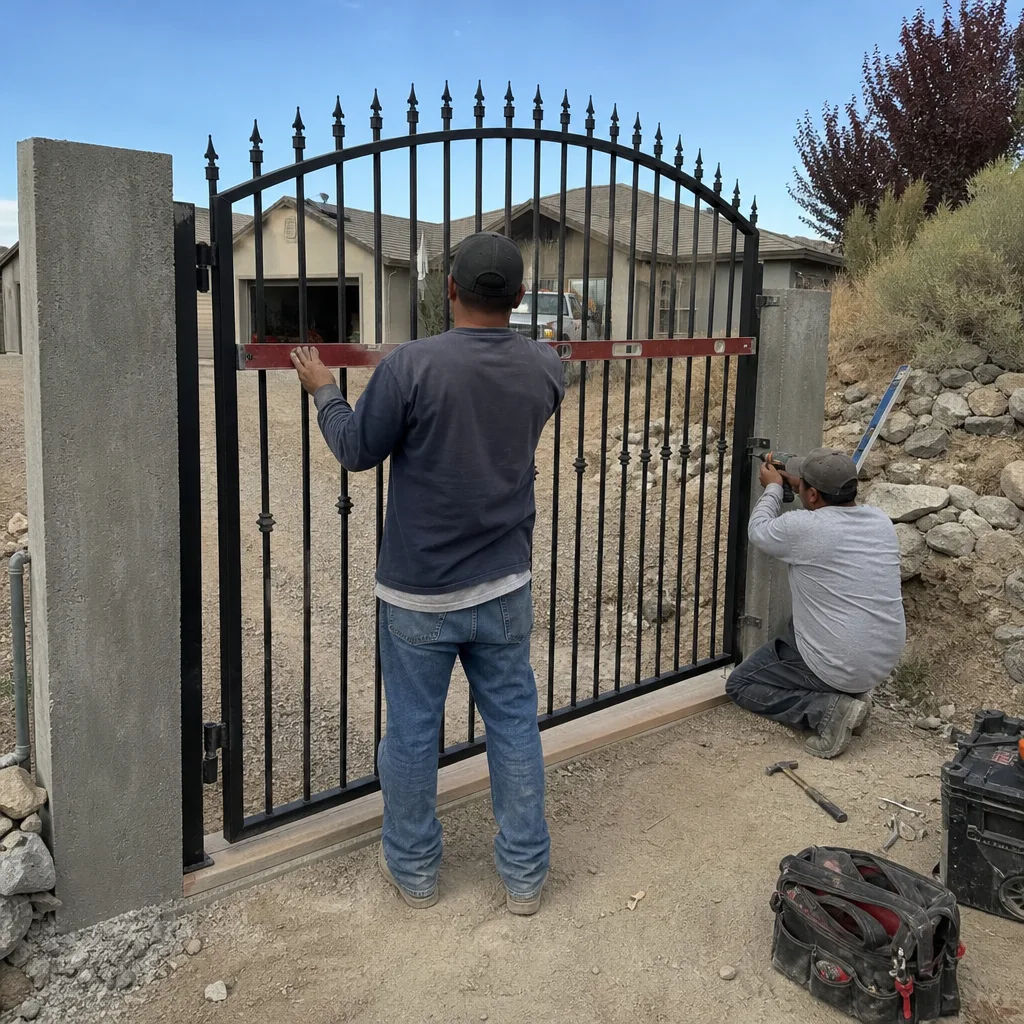
A windstorm in Winchester most often jams the roller track with dust, knocks the limit switch out of position, or both. Road grit and desert dust pack into the roller bearings and the track, creating resistance the operator reads as an obstruction. The limit switch can also be shifted by a hard gust that pushed the gate past its stop point. Check the track for visible grit first, then run the manual release test to see whether the gate moves by hand.
Usually, yes. A humming motor that won’t turn is the classic sign of a failed start capacitor, and it’s the most common summer failure on older operators in Winchester. The capacitor gives the motor its starting jolt, and heat above 110°F cracks it. A replacement part typically runs $15-$40, and the labor is a short job once it’s confirmed. Call (866) 983-9213 for a written quote before any work begins.
You can safely check the track for debris, wipe the photo-eye lenses, and run the manual release test. Anything past that - the capacitor, the limit switch, the wiring inside the operator, the control board - is where a trained technician should take over. The high-voltage side of an operator deserves care, and a misadjusted limit switch can cause the gate to travel past its stop and damage the gate itself. Estimates are free, and the price is written before any tool comes out.
Diagnosis is included in the repair price when you go ahead with the work, and the written price for the repair is set before a technician starts. Common Winchester repairs run from a $15-$40 capacitor up to $340 for a control board swap, depending on the brand and what failed. We’re a live answer at (866) 983-9213 any hour, so you’re not leaving a voicemail and waiting.
Get it looked at
If you’d rather have it looked at than keep guessing which of these is the cause, Vance Gate Repair Winchester offers a no-pressure assessment in Winchester. The written price comes before the work, and you leave with a photo record of what was found. Call (866) 983-9213 for a free estimate, any time of day.
Written by the team at Vance Gate Repair Winchester, serving Winchester, NV.