
 Wrought iron
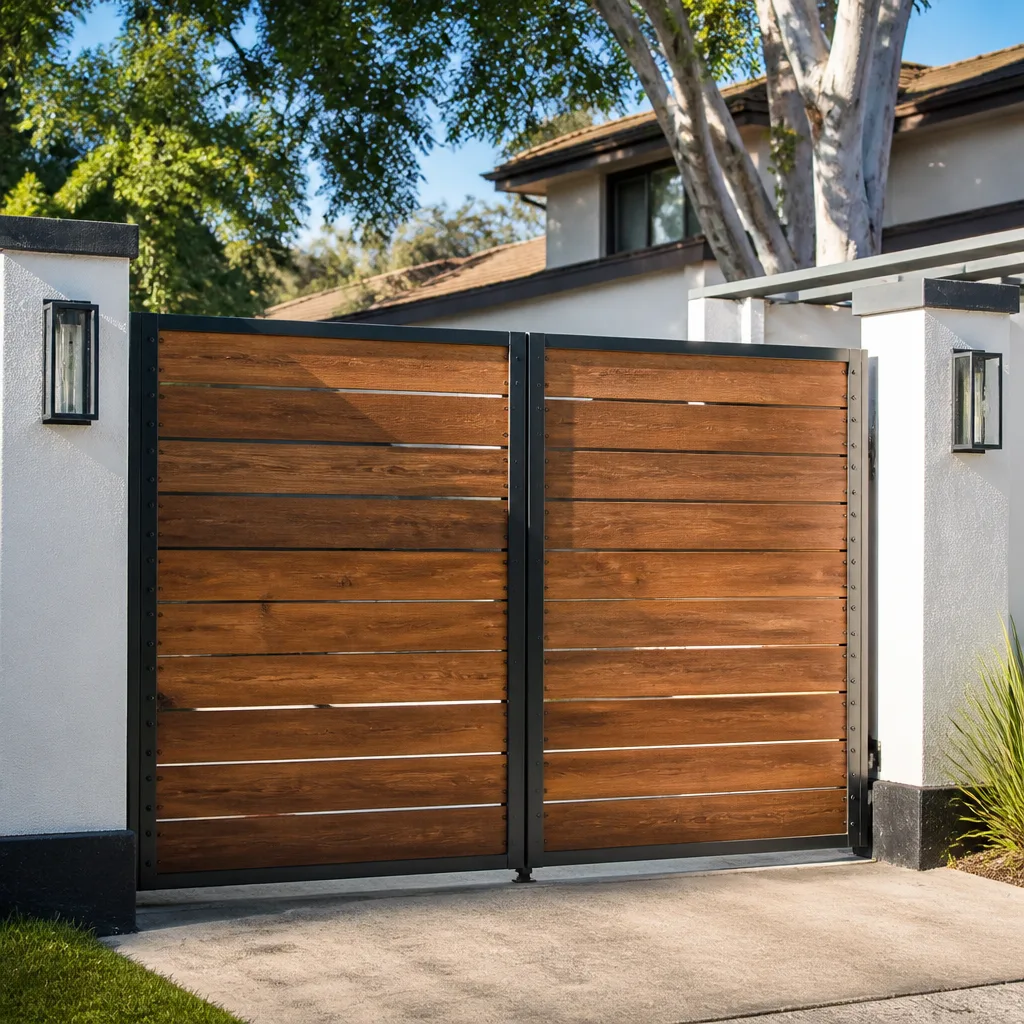 Wood & steel frame
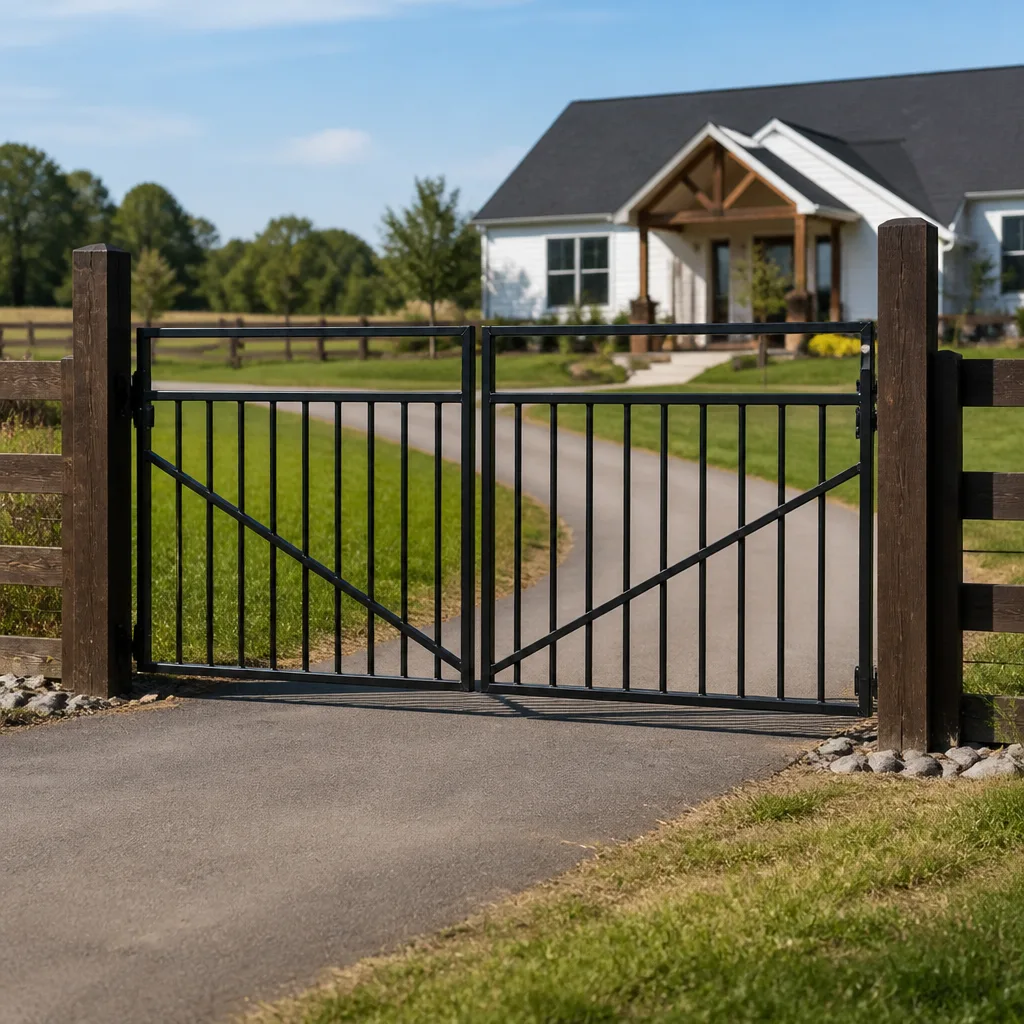 Farm & ranch
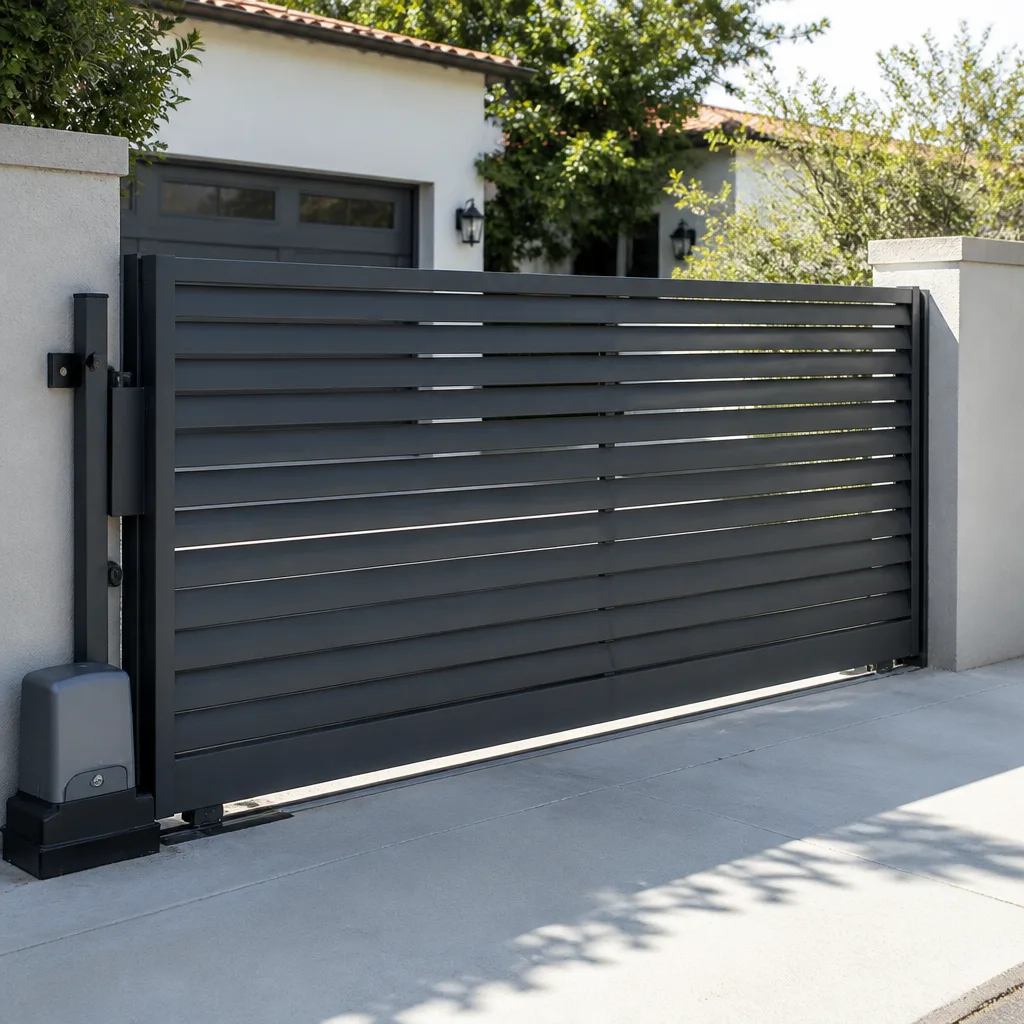 Sliding driveway gates
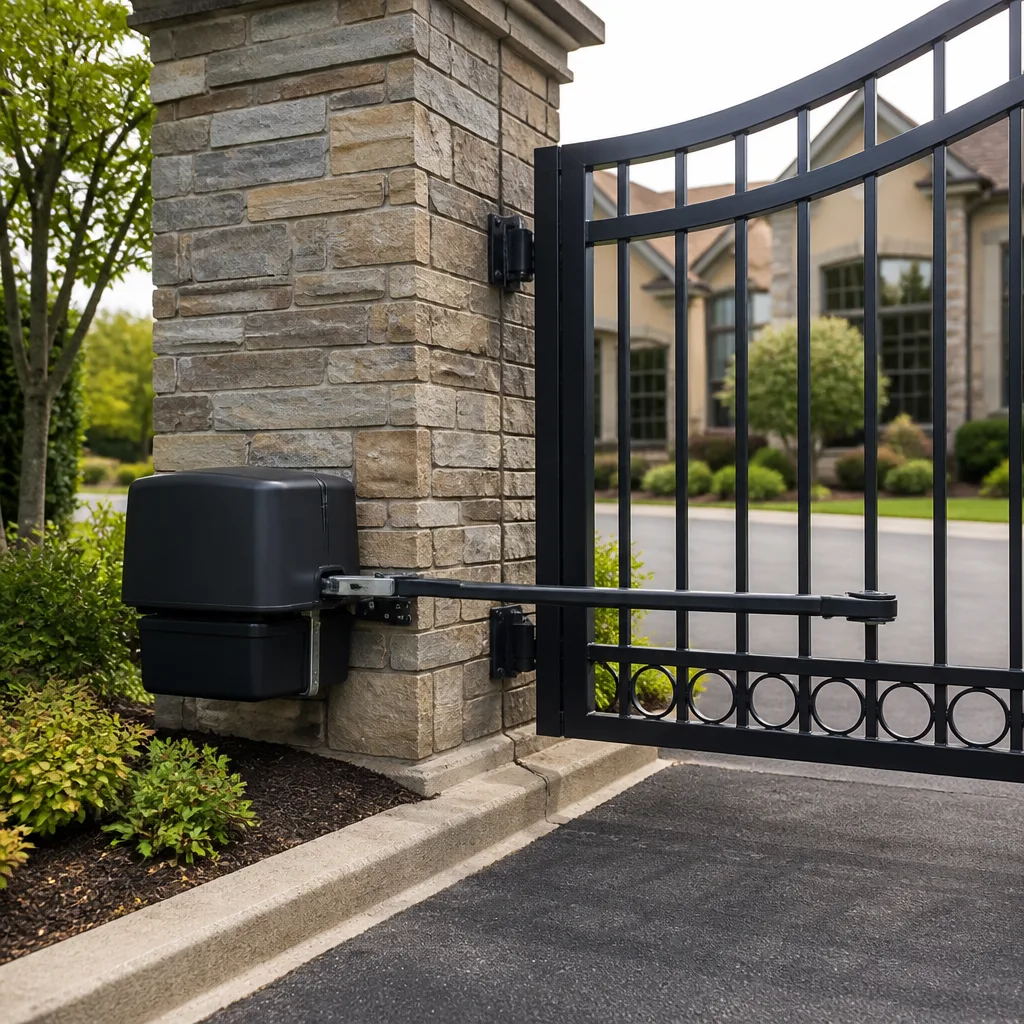 LiftMaster operators
Free on-site gate assessment - hinges, posts, and your LiftMaster or Nice gate operator checked before anything is quoted
The assessment is free and the quote is the invoice.
Get your free estimateStyles & brands we work with
- Wrought iron
- Wood & steel frame
- Farm & ranch
- Sliding driveway gates
- LiftMaster operators
See the difference
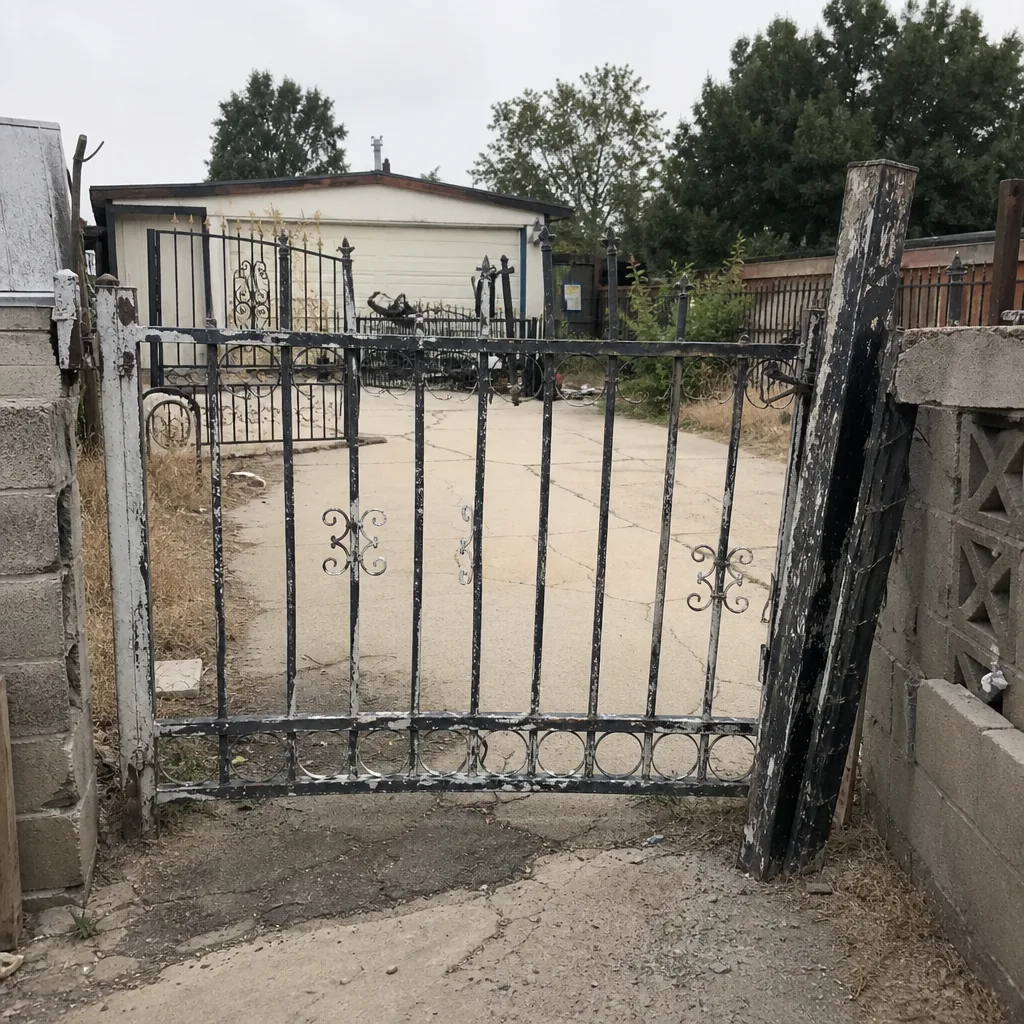 Before
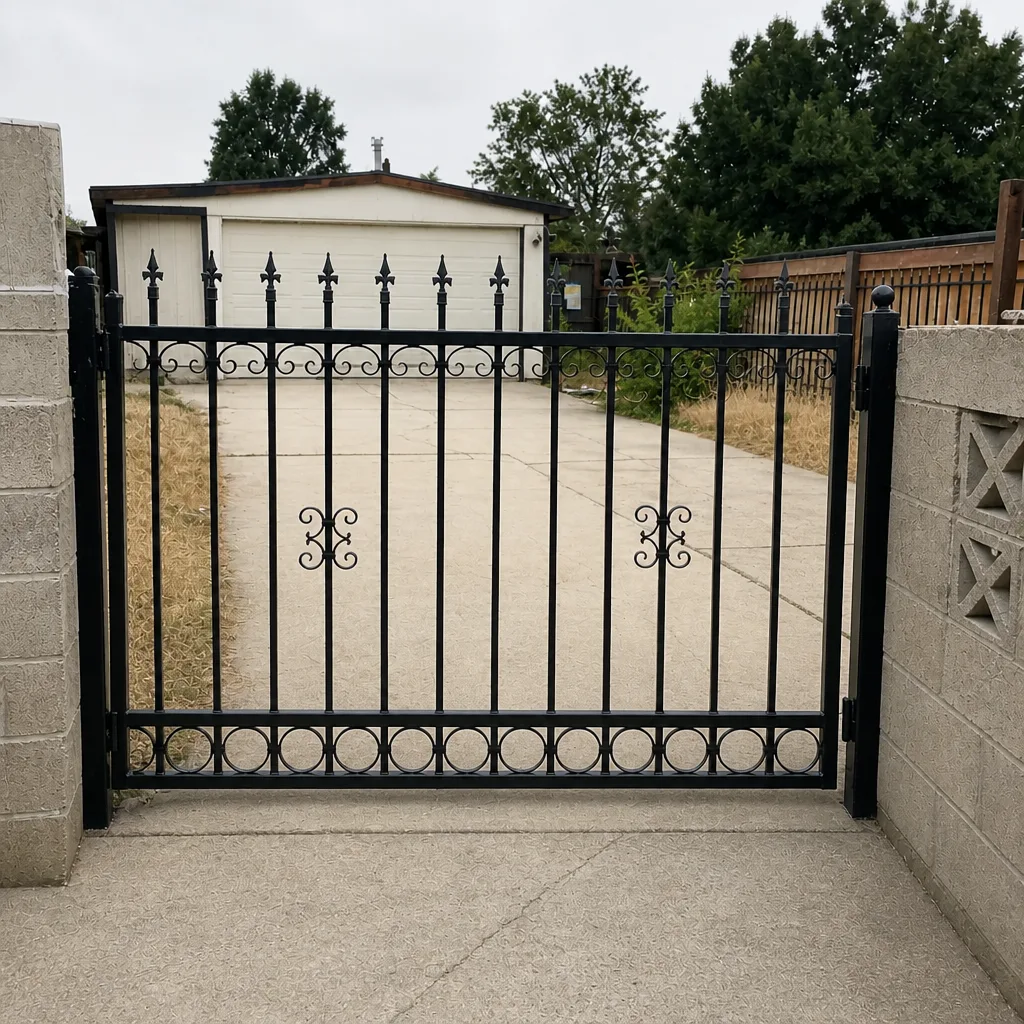 After
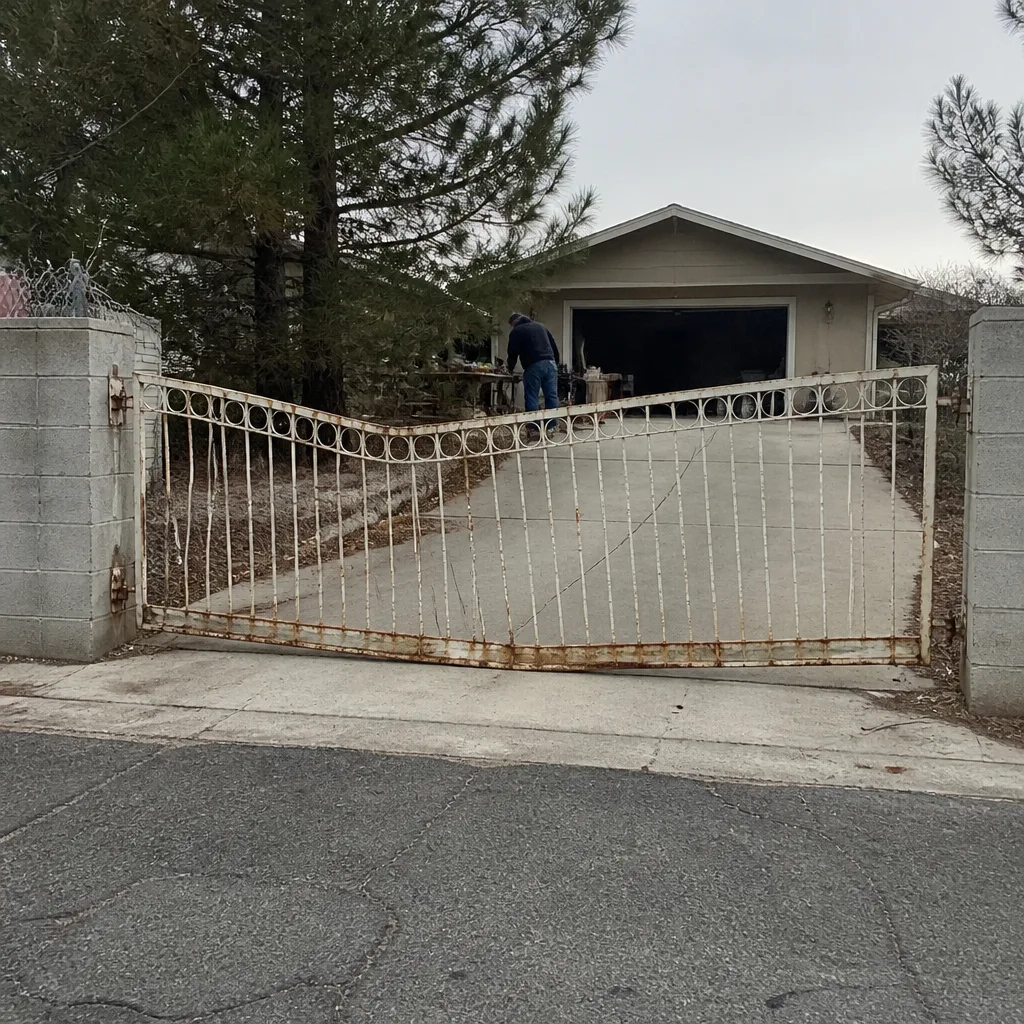 Before
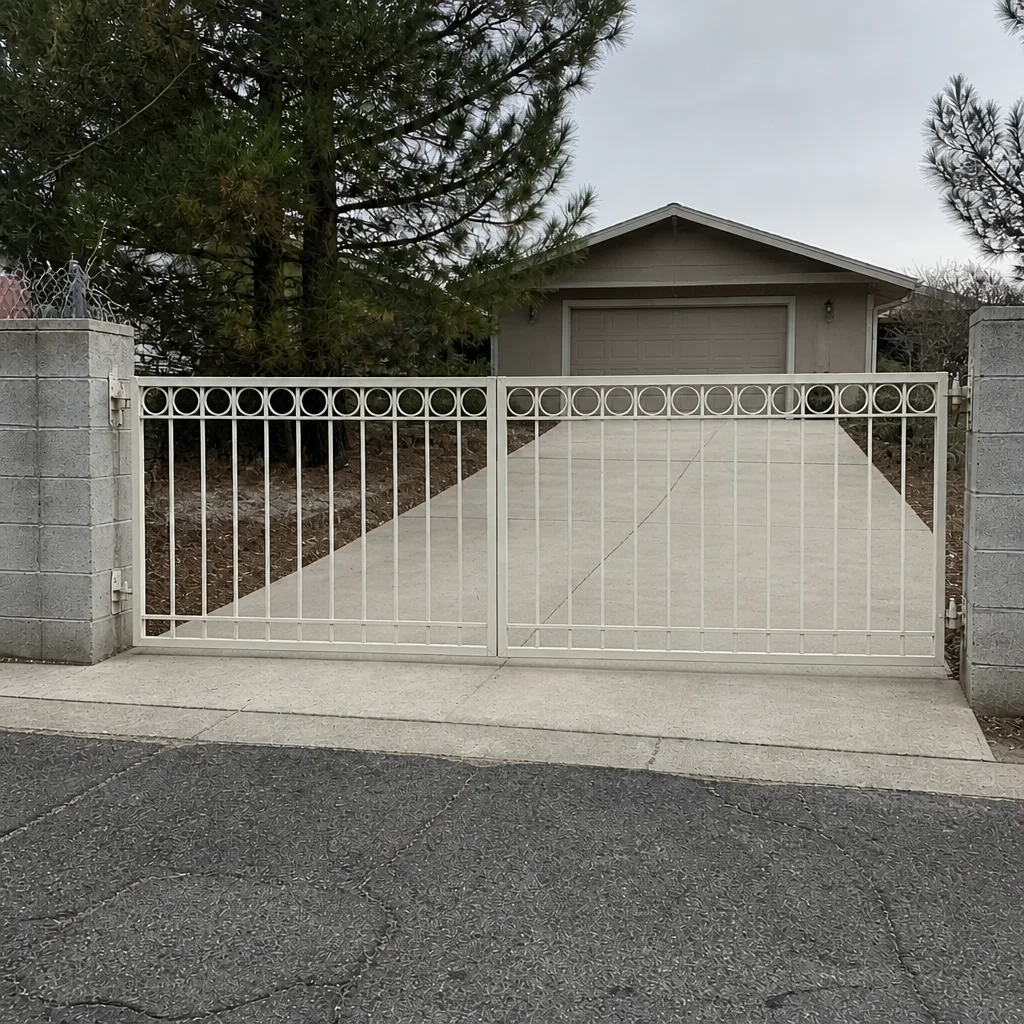 After
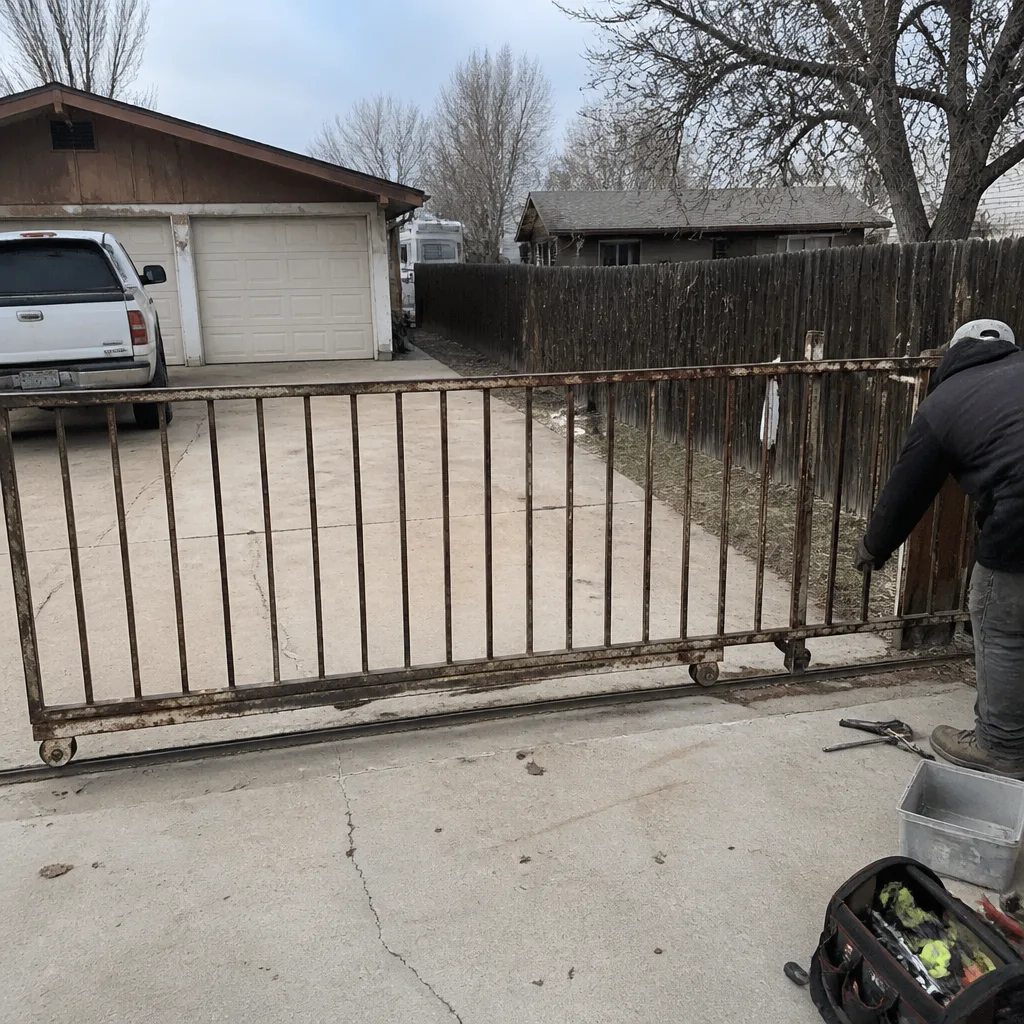 Before
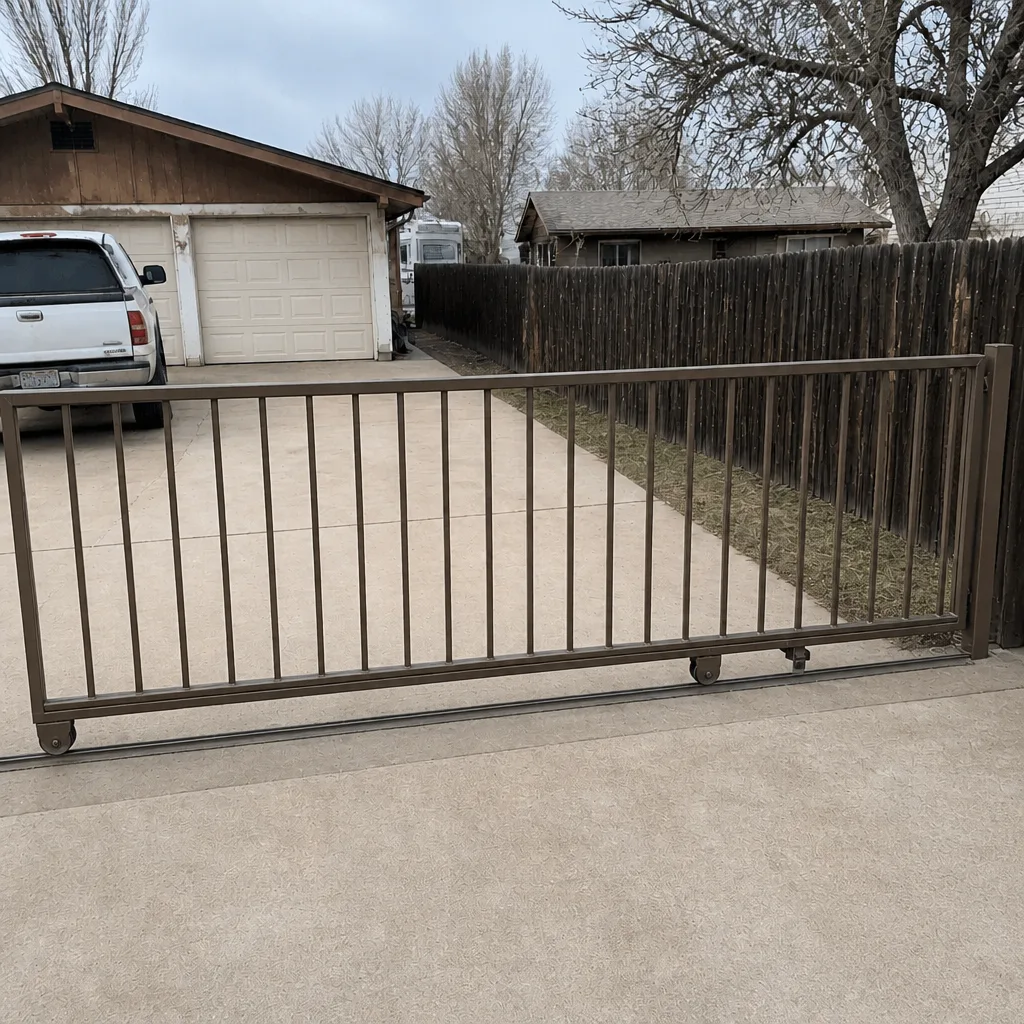 After
How an Automatic Gate Opener Works in Winchester, NV
An automatic gate opener works by turning a small control signal into physical motion: a transformer drops household current to low voltage, a control board decides whether it’s safe to move, a drive motor spins a gearbox that pushes the gate along its track or arm, and a set of sensors tells the board where the gate is and whether anything is in the way. Four subsystems, in other words. Most explainer articles cover the motor and stop there. The other three are where gates around Winchester actually fail, and knowing which one is misbehaving can save you a service call or at least help you ask better questions.
In Winchester’s Mojave heat, the parts that give out first are usually a tired capacitor, a dust-clogged photo-eye, or a limit switch that’s drifted out of position after decades of sun and expansion. None of those are motor failures, and none of them mean you need a new operator. Here’s the full system, read the way a technician reads it.
What each of the four subsystems does
Before the deeper dive, a plain-language map of what’s inside the housing on your gate post:
- Power supply and transformer. Takes 120-volt household power and steps it down to the low voltage the board and motor use. When this fails you get a dead operator and no lights at all.
- Control board with logic and receiver. The brain. It reads the remote, decides direction, times the run, and holds the safety inputs. Firmware version and DIP-switch settings live here.
- Drive mechanism. The motor, a start capacitor, and a gearbox or screw drive. This is the part that actually moves the gate, and the part most people picture when they hear “opener.”
- Safety and position sensors. Photo-eyes, limit switches, and (on some gates) edge sensors. These tell the board when to stop and when to reverse.
If you’re already leaning toward a repair rather than a full read, our Gate Motor & Opener page covers the service side. This page is about understanding what you’re looking at. For everything from motor swaps to board diagnosis, our home page is the starting point.
Why the limit switch is the component nobody explains
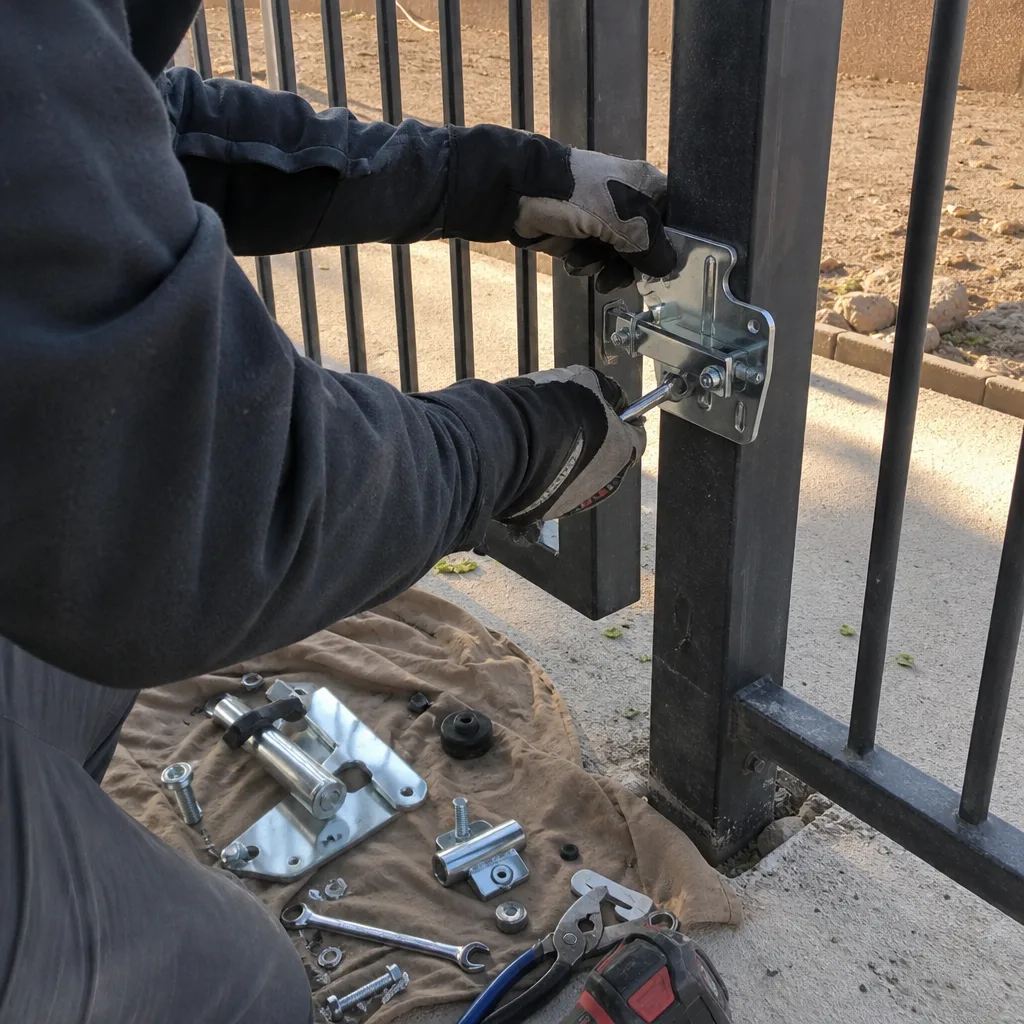
The limit switch is the least-understood part on the whole operator, and it’s the one that causes the most confusing symptoms. It tells the operator where “open” and “closed” are physically located. Not how far the motor has spun, not how long it has run: the actual physical endpoints of your gate.
Now picture a 40-year-old wrought-iron gate on a mid-century tract lot in Winchester. The soil shifts in summer heat. The hinges wear. The gate sags by a quarter inch one season and a half inch the next. The motor is fine. But the limit switch was set when the gate was aligned differently, so the operator now thinks the gate is fully open when it’s still a foot short, or thinks it’s closed when the gate has slammed into the stop post.
Homeowners read this as “the motor is dying.” It usually isn’t. The limit switch is adjustable, and resetting it is a matter of running the gate to true open and true closed, then setting the cams or programming the board to match. The right way to fix it is to also photograph the new positions, so the next person (us or anyone else) starts from a known baseline instead of guessing.
One first-hand example
A recent call on a LiftMaster operator at a small commercial property: the gate would open fine but stop about 18 inches short of closing. The board reported it as a “close force” fault. What we actually found was a limit cam that had drifted roughly 12 degrees past the intended travel position, plus a slightly loose hinge that had shifted the gate’s rest position. We reset the cam, tightened the hinge, and documented both. No new motor, no new board.
BeforeAfterPhoto-eyes and the desert dust problem
The photo-eye is the safety sensor: a small infrared beam that runs across the gate path from one side to the other. If something crosses the beam while the gate is moving, the board reads it as an obstruction and reverses or refuses to close. Good design. Straightforward function.
In Winchester, the photo-eye has a chronic enemy: desert particulate. Every dust storm, every gust off the open ground, every monsoon that throws grit sideways deposits a film on the lens face. That film scatters or blocks the beam, the board reads “obstruction,” and the gate won’t close. From the driver’s seat it looks like the operator has failed. Almost every time, the fix is cleaning the lens face and re-aligning the sensors to each other. Two inches of misalignment is enough to break the beam even on a clean lens.
Monthly, not yearly
Cleaning the lens faces is a monthly task in the Mojave, not a yearly one. Wiping them down with a soft cloth takes a minute. If you have an early-automatic or retrofitted operator on an older chain-link security gate (common on the smaller commercial strips around Winchester), the photo-eyes are often mounted low where dust settles faster, so this matters even more. If your gate is a Mighty Mule or Elite unit that was installed years ago and hasn’t been touched, expect the beam path to need attention first.
What the capacitor does, and why summer is call season
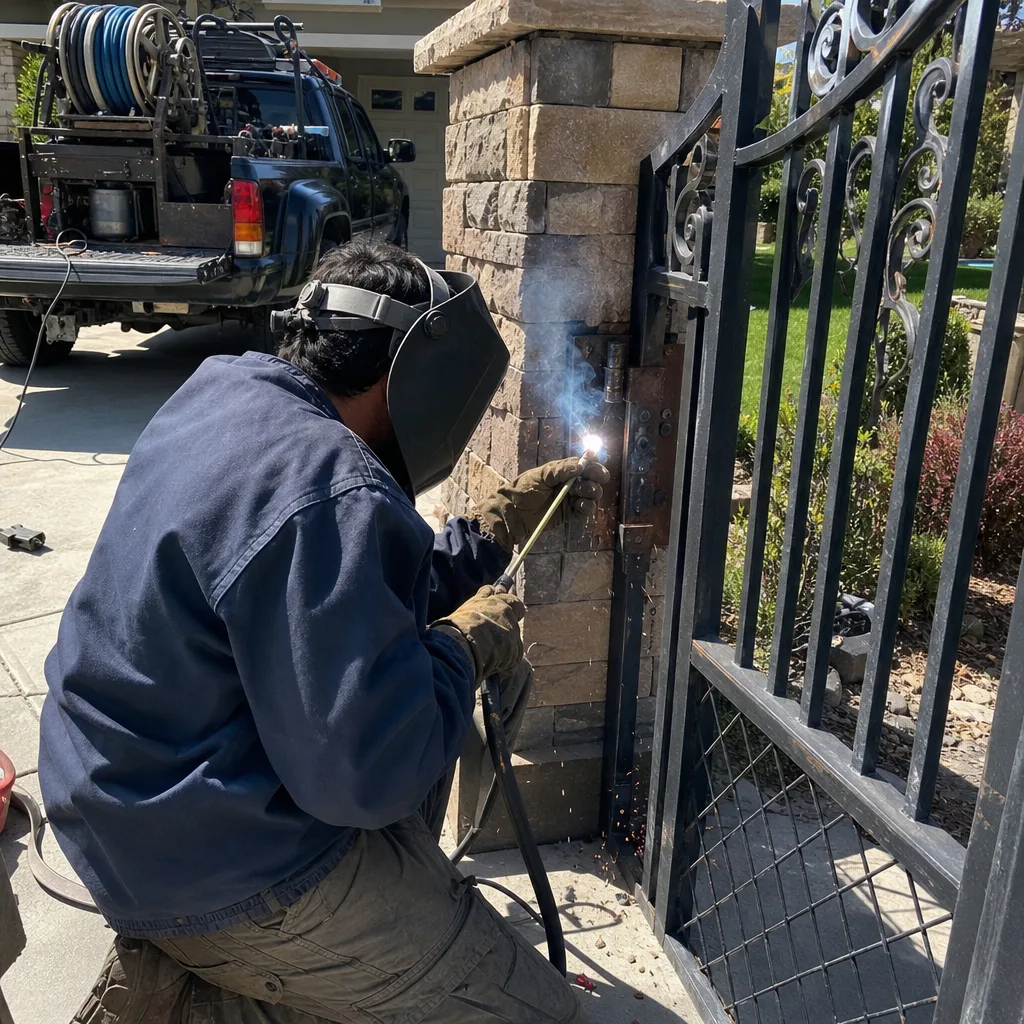
The capacitor stores a charge and releases it at the moment the motor starts, giving the gate the torque burst needed to overcome static friction and begin moving. That’s the whole job. Without a healthy capacitor, the motor hums, stalls, or starts sluggishly.
Here’s the Mojave-specific part: sustained heat degrades capacitors faster than anything else in the operator housing. A capacitor that would last ten years in a coastal climate can fail in four or five in Winchester’s summer heat, especially when the housing sits in direct afternoon sun on a west-facing gate post. This is why late June through September is the peak call window for gate operators here. When a homeowner tells us “it worked fine in April and now it just clicks,” a bad capacitor is the first thing we check.
Rough cost bands for the common repairs
These are the ranges we typically see on residential and light-commercial operators in Winchester. Actual pricing depends on brand, access, and what else the diagnosis turns up:
| Repair | Typical range |
|---|---|
| Photo-eye cleaning and re-alignment | $85 - $150 |
| Limit switch reset and documentation | $125 - $220 |
| Capacitor replacement | $140 - $260 |
| Control board diagnosis and firmware review | $180 - $340 |
| Swing-gate motor replacement (arm bracket intact) | $650 - $1,400 |
Every one of those figures is a written price before work starts. That’s the point of the way we quote. No “call for pricing,” no invoice at the end that reads different from the number on the phone.
Why documentation changes the math on repeat calls
Every component described on this page has a setting or a reading that can be recorded. Limit switch position. Photo-eye alignment. Board firmware version. Capacitor date. Motor amperage draw at start and at run. When a technician writes those values down and photographs the actual components, the next service call starts from a known baseline instead of a cold start.
That’s a habit that carried over from commercial access-control work, where DoorKing and LiftMaster installations on gated sites required the same discipline. On a residential driveway in Winchester it means a photo log every visit showing what was found, what was adjusted, and what was replaced. When a limit switch drifts again a year later, nobody has to re-discover the original setting: it’s in the record. That shortens the next visit and shortens the next invoice.
The 365-Day Done Right Promise sits on top of that. If a repair isn’t right, we make it right, no argument and no fee within that window. The documentation is the reason we can stand behind it. We can see what we did.
A simple diagnostic order to walk through yourself
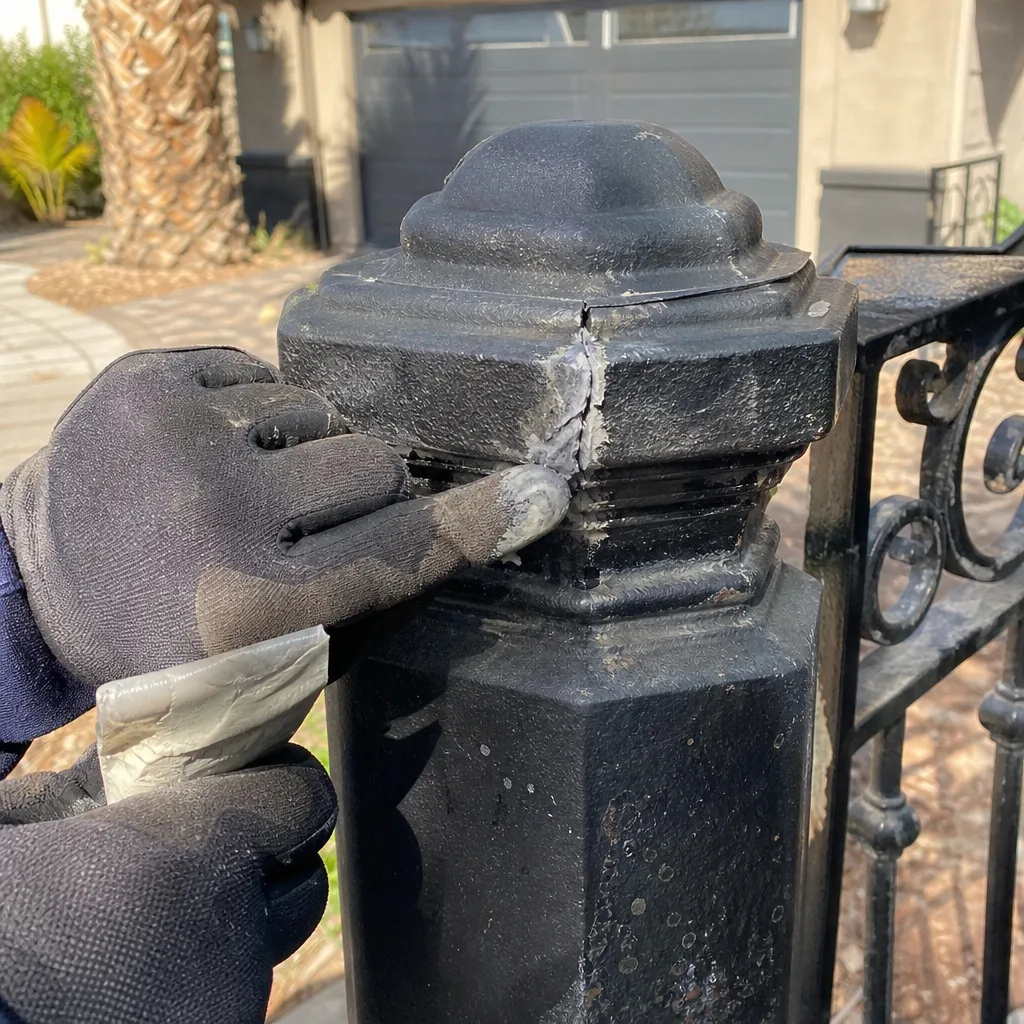
You can check several of these before calling anyone. This list is diagnostic, not a repair guide: don’t open the operator housing or touch the capacitors, motor wiring, or high-voltage side. Those carry a real shock and burn risk, and a technician should handle them.
- Check the power. Is the operator getting power, are the batteries fresh in the remote, and does the board LED come on? No LED at all points to power supply or transformer.
- Look at the photo-eyes. Are the lenses visibly dusty or one lens misaligned with the other? A steady amber light on one and off on the other usually means misalignment.
- Watch the gate travel. Does it stop short in one direction, or slam? That’s a limit switch symptom, not a motor symptom.
- Listen for the hum. A hum then nothing, or a sluggish start, is the capacitor or the gearbox, not the remote.
- Note the fault code or behavior. Whatever the board reports, photograph it. It tells the next person whether they’re chasing a sensor or a drive problem.
If steps 2 through 4 point to the same thing twice, it’s time for a technician. If they point to the drive mechanism, that’s a motor-level job. Call us at (866) 983-9213 before a small fix gets billed as a motor replacement somewhere else.
FAQs
An automatic gate opener converts a low-voltage control signal into motion: a transformer steps down household power, a control board reads the remote and safety sensors, a motor and capacitor drive the gate, and limit switches tell the board where open and closed are. When any of the four fails, the gate can behave in ways that look like a motor problem but usually aren’t. For a diagnosis, call (866) 983-9213 and we’ll give you a free written estimate.
A gate that opens but refuses to close is almost always a photo-eye safety issue: dust on the lens, misalignment, or a beam crossing the path that the board reads as an obstruction. In Winchester’s desert climate, dust buildup is the most common cause. If cleaning and re-aligning the lenses doesn’t fix it, call (866) 983-9213 for a same-day assessment and a written range.
Yes. The limit switch is adjustable, and on older Winchester gates a sagging or shifted gate just means the switch is no longer aligned to the true endpoints, not that the motor has failed. A reset and re-documented limit switch usually resolves the symptom. Call (866) 983-9213 for an exact quote; estimates are free.
Repair is usually cheaper when the fault is in the sensors, capacitor, or limit switches, which covers most calls. Replacement only makes sense when the operator is beyond parts support or the board has failed in a way that isn’t cost-effective to swap. For older DoorKing, LiftMaster, or Mighty Mule units, a repair is often the better move. Bring us a written estimate from another company and we’ll give you a free second opinion.
If you’d rather have it looked at
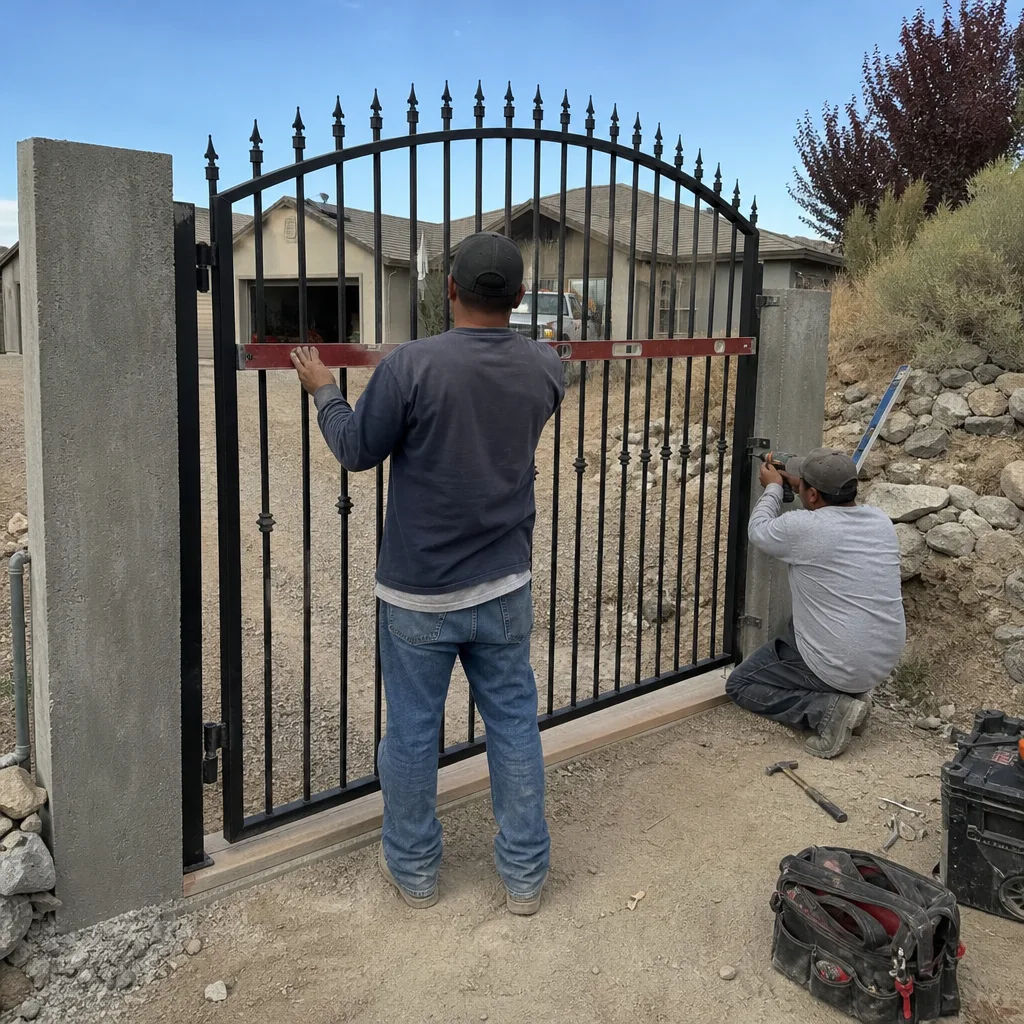
If you’d rather have it looked at, Vance Gate Repair Winchester offers a no-pressure assessment in Winchester – call (866) 983-9213 for a free written estimate. Our technicians have up to 12 years of experience, and every visit leaves you with a photo log of what was found, what was set, and what was installed.
Written by the team at Vance Gate Repair Winchester, serving Winchester, NV.