
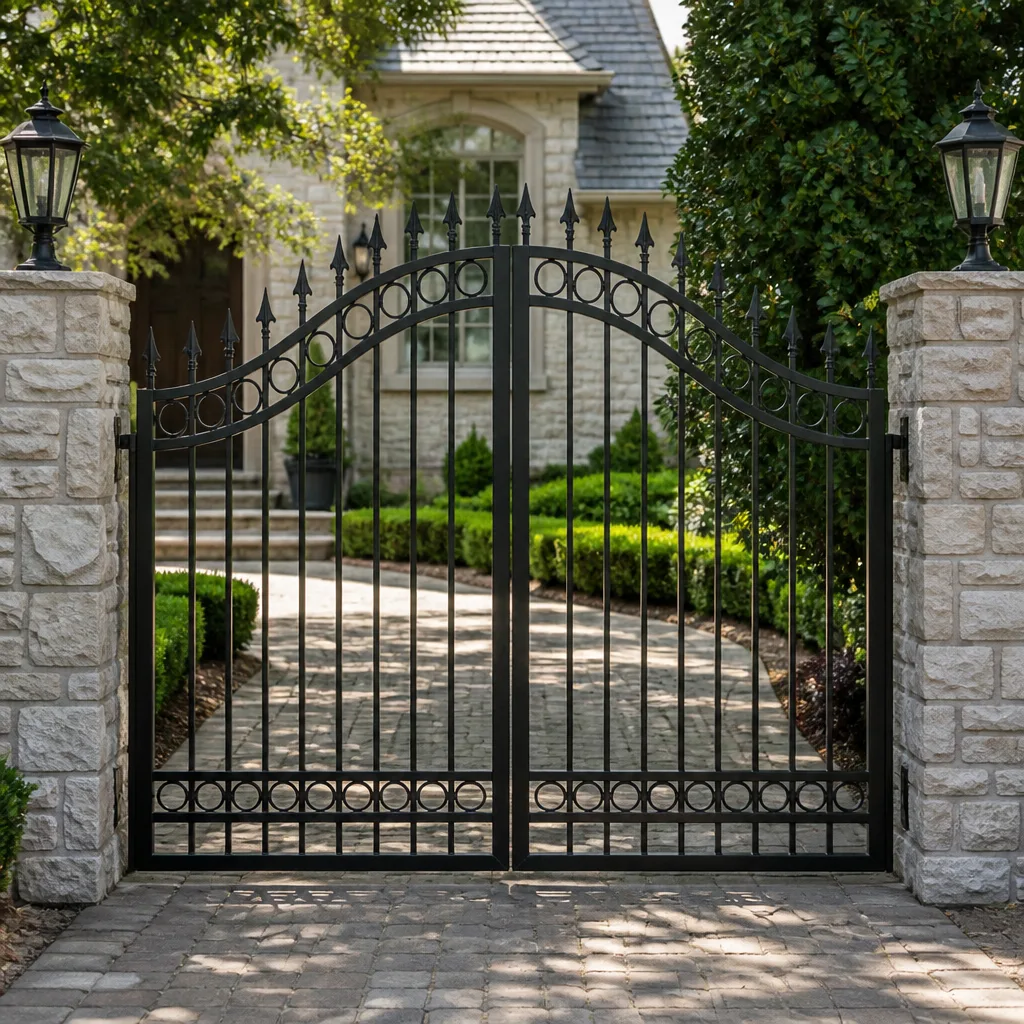
 Wrought iron
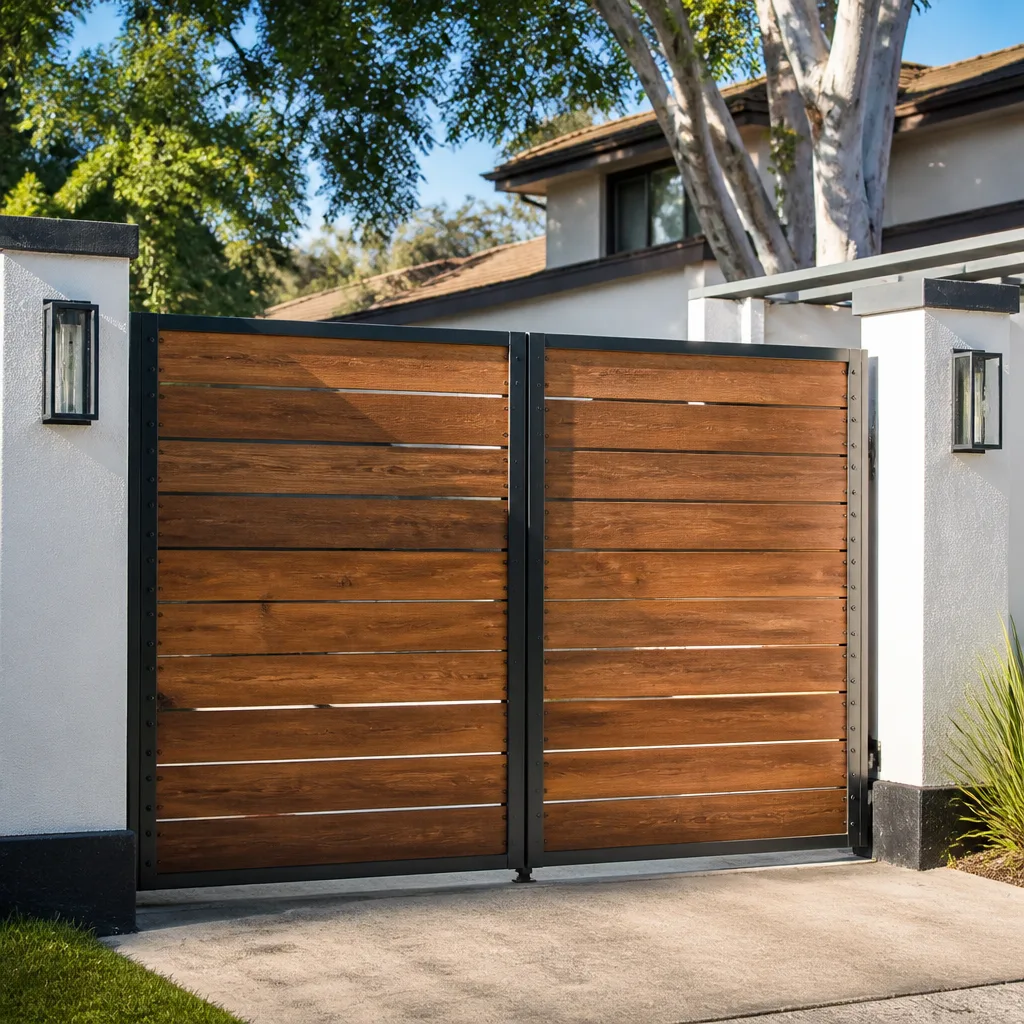 Wood & steel frame
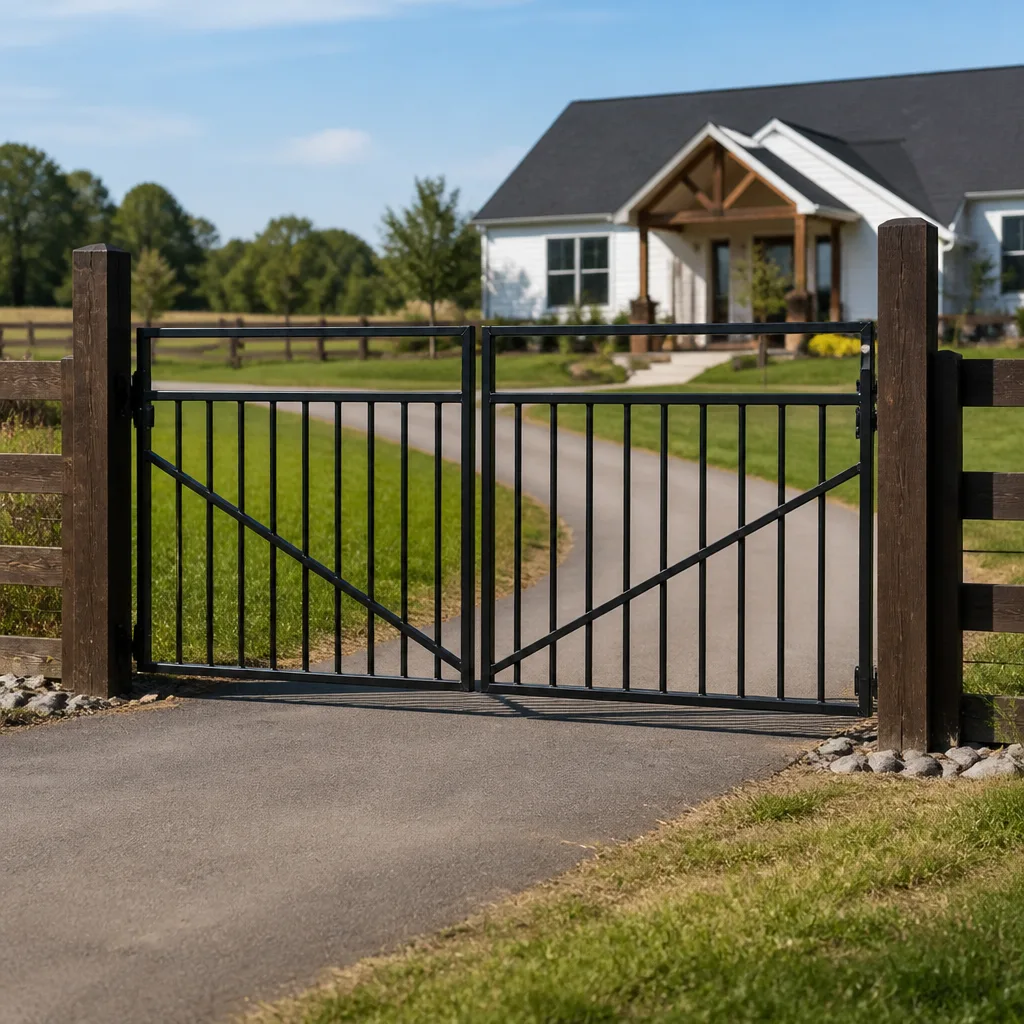 Farm & ranch
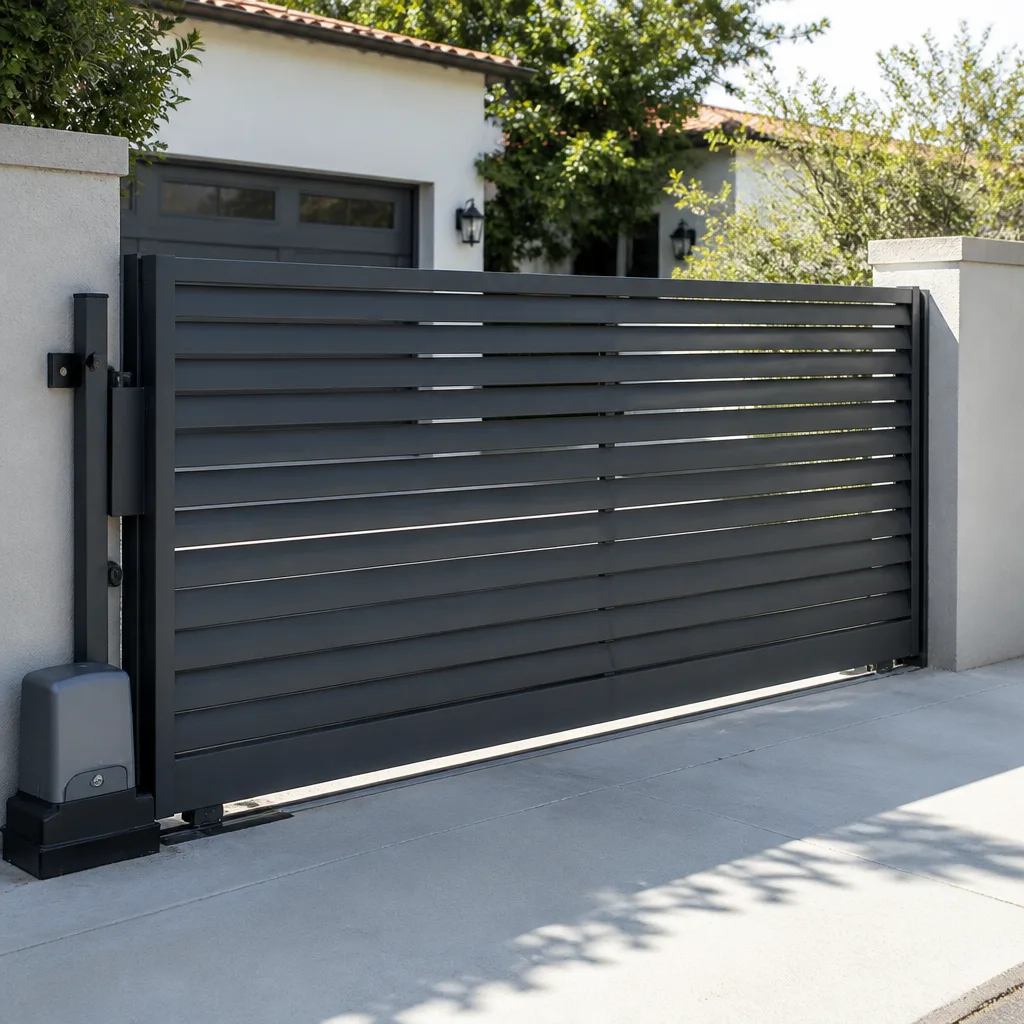 Sliding driveway gates
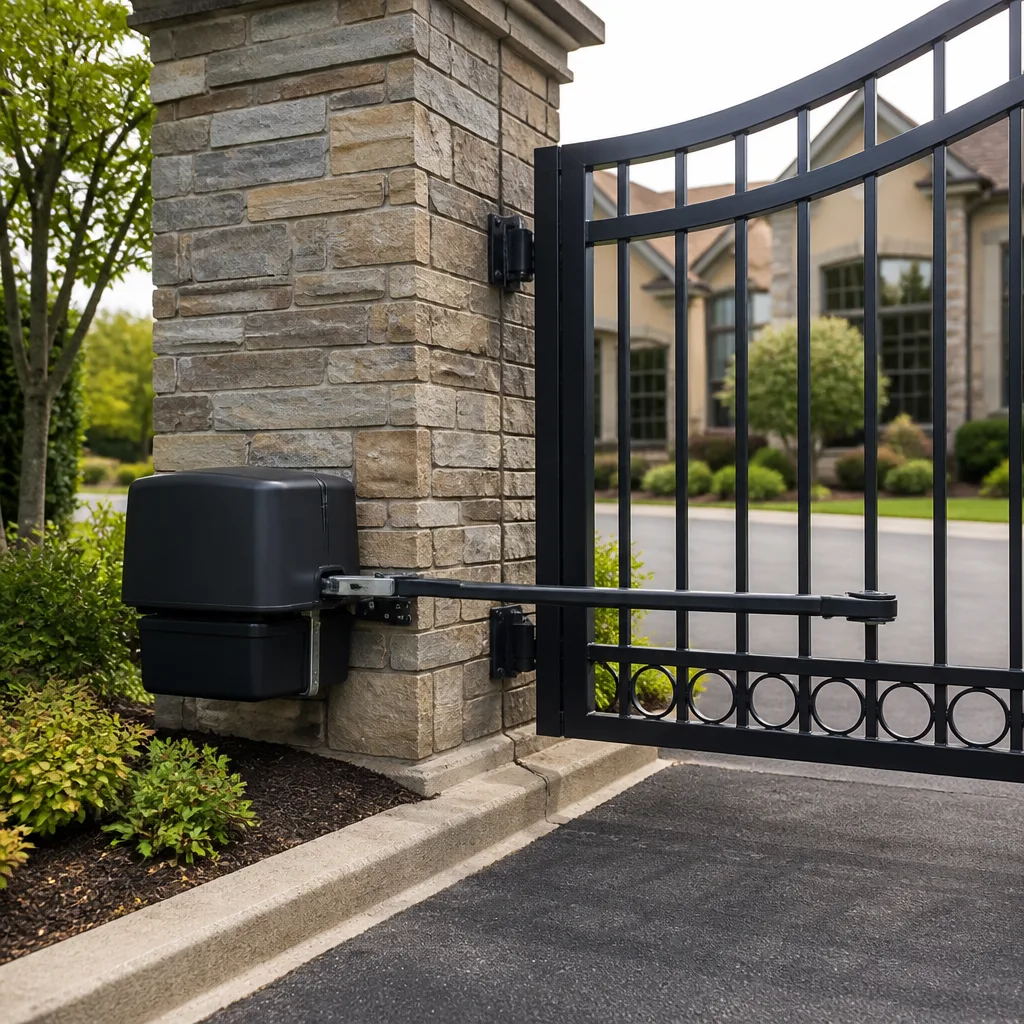 LiftMaster operators
Free on-site gate assessment - hinges, posts, and your LiftMaster or Nice gate operator checked before anything is quoted
The assessment is free and the quote is the invoice.
Get your free estimateStyles & brands we work with
- Wrought iron
- Wood & steel frame
- Farm & ranch
- Sliding driveway gates
- LiftMaster operators
See the difference
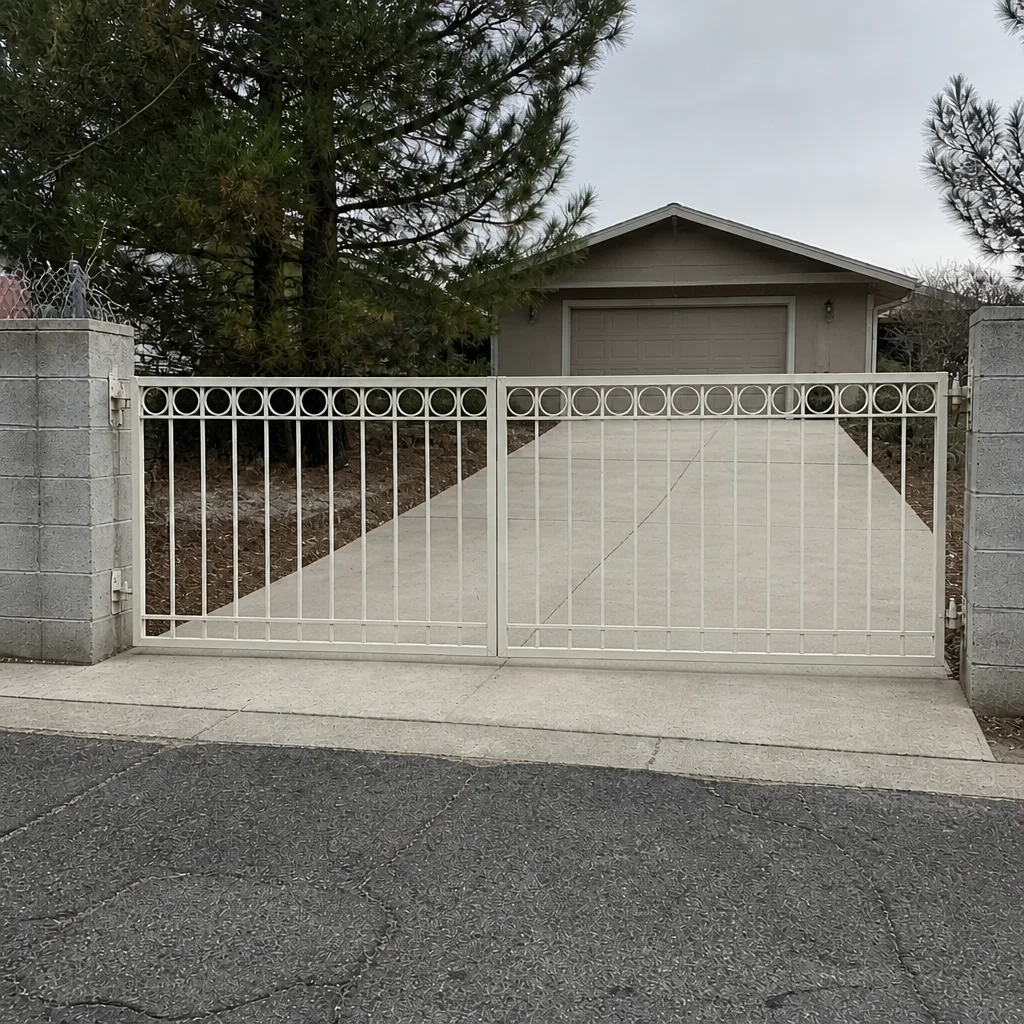
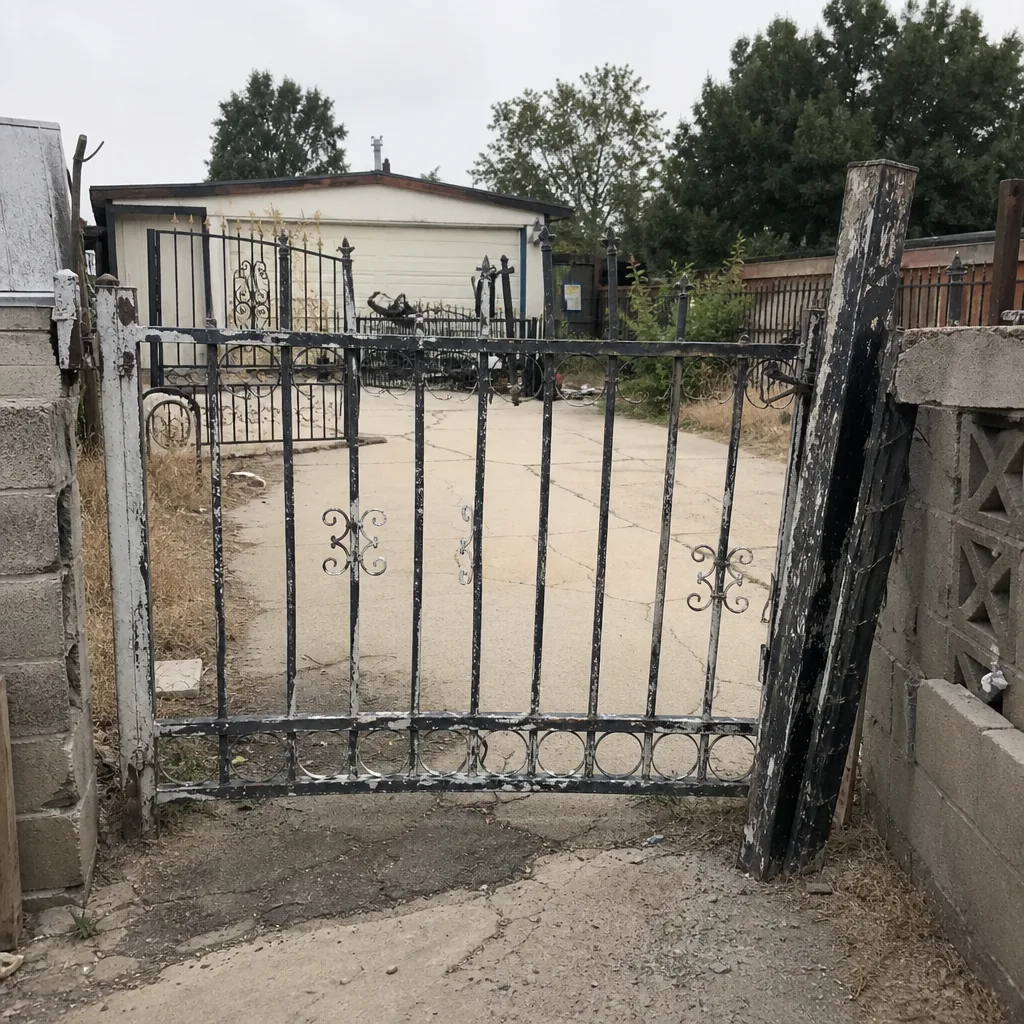 Before
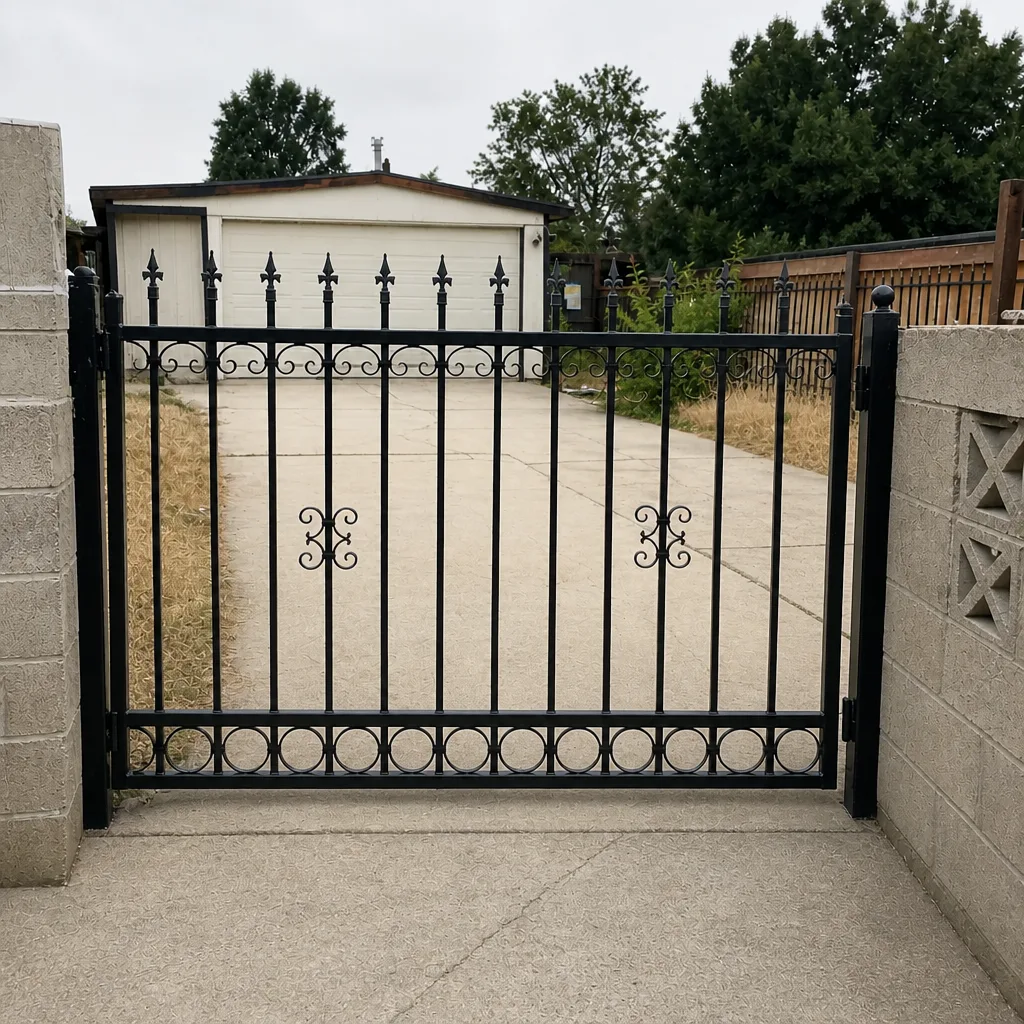 After
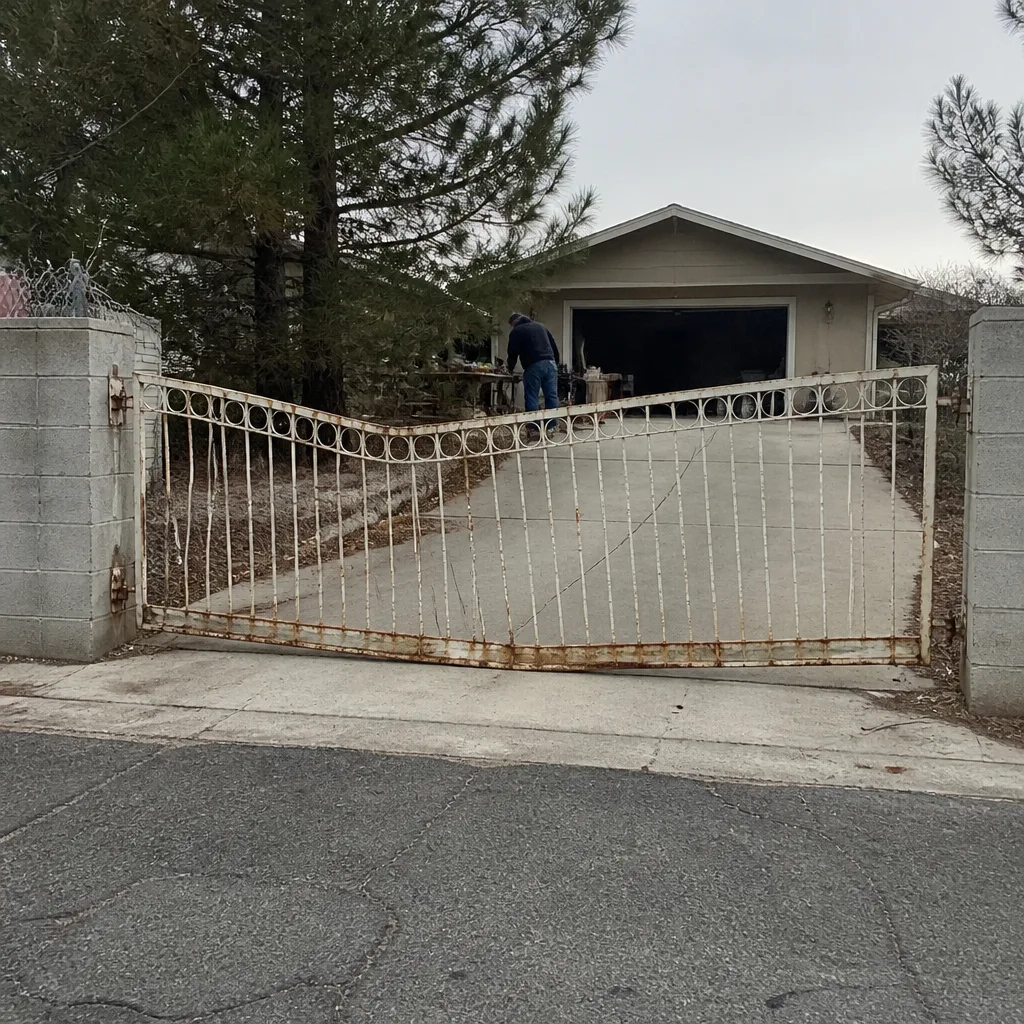 Before
 After
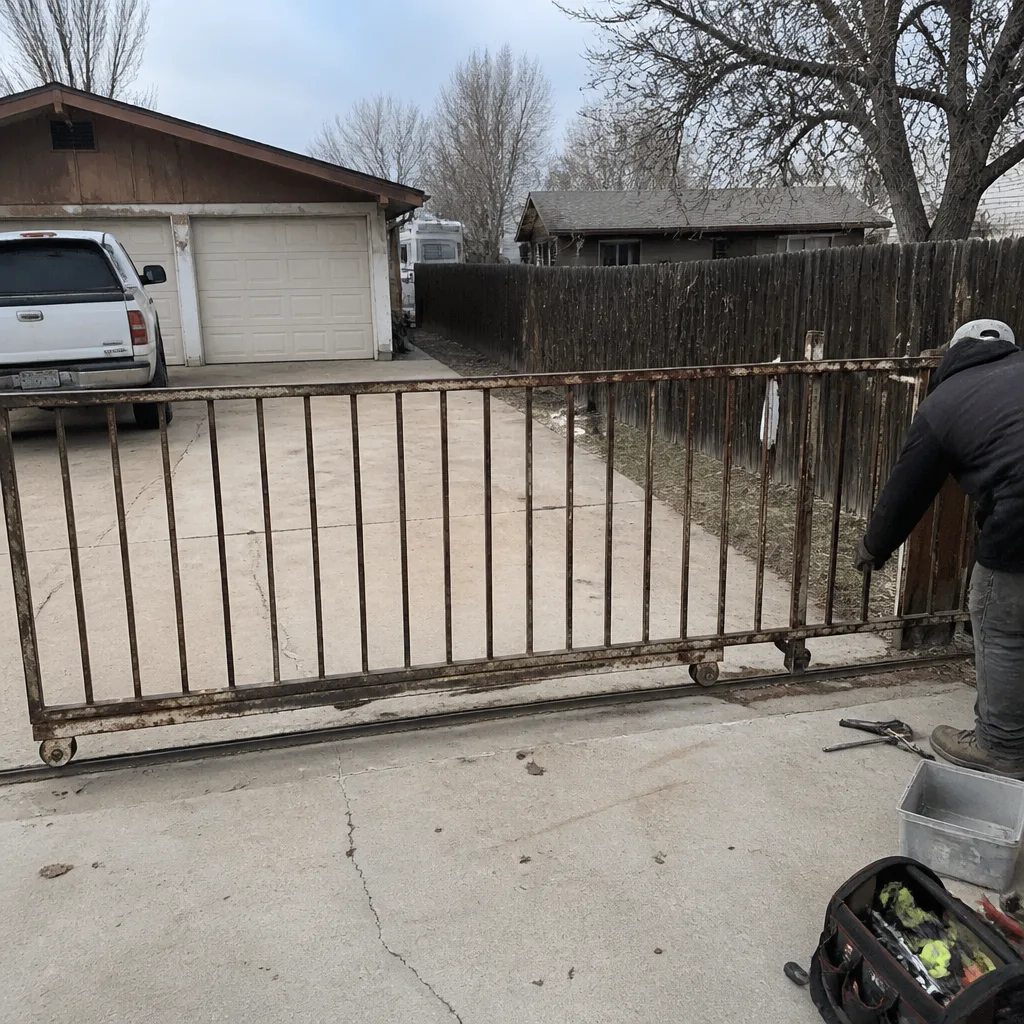 Before
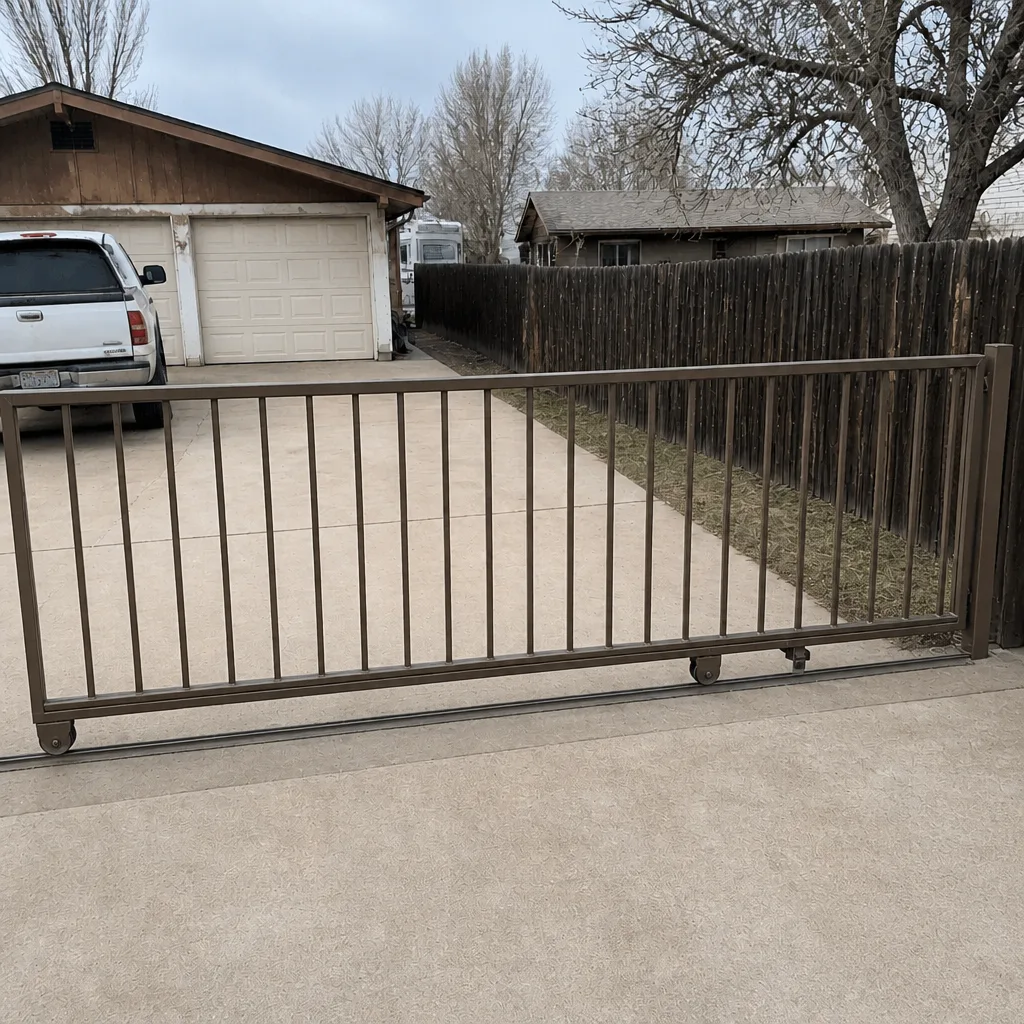 After
Wrought Iron vs Aluminum Gates in Winchester, NV: Which Actually Costs Less Over Ten Years?
Choose aluminum if your Winchester gate is a driveway or pedestrian gate on a 1950s-1970s tract home. Choose iron only if the gate protects a small business and needs to resist vehicle impact. The reason is local and specific: most original Winchester iron gates were never hot-dip galvanized. They were brush-painted mild steel, and on a 1965 tract lot that gate has been wicking caliche moisture for roughly half a century. Aluminum sidesteps that corrosion timeline entirely. Call (866) 983-9213 and we’ll tell you which type you actually have before you decide anything.
Why Winchester Iron Gates Age Differently Than the Comparison Articles Admit
The wrought-iron-versus-aluminum debate usually gets written by people picturing a properly galvanized iron gate. That gate holds up. But Winchester’s original housing stock is 1950s-1970s single-family tract homes on small lots, and the gates on those lots were overwhelmingly fabricated as brush-painted mild steel. Hot-dip galvanizing adds cost and process, and in an unincorporated township with no formal HOA oversight pushing for better materials, the cheaper fabrication won.
That distinction is everything. Hot-dip galvanized iron gets a sacrificial zinc layer that corrodes first and protects the steel beneath. Brush-painted mild steel has one thin barrier, and once the paint film cracks, moisture reaches bare metal and the rust starts from the inside of the film. Probe the bottom rail of a 1965 Winchester gate with a screwdriver and you’ll often find the steel has been quietly rusting where it meets soil for decades. What looks like maintenance is really a rehabilitation job.
How to tell which type your Winchester gate is
You don’t need a lab. You need to look in two places.
- Peel a paint flake near the soil line. Mill scale (the dark, flaky oxide layer left on steel from hot rolling) underneath is the signature of mild steel that was never galvanized before painting. Galvanized iron shows a dull gray zinc layer instead.
- Check the welds at the hinges. Original mild-steel gates from the 1960s and 70s often show rust blooming out of the weld bead itself, because mill scale interferes with a clean weld and traps moisture.
- Look at the bottom rail, not the top. Caliche soil holds moisture against the lowest bar longer than rain ever reaches the upper sections. That’s where the story is.
We photograph exactly this on inspection visits – rust condition, mill-scale extent, weld integrity at the hinges – so you have a baseline. Under Clause 4 of The Haven Standard, every visit includes a documented photo record at no additional charge, and that record is what lets you choose between rehab and replacement with evidence in your hand instead of a contractor’s opinion.
The Mojave Humidity-Spike Problem Nobody Talks About
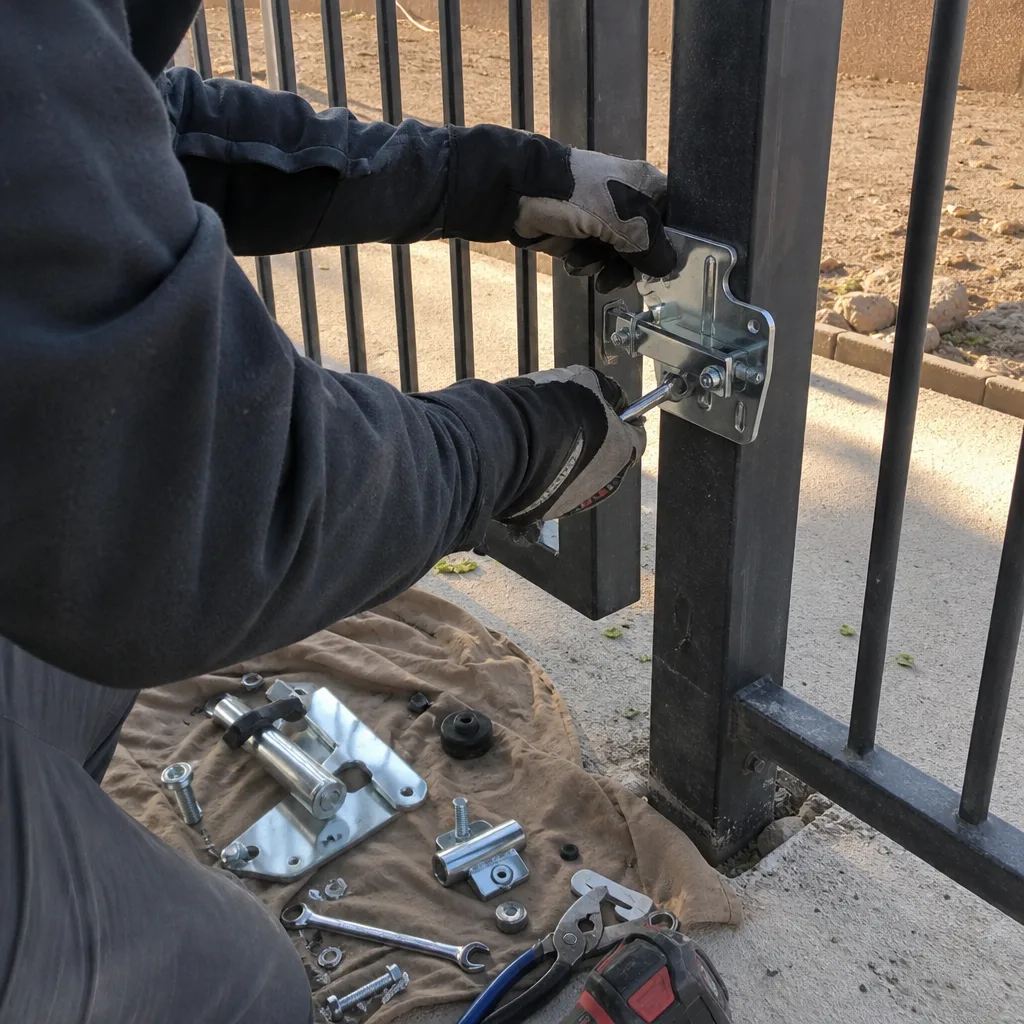
Winchester sits in Mojave Desert climate: intense summer UV, heat, and occasional monsoon wind and flash flooding. The part that matters for iron gates is the swing, not the average. During monsoon season, relative humidity can jump from under 15% to over 60% in a matter of hours, then drop back down. That thermal-moisture cycling is harder on a paint film than steady humidity would be. Paint expands slightly in the damp and contracts in the dry, cracks open along the seams, and the next spike drives moisture into the crack. Repeat that a few hundred times and the barrier coat is gone.
Aluminum doesn’t care. It forms its own oxide layer on exposure and stops there. It doesn’t need galvanizing, it doesn’t rust in caliche, and it weighs roughly 60-70% less than a comparable iron gate. That weight difference has a downstream effect most comparisons skip: a lighter gate draws less motor current, and less current means the operator runs cooler through a Winchester July. If the gate is on a LiftMaster or FAAC arm, that margin shows up as longer motor life and fewer limit-switch drift calls.
BeforeAfterSide-by-Side: Iron vs Aluminum for a Winchester Property
| Factor | Wrought iron (galvanized) | Wrought iron (brush-painted mild steel) | Aluminum |
|---|---|---|---|
| Corrosion in caliche soil | Slow – zinc layer sacrifices first | Active rust at the soil line within a decade | None – oxide layer self-seals |
| Monsoon humidity cycling | Tolerable | Paint film cracks and reopens | Unaffected |
| Weight vs iron | Baseline | Baseline | 60-70% lighter |
| Operator load in summer heat | Higher draw, warmer motor | Higher draw, warmer motor | Lower draw, cooler motor |
| Forced-entry resistance | High at 1.5-inch schedule | High | Lower – yields before iron |
| Typical local cost to replace a 12-ft driveway swing gate | $3,200-$6,500 | N/A – replacement is the better spend | $2,100-$4,400 |
| Typical cost to rehabilitate an existing gate (strip, weld, recoat) | Rarely needed | $900-$2,400 depending on rust depth | Not applicable |
Those ranges are what we see quoted on Winchester jobs for standard residential driveway gates; exact numbers depend on span, picket count, and whether the existing operator is reusable. You’ll get the price in writing before we touch the gate.
Where Iron Genuinely Wins: The Small-Business Case
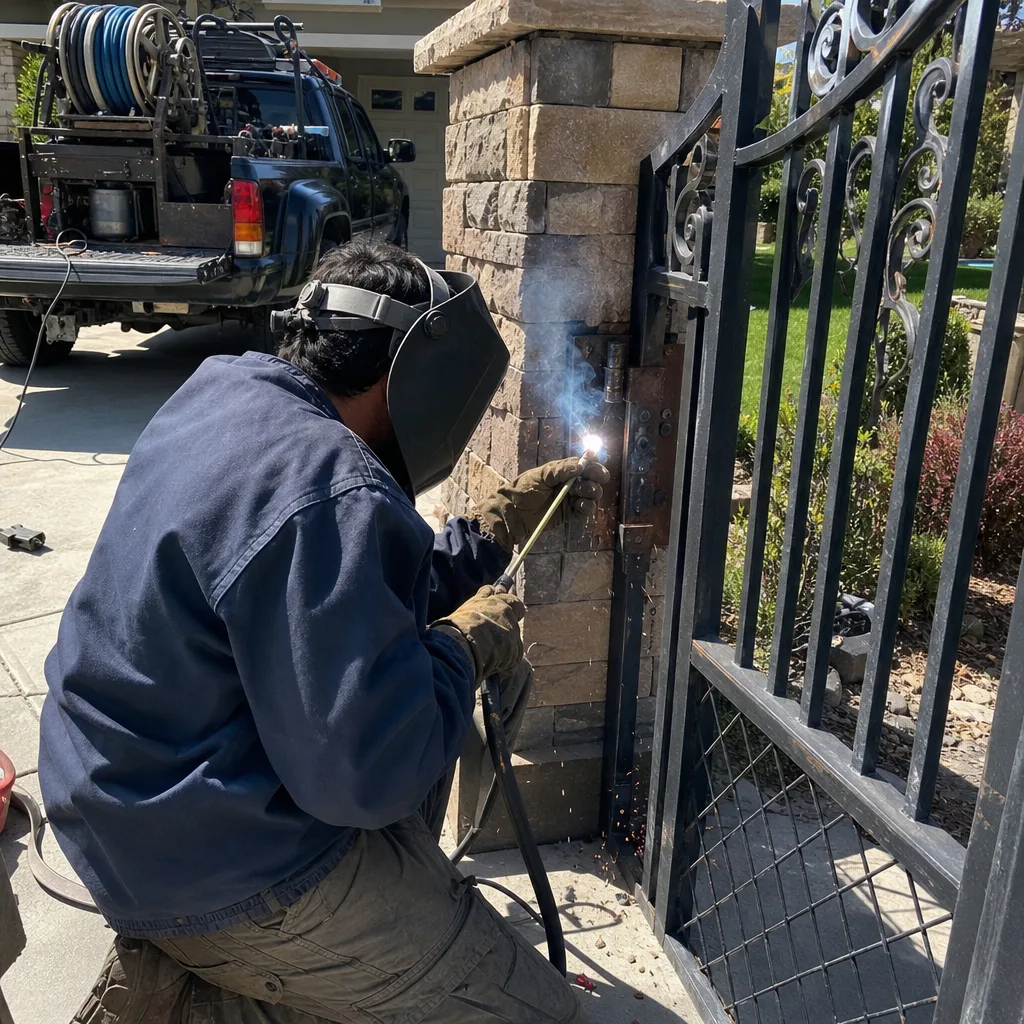
We won’t pretend aluminum is universally better, because it isn’t. Along Winchester’s aging low-rise commercial strips, gates do a different job: they keep a delivery yard or equipment lot closed against someone who is willing to hit the gate. A 1.5-inch-schedule iron gate absorbs vehicle impact and bends; aluminum of comparable visual weight yields and sometimes fails at the weld. Off-the-shelf aluminum residential panels are not built to be rammed.
For a small business on an unincorporated lot, iron is often the right call – and it’s worth noting that permitting on those lots can run through county rather than city channels, which is its own set of quirks. We work on both, and we don’t steer a business toward aluminum just because it’s lighter.
What Happens When a Winchester Gate Won’t Lift or Swing
On the residential side, the gate operator often gives out before the gate does. Here’s how we work through a failure:
- Photograph the existing condition. Rust, hinge welds, and operator mounting get documented before anything is loosened.
- Test the operator’s electrical path. Motor draw, limit-switch readings, and photo-eye alignment (the infrared beam that stops the gate if something crosses the path) get recorded with numbers, not adjectives.
- Separate mechanical wear from control faults. A jammed roller after a dust storm is a different job from a drifted limit switch or an arm bracket that’s cracked.
- Write the scope and the flat price. You see both before any work starts – the whole point of Clause 1, “Have it in writing.”
- Complete the repair and leave the record. You get the photo log of every adjustment and the part numbers installed, and the 365-Day Done Right Promise covers the work for a full year.
We service nine major automation brands, including Mighty Mule, LiftMaster, FAAC, and BFT, so if your gate already has a motor on it, we work with what’s there. If you’re replacing the gate itself, our Gate Installation team handles the fabrication and hang.
How much does a wrought iron or aluminum gate cost in Winchester?
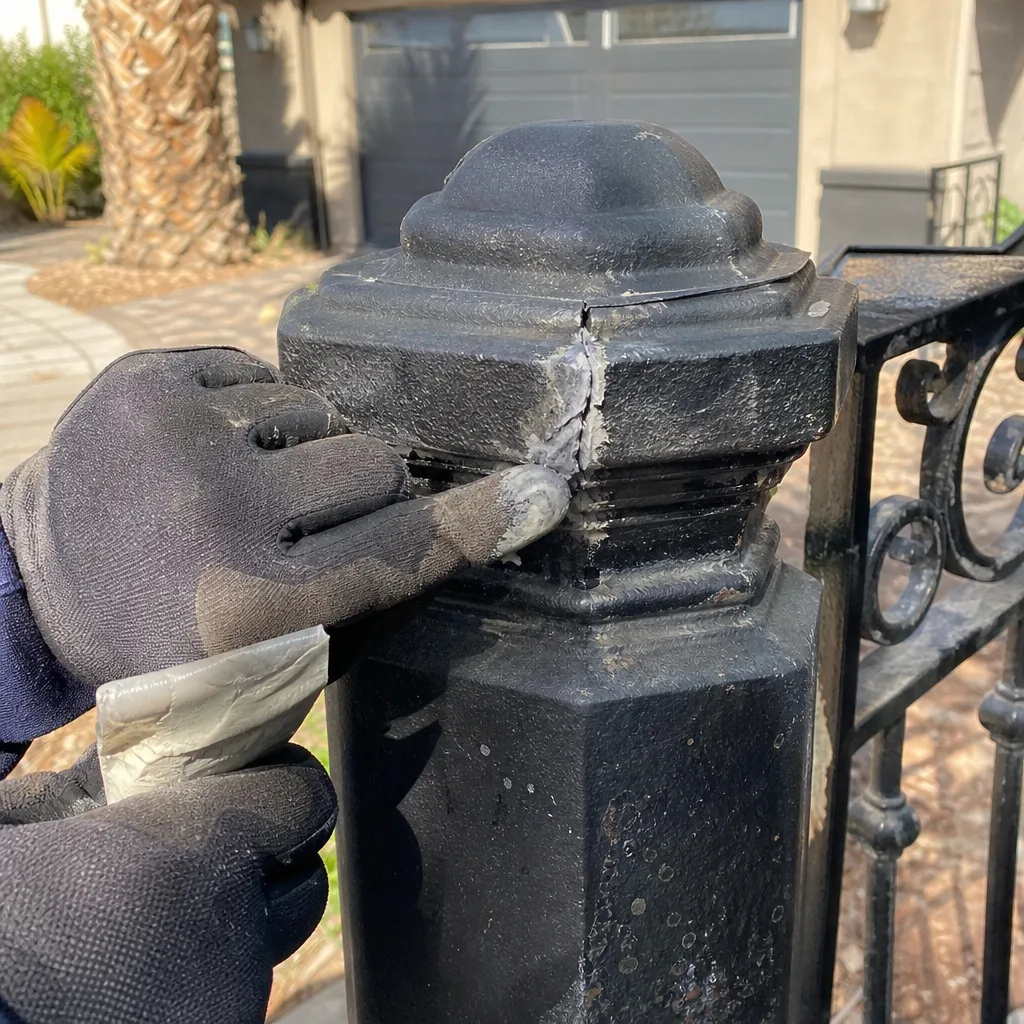
Most Winchester residential driveway gate replacements run $2,100-$4,400 for aluminum and $3,200-$6,500 for iron, and rehabilitating an existing mild-steel gate runs $900-$2,400. The spread depends on gate width, picket style, and whether your operator can be reused. Iron costs more up front and, for an ungalvanized mild-steel gate, more over time. Aluminum costs less to buy and less to keep. If you want the exact number for your gate, call (866) 983-9213 – estimates are free and written.
FAQs
Yes, for a residential gate on a 1950s-1970s tract lot, aluminum almost always costs less over ten years because it never needs rust rehabilitation. An ungalvanized iron gate on caliche soil typically needs a strip-and-recoat or a weld repair within that window, and those visits add up. The exception is a commercial gate that needs impact resistance, where iron’s durability justifies the ongoing upkeep. Call (866) 983-9213 for a free assessment of which side your gate falls on.
Peel a paint flake near the soil line and look for dark mill scale underneath; that means brush-painted mild steel, not galvanized iron. Galvanized gates show a dull gray zinc layer instead. Rust blooming out of the hinge welds is another strong tell. Bring what you find to us and we’ll confirm it on-site with photos – no charge for the look.
For paint film on mild steel, yes – the swing from under 15% to over 60% relative humidity in hours expands and cracks the coating faster than steady humidity does. The gate dries fast in desert sun, paint contracts, then the next monsoon spike drives moisture into the new cracks. Galvanized iron and aluminum both resist this. Call (866) 983-9213 if you’ve seen paint failure along the bottom rail.
Often, yes – and we’ll tell you honestly when it’s the better spend. A mild-steel gate with rust confined to the bottom rail is a strong candidate for rehabilitation: strip, weld, recoat. A gate with mill-scale rust through the hinge welds usually isn’t. Either way, the visit produces a photo record of the rust, mill-scale extent, and weld integrity, so you decide with evidence. Call (866) 983-9213 for a no-pressure assessment.
Get a Written Number Before You Decide
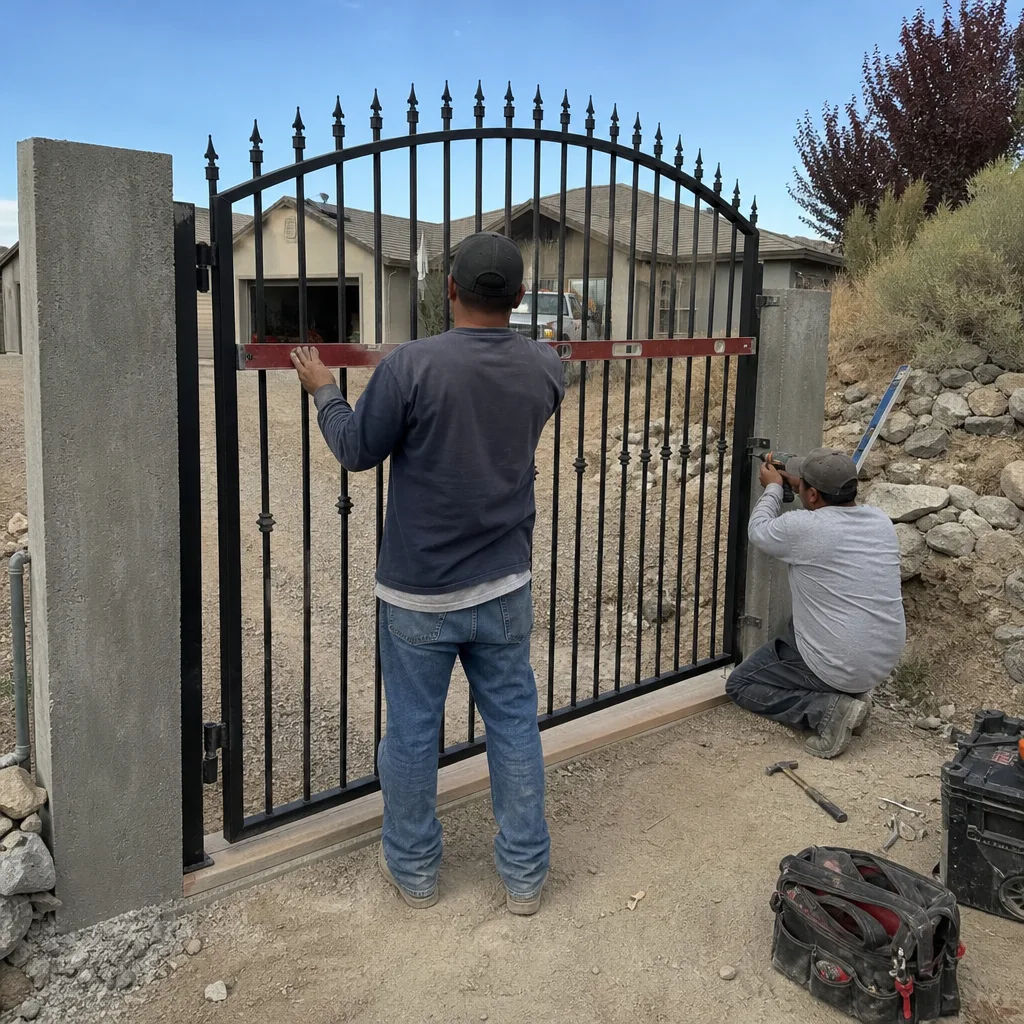
If you’d rather have it looked at than guess, Vance Gate Repair Winchester will photograph what’s actually on your gate – rust, mill scale, welds, operator condition – and leave you with a written price before any work starts. Whether you end up rehabilitating iron or moving to aluminum, you’ll know which is cheaper for your specific Winchester property. Call (866) 983-9213 for a free estimate, and read more about our home and Gate Installation in Winchester work if you’re weighing a full replacement.
Written by the team at Vance Gate Repair Winchester, serving Winchester, NV.