
 Wrought iron
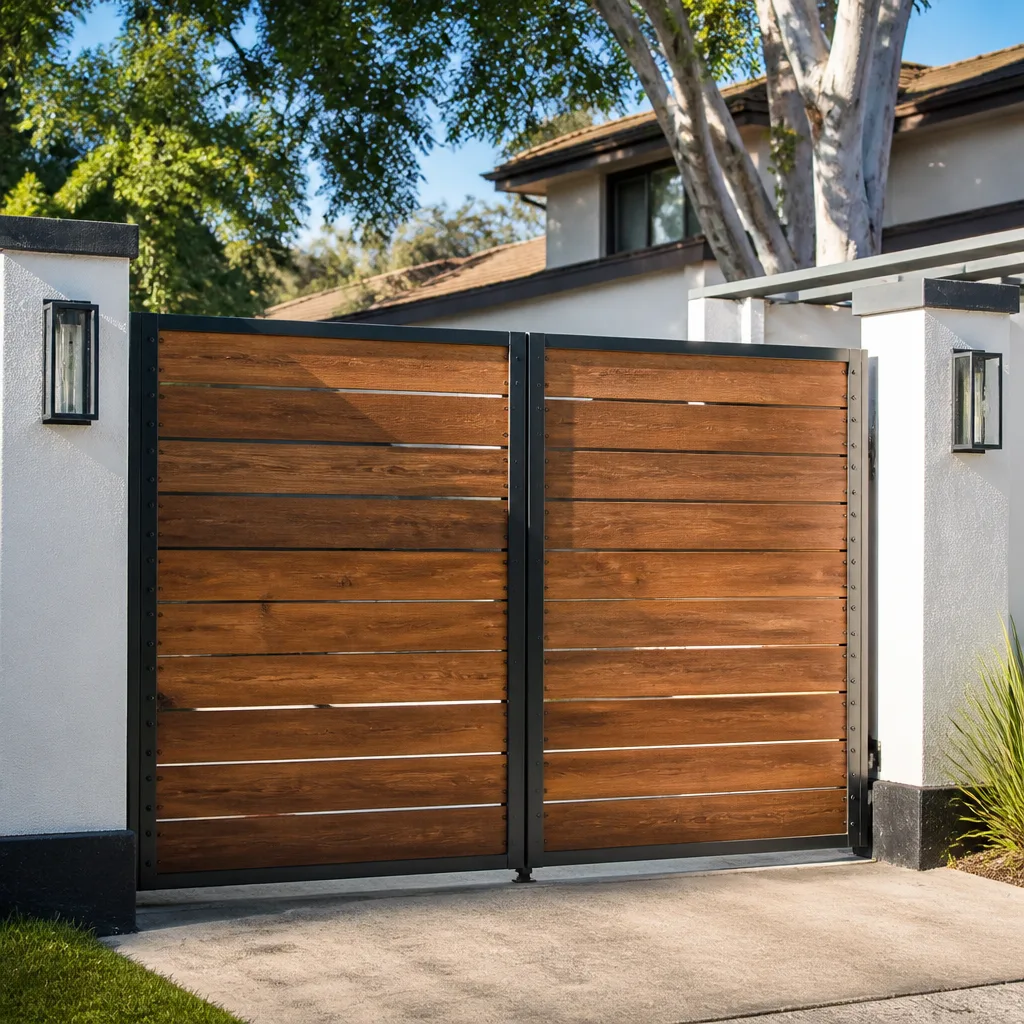 Wood & steel frame
 Farm & ranch
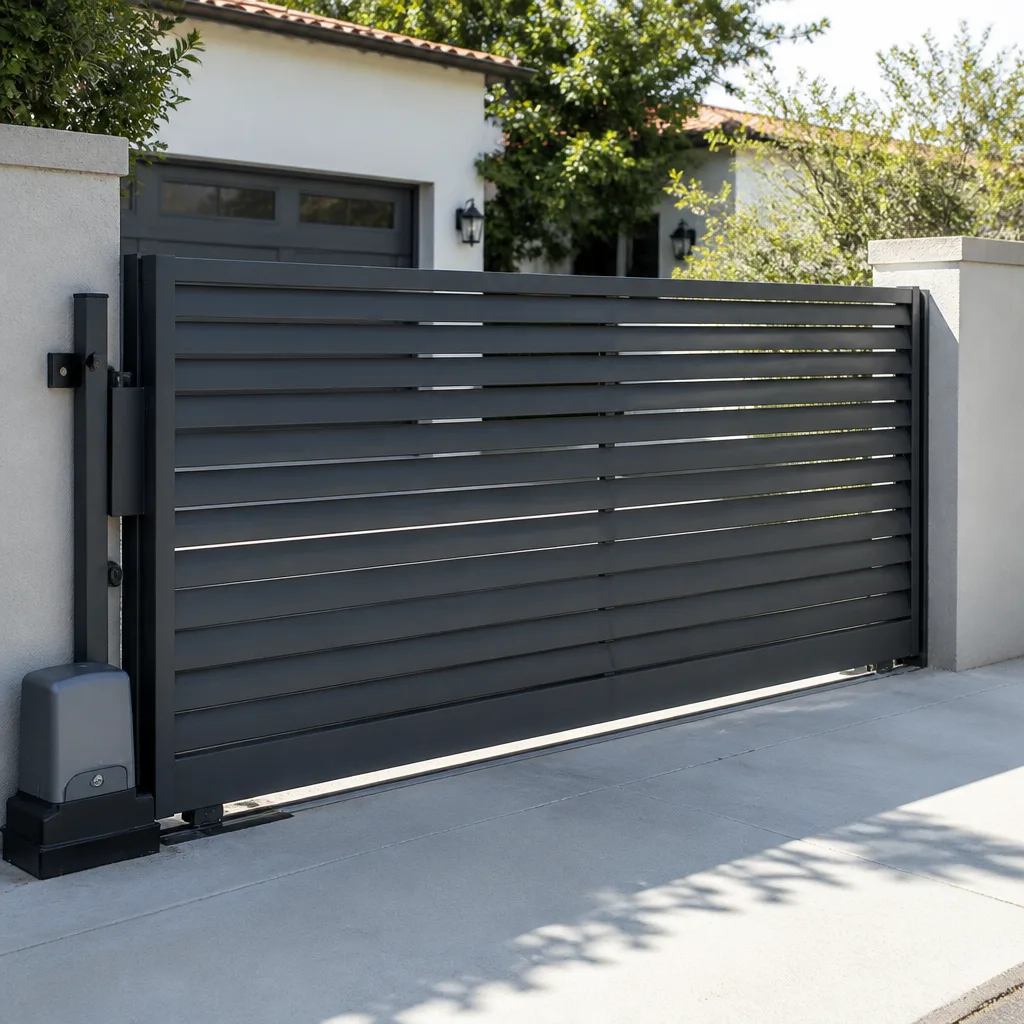 Sliding driveway gates
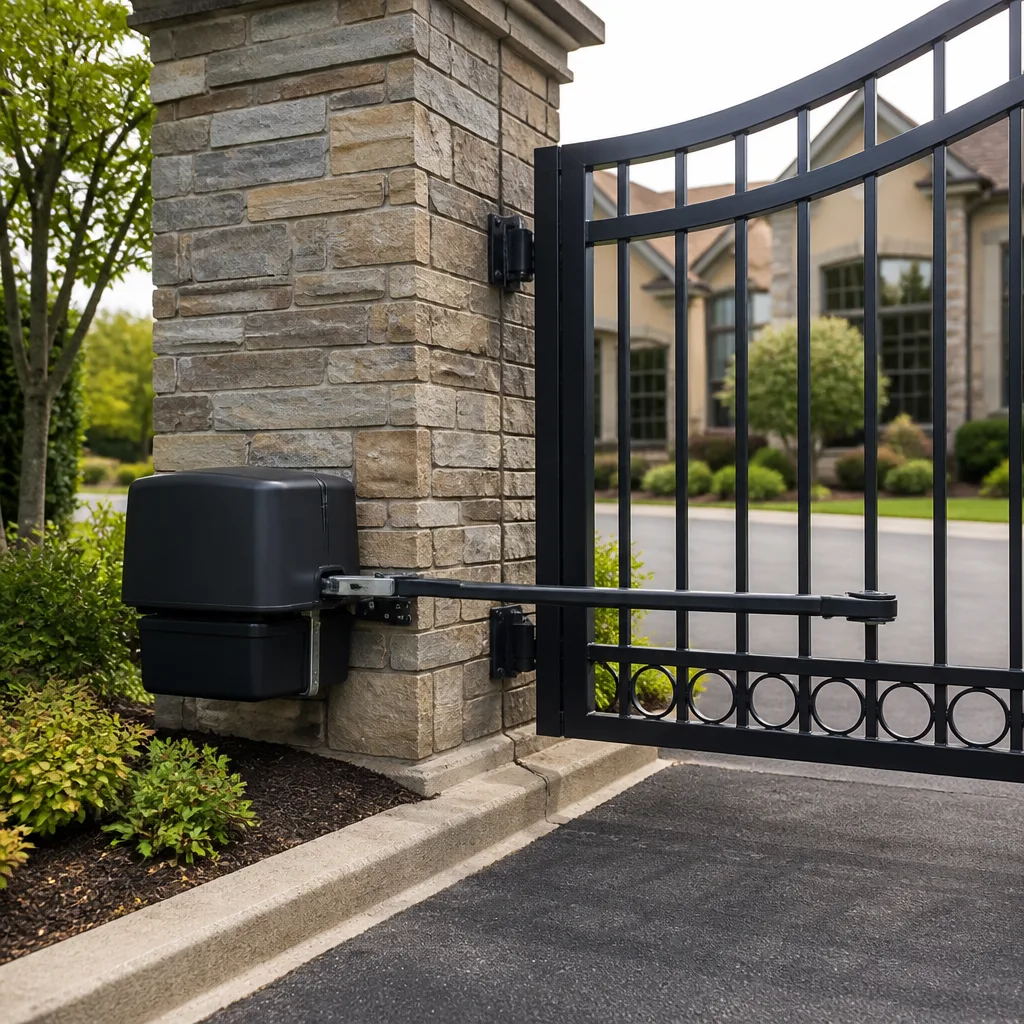 LiftMaster operators
Free on-site gate assessment - hinges, posts, and your LiftMaster or Nice gate operator checked before anything is quoted
The assessment is free and the quote is the invoice.
Get your free estimateStyles & brands we work with
- Wrought iron
- Wood & steel frame
- Farm & ranch
- Sliding driveway gates
- LiftMaster operators
See the difference
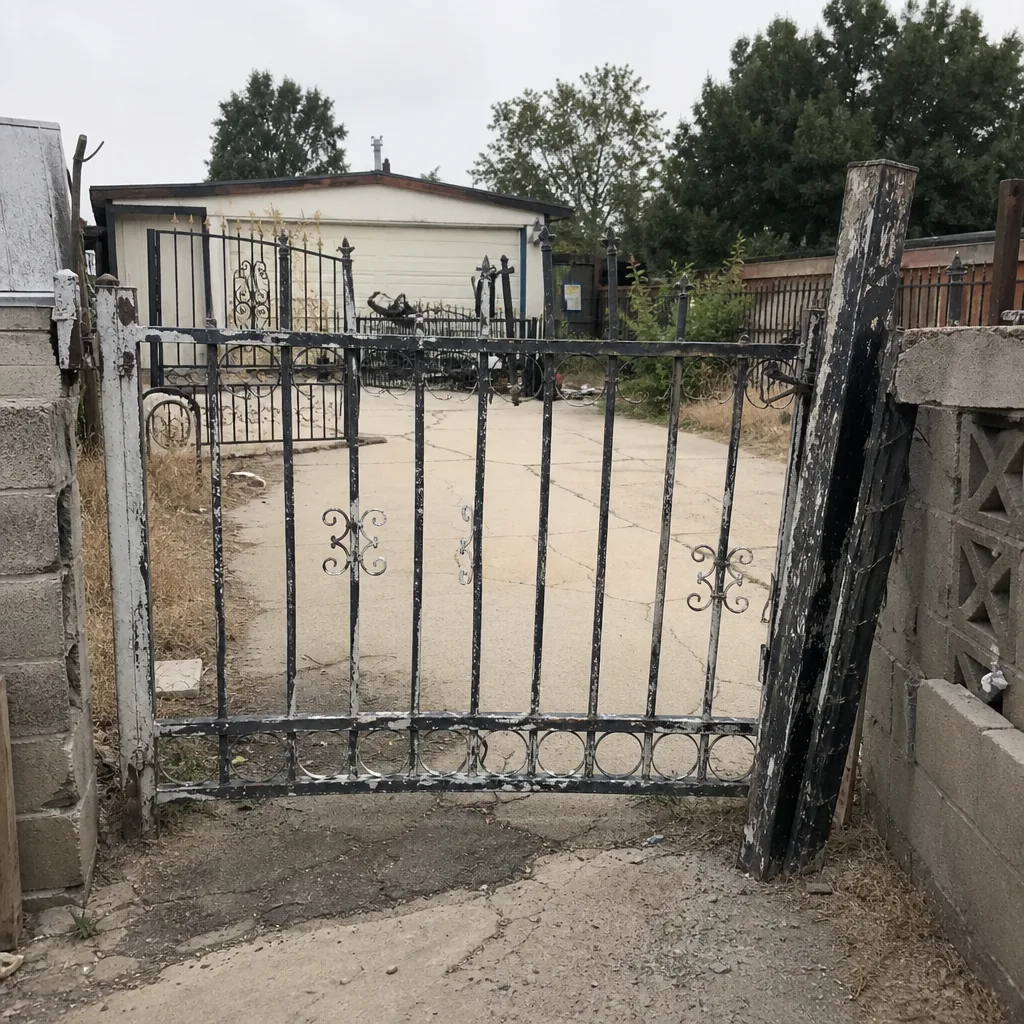 Before
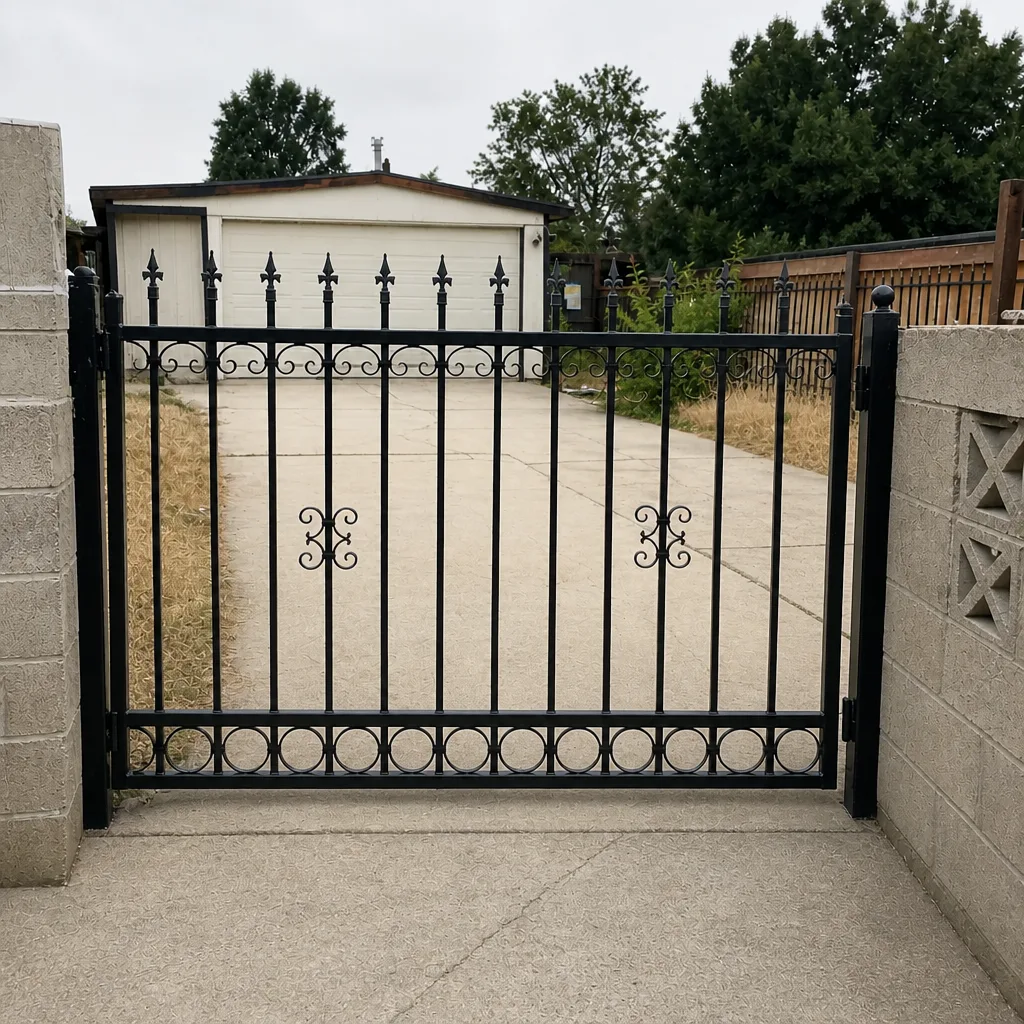 After
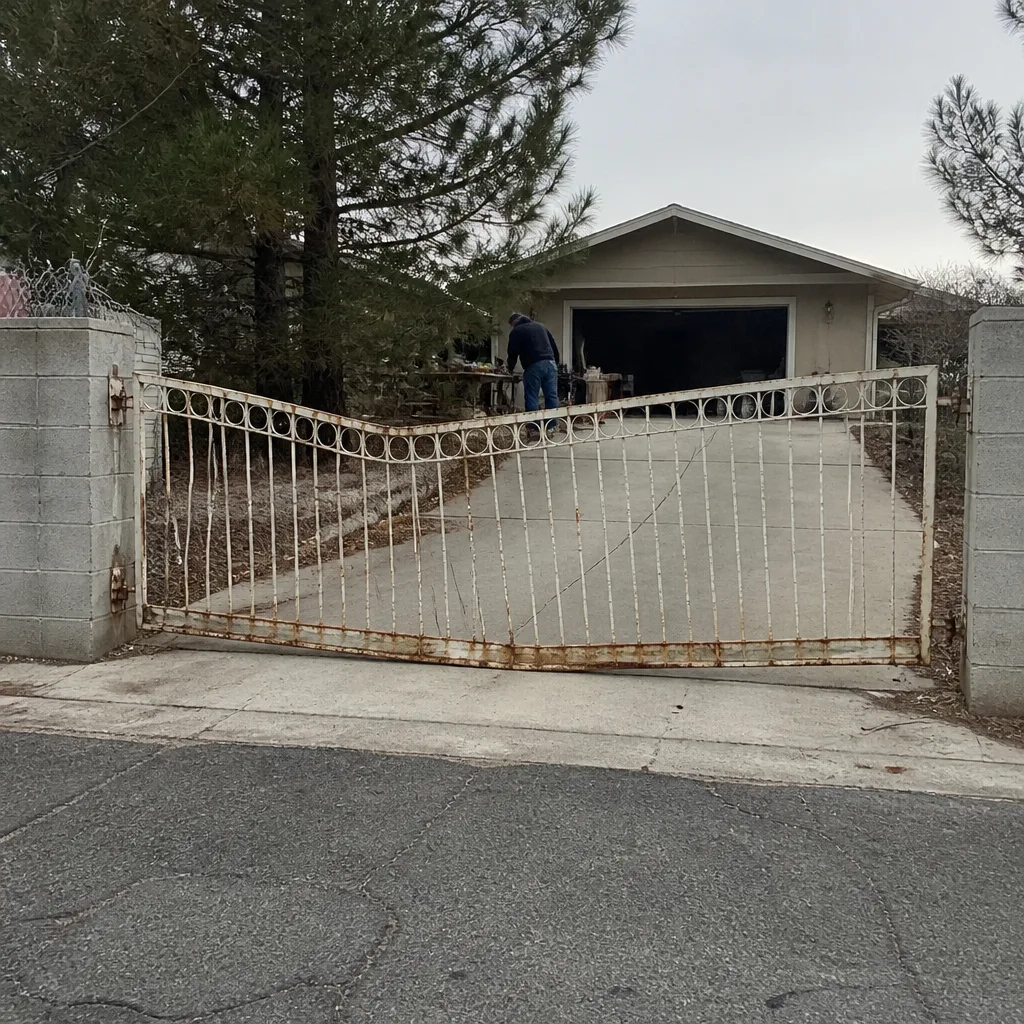 Before
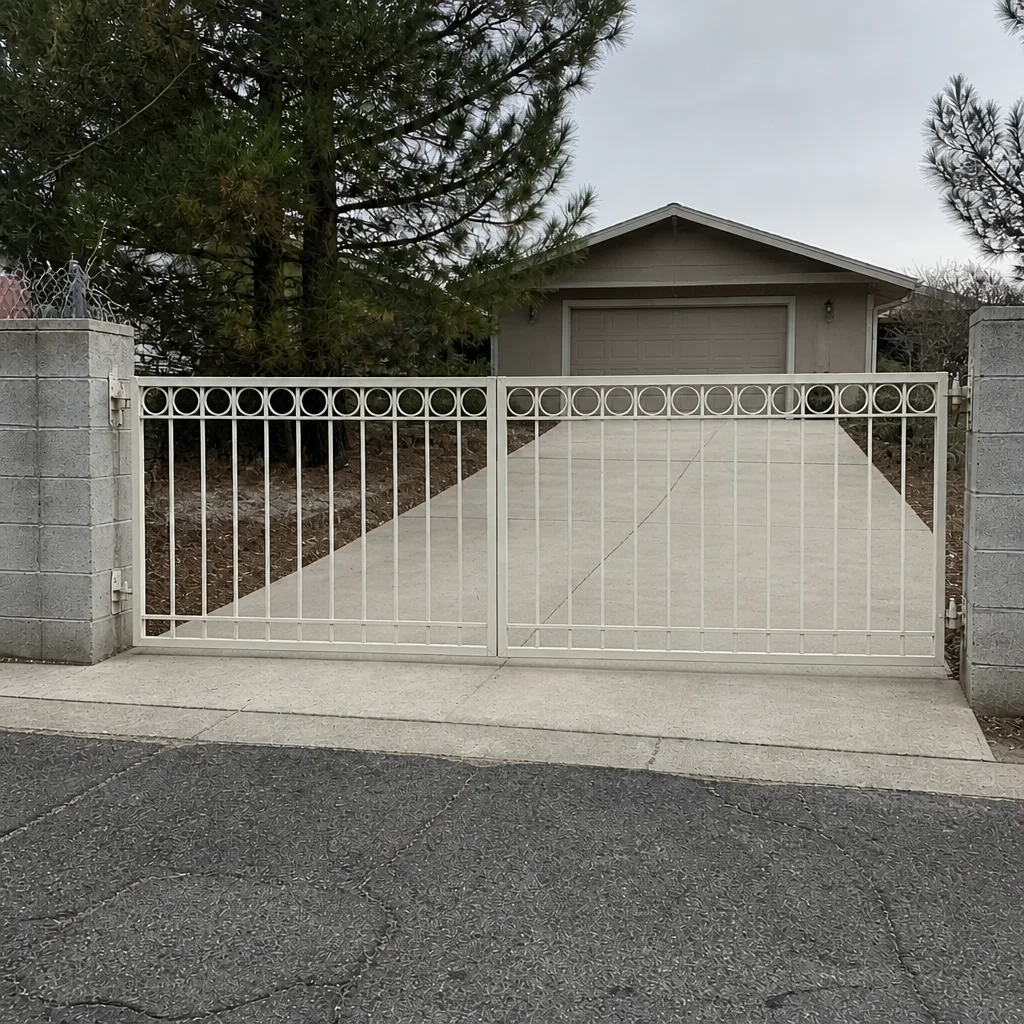 After
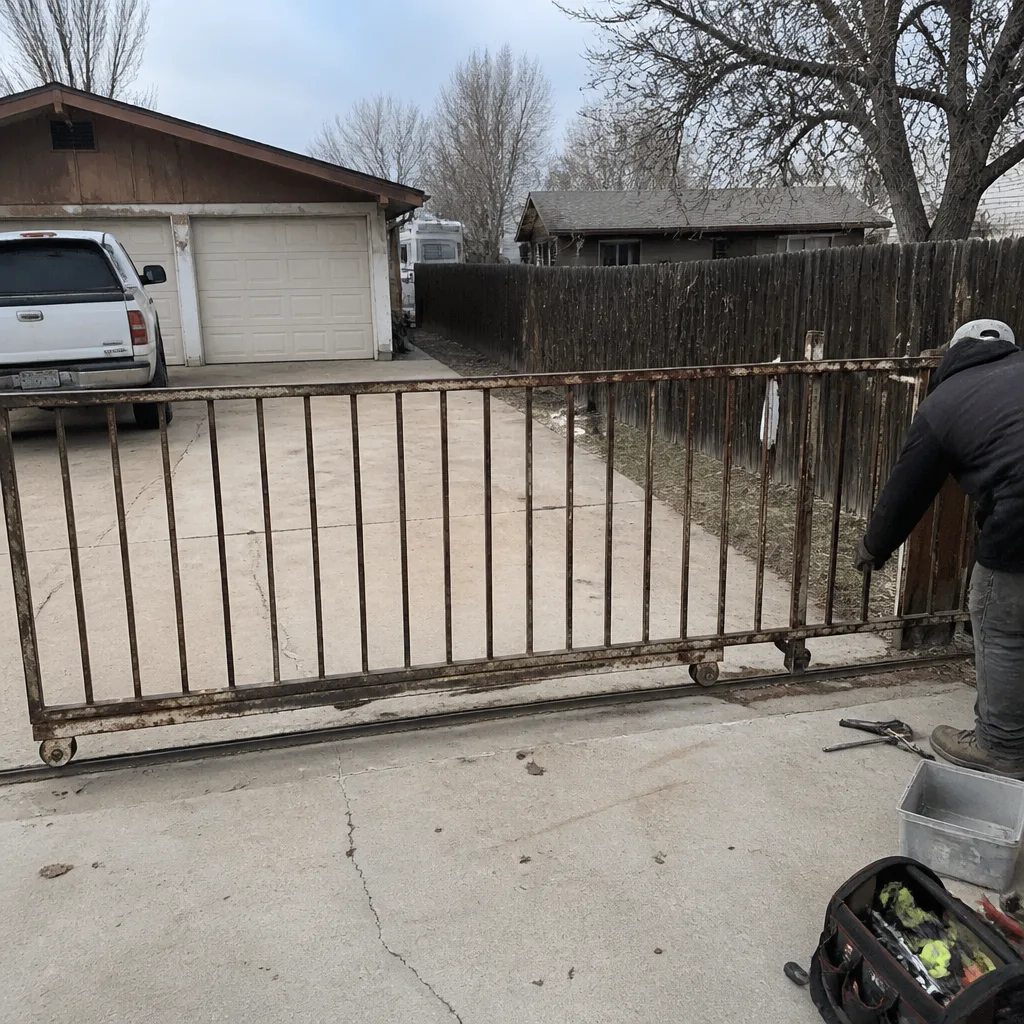 Before
 After
How Gate Access Control Systems Work in Winchester, NV
A gate access control system works as a stack of five connected layers: the credential you present (keypad code, fob, or buried loop), the receiver that reads it, the controller board that decides, the operator motor that moves the gate, and the feedback sensors that confirm the gate actually did what it was told. On Winchester’s original 1960s and 70s properties, the layer that fails is almost always the handoff between a modern controller and old wiring that was never rated for its signals. If your gate keeps calling for service, call Vance Gate Repair Winchester at (866) 983-9213 and we’ll measure before we touch anything.
Key Takeaways
- Five layers, one weak link: credential, receiver, controller, operator, feedback sensors.
- Mojave heat kills receivers and drifts limit switches before motors wear out.
- Old 24V relay loops and new 5V logic boards don’t speak the same language – reading voltage first prevents a burned board.
- Winchester’s unincorporated status puts county permit notes on low-voltage work that many gate companies skip.
- A wiring diagram left after every visit is what stops you paying twice to rediscover the same problem.
The five layers, and where each one actually breaks in Winchester
Most explainers draw the loop as credential, controller, motor, done. The real stack has two more steps and each one has a weather-specific failure mode here. Naming them in order is how a technician narrows a fault instead of guessing.
- Credential. Keypads, fobs, and in-ground inductive loops. In Winchester it’s usually cracked keypad membranes from UV exposure and loops cut by root heave or heavy driveways.
- Receiver. The radio or signal reader that turns a remote into a command. White plastic housings sun-crack within five to seven years here; a hairline crack lets dust and monsoon moisture in and the range drops before it dies.
- Controller board. The logic that decides open, close, or hold. This is where the legacy-voltage problem lives on older Winchester properties.
- Operator motor. The arm or slide motor with its limit switches, which tell the gate when to stop. Heat makes these drift two to three degrees past travel, so the gate slams or reverses halfway.
- Feedback sensors. Photo-eyes, the infrared beam that stops the gate if something crosses the path. Misaligned by an inch or two after a windstorm or a bumped post, and the gate behaves as if it’s phantoming.
Knowing which layer is at fault is the whole diagnosis. A gate that opens partway and reverses is usually a drifting limit switch or a blocked photo-eye, not a dead motor. A keypad that works from the car but not on foot is usually the receiver, not the board.
Why a brand-new receiver can fail on old Winchester wiring
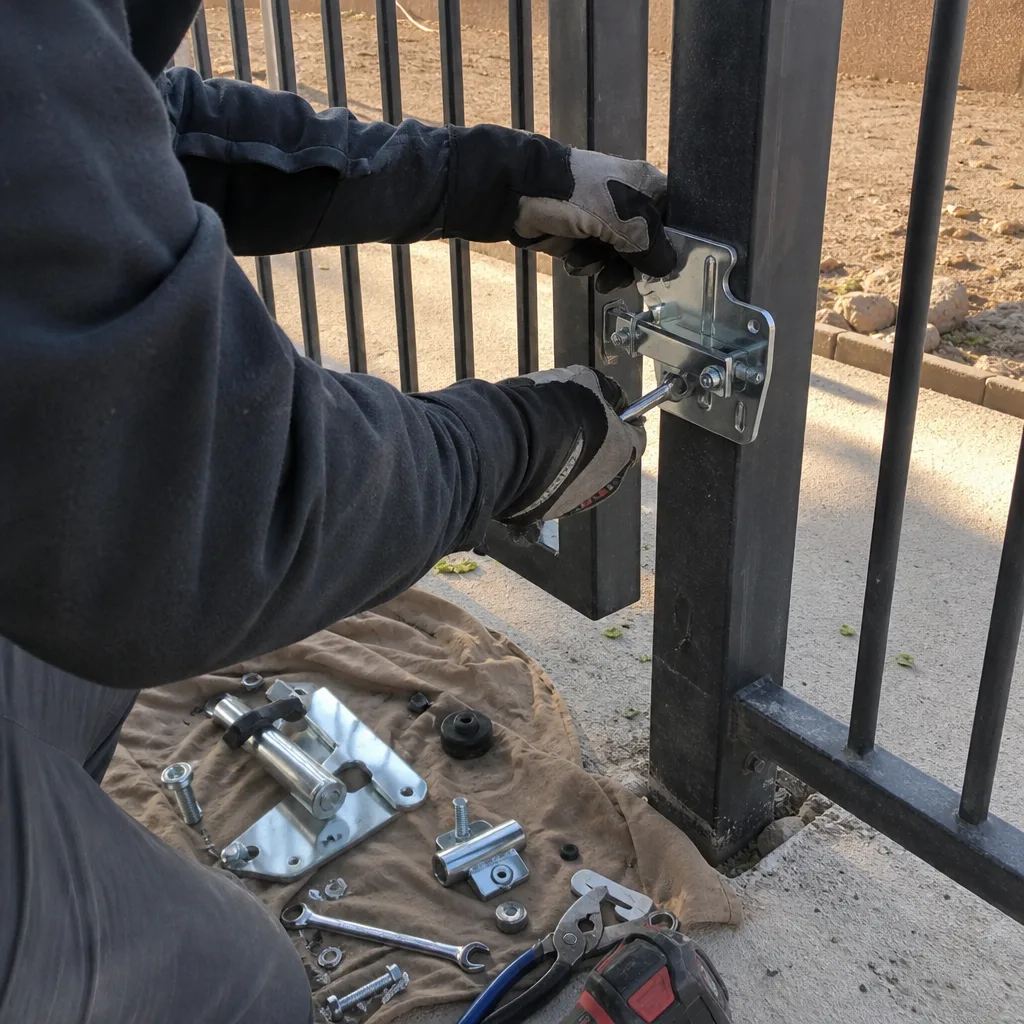
Here’s the piece competitors leave out. A 1968 wrought-iron driveway gate in Winchester can accept a new LiftMaster receiver in about two hours, but only if the technician first reads what voltage the original relay loop is running. The old loop may sit at 24V; the modern receiver or controller expects a small 5V logic signal. Push the higher voltage into the lower-voltage input and you burn a board – and the “new” system quits within 30 days.
That mismatch is the number-one reason installs fail on old wiring. It’s a Mojave problem layered onto a mid-century problem: Winchester’s housing stock is dominated by 1950s-1970s tract homes and aging low-rise commercial strips, so most gates are original wrought-iron, chain-link security, or early automatic operators rather than anything new. Nobody rated those relay circuits for logic-level signals. The fix isn’t exotic – measure the loop, add a step-down relay or isolation, and note it – but a technician who skips the measurement burns your board and blames the equipment.
On the commercial side, understanding the control architecture of each brand is what separates diagnosis from a sales pitch. We service nine major automation lines – LiftMaster, FAAC, BFT, Linear, Viking, Ghost Controls, DoorKing, Elite, and Mighty Mule – so we work on the motor already on your property rather than steering you toward a replacement. A DoorKing board with a regional quirk and a FAAC arm with its own limit behavior both get read on their terms, not swapped out for convenience.
BeforeAfterWhat a diagnosis looks like, and why we write it down
Reading the voltage is step one, but the habit that prevents repeat service calls is documentation. Every Vance Gate Repair Winchester visit produces a wiring diagram of what we found – the relay loop as it actually was, not as it should have been – plus a photo log of what we set and what we installed. That’s the same commercial documentation habit carried onto residential gate repair, and it’s what makes the free second opinion on another company’s written estimate worth requesting. Bring the paperwork and we’ll review it.
So when any component gets upgraded later – a keypad swap, a new receiver, a board replacement – the next technician reads the diagram instead of reverse-engineering the original installer’s guesswork. You don’t pay twice to rediscover the same problem. Our technicians have up to 12 years of experience, background-checked and uniformed, with a live person answering at any hour.
The control loop, step by step
- Present the credential. A code on the keypad, a fob press, or a vehicle crossing the in-ground loop.
- The receiver reads the signal. It validates the command and passes it to the controller, provided the housing isn’t cracked and moisture-free.
- The controller decides. It checks safety inputs, then sends a direction command to the operator. This is the board most vulnerable to a voltage mismatch.
- The operator moves the gate. The motor drives the arm or slide until limit switches tell it to stop. Those limits drift from heat.
- The feedback sensors confirm it. Photo-eyes watch the path; if the beam breaks, the gate reverses. A misaligned pair causes phantom stops.
- The record gets written. A wiring diagram, photos, and a written price sit in your job file, so the next visit starts from evidence.
Unincorporated Winchester: the permit gap nobody warns you about
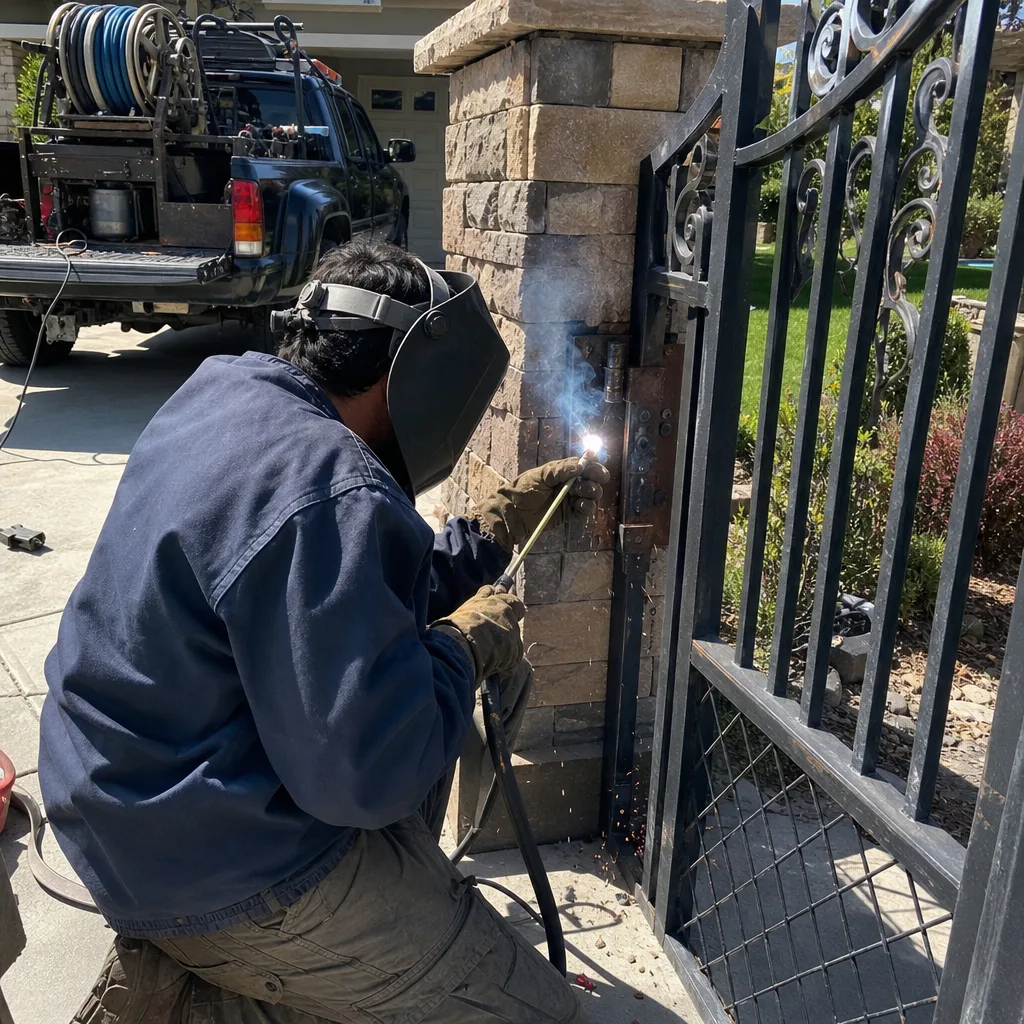
Winchester is an unincorporated township surrounded by Las Vegas and Paradise, which changes how gate work gets permitted. Because many properties here lack formal HOA oversight, gate repair often involves navigating county versus city quirks. On access-control work specifically, county permit rules can call for a licensed low-voltage contractor notation – documentation a standard gate company may simply skip. When that’s missed, the homeowner inherits the compliance gap, and it surfaces later when a property is sold or an inspector looks at the panel. We flag it as part of the written scope before any work starts, so you know what’s required on your lot rather than discovering it afterward.
The climate adds its own timeline. Winchester’s Mojave Desert summers bring intense UV, heat, and occasional monsoon winds and flash flooding. Dust storms jam older rollers, sun exposure dries and warps components, and oxidized metal stresses gate hardware seasonally. A gate that worked in March may stick in July – not because the system failed, but because the desert stressed a part already near the end of its life. That’s why we photograph each adjustment and record the part numbers we install.
FAQs
On older Winchester properties, the most common cause is a voltage mismatch between the original relay wiring (often 24V) and a modern controller expecting a 5V logic signal, which can burn the board. On newer setups it’s usually a drifting limit switch from heat or a misaligned photo-eye after wind. Either way, measuring first is what saves you a part. Call (866) 983-9213 and we’ll read it before we replace anything.
Most control-layer work in Winchester runs from a needle-and-meter diagnostic visit to a full controller or receiver replacement, and the exact flat price is written and handed over before any tool comes out – no “call for a quote.” A quick diagnosis sits at the low end; a burned board or a receiver plus wiring correction sits higher. Because the written price comes first, you’ll never get a surprise invoice. Call (866) 983-9213 for a free estimate in Winchester.
Yes – if the technician measures the original relay loop’s voltage first and adds a step-down or isolation where needed. Skip that step and a brand-new LiftMaster or FAAC receiver can fail within 30 days on old wiring, because the higher voltage overwhelms the low-voltage logic input. The two-hour install only stays reliable when the mismatch is handled, not ignored. Call (866) 983-9213 to have it measured correctly.
That behavior almost always points to the feedback layer – a photo-eye misaligned after a windstorm or a limit switch set past travel so the controller reads an obstruction. It’s rarely the motor. A technician reads the limits and the beam rather than selling a replacement. Call (866) 983-9213 and we’ll diagnose it today.
Get your control stack read before you spend
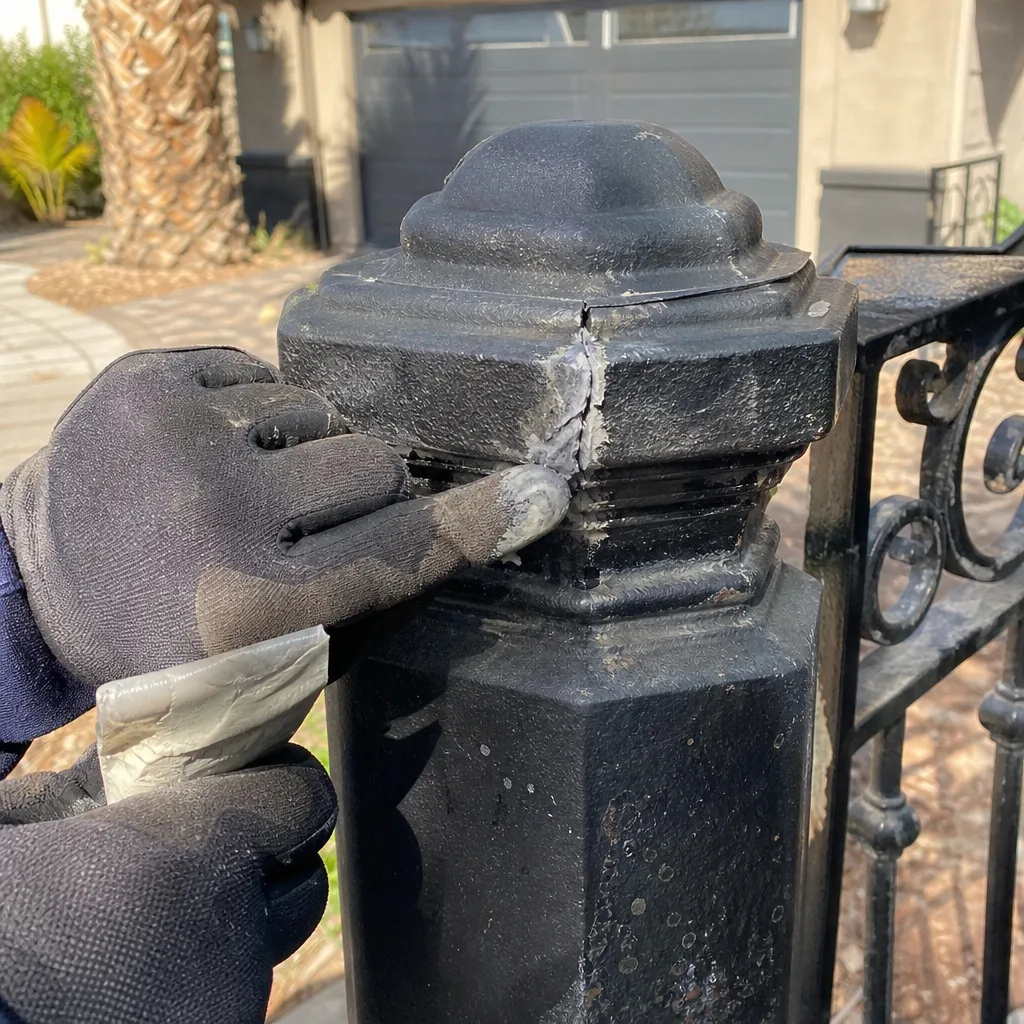
If your gate is acting up – cracking open partway, eating receivers, or ignoring codes – the fix begins with a measurement, not a part. Vance Gate Repair Winchester walks the full stack, reads the wiring, and leaves a documented photo record before we go. Call (866) 983-9213 for a free estimate in Winchester, with a written price before any work starts. For the broader picture, see our Gate Access Control services, and if you’re closer to the core, our Gate Access Control in Winchester page covers the residential side. Start at our home page for the full lineup.
Written by the team at Vance Gate Repair Winchester, serving Winchester, NV.