
 Wrought iron
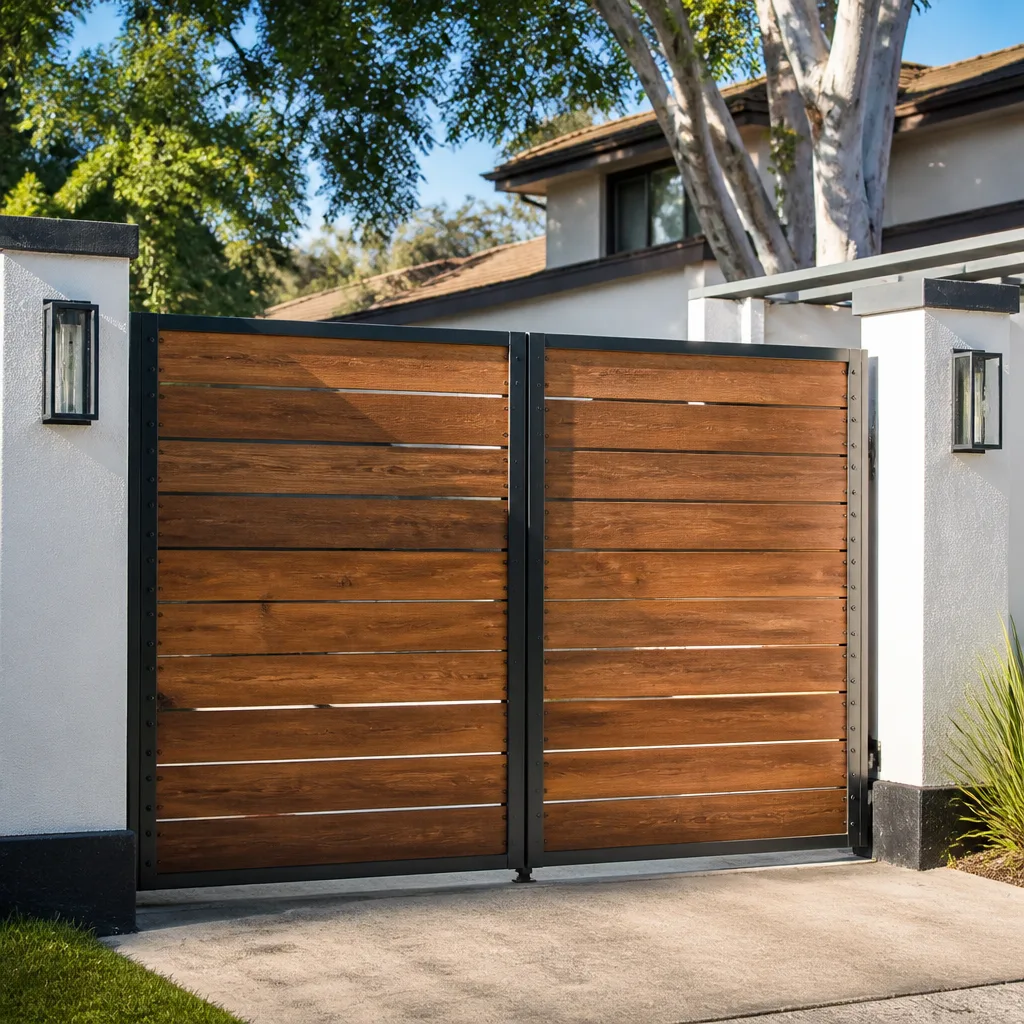 Wood & steel frame
 Farm & ranch
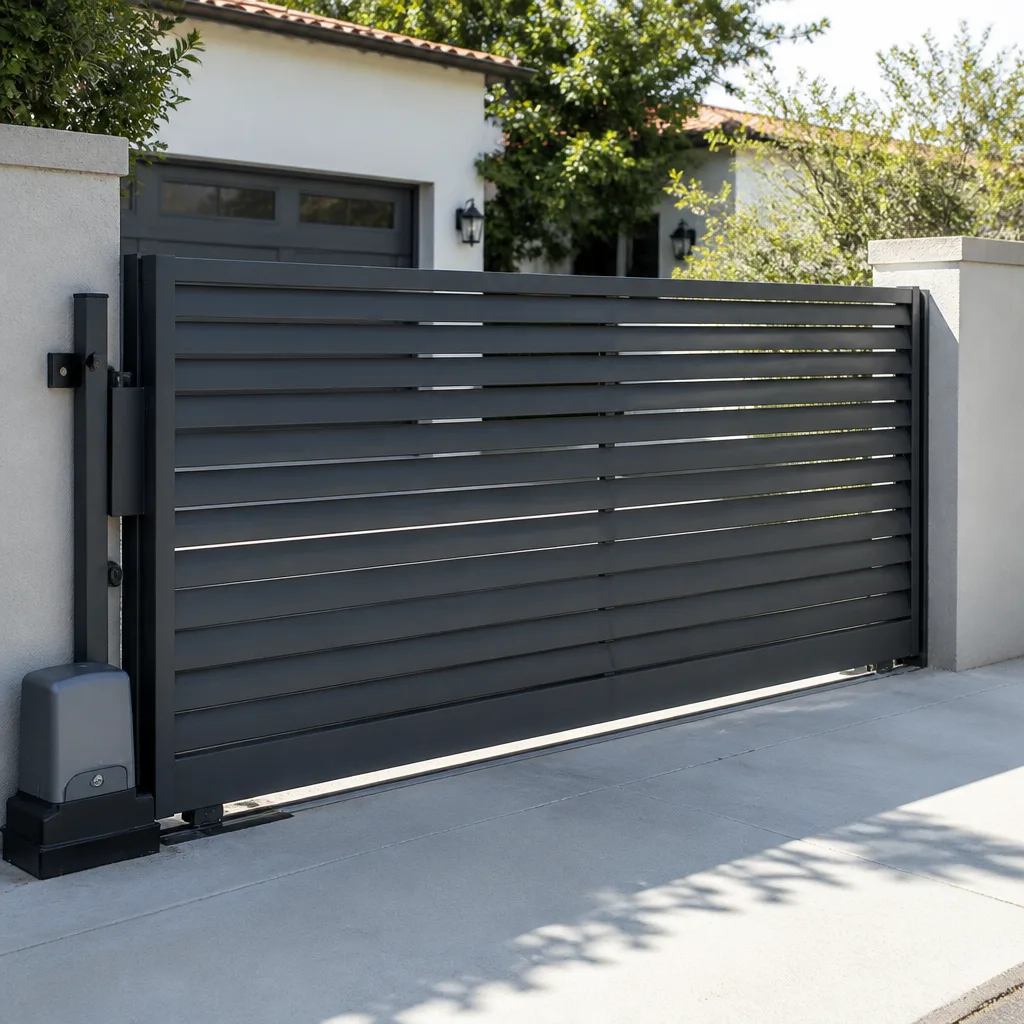 Sliding driveway gates
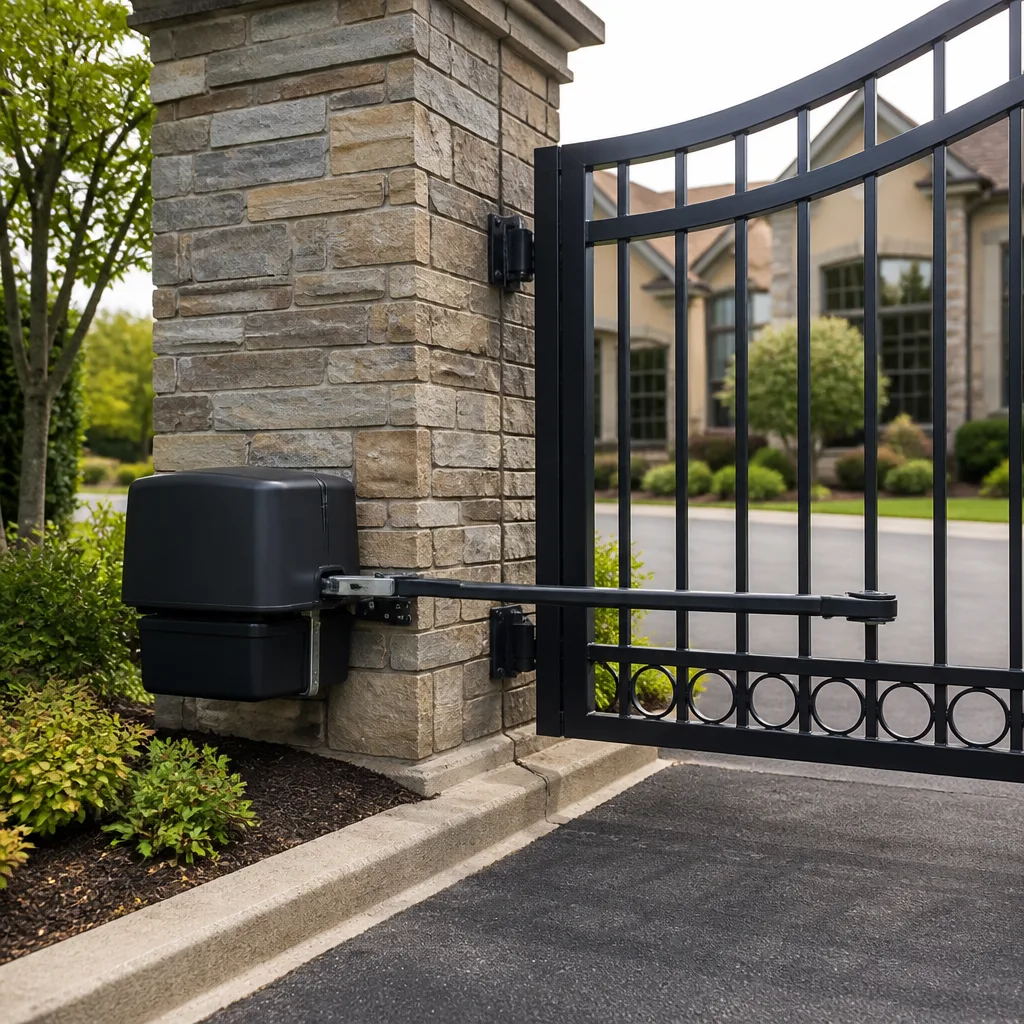 LiftMaster operators
Free on-site gate assessment - hinges, posts, and your LiftMaster or Nice gate operator checked before anything is quoted
The assessment is free and the quote is the invoice.
Get your free estimateStyles & brands we work with
- Wrought iron
- Wood & steel frame
- Farm & ranch
- Sliding driveway gates
- LiftMaster operators
See the difference
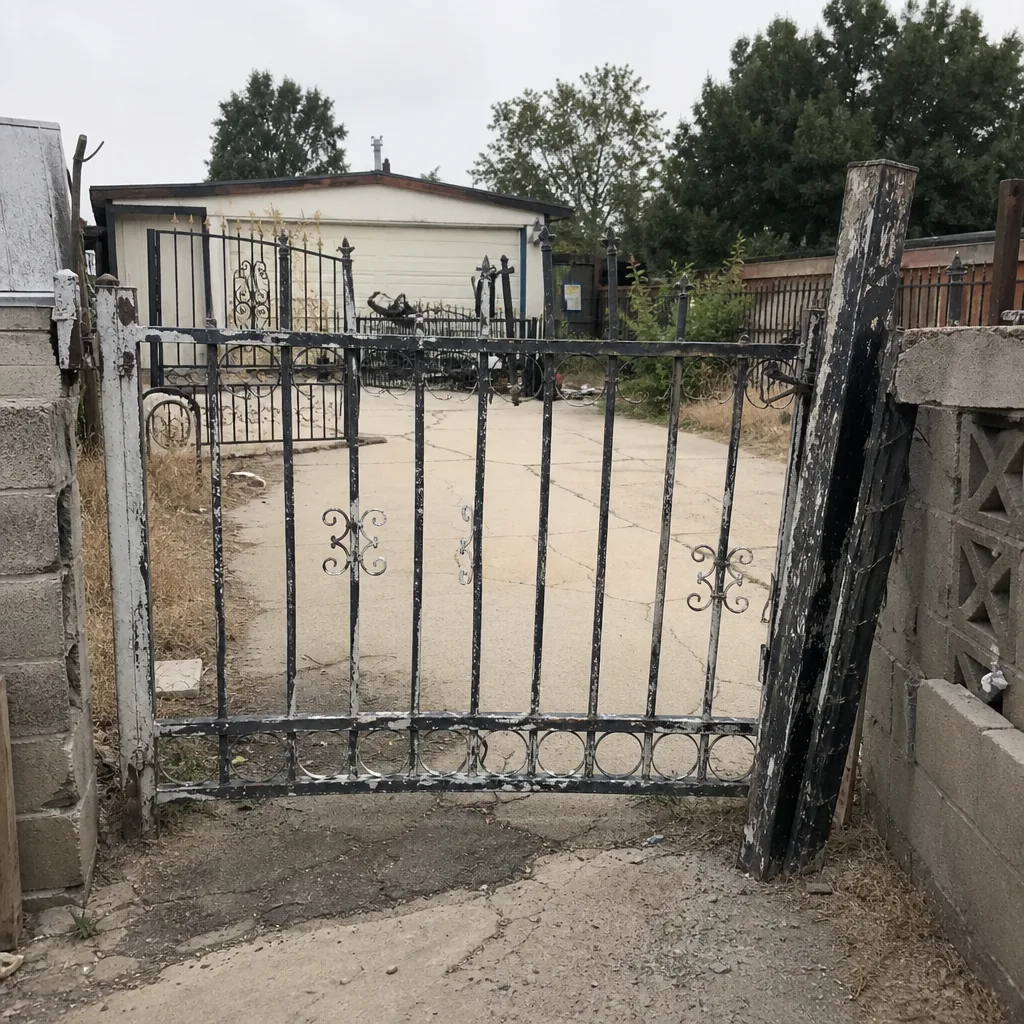 Before
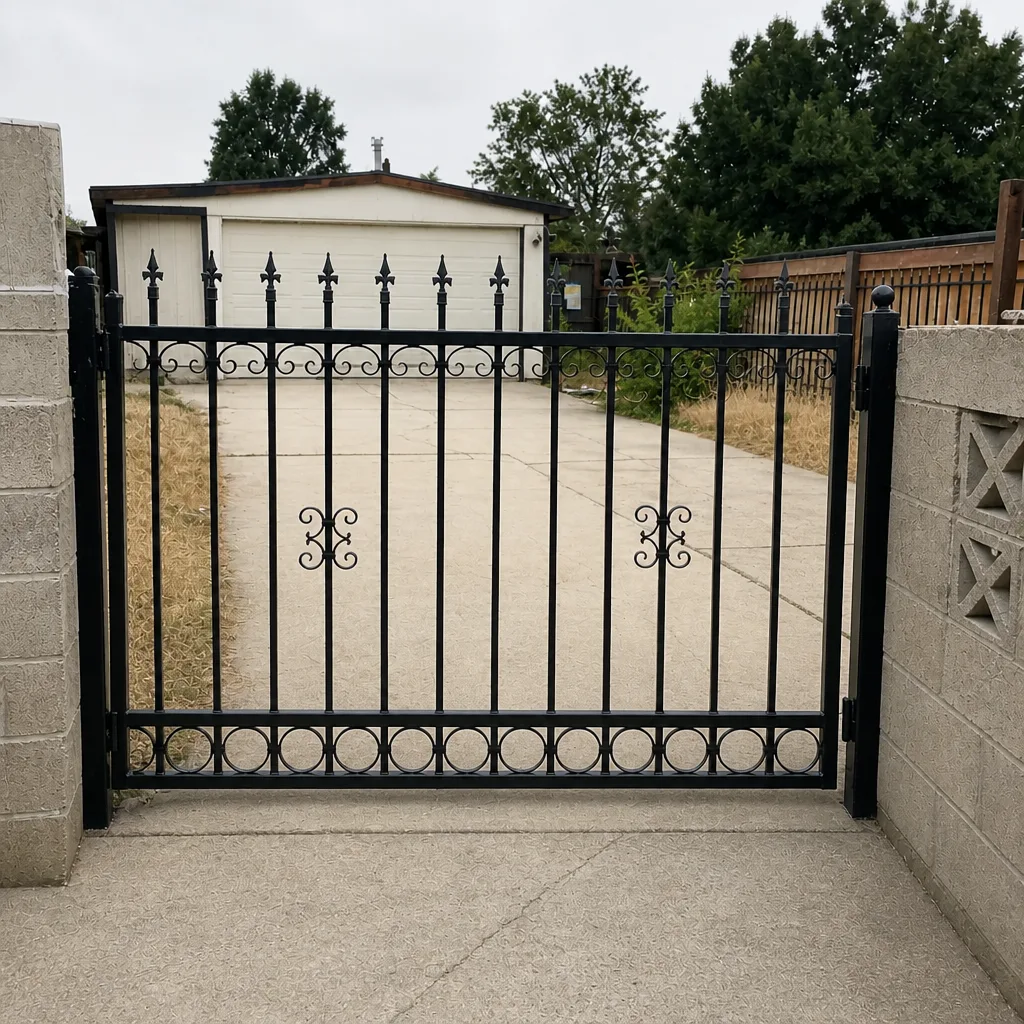 After
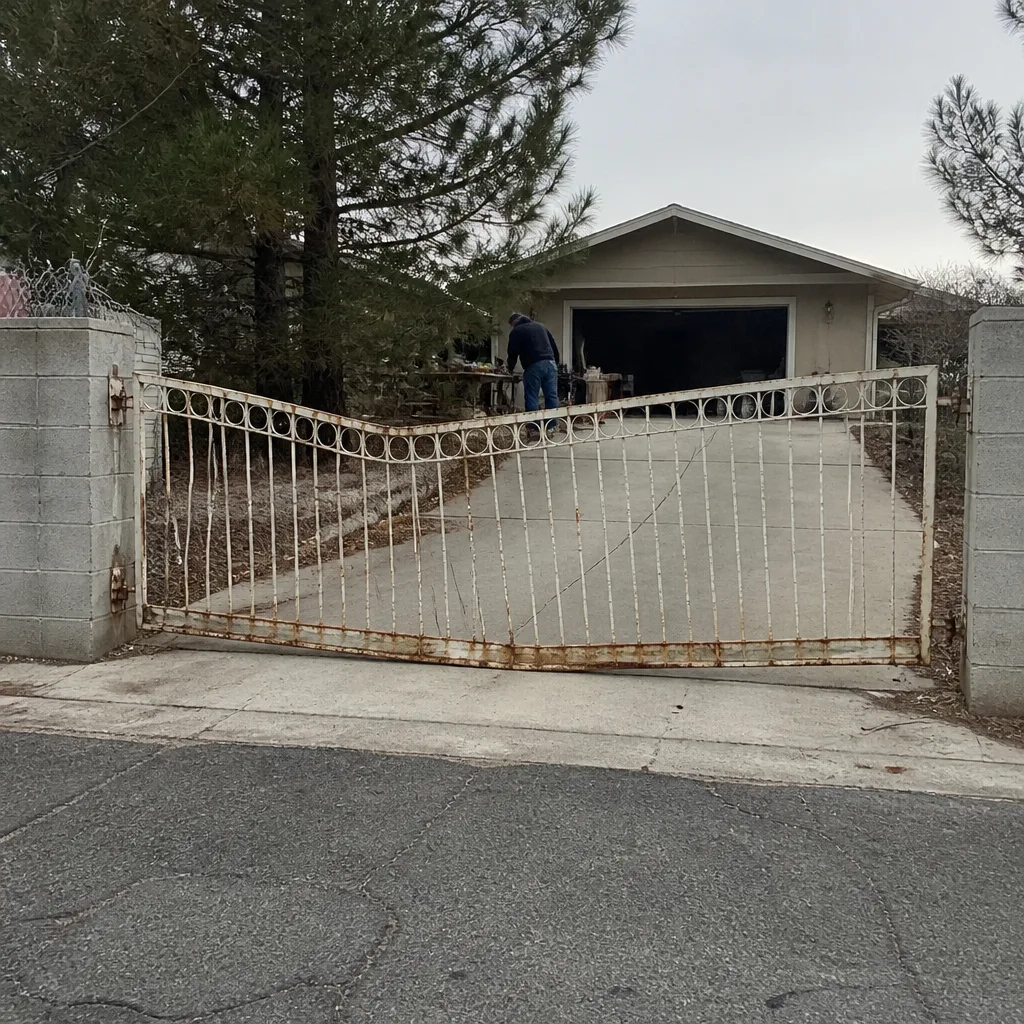 Before
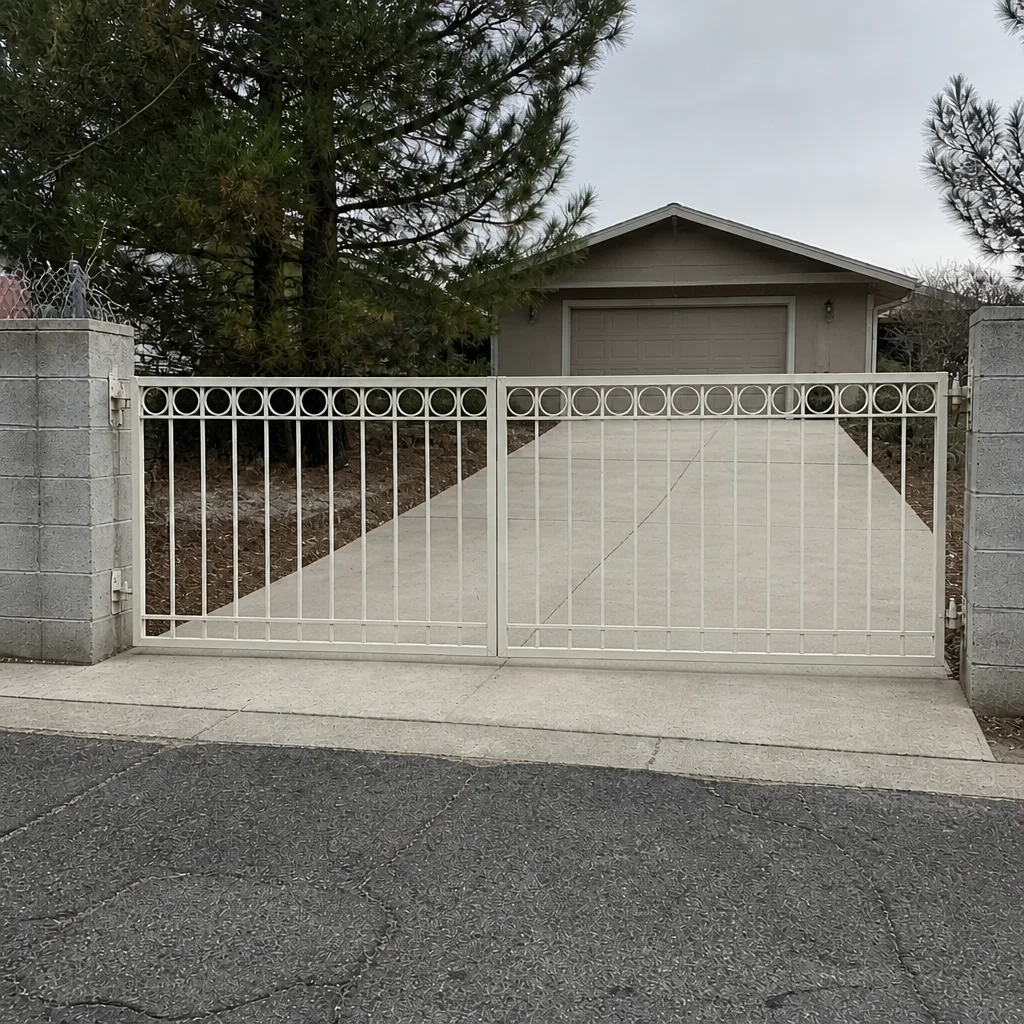 After
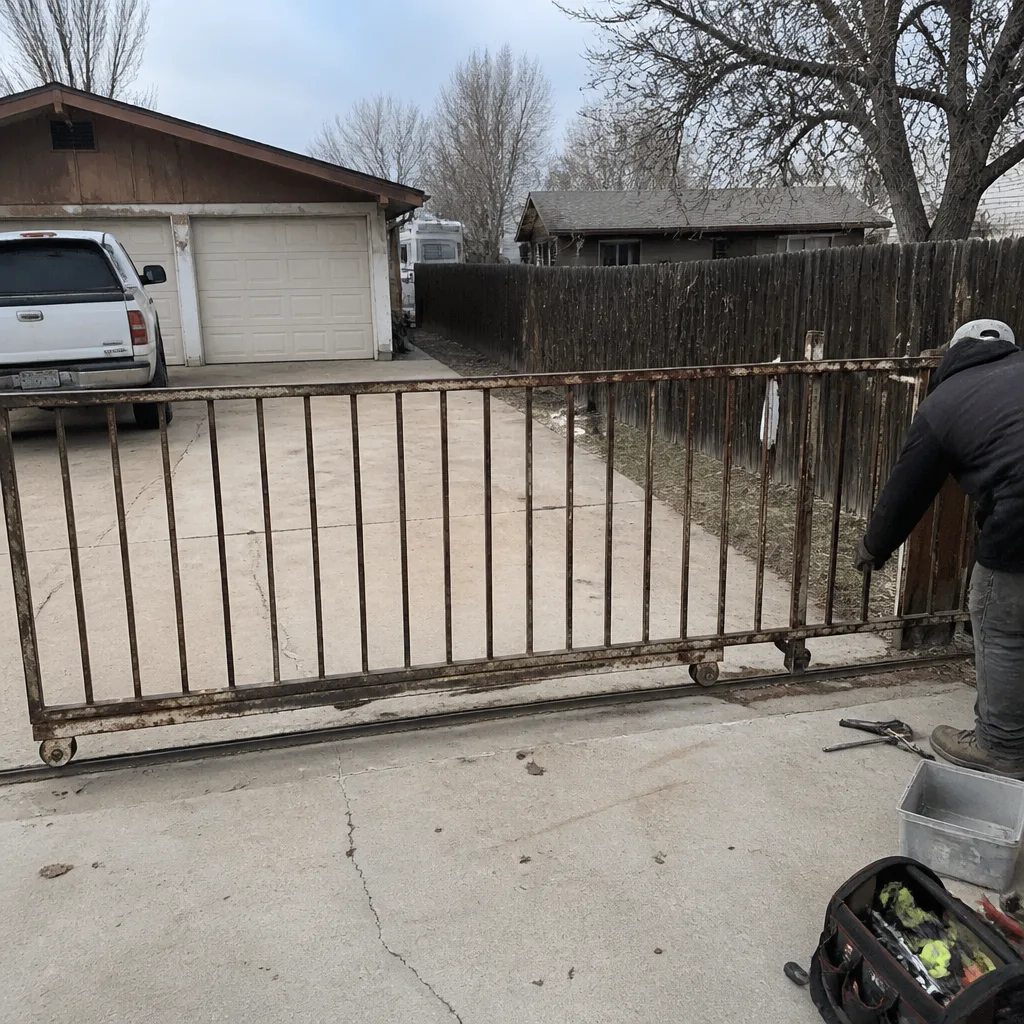 Before
 After
How to Reset an Automatic Gate in Winchester, NV: Identify the Fault Before You Press Anything
Pressing the reset button on a gate operator that tripped its thermal cutout is a different job from resetting one that lost its limit-switch memory. A power-cycle clears a heat trip and keeps your travel settings. A control-board factory reset wipes them. And a limit-switch re-learn isn’t a reset at all, it’s a calibration. Do the wrong one on the wrong fault and you’ve erased the operator’s travel settings, which is exactly the mess we get called to clean up in Winchester. Here’s how to tell which reset you actually need before you touch the board. Call (866) 983-9213 if you’d rather have us identify it for you.
Key Takeaways
- Three different faults look like “the gate won’t reset.” Each needs a different procedure.
- After a summer heat shutdown, the operator needs 20-30 minutes off, not another power cycle.
- A full factory reset on an older operator tuned to a heavy wrought-iron gate returns it to defaults that don’t fit the gate.
- If your last service visit left documented limit-switch readings, restoring them takes five minutes.
Which of the Three Reset Scenarios Are You Actually In?
Before you press a single button, work out what the operator is telling you. Most homeowners in Winchester arrive at “reset” the same way: the gate stopped mid-travel, the arm won’t move, and the manual says “reset.” The manual covers three separate procedures and they are not interchangeable.
- Power cycle (momentary fault or thermal trip). The operator cut out to protect the motor or the board tripped a transient fault. Turning power off and back on clears it. No settings are lost.
- Control board factory reset (corrupted logic). The board is holding bad memory and won’t run a normal cycle. This clears the corrupted logic, but it also erases every limit-switch and force setting the operator had learned. You will reprogram it afterward.
- Limit-switch re-learn (travel boundaries drifted). The gate sags, a roller jams, a hard impact knocks the arm. The board is healthy but its travel endpoints are wrong. This isn’t a reset, it’s a calibration to the actual open and closed positions.
If the gate ran fine yesterday and stopped after a hot afternoon, you’re almost certainly in the first scenario. If it ran fine and then behaved erratically after a power surge, suspect the second. If it binds, drags, or stops at a different spot than it used to, that’s the third.
Why Winchester Summers Trip the Operator First
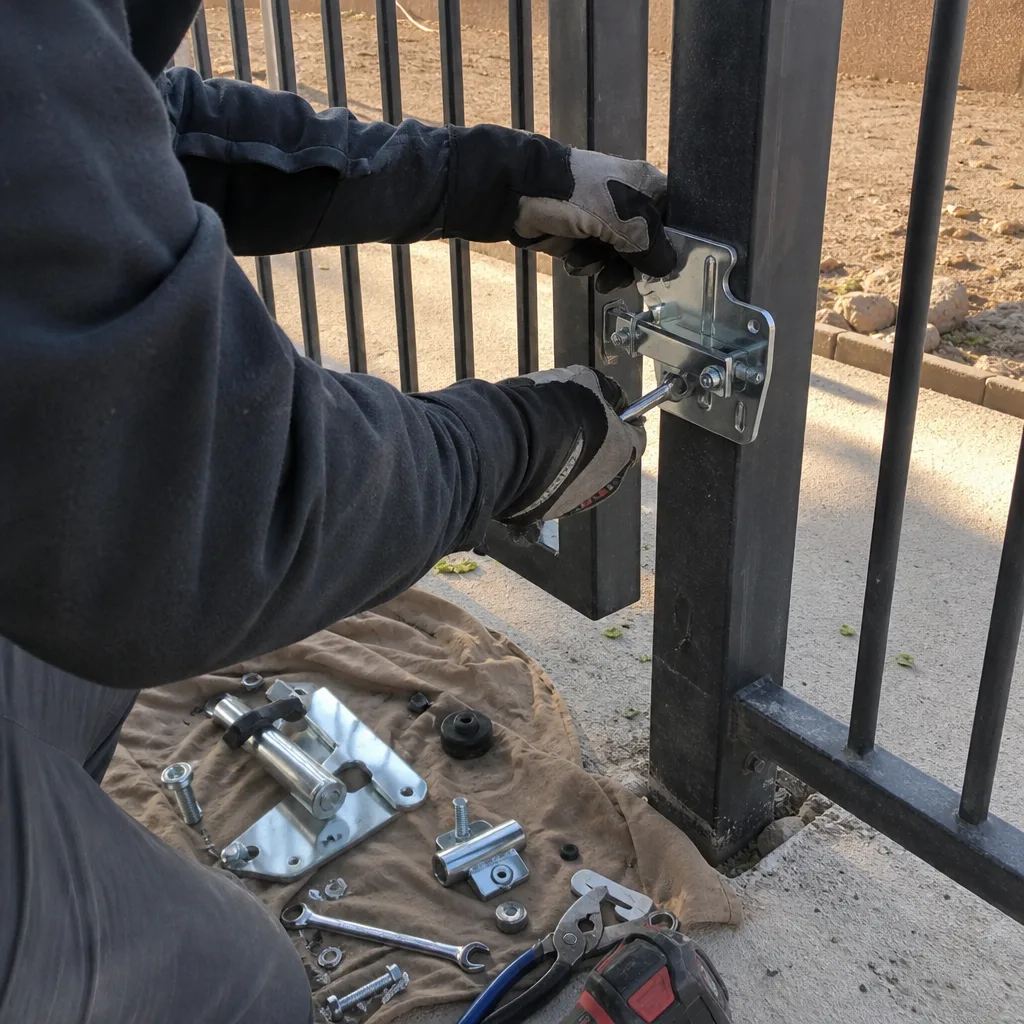
Winchester’s Mojave Desert summers are hard on gate operators. Intense UV and triple-digit heat cook the components, and the operator protects itself by cutting power to the motor when it gets too hot. That’s a thermal trip, not a failure. The gate didn’t break, the motor hit its limit and shut down before it burned itself out.
The correct response is patient. Turn the power off at the disconnect, leave it off for 20 to 30 minutes, and put the operator in shade if you can manage it. Then restore power and run a normal cycle. What damages the board is cycling power over and over to “test” if it’s back yet, because each attempt re-energizes a hot board and shortens the operator’s life. The same conditions that dry-rot gate hardware and warp older operators also jam rollers after a dust storm, and that jam can trigger the same overheating in the first place. If your gate jams after a wind event, the thermal trip is a symptom of the jam, not the fault.
This is also why Winchester gate repair skews toward rehabbing aging hardware rather than swapping it. The housing stock here is dominated by 1950s to 1970s tract homes on small lots with original wrought-iron and chain-link gates. Because Winchester is an unincorporated township, many properties skip formal HOA oversight, so the gate on the property is often older than anything current codes would require. An operator tuned for a lightweight modern gate doesn’t match a heavy 50-year-old wrought-iron driveway gate, and a factory reset assumes it does.
BeforeAfterThe Reset to Avoid: Factory Reset on an Older Operator
The one reset that causes the most damage is a full factory reset on an older operator that has been tuned to a specific gate weight and travel distance. A factory reset returns every setting to default, and those defaults assume a modern residential driveway with a light gate. Your Winchester wrought-iron or chain-link gate doesn’t match those numbers. It’s heavier, its travel is longer, and its hinge geometry is whatever the installer found 30 years ago. After a factory reset, the operator thinks it’s driving a gate that doesn’t exist, and a technician has to retune the whole thing from scratch.
This is the reason we keep a written record of every setting we touch. When we service a gate, we photograph the limit-switch positions and note the force settings, the model, and the wiring on file. If a reset happens later, restoring the operator’s travel is a five-minute job: we look at the record, set the switches back, and photograph the new positions. Without that record, the technician tunes by trial and error, and that trial and error is billable time you didn’t have to spend. It’s the difference between a documented visit and guesswork.
How a Limit-Switch Re-Learn Looks in Practice
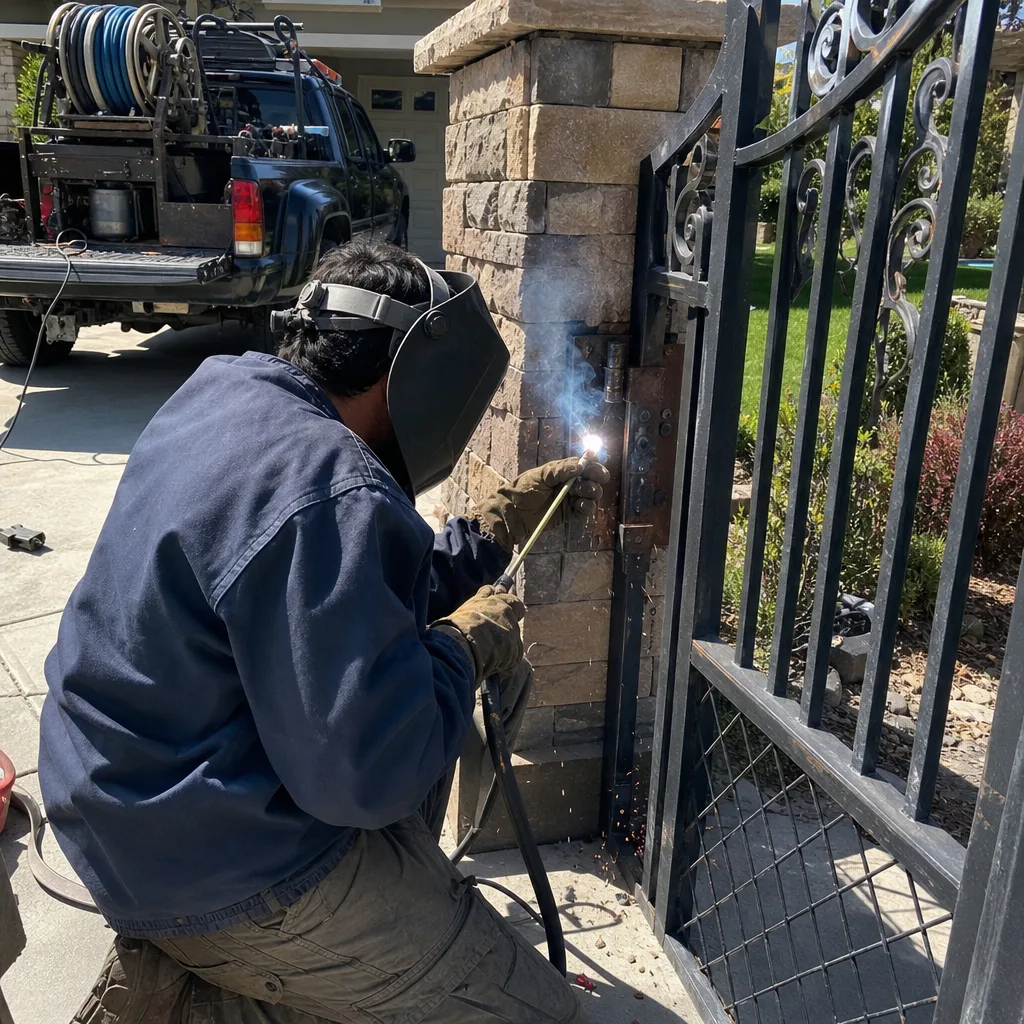
The generic limit-switch re-learn on a LiftMaster or Linear operator runs about the same way, though every brand differs in the button sequence, so have the model number ready before you start. The procedure is:
- Clear the path and confirm no obstruction is holding the gate.
- Put the operator in manual release and move the gate by hand to the fully closed position. Note any drag or binding along the way.
- Re-engage the operator.
- Enter program mode using the brand’s sequence (often a hold of the limit-set button, not the reset button).
- Run the gate to the open limit, confirm the endpoint, and set it.
- Run it closed, confirm the endpoint, and set it.
- Cycle the gate two or three times to confirm the new travel is stable and the force settings hold.
That last step is where a hidden problem shows itself. If the gate kept drifting closed, the limit-switch re-learn will fail again on the next cycle and the root cause is usually a mechanical issue like a worn roller or a hinge that needs lubricant, not a board problem. If you’re fighting the same failure repeatedly, the physics is telling you the gate is fighting the motor, and the answer may be a repair on the operator itself.
Getting the Brand and Model Right Saves Time
Every operator brand uses a different reset sequence, and mixing them up is how customers get stuck. LiftMaster and Linear use one button-hold pattern; FAAC and BFT use their own; Mighty Mule has its own quirks. Over the years we’ve worked across nine major automation brands, so the first thing we ask when you call is the brand and model number printed on the operator cover, then what the gate did right before it stopped. That’s usually enough to route the call to the right diagnosis in about 10 minutes instead of 20. If you still have the owner’s manual, the reset sequence is printed there and the model number is on the sticker. If you don’t, photograph the operator and read off the numbers. Under The Haven Standard, every visit ends with a photo log of what was found and what was set, so the next reset you face is one you can solve from your own record. Our technicians have up to 12 years of experience across these platforms.
This kind of documentation is the same habit behind our Gate Motor & Opener work, where we treat the written scope as the start of every job, not the end. If you’re weighing whether to repair or replace an aging operator, that decision comes after what we find, not before. And if the reset you’re dealing with turns out to be a thermal trip that keeps recurring, the fix is on the operator, not the button. The Gate Motor & Opener in Winchester page covers the repair side of that, including what we document and what the photo record looks like.
When to Stop and Call
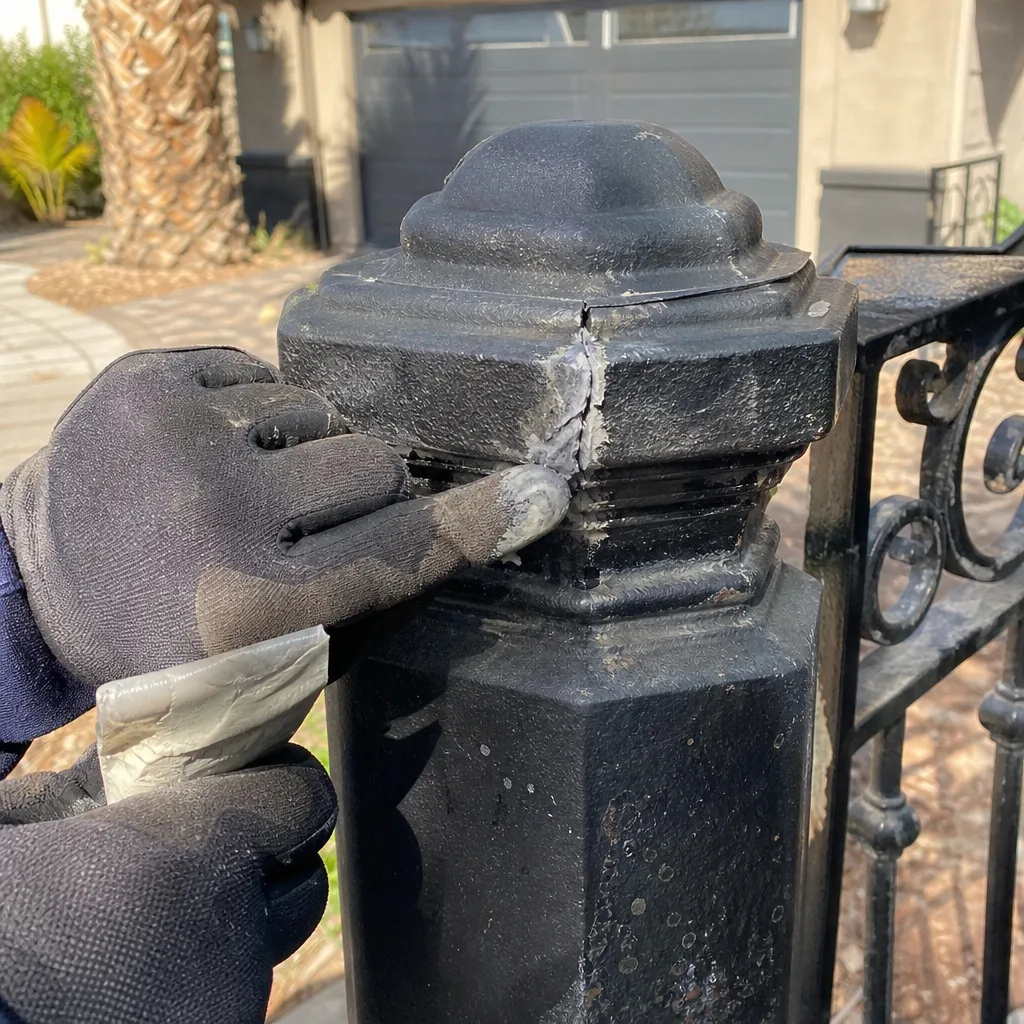
If the gate is a heavy wrought-iron unit with a high-torque operator, or the arm assembly is spring-loaded, stop before you take the cover off. That hardware can move with serious force when released. If a factory reset has already returned the operator to defaults and the gate won’t track, a trained technician with a documented record saves you hours of trial and error. If the operator keeps tripping after 30 minutes off, the motor is telling you something that won’t be fixed at the button.
FAQs
If the gate stopped after a hot day or a sudden jolt and the operator isn’t showing an error code beyond a fault light, a power cycle is usually enough. Turn the power off at the disconnect, wait 20 to 30 minutes, then restore. If the gate won’t move even after a full cooldown and the board hasn’t lost settings, the problem is elsewhere and needs a diagnosis. Call (866) 983-9213 for a written price before any work starts.
Yes, a control-board factory reset erases the limit-switch positions and force settings the operator learned for your specific gate. A power cycle does not. That’s why the two procedures are not interchangeable, and why a factory reset on a heavy Winchester wrought-iron gate can leave the operator running against defaults that don’t match the gate’s weight. Call (866) 983-9213 if the settings have already been wiped.
Give the operator 20 to 30 minutes off at the disconnect, and put it in shade if you can. Cycling power repeatedly to check if it’s back re-heats the board and shortens its life. If the operator trips again after a full 30-minute cooldown, the problem is the motor or the board, not the heat. Call (866) 983-9213 for a documented assessment.
We dispatch documented, background-checked technicians who provide a written price before any work begins. A live person answers the phone around the clock, so call (866) 983-9213 and give us the brand and model number on the operator cover, plus what the gate did right before it stopped. That saves time and gets you a written price before the technician touches the gate.
If you’d rather have it looked at, Vance Gate Repair Winchester offers a no-pressure assessment in Winchester. We’ll identify which reset you’re actually facing, hand you the written price before work starts, and leave you with a photo record of every adjustment. Call (866) 983-9213.
Written by the team at Vance Gate Repair Winchester, serving Winchester, NV.